
Technology
3D face recognition: when a lock measures depth instead of pixels
Depth sensing separates a live face from a photograph or mask. Structured light, time-of-flight and stereo systems each do it differently, with consequences for power, height and price.
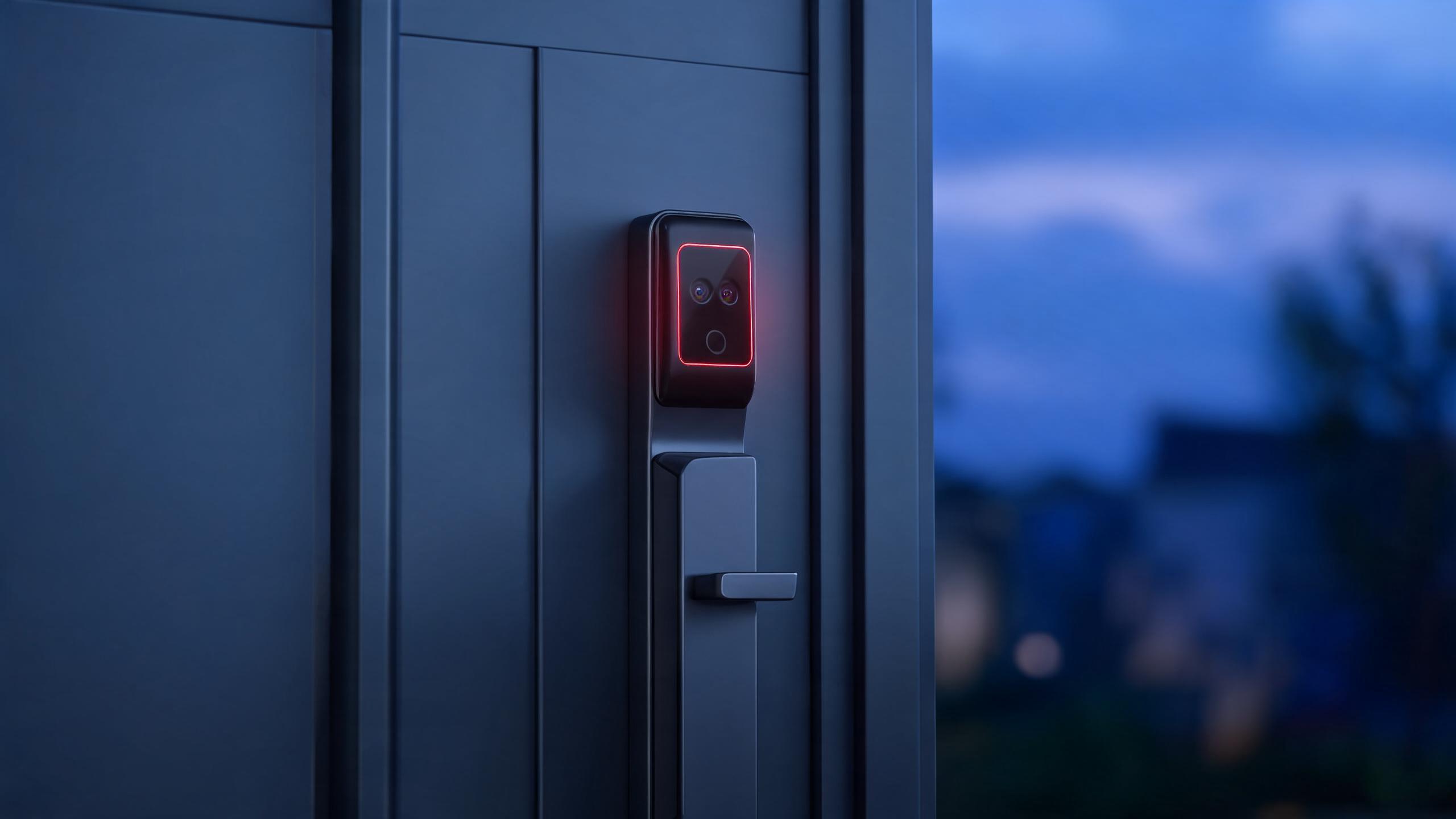
Facial recognition in smart locks moved a generation beyond comparing a webcam-style photograph. 2D systems process a flat image and can struggle with lighting changes and spoofs; 3D systems measure geometry using one of three mainstream methods — structured light projecting an infrared dot pattern, time-of-flight timing infrared reflections, or stereo cameras triangulating disparity between two viewpoints. The lock builds a depth map, extracts a compact template and checks liveness before driving the motor. The user benefits are real in daily life: hands full with groceries, gloves in winter or wet fingers make face unlock feel effortless. The trade-offs are higher power draw, module cost, mounting height considerations for children and wheelchair users, and strong privacy expectations around cameras at a home entrance. This guide compares the methods and lists what to specify. Face module capabilities for each production model are documented per quotation.
3D face technology at a glance
| Structured light | An infrared projector casts a dot or fringe pattern; a camera reads deformation to compute depth, giving dense maps at short distances. |
| Time of flight | A sensor times infrared light returning from the face; fast depth acquisition with relatively compact optics in current lock modules. |
| Stereo vision | Two separated cameras infer depth from disparity, mimicking human vision, with performance depending on baseline and ambient light. |
| 2D is different | A single visible-light camera comparing a flat photo offers weak liveness and should not be described as 3D recognition. |
| Liveness | Depth plus infrared checks reject photographs and most masks; high-assurance projects should understand the exact anti-spoof tests. |
| Practical range | Recognition distance, height window and speed are tuned per model; installation height matters for children and wheelchair users. |
| Our policy | We state the sensing method, recognition window and fallback credentials for each model without blending 2D and 3D in marketing claims. |
Answer unit
Where does 3D face unlock fit best?
Hands-free convenience shines on residential entrances and premium multi-family units where users approach directly. Projects with extreme height ranges, strong privacy rules or tight power budgets should test samples and keep a secondary credential.
| Deployment | Fit of 3D face unlock | Design action |
|---|---|---|
| Family homes and villas | Strong: daily hands-free entry with arms full | Set recognition height for adults and keep PIN for children. |
| Premium apartments | Good amenity that supports premium positioning | Publish clear privacy notice and disable cloud uploads by default. |
| Short-term rentals | Useful for staff, less so for transient guests | Rely on dated codes or mobile keys for guests; face for the owner. |
| Offices | Possible at controlled entrances, privacy review first | Coordinate with card access and works-council or employee notice. |
| Gates and outdoor doors | Only with weather-rated modules and sun testing | Validate direct sunlight, rain and backlight behavior on site. |
| Accessible or mixed-height sites | Needs careful mounting and wide height window | Test seated and child heights, and never remove card or code fallback. |
Projects, products and evidence
Face modules share the door with other credentials in practice. The strongest deployments treat face as the convenient layer and cards, codes or fingerprints as the inclusive, weatherproof fallback.
| Opening | Typical door | Lock approach |
|---|---|---|
| Villa main entrance | Timber or security door under a porch | 3D face lock with keypad and mechanical override under cover. |
| Apartment unit door | Indoor corridor wood or steel door | Compact face module, template on device, no camera streaming. |
| Penthouse private lobby | Designer aluminum and glass entrance | Premium finish face reader integrated beside slim handles. |
| Office reception door | Glass partition with existing card system | Face as an added factor only after privacy and policy sign-off. |
| Covered outdoor gate | Metal gate with weather protection | Weather-rated module tested for backlight and night use. |
| Senior-living suite | Accessible wide door at standard height | Wide recognition window plus large keypad for caregivers. |
Face recognition specification pack
Camera-equipped locks deserve precise documentation. We separate sensing hardware, privacy behavior and installation constraints so brand owners and projects can evaluate the feature honestly.
| Component | Typical logic | Notes |
|---|---|---|
| Sensor statement | Structured light, ToF or stereo, plus infrared components. | Distinguishes genuine 3D hardware from a 2D camera. |
| Recognition envelope | Distance, height range, speed and lighting conditions tested. | Drives installation height and accessibility decisions. |
| Privacy design | On-device templates, no streaming, and any optional app upload behavior. | Feeds the resident or employee privacy notice. |
| Liveness description | Anti-photo and anti-mask measures implemented in the module. | Sets realistic expectations for spoof resistance. |
| Fallback credentials | PIN, card, fingerprint or key paths when face recognition fails. | Maintains access for children, delivery and device failures. |
Specifying 3D face locks in five steps
- Confirm the sensing methodRequire written identification of structured light, ToF or stereo hardware.
- Measure the entranceRecord door position, canopy, backlight and the heights of all users.
- Define privacy behaviorChoose on-device templates and document what the camera never records.
- Sample test on siteTest night, strong sun, masks, hats and seated users at the real door.
- Deploy with fallbackInstall at documented height and retain code or card credentials.
Related technology guides
Related biometric and comparison guides
Questions about 3D face recognition locks
Can a photo or video of my face unlock a 3D face recognition lock?
A properly implemented 3D module requires depth information from structured light, time-of-flight or stereo sensing, and it pairs the depth map with infrared checks of the face in front of the lock; a flat photograph or a normal phone screen does not satisfy the depth requirement, and most common masks fail the infrared and geometry checks. The residual risk comes from sophisticated custom spoofs built for a specific person, which is why financial-style high-security doors add a second factor. No honest supplier claims any consumer lock is immune to every possible spoof. During sample testing, buyers can present photos and screens themselves and review the module supplier’s anti-spoof documentation rather than relying on a logo.
Does face recognition work for children and wheelchair users?
It can, but installation geometry matters more than marketing suggests. Face systems have an effective distance and height window: if the sensor is mounted high for standing adults, a seated user or a young child may fall outside the capture envelope, and very small faces are harder to enroll reliably. The remedies are a wide-angle module with a generous height range, mounting at a documented compromise height, and retaining a PIN or card path so nobody is forced to depend on face unlock. For accessibility-focused projects such as senior living or inclusive housing, we strongly recommend testing the exact lock with seated users and children before committing to the full order; current recognition envelopes are stated per model.
Does a 3D face lock record video or upload my face to the cloud?
The products we supply perform enrollment and recognition locally on the lock, storing a compact mathematical template rather than a photo album, and the recognition module is not a surveillance camera streaming to a recorder. Whether a template or a visit image is ever attached to an app account depends on the brand’s feature configuration, and we document this precisely so it can be disabled by default where the market requires. Deployers still carry their own privacy obligations — residents, employees or guests must be informed about a camera-equipped entrance, and GDPR-related projects should treat biometric templates as special-category data with a documented lawful basis and deletion path.
Does 3D face recognition work in complete darkness or strong sunlight?
Infrared-based 3D modules work in darkness because they illuminate the face actively, which is one of the feature’s strongest advantages for porch arrivals at night. Strong direct sunlight is the harder case: sunlight carries infrared energy that can reduce contrast in the projected pattern or overwhelm a time-of-flight sensor at certain angles, and backlighting around sunset can affect weaker stereo systems. Canopies, porch positioning and sensor tuning help, and the current tested lighting envelope should be taken from the model datasheet rather than assumed. We recommend a side-by-side outdoor trial in the actual orientation, especially for gates and exposed front doors without cover.
Does face recognition drain batteries much faster than a keypad lock?
The depth camera and infrared projector are the most power-hungry components, so face locks typically consume more energy than an equivalent keypad or RFID lock, especially when they wake frequently on passersby. Good designs keep the sensor in a low-power state and trigger recognition through a proximity wake or a touch wake, which limits standby consumption; the real-world battery interval still depends on daily unlock count, temperature and whether Wi-Fi is also active. Current battery life for the exact model and duty profile is confirmed per quotation rather than estimated across the whole range, and every face lock keeps a physical emergency power contact or mechanical override for a fully discharged battery.
Evaluating 3D face recognition for a product line or project?
Tell us the door position, user heights and privacy requirements. We document the sensing method, recognition envelope and fallback credentials for each face-lock model and provide samples for site testing before volume commitment.
Request Spec Sheet + QuoteTechnology overviewLast updated: October 31, 2026 · Reviewed by the Smart Lock Factory editorial team