
OEM by lock type
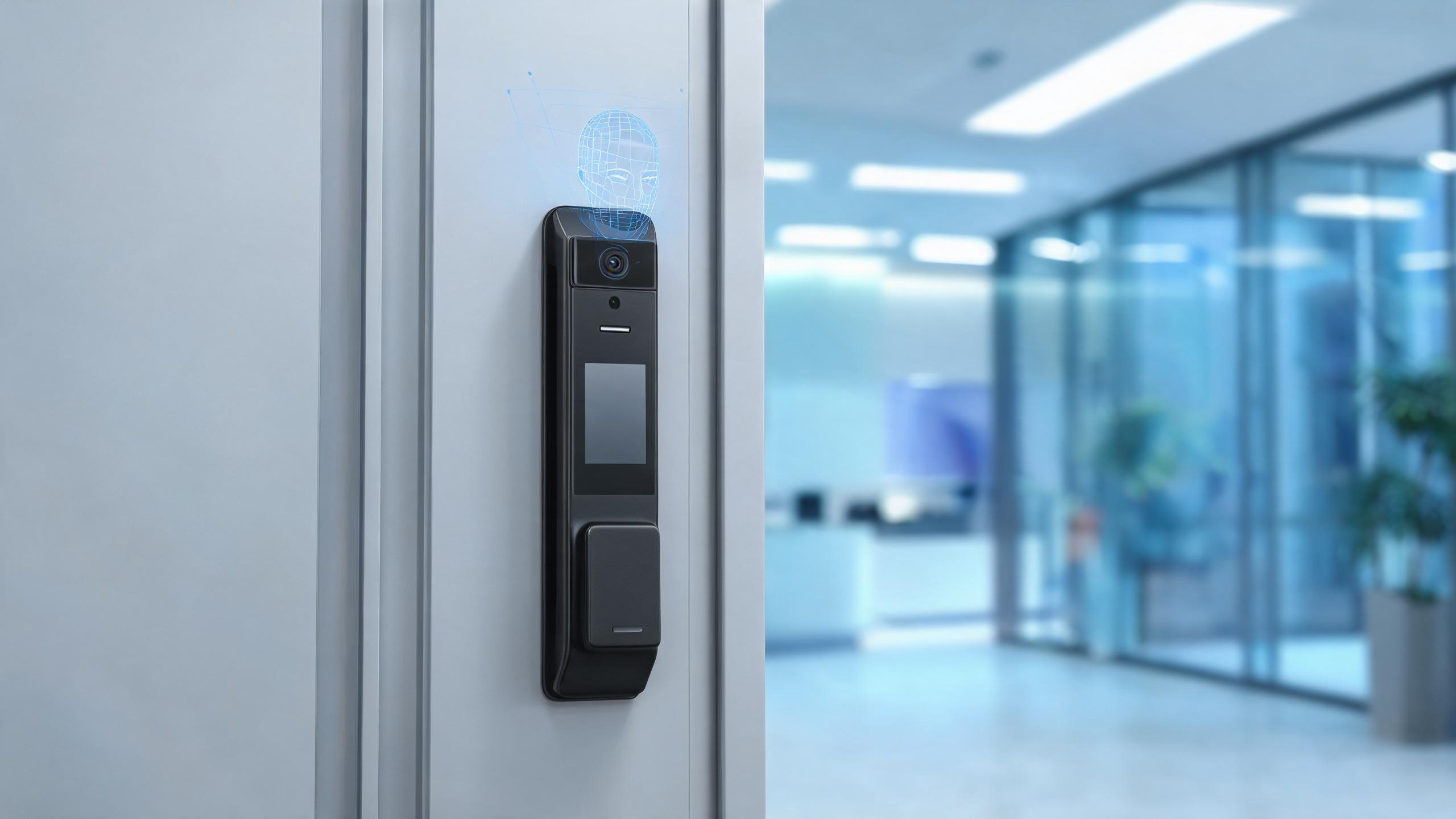
OEM face recognition locks: hands-free entry as a branded line
Facial-recognition door locks built on 3D and optical platforms, with per-SKU capacity and speed figures, multi-credential fallback, mounting-height guidance and a privacy design that keeps biometric templates on the device.
A face lock is a camera system, a biometric matching engine and a door lock in one housing, so OEM programs are specified differently from mechanical lines. The first decision is the sensor platform: 3D structured-light or similar depth-sensing modules versus conventional 2D optical modules, each with its own balance of spoof resistance, lighting tolerance and unit cost; covered SKUs document which platform they use and supply model-specific test material rather than one universal claim. Enrollment, user capacity, recognition speed and wake method are all fixed per SKU, as is behavior with glasses, hats and varying height. Because facial recognition is one credential that can fail in strong backlight or for an unenrolled visitor, every covered face lock carries fallback credentials — fingerprint, card, PIN or app — and privacy is designed in: on covered platforms the facial template is captured, stored and matched on the lock itself, and the factory never receives end-user biometric data. The technology overview compares recognition methods in depth.
OEM face locks at a glance
| Sensor platforms | 3D depth-sensing modules and 2D optical modules across covered SKUs; platform type and model-specific test reports supplied before ordering |
| Performance figures | User capacity, recognition speed and wake time are fixed per SKU and quoted from its spec sheet, never blended across the line |
| Fallback credentials | Fingerprint, RFID card, PIN and app access on covered models so entry never depends on the camera alone |
| Lighting and height | Backlight and low-light behavior differs by module; mounting height and tilt are installed to the guide so enrolled users are recognized without stooping |
| Privacy design | On covered platforms templates are stored and matched on the device, no biometric data flows to the factory, and admin enrollment controls who is registered |
| Power profile | Camera modules draw more than keypad-only locks; battery type, typical life and low-battery behavior are listed per SKU, with emergency power contacts |
| OEM layer | Laser logo, finish, face-window appearance, wake sounds and voice language, packaging and manuals in target languages |
Answer unit
3D depth sensing or 2D optical for the line?
The platform choice drives unit cost, spoof-resistance expectations and the markets the line suits. It is made per SKU from documented test material, not from a marketing claim.
| Dimension | 3D depth-sensing module | 2D optical module |
|---|---|---|
| Principle | Depth map of the face used for matching | Image-based facial matching from the camera |
| Spoof resistance | Higher tolerance to photo and screen attacks; verified per model | Relies on the model's liveness logic; test reports reviewed per SKU |
| Lighting behavior | More stable in backlight and low light on covered models | Performance depends on installed lighting conditions |
| Unit cost | Higher module cost, aimed at premium and office lines | More cost-competitive for mainstream residential lines |
| Typical channels | Offices, premium residential, developer specifications | Retail and mid-range smart-home ranges |
| Confirm with | Model test material, live sample and spec sheet | Model test material and real-lighting sample review |
How a branded face-lock line is released
- Platform selectionThe 3D or 2D SKU is chosen against target market, price band and the model-specific test material, with fallback credentials confirmed.
- Real-condition samplesSamples are enrolled and tested at the intended mounting height in actual entrances, including backlight, night and varied-user trials.
- Privacy and admin designEnrollment authority, admin reset and the on-device template model are documented for the brand's privacy material and operator training.
- Branded productionLogo, finish, voice language, packaging and manuals applied; battery life and low-battery behavior verified end of line per SKU.
Related programs
Adjacent recognition and access pages
OEM face recognition locks: common questions
Is 3D face recognition safer than 2D optical?
3D depth-sensing modules generally offer stronger tolerance to photo and screen spoofing because they match a depth map rather than an image, but the honest comparison is made per model from its test material, not from a category label. Both platforms keep fallback credentials on covered SKUs, and the model-specific reports are supplied before ordering so the claim can be checked against the product actually shipped.
Does face recognition work in the dark or strong sunlight?
Behavior depends on the module and installation: depth-sensing SKUs are typically more stable in backlight and low light, while optical modules are more sensitive to installed lighting. Rather than promise universal performance, samples are enrolled and tested in the actual entrance — night, backlight and varied users included — before the line is confirmed. Mounting height also matters and follows the install guide.
What happens if the camera does not recognize a user?
Entry never depends on the camera alone on covered face locks: fingerprint, RFID card, PIN or app access is available as fallback, and mechanical or emergency-power override follows the SKU design. This matters for deliveries, visiting staff and rare lighting conditions, and the fallback set is confirmed as part of model selection. See the manufacturer guide for per-SKU combinations.
Where is facial data stored, and who can enroll users?
On covered platforms the facial template is captured, stored and matched on the lock itself; nothing biometric flows back to the factory, and cloud behavior is documented per connected SKU. Enrollment requires an administrator credential, and a factory or admin reset removes registered users. Brands receive a written privacy description they can use in their own customer material.
What MOQ and lead time apply to branded face locks?
Face-lock programs carry module-level planning and usually a longer sample-validation stage than keypad lines. Thresholds follow the chosen 3D or 2D SKU and the branding scope; send target quantities, market and credential requirements through the RFQ form and current MOQ and lead time are confirmed in writing per quotation.
Build a face-lock line backed by real test data
Send target market, price band, required fallback credentials and quantities — receive platform options with test material plus written MOQ and lead-time terms.
Request OEM termsOrder validation samplesLast updated: October 31, 2026 · Reviewed by the Smart Lock Factory editorial team