
Applications
Smart locks for stadiums: thousands of doors, one event-day schedule
Zone-based credentials for players, media, concessions, suites and service crews, event-day and dark-day operating modes, contractor windows and fast turnaround workflows.
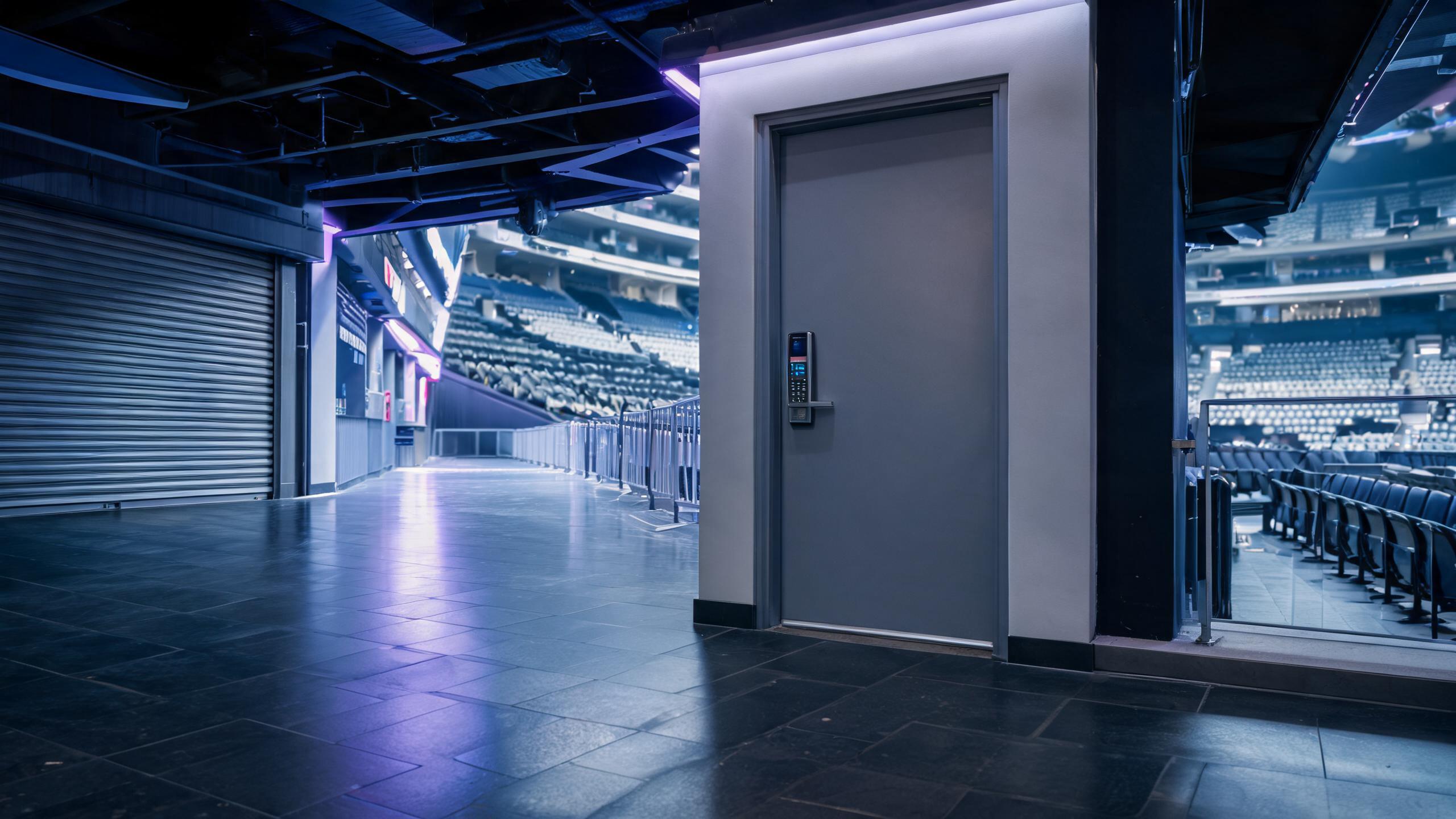
A stadium is a small city that switches between empty and full in hours: dozens of identical concession stands, executive suites, players and officials areas, broadcast compounds, merchandise stores, loading docks and thousands of service doors, worked by casual staff, tenants and contractors who change with every event. Smart access replaces the master-key culture with zone credentials that follow the event schedule — a concessions employee opens only their stand on event days, a broadcaster’s crew receives a compound-and-booth window for the match, cleaners open sections in sequenced post-event zones, and everything outside that window stays in dark-day mode. Suite holders and sponsors can receive dated hospitality credentials without inheriting service access. The parking guide covers the garage and gate layer, the fitness guide covers high-turnover membership venues, and the retail guide covers point-of-sale back rooms.
Stadium access at a glance
| Event-day switching | Credentials activate for event windows and revert to dark-day lockdown automatically, with no key collection round |
| Concession stands | Many identical stands open per tenant for the event, with cash-room and stock doors held to tighter groups |
| Players and officials | Team, official and medical areas carry narrow credentials distinct from media and hospitality routes |
| Media compound | Broadcasters and photographers receive dated compound-and-position windows tied to the event |
| Suites and sponsors | Suite holders get dated hospitality credentials that never inherit back-of-house or service access |
| Post-event cleaning | Cleaning zones unlock in sequenced sections after spectators leave, with contractor windows recorded |
| BOM shape | Stand and suite controls, zone locks, event credential workflow, contractor scope and venue spares |
Answer unit
Master keys for each department, or event-scoped zone credentials across the venue?
Venues standardize on event-scoped credentials because the workforce and tenant list changes with every single event.
| Dimension | Department master keys | Event-scoped zone credentials |
|---|---|---|
| Casual staff | Keys cut and reclaimed each event | Credentials valid for the stand and event window only |
| Broadcasters | Escorted or compound keys shared | Dated compound-and-booth windows per event |
| Suites | Suite keys copied over years | Dated hospitality credentials expiring after the event |
| Cleaning | Whole-bowl access overnight | Sequenced post-event zones opened section by section |
| Dark days | Venue depends on manual lockdown | Non-event state enforced automatically by schedule |
| Typical fit | Small single-stand venues | Stadiums, arenas, multipurpose venues and exhibition halls |
Door types and lock-body match
Identical concession stands dominate the door count; players, media, docks and suites define the sensitive zones.
| Opening | Typical door | Lock approach |
|---|---|---|
| Concession stand | Identical kiosk with serving hatch and rear door | Tenant credentials for the event, cash-room logic held separately |
| Players / officials entrance | Secured team-arrival doors | Narrow matchday credentials separated from public and media flow |
| Broadcast compound | Compound gate and booth doors | Dated crew windows tied to broadcast positions and the event |
| Executive suites | Hospitality suite doors on premium levels | Dated suite-holder credentials with no service-route inheritance |
| Loading / service dock | Large receiving doors and marshaling | Tenant and contractor delivery windows scheduled around event build |
| Merchandise / retail | Storefront with back stockroom | Retail-style front and stockroom credentials separate per operator |
Example BOM shape for a multipurpose arena
This example illustrates a typical configuration, not a specific customer project. Stand count, suite model and event mix drive the list.
| Component | Typical logic | Notes |
|---|---|---|
| Stand and store controls | Concession and merchandise door sets by operator | Identical specification repeated across the concourse |
| Sensitive-zone hardware | Players, officials, medical and media doors | Zone policy authored with security before event calendar setup |
| Event workflow | Credential templates per event type and role | Casual onboarding and withdrawal run within event timelines |
| Contractor scope | Build, breakdown and cleaning windows | Sequenced zones with recorded after-hours activity |
| Venue spares | Stand locks and zone readers in venue stock | Fast swaps protect the short event preparation window |
How a stadium access program rolls out
- Venue surveyStand inventory, sensitive zones, suite contracts, operator list and event types are documented before specification.
- Pilot eventOne full event cycle runs stand opening, media arrival, suites, post-event cleaning and dark-day lockdown.
- Venue rolloutControls install by stand and zone during the off-event schedule with identical hardware across kiosks.
- Operator adoptionConcessionaires, media hosts and cleaning leads rehearse event-day issuing from role templates.
- Assurance handoverEvent runbooks, lockdown checklists, spare custody and incident review reports are documented.
Related applications
Related high-turnover venue pages
Smart locks for stadiums: common questions
How do casual event-day staff receive access without key queues?
Each concessionaire or department invites its event roster against role templates: a stand attendant receives the stand door and stock area for that event window only, a kiosk supervisor additionally holds the cash-room group, and credentials activate at door-open and expire at post-event close — no pre-event key collection and no chase afterward. When someone drops a shift, the credential is withdrawn or reassigned without touching hardware. The process is designed around the reality that hundreds of casuals may onboard in a day, so issuing is bulk and fast while the zone boundaries behind it stay strict. On dark days none of those credentials work, which closes the standing gap created by keys copied for one final concert series.
How are players, officials and broadcast crews separated from the public?
Matchday zones are credentialed as separate domains: team arrival and changing rooms hold the narrowest groups, officials follow their own route, medical and doping-control rooms sit outside normal staff access, and broadcast compounds issue dated crew windows bound to compound gate, booth and camera positions. Hospitality and public flow never inherit these routes, which protects broadcast rights and competition integrity. The zone map is authored with security and the event organizers before the calendar is configured, and away teams or visiting broadcasters receive credentials that die at the final whistle rather than lingering for the next event.
What about executive suites and sponsor hospitality?
Suite holders and sponsors receive dated credentials for their suite and the hospitality amenities on event day, convenient enough to replace the perennial problem of copied suite keys, while service corridors, kitchens and loading docks stay outside their scope. Tenants who operate premium lounges run as a separate operator group with their own staff credentials. Credentials can follow a season package or be issued per event, and visiting sponsor guests receive single-event passes. The separation matters because premium areas sit close to back-of-house in most venues, and hospitality convenience should not quietly become a service-route key.
How does post-event cleaning and breakdown stay controlled?
After spectator exit, cleaning opens in sequenced zones — lower bowl, premium levels, upper stands — so crews work supervised sections rather than roaming an unlocked bowl, while stagehands and rigging crews hold dated build-and-breakdown windows on the dock and rigging routes. Every zone opening is recorded for the post-event review, which also narrows investigation of lost or damaged property. Contractors for the next conversion (ice to court, sport to concert) receive credentials bounded to that conversion window. The dark-day state then reasserts automatically, so morning staff do not discover doors left open overnight by a crew that finished at 3 a.m.
How is a stadium BOM and MOQ scoped?
The BOM counts the repeated concession and merchandise doors (which drive volume), sensitive-zone hardware, suite controls, event workflow and venue-held spares, with MOQ and lead time confirmed in writing per quotation. Venues usually pilot one full event before venue-wide commitment, because the event-day operating model — not the hardware — is what needs proving. Send the stand inventory, suite count, operator and tenant list, event-type calendar and contractor model, and the quote is structured by zone and door type so procurement sees the repeating volume separately from the sensitive-zone specification.
Run a full house without handing out a full key ring
Send the stand inventory, suite count and event-type calendar — receive a zone-structured BOM with workflow scope and written MOQ and lead-time terms.
Discuss your project (RFQ)Project configurationsLast updated: October 31, 2026 · Reviewed by the Smart Lock Factory editorial team