
Solutions
Hotel energy saving: rooms use energy when they are actually occupied, not around the clock
Occupancy-aware lighting, air-conditioning and power linked to reservation and room status, guest comfort settings, staff servicing rules and retrofit-ready scope.
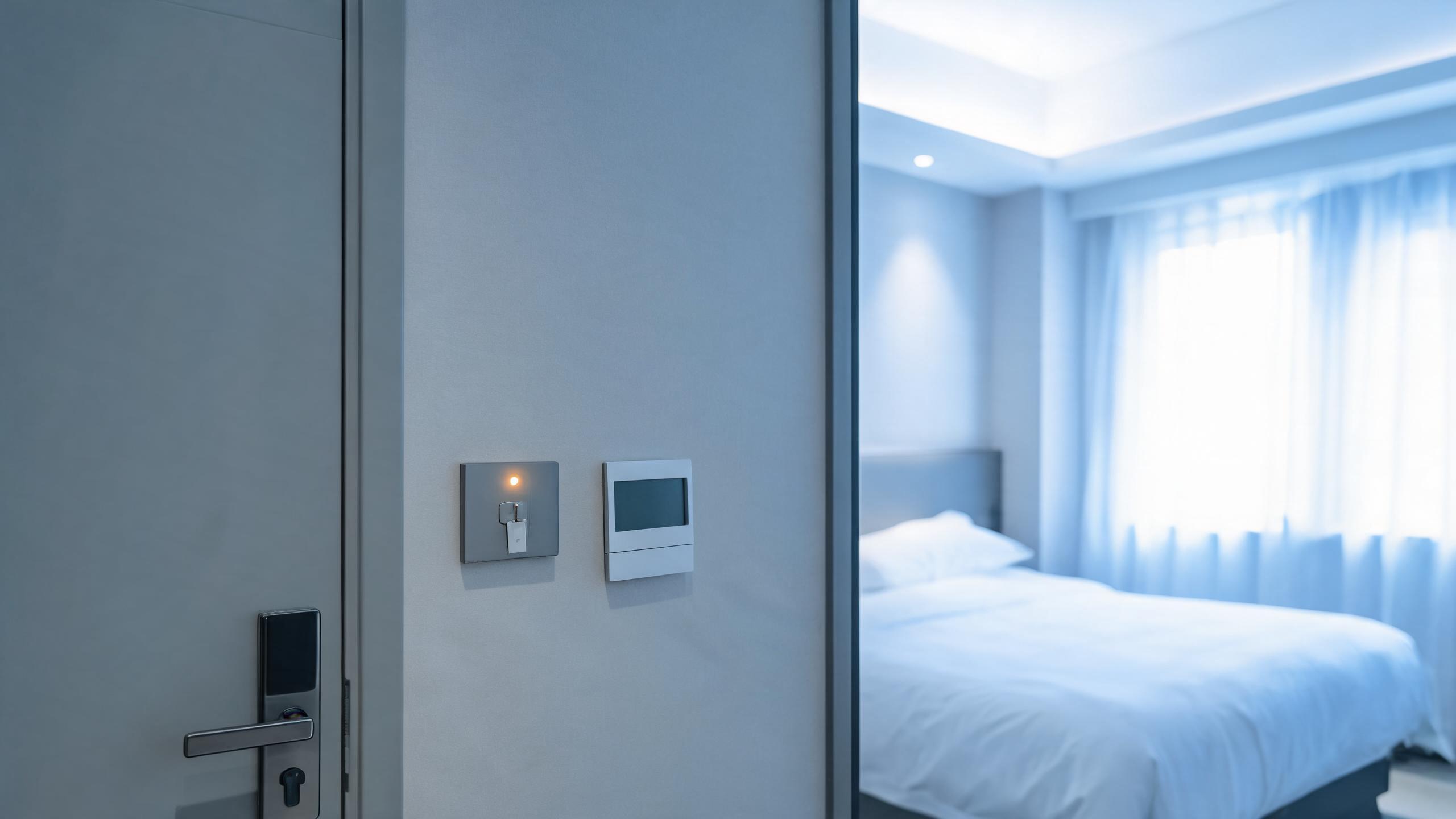
Empty and between-stay guest rooms are a hotel’s largest avoidable energy load, with air-conditioning left running after checkout, lights left on when guests leave for the day, and sold rooms heated or cooled hours before arrival. Hotel energy management uses room status — occupied, due-in, servicing, due-out, vacant — to set lighting and climate to sensible states, coordinated with the reservation system and the door lock rather than relying on guests to switch everything off. Comfort for an arriving or sleeping guest is protected: setback is gentle, overrides are obvious, and the guest never returns to an extreme room. Because savings depend on the installed room-control and reservation systems, the integration and the expected behaviour are scoped in writing against the actual equipment. The hotel access solution covers the door layer, the resort solution covers dispersed rooms, and the serviced apartments guide covers long-stay variants.
Hotel energy management at a glance
| Room status | Lighting and climate follow reservation and occupancy state rather than running continuously |
| Guest comfort | Setback keeps rooms within a comfortable band and pre-conditions before expected arrival |
| Servicing windows | Housekeeping runs a power and climate state for the cleaning window, then returns the room to standby |
| Door coordination | Lock and room-control status are coordinated so a checked-out room does not stay fully active |
| Staff overrides | Engineering and front office hold deliberate overrides for VIP, medical and maintenance needs |
| Integration scope | Behaviour is verified against the actual PMS and room-control system and agreed in writing |
| BOM shape | Room controllers and sensors, integration scope, retrofit labor and a per-floor rollout plan |
Answer unit
Standalone room thermostats, or status-linked building-wide room control?
Branded and multi-floor hotels pursue status-linked control; small guesthouses often start with well-set standalone thermostats and staff habits.
| Dimension | Standalone thermostats and cards | Status-linked room control |
|---|---|---|
| Vacant rooms | Conditioned until noticed by staff | Set back automatically against reservation state |
| Guest leaving | Energy use continues all day | Unoccupied setback triggered by room status |
| Arrival | Room may be hot or cold | Pre-conditioned to a comfortable band before check-in |
| Checkout | Staff must visit to switch off | Room returns to standby on the due-out event |
| Measurement | Savings estimated informally | Room states and overrides visible for review |
| Typical fit | Small owner-run properties | Branded hotels with PMS and room controls |
Door types and lock-body match
The guest-room climate and lighting circuit carry the savings; door and reservation status provide the occupancy truth the room needs.
| Opening | Typical door | Lock approach |
|---|---|---|
| Guest room | Climate, lighting and master power in the room | Status-linked setback with comfort band and guest override |
| Entry / door | Smart lock and door status | Coordinates occupied and checkout state with room control |
| Floor corridor | Corridor lighting and climate | Can follow floor vacancy and housekeeping activity where fitted |
| Housekeeping closet | Servicing control point | Runs the cleaning power state, then returns the floor to standby |
| Front office | PMS and reception console | Room-state visibility with deliberate staff overrides |
| Plant interface | Chiller or boiler interface where offered | Coordination scoped against the actual building systems |
Example BOM shape for a hotel retrofit
This example illustrates a typical configuration, not a specific customer project. Room count, existing controls and wiring drive the list.
| Component | Typical logic | Notes |
|---|---|---|
| Room controls | Thermostats, sensors and master-power scope | Retrofit-friendly options matched to existing wiring |
| Integration scope | PMS and room-control interface points | Status mapping and fallback agreed in writing |
| Comfort policy | Setback bands, pre-arrival and override rules | Defined with operations before commissioning |
| Staff workflow | Housekeeping and front-office states | Servicing windows and deliberate exception handling |
| Rollout plan | Per-floor installation with minimal room downtime | Pilot floor validated before property-wide rollout |
How an energy program rolls out
- Room and system auditExisting thermostats, wiring, PMS fields and plant interfaces are surveyed room by room.
- Pilot floorOne floor runs vacant setback, arrival pre-conditioning, checkout and servicing states across real stays.
- Comfort validationGuest comfort and complaint review confirm the setback band before wider rollout.
- Property rolloutFloors retrofit around sale availability with front-office and housekeeping training.
- Assurance handoverStatus mapping, override policy, maintenance and expected-behaviour notes are documented.
Related solutions
Related hospitality pages
Hotel energy management: common questions
How does the room know when to save energy?
Room control follows the reservation and occupancy state maintained across the PMS, door lock and room sensors: a due-in room pre-conditions to a comfortable band before arrival, an occupied room holds guest comfort and applies setback when the guest is away, a due-out room returns to standby after checkout, and a servicing room runs a defined cleaning state while housekeeping is present. This replaces the two biggest wastes — vacant rooms conditioned all day and checked-out rooms left fully active. The exact state mapping is decided with operations before commissioning, including how long after departure a room waits before setback, so front-office flexibility for late checkouts is preserved.
Will energy saving make guests uncomfortable?
Comfort is designed first: setback keeps the room within a defined band rather than switching climate off, arrival pre-conditioning means the guest walks into a comfortable room, and any guest override is immediate and never punished, so the system saves energy on genuinely unoccupied time instead of restricting an occupied guest. Operators review complaints and can widen bands by season or room type; VIP and medical-needs rooms can be exempted deliberately. The pilot floor runs across a mix of occupancy and weather, and the comfort band is adjusted from real feedback before property-wide rollout, because a program that generates front-desk complaints gets switched off and saves nothing.
Does it work with the smart locks and systems we already have?
Integration feasibility depends on the specific PMS, its room-status fields, the installed thermostats or room controllers and their wiring, so the interface points and fallback are surveyed and agreed in writing rather than assumed from marketing compatibility. The smart lock contributes occupancy and checkout state where the two systems can exchange it; in lighter retrofits, room sensors and a managed thermostat deliver most savings without a deep lock link. Where a plant or BMS interface is offered it is scoped separately. Older properties often choose a retrofit-friendly room-control range and accept a documented manual fallback for statuses the PMS cannot emit.
How does housekeeping fit into the energy workflow?
When housekeeping opens a due-out or vacant room, the room enters a servicing state that provides adequate light and ventilation or climate for the cleaning window, and once the room is released as clean and inspected it returns to standby rather than staying fully powered until the next sale. This removes the common pattern where cleaning staff turn everything on for comfort and rooms run for the rest of the day. Front office can see room state alongside PMS status, and maintenance overrides climate for repairs with a reason that expires. Housekeeping is trained during the pilot so the workflow supports them rather than adding steps they simply bypass.
How is an energy-management BOM and MOQ scoped?
The BOM inventories per-room thermostats, sensors and master-power scope, the PMS and room-control integration, any plant interface, retrofit labor and a per-floor rollout plan, with MOQ and lead time confirmed in writing per quotation. Hotels pilot one floor across vacant, occupied, checkout and servicing states and a comfort review before scaling. Send the room count, thermostat and controller models, wiring notes and PMS details, and the quote maps each line to retrofit scope and integration rather than generic device pricing.
Cut empty-room energy without a single comfort complaint
Send the room count, controller models and PMS details — receive a retrofit-scoped BOM with written MOQ and lead-time terms.
Discuss your project (RFQ)Project configurationsLast updated: October 31, 2026 · Reviewed by the Smart Lock Factory editorial team