
Applications
Smart locks for villas and vacation homes: one property, many door classes
Guest codes for the booked window, windows for housekeeping and pool vendors, weather-rated outdoor doors and remote management across properties you rarely visit.
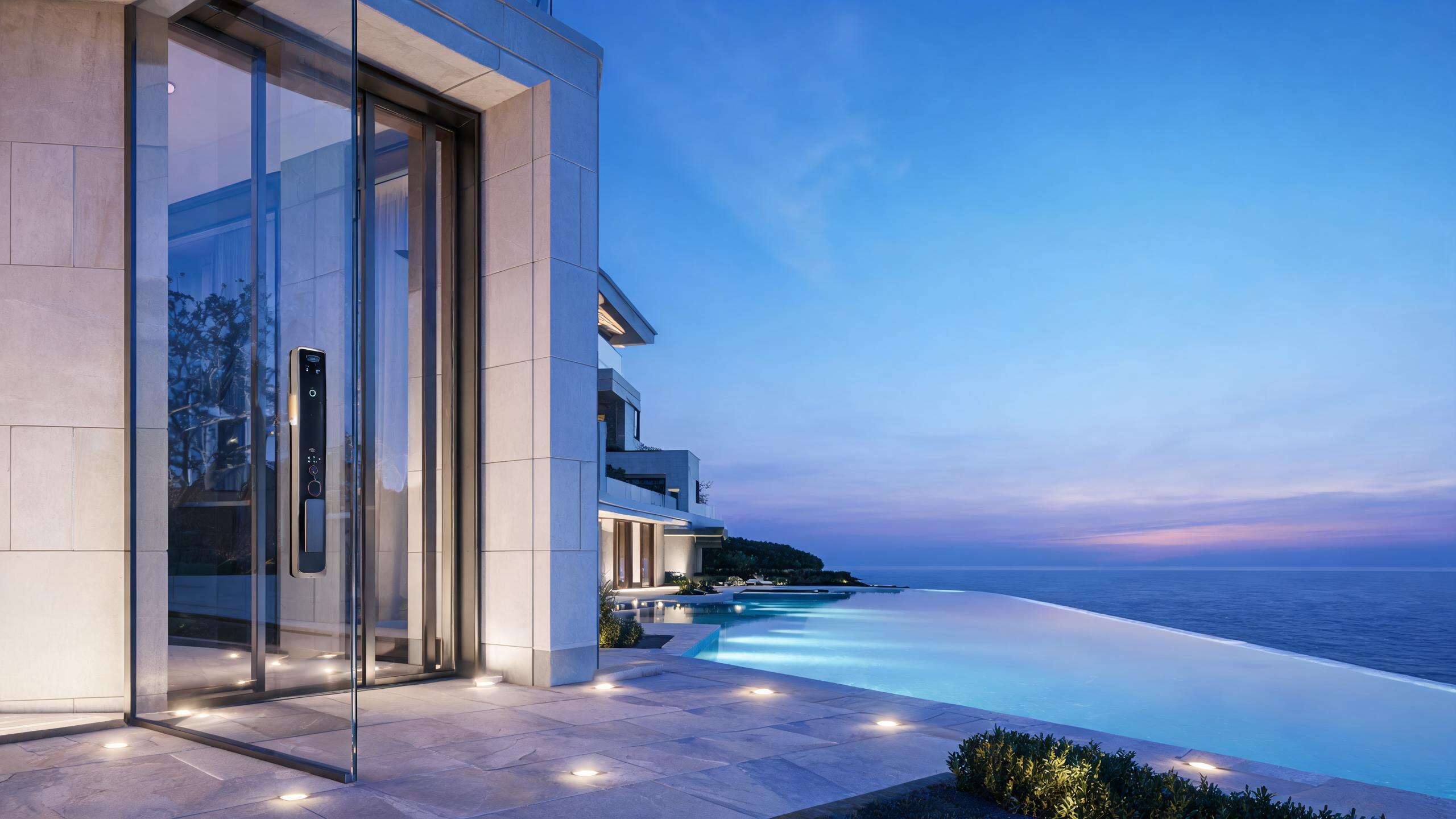
A villa is not a single front door: it is an entrance, guest-wing doors, pool and beach gates, storage rooms, wine or utility areas and sometimes a separate staff building, spread across a property the owner may visit a few weeks a year. Smart access is specified per opening — a refined smart lock for the main entrance, weather-rated hardware for exposed gates, simpler locks for storage — all issuing credentials against the booking calendar so a guest code is born at check-in and dies at check-out. Housekeeping, gardeners and pool contractors receive scheduled windows instead of permanent keys, which is the single largest security improvement on a remote-owned home. Gateways are planned around coverage across large floors and outbuildings. The vacation rental guide covers the rental workflow, the outdoor gate guide covers exposed openings, and bed and breakfasts represent the small-host end of the same market.
Villa access at a glance
| Door classes | Main entrance, guest-wing doors, pool and garden gates, garage, storage and utility rooms, plus a separate staff building where present |
| Guest access | One dated code or wallet credential for the booking window, automatically expiring at check-out with no owner visit required |
| Vendor windows | Housekeeping, pool and garden vendors receive time-limited scheduled credentials rather than permanent copies of a key |
| Outdoor doors | Only hardware whose per-SKU IP and temperature ratings fit the exposure is used on gates and beach-facing openings |
| Remote management | Gateways placed per coverage area let an absent owner issue, revoke and audit access from another country |
| Power reality | Large properties plan gateway power and lock battery logistics, including doors used only seasonally |
| BOM shape | Indoor and outdoor locks by opening, gateways by coverage zone, a few guest fobs where wanted, and a maintenance spare pool |
Answer unit
Codes only, or codes plus RFID fobs?
Villas often add fobs for children, elderly guests and staff who should not rely on a phone or a memorized code. The two coexist on one platform.
| Dimension | Booking-window codes only | Codes plus RFID fobs / cards |
|---|---|---|
| Guest entry | Code texted before arrival; nothing to collect | Code plus a welcome-pack fob for guests who prefer it |
| Family use | Children and older guests memorize a short code | A fob is simpler for children, seniors and bags-in-hand arrivals |
| Staff and vendors | Scheduled codes for cleaning and maintenance | Fobs for full-time staff, scheduled codes for visiting vendors |
| Loss model | Nothing physical to lose | Fobs are revoked individually and replaced from a small stock |
| Hardware | Keypad locks across the property | Dual-credential reader locks plus a small fob inventory |
| Typical fit | Compact villas, remote self check-in | Large estates, multi-generational rentals, staffed villas |
Door types and lock-body match
Exposure drives villa fitment more than any other factor: salt air, rain and pool humidity narrow the outdoor hardware list sharply.
| Opening | Typical door | Lock approach |
|---|---|---|
| Main entrance | Premium timber, metal or large glass door | Flagship connected smart lock with code and optional fob, matched to door thickness |
| Guest wing / suite door | Timber or glazed interior door | Smart lever on the same booking window, sometimes zoned for multi-family rentals |
| Pool / beach gate | Metal or hardwood exterior gate | Only a lock with the per-SKU IP rating for the exposure — see the outdoor platform guide |
| Garage / utility | Metal service door | Staff-vendor credential; offline or connected by how often access changes |
| Storage / wine room | Timber interior door | Owner-and-manager credential, with audit on connected models |
| Staff building | Timber residential door | Separate staff hierarchy, never shared with the guest booking group |
Example BOM shape for a multi-building vacation villa
This example illustrates a typical configuration, not a specific customer project. The outdoor/indoor split and coverage survey decide the final numbers.
| Component | Typical logic | Notes |
|---|---|---|
| Indoor smart locks | Main and suite doors by the guest-flow plan | Code or dual-credential model per the fob decision |
| Outdoor-rated locks | Pool, garden and service gates with real exposure | Specified from per-SKU IP and temperature ratings |
| Gateways | One per coverage zone across wings and outbuildings | Position verified in a connectivity survey over the grounds |
| Fob and code kit | A few welcome fobs, vendor code list and spare stock | Sized for the largest rental party plus staff turnover |
| Seasonal spares | Batteries and spare locks for a property run remotely | Protects re-booking while an owner is off site |
How a villa program rolls out
- Grounds surveyEvery door and gate is logged with material, exposure and distance from Wi-Fi, including outbuildings and staff areas.
- Coverage planningGateway positions are planned zone by zone and outdoor hardware is shortlisted against actual ratings rather than appearance.
- SamplingThe main door and one exposed gate receive samples to confirm fit, finish and weather behavior before the estate-wide order.
- Credential setupBooking windows, recurring staff schedules and vendor windows are built, and the local manager is trained on issue and revoke.
- Seasonal handoverBattery service cycles, spare locations and audit review are documented for an owner operating the property remotely.
Related applications
Related rental and outdoor pages
Smart locks for villas and vacation homes: common questions
Which villa doors actually need weatherproof smart locks?
Only openings exposed to rain, salt air or wash-down need outdoor-rated hardware: pool gates, beach-side gates, garden gates and some garage doors. Indoor-rated locks placed outdoors fail early and void the practical value of the system, so the survey separates exposed openings from sheltered ones and names a per-SKU IP and temperature rating for each. Main entrances under a porte-cochère often run standard smart locks; gates facing the sea do not. Honest separation keeps the BOM focused on the handful of doors that genuinely require premium outdoor hardware.
How does cleaning and pool maintenance get in?
Each vendor receives a scheduled credential tied to their actual window — the cleaner between check-out and the next arrival, the pool company on its service day — instead of a permanent key. The owner or manager sees entry records on connected doors and can open a one-off window for a repair visit. When a vendor relationship ends, one credential is revoked rather than changing locks or hunting copies. On large estates the staff building holds its own hierarchy so domestic staff never share the guest booking group.
Can I manage a villa I only visit once a year?
Yes, which is the main reason remote owners specify gateways: codes are issued and revoked against the booking calendar, lockouts are resolved remotely, low-battery warnings arrive before guests notice, and the local manager holds a defined credential rather than master keys. Gateways are placed per coverage zone across wings and outbuildings after a connectivity survey, and a small local spare kit handles hardware swaps between visits. Offline locks are deliberately reserved for doors the local team reaches routinely.
Do guests need to download an app?
No. Booking-window PIN codes carry the entire stay without any app, and RFID fobs are added where owners want a welcome-pack option for children, seniors or guests arriving hands-full. Apps and e-keys remain available for owners and staff who prefer them, but the guest experience is designed to work from a texted code alone, because every rental audience includes people who will not install another application at the door.
How is a villa BOM and MOQ scoped?
The BOM lists indoor locks, genuinely outdoor-rated locks, gateways by coverage zone, fobs and the spare pool separately, because quoting a villa as one lock model hides the outdoor cost and the coverage work. Send the door and gate list, exposure notes, grounds distance and the booking model, and current MOQ, pricing logic and lead time are confirmed in writing per quotation, with phased shipping possible for estates being completed building by building.
Run the keys to a villa from anywhere in the world
Send the door and gate list, exposure notes and grounds layout — receive a whole-property BOM with outdoor hardware, gateway zones and written lead-time terms.
Discuss your project (RFQ)Project configurationsLast updated: October 31, 2026 · Reviewed by the Smart Lock Factory editorial team