
Door types
Smart locks for sliding barn doors: privacy and control on a surface track
Interior barn doors slide rather than swing and rarely need entrance-grade deadbolts; smart options focus on privacy, room access and child or staff control.
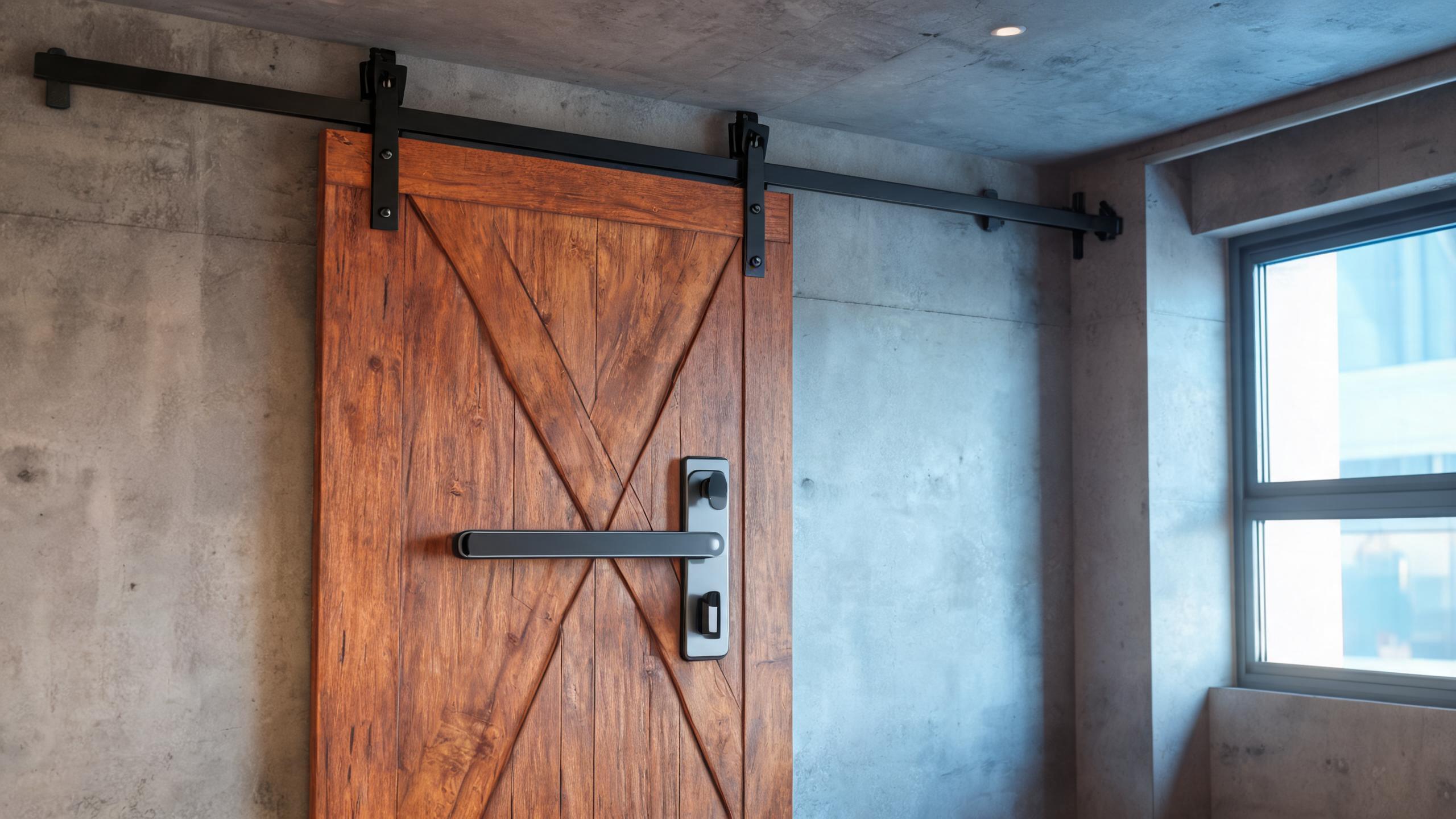
Barn doors slide on exposed surface hardware, so traditional deadbolts cannot engage a jamb and the door never seals like a swing door. Smart locking for interior barn doors therefore uses surface hook or latch systems that pin the panel to the wall track or strike, privacy locks for bathrooms and offices, and credential-controlled versions for rooms that genuinely need access management, such as hospitality feature rooms or staff-only storage. Exterior “barn-style” sliding doors on outbuildings are a different problem — weather, gap security and heavy-duty hasps dominate. This guide separates the two and sets realistic expectations for what barn door locks can and cannot do.
Barn door fit at a glance
| Door motion | Surface-track sliding means latching is into the wall or a floor stop, never a jamb deadbolt. |
| Gap reality | Barn doors hang with deliberate clearance, so they are not high-security or acoustically sealed openings. |
| Interior latches | Hook-and-pin, teardrop latches and privacy hooks hold the panel closed at the track or wall. |
| Smart privacy | Electronic surface latches add code/card release for rooms needing controlled entry. |
| Floor guides | Guides stop the panel swinging off the wall and are essential for reliable latch seating. |
| Exterior difference | Outbuilding barn doors use heavy hasps, weatherproof sliding locks and often separate padlocks. |
| Use fit | Barn doors suit rooms with swinging-door alternatives for egress and accessible routes. |
Answer unit
Which barn door needs electronics?
Most residential barn doors use mechanical privacy hardware; electronics appear where the room behind the sliding panel is actually managed space.
| Room type | Typical latch | Smart logic |
|---|---|---|
| Bedroom / bath | Privacy hook or teardrop latch | Usually mechanical; emergency release required |
| Home office | Surface hook latch | Smart latch if records or equipment stored |
| Hotel feature room | Electronic surface latch | Guest credential plus staff override |
| Staff storage | Smart hook on wall strike | Code/card with audit, staff-only access |
| Retail stockroom | Track barn door as feature entry | Smart latch plus secondary monitored gate |
| Exterior outbuilding | Heavy sliding hasp | Weatherproof smart padlock on fixed hasp |
Door types and lock-body match
Track quality and floor guides determine whether any latch engages; a panel that rocks on cheap track defeats every lock option.
| Opening | Typical door | Lock approach |
|---|---|---|
| Interior wood barn door | Standard surface track panel | Mechanical privacy or smart surface latch |
| Glass barn panel | Framed glass slider on barn track | Clamp latch, light duty |
| Double barn doors | Two overlapping panels | Central meeting latch with floor guides |
| Hotel sliding feature door | Interior decorative slider at suite room | Electronic latch integrated to guest credential |
| Office meeting nook | Acoustic-rated barn door | Latching surface lock; verify gap sealing first |
| Exterior barn / shed | Heavy exterior slider | Fixed hasp with weatherproof smart padlock |
Example BOM shape for barn door hardware
This example illustrates a typical configuration, not a specific customer project. Track and panel weight drive hardware.
| Component | Typical logic | Notes |
|---|---|---|
| Surface smart latches | Electronic hook/latch units at wall or track | Staff override for hospitality use |
| Mechanical privacy sets | Hooks and teardrop latches with emergency release | Standard for bathrooms |
| Track and guides | Heavy track and floor guides preventing panel swing | Prerequisite for reliable latching |
| Exterior hasps | Fixed hasps for smart padlocks on outbuildings | Weatherproof materials only |
| Bumpers and stops | Limit travel so the latch meets its strike | Included in every kit scope |
How a barn door locking project is handled
- Set expectationsConfirm the door is interior feature hardware, not a security perimeter.
- Check track and guidesVerify panel weight rating, floor guides and zero rock at closed position.
- Choose latch typeSelect mechanical privacy or electronic surface latch by room function.
- Fit the strikeMount wall or track strike at the correct closed position with bumpers set.
- Test operationConfirm release from inside, emergency access and panel travel stop.
Related door types
Related sliding and storage guides
Barn doors: common questions
Can a barn door lock like a normal door?
Not with a jamb deadbolt, because a barn door slides on a face-mounted track and closes against the wall with an intentional gap rather than inside a frame. Barn doors are held closed with surface hardware: hook-and-pin latches that catch a strike on the wall or track, teardrop privacy latches, or electronic surface latches for managed rooms. They are interior feature doors by design and should not be treated as security or acoustic boundaries; bedrooms and bathrooms using them retain emergency release and usually an alternative corridor route. Buyers wanting real perimeter security choose a framed swing or sliding door rather than upgrading the barn hardware.
Are electronic smart locks available for interior barn doors?
Yes, in the form of motorized surface hook or deadbolt-style latches mounted at the meeting edge or near the track, released by keypad, card or mobile credential and operated manually from the room side. They suit spaces where the sliding panel is the room boundary for managed functions — hotel feature suites, staff storage, clinics with sliding timber doors or offices holding equipment. The latch needs a solid strike area and a panel that stops exactly at closed position, so track stops and floor guides are part of the same installation. Acoustic privacy still depends on the gap seals, not the lock; an electronic latch does not turn a barn door into a sealed door.
How do you lock a bathroom barn door from inside?
The standard solution is a mechanical privacy hook or teardrop latch that the occupant engages from inside, paired with an emergency release slot accessible from the corridor — the same safety logic as a bathroom push-button. Because barn doors have a gap, the latch also benefits from a floor guide that steadies the panel so the hook cannot be jiggled free. Electronic locking is unusual for ordinary residential bathrooms but appears in accessible or commercial washrooms where occupancy indicators and timed release are integrated. Local accessibility rules may require the bathroom to have a proper outward route, which is a design decision made before the barn door is chosen rather than at lock purchase.
What locks work on an exterior barn or shed sliding door?
Exterior sliding barn doors are secured by fixed hasps and staples bolted through the door and frame structure, typically with a heavy weatherproof padlock — including smart padlocks with shackle credentials where access logging is wanted. The interior surface-latch family is not weatherproof and its screws are too light for exterior attack. Mounting uses large backing plates on both faces, corrosion-resistant fasteners and a ground guide that keeps the door in its track. Where an outbuilding stores valuable equipment, layered security (door hasp plus an inner cage or monitored gate) is more realistic than expecting one padlock to perform like an entrance lock. Exposure and salt air should be declared in the RFQ.
Does a barn door work as the only door to a bedroom or office?
Building codes and practicality usually expect a real door for rooms that require privacy, fire separation or accessibility. A barn panel can be the visual primary door in open-plan interiors, but bedrooms, bathrooms and lockable offices often need an alternative closable opening for egress width, smoke control and acoustic privacy, and barn doors rarely meet those requirements on their own. In commercial fit-outs the fire strategy must accept the track and panel; many barn-style office doors sit in front of a conventional framed leaf rather than replacing it. This is settled in the design stage; the smart latch choice is secondary to confirming the room is allowed to use this door type at all.
Choose the right latch for a barn door
Share the panel weight, track type and room function — receive a surface-latch or hasp recommendation with sample terms.
Discuss your project (RFQ)Project configurationsLast updated: October 31, 2026 · Reviewed by the Smart Lock Factory editorial team