
Project configurations
A typical 500-key resort access design across blocks and villas
A resort of five hundred keys is a distributed campus, so radio coverage planning, outdoor hardware and amenity-zone scheduling drive the configuration.
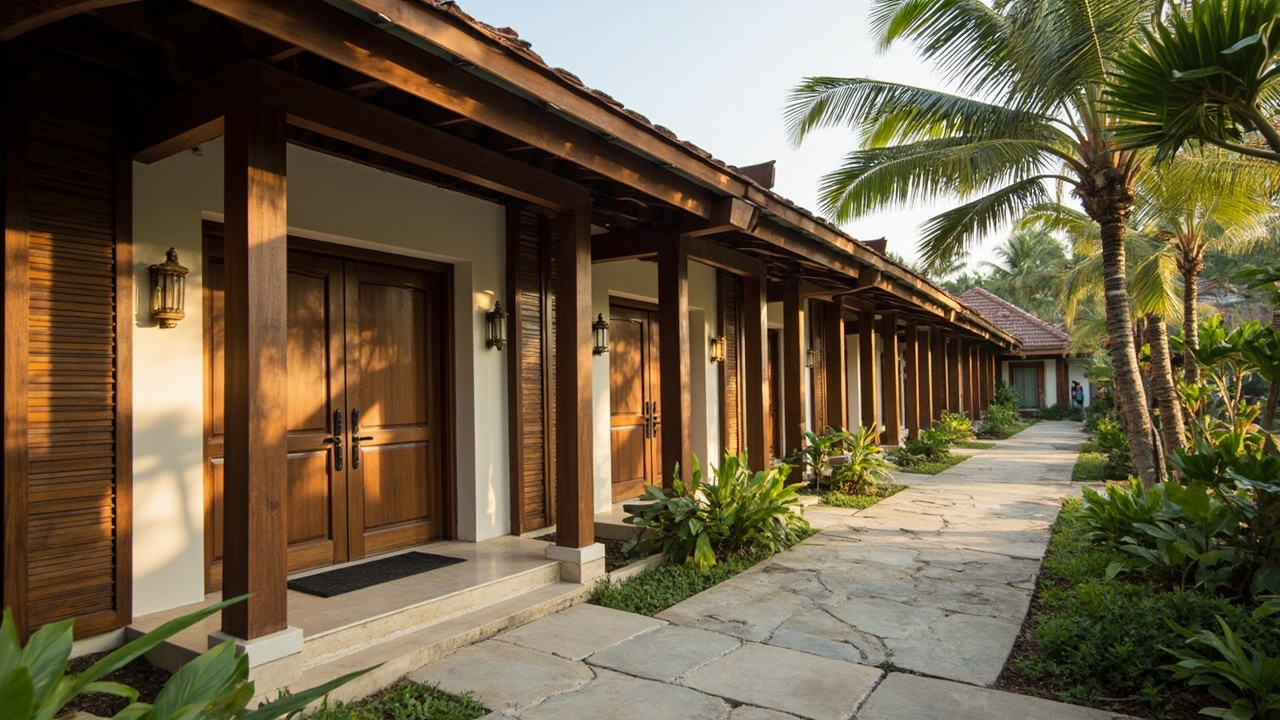
This page outlines a representative typical configuration for a resort of about 500 keys spread between multi-story blocks, low-rise wings and villas. Unlike a compact city hotel, the defining challenge is geography: guest buildings may be separated by pools, gardens and beachfront, so the online layer depends on a careful radio and network survey with gateways per block and a defined fallback where coverage is weak. Guest rooms and villas use card locks suited to their door construction, with weather-protected exterior escutcheons where entrances face salt air and rain; mobile keys or dated PINs help remote villas and late arrivals. Access extends well beyond sleeping rooms into spa, gym, kids’ club, beach clubs, F&B outlets, staff dormitories, marina or golf facilities and perimeter gates, all on zoned schedules under the PMS. Energy management, lift control and locker systems may share the credential. The figures here are planning estimates; exact quantities and specifications are confirmed per project quotation after site surveys and brand review.
Key facts: 500-key resort configuration
| Site profile | Planning estimate of a large resort with about 500 keys across hotel blocks, wings and detached villas, plus extensive amenities and outdoor areas. |
| Openings in scope | Estimate around 500 sleeping-room locks plus amenity, F&B, staff, storage, perimeter and locker openings; counts follow a site-wide survey. |
| Credential architecture | MIFARE cards with mobile-key and dated-PIN support for villas; amenity bands and staff roles encoded on the same credential where the brand allows. |
| Software/integration | Multi-station PMS-linked platform with zone management, amenity scheduling and centralized staff revocation across the entire property. |
| Network/power | Per-block gateways after radio surveys, weather-protected exterior locks, battery reporting by zone and documented offline fallback for remote villas. |
| Compliance evidence | Fire-rated hardware where applicable, verified IP rating for exposed assemblies, and certificates and test reports for named SKUs provided per RFQ. |
| Commercial terms | Current MOQ policy, sample terms and lead time are confirmed in writing per quotation; warranty terms are confirmed in writing per quotation. |
Answer unit
How access is configured at this scale
At 500 keys across a campus, the project succeeds or fails on coverage planning and zone operations rather than lock selection alone. The design standardizes lock generations by building type, accepts offline fallback deliberately, and puts amenities and perimeter gates under zoned online control.
| Opening group | Configuration choice | Why at this scale |
|---|---|---|
| Hotel-block guest rooms | Online or hub-connected card locks per block | Dense blocks suit gateway coverage and give housekeeping live status at scale. |
| Detached villas and suites | Weather-protected card locks with mobile or PIN option | Distributed units make cabling impractical; offline fallback protects remote arrivals. |
| Spa, gym and clubs | Online readers with scheduled bands and membership rules | Amenity access follows opening hours and guest-inclusive or charged packages. |
| Perimeter, beach and marina gates | IP-rated readers and gate controllers | Outdoor exposure and salt air demand verified ratings and sheltered mounting. |
| Staff and back-of-house areas | Zoned online locks with role schedules | Large resort teams need department separation and rapid revocation across zones. |
| Lockers and energy control | Credential-sharing locker and energy-saving hardware | One card or phone can cover room, locker, lift and power where brand standards permit. |
What evidence backs this configuration page
| Evidence level | What this page states |
|---|---|
| L1 - Authorized named case study | An L1 record would name the resort, its owner or operator and the delivered scope under signed authorization. We do not currently publish an L1 record for a 500-key resort project. |
| L2 - Verifiable public reference | An L2 record can be checked against a public opening announcement, operator filing or procurement notice. This page makes no such claim and cites no verifiable reference. |
| L3 - Photos and records under NDA | L3 evidence covers site photographs, block-by-block records, gateway maps and commissioning notes held under NDA. Qualified buyers may review comparable material per RFQ. |
| L4 - Genericized project record | An L4 record preserves the resort architecture — block types, coverage approach, amenity zoning — while removing names, country and identifying features. |
| L5 - Representative typical configuration | This page is an L5 representative typical configuration for a 500-key resort. It is not a delivered project; L1 to L4 evidence is provided to qualified buyers under NDA per RFQ. |
Indicative bill of materials for this scale
The BOM below is a planning BOM for a distributed resort, not a quotation. Villa and block counts, gateway density and amenity hardware are all derived per site from surveys rather than from room count alone.
| Component | Quantity logic | Notes |
|---|---|---|
| Guest and villa electronic locks | One per keyed sleeping room, plus spares | Different escutcheon finishes or weather kits may apply by building type. |
| Gateways and network equipment | Allocated per block from coverage surveys | Remote zones carry extra survey and possibly repeater or network costs. |
| Encoder stations and handheld tools | One per reception desk plus service devices | Multiple lobbies, club lounges and villa reception points may issue cards. |
| Mobile and PIN platform modules | Enabled per property or per villa category | Platform scope and app branding are confirmed as named SKUs per RFQ. |
| Outdoor and perimeter readers | One per controlled gate or amenity entrance | IP rating, mounting shelters and gate-voltage interfaces must be specified. |
| Locker, lift and energy hardware | One per integrated locker bay, lift or energy point | Third-party compatibility and interface ownership are agreed per project. |
Resort economics change sharply with geography as much as key count. These factors show what to reconsider when planning a smaller retreat or a larger integrated resort.
Re-check the items below when your project is smaller or larger than the representative scale on this page.
| Scale factor | How the configuration changes | What to verify |
|---|---|---|
| Building distribution | Compact blocks reduce gateway count; scattered villas raise survey, network and fallback work. | Plan coverage zone by zone before finalizing online scope. |
| Outdoor exposure | More coastal and perimeter openings increase demand for verified weather-rated assemblies. | Specify complete-assembly IP evidence, not indoor hardware outdoors. |
| Amenity complexity | Larger resorts add clubs, pools, marina, golf and spa zones with different schedules. | Map amenity packages to credential bands during design. |
| Arrival patterns | Remote villas and staggered arrivals favor mobile keys and dated PINs. | Decide which guest segments receive which credential type. |
| Staffing scale | Hundreds of staff need role zoning, transport-gate rules and fast revocation. | Design the staff hierarchy with security and HR before configuration. |
| Phased operation | Large resorts often open blocks in phases and must run construction access safely. | Use expiring contractor credentials and phase gateway commissioning. |
Five steps across a multi-zone resort rollout
- Survey the campusSurvey every block, villa, amenity and gate for doors, exposure, power and realistic radio coverage.
- Architect zones and fallbackAgree online blocks, offline villas, amenity bands, staff roles and integration scope with the PMS.
- Samples and evidenceTest lock generations indoors and outdoors; named-SKU certificates and test reports are provided per RFQ.
- Commission by phaseBuild coverage per block, validate fallback at remote villas and open zones in operating phases.
- Operate and hand overTrain reception, security and engineering per zone, document spares and confirm warranty terms in writing.
Related pages
Related resort, outdoor and integration pages
Request a similar configuration for a 500-key resort
Send site plans, block and villa counts and your brand standard with a Request Similar Configuration note. We confirm coverage strategy, credential mix, amenity and gate scope; current MOQ policy, sample terms and lead time are confirmed in writing per quotation, and certificates and test reports for named SKUs are provided per RFQ.
Request Similar ConfigurationProject configurationsLast updated: November 1, 2026 · Reviewed by the Smart Lock Factory editorial team