
Project configurations
A typical 100-unit rental apartment access design
A hundred units means roughly a hundred credential turnovers per lease cycle, so centralized cloud management and instant revocation define the configuration.
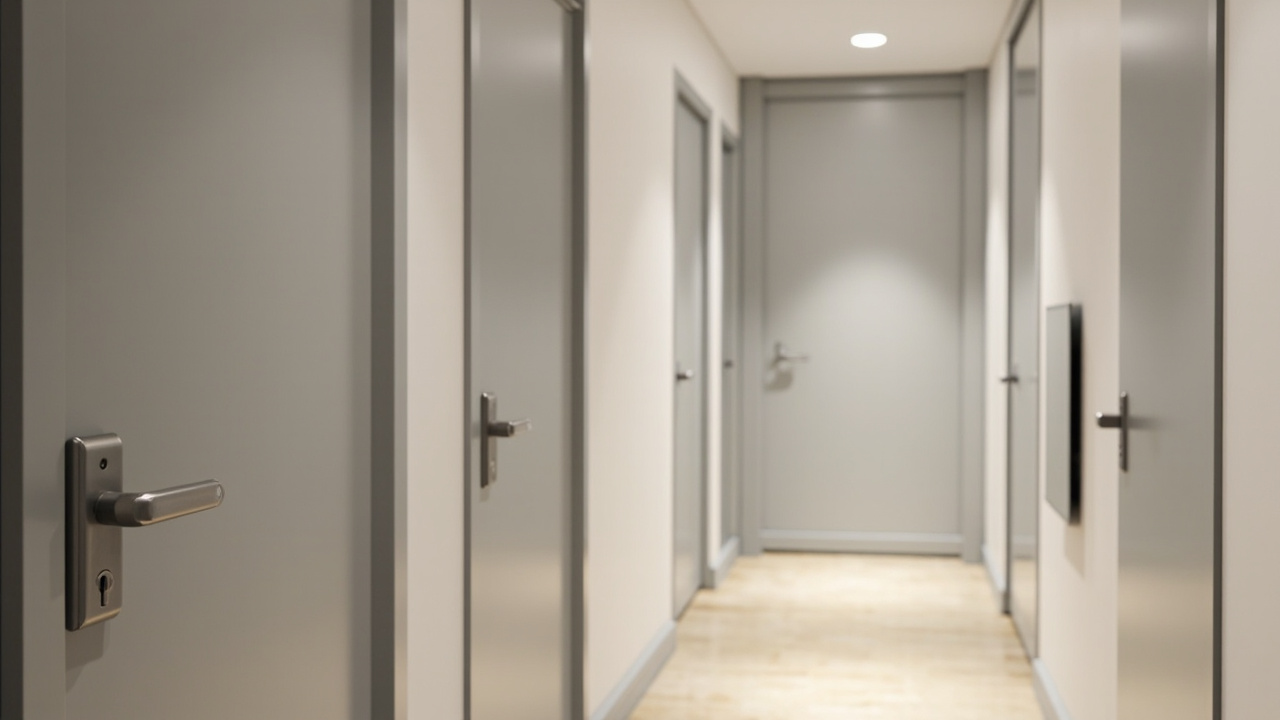
This page describes a representative typical configuration for a rental apartment building of approximately 100 units, whether classed as mid-rise condos held for rent or purpose-built rental stock. The system manages three opening populations: around a hundred unit doors where residents use a daily credential, shared common doors including the main entrance, lobby, package room, gym, co-work lounge and bin store, and service openings for maintenance, plant rooms and roof access. Cloud platforms issue credentials at lease signing, revoke them instantly at move-out and remove the historic burden of collecting physical keys; dated PIN codes support self-guided viewings and contractor visits, while intercom or lobby readers admit guests. Unit locks typically run on batteries with keypad, card, Bluetooth or mobile options, and common doors are hardwired online readers tied to door controllers. The exact mix, quantities and specifications are confirmed per project quotation; everything on this page is a planning-level typical configuration rather than a delivered project claim.
Key facts: 100-unit apartment configuration
| Site profile | Planning estimate of one mid-rise rental building with about 100 units, shared amenities and a small staff or third-party property manager. |
| Openings in scope | Estimate around 100 unit doors plus main entrance, package, amenity, service, stair and roof openings, finalized from the door schedule. |
| Credential architecture | Resident mobile key or PIN plus card option, dated codes for viewings and vendors, and scoped staff credentials for management and cleaners. |
| Software/integration | Cloud management platform with unit directory, instant revocation, audit logs and optional links to property-management software. |
| Network/power | Battery unit locks with low-battery alerts; hardwired or PoE readers and controllers on common doors; mechanical override retained. |
| Compliance evidence | Fire doors use listed hardware with free egress, and certificates and test reports for named SKUs are provided per RFQ. |
| Commercial terms | Current MOQ policy, sample terms and lead time are confirmed in writing per quotation; warranty terms are confirmed in writing per quotation. |
Answer unit
How access is configured at this scale
With about 100 units, one platform can carry the whole building: resident credentials on the unit doors, hardwired control on shared entrances and dated codes for the viewing and maintenance cycle that defines rental operations.
| Opening group | Configuration choice | Why at this scale |
|---|---|---|
| Unit entrance doors | Battery smart locks with mobile, PIN and card options | Resident choice plus instant remote revocation supports frequent lease turnover. |
| Main entrance and lobby | Online intercom reader and door controller | Visitor admission and delivery access must be monitored from the management console. |
| Package and amenity rooms | Online readers on schedules | Package rooms, gyms and lounges need resident access with staff-only override. |
| Maintenance and plant rooms | Scoped online locks with vendor windows | Dated contractor codes avoid key handovers and leave an audit trail. |
| Stair, roof and service doors | Listed exit hardware with controlled outer side | Egress stays free while cross-access between floors is managed. |
| Viewing and turnover units | Dated self-tour PINs via the platform | Leasing teams run unstaffed showings without rekeying between applicants. |
What evidence backs this configuration page
| Evidence level | What this page states |
|---|---|
| L1 - Authorized named case study | An L1 record names the building, owner or operator and the installed scope with written authorization. We do not currently publish an L1 record for a 100-unit apartment project. |
| L2 - Verifiable public reference | An L2 record would link to a public project page, planning filing or operator statement that buyers can verify independently. None is provided here. |
| L3 - Photos and records under NDA | L3 material includes installation photos, device lists and turnover records shared under NDA with qualified buyers during procurement. |
| L4 - Genericized project record | An L4 record keeps the scale and architecture — unit count, common doors, platform workflows — without identifying the asset or its owner. |
| L5 - Representative typical configuration | This page publishes an L5 representative typical configuration for a 100-unit rental building. L1 to L4 evidence is provided to qualified buyers under NDA per RFQ. |
Indicative bill of materials for this scale
This planning BOM reflects per-unit and per-common-door logic for budgeting. It is not a quote: unit lock mix, controller counts and intercom scope change with each building’s drawings and amenities.
| Component | Quantity logic | Notes |
|---|---|---|
| Unit smart locks | One per residential unit, plus a spare allowance | Choose one credential mix across the asset to limit SKU and training diversity. |
| Common-door readers | One per controlled shared opening | Entrances, amenities and package rooms each need their own reader point. |
| Door controllers and power | One controller per door or paired doors per spec | Wiring routes and PoE availability are checked against electrical drawings. |
| Cloud platform and credentials | Per-building management tenancy and enrollment | Resident capacity, roles and data retention are confirmed for the named platform. |
| Intercom or lobby stations | Per entrance point as designed | Audio or video station choice depends on lobby and concierge layout. |
| Spare cylinders and keys | One override path per lock, controlled stock | Mechanical entry remains audited and held by management, not residents. |
The 100-unit design sits between small walk-ups and institutional multifamily. These factors show what changes when comparing neighboring scales.
Re-check the items below when your project is smaller or larger than the representative scale on this page.
| Scale factor | How the configuration changes | What to verify |
|---|---|---|
| Unit count | Smaller assets can run on simpler operator apps; larger ones demand portfolio grouping and role depth. | Re-check platform limits before standardizing across buildings. |
| Turnover rate | High-vacancy markets lean harder on dated codes and self-tour workflows. | Tune credential types to the leasing process, not just hardware cost. |
| Common-door density | Amenity-rich buildings add readers, controllers and schedules beyond the unit count. | Count every shared door in early budgets. |
| Network availability | Hardwired common doors need PoE or power routes; retrofits may favor wireless where feasible. | Validate cabling paths before choosing controller architecture. |
| Staff model | On-site teams use staff badges; remote managers rely on mobile admin and vendor codes. | Define who issues and revokes credentials in daily operations. |
| Portfolio growth | Operators planning more buildings should select a multi-site platform from the start. | Confirm cross-site roles and reporting before the first install. |
Five steps to a 100-unit rollout
- Survey doors and wiringRecord unit and common doors, fire labels, power routes and network points across the building.
- Design the platformAgree resident credentials, self-tour codes, staff roles, intercom scope and PMS-style integrations.
- Sample and evidencePilot a floor and the main entrance; certificates and test reports for named SKUs are provided per RFQ.
- Install and enrollFit unit and common hardware, enroll residents in batches and verify revocation on move-out.
- Train operatorsTrain leasing and maintenance teams, document override keys and confirm warranty terms in writing.
Request a similar configuration for 100 apartments
Provide unit and common-door counts, drawings and your preferred operating model with a Request Similar Configuration note. We confirm lock mix, controller and platform scope; current MOQ policy, sample terms and lead time are confirmed in writing per quotation, and certificates and test reports for named SKUs are provided per RFQ.
Request Similar ConfigurationProject configurationsLast updated: November 1, 2026 · Reviewed by the Smart Lock Factory editorial team