
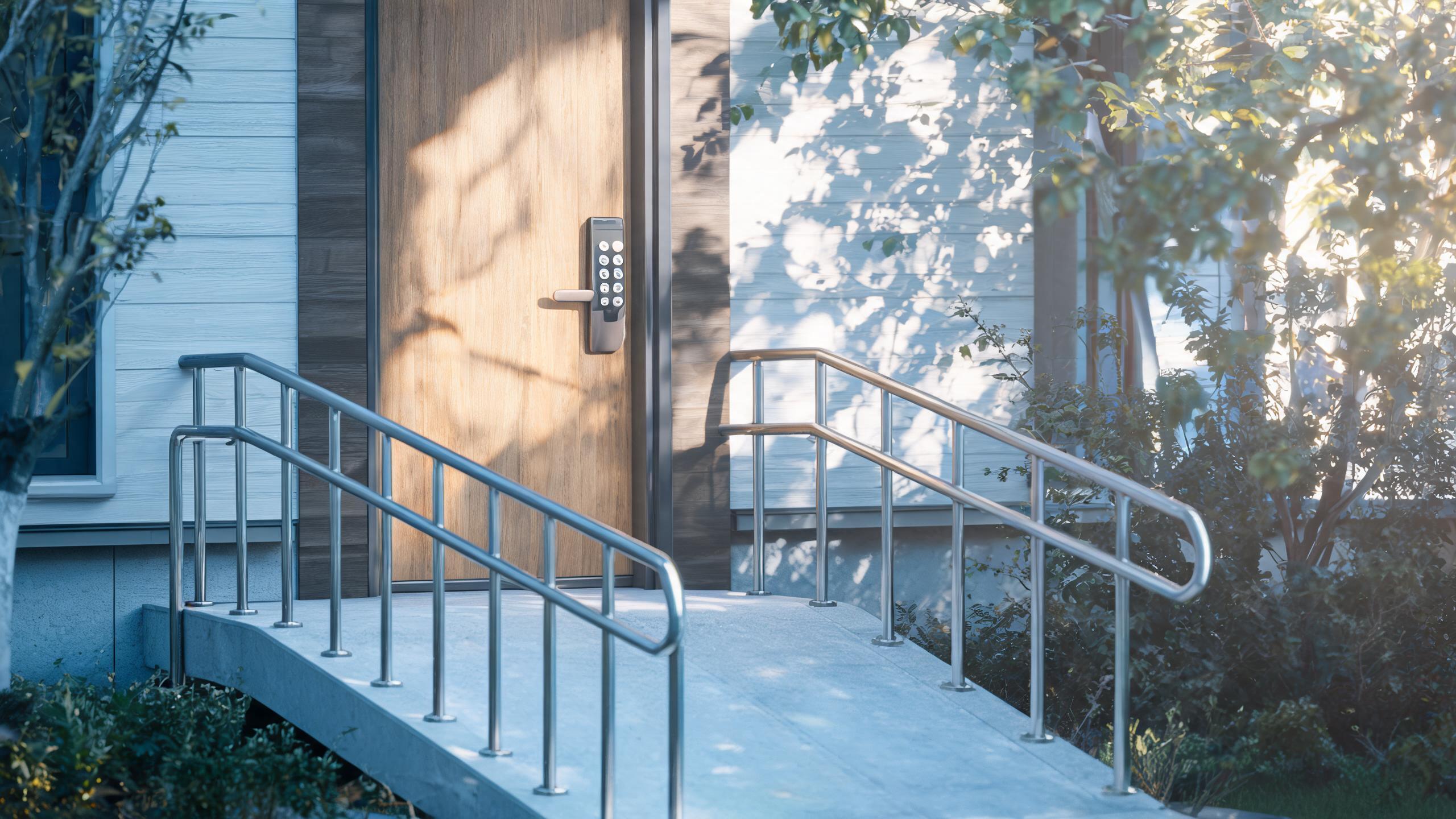
Applications
Smart locks for home care: letting caregivers in without hiding keys
Scheduled codes for care visits, family visibility from anywhere, locks a senior can actually operate, and emergency access written into the care plan.
Home care runs on the front door: scheduled aides, rotating agencies, physical therapists, meal delivery and family members who arrive from out of town, usually around one older resident who should never have to manage a key library. Smart access replaces the key under the mat with named credentials on schedules — the Monday/Wednesday aide gets a recurring window, the agency gets a code that dies when the contract ends, the adult child holds permanent access, and a one-time code admits emergency services when needed. Families gain visibility into arrivals on connected locks without turning the home into a surveillance environment, and the lock is chosen for the resident’s abilities: large buttons, lever operation and a mechanical path. The senior living page covers managed communities, the residential guide covers standard homes, and the clinics page covers professional care settings.
Home care access at a glance
| Care population | One resident, often elderly, served by rotating individual caregivers, agencies, therapists and family across the week |
| Caregiver credentials | Recurring scheduled codes per named caregiver, revoked independently when assignments change |
| Family access | Adult children hold permanent remote visibility and access without copying keys to every relative |
| Emergency path | Time-limited codes or verified remote entry support EMS and urgent visits, with a documented plan |
| Resident use | Large buttons, lever hardware and clear feedback chosen around vision, dexterity and cognitive ability |
| Privacy balance | Arrival visibility serves care coordination; families decide deliberately what is monitored and shared |
| BOM shape | One entry lock, optional gateway for remote visibility, updated closer and lever if needed, plus spare batteries |
Answer unit
Caregiver codes on schedules or one shared home-care code?
A shared agency code is convenient and opaque. Named scheduled codes are the point of the upgrade, because care accountability depends on knowing who entered.
| Dimension | One shared care code | Named scheduled caregiver codes |
|---|---|---|
| Accountability | Any visit is unattributable | Arrival records map to the named caregiver |
| Staff changes | Code must be rotated for the whole agency | Only the leaver’s credential is revoked |
| Scheduling | Works at all hours, even off schedule | Recurring windows match the authorized care plan |
| Family trust | Trust rests on the agency | Families verify arrivals against the schedule themselves |
| Emergency cover | Anyone can respond, uncontrolled | One-time codes cover verified unscheduled visits |
| Typical fit | Informal care by one trusted person | Professional home care with rotating staff |
Door types and lock-body match
Aging-in-place fitment reviews the resident first and the door second; small hardware changes often matter more than electronics.
| Opening | Typical door | Lock approach |
|---|---|---|
| Main entry | Timber residential door | Large-button smart lock with lever, accessible mounting and staff code capacity |
| Door closer / screen | Tight closer or heavy storm door | Adjusted so the resident can operate the door independently |
| Side / rear entry | Timber or patio door | Family-and-care credential only where the care plan uses the door |
| Medication / interior room | Interior timber door | Usually mechanical; electronic only where wandering risk is documented |
| Garage / utility | Metal service door | Family and delivery credential; excluded from caregiver group by default |
| Emergency access point | Lockbox or designated side gate | Documented one-time-code or monitored lockbox path for EMS |
Example BOM shape for one aging-in-place home
This example illustrates a typical configuration, not a specific customer project. Care complexity and family distance decide the list.
| Component | Typical logic | Notes |
|---|---|---|
| Entry smart lock | One large-button lever model at the main door | Selected against the resident’s actual dexterity and vision |
| Gateway | Added when family needs remote visibility and codes | Not required for locally managed care |
| Accessibility hardware | Lever, closer adjustment and mounting changes | Often the most important usability items in the kit |
| Credential plan | Family, caregiver, agency and emergency groups written down | Mirrors the signed care schedule |
| Service kit | Spare batteries and override key held by the local contact | Reviewed at each care-plan change |
How a home care setup is introduced
- Care and ability reviewThe family documents the care schedule and the resident’s vision, dexterity and cognition before choosing hardware.
- Door adjustmentLever, closer and mounting changes are made so the resident can still enter independently.
- Credential buildFamily, named caregivers, agency and emergency codes are created to match the signed schedule.
- Caregiver rehearsalEach caregiver practices entry on their first shift, and revocation is confirmed during one staff change.
- Plan maintenanceThe credential list and emergency procedure are reviewed at every care-plan change, with batteries checked.
Related applications
Related care and home pages
Smart locks for home care: common questions
How do caregivers get in without a key under the mat?
Each named caregiver receives a recurring code matching their scheduled shifts — for example weekday mornings — while the agency holds a credential that can be revoked as a whole when the contract ends, and the adult child keeps permanent access. When a caregiver leaves, only that one credential is revoked instead of changing the lock. Connected doors let the family see arrivals against the care plan, which is the actual safeguard in professional home care; a shared code hidden outdoors provides none of that accountability.
Will an older resident be able to use the lock?
Selection starts from the resident rather than the product catalog: large tactile buttons, clear audio and visual feedback, lever operation instead of a small knob, and a door closer adjusted so opening does not require strength. Many residents simply use their familiar routine while staff and family use codes. The install visit tests the resident personally, because successful aging-in-place technology is defined by the least confident daily user, and the mechanical key remains available for anyone who prefers it.
How does emergency services access work?
Families predefine an emergency path — typically a one-time code released to a verified caller or a monitored lockbox at a side point — and write it into the care plan alongside the local contact, rather than improvising during an incident. The lock never blocks first responders because the mechanical path and code paths coexist. The important work is procedural: everyone with responsibility knows the plan, the code list excludes former staff, and the procedure is rehearsed once so the first real event is not the first test.
Does monitoring arrivals invade the resident’s privacy?
The family decides deliberately what visibility serves care safety: most use arrival records only to confirm scheduled care occurred, not to track the resident’s movements indoors, and the resident — where capacity allows — is part of that conversation. Credentials cover the front door rather than interior rooms by default, and agencies receive transparency about scheduling checks in their service agreement. The technology supports dignified independence; the monitoring posture is a family policy decision that is written down rather than left to whoever set up the app.
What should a family buy and is there an MOQ?
Most homes need one well-chosen entry lock, a gateway only if family manages remotely, and small accessibility hardware changes; there is no minimum beyond the order itself, with current pricing and lead time confirmed in writing per quotation. Send the care schedule, the resident’s ability notes and the door details, and the recommendation covers model choice, closer adjustment and the credential plan rather than a generic retail box, with support and warranty terms documented for the family member who will administer it.
Give the care team scheduled access — and the family real visibility
Send the care schedule, resident ability notes and door details — receive a single-door plan with model, credential structure and written terms.
Discuss your project (RFQ)Project configurationsLast updated: October 31, 2026 · Reviewed by the Smart Lock Factory editorial team