
For retailers & chains
Smart locks for retailers: shelf-ready, repeatable range
Curated good-better-best models, retail-grade packaging, staff training material and predictable warranty handling — the program behind a category that sells without surprises.
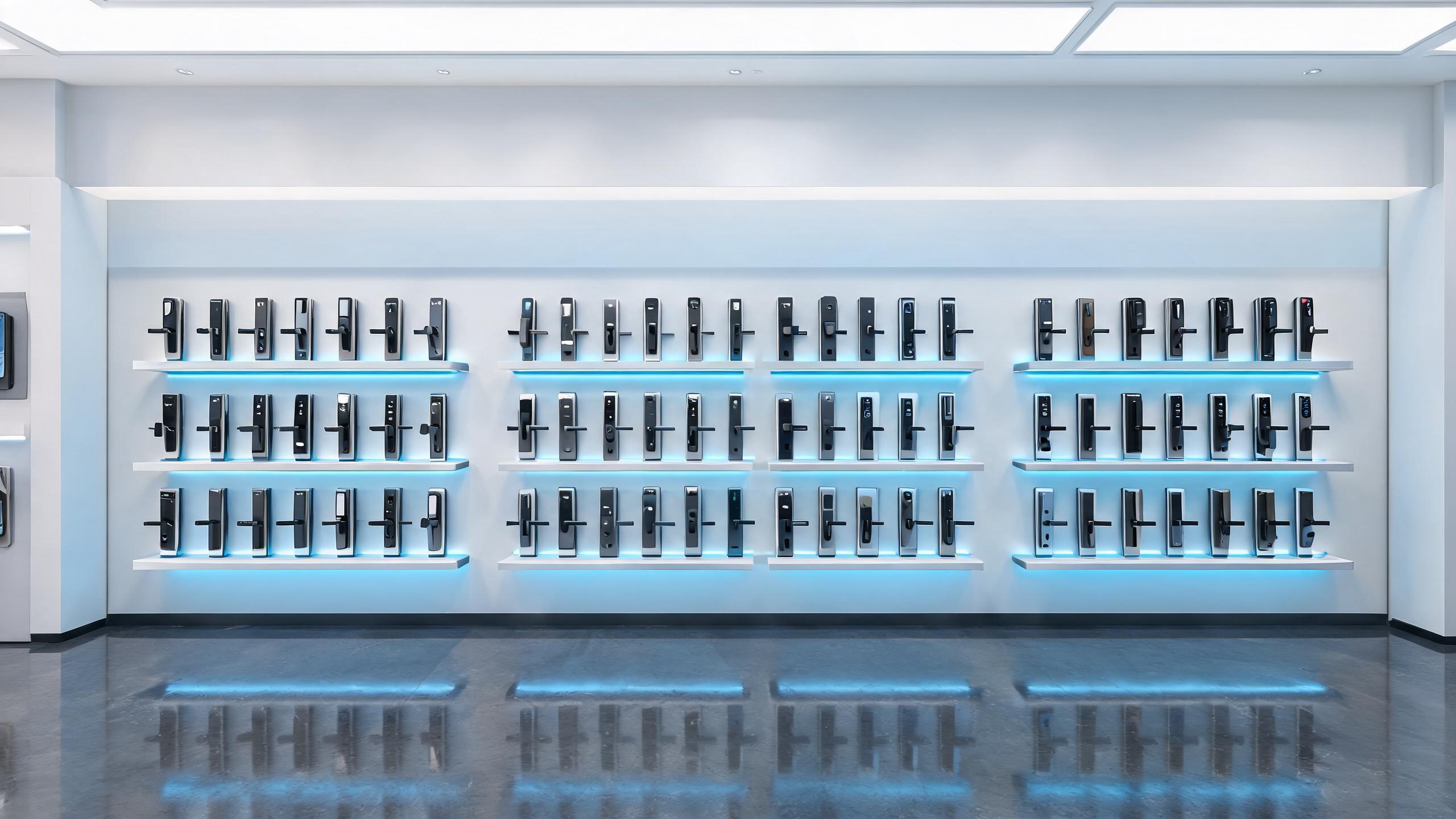
Retailers succeed with smart locks when three things are true: the range is simple enough for staff to sell, every box is complete and identical, and warranty claims are handled without the customer standing at the counter for weeks. The retail program supplies repeatable in-production models rather than one-off lots, retail-ready packaging options, good-better-best range logic across access methods, training material for floor staff, and spares plus documented warranty handling through a named engineer. Branded packaging and laser logos are available at reorder scale; first range tests can start from neutral stock — current MOQ and tier terms are confirmed in writing for your store count.
Retail program at a glance
| Range structure | Good-better-best ladder across keypad, fingerprint and connected models, with a deliberate small SKU count to avoid shelf paralysis |
| Packaging | Neutral or branded color boxes, consistent accessory kits (manuals, override keys, fixing sets), carton and shelf-ready options |
| Repeatability | In-production platforms with stable specifications; buyers are warned before any running change affects a listed SKU |
| Training support | One-page selling points, installation compatibility notes and FAQ material for floor and customer-service staff |
| After-sales | Spares planning from the first PO and documented warranty flow via your sales engineer |
| Compliance | Model-specific document copies for covered SKUs for your market's retail requirements — see certifications |
| Commercials | Quantity tier pricing by store count and reorder volume; MOQ and lead time per SKU confirmed on the quotation |
Answer unit
What should a retail smart lock range look like?
The strongest retail ranges use a short ladder with visible differences customers can understand: access method, connectivity and finish. Six SKUs beat twenty when staff can explain the step-up logic, and every tier must fit the doors common in the market — door-fit returns are the most avoidable cost in the category. The ladder below is the typical starting template; exact models are chosen against your market's door standards.
| Tier | Typical product | Buys the step up | Typical customer |
|---|---|---|---|
| Good | Keypad + override key | — entry into keyless | Price-led households, rentals |
| Better | Fingerprint + code + key | Biometric convenience | Family homes |
| Best | Connected fingerprint (app/remote) | Remote access and integration | Smart-home buyers |
| Specialty | Glass or outdoor-rated model | Niche fitment the ladder lacks | Gates, offices, shopfronts |
Merchandising rule: keep one model per price step, show the access method on the packaging, and include a door-thickness and prep check on the box. See the door compatibility hub for the measurement language staff use.
What the factory provides per SKU
Identical box contents
Manual, override keys, fixing kit and accessories specified and checked at end-of-line packing.
Packaging options
Neutral boxes for range tests; branded color boxes and inserts once the range is proven.
Sales training material
Selling-point sheets, compatibility checklists and customer FAQ summaries for staff.
Warranty flow
Documented claim handling and technical escalation so counter staff know exactly what to promise.
Spares pack
Key components and lock bodies planned with each PO instead of ad hoc air freight.
Document copies
Compliance files for covered SKUs available for retailer onboarding and market checks.
From pilot stores to chain range
- Door-market checkConfirm dominant thickness, prep and body standard so every listed SKU fits the doors customers actually own.
- Sample & staff testInstall candidates in-store and on staff doors; collect fit and usability feedback before buying the range.
- Pilot orderA short ladder into pilot stores with training sheets and a defined returns-tracking process.
- Performance reviewSell-through, return reasons and customer questions identify which tiers to deepen.
- Branded reorderCustom packaging and laser logo for proven SKUs, plus spares scaled to chain volume.
- Chain rolloutForecast-based scheduling across stores, with specialty models added where pilot data supports them.
Related programs
Other ways to buy
Smart locks for retailers: common questions
How many smart lock SKUs should a retail range carry?
Typically a short good-better-best ladder plus one specialty model for glass or outdoor fitment. Too many similar SKUs confuse staff and buyers; the exact models are selected against your market's dominant door standards through the catalog discussion — start with the catalog request.
Can packaging carry our store brand from the first order?
Branded color boxes are feasible at reorder scale because of print-run minimums; first pilot orders commonly use neutral packaging with branded inserts. Laser-marked locks are the lighter branding option. The threshold for each layer is confirmed in writing.
How do you help our staff sell and support the locks?
Retail buyers receive selling-point sheets, door-compatibility checklists and FAQ summaries aligned to the supplied SKUs, so floor staff can answer fit and feature questions and customer service can triage warranty cases consistently.
How are warranty returns handled?
Each account orders a planned spares pack, and warranty cases run through a named sales engineer with a documented process and response timelines. Counter staff should never improvise commitments — the agreed flow is described on the support and warranty page.
What causes most smart lock returns, and how do we avoid them?
In retail, door-fit mismatch is the most avoidable category: the lock does not fit door thickness or existing prep. It is largely prevented with a compatibility check on packaging, staff training from the door types hub, and matching the range to local doors before listing.
Build a smart lock category that stays in stock
Tell us your store count, market door standards and pilot timeline — receive a ladder proposal, terms and training plan.
Talk to retail salesPilot with samplesLast updated: October 31, 2026 · Reviewed by the Smart Lock Factory editorial team