
Decoding SLK-D15: Specifications, Gaps and What to Ask for
Procurement rarely loses a lock decision because nobody can find a feature list. Time is lost when that feature list is mistaken for an orderable specification. The slk d15 specification decode starts by separating the catalogue record, the supplier’s dated evidence and the project-specific acceptance conditions. The result identifies what can be committed, what remains open and which documents must be reviewed before a purchase order.
Direct answer. In short, slk d15 specification decode is the subject of this piece. slk d15 specification decode is where the work on slk d15 specification decode sits. slk-d15 is what has to be evidenced before anyone signs. A slk d15 specification decode is a component-level look at how the technology behaves. slk d15 specification decode is where the limits sit. slk d15 specification decode is verified on the dated product page.
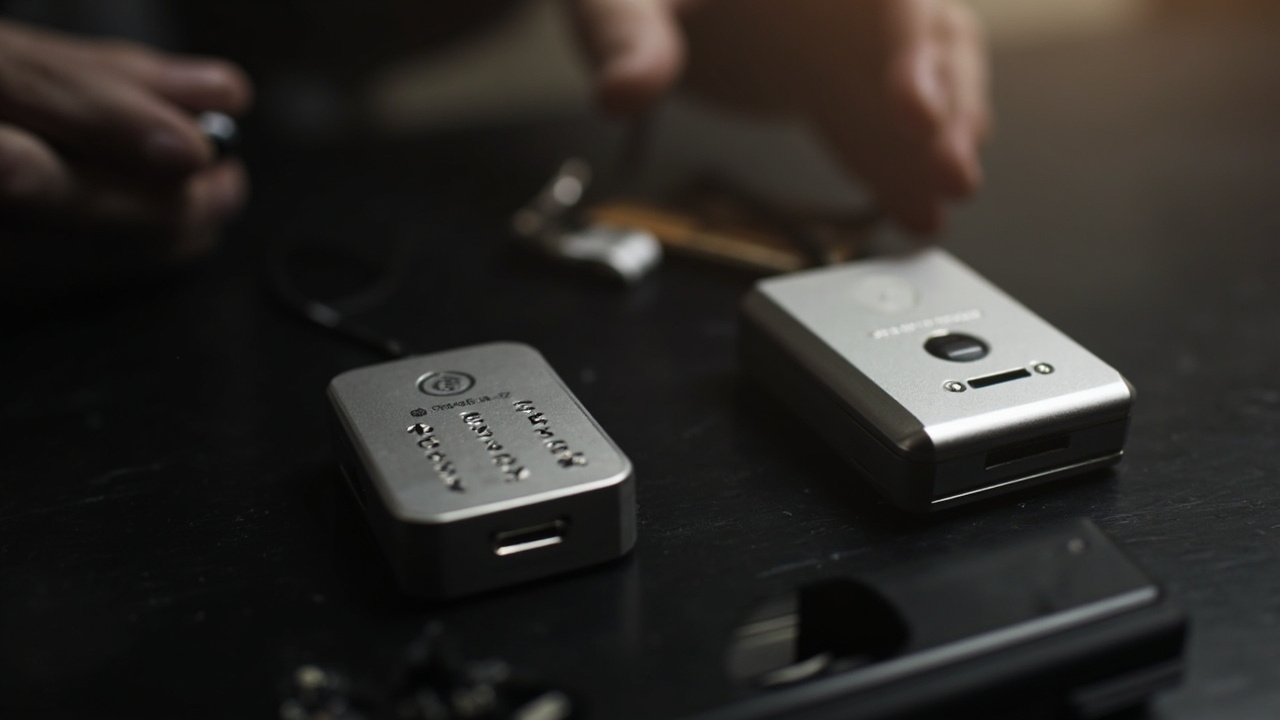
The supplied record identifies the SLK-D15 as the Single-Sided Weatherproof Smart Lock for Courtyard Aluminum Gates. It is an SLK-D15 smart lock associated with fingerprint, outdoor and general smart-door-lock categories. Its recorded access methods, platform functions, power arrangement, housing description and packing data provide a useful baseline. Door fit and version capacity, however, are blank in the record, so procurement must close those gaps before treating the description as a project specification.
flowchart TD
    A["Catalogue baseline"] --> B["Access and management"]
    B --> C["Environment, power and packing"]
    C --> D["Gap evidence request"]
    D --> E["Qualification matrix"]
    E --> F["Sample gate journey"]
    F --> G{"Approval gates complete"}
    G -->|Yes| H["Release purchase order"]
    G -->|No| D
The catalogue record is a starting map, not the order specification
The catalogue describes the model’s position, style, access methods, platform functions, materials, power, packing, environment and available documentation. That is enough to identify the intended product family and build a supplier questionnaire. It is not enough to establish fit, environmental performance, credential interoperability or the exact configuration that will be shipped.
The following SLK-D15 specifications reproduce the supplied catalogue fields. Every value remains subject to the instruction to confirm on the dated product page for the specific SKU before it drives a procurement decision.
| Record group | Catalogue entry | What procurement can use it for |
|---|---|---|
| Product description | Single-Sided Weatherproof Smart Lock for Courtyard Aluminum Gates | Defines the product family and intended gate application |
| Categories | Fingerprint Door Lock, Outdoor Door Lock, Smart Door Locks | Identifies the relevant catalogue families for comparison |
| Access | RFID/IC card, passcode, fingerprint, mobile app and mechanical override listed as standard | Defines the credential and fallback methods to verify |
| Platform | Tuya (Wi-Fi) | Establishes the platform family to investigate |
| Connectivity | Wi-Fi / Bluetooth | Identifies the recorded connection methods to confirm |
| Functions | Remote unlock, temporary/periodic passcodes, user management and access records | Creates a management-system evidence checklist |
| Body | Weather-Resistant Broken-Bridge Aluminum Fingerprint Lock; aluminum alloy | Defines the recorded construction and configuration |
| Finish | Black / Silver | Creates the available visual-option request |
| Power | 4 × AA alkaline batteries; low-battery alert listed as standard | Starts the power and serviceability review |
| Door fit | — | Flags the principal unresolved installation question |
| Packing | 390 × 380 × 340 mm carton; 10 pcs/ctn; 20 kg gross weight | Provides a starting point for shipment planning |
| Capacity and versions | — | Flags another unresolved configuration question |
| Environment | Weatherproof housing | Requires a project-specific definition and supporting evidence |
| Documentation | Dimension drawings, installation guide and full datasheet available on request | Establishes documents to request before approval |
| OEM/ODM | Custom logo, finish, packaging, manuals and product configuration for distributor and project orders | Opens the discussion about project-specific configuration |
The blank fields are especially important. An em dash in the supplied record means the information was not provided there; it is not evidence that a capability exists or does not exist. Procurement should ask for the missing information rather than filling the gap with an assumption based on other locks in the catalogue.
Five access entries require five different acceptance tests
The access row lists RFID/IC card, passcode, fingerprint, mobile app and mechanical override. Each entry can influence door control, administration and emergency procedures, but the catalogue does not describe the card standard, code format, sensor arrangement, key cylinder or credential-retention behavior.
This distinction matters when a buyer compares an RFID smart lock with a fingerprint gate lock. The method names are familiar, yet two products can present different installation, administration and testing obligations under those same labels.
| Access method | Catalogue position | Evidence to request |
|---|---|---|
| RFID/IC card | Standard | Card frequency and standard, supported card types, issuing method, revocation process and sample cards |
| Passcode | Standard | Code format, temporary and periodic code behavior, keypad layout, code-change procedure and audit trail |
| Fingerprint | Standard | Sensor location, enrollment procedure, template capacity, recognition procedure, invalid-template handling and test method |
| Mobile app | Standard | App ownership model, account setup, remote administration, user roles, record access and offline behavior |
| Mechanical override | Standard | Key type and cylinder arrangement, key-control procedure, access authorization, emergency use and attempted-use logging |
The word “standard” in this table means that the access method is present in the supplied catalogue row. It does not define a performance grade or project acceptance threshold. Confirm on the dated product page for the specific SKU before selecting card formats, fingerprint templates or key-control procedures.
For credential-specific administration, use SLK-D15 Access Options: What the Management Layer Adds as a companion. The key RFQ question is not simply whether a method is listed. Ask how identities are created, assigned, expired, revoked and retrieved, and who owns that process after handover.
The management layer changes the scope of the lock order
For this slk d15 specification decode, the platform row deserves the same attention as the reader hardware. The record lists Tuya (Wi-Fi), Wi-Fi / Bluetooth connectivity, remote unlock, temporary/periodic passcodes, user management and access records. These fields turn the product from a collection of access methods into a managed access point, although the supplied row does not define the complete software workflow.
A Tuya Wi-Fi smart lock quotation should identify the applicable platform account, mobile application, cloud or deployment arrangement, administrator roles and record-export method. Confirm on the dated product page for the specific SKU before assuming a project account structure or remote-unlock workflow.
Remote unlock also needs defined failure behavior. Procurement should ask what happens when the network is unavailable, whether an authorized local method remains available, what authentication is required and which event is written to the access record. The request should cover attempts when the lock is offline, when the account lacks permission and when the administrator is unavailable.
Access records require a data dictionary. Ask for the event name, timestamp format, user identifier, door identifier, result field, export format and retention arrangement. If the project manages multiple sites, ask how sites, buildings, doors and roles are separated. If the buyer intends to migrate credentials or export the register at handover, that requirement belongs in the quotation and acceptance plan rather than in a later request.
For network, credential-data and remote-access obligations, use the following evidence line:
CONFIRM-WITH-LOCAL-RADIO-DATA-AND-REMOTE-ACCESS
The relevant radio and network requirements are per-product and per-project questions. Request the dated product evidence and the applicable local scope; do not infer compliance from the platform name alone.
The weather-resistant description needs a site-specific definition
The record names a Weather-Resistant Broken-Bridge Aluminum Fingerprint Lock and gives the material as aluminum alloy, with black and silver finishes recorded. Its environment field says “weatherproof housing.” These are useful catalogue facts, but they do not quantify exposure, corrosion resistance, moving-gate tolerance or the limits of the finish.
For a courtyard aluminum gate lock, the most important weather exposure may come from a change in gate alignment rather than from rain striking the reader. A moving leaf can place repeated lateral load on the latch, spindle or body. Construction tolerances and surface movement can therefore affect the lock even when the housing is correctly positioned.
A weatherproof smart lock quotation should define the installation orientation, exposure conditions, drainage path, seal interfaces, fastener materials, corrosion-prevention treatment and finish requirement. Ask for evidence appropriate to the actual site. Do not convert “weatherproof housing” into an ingress rating that the supplied catalogue row does not state.
Confirm on the dated product page for the specific SKU before approving the body style, finish or environmental description. The supplier should also identify whether the supplied configuration has separate interior and exterior components and how the gate leaf is prepared for mounting.
The site record should follow the discipline in the Office Smart Lock Site Survey and Smart Lock Retrofit Site Survey. Record the leaf thickness, profile, material, frame condition, swing direction, opening angle, mounting-face dimensions and the intended relationship between the lock body and gate hardware. Photographs are useful, but dimensioned measurements and marked drawings should control the decision.
If the gate is part of an escape route or has accessibility, emergency-opening or controlled-access obligations, ask the project authority to define them. Use this separate evidence line:
CONFIRM-WITH-LOCAL-EGRESS-AND-ACCESSIBILITY
Power specification and the outage question
The power row records 4 × AA alkaline batteries and a low-battery alert. These points start the service design, but they do not establish usable runtime, warning behavior or what happens after the batteries are depleted.
Confirm on the dated product page for the specific SKU before approving the battery type or treating the low-battery alert as an acceptance criterion. The dated evidence should also state whether battery replacement is intended to be performed by an operator or a technician and whether access state is preserved during a cell change.
The RFQ should request the manufacturer’s test conditions behind any runtime statement, including load, temperature, network condition, activity profile and battery batch assumptions. If the project needs a service interval, procurement can convert that evidence into an inspection plan. It should not substitute an unsourced interval for a documented result.
The supplied row does not list an external power override through a USB terminal. Treat that point as an open item, not as a promise or a rejection. Ask whether an emergency-power provision is fitted, whether it is external to the lock and how the lock behaves during power restoration. If the answer is no, document the approved battery-change and mechanical-access procedure instead.
Packing data matters only when connected to the shipment
The recorded carton is 390 × 380 × 340 mm, with 10 units per carton and a gross carton weight of 20 kg. These figures give logistics and warehouse teams an initial planning basis, subject to confirmation on the dated product page for the specific SKU.
Before shipment approval, ask whether the carton dimensions include protective inserts, whether the unit count applies to every finish and configuration, and whether project-specific packaging changes the result. Also request the approved carton label, product identification, accessory count and handling marks.
A packing list should connect every physical line to the purchase order. The item identifier, finish, quantity per carton and documentation bundle should agree. If OEM/ODM changes are requested, ask for revised artwork, packing specifications and inspection evidence rather than assuming the standard carton still applies.
Commercial terms should remain quote-based. The buyer’s comparison sheet should leave the commercial response field open, while technical approval proceeds against the same dated SKU evidence used for the sample.
The two catalogue gaps can stop an otherwise complete approval
Two fields are explicitly blank: Door fit and Capacity & versions. Their absence matters because both affect whether the quotation can become an orderable configuration.
Door fit cannot be reconstructed reliably from the product name. The record identifies a gate application, but it supplies no panel dimensions, applicable door thickness, backset, spindle position, handle geometry, latch or deadbolt arrangement. The buyer should request a dimension drawing that identifies every mounting point and moving interface. The Replacing Doors or Locks with SLK-D15: A Fit Checklist provides the closer fit-focused sequence.
Capacity and versions are equally ambiguous. The access functions are listed, but the row does not state user capacity, credential limits, available hardware versions, management configurations or version-specific datasheets. Ask for the configuration schedule and the identifiers that will appear on the product, carton, app record and delivery documents.
| Open question | Why the catalogue cannot close it | Required closing evidence |
|---|---|---|
| Gate and panel dimensions | No dimensions are recorded in the Door fit field | Dimensioned drawing plus site measurements |
| Gate movement and latch relationship | The gate application is stated, but movement tolerance is not | Marked site section and interface drawing |
| User and credential capacity | Capacity & versions is blank | Configuration schedule and written capacity |
| Access-record retention | Access records are listed without retention details | Event dictionary and retention statement |
| Offline behavior | Connectivity is recorded without failure behavior | Operating sequence and failure test |
| External emergency power | The supplied power row does not list one | Written answer and procedure if not fitted |
| Weather exposure definition | The environment field uses a general housing description | Project-specific evidence and installation conditions |
| Packaging configuration | Standard packing is recorded, but custom changes are possible | Approved carton specification for the order |
These gaps should be marked “open,” not “non-compliant.” The purpose of the specification decode is to identify the next evidence request, not to penalize a product before the relevant evidence has been supplied.
Convert each gap into a supplier evidence request
A useful RFQ asks for evidence indexed to a decision. The following worksheet prevents general promises from replacing technical answers. Assign each request to a buyer, supplier engineer, project manager or quality reviewer so that no item remains ownerless.
| Request ID | Evidence requested | Acceptance use | Owner |
|---|---|---|---|
| E01 | Dated product-page extract and drawing revision | Freeze the quoted SKU and its technical baseline | Procurement |
| E02 | Dimensioned drawing with mounting and moving interfaces | Confirm gate fit | Project engineer |
| E03 | Credential, app and configuration schedule | Confirm operational scope | Access manager |
| E04 | Access-record dictionary and export sample | Confirm reporting and handover | IT or security reviewer |
| E05 | Network, account and remote-unlock procedure | Define administration and failure behavior | IT reviewer |
| E06 | Environmental and material evidence for the site | Define the housing and finish requirement | Quality reviewer |
| E07 | Battery, low-battery and emergency-access procedure | Define maintenance and contingency | Facility owner |
| E08 | Mechanical override and key-control procedure | Define authorized fallback access | Security reviewer |
| E09 | Carton, labeling and identification schedule | Approve shipment handling | Logistics reviewer |
| E10 | Sample and conformity-inspection plan | Link the quotation to acceptance | Procurement and quality |
Each response should identify its document, revision and date. “Available on request” is not the final evidence state because the buyer must actually receive and review the document. Where a field remains blank, the supplier should state that it is unavailable and identify an alternative source or limitation.
The request set should also separate pre-sale commitments from order-specific documents. A general brochure can orient the review, while the dated product-page extract, drawing, configuration schedule and approved sample determine what is purchased.
Use a qualification matrix instead of a feature tally
Feature totals conceal whether an unknown can affect installation, administration or acceptance. A qualification matrix records the known position, the unresolved point, the required evidence and the release status for each decision area.
| Decision area | Known from the supplied record | Unresolved point | Evidence required | Release status |
|---|---|---|---|---|
| Product identity | Single-sided weatherproof smart lock for courtyard aluminum gates | Exact ordered revision | Dated page, drawing and configuration identifier | Set by buyer |
| Physical fit | No door-fit fields supplied | Gate, panel and moving-interface geometry | Dimensioned drawing and site survey | Set by buyer |
| Credential set | Card, passcode, fingerprint, app and override listed | Formats, capacity and administration | Configuration schedule and credential procedure | Set by buyer |
| Management | Tuya (Wi-Fi), Wi-Fi / Bluetooth and management functions listed | Account, network and record workflow | Deployment and event documentation | Set by buyer |
| Environment | Weatherproof housing; aluminum alloy recorded | Site exposure and project-specific limits | Applicable product evidence and installation detail | Set by buyer |
| Power | 4 × AA alkaline; low-battery alert listed | Runtime conditions and contingency behavior | Dated power evidence and procedure | Set by buyer |
| Override | Mechanical override listed | Cylinder, key control and authorized use | Procedure and sample demonstration | Set by buyer |
| Packing | Standard carton fields recorded | Customization and identification | Approved packing schedule | Set by buyer |
A row is not “passed” merely because a feature is present. It becomes ready when the evidence answers the unresolved point and the project owner accepts the result. This method makes the qualification status auditable and prevents an attractive credential list from compensating for an unresolved gate-fit issue.
Test the sample against the actual gate journey
A sample test should reproduce the intended route through the gate, not just demonstrate each reader in isolation. Agree the test sequence, sample identity, operating conditions and acceptance record before testing. Use the same configuration proposed for the order.
- Freeze the sample identity. Record the dated product-page reference, drawing revision, finish, firmware or app configuration where applicable, and all included accessories. Confirm on the dated product page for the specific SKU before accepting the sample as representative.
- Measure the gate and mounting area. Compare the supplier drawing with the actual leaf, frame, gate post, latch interface, swing direction and available fixing points. Mark every discrepancy against the drawing.
- Install without masking a fit issue. Fit the lock according to the supplied instructions and record any shimming, modification, cable routing or field rework. A successful demonstration with improvised adaptation is not a fit approval.
- Exercise every listed access method. Test card, passcode, fingerprint and mobile-app flows using the proposed credential process. Include invalid, expired, revoked and duplicated-access attempts.
- Verify management behavior. Test user creation, temporary or periodic code use, user removal, remote-unlock authorization, event capture and record export under the intended account arrangement.
- Simulate service conditions. Evaluate the low-battery alert, battery replacement and the approved emergency procedure. Do not invent a runtime threshold; use the value or method agreed with the supplier.
- Cycle the gate and check the interface. Operate the gate through its normal movement range and inspect the lock, spindle, latch and strike relationship for binding, looseness or interference.
- Inspect finish, housing and packing. Review exposed surfaces and interfaces for the agreed site condition, then verify that the packed configuration, labels and accessories match the approved order.
The Office Smart Lock Site Survey can supply the measurement record, while the Smart Lock Retrofit Site Survey can support an existing-frame review. Their measurement fields should become part of the sample record so that later production units are checked against the same baseline.
Use RFQ language that leaves no ambiguous nouns
The RFQ should identify the catalogue description and then request the evidence needed to turn that description into an orderable configuration. It should not rely on a product family name, a project nickname or a copied feature paragraph.
A suitable opening request is: “Supply the lock identified in the supplier’s dated record as the Single-Sided Weatherproof Smart Lock for Courtyard Aluminum Gates, with the access methods, platform functions, body construction, finish, power arrangement, environmental description, packing and documentation stated in that record.”
Then request dated evidence for the exact configuration:
- Product-page extract and drawing revision.
- Gate-fit dimensions and moving-interface details.
- Card format, code behavior, fingerprint procedure and app workflow.
- User capacity, credential capacity and configuration variants.
- Access-record fields, export method and account arrangement.
- Remote-unlock and network-failure behavior.
- Environmental, corrosion and finish evidence relevant to the site.
- Battery test conditions, low-battery behavior and emergency procedure.
- Mechanical override, key-control and authorized-access procedure.
- Carton specification, item identification and accessory list.
The supplier should mark each response “provided,” “not applicable” or “open,” with an owner and date for every open item. This makes the quotation reviewable without implying that a feature outside the supplied row has already been demonstrated.
The model name should remain separate from generic category links in the RFQ. A category page can help the buyer understand the broader range, but it cannot replace the dated evidence for this SKU.
Release the purchase order through named approval gates
The purchase order should be released only after the evidence set has named decision owners. A useful release checklist contains four gates. First, identity and configuration must be frozen. Second, the gate and credential requirements must be accepted. Third, sample and documentation results must be signed. Fourth, commercial and shipment records must match the approved configuration.
Use the Before You Order SLK-D15: The Project Checklist for the detailed project sequence. Within that sequence, give particular attention to the open fit and capacity fields, the management-account handover and the exact product identification printed on the delivery documents.
Any customization should appear in the release record. The catalogue lists custom logo, finish, packaging, manuals and product configuration for distributor and project orders. Confirm which items apply, approve the artwork and packaging separately, and confirm on the dated product page for the specific SKU that the final configuration remains the evaluated item.
The technical approval record should also state who receives the app or account information, who manages credentials after handover, who holds the mechanical keys and how records are transferred. Those are operational ownership decisions, not details to leave inside a supplier quotation.
Procurement’s final interpretation of the record
The supplied catalogue gives procurement a credible starting point: an aluminum-alloy, single-sided gate lock with card, passcode, fingerprint, mobile-app and mechanical-override entries; Tuya (Wi-Fi) platform information; Wi-Fi / Bluetooth connectivity; management functions; 4 × AA alkaline power; a low-battery alert; black and silver finish options; weatherproof-housing language; standard packing data; and document and OEM/ODM availability.
The same question is worked through in more detail in what smart lock is best for mobile access. That is the same question slk d15 specification decode has to answer here.It does not provide the gate dimensions, configuration capacities or the complete evidence needed to approve an order. The decisive next step is not another generic feature comparison. It is a controlled evidence request tied to the actual courtyard aluminum gate, the intended access-management process and the exact dated SKU. Confirm on the dated product page for the specific SKU, document every response and release the purchase order only when the open fields have become explicit decisions.
The next step is to request a quote.