
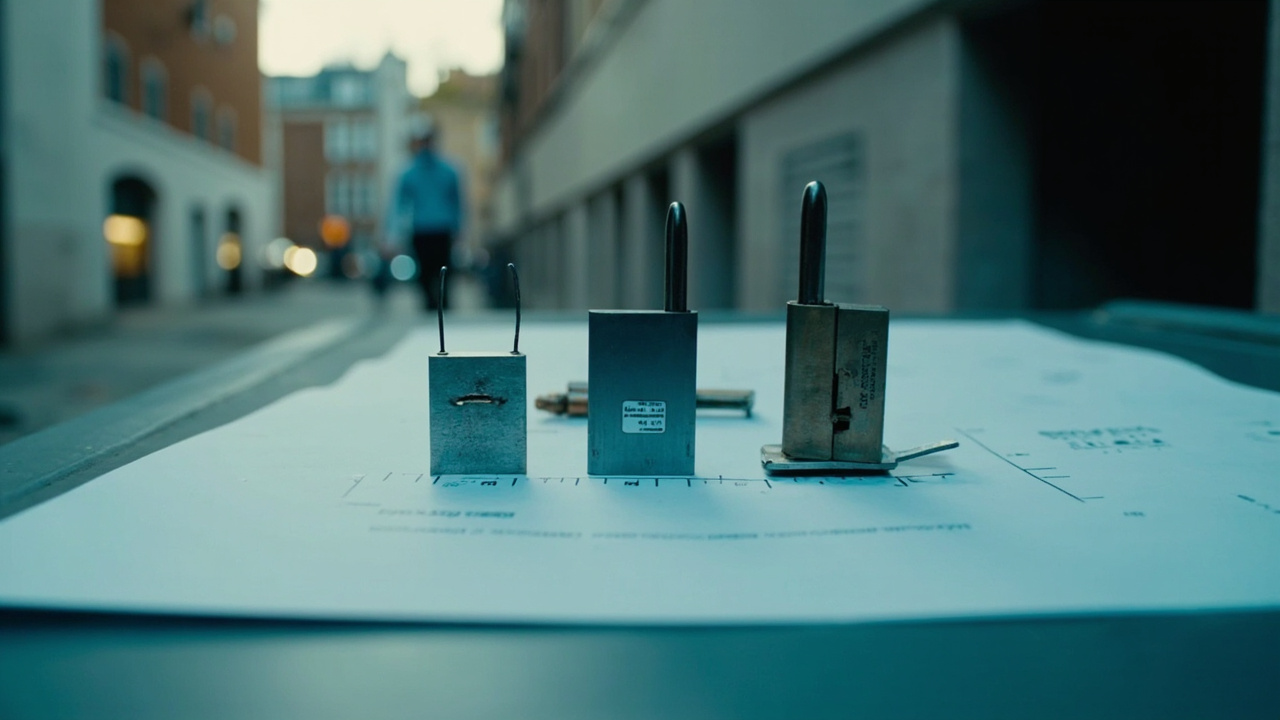
Fingerprint Versus Euro Cylinder: Decision Matrix for Hospitals and Ward Blocks Operators
Procurement should treat the fingerprint versus euro cylinder hospitals matrix as a door-level decision record, not a contest between two products. The same ward can contain a public entrance, staff corridor, treatment room, medicine store and service door, and each opening has a different access chain, exception path and installation constraint. The output should show why every door receives its chosen arrangement and what evidence closes the decision.
Direct answer. The one-line answer — fingerprint versus euro cylinder hospitals matrix is the working record for fingerprint versus euro cylinder hospitals matrix. fingerprint versus euro cylinder hospitals matrix is worthless until euro-cylinder is attached to it as evidence. A fingerprint versus euro cylinder hospitals matrix is a criteria-led comparison. fingerprint versus euro cylinder hospitals matrix applies to fingerprint versus euro cylinder hospitals matrix before any shortlist is drawn up.
fingerprint versus euro cylinder hospitals matrix means here what fingerprint versus euro cylinder hospitals matrix sets out. It is a working definition of fingerprint versus euro cylinder hospitals matrix for this market and product. It is drawn from the evidence below, and it is not a general marketing phrase.
- State the criteria — name the criteria for fingerprint versus euro cylinder hospitals matrix before comparing anything
- Apply the same criteria — score every option against euro-cylinder the same way
- State the trade-off — say what each option in separation primary credential costs you
- This is the sequence fingerprint versus euro cylinder hospitals matrix has to follow, anchored on euro cylinder.
The distinction needs care. A fingerprint lock authenticates a person through an enrolled biometric credential and usually adds electronic management. A Euro cylinder is a mechanical key interface controlled through key issue, return and audit procedures. A fingerprint-equipped lock may still include a mechanical override, so the primary credential and emergency method must be specified separately rather than inferred from the product name.
This process moves from a surveyed door register through pilot testing, approval and rollout. For wider programme context, see Fingerprint Versus Euro Cylinder: Which Fits a Hospitals and Ward Blocks Door Programme; this document supplies the stage gates and evidence matrix.
1. Separate the primary credential from the fallback method
Euro cylinder access control and fingerprint locks for hospitals solve different parts of the access problem. The first starts with possession of an issued key. The second starts with an enrolled person and depends on an electronic reader, stored credential and operating procedure. Neither description alone establishes suitability for a particular hospital door. The nearest catalogue entry is the SLK-004 Fingerprint Keypad Lock for Wooden Doors; the specific SKU is confirmed on its dated product page.
| Decision point | Fingerprint reading | Euro cylinder reading |
|---|---|---|
| Primary credential | Enrolled biometric credential presented at the reader | Issued mechanical key presented at the cylinder |
| Administrative control | User enrolment, credential status and event review | Key issue, return, duplicate control and register review |
| Emergency route | Mechanical override, if the selected version provides one | Continued operation of the mechanical lock, subject to the approved arrangement |
| Main risk | Failed recognition, administration and user acceptance | Key control, loss, duplication and slower manual handling |
| Evidence required | Configuration, storage and management arrangements | Cylinder, key schedule and issue-and-return procedure |
Before comparing package features, write down the operational sequence for one representative door. Identify who arrives, what credential they present, how an absent person is handled, what happens when the primary method fails and who can inspect the resulting record. This prevents the selection team from treating a convenient demonstration as proof of hospital workflow. Every commercial claim here has to be checked against the fingerprint door locks.
2. Build the hospital door register before shortlisting hardware
Hospital door access must be assessed by location, traffic, security boundary and local operating responsibility. Do not apply one lock type to an entire building block. A ward entrance used by visitors has a different routine from a treatment room accessed by clinical staff, while a plant-room door may need a simpler service credential.
Use the Office Smart Lock Site Survey as a field-form reference, then add hospital-specific fields. The door schedule should become the controlling procurement document.
| Door class | Typical access question | Information to capture before selection |
|---|---|---|
| Ward entrance | How are visitors, patients and staff separated? | Traffic pattern, reception process, delivery access and egress exposure |
| Treatment or consultation room | Which staff need rapid, attributable entry? | Occupancy, privacy requirement, shared-device risk and local access zones |
| Pharmacy or medicine store | How is a restricted zone controlled and audited? | Responsible user group, exceptional access and event-review requirement |
| Staff-only corridor | Which credentials may cross the zone boundary? | Badge zones, contractor access, shift pattern and credential lifecycle |
| Plant, laundry or service room | Does electronic administration add operational value? | Service frequency, environmental exposure and emergency procedure |
| Patient bedroom | How do staff enter without weakening the room arrangement? | Nursing workflow, resident control, privacy and visitor expectations |
| Identified egress route | Which locking arrangement has been signed off? | Authority decision, release behaviour, signage and inspection responsibility |
CONFIRM-WITH-LOCAL-FIRE-SAFETY-AUTHORITY: For every door identified as an egress route, confirm the required locking arrangement, release behaviour, signage and approving authority before selecting the lock.
Record a unique door identifier, opening direction, door leaf and frame type, intended operating mode and responsible owner. Mark every unresolved question as an exception. A scheduled lock cannot be shown to fit a hospital workflow while its egress status or access zone remains blank.
3. Advance the package through seven procurement gates
The timeline moves from evidence collection to a controlled rollout. Stages may overlap, but the exit evidence must remain distinct. A supplier selection should not be allowed to jump directly from a catalogue comparison to a purchase order.
flowchart TD
    A[Open the door register] --> B[Complete the site survey]
    B --> C[Classify doors and access zones]
    C --> D[Issue the evidence request]
    D --> E[Review samples and door fit]
    E --> F[Run the operational pilot]
    F --> G[Record the approval decision]
    G --> H[Roll out and review exceptions]
| Gate | Main activity | Owner | Exit evidence |
|---|---|---|---|
| 0. Register | Confirm scope, budget owner and decision criteria | Procurement and facilities | Approved door register |
| 1. Survey | Measure doors and document existing arrangements | Facilities or site assessor | Signed survey and door data |
| 2. Classify | Map access zones, traffic and egress questions | Security, facilities and user representatives | Door classification and exception log |
| 3. Source | Issue a model-specific request for evidence | Procurement | Comparable supplier responses |
| 4. Test | Check samples, fit, credential workflow and overrides | Technical assessor and pilot users | Sample and mock-up record |
| 5. Pilot | Run approved scenarios on representative doors | Operations and security | Pilot results with unresolved defects |
| 6. Approve | Select the arrangement for each door class | Authorised decision owner | Signed award and deviation record |
| 7. Deploy | Install in controlled waves and train users | Supplier, installer and facilities | Installation acceptance and handover |
At each gate, ask what new fact has been added. A meeting without a revised door schedule, sample result or signed decision is not progress. This approach also gives the procurement team a clear response when facilities, security and clinical stakeholders recommend different credentials for the same opening.
4. Apply the comparison matrix to every door class
The fingerprint versus euro cylinder hospitals matrix below turns the survey into a series of gate questions. Use the fingerprint column when rapid recognition and electronic user administration are central to the workflow. Use the Euro cylinder column when controlled key issue and mechanical continuity offer a better operational fit. Hybrid arrangements require both columns to be completed.
| Criterion | Fingerprint option | Euro cylinder option | Evidence that closes the decision |
|---|---|---|---|
| Routine staff entry | Individual users enrol and present a biometric credential | Staff receive and present individually controlled keys | Timed workflow trial on a representative door |
| High-volume handover | Electronic access may reduce repeated searches for a shared credential | A key register must still identify who holds each key | Issue, return and exception procedures |
| Visitor or temporary access | Temporary permission depends on the selected management platform | A temporary key remains a controlled physical asset | Approval, expiry and recovery demonstration |
| High-security zone | Access is limited to enrolled users, subject to the chosen configuration | Access depends on the quality of cylinder and key control | Zone definition and attempted-access test |
| Egress exposure | The lock arrangement and override must match the approved door design | The cylinder must sit within the approved locking arrangement | Local decision recorded against the door ID |
| Audit requirement | Electronic event records may be available, but the model must show how | The key register records custody rather than door events | Sample report or documented register procedure |
| Lost credential | User suspension and biometric re-enrolment procedures are required | Lost-key reporting, cylinder response and replacement decisions are required | Named recovery workflow |
| Installation | Panel, reader, mortise, spindle and power arrangements must fit | Cylinder, keyway, escutcheon and door fixing must fit | Dimensioned door-specific sample check |
| Commercial case | Value depends on the selected configuration and management requirements | Value depends on cylinders, key quantities, blanks and service arrangements | Exact comparison obtained through a quote |
Ward block security depends on the weakest relevant operational link, not on the most advanced reader installed elsewhere in the block. If a door is frequently held open for equipment movement or shared by multiple departments, document that behaviour before deciding which credential can be enforced. The matrix should capture exceptions rather than forcing an inaccurate score.
5. Trace normal access, exceptions and credential removal
Hospital door access must work when the planned user is present, absent, newly appointed, transferred or unable to use the selected credential. Evaluate these events separately. A satisfactory demonstration of normal entry says little about replacement of a lost key or restoration of access after a device failure.
| Event | Fingerprint workflow to test | Euro cylinder workflow to test | Required record |
|---|---|---|---|
| New staff member | Enrolment authority, identity evidence and user activation | Key issue, recipient check and register entry | Named authoriser and completion date |
| Temporary visitor | Permission window, cancellation and credential recall | Temporary key issue, expiry and return | Expiry check and responsible holder |
| Lost credential | Suspension, re-enrolment and exception handling | Loss report, cylinder or key response and replacement decision | Incident and recovery record |
| Medical or operational exception | Who can grant access without weakening the routine workflow | Who can release a controlled emergency key | Approved exception procedure |
| Staff transfer | Remove old zones and verify new permissions | Recall or reassign keys and close old access | Cross-zone verification |
| Contractor departure | End account or credential and test exclusion | Recover issued keys and close temporary access | Contractor clearance confirmation |
A fingerprint template is not a substitute for a complete identity and access process. Determine who may enrol users, who may suspend them, where the selected platform stores its data and how records are reviewed. For a mixed badge, fingerprint and key environment, also establish how a person with more than one credential is identified in an event record.
CONFIRM-WITH-LOCAL-INFORMATION-GOVERNANCE-OWNER: Confirm the permitted identity attributes, enrolment, storage, retention and deletion controls for biometric credentials in this hospital.
6. Test catalogue relevance without treating a model name
The first-party catalogue contains 79 published models. Its category composition includes 37 fingerprint-category models and 24 hotel-category models, although models can belong to several categories. These figures demonstrate catalogue breadth; they do not establish suitability for a hospital opening. Compare the exact proposed version, its access methods, door-fit record and management requirements. Treat category pages as starting points only. The procurement file should identify one named version and preserve its dated specification, dimension drawing and configuration record.
Do not infer a hospital-ready package from a residential or apartment label. Check the mortise case, emergency method, event records, user administration, cleaning regime, service process and door fit. Where a catalogue field is absent, request evidence rather than treating the absence as permission to assume compatibility.
7. Convert the hospital door fit survey into a hold-point
The hospital door fit survey determines whether a proposed lock can be installed without uncontrolled alteration. Use the Smart Lock Retrofit Site Survey to structure site data, but record each measurable component in the door schedule. A nominal door width or photograph is not enough for procurement.
| Measure or item | Record for the specific opening | Why it affects the decision |
|---|---|---|
| Door leaf and thickness | Actual measurements and construction type | Determines panel and mortise compatibility |
| Frame rebate and reveal | Fixed dimensions and required clearance | Prevents panel or lever interference |
| Backset and spindle arrangement | Existing and proposed positions | Identifies mechanical conversion needs |
| Lock body and mortise case | Type, dimensions and bolt arrangement | Confirms whether the case must be replaced |
| Latch or deadbolt | Projection, throw and movement | Tests latching and locking performance |
| Strike plate and keeper | Position, fixing and condition | Identifies alignment and reinforcement work |
| Cylinder and collar | Keyway, euro-cylinder position and access | Determines the mechanical override arrangement |
| Handle or lever | Projection and operating force | Checks reach, door swing and use |
| Panel and reader | Fixing, sensor location and clearance | Checks the proposed fingerprint interface |
| Battery compartment | Access, cell type and replacement route | Supports routine maintenance |
| External power terminal | Presence and proposed use | Defines the low-power response where applicable |
| Door closer and hold-open | Existing hardware and interaction | Prevents clashes with latching |
A dimensioned sample or mock-up should be approved before a large order. Record every deviation, such as additional door reinforcement, a changed spindle position or a different cylinder arrangement. These are scope items, not minor installation assumptions.
8. Pilot the credential and failure scenarios
A pilot should prove the complete access sequence, not merely the fingerprint sensor. Choose representative doors with different users, traffic patterns and operating conditions. The pilot protocol below is a test plan; acceptance limits and permitted workarounds should be set by the hospital before testing begins.
| Pilot scenario | Method | Evidence retained | Stop condition |
|---|---|---|---|
| Normal staff entry | Enrol or issue the credential, then enter during representative traffic | Timed observation and user feedback | Repeated failure interrupts the required workflow |
| Temporary access | Grant, use, expire and close a temporary credential | Permission and recovery record | Temporary access remains active after expiry |
| Primary-method failure | Follow the approved fallback without bypassing an exclusion zone | Observation and defect report | Workaround creates an unmanaged access path |
| Mechanical override | Operate the specified override and inspect key control | Test record and custody check | Override is undocumented or incorrectly configured |
| Egress arrangement | Test only the arrangement approved for the identified door | Signed observation against the door ID | Operation conflicts with the recorded decision |
| Event review | Retrieve and interpret records for an enrolment and an entry | Exported or witnessed record | Required event cannot be identified |
| Maintenance access | Replace power cells and access the compartment | Maintenance observation | Routine service requires lock dismantling |
Include staff working in different operational conditions and representative user groups without using the pilot to make clinical or workforce claims. Record the lock model, firmware or configuration where relevant, door identifier, test date and observed result. Unresolved defects should remain visible in the approval record.
9. Issue a model-specific evidence request
A useful request for quotation makes each response comparable. Do not ask suppliers merely whether they offer fingerprint or Euro cylinder access. Require the exact proposed version, the operating configuration and the evidence needed to approve it. Use the Request a Catalogue and Buyer Resources areas as supporting resources.
| RFQ line | Required response | Reason for inclusion |
|---|---|---|
| Model and version | Full designation, variant and configuration | Prevents comparison of unlike packages |
| Door fit | Dimension drawing and suitability statement for each door class | Tests physical integration |
| Primary access methods | Fingerprint, card, passcode or other included methods | Establishes the actual credential chain |
| Mechanical override | Cylinder type, key control and operating method | Separates emergency access from primary authentication |
| Power | Cell specification, low-battery indication and external power provision | Supports the maintenance plan |
| Management | User, permission, temporary-access and event-record functions | Confirms administrative scope |
| Audit output | Available event fields, retrieval method and storage arrangement | Enables the required review process |
| Documentation | Installation guide, wiring information and full datasheet on request | Provides an installation and handover record |
| Sample | Loan or evaluation unit with the proposed configuration | Enables representative testing |
| Commercial response | Exact project quotation and stated commercial conditions | Creates a valid comparison through the quote process |
Ask the supplier to state every limitation in the proposed configuration. If a feature is absent from the catalogue record, request a dated document rather than relying on a family-level description. Any connectivity, ecosystem or management claim must identify the exact configuration and applicable dated evidence.
10. Score the shortlist behind mandatory gates
Weighted scoring is useful only after every mandatory gate is closed. In this example, the egress decision, model identification and door-fit evidence remain pass-or-fail conditions. The weights are an illustrative worksheet for the buyer to adjust, not an industry benchmark.
| Criterion | Illustrative weight | Evidence used for scoring |
|---|---|---|
| Approved operating arrangement | 25% | Signed door decision and exception status |
| User and credential workflow | 20% | Observed pilot sequence and administration process |
| Lifecycle and exception handling | 20% | Recovery, temporary access and audit procedure |
| Technical and commercial evidence | 15% | Exact SKU documents and complete quotation |
| Door fit and installation impact | 10% | Dimensioned survey and mock-up result |
| Service and handover readiness | 10% | Training, documentation and maintenance plan |
Score each criterion from zero to three against defined evidence anchors. A zero means the required evidence is missing; it is not automatically a poor product. A three means the proposed arrangement has been demonstrated against the stated requirement. Record the evidence location beside each score so another reviewer can reproduce the result.
Do not allow a favourable commercial score to compensate for an unresolved egress decision or unverified door fit. Where two packages remain close, request a focused clarification or additional sample rather than increasing the weight of the preferred option. The award record should explain why the selected arrangement performs better under the hospital’s own workflow, not merely why its feature list is longer.
11. Roll out by controlled door groups
Pilot approval is permission to proceed with the tested arrangement, not permission to generalise it to untested doors. Release deployment in groups that share a configuration and operating workflow. Keep the tested model, install method and credential process visible in every work order.
| Rollout group | Release condition | Operational preparation |
|---|---|---|
| Pilot doors | Pilot results accepted and residual defects assigned | Users and facilities teams briefed |
| Standard staff-only doors | Representative fit and credential workflow verified | Local user and exception process ready |
| Treatment and patient-room doors | Operational review completed for the selected arrangement | Ward representatives confirm the handover process |
| Public or special-function doors | Final door-specific decision recorded | Relevant teams approve installation and operation |
| Egress-related doors | Local authority decision matched to the ordered configuration | Installation evidence filed against the door ID |
Before each wave, freeze the approved configuration and recheck door data against the current survey. Record installer, hardware, cylinder or override arrangement, credential enrolment responsibility and handover owner. Changes during installation should trigger an exception review rather than an informal substitution.
12. Preserve the decision record for audit and handover
A fingerprint-versus-euro-cylinder award should remain readable after the demonstration equipment has been returned. Store the matrix, survey, pilot results, supplier evidence and approvals as one controlled package. Each door schedule line should point to the document that resolved its open questions.
The practical counterpart to this point is how to choose a connected smart lock system. That is the same question fingerprint versus euro cylinder hospitals matrix has to answer here.
| Record | Required content | Retention purpose |
|---|---|---|
| Door decision sheet | Door ID, selected arrangement, reason and conditions | Shows why the opening received its design |
| Evidence index | Supplier documents, sample results and dated product page | Connects claims to the evaluated version |
| Pilot log | Scenario, participant group, result and defect reference | Demonstrates the tested workflow |
| Exception register | Issue, owner, due decision and final disposition | Keeps unresolved conditions visible |
| As-built schedule | Installed model, configuration and hardware | Supports service and future replacement |
| Handover record | Credential process, training, maintenance and contacts | Transfers operation to the responsible teams |
Record the reason in plain language. “Fingerprint selected for routine staff entry; mechanical override retained under the approved arrangement” is more useful than “smart lock approved.” The latter does not explain the workflow, fallback or remaining condition.
13. Issue the final procurement handover package
Before release, confirm that the handover package contains:
- A completed door register with no unassigned model or configuration
- Signed local decisions for every identified egress-related opening
- Dimension drawings matched to each door group
- A current supplier response for the exact proposed SKU
- Credential enrolment, temporary-access and recovery procedures
- A mechanical override control method where one is included
- Pilot results and a closed or assigned exception list
- Training responsibilities for facilities, security and users
- Maintenance, replacement and handover records
- Exact commercial figures and project terms in the formal quotation
The procurement team can then Request a Quote using the approved matrix, door groups and model references as the package boundary. If the hospital is still defining the application, Applications can help separate ward entrances, treatment spaces, staff areas and service doors before products are proposed. This keeps the final request tied to measured requirements rather than a general fingerprint or cylinder preference.