
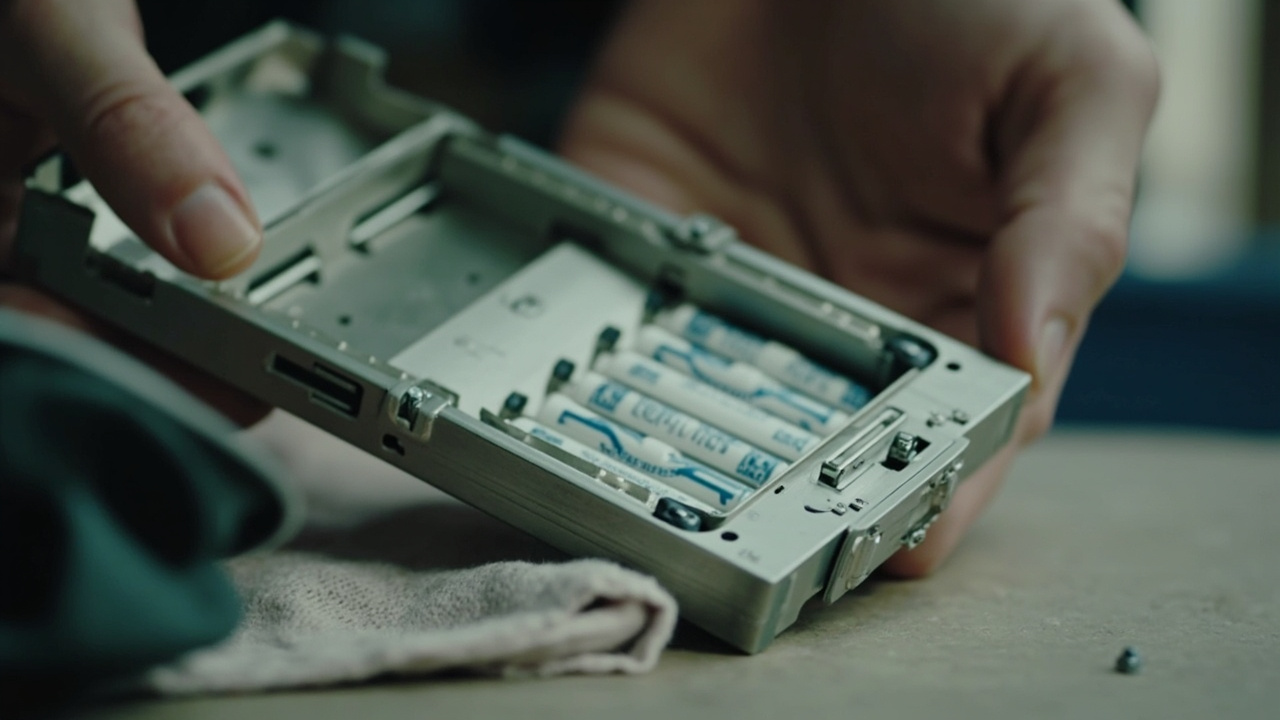
The Field Failure Triage Site Record Sheet
A diary of one object: the field failure triage worksheet, carried through six months of post-handover operations at a mixed smart-lock portfolio, from the first stiff handle to the version stamp on a revised sheet.
Direct answer. To put it plainly: field failure triage worksheet has to hold for field failure triage worksheet. field-failure-triage has to hold at the same time. The sections below describe the order field failure triage worksheet is settled in. A field failure triage worksheet is a lifecycle guide. It starts where the invoice ends. field failure triage worksheet is what has to be measured to keep the field failure triage worksheet record usable.
Day two after handover. Door 214, block A. The first-line technician has a short window at that door before his next job, and at the end of it he has to choose: swap the unit, or send something back to the support desk with a story attached. This diary is about the object that decides what he is actually able to send — a site record sheet that starts as printed columns and ends, if it is used well, inside a warranty claim file or an engineering review. Everything here is written as procedure and record, not as a product pitch: the lock on the door is the problem, and the worksheet is the evidence.
I have run field service documentation across enough sites to know that the same three shapes of failure repeat. The sheet never exists when the first fault arrives. It exists but only as a list of actions, with no record of what each action excluded. Or it exists, filled in, and carries claims the site cannot make — numbers the site never agreed, promises no supplier has given. Each of those failures is a design fault in the sheet itself, which is why this diary is organised around the columns rather than around the faults.
Why a worksheet exists before the fault does
Triage at the door is a sequencing problem: what to test before what to replace. Someone else owns the ordering; the sequencing itself lives in A Field Decision Tree for Field Failure Triage. What I own here is the paper. A decision, however well taken, evaporates unless it is captured in the ninety seconds it takes to make it, and a technician under time pressure will not compose prose. He will fill in a column if the column is already printed.
That is the whole argument for a field failure triage worksheet rather than a notebook. A notebook records what the technician remembered. A worksheet records what the form asked him to establish, including — this is the part most sheets miss — what each test excluded. A field record without a ruled-out column is a list of actions. A list of actions cannot be read by anyone who was not standing there, which means it cannot be read by the support desk, the insurer, the claims file, or the person who takes over this portfolio in two years. What can be supplied is listed in the smart door locks.
One more scoping note before the entries begin. A portfolio needs several records: the acceptance sheet at handover, the snag list, the maintenance calendar, the RMA paperwork. Those siblings are real documents for real moments, and the whole set deserves the fuller treatment given in Field Failure Triage Documentation Set. This diary is deliberately smaller: one sheet, the one that gets written at the door while the door is still the subject.
Why does that single sheet matter commercially? Because the moment a fault is disputed — by a contractor, a carrier, a supplier, an insurer — the only party who can reconstruct what happened is the one holding a record that shows not just what was done but what each step ruled out, and in what order. Everything else in this cluster is planning. The worksheet is the part that survives contact with a door.
What the sheet should physically
Debatable, and I have changed my mind twice.
My first version was a laminated card: ten columns, pencil-proof, one per visit. It survived rain and dock-house condensation, which the paper version did not. Its failure was the ruled-out column — the space provided was too small for a sentence, so technicians wrote a word, and a word rules nothing out.
The second attempt was a phone form. Better structure, worse reality: the two sites in this portfolio had signal in the riser rooms and none behind the fire doors where faults actually cluster. A form that needs a network to record a fault is a form that records no faults.
What settled it, and what I would print for your doors: a paper sheet designed to be photographed. Print the columns; leave the entries hand-written; photograph the completed sheet at the door while the door is still in frame, and let the photo carry what the handwriting cannot — the state of the latch, the reading on the tester, the label with the model and variant on it. One sheet, one photo, one job number linking them. If your teams already run a digital job system, the same design transfers; the point is not the medium, it is that the ruled-out column is mandatory and the photo is attached before anyone leaves.
Whatever medium wins at your sites, the sheet needs a version stamp at the foot of every copy. Entries are evidence about the sheet as much as about the door. When you read an old entry and ask why nobody recorded the credential state, the version number answers: the sheet in use at that time had no such column.
Entry one, day two after handover — door 214, stiff handle
Reported: door 214 slow to open from the inside, handle stiff, no app notification, no beeping. A classic ticket for a replacement, and it is the one I keep coming back to in this diary because nothing was wrong with the lock.
The technician did three things at the door, and I have reproduced them below only as they appeared in the ruled-out column, because the order is the decision-tree sibling's territory, not mine:
- He checked whether the lock was sitting in a locked or unlocked state and whether the handle was free at all. The entry recorded that the mechanism appeared to be trying to re-latch against a pre-loaded latch. What it ruled out, in his words: door alignment and closer force, not yet, but the symptom moved off the lock.
- He turned the mechanical override by hand. It turned freely. That entry ruled out a seized gearbox, and with it most of the theory that the unit was dying.
- He looked at the door leaf and the strike rather than the escutcheon. The closer had been adjusted during a works visit nobody had told the operations team about, and the leaf now pressed against the latch before the motor finished its cycle.
Resolution: the door was referred to the closer adjustment, the lock was never opened, and the entry closed with the door operable and nothing replaced. First-time fix, technically, though the first-time fix was on the door furniture rather than on anything with a PCB in it. If you want a definition of first-time fix that survives that subtlety, the table further down this diary is the one I use, and it deliberately says what the measure does not tell you.
What the sheet captured — and this is the point — was not that checks were run. It was which theories died at which moment. Three entries, three exclusions, one conclusion nobody standing at the door had needed to guess at. Six months later, when a similar ticket arrives for door 341, whoever reads entry one can see exactly why the handle test comes before the battery theory, and can see what a passed handle test excludes.
One small design note came out of this entry. The first print of the sheet had a column called Findings. Within a fortnight, door 214 taught me the label was wrong: findings is what you found, and a record of what you found invites a noun. What I needed the technician to write every single time was what the check had excluded. The column was renamed Ruled Out on version one, and it has been the argument of this diary ever since.
The columns you print before anyone is in trouble
The minimum record at the door, in the order I now print it. Every line exists because some entry in this diary hurt without it. The first ten columns are the worksheet; the last two are what ride along with it.
| Column | What goes in it | What its absence costs you |
|---|---|---|
| Door or unit identifier | The object schedule reference, not the room number | Rooms get renumbered; objects keep their identity across a whole programme |
| Model and variant | Read from the label or the catalogue row at the door | Variants within one model differ in ways that matter to diagnosis; guessing the model guesses past them |
| Specification source | A note that any spec used in the diagnosis was taken from the dated product page for the specific SKU | A memory-based spec turns one technician's error into everyone's |
| Date and time reported | When the fault entered the agreed channel, not when someone noticed | This timestamp and the next one are the two numbers behind any availability or resolution measure you compute |
| Date and time operable again | When the door could be used normally again, however provisionally | Without it the whole record is anecdote |
| Symptom, in the technician's words | The reporter's own description, unimproved | Polished symptoms stop matching other symptoms; the raw words are what cluster |
| Measured observation | What a meter, a reading or the eye actually showed | Turns a symptom list into evidence |
| Checks run, in order | One line per check, numbered | Out-of-order triage looks the same as triage on the wrong branch |
| Ruled out | For each check, the thing it excluded | The difference between a record and a receipt |
| Parts fitted or unit swapped | What went in and what came out, with the old unit retained | An unreplaced old unit is an unexamined witness |
| Credential state before and after | The state of any card, code or fingerprint enrolment touched by the work | Silent credential loss shows up months later as an access incident nobody can explain |
| Photo or reading | The reference of the image or meter reading supporting the conclusion | A conclusion with no picture is a claim |
Two of those rows deserve the argument I had to have internally before printing them.
The identifier row. For years I let site teams use room numbers because that is what occupant tickets contain. Then a block was renumbered mid-diary, and four months of entries became unlinkable. The object schedule — the register you built for the Smart Lock Door Measurement Guide exercise, or its successor — is the only identifier that survives fit-out changes, room mergers and the passage of time. The room number can ride alongside as a courtesy; the schedule reference is the spine.
The specification source row. The reason it exists is a door where a technician asserted a cell count from memory, got it wrong, and diagnosed a power fault that was a compartment mismatch between two similar variants. The rule after that: the model and variant come off the label at the door or the catalogue row, and wherever a specification actually drove a decision, the sheet notes that it was read off the dated product page for that specific SKU rather than recalled. Model-level detail — dimensions, read distances, cycle behaviour, what a given variant offers where a similar one does not — is a per-SKU question, and a site record sheet that pretends otherwise is teaching its technicians to guess.
The ruled-out column, filled in properly
Here is the column with its examples, because the empty table above is decoration until someone has seen entries. The left column pairs with the checks a competent technician already runs at the door; the middle is what I want written down; the right is the discipline that keeps the entry honest about what it has not proven.
| Check at the door | What the ruled-out entry should say | What that entry does not say |
|---|---|---|
| Locked or unlocked state; handle free at rest | Re-latching against a pre-loaded latch — alignment and closer force now suspects, not the motor | That the door was the cause; that came from the next two checks |
| Handle turns freely by hand | Mechanical override moves — seized gearbox excluded | That the drive and electronics are good; only that the body is not locked up |
| Indicator and app behaviour | Low-battery alert, jam indication, and no response at all logged as three different symptoms | A diagnosis; this row exists to show which branch was entered |
| Cells or pack measured at the terminals | Measured voltage against the alert: the alert is a threshold, not a measurement | That the cells were flat or fine — the reading says what it said |
| Emergency power input, if the model offers one | Test at the terminal or external port recorded as present, absent or untested | Anything about the rest of the power path |
| Physical state against recorded state | Door position and lock state mismatch — configuration or synchronisation suspect, drive excluded | That the electronics are healthy; only that the motor theory died |
| Opens by override key but not by credential | Credential path suspect — motor and drive excluded for this symptom | That the credential layer is definitely at fault; only where the branch goes |
| Same fault on a second door of the same variant | Fault fingerprint matches across two units — stop replacing, suspect configuration, firmware or supply batch | Who fixes it; that is an escalation question, not a door question |
Read the right-hand column of that table out loud at a team meeting once and the sheet designs itself. Every entry in the middle column overstates if anyone forgets the right-hand column exists. Excluding a seized gearbox is real knowledge. Declaring the lock healthy is not what happened, and a record that declares it will be believed by nobody who knows the difference — which is exactly the audience of the support desk and the claims file.
The last row is the one that separates a repair from a mass replacement, and it cannot be written at one door. It is written when two sheets describing the same variant sit on the same desk, which is another reason the identifier and variant rows are not clerical niceties. When that second sheet lands, who the fault goes to and how severity gets fixed is not decided here — the routing and the deadlines are laid out in Field Failure Triage: The Escalation Route and Its Deadlines.
Entry two, week six — the alert that lied twice
Three doors in one week, different blocks, same reported symptom: lock dead, app says low battery. On the old notebook style this would be three battery changes and one invoice. The sheet made it a sequence.
Door 118: cells measured at the terminals, and the reading said the cells were nowhere near the alert threshold. The alert itself was the suspect — a threshold, not a measurement, and this door's threshold had been met while the pack had no business meeting it. What I want from you is the second row of the ruled-out table applied live: the measured reading excluded the flat-battery theory, and the entry then had to say so. The cell compartment, the contacts, the reading — all on the sheet, all photographed. The low-voltage signalling behind alerts like this one is treated at buyer level in Smart Lock Low Battery Warning.
Door 141: same reported symptom, different sheet. Here the cells genuinely were spent and the door came back up after replacement, old cells retained, credential state checked before and after because the compartment loss had dropped an enrolment that nobody noticed until week eight. That is the before-and-after row earning its place: a quiet enrolment loss during a battery swap is exactly the kind of thing that surfaces months later as an access incident with no explanation.
Door 166: dead, alert present, and the replacement cells did nothing. This is the entry where the sheet saved money. The check order took the technician to physical-versus-recorded state, and the door was found in a state the controller thought it was not — a configuration problem, not a motor problem, not a power problem. Recovery of configuration at the door is a procedure of its own; what the worksheet needed to capture was simply that two more theories had died, so the eventual fix could be attributed rather than guessed.
Three tickets, one symptom, three different branches, all recorded before the week was out. Nobody replaced a unit that week. The support desk, reading the three sheets together, asked the obvious follow-up question — was the alert behaving identically across three units of one variant? — and that question is what a well-designed field service record is for: it makes the pattern visible to people who were never at the doors.
Entry three, week nine — the same fingerprint of a fault
The fault looked small: on two doors, same variant, the fingerprint sensor accepted a finger, the motor began its cycle, and the latch stopped short. On the second occurrence, a replacement-happy operation would already have shipped two units.
What the two sheets showed side by side was identical ruled-out columns. Handle free. Override turns. Power measured good. Credential path partly good, since the card opened both doors normally while the enrolled finger did not. Motor theory dead, power dead, credential enrollment dead as far as the card could show. What remained alive: something about how that variant drove the latch on that input path — configuration, firmware or batch.
So nothing was replaced, and both old units — which would have been in a skip — were retained and bagged with the sheet references on the tags. Whatever the supplier's engineering review decides about those two retained units is the supplier's process to describe, not mine to promise: ask the questions, demand the evidence. What is mine to describe is that the review had anything to work with at all. A triage record that stops at the actions gives an engineer two door tickets. The same record with ruled-out entries and retained units gives them a comparison. Whether the answer turns out to be configuration, firmware or a supply batch, the sheet is the common evidence; the reader who wants the door-level view of firmware faults specifically should not expect this diary to duplicate it.
This is also the entry where the sheet first travelled outward instead of inward. For the first two months it had been an internal document. Week nine was the first time the ruled-out column did the job the whole design was for: convincing somebody who was not there, with no stake in the outcome, that replacing the units would have destroyed the only evidence available.
What never belongs on a site record sheet
The sheet gets read by people with an interest in what it says: contractors in disputes, insurers after events, claims handlers before decisions. That audience is the reason some tempting entries are poison.
| Tempting entry | Why it does not belong | Where it actually goes |
|---|---|---|
| A price or quote value on the sheet | Turns an evidence document into a commercial one, and the number is stale the day it is written | Procurement records |
| A promised lead time for parts or units | It is nobody's promise to make from a door, and it reads like one | The agreement that governs the supply |
| A warranty duration or expiry claim | Whether this fault is inside anything is a per-product, per-agreement question | The claim submission, sourced from the agreement |
| Availability, response or resolution targets | These are the buyer's planning assumptions; the sheet supplies measurements, not targets | The operating plan that sets them |
| A defect rate or failure statistic | One site's population is not a rate, and the arithmetic invites everyone to redo it badly | Analysis across many completed sheets |
| The room number instead of the object reference | Rooms change; objects do not | Nowhere — delete it as the identifier |
| Speculation about blame — who caused it | Evidence survives disputes; opinion gets the whole sheet discounted | Leave it out entirely |
| The word fixed with nothing excluded | Fixed is a feeling; a ruled-out column is a proof | The ruled-out column, always |
The underlying firewall is simpler than the list. Anything the site has not agreed, and anything a supplier or carrier has not committed to in writing, has no business being asserted in ink at a door by a technician who will not be in the room when the document is read. Where a sheet needs to gesture at such a thing — what the support desk does with returns, whether a freight arrangement covers the retained unit's trip back — it writes the question, not the answer, and marks it for the contract review. The clauses themselves, and how to tell a supportive one from a decorative one, belong to the contract-side reading of this standard rather than to this diary.
CONFIRM-PER-SUPPLIER: any line in your own sheet that describes what a supplier, carrier or warranty process will do should be written as a question to ask and evidence to demand, and checked against that supplier's written terms before it influences a decision.
Entry four, the crossing — same sheet, second jurisdiction
Week fourteen, a second site across the border, forty minutes by road and an entire legal system away: same operation, same lock variants, same worksheet with a translation strip along the left margin.
The sheet crossed beautifully. The columns are mostly nouns, the ruled-out entries are short sentences, and evidence is evidence. Three things did not cross cleanly, and all three were site-law questions rather than lock questions.
Time zones and clocks: the two sites kept different time conventions in their ticketing, and one entry briefly looked like a fault that resolved before it was reported. The fix was a column header change — every timestamp now states its clock convention beside it — not a change to anything legal.
The escape question: on this portfolio the doors have levers on the inside, and across the border the equivalent doors sit inside a conversation about escape route responsibilities and what any operation may touch while doing so. Whether a given door's escape function constrains your triage procedure is not something a worksheet from the other side of a border can answer. It is a per-site, per-jurisdiction question for the people who carry the responsibility on that site.
CONFIRM-WITH-LOCAL-LEGAL: before your triage procedure touches exit hardware, fire doors or anything on an escape route, confirm the constraints with the local authority, the site's own responsible person and its insurer for that jurisdiction; the worksheet records that the check was made, never what it concluded elsewhere.
Data, quietly. Credential state before and after sits on the sheet — card references, enrolment status, sometimes names in the technician's handwriting. What may be recorded, stored and carried across a border about identified people's access data is not a lock question and not a support question.
CONFIRM-WITH-LOCAL-DATA-PROTECTION-REVIEW: confirm with a reviewer qualified for both jurisdictions what access-credential information your sheets may hold, in what form, and where the photographs of completed sheets may live.
The diary lesson from the crossing is a small one and I state it plainly: the worksheet was the most portable document in the whole handover pack. Drawings need re-issuing, agreements need redrafting, even the maintenance calendar needed re-phasing for the second site's regime. The sheet crossed in a week, needing a header change, a translation strip, and a legal review of two rows.
From the door to the support desk — the sheet as a message
Everything above is the sheet at home. Its outward life is the reason for half its design. A completed worksheet sent to a supplier's support desk is an argument, and the argument is: here is what died at the door, in order, with measurements and photographs, before anything was replaced.
The first version of this diary's flowchart existed because the operations team could not agree what a return package contained:
flowchart TD
    A["Fault enters the agreed channel"] --> B["Sheet opened at the door"]
    B --> C["Checks logged in order with rule-outs"]
    C --> D["Branch decision at the door"]
    D --> E["Door operable - sheet closed and filed"]
    D --> F["Unit swapped - old unit retained and tagged to sheet"]
    D --> G["Pattern suspected - variant and batch flagged"]
    F --> G
    G --> H["Sheets travel to written support"]
    H --> I["Claim file or engineering review"]
    E --> J["Month end - entries read as a set"]
    I --> J
    J --> K["Version bumped - sheet revised"]
    K --> B
What to attach when the sheets travel: the photographed sheet, the retained unit with its tag matching the sheet reference, the model-and-variant line from the label, and the dated-product-page note where a specification drove the diagnosis. What to ask in the same message — as questions, because the answer is that supplier's process to state and nothing I can write for you: does your written support procedure ask for the ruled-out entries before authorising a return; does it want the retained unit back, and who arranges its journey; do you read sheets in sets across doors of the same variant or case by case.
CONFIRM-PER-SUPPLIER: treat each of those questions as a clause to get in writing before you need them, not as a courtesy to discover during a dispute; where the answer depends on the unit itself, the dated product page for the specific SKU is the reference, not a recollection.
A support desk that receives the actions-only kind of sheet has to reopen the diagnosis from zero, which in practice means the technician at the door gets a phone call or, worse, a replacement arrives that tests nobody's theory. The sheet saves both parties the same thing: the argument you already settled at the door.
When the sheet becomes a claim file
Nobody writes a claim in the present tense at the door. But the claim — whenever and whether it is ever submitted — is assembled from what the sheet held, and the evidence that a claim can stand on is collected before the door is closed, not reconstructed afterwards. The case for capturing it while it is fresh, and the cost of the reconstruction version, is argued properly in Field Failure Triage: Recording the Case Before It Is Gone; this diary stays with the columns that make that capture mechanical.
The claim-bearing rows, and why each one hurts if it is missing:
- Reported and operable timestamps. The two numbers behind any measure the buyer computes; a claim about downtime with an empty pair of these is an unanchored assertion.
- Measured observation. The cell reading, the meter value, the photograph of the strike and latch. Reconstruction can produce the symptom again; it cannot produce the reading.
- Checks in order with rule-outs. This is the column that answers the claim handler's real question, which is never was there a fault but was your procedure competent before it escalated.
- The swapped unit, retained. A returned unit with a tagged sheet reference is an examination object. A returned unit that went to a skip is a rumour.
- Credential state before and after. Where the incident around the fault touched access, the claim will be about access, and the enrolment record is the document the handler reads first. The wider rules about who holds which credential live with Smart Lock Credential Security, and the access-side reading of installed hotel fleets with the Hotel Smart Lock Maintenance Guide; the worksheet's job is only to state, at the door, what the credential path looked like on both sides of the work.
What the sheet must not do is argue. I have read claim-supporting sheets that contain sentences like supplier at fault, and I have watched a claims handler discount an otherwise excellent evidence pack because of one such line. The ruled-out column is an argument already, made in the strongest register available: a competent technician, in order, with measurements, explaining what each theory died from. The claim writes itself from that, or it does not write, and either outcome is information.
The service words you will type into it
The vocabulary on the sheet borrows from service measurement, and the sheet is where the definitions have to survive daily use, so I print this strip on the reverse of the worksheet. Definitions only — the numbers behind every one of them come out of your own completed sheets, and none come from this diary.
| Term | The definition the sheet assumes | What it does not tell you |
|---|---|---|
| Response time | Reported through the agreed channel until a person or system acknowledges | Whether anyone attended the door |
| On-site attendance time | Acknowledgement until someone stood at the door | Whether the door was fixed |
| Resolution time | Reported until the door was operable again | Why it took as long as it took |
| MTTR | The mean of resolution intervals over a stated period and population | Anything about the tail, or the doors nobody reported |
| Availability | Operable time over scheduled time, across a stated population and period | Whether that population is the one that matters |
| First-time fix | A visit that ends operable with no repeat visit for the same symptom | Whether the root cause was found |
| Repeat rate | The share of failures returning inside a stated window | How bad each return was |
| DOA | A unit failing before normal service, with the arrival-versus-use boundary stated in the agreement | Whose fault it was |
| RMA | The return-authorisation route: what is authorised, shipped, sent back | Who pays the freight |
The first-time fix row did real work in this diary's portfolio. Door 214 ended with a first-time fix that fixed a closer, not a lock — the door was operable and nobody returned for the same symptom, so the measure counted it, and the sheet alone shows anyone why that is either a fine outcome or a warning about what the measure is not measuring. Definitions belong on the sheet because a measure without a shared definition is a negotiation, and you do not want to be negotiating what resolution time means in the middle of a dispute about it.
A note I will not let disappear from this section: every one of those words describes something the buyer computes from their own records. This fact base — the cluster's, and this diary's — publishes no availability figure, no response or resolution time, no service-life number, no defect rate and no warranty period. Where a template somewhere invites you to fill that column in on the sheet, the honest fill is your own computed value against your own stated target, with the timestamps that generated both, and a marked line for the target the plan sets rather than the one the building achieved.
Revisions — bumping the version after month three
Every entry in this diary ended as a column change. Here is the printed history, in the form the foot of the sheet now carries:
| Version | What changed | What it was taught by |
|---|---|---|
| v0 | A notebook, renamed | Nothing yet; that was the problem |
| v1 | Findings column renamed to Ruled Out, one mandatory line per check | Door 214 — the stiff handle that was not a lock |
| v2 | Specification-source note added beside model and variant | The compartment mismatch blamed on a remembered cell count |
| v3 | Credential state before and after, plus photo reference column | The enrolment that vanished during a battery swap and surfaced in week eight |
| v4 | Clock-convention header, translation strip, legal-review marks on the rows that crossed the border | Entry four, the crossing |
| v5 | A variant-and-batch flag beside the ruled-out table's final row | The two doors whose identical sheets stopped two replacements |
Two revision rules came with the versions. Bump the stamp in ink as soon as the change ships, because entries are evidence about the sheet too, and reading history needs to know which standard a given entry was written against. And refuse changes that add opinion columns — the portfolio generated requests for a priority column on the sheet itself, which is escalation routing wearing a lab coat, and belongs in the routing rules, not at the door.
The version discipline is also how a single sheet stays a single sheet. The temptation at month six is to grow the worksheet toward the documentation set — acceptance references, maintenance tick-boxes, the handover history. Resist it, or you end up with a form nobody at a door will fill, which is the same failure as v0 wearing better clothes. When the portfolio genuinely needs the whole family of records, that is a different document with its own owner, linked from this one rather than merged into it.
Entry five, month six — the quiet use
The sheet's least dramatic fortnight was also its best argument. No faults escalated; a planned inspection round used the same columns for the same reasons: state and handle free, override by hand, reading against alert, physical against recorded, credential path touched and recorded before and after. The preventive-versus-corrective question — which of those inspections earns their keep — is a split worth its own thinking, and the diary does not settle it here; the worksheet simply proves itself useful on both sides of the line.
Quiet weeks also did the arithmetic nobody had planned for. Twenty-one completed sheets sat in the job system with matching photographs, and reading them as a set — the flowchart's month-end loop made visible — showed the alert-threshold behaviour from entry two on three more doors nobody had escalated, all one variant, all caught at inspection rather than incident. The variant-and-batch flag, which existed because of week nine, did exactly what it was designed for: nothing needed a phone call, because the sheets already pointed at each other.
The technician from day two left in month five. His sheets were the induction material of the replacement, cover to cover, including the door 214 entry printed and taped inside the riser-room door where the closer gets adjusted every season without telling operations. That is the last use a site record sheet has, the one I had not designed for: it is the operation's memory of itself, written by people who will not always be there.
Taking the sheet to your own doors
Start smaller than this diary makes it sound. Print the twelve rows from the columns table as a single landscape sheet, put the ruled-out label on it, stamp it v0, and run it for a month on every reported fault at every door in scope, however trivial. Do not add the vocabulary strip until someone misuses a word in a real dispute; do not localise anything until someone crosses a border with it. Then sit down with the completed sheets and make your version history, which will not match mine, because your doors taught your columns.
The measure of the first month is narrow and fair: how many entries say what each check ruled out, and how many end with a photograph reference. If those two numbers are alive, the sheet is working, and the escalation paths, the support-desk questions and the claim-ready files all assemble themselves from it later. If they are not, the design — not the technicians — failed, and this diary has told you where the columns were too small, too optional or too polite.
The documents at this end of the pipeline — the worksheet, the set it belongs to, the tree that feeds it — all exist to make the moment at the door survivable by the people who were never there. If you want the supplier side of that arrangement: what written support should be asked to look like, what evidence a support desk should be required to request before authorising a return, and how a claim-ready record helps your teams long after the project files close, those are conversations worth having before the fault, not during it. Start them through the service pages, read what we publish on support and warranty, and take the evidence-pack questions to buyer resources before your next portfolio goes live.
Close the loop with requesting a quote.