
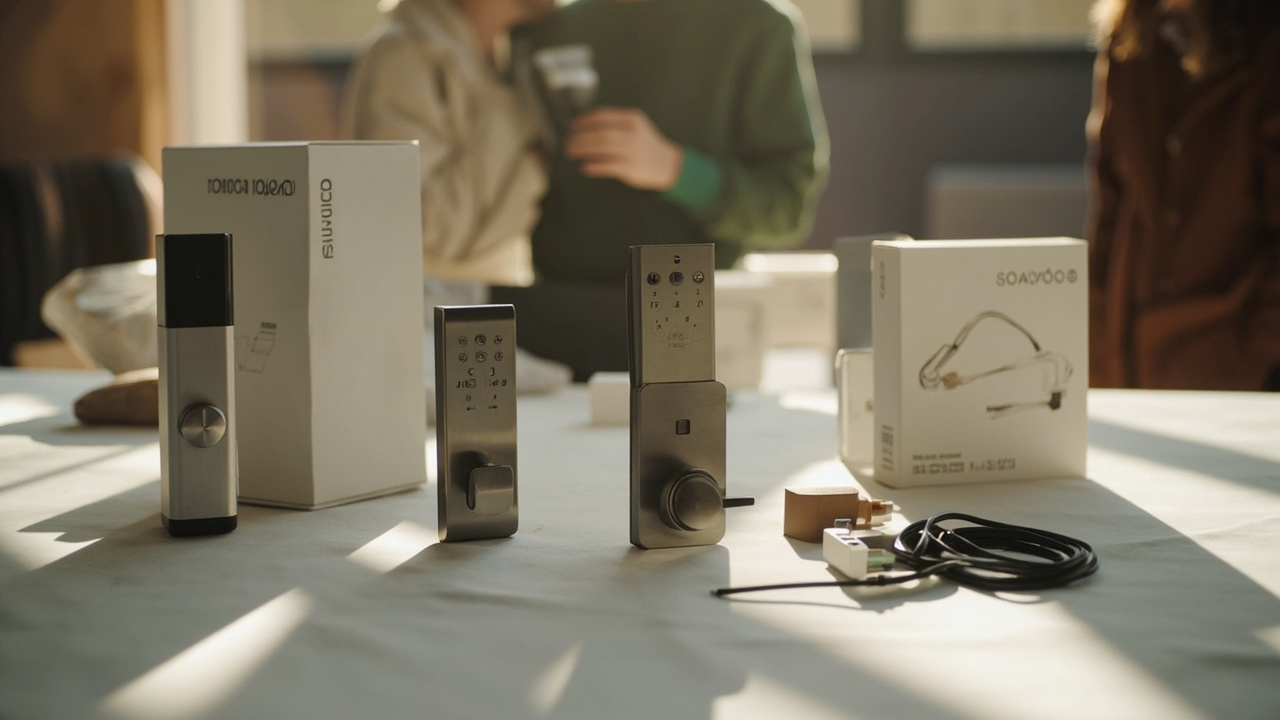
Data memo: power source and cylinder architecture
Memo control — external power versus euro cylinder build to rent comparison
| Memo field | Working entry |
|---|---|
| Decision stage | Evaluation |
| Buyer | Procurement Manager |
| Scope | Build-to-Rent and Multifamily |
| Decision | Select a lock architecture by door class |
| Evidence status | Site and SKU evidence still required |
This data memo asks whether a build-to-rent and multifamily programme should standardise on an externally powered smart lock or a euro-cylinder-based arrangement. The external power versus euro cylinder build to rent comparison must not start with unit price: power architecture and cylinder interface solve different parts of the door. They can coexist, so this memo compares programme routes rather than mutually exclusive hardware categories. What can be supplied is listed in the smart door locks.
Direct answer. Short version — external power versus euro cylinder build to rent comparison is treated here as external power versus euro cylinder build to rent comparison first. euro-cylinder comes second. The evidence for external power versus euro cylinder build to rent comparison is named in the sections below. An external power versus euro cylinder build to rent comparison compares alternatives without marketing language. external power versus euro cylinder build to rent comparison carries the weight in the scoring of external power versus euro cylinder build to rent comparison.
On external power versus euro cylinder build to rent comparison, this article uses external power versus euro cylinder build to rent comparison as the definition. It treats external power versus euro cylinder build to rent comparison as a working definition specific to this market and product, rather than a general one.
- Name the basis — name the criteria for external power versus euro cylinder build to rent comparison before comparing anything
- Hold every option to it — score every option against euro-cylinder the same way
- Set out the cost — say what each option in memo control costs you
- This is the sequence external power versus euro cylinder build to rent comparison has to follow, anchored on euro cylinder.
For the build to rent door programme, separate the unit door, communal entrance, cycle store and parcel room into door classes. A multifamily access control requirement may justify a powered smart lock at one entrance without making that architecture right for every unit.
Definitions to freeze before any option is scored
Define external power before scoring. State whether each candidate has a continuous wired supply, an emergency external input, or both. Record the connector, cable route, planned isolation point and behaviour during loss of supply. The catalogue field external power override via USB terminal is not proof of a continuously powered lock. Confirm on the dated product page for the specific SKU and request the installation drawing.
Define euro cylinder by its physical interface and operating method. A euro profile cylinder can be part of a mechanical or electronic lock body; the format alone does not establish permissions, event records, remote control or an automatic schedule. Require the bidder to identify the lock case, cylinder length, cam or follower arrangement, key-control process and emergency-access method.
Evidence base and decision limits
The dated first-party catalogue contains 79 published models, including 77 categorised as smart door locks. It records RFID/IC card on 72, mechanical override key on 63, passcode/keypad on 55 and mobile app on 41. These are catalogue counts, not evidence that a candidate fits this estate. Model-level power, cylinder, door-fit and management claims require confirmation on the dated product page for the specific SKU.
Use the Office Smart Lock Site Survey as a field-method reference where several access patterns operate within one building. The Smart Lock Retrofit Site Survey is closer to an existing housing stock. The companion External Power Versus Euro Cylinder: Decision Matrix for Build-to-Rent and Multifamily Operators provides a paired scoring structure. Survey methods do not establish product compatibility.
Decision matrix for the two programme routes
The matrix below compares programme implications rather than declaring one lock type suitable for every opening. Each cell identifies an item the bidder must evidence.
| Criterion | External-powered smart-lock route | Euro-cylinder route | Required evidence |
|---|---|---|---|
| Power and continuity | Requires a designed feed; define the power-loss state | May be mechanical or electronic; bidder must define the source | Supply drawing and witnessed test |
| Existing door fit | Panel, backset, spindle and strike geometry must fit | Lock case, cylinder length and follower interface must fit | Door fit survey |
| Access administration | Credential and event-record functions must be demonstrated when required | Key control or electronic-cylinder functions depend on the candidate | Configuration and sample records |
| Turnover | Issuing, revocation and audit retrieval need a tested procedure | Cylinder or key replacement and handover need a tested procedure | Operator process test |
| Failure and recovery | Define outage behaviour and restoration method | Define mechanical operation and emergency-access method | Failure-mode test |
| Maintenance | Plan access to wiring, supply and electronics | Plan access to the cylinder, key and mechanical components | Service method statement |
| Total cost per door | Include supply infrastructure and site preparation | Include cylinder work, key service and hardware replacement | Normalised cost model |
| Programme fit | Can suit planned shared doors with infrastructure | Can suit reusable stock with simpler unit-door control | Door-class allocation |
Do not select the route with the higher aggregate score if it fails door fit, transition control or service access. A fatal-fit or unresolved-failure issue should return the candidate for clarification rather than being offset by administrative benefits.
Allocation by door class
The strongest decision is usually a split programme, not one lock imposed across every opening. Use observed access and service conditions to decide which route leads.
| Door class | Leading route and condition |
|---|---|
| Communal entrance | External power leads where supply is planned in, the entrance is used frequently and centralised administration is required. The euro-cylinder route remains relevant where the existing lock case fits and simpler access control is sufficient. |
| Unit entrance | The euro-cylinder route leads where reusable lock cases and resident key or cylinder administration are adequate. External power leads where centralised credentials and records must connect to the operator’s systems and supply infrastructure is available. |
| Cycle store or parcel room | External power leads where wiring is planned and frequent use creates a stronger maintenance case. The euro-cylinder route can suit existing doors when the required control and emergency-access arrangements are demonstrated. |
| Mixed existing or new-build estate | Split the package by door class. Forcing one architecture across incompatible doors creates avoidable site variation and weak fit evidence. |
flowchart TD
  A[Classify doors by access pattern] --> B{Existing lock and wiring condition}
  B -->|Reusable lock case| C[Evaluate euro cylinder route]
  B -->|Planned supply and new installation| D[Evaluate external power route]
  C --> E[Compare access and service evidence]
  D --> E
  E --> F[Run representative door pilot]
The diagram turns the programme into a sequence: classify first, select a route, gather comparable evidence, then approve through a representative door pilot. It prevents a technically attractive lock from being selected before its door interfaces are known.
Door fit survey record
Each door fit survey record should connect the physical door to the proposed lock architecture. Include at least:
- Door identifier and class: unit, communal, cycle store or parcel room.
- Leaf, frame, opening direction, door thickness and frame rebate.
- Lock case, backset, cylinder length, spindle or follower, latch, deadbolt and strike.
- Existing power route and planned isolation point.
- Current credential and mechanical override arrangements.
- Turnover frequency, peak-use observations and maintenance-access route.
Record what cannot be measured on site. Supplier drawings can resolve an interface, but they cannot replace checking the actual door.
Total cost per door model
Compare total cost per door over the operator’s actual tenancy and turnover assumptions rather than comparing hardware entries alone. Use this structure for each route:
Total cost per door = installed hardware + site preparation + power provision + turnover work + service and recovery
| Cost element | External-powered route | Euro-cylinder route |
|---|---|---|
| Installed hardware | Lock, panel, strike and related components | Lock, cylinder and strike components |
| Site preparation | Cable route, access and frame preparation | Cylinder access and frame preparation |
| Power provision | Supply equipment, testing and planned maintenance | Only where the candidate requires it |
| Turnover work | Credential issuing, revocation and audit retrieval | Key or cylinder issue, replacement and handover |
| Service and recovery | Planned intervention and end-of-tenancy recovery | Key service, cylinder replacement and mechanical recovery |
Ask for an itemised quote and state every operating assumption beside it. The result is a comparable operating model, not a generic allowance. It also shows where the external-power route adds infrastructure work and where the euro-cylinder route adds key or cylinder administration.
Weighted procurement scorecard — rent comparison
Use a separate score for each door class. The following weights form an illustrative worksheet, not market data; procurement may adjust them before bids are received.
| Criterion | Weight | Evidence used |
|---|---|---|
| Door fit and serviceability | 20 | Survey, drawing and physical mock-up |
| Access administration | 15 | Credential, permission and record demonstration |
| Turnover workload | 15 | Issue, revoke, handover and recovery process |
| Power continuity and recovery | 15 | Failure and restoration test |
| Hardware and key control | 15 | Physical inspection and documented operation |
| Installation disruption | 10 | Installation method and access plan |
| Total cost per door | 10 | Normalised operating model |
Score each candidate from zero to five against the stated weight, then retain the evidence beside the score. Do not average a communal entrance into a unit entrance. Any zero score for fit, emergency operation or administrative handover should trigger clarification before programme approval.
Validation and failure-mode plan
Run the same evidence capture for both routes, with route-specific tests added where needed. The objective is to learn how the installed configuration behaves, not simply whether the lock operates once in a showroom.
| Test | Evidence to retain | Primary route sensitivity |
|---|---|---|
| Supply interruption | Recorded state during loss of supply and restoration | External-powered route |
| Cylinder or mechanical operation | Exercised key, emergency access and mechanical release | Euro-cylinder route |
| Credential turnover | Issued and revoked credential plus retrieved records | Digital administration route |
| Physical installation | Installed panel or cylinder, strike engagement and service access | Both |
| Environmental boundary | Door exposure and documented operating limits | Both |
CONFIRM-WITH-LOCAL-ELECTRICAL-AND-FIRE-APPROVAL: Confirm the power arrangement, power-loss behaviour and any escape-door requirements for each project with the relevant local authority and building approver; acceptance is per door and jurisdiction.
A catalogue field or category-level observation is not a substitute for the model and installation being evaluated.
Evidence schedule for the tender pack
Request the following evidence for each shortlisted candidate:
- A completed door fit survey linked to every covered door ID.
- A dimensioned drawing covering panel, lock case, spindle, cylinder and strike interfaces.
- The exact power arrangement, including whether external power is continuous or an override input.
- The administrative workflow for issuing, revoking and retrieving access records or managing keys.
- The tested failure state, emergency-access method and restoration procedure.
- The installer and operator responsibilities for first-line diagnosis and replacement.
- An itemised commercial response aligned to the total cost per door model.
Decision and approval route
For the external power versus euro cylinder build to rent comparison, the recommended answer is segmented rather than universal. Use external power as the leading route for new-build communal and shared doors where supply infrastructure is planned, frequent use is evidenced and centralised administration adds operational value. Use a euro-cylinder-based route for unit doors where the existing lock cases are reusable and resident key or cylinder administration is sufficient. Where electronic permissions and records are required at unit level, the euro-cylinder route must be evaluated as an electronic arrangement rather than assumed to provide them.
The practical counterpart to this point is smart locks for factory tool rooms. That is the same question external power versus euro cylinder build to rent comparison has to answer here.Approval should follow four gates:
- Freeze the external-power and euro-cylinder definitions in the tender documents.
- Allocate candidate routes by door class using the survey and programme requirements.
- Score each route independently and resolve any zero-rated fit, failure-recovery or handover issue.
- Pilot the preferred configurations on representative doors before releasing the programme package.
Package the drawings, survey records, scorecards and validated operating assumptions into the approval record. Use the Request a Quote channel only after those records identify the required configuration, allowing the commercial response to follow the same normalised total cost per door structure.