
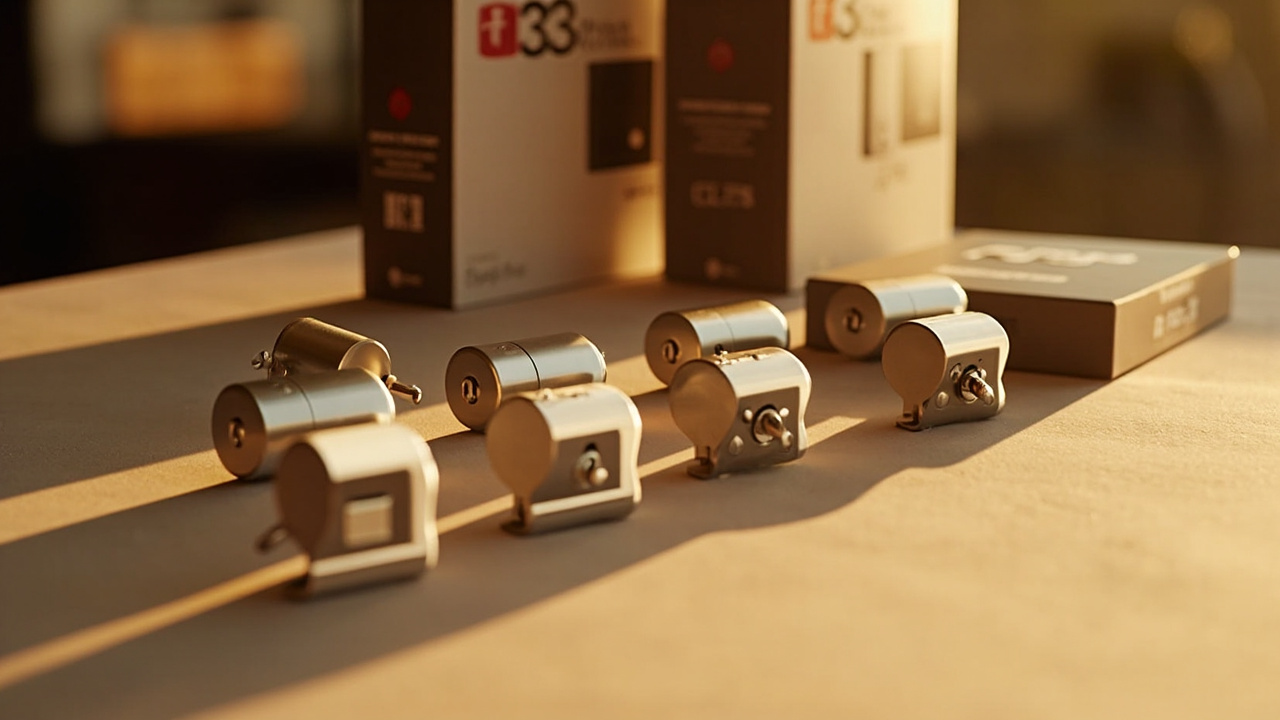
Direct-connect Versus Surface-Mount: Which Fits a Manufacturing Plants and Industrial Campuses Door Programme
Procurement teams evaluating factory access control often see direct-connect and surface-mount options reduced to installation labels. That shortcut hides the parts that decide door strength, service time and credential integration. This direct connect versus surface mount manufacturing comparison takes the lock body, mortise case, strike, panels, power route and credential path apart as one system, then tests each route against goods doors, production-line doorways and outdoor gates. The aim is a door-by-door rule for the manufacturing door programme, plus a supplier package that a plant technician can install, operate and maintain.
Direct answer. The short answer is that direct connect versus surface mount manufacturing comparison is not one decision. It is a sequence. This article takes direct connect versus surface mount manufacturing comparison from direct connect versus surface mount manufacturing comparison through surface-mount to the record you keep. A direct connect versus surface mount manufacturing comparison scores alternatives against criteria a buyer can defend. direct connect versus surface mount manufacturing comparison is the criterion that eliminates the most direct connect versus surface mount manufacturing comparison candidates.
The term direct connect versus surface mount manufacturing comparison carries one meaning throughout this article. It is the one given in direct connect versus surface mount manufacturing comparison. That is a working definition of direct connect versus surface mount manufacturing comparison, and the buyer still has to check it against the dated product page.
- State the criteria — name the criteria for direct connect versus surface mount manufacturing comparison before comparing anything
- Apply the same criteria — score every option against surface-mount the same way
- State the trade-off — say what each option in naming two assemblies costs you
- For direct connect versus surface mount manufacturing comparison, surface mount is what each step has to answer to.
Name the two assemblies before comparing labels
Terminology is not universal. In this component teardown, direct-connect means an embedded electronic lock is coordinated with the door leaf, frame and working lock assembly. Surface-mount means a complete module is fixed to the visible face and connects to defined door and strike interfaces. Require that meaning in the RFQ and mark every component on a drawing; a marketing label alone is not an installation definition. Specifications at this level come off the smart door locks.
Neither label establishes whether a lock is wired, battery powered or networked. The direct-connect lock architecture changes where the mortise case, latch or deadbolt drive, spindle, cylinder and control electronics sit. The surface-mounted retrofit lock changes how much of that mechanism sits outside the door. Power, communications and credentials must be compared separately from construction.
| Layer | Direct-connect route | Surface-mount route | Evidence to demand |
|---|---|---|---|
| Working mechanism | Coordinated case, mortise and drive | External case or retrofit module | Exploded drawing |
| Door interface | Leaf rebate and fixings coordinated | Surface fixings and mounting plate | Section through the installed door |
| Frame interface | Strike and keeper selected together | Adapter or existing keeper retained | Trial dimensions |
| Controls | Reader and electronics related to working lock | Reader and electronics within external housing | Module location and access |
| Service route | Removable panels expose internal parts | External module must be removed | Replacement sequence |
| Power and data | Concealed or fixed route documented | Battery compartment or surface route documented | Connection and outage plan |
Strip the direct-connect assembly to its working parts
Begin with the leaf and frame rather than the lock. Record rebate dimensions, backset, door thickness, spindle positions, latch or deadbolt arrangement, strike opening, frame material and the relationship to any door closer or hold-open device. Then follow the lock inward: case or mortise body, latch and bolt drive, spindle, cylinder and collar, control PCB, motor and gearbox. The teardown should show how each part is removed for diagnosis and whether a technician can replace the failed module without damaging the finished door.
Direct-connect can reduce visible surface hardware and let the lock case, door and frame be engineered as one set. It can also increase fabrication, wiring and replacement work because preparation is less forgiving than a surface installation. Compare door-shop labour, plant downtime and later refinishing rather than lock boxes alone.
Use the Office Smart Lock Site Survey for opening and frame measurements, and the Smart Lock Retrofit Site Survey when a candidate must work with an existing leaf. Request dimensioned, door-specific drawings rather than accepting a generic installation guide.
Strip the surface-mount assembly and expose its interfaces
A surface mount reverses the inspection order. Start with the escutcheon or panel, then external case, fasteners or mounting interface, strike plate and keeper, followed by the connection to the cylinder, spindle, latch or existing pull. Add the visible power compartment, external override and any surface cable. The teardown must show the load path into the door leaf and the movement tolerance across the strike gap.
The recurring weakness is often the interface rather than the reader. Fastener pull-out, panel flex, a moving frame, an adapter that changes latch throw and a cable crossing the door sweep can turn a quick installation into recurring service. For a goods-door lock retrofit, require measurements of the complete installed state, including handles, push plates, signage and existing locking hardware.
Match the construction route to the door it must survive
Manufacturing traffic makes door class more important than finish. Forklifts, tuggers and pallet jacks can transmit impact into a goods door, while a production-line doorway may be opened repeatedly through a shift. The tool store, office, canteen and perimeter gate add different override, finish, pedestrian and weather requirements. One site-wide lock standard is rarely defensible.
| Door class | Main condition | Direct-connect evidence | Surface-mount evidence |
|---|---|---|---|
| Goods door | Impact and repeated operation | Coordinated case and strike accepted by the door fabricator | Adapter carries load without changing throw |
| Production-line doorway | Frequent cycling and clear opening | Case preserves passage, closer and hold-open clearances | Module clears all moving hardware |
| Tool store | Controlled access and override | Technician can service the internal parts | Override and internal components remain reachable |
| Office | Appearance and limited impact | Value justified by planned door replacement | Clean installation and service route demonstrated |
| Canteen | Repeated pedestrian use | Lock and door remain compatible with cleaning | Module avoids impact and remains accessible |
| Outdoor gate | Weather and frame movement | Engineered case, seal and keeper detail supplied | Enclosure, cable and keeper tolerate movement |
Use the table to identify what must be proven, not to declare a winner by label. A coordinated assembly may suit a goods door when the plant controls fabrication. Surface mounting may suit an existing office or canteen door when a smaller intervention matters, provided fit and service access are demonstrated.
Separate construction from power and connectivity
Direct-connect must not be confused with direct-wired. It describes the construction relationship; it does not establish the power source, network route, credential platform or audit destination. For factory access control, ask whether each door is standalone or networked, where the gateway sits, what happens after a power loss, and whether remote unlock and event records are required. Battery compartments, emergency power ports and external override arrangements must appear on the drawing. Request a dated submittal for each proposed model, including dimension drawings, installation guide, datasheet on request and configuration notes. Confirm on the dated product page for the specific SKU, then compare the drawing with the surveyed door.
flowchart TD
    A[Define door class and traffic] --> B[Choose construction route]
    B -->|Direct connect| C[Coordinate door leaf frame and lock case]
    B -->|Surface mount| D[Verify module strike and service access]
    C --> E[Approve power credential and maintenance]
    D --> E
    E --> F[Sample inspect and record acceptance]
Account for hidden work and technician serviceability
A lock-box comparison hides major cost differences. A direct-connect route can add leaf fabrication, frame coordination, concealed routing and planned lock-case replacement. A surface route can add adapters, strike modification, surface cable containment and more frequent module replacement. These are cost drivers, not fixed prices. Request an itemized quotation against the same door schedule and installation assumptions.
Include survey, fabrication, installation, commissioning, operator training, technician training, spares, planned replacement and refinishing in the comparison. Obtain exact figures for the proposed configuration rather than borrowing a generic figure from another door type.
Serviceability should be scored, not assumed. Ask which panels open, which modules can be replaced, which tools a plant technician needs and whether the motor, control PCB, reader and power compartment are identifiable in the parts list. Mechanical override matters at the tool store, while event-log access matters where managers investigate access history. The acceptance sample should include a damaged-module exercise: isolate, replace and restore operation without damaging the finished door.
Test the decision against three plant scenarios
In an illustrative mixed-age goods door, direct-connect becomes credible when a planned fabrication slot can machine a compatible case and coordinate the strike. Surface mounting remains credible when the existing leaf cannot be opened up and an adapter passes the load and operating checks.
On an illustrative production-line doorway, neither route wins merely because it is described as rugged. The close fit must tolerate repeated operation, nearby handling equipment and any closer or hold-open device, while service access must remain outside the traffic path.
For an illustrative outdoor perimeter gate, verify enclosure, seal, cable route, keeper movement and construction before selecting either architecture. The relevant evidence is the installed sample in the intended orientation, not a general claim that an outdoor housing is suitable.
Score each door instead of scoring the site
Use this direct connect versus surface mount manufacturing comparison at door-schedule level. Score the evidence for each candidate from 1 to 5, then adjust the weights to reflect the traffic and maintenance consequences of that door. Do not score an unsupported feature as if it were proven.
| Criterion | Weight | Direct-connect evidence | Surface-mount evidence |
|---|---|---|---|
| Door preparation and disruption | Choose | Measured leaf and frame route | Measured adapter route |
| Impact and operating load | Choose | Case and fixing load path | Module and fixing load path |
| Service access and replacement | Choose | Removal sequence | Removal sequence |
| Strike and frame compatibility | Choose | Coordinated drawing | Adapter trial dimensions |
| Power, data and credentials | Choose | Connection and outage plan | Connection and outage plan |
| Footprint and clearances | Choose | Door and hardware sections | Installed envelope |
| Maintenance and training | Choose | Module list and procedures | Module list and procedures |
| Total cost for the same scope | Choose | Itemized assumptions | Itemized assumptions |
If the scores remain close, use the survey evidence and a sample inspection. If one route needs an unverified adapter, shared strike, hidden cable modification or unclear repair procedure, it is not ready for approval regardless of its feature score.
Convert the decision into an RFQ and sample inspection
Require an exploded, door-specific drawing; the door schedule; the proposed lock body or case, reader, credential, override, strike, keeper, power and data route; service instructions; and the acceptance sample. Identify every door closer, hold-open device, escape device and glass patch fitting so the supplier can show clearances.
Ask the supplier to state which claims are product-specific and provide the dated document behind each one. For doors in escape routes or subject to local access rules, require site-specific review before approval.
CONFIRM-WITH-LOCAL-FIRE-SAFETY-AND-ACCESSIBILITY-REVIEWER
For a parallel operating perspective, use the Direct-connect Versus Surface-Mount: Decision Matrix for Manufacturing Plants and Industrial Campuses Operators alongside the door-by-door scorecard.
Issue the purchase instruction by door class
Write one instruction for each door: door ID, construction route, working lock case, reader, credential method, override, strike and keeper, power and data route, finish, service access, sample reference and required local review. This converts a broad manufacturing door programme into evidence that can be inspected and maintained.
The practical counterpart to this point is the smart lock supplier china. That is the same question direct connect versus surface mount manufacturing comparison has to answer here.Choose direct-connect where coordinated fabrication, service access and a controlled door schedule create more value than surface preparation. Choose surface-mount where existing doors, limited downtime and verified compatibility dominate. Choose neither until the drawing and sample resolve the door-specific interface.
Then Request Catalog and Request a Quote with the completed schedule rather than a general model list. That gives the supplier enough information to return comparable alternatives and gives the plant a defensible record of every construction decision.