
SLK-002 Door Fit and Replacement Notes for Buyers
Slk 002 door fit notes is what this piece examines at component level. A guesthouses lock fails at the worst possible moment: a reader that stopped reading on an occupied room on a Friday evening, or a set of cylinders that has to go before the next letting starts. Procurement at that scale does not run the way a hotel programme runs, with one submittal and one installation date. It runs as a standing stream of single-door replacements, and the unit of decision is always the door.
- Check the capability — confirm on the dated product page for the specific SKU behind slk 002 door fit notes
- Check the limit — record where the technology in slk-002 stops working
- Check the fallback — name the mechanical path that remains if slk 002 door fit notes fails
- In slk 002 door fit notes, this sequence is what slk 002 is checked against.
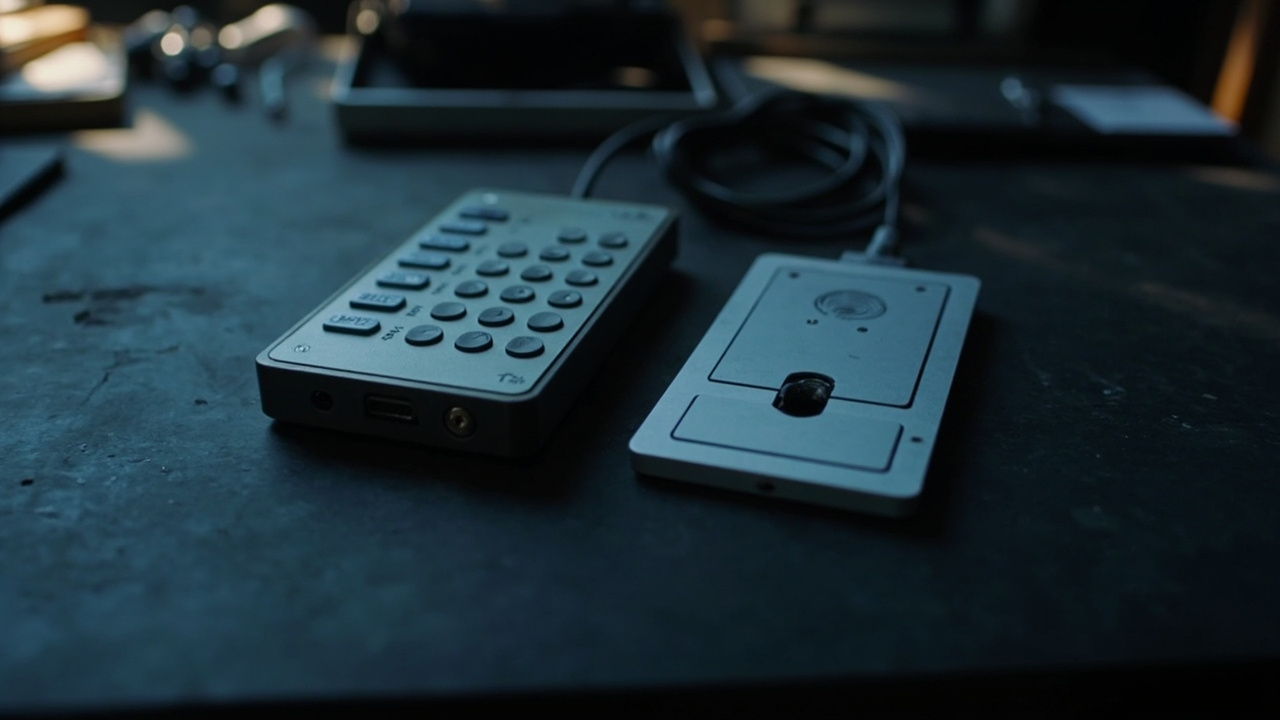
The SLK-002 is the keypad RFID lock for guesthouses in our catalogue, and its published record is fuller on the access side than most. RFID/IC card, passcode, mobile app and mechanical override are each listed as Standard. The platform is recorded as TTLock over Bluetooth, with hotel lock management software available on card-model versions, and the functions listed are guest card issuance, floor/room permissions, check-in validity windows and unlock records. The Body and panel row reads Style: Apartment Password Lock, with a finish of Black / Silver. Five field groups on the same record are empty, and the one that decides a replacement is Door fit. There is no applicable door thickness on the record, no backset, no panel dimension, no list of suitable door types, and no power, packing, capacity or environment entry either.
Direct answer. SLK-002 door fit notes exist to manufacture the fit answer that the published record does not carry. The record states RFID/IC card, passcode, mobile app and mechanical override as standard, a style of Apartment Password Lock in black or silver, and a TTLock over Bluetooth platform offering guest card issuance, floor and room permissions, check-in validity windows and unlock records. It records no door fit, power, packing, capacity or environment entry, so the buyer builds the fit answer from dated dimension drawings and a door survey, and every figure that drives an order is confirmed on the dated product page for the specific SKU before it enters a purchase order.
The note below is written as a process rather than a comparison, because that is how the work runs: a register gets built, drawings are requested, a sample goes on a bench, doors get classified, waves get sized around the rooms that are still let, and an evidence pack releases each door. The worked example is illustrative — a guesthouses operator with a scattered portfolio — and describes the sequence, not a named project, client or contract.
timeline
    title The SLK-002 replacement sequence, from register to release
    section Register
        Stage one : Build the door register : Rank the doors by risk
        Stage two : Request dated drawings : Match the guide revision
    section Prove
        Stage three : Bench the sample : Photograph against the drawing
        Stage four : Classify each door : Decide reuse or replacement
    section Release
        Stage five : Size the wave around occupancy : Plan the credential actions
        Stage six : Assemble the evidence pack : Release against the revision
        Stage seven : Install and sign the door record : Update the register
The replacement rhythm that turns door fit into a standing problem
A hotel programme and a guesthouses portfolio can end up with the same hardware on the same door, and they arrive at it by opposite routes. Which route a buyer is on decides how the fit question has to be answered, long before anyone opens a drawing.
In a hotel, the door schedule is drawn once, reviewed, signed and machined to one specification, so the lock is chosen against a known door and a mismatch becomes a change order inside a single contract. In a guesthouses operation, doors arrive one at a time in the order the failures happen: a failed reader, a cracked escutcheon, a property that changed hands, a seasonal refit where every cylinder comes out while the guests are still in the rooms. Nobody draws the estate first, because nobody knows the order the work will come in.
| Operating rhythm | How the door set arrives | What the fit question looks like | What a bad fit costs |
|---|---|---|---|
| Hotel programme on one contract | Drawn once, reviewed, signed, machined to one spec | One drawing set, one revision, one installation date | A change order against the contract and a floor held up |
| Guesthouses portfolio, scattered | One door at a time, in the order the failures happen | A standing register, with a new wave every few weeks | A night visit, a room that cannot be sold tonight, cartage across a border |
| Guesthouses seasonal refit | One building at a time, usually while rooms are still let | A wave plan with a drain window on every occupied room | Guests in residence during the change and credentials reissued under pressure |
The lower two rows are where an SLK-002 tends to land, and they produce two habits. The first is that a survey has to be cheap enough to repeat: a survey costing a site visit per door happens in a hotel programme, not in a guesthouses operation, so it has to be a sheet somebody can fill in a corridor with a rule and a torch, and the fit answer has to be a register that already holds the numbers. The second is that the answer has to survive reuse. The second wave through the same building is not surveyed again; it is read off the register, checked against the current drawing revision and released. That is why the register, the revision number and the release gate are the objects this process is built around.
The catalogue record for the SLK-002, field by field
Every model in our catalogue is written into the same ten field groups, and for the SLK-002 five of them carry no value at all. The groups run Access, Platform and network, Body and panel, Power, Door fit, Packing, Capacity and versions, Environment, and Services, and the five empty ones are the five a replacement decision leans on hardest. Here is the record exactly as it stands.
| Record field group | What the catalogue states for the SLK-002 | What it does not settle for a fit decision |
|---|---|---|
| Access | RFID/IC card: Standard · Passcode: Standard · Mobile app: Standard · Mechanical override: Standard | Which credential actually releases the lock on a given door, and what staff reach for when the reader fails |
| Platform and network | Platform: TTLock (Bluetooth); hotel lock management software available on card-model versions | Whether the quoted variant is a card-model version, and what equipment sits beside the lock |
| Platform and network, continued | Connectivity: Bluetooth · Functions: Guest card issuance, floor/room permissions, check-in validity windows, unlock records | What the connection is used for on site |
| Body and panel | Style: Apartment Password Lock · Finish: Black / Silver | Whether the unit is mortised, rim-mounted or a retrofit clamp, and every panel dimension |
| Power | — | Cell type, cell count, standby draw, and whether a power-cut override is present on the variant |
| Door fit | — | Applicable door thickness, backset, suitable door types, and the fit envelope as a whole |
| Packing | — | Carton dimensions, units per export carton, gross weight per carton |
| Capacity and versions | — | User capacity, and which model versions exist at all |
| Environment | — | Weatherproof housing, operating temperature and humidity range |
| Services | Documentation: Dimension drawings, installation guide and full datasheet available on request | Whether the drawings that arrive actually cover the variant that was quoted |
| Services, continued | OEM/ODM: Custom logo, finish, packaging, manuals and product configuration for distributor and project orders | What a distributor or project order can configure |
An em dash in that table is not a statement that the lock lacks a capability. It means the value is not published, so the buyer has to source it from a named place and write that place into the order file. Reading an empty row as absence is the most expensive misreading available in this catalogue.
It is also worth seeing what a published fit figure looks like. The SLK-9936S hotel lock carries a published door thickness of 36–100 mm and a 4 × AA power specification in the same block, and the SLK-9905A hidden-reader hotel lock is published at roughly 38–100 mm. Those two ranges belong to those two models and to no others, and they are useful here only as a shape example, showing how quickly a published figure travels through a spreadsheet into a claim about a lock it was never measured for.
What the style label does not tell a survey engineer
The Body and panel row records a style and two finishes. A style label tells you what the unit is for and roughly what the escutcheon looks like from a corridor. It does not tell a survey engineer how the lock meets the door, and on a replacement that difference decides almost everything: whether the existing case stays, whether the door has to be machined, and whether the job is an hour or a day.
Three mounting routes cover most of what a keypad and RFID unit of this kind can be built as, and each one asks something different of the door.
| Mounting route | What the door has to offer | What the existing door gives up | The fit question it creates |
|---|---|---|---|
| Mortise case into a routed pocket | A core deep enough to rout, a clean edge, an existing or new rebate | The pocket, and often the strike and faceplate | Can the existing case be reused, and does the escutcheon clear the rebate |
| Rim unit fixed to the door face | Face area for the escutcheon plus edge fixing points | The face finish and the old lock's fixing holes | Is the face wide and flat enough, and what covers the old fixings |
| Retrofit clamp around the leaf | Free edge to grip and no thin laminate | Very little, which is the point of this route | Does the clamp bite a hollow-core leaf, and what is the closed gap |
Because the Door fit row is empty, nobody knows at the moment of the survey which of the three is being ordered, and that is the practical reason a survey here records more than it strictly needs: a sheet holding only the leaf thickness is wasted the day the drawing arrives and the answer turns out to be a rim unit.
The cheapest defence is to record geometry that serves all three routes at once — leaf thickness at three points, rebate width and depth on the latch stile, the distance from the door edge to the centre of the bore or spindle, the profile of the strike on the frame, and the handing of the door. Five numbers place any of the three mounting routes onto a door, and the drawing confirms which applies.
The measurements that decide whether a door takes the lock
The table below is the working survey sheet. The method column matters as much as the measurement itself, because the same number taken two different ways produces two different arguments later, and most disputes on site turn out to be arguments about measurement.
| Measurement | How it is taken | Where | What the number changes |
|---|---|---|---|
| Leaf thickness | Rule or calipers, three readings, never averaged | Latch stile, hinge stile, mid-leaf | Whether any panel body clears the rebate, and which readings may be trusted |
| Rebate width and depth | Rule and depth gauge | Latch and hinge jambs | Whether a case can be dropped into the pocket or the door has to be worked |
| Backset | Rule, from the door edge to the centre of the bore or spindle | Lock stile | Which case family is physically possible at all |
| Lock case dimensions, if a case is present | Calipers on the exposed case | Lock stile | Whether the replacement reuses the case or replaces the assembly |
| Strike plate and keeper | Rule and calipers on the frame fixings | Latch jamb | Whether the supplied plate matches the frame or an adaptor is needed |
| Door gap and undercut | Rule or wedge, leaf against frame | Head, latch and hinge jambs | Whether the latch and deadbolt can engage the keeper cleanly |
| Cylinder and collar position | Rule, centre to face of door | Lock stile | Whether the escutcheon lands where the key can be reached |
| Handing and swing | Observation, door opened and closed | Whole door | Which orientation of escutcheon and latch is ordered |
| Frame and leaf construction | Probe and observation | Whole frame | Whether the leaf is solid or hollow, and whether the frame is wood, steel or aluminium |
The published library already carries the detail behind most of these lines. Smart Lock Door Measurement Guide is the overview, Smart Lock Backset Measurement covers the edge-to-spindle figure, Smart Lock Door Thickness Measurement covers the leaf reading, and Smart Lock Lock Case Measurement with Smart Lock Mortise Measurement settle the case question. Smart Lock Strike Plate Measurement covers the frame side, and Smart Lock Door Preparation Guide sets out what the door should look like before the sheet is filled in.
Three rules sit on top of the sheet. Take the thickness at three points and report the minimum and the maximum, never the mean, because a hollow-core door reads thinner at the middle of the panel than at the stiles and the mean hides the case that matters. Measure the backset on the door you will install, not on a drawing, because a re-drilled bore is common in upgraded properties. And record what was measured as well as what it is: a row that says 38 mm is worth far less than a row that says 38 mm at the latch stile, 41 mm at mid-leaf, on a solid-core leaf.
Stage one: the door register that makes the next wave cheap
The register is the first object the programme produces, and the only one that makes the following waves cheap. It holds one row per door, and it is a working document with a named owner rather than an attachment somebody forgot to send.
| Column | What it holds | Why it earns its place |
|---|---|---|
| Door identifier | Property, building, room or unit number | Ties the door to the room permissions recorded against the lock |
| Leaf and frame type | Solid or hollow core, core material, frame profile | Decides whether a pocket can be routed or a retrofit route applies |
| Thickness range | Minimum and maximum of three readings | The first order-blocking number on every unit |
| Rebate and backset | Width, depth, and edge to spindle centre | Places any case family on the door |
| Strike on the frame | Type, plate dimensions, fixing centres | Settles whether an adaptor enters the accessory list |
| Existing hardware | Case, cylinder, handle, door closer, hold-open, escape device | Decides what the replacement actually removes |
| Occupancy state | Let, vacant, drain window, shut for refit | Sizes the wave and fixes the credential actions |
| Fit disposition | Reuse the case, replace the case, new leaf, exclude | The output the order is built from |
| Drawing revision | The revision the disposition was judged against | Makes the decision auditable when the drawing changes |
A register that stops at the measurement columns is a survey sheet. One that runs to the disposition and the revision becomes the release instrument: each wave is drawn from the rows that share a revision and a disposition, and the remainder stays in the register until the next drawing arrives.
Two habits keep it honest. One named person owns it, because a register with three contributors and no owner is three registers. And every row records the drawing revision it was judged against, because a disposition reached against a superseded drawing is not a disposition any more.
Stage two: the drawing request and the document set behind it
The Services row of the catalogue record is the route out of the empty Door fit row: dimension drawings, an installation guide and a full datasheet are available on request for this model, along with custom logo, finish, packaging, manuals and product configuration for distributor and project orders. Those documents are only useful if they are asked for in a particular way.
| Document or answer | What it must contain | The procurement decision it drives |
|---|---|---|
| Dimension drawings for the quoted variant | A dated sheet with a revision number, showing the escutcheon, the case or the mounting route, and the fixing centres | Whether the door can be prepared at all, and what the case ordering is |
| Applicable door thickness | An explicit range rather than a single nominal figure | Whether the register rows can be released |
| Backset and case dimensions | Values on the drawing or in a drawing appendix | Which doors keep their case and which lose it |
| Suitable door types and exclusions | A named list, with excluded door types written down | Whether a door population is in scope for this variant |
| Installation guide, same revision | Matching revision number, with the door preparation shown | Whether an installer can work from the paperwork in the carton |
| Full datasheet for the specific SKU | A dated document for the variant ordered, not a catalogue page | Whether the power and connectivity assumptions hold |
| Variant confirmation | A written statement of which model version is quoted, and whether it is a card-model version | Whether the management software and card encoder belong in the quotation |
The last row is the one that gets skipped. The record notes hotel lock management software available on card-model versions, which means the software is tied to a family of versions rather than offered on every unit, and whether the variant being quoted belongs to that family is a per-SKU question. Getting it wrong leaves a quotation with software priced in that the delivered units cannot use, or a lock in the field with no way to issue a guest card against it. Every figure that decides a purchase comes from the dated product page for the specific SKU. The other discipline worth keeping is revision control: drawings arrive by attachment, get renamed and get edited by whoever holds the file, so the revision number has to travel with the document and get quoted in the order file. A drawing without a revision is a picture.
Stage three: the bench session that turns a style label
Once the drawing is in hand, a sample turns the style label into something a surveyor can measure against. The sample route on the site is the right way to buy one, and the unit should be treated as an instrument rather than as a sales sample.
| Bench step | What is examined | What it establishes | What it still cannot establish |
|---|---|---|---|
| Compare the escutcheon to a standard stile | Panel proportions against the rebate and against the face of the door | Whether the visible face reads correctly on a door of this class, and where the keypad and reader sit | How the panel behaves on a door with a different rebate |
| Locate the keypad and the RFID reader | Their position on the escutcheon, and the approach clearance each needs | Whether a guest can stand square to the door with a bag, and whether a corridor has room | How the reader behaves with the door open at a different angle |
| Inspect the override | The mechanical override key listed as standard on the access row | Whether it is a working key cylinder, and where the key can be reached from | The policy for issuing and recovering those keys |
| Check the power arrangement | Whether a cell compartment is present, and what an external power override terminal does | How the lock is kept alive during a power interruption | The cell type, count and standby draw, which the record does not publish |
| Sit the case against the door | The case, latch, bolt drive, spindle and strike plate against the measured door | Whether the case fits the pocket and whether the supplied strike matches the frame | Anything about a door the operator has not surveyed |
| Photograph against the drawing | Each feature recorded against the current revision | An evidence trail that survives the next wave | A substitute for the door itself |
The last row carries the lesson. A carton contains no door, so the bench session can confirm the hardware and never the fit. Programmes that approve the sample on the bench alone tend to discover the fit question later, at the point where changing it is expensive.
There is a freight consequence hiding in the same place. Packing is one of the five empty field groups, so carton dimensions, units per export carton and gross weight per carton are not published for this model either. Cross-border freight is priced on volume and weight, so a distributor building a container plan needs those figures in writing before the wave is committed.
Stage four: classifying each door against the unit
With the drawing in hand and the register populated, each door carries one of a small number of dispositions. The classification is done door by door because the estate is not homogeneous, and a portfolio that looks uniform from the corridor is usually three or four hardware generations deep.
| Door population | What the survey shows | Disposition the drawing supports | Accessory or follow-up it generates |
|---|---|---|---|
| Solid-core leaf with a serviceable mortise case and a standard timber frame | Rebate and backset inside the drawing, existing case undamaged | Reuse the case, replace the escutcheon and lock body | Strike plate only if the frame fixings differ |
| Hollow-core or lightweight leaf | Thin panel readings, no routable core | Retrofit route if the leaf allows clamping, otherwise exclude the door | Adapter or a different model for that door type |
| Narrow-stile aluminium or framed glass leaf | Stile depth below the escutcheon width, patch fitting already present | Exclude from this model, route to the glass and aluminium ranges | A second model line and a second drawing set |
| Steel leaf with a face-mounted strike | No usable pocket, existing strike on the face | Rim route if the face has space, otherwise exclude | Strike adapter, and a second survey of the face |
| Fire-rated or controlled-hardware leaf | Hardware schedule set by somebody else, existing closer and hold-open in place | Exclude pending the approval route | A written exclusion in the register and an approval question |
| Door with an existing card lock being retired | Old reader, case and cylinder still in place | Replace the assembly, reuse the rebate if the case position allows | A credential migration plan, a key plan and a drain window |
Two of those rows carry the weight. The exclusion rows are legitimate outcomes, and writing them down stops an excluded door from quietly reappearing in a later wave as a surprise. The card-lock row is where the fit decision stops being mechanical, because retiring an existing reader on an occupied room changes what the guest holds, and that change has to be planned rather than discovered.
flowchart TD
    A[Register row completed for the door] --> B[Dated drawing for the quoted variant]
    B --> C{Register numbers and drawing agree}
    C -->|yes| D[Classify the disposition]
    C -->|no| E[Hold the door and requery the supplier]
    E --> F[Revise the register row with the finding]
    F --> B
    D --> G[Add the door to a wave]
    G --> H[Release against the evidence pack]
For the compatibility argument itself, the published library is stronger than anything rebuilt from scratch: Smart Lock Retrofit Compatibility Guide sets out how a fit claim is argued, Smart Lock Retrofit Site Survey covers how the survey is run and recorded, and Smart Lock Old Lock Replacement Guide covers the removal side of an existing unit.
Where a door is under somebody else's hardware schedule, the question to ask is which authority signs off that leaf and what evidence it requires, and the answer has to be verified against the body that actually issues it rather than assumed from a general rule.
CONFIRM-WITH-LOCAL-REGULATORY-ADVISER: whether any leaf in this portfolio sits inside an approval route that affects lock selection, installation or the hardware schedule, which authority signs it off, and what evidence it requires for this specific project and jurisdiction.
Stage five: sizing the wave around the rooms that are let
This is the stage a hotel programme never needs and a guesthouses operation cannot skip, and it is where a fit decision starts to cost money in a way that has nothing to do with measurement.
The record lists guest card issuance, floor/room permissions, check-in validity windows and unlock records as the lock's functions, and the platform as TTLock over Bluetooth. Those functions are held per unit: the record of which permissions apply to which room, and which validity window a card carries, is attached to a physical lock on a physical door. That is a reasonable reading of what the catalogue states rather than a published behaviour, and it is the reason a swap is not a quiet operation.
Put plainly, a fitted unit carries an identity. Replace it and that identity changes, whatever the geometry did. The guest in residence holds a credential issued against the old identity, the room permission set has to be re-established against the new one, and the check-in window has to be re-issued. The size of the wave is therefore set by how many rooms can be drained at once rather than by how many units are on the pallet.
| Wave | Doors in the wave | Occupancy constraint | Credential and key action | Evidence produced |
|---|---|---|---|---|
| One | The failed door only | Night of the failure, room emptied for the visit | Re-establish the room permission and the validity window on the new unit; recover or reissue the override key | Incident record and the released row from the register |
| Two | One building, vacant rooms first | Vacant rooms in a single day, let rooms on the same night | Re-issue for each room as it comes back into service | Register rows with the new revision and the re-issue dates |
| Three | A full seasonal refit | Drain windows agreed with the operator, one building at a time | Batch re-issue before the first arrival of the season, override keys handed over on a signed list | Master re-issue record and the key register |
The override key matters here more than it does in a hotel programme, because in a small property the staff who open a door in the middle of the night are few, and the mechanical override listed as standard on the access row is their route when a reader or a code fails. A wave that replaces cylinders without a key plan leaves the operator holding doors they cannot open.
The credential side of the same subject is treated separately in Configuring SLK-002: Credential Choices and Management Tools. The point here is narrower: the fit decision and the credential action happen together or not at all.
stateDiagram-v2
    [*] --> InService
    InService --> Occupied : Card or code issued to a guest
    Occupied --> DrainWindow : Guest departs and access is revoked
    DrainWindow --> Swapped : Old unit removed and new unit fitted
    Swapped --> InService : New unit registered and credentials reissued
    Occupied --> Swapped : Emergency replacement with a spare unit
Stage six: the evidence pack that releases a door
A wave is released when each door in it carries the same set of documents. The list is phrased as evidence rather than as confirmation, because a tick that says the item looks fine closes nothing.
| # | Item | Evidence that closes it | Owner | Gate |
|---|---|---|---|---|
| 1 | Dated dimension drawings for the exact variant quoted | A sheet carrying a revision number and a date | Buyer | Before the wave is sized |
| 2 | Installation guide at the same revision | A guide whose revision matches the drawings | Buyer | Before the wave is sized |
| 3 | Full datasheet for the specific SKU | A dated datasheet rather than a catalogue page | Buyer | Before the wave is sized |
| 4 | Applicable door thickness stated as a range | An explicit band, not a single nominal figure | Technical reviewer | Before each door is released |
| 5 | Backset and case dimensions on the drawing | Values on the sheet or in a drawing appendix | Technical reviewer | Before each door is released |
| 6 | Suitable door types and exclusions | A named list, with excluded door types written down | Technical reviewer | Before each door is released |
| 7 | Variant confirmation and card-model version status | A written statement of the model version quoted | Buyer | Before the wave is sized |
| 8 | Power arrangement and power-cut behaviour | Stated on the datasheet, including any external override | Technical reviewer | Before each door is released |
| 9 | Carton dimensions, units per carton, gross weight | Packing figures in writing for freight planning | Logistics | Before freight is booked |
| 10 | Register row with disposition and drawing revision | A register row naming the revision it was judged against | Programme owner | Before each door is released |
| 11 | Drain window and credential re-issue plan | A dated plan naming the room and the re-issue action | Programme owner | Before the visit |
| 12 | Override key issue and recovery record | A signed key list against the room schedule | Programme owner | Before the visit |
Alongside the list goes a short photo request to every site team. Six pictures, each with a purpose: the leaf edge with a rule against the rebate, the open rebate on the latch stile, the strike plate with a rule showing its dimensions, the frame profile at the head, the existing case exposed, and the escutcheon held against the stile. Those photographs settle most fit arguments without a second visit. The wider discipline sits in Smart Lock Replacement Measurement Checklist.
Stage seven: installation day and the record that closes the door
The installation visit is short, because everything else was done before the installer arrived. The visit consumes four things: the drawing revision, the installation guide at the same revision, the parts for that door's disposition, and the register row.
The sequence on site is fixed. Old unit removed, old cylinder and hardware bagged and labelled with the door identifier. New case or mount fitted to the drawing, escutcheon seated, strike matched or adapted. Then the door is tested three times: by the staff credential, by the mechanical override, and by the guest credential that will be issued for the room. All three pass before the door is signed, and a door that passes two out of three goes back on the list rather than onto it with a note.
| Symptom on the visit | Causes worth testing first | Evidence to capture | Disposition |
|---|---|---|---|
| Escutcheon will not sit flat | Rebate shallower than surveyed, or the panel differs from the drawing | A photo of the escutcheon against the rebate with the revision in hand | Hold the door, order against the current drawing |
| Handle drops or the spindle will not turn | The spindle or square does not match the handle, or the case and escutcheon came from different revisions | A photo of the spindle interface and the handle reference | Stop the install and request the matching pair |
| Latch fouls the strike | Backset mismatch, or a face-mounted strike in a different gauge | The measured backset, the strike dimensions, the head gap | Fit the adapter or correct the register row |
| Keypad or reader does not respond | Power not connected, cells absent, or the unit has not been registered | A photo of the power compartment and the registration screen | Not a fit issue, route to power and registration |
| Finish does not match the neighbouring doors | A different finish variant was ordered, or a batch difference | The installed unit and the neighbouring door photographed together | Raise as a finish query against the order reference |
None of that table is specific to this model, and it is not meant to be. It is the diagnostic worksheet a replacement programme should hold ready, so that the visit ends in a disposition rather than an argument. Spares for the doors that fail most often are handled through the published parts discussion at Smart Lock Replacement Parts Supply.
The finish question that comes back with every wave
The Body and panel row records two finishes for this model, black and silver. On a single door that is a preference; across a portfolio it is a consistency problem, because a replaced lock that reads differently from the ones either side of it is visible from the corridor and is noticed. The pattern is predictable in a seasonal refit: the first building is fitted in one finish because that was what was available, and two seasons later the replacement wave brings the other.
The cheapest fix is to write the chosen finish into the register as a column and let every wave inherit it, so the finish stops being a per-order judgement. A custom finish is a different matter: the Services row records custom logo, finish, packaging, manuals and product configuration for distributor and project orders, so a bespoke finish is a configured order with its own sample and its own approval, not a colour change on a unit already on the shelf. Those conversations belong in OEM and ODM and private label, and the standard process for agreeing a configuration before goods are packed is covered on the factory tour and quality control pages.
The questions to put in the quotation request
A quotation is the moment to settle the things that cannot be settled later. The questions below are written for the person who will read the reply, and each one names the artefact that answers it, because a question without a named artefact comes back with an assurance instead of an answer.
- What is the applicable door thickness for the variant quoted, stated as a range on a dated drawing?
- Is the quoted variant a mortise, rim or retrofit-clamp unit, and what does the drawing show for each?
- What backset and case dimensions apply, and which existing cases can be reused?
- Which door types are excluded for this variant, and are they listed in writing?
- Is the quoted variant a card-model version, and what equipment does the management software need beside it?
- What power arrangement does the variant use, and what happens during a power interruption?
- What are the carton dimensions, the units per export carton and the gross weight per carton?
- Which model versions exist, and how does the buyer specify one on the order?
- What documentation can be issued with the first shipment, and how are revisions marked?
- How does a replacement unit carry its room permissions and validity windows, and what has to be re-issued on the operator side?
- What is the process for an excluded door or a non-conforming delivery?
- What does the sample route include, and what does the buyer receive to work from?
Questions one to nine are the fit-and-variant set, and they decide whether the order can be released. Question ten is the occupancy question in Stage five, asked at quotation stage rather than on the night of a failure. Question eleven is the non-conformance route, which costs nothing to agree in advance. Question twelve is the sample, the cheapest way to settle a physical question about the hardware before a pallet is committed.
Commercial figures, packing details and programme pricing are settled per quotation rather than from any published list, so the request for quotation is the route, and attaching the register with the drawing revision is what makes the reply usable.
Where this note stops and what to send next
This process produces five objects and no hardware advice: a door register with one row per door, a controlled drawing set with a revision number on every sheet, a wave plan that sequences the work around occupancy, an evidence pack per door, and a spares list keyed to the doors that fail most often. What it does not produce is a fit answer the catalogue never had. The published record for the SLK-002 states RFID/IC card, passcode, mobile app and mechanical override as standard, a style of Apartment Password Lock in black or silver, and a platform of TTLock over Bluetooth with guest card issuance, floor and room permissions, check-in validity windows and unlock records, alongside dimension drawings, an installation guide and a full datasheet available on request. It records no door fit, no power, no packing, no capacity and no environment entry, and those empty rows are a request for information rather than a statement about the lock.
Everything the fit decision turns on therefore arrives through the drawing and the survey, and every figure that drives a purchase is confirmed on the dated product page for the specific SKU before it enters a purchase order.
For procurement teams running this sequence, the entry points are the buyer resources section, the catalogue request for the published range and the current documentation set, the sample order route for a unit to bench and photograph, and the request for quotation with the register and the drawing revision attached. Distributors running several markets can take configuration, finish and packaging through OEM and ODM and private label.
The closer sibling documents in this set are SLK-002: Reading the Published Specification Without Guesswork for the record itself, Configuring SLK-002: Credential Choices and Management Tools for the access side, and SLK-002 Order Checklist for Project and Repeat Purchases for the release sequence.
A replacement programme is a document exercise that happens to carry hardware. The wave that installs cleanly is the wave where every row pointed at a drawing revision nobody had to guess.