
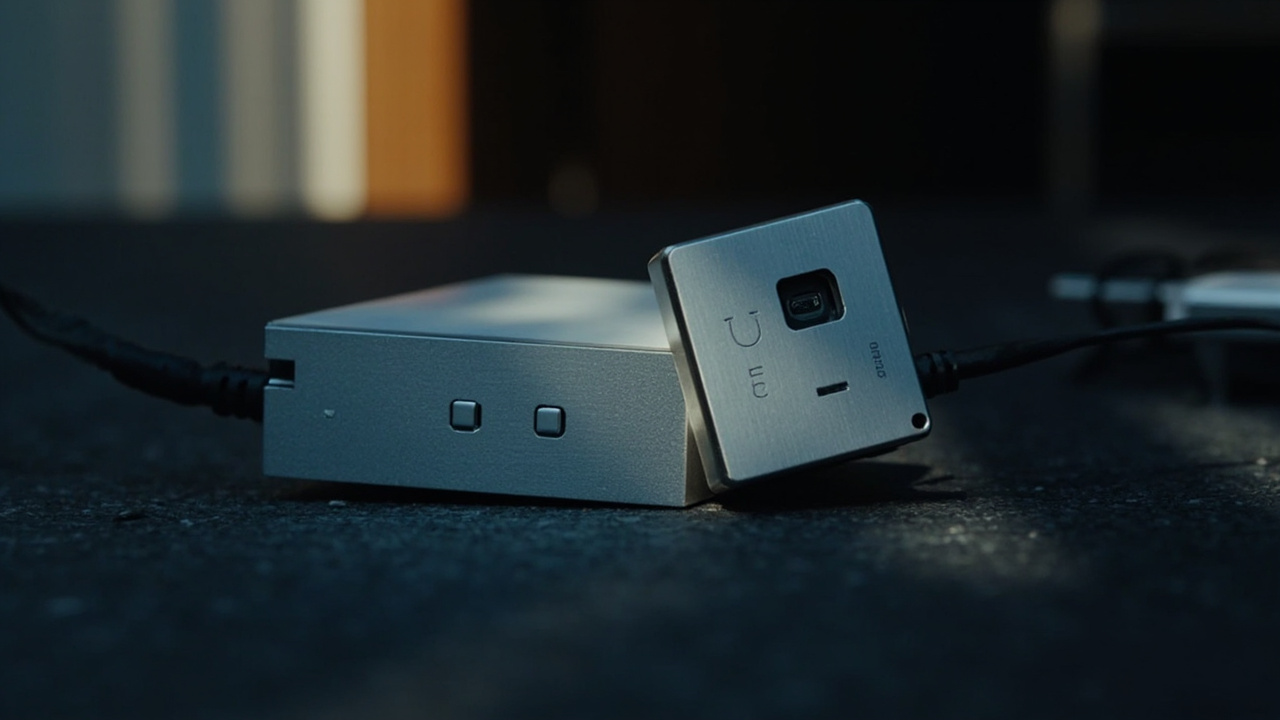
SLK-118 Door Fit and Replacement Notes for Buyers
Slk 118 door fit notes is what this piece examines at component level. A hotel lock replacement programme has an awkward shape. The order is for hardware, but every fact that makes the hardware installable comes from doors that nobody measured before the contract was signed. Fit is not a property of a model. It is a property of a specific leaf, a specific frame and a specific pocket cut into that leaf, and a buyer who treats fit as a tick on a quotation sheet discovers the answer on the morning the fitter opens the first door.
Direct answer. In short, slk 118 door fit notes is the subject of this piece. slk 118 door fit notes is where the work on slk 118 door fit notes sits. slk-118 is what has to be evidenced before anyone signs. A slk 118 door fit notes is a component-level look at how the technology behaves. slk 118 door fit notes is where the limits sit. slk 118 door fit notes is verified on the dated product page.
- Confirm the feature — confirm on the dated product page for the specific SKU behind slk 118 door fit notes
- Confirm the constraint — record where the technology in slk-118 stops working
- Confirm the contingency — name the mechanical path that remains if slk 118 door fit notes fails
- For slk 118 door fit notes, slk 118 is what each step has to answer to.
These slk 118 door fit notes are a worked exchange about exactly that. Two voices alternate throughout: a buyer-side procurement lead, and a supplier-side application engineer who holds the product record and the drawing set. The exchange is set against one concrete task — replacing an incumbent hotel lock across a mixed door population and specifying the SLK-118 as the replacement. The transcript is illustrative throughout: it depicts no real customer, building, quotation or contract, and every quantity inside it is a label rather than a promise.
Between the turns sit margin notes, in three kinds: an action the buyer takes next, the document that closes the question, and the sentence to write into the request. Where a figure for a specific SKU is quoted, it is confirmed on the dated product page for the specific SKU before it enters a tender or a purchase order. Nothing here is a claim about a market, a schedule, a price or an approval.
Two conventions before the first turn. The catalogue record for this model is read as it stands, including the rows where nothing is recorded — an empty row says what has not been published, not what a model lacks. And this is commercial and technical guidance, not legal advice; where an answer depends on your jurisdiction, your building-control route or your own contract, the turn says so and carries a confirm line.
Two voices, and what the margin notes
The exchange only works if both sides stay in character, so it is worth stating what each voice can and cannot settle first.
| Voice | Stands for | Settles well | Cannot settle |
|---|---|---|---|
| Procurement Lead | A buyer-side procurement manager carrying the replacement programme, the door schedule and the order file | Which doors are in scope, which populations exist, which approval routes are open, what evidence will be accepted | What a lock will do on a door nobody has measured; what the drawings will contain; which case a building already holds |
| Application Engineer | A supplier-side engineer holding the product record, the drawing set and the fit dossiers | What the record publishes and withholds, which case the panel expects, what a reading must be checked against | What is inside a particular building; which doors sit under another party's approval; whether a survey was taken properly |
A margin note is not a remark from the narrator. It is an instruction that would be lost if the conversation were transcribed and filed. Three kinds appear here — a buyer action, an evidence request, and a sentence for the enquiry file — and a turn without one is context, which is allowed to be interesting.
The catalogue row, read out loud
Procurement Lead: Before we talk about doors, read me the record for the model. Field by field, as published.
Application Engineer: It runs to ten field groups. Access: RFID/IC card: Standard, and a mechanical override: Standard. Platform and network: hotel lock management software on PC, with the lock operating as a standalone lock alongside a PC-linked card encoder, so no in-room network is required; the functions listed are guest card issuance, floor/room permissions, check-in validity windows, unlock records. Body and panel: style RFID Hotel Card Lock, material 201 stainless steel, mortise No. 2 hotel mortise, panel 242 × 77 × 19 mm, finish silver or gold. Power: four AA alkaline batteries with a low-battery alert listed as standard. Packing: ten units to a carton, 23.15 kg gross.
Procurement Lead: And the rows I care about most?
Application Engineer: Door fit, capacity and versions, and environment. All three are empty.
Procurement Lead: So the model has no fit. The model has no weather rating. We have no idea how many cards it holds.
Application Engineer: We have no published answer to any of those three. That is a different statement, and the difference is the whole subject of this conversation.
Margin note (buyer action): Ask for the dated product page for the specific SKU alongside the drawing request, and file the two together. A catalogue row and a dated product page are not the same document, and only one of them tells you what the fitter will be handed.
| Field group | What the catalogue records for the SLK-118 | What a fit decision still has to ask for |
|---|---|---|
| Access | RFID/IC card: Standard · Mechanical override: Standard | The override decides whether a door opens from the inside without a card |
| Platform and network | Platform: Hotel lock management software (PC) · Network: Standalone lock; PC-linked card encoder (no in-room network required) | Which platform build is quoted, and so which installation guide applies |
| Body and panel | Style: RFID Hotel Card Lock · Material: 201 stainless steel · Mortise: No. 2 hotel mortise · Panel: 242 × 77 × 19 mm · Finish: Silver / Gold | Case dimensions, panel datum, lever arrangement, handing |
| Power | Supply: 4 × AA alkaline batteries · Low-battery alert: Standard | How cells are reached on an installed door |
| Door fit | No door fit field is recorded for this model | Applicable door thickness, backset, suitable door types |
| Capacity and versions | No capacity or version field is recorded for this model | Which configuration is quoted, and whether the sample matches it |
| Environment | No environment field is recorded for this model | The record supports no exposed-door claim |
| Services | Documentation: Dimension drawings, installation guide and full datasheet available on request | Whether the drawings cover the variant quoted, and at which revision |
Two sentences in that row carry the entire fit argument. The first is the mortise line — No. 2 hotel mortise — and it is the most useful single phrase in the record for anyone doing replacement work, because it names the case family the panel is built to sit on. A hotel leaf that already carries a case from that family may need no joinery at all.
The second is the services row, where the documentation entry — dimension drawings, an installation guide and a full datasheet, all available on request — is the entire mechanism by which the empty rows get filled. It is also a request. Nobody has made it yet, and until somebody does, the fit question stays unanswerable by anyone, including us.
A third habit deserves naming, because it is the way unpublished numbers get manufactured in this industry. Other models in the same catalogue carry a published door thickness band — the SLK-9936S hotel lock is published across 36–100 mm — and a figure like that travels into a spreadsheet, then into a quotation, then into a tender response written for a different model. Confirm any published band on the dated product page for the SKU it belongs to, and never let it migrate.
What the mortise line settles, and what it leaves open
Procurement Lead: So if the door already has a hotel mortise in it, are we finished?
Application Engineer: Not quite. No. 2 is a family name, not a drawing. The family tells you the general shape of the case, the way the spindle and the emergency override are arranged, and the faceplate that normally travels with it. It does not tell you the backset, the height of the case above the centreline, the width of the faceplate, or where the fixing screws land — and those are the numbers that decide whether the case in your leaf is the case this panel expects.
Procurement Lead: So a door with a case from the right family can still fail?
Application Engineer: It can, and it fails expensively after the order rather than before it. The deciding figures are the backset from the door edge to the centre of the spindle, the bore diameter and the bolt-to-bore distance, the faceplate gauge, and the case body dimensions. If the case in the leaf agrees with the drawing on those, the door is a case-reuse line. If it does not, the case comes out and a new pocket is cut, and that is joinery work with its own programme.
Procurement Lead: And once the pocket is re-cut, does the rest of the survey still stand?
Application Engineer: Not automatically. A new case sits at a different distance from the door edge, which moves the panel, which changes how much of the visible face the panel covers. The visible-face reading has to be taken again on every door where the case changed, which is why a survey that records only a thickness and a photograph will need a second visit.
Margin note (evidence): Photograph every exposed case before anything is ordered, with a ruler in the frame and the door edge visible. A photograph of a case with a hand next to it tells you nothing.
graph LR
    A["Leaf thickness at the lock stile"] --> E["Case and fixings crossing the leaf"]
    B["Backset to the spindle centre"] --> F["Whether the No. 2 case in the leaf can be reused"]
    C["Pocket geometry and fixing positions"] --> F
    D["Visible face width at lock height"] --> G["Whether the panel lands on the face"]
    H["Handing and swing direction"] --> I["Which face carries the reader"]
    J["Lever boss and door hardware already on the leaf"] --> G
    K["Rebate depth and the door stop"] --> L["Whether the leaf still closes"]
    E --> M["Fit verdict for that door"]
    F --> M
    G --> M
    I --> M
    L --> M
The diagram is not decoration. It says that the readings taken on the leaf feed verdicts that are really about the case, that the frame answers a different verdict again, and that two of the inputs — handing and the hardware already on the door — arrive from standing in front of a door rather than from a tape.
Reading 242 by 77 by 19 against a leaf that already carries a lock
Procurement Lead: What do the panel numbers actually tell me?
Application Engineer: Three numbers, and they do not all mean what a buyer assumes. The 242 mm is a length, and it is the vertical run the escutcheon occupies on the leaf face. The 77 mm is the width of that face across the door. The 19 mm is the remaining dimension, and it is the one you should not use without asking.
Procurement Lead: Why not?
Application Engineer: Because nobody has said which datum it is measured from. Panel dimensions get quoted from the leaf face, from the spindle centreline, from the door edge, or as an overall bounding box, and the four produce different answers about how proud the hardware stands. Read 19 mm as a depth from the leaf face and it tells you how far the escutcheon stands off the door and whether the leaf still closes against its stop. Read it as a bounding box and it tells you nothing.
Procurement Lead: The width worries me more. Seventy-seven millimetres across a hotel door face.
Application Engineer: It should. On a guest-room leaf with a mortise lock already in it, the visible face between the bead and the rebate is often narrower than people expect, and the panel is wider than the section of leaf it has to land on. Where an escutcheon is being replaced, the question is whether the new panel is wider than the old one; where the leaf has an upgraded lever set, whether the lever boss sits where the panel needs the face.
Procurement Lead: Does the record say whether a lever comes with the lock?
Application Engineer: No. There is no lever or handle field on this row. The body and panel line gives a style, a material, a mortise family, a panel dimension set and a finish, and stops there. Whether the room's existing lever set is retained or replaced is therefore a question for the drawings and for the dated product page for the specific SKU — and it is worth asking early, because it changes the cut-out work on every door in the programme.
Margin note (buyer action): Add one line to the door survey for the interior face of every leaf: the position of the lever boss and of the existing escutcheon fixings, measured from the door edge and from the spindle centreline.
The material and finish carry a separate point. The record states 201 stainless steel in a silver or gold finish. Grades are not interchangeable in a specification that a fitter will work from, so if a project schedule elsewhere in the pack says 304, the two lines have to be reconciled against the record for the SKU actually ordered rather than assumed equal. And a finish is approved against a physical unit under corridor lighting, not against a swatch on a desk.
Taking the incumbent off and recording what is left in the leaf
Procurement Lead: Walk me through the removal. What is actually left in the leaf?
Application Engineer: More than most people expect. A working incumbent hotel lock leaves a mortise case in the leaf, a faceplate on the latch jamb, a strike and keeper, a cylinder or emergency override on the interior face, two or more escutcheon fixings, sometimes a track for a card holder, and possibly a closer, a hold-open or an escape device belonging to a different schedule. The leaf is not empty and the frame is not empty. That is why a replacement is a fit question rather than a swap.
Procurement Lead: Does the removal damage the leaf?
Application Engineer: Sometimes, and that makes it a joinery item before it is a hardware item. Screws driven into a hollow or a chipboard core do not always come out cleanly, and the pocket can open up as the case is levered out. Photographs of the case as found tell you whether the pocket is in good condition; photographs after removal tell you what the pocket actually is.
| What the incumbent leaves behind | The decision it drives | The evidence that settles it |
|---|---|---|
| A mortise case set in the leaf | Whether the door is a case-reuse line or a re-cut line | Case family, backset, faceplate gauge and fixing positions, checked against the drawings |
| A faceplate screwed to the latch jamb | Whether the supplied strike suits the frame | Frame gauge, plus the faceplate dimensions on the drawing |
| A card holder, room number plate or service track | Whether the escutcheon has a clear vertical run | Photographs with the panel outline overlaid on the image |
| An existing lever or handle set | Whether the 77 mm panel conflicts with a lever boss | Measured position of the boss against the panel centreline |
Margin note (evidence): Record the case as found, not the case you wish were there. A survey that writes down what a hotel door usually contains is a survey that will be wrong in the most expensive direction, and it will be wrong in a way nobody can reconstruct later.
One more point about inherited geometry. A hotel that upgraded its locks once and is upgrading again is holding a case that was already a retrofit of a retrofit, and the cut-out on the door face is the accumulated result of two generations of hardware. An accumulated cut-out does not necessarily match any family of factory geometry.
Four door populations, four evidence sets
Procurement Lead: We are not talking about one door. In this building there are at least four kinds, and the programme spans more than one property.
Application Engineer: Then there are four evidence sets, and mixing them is how a programme loses a month.
| Door population | What the survey has to capture | The verdict that releases the line | What enters the order file |
|---|---|---|---|
| Guest-room leaf with an incumbent hotel mortise that the drawings cover | Case family and backset, leaf thickness at the stile, visible face width, handing | Case reuse, no joinery | One line, one variant, one faceplate family |
| Guest-room leaf with a case of an unknown family, or a pocket from an earlier retrofit | Bore diameter, bolt-to-bore distance, case height, fixing positions, photographs | Re-cut the pocket, then re-take the visible-face reading | A second hardware line plus a joinery line |
| Service, staff or corridor door on a narrow stile, or with a retained lever set | Visible face width against the 77 mm panel width, lever boss position | Panel variant or a different product family | A separate line with its own variant |
| Leaf on an escape route or inside a fire-rated assembly | Leaf construction, existing hardware, the approval route | Excluded until the route is closed in writing | An exclusion recorded in the schedule |
| Aluminium or glass leaf | Frame profile, patch fitting, the absence of a rebate | Outside this model's record | A separate product family |
The fifth row is the one that is easiest to get wrong. The catalogue does not record a suitable door types field for this model and it does not record an environment field, so there is no published statement anywhere that this lock suits an aluminium or a glass leaf. The correct reading of an empty field is that the question has not been answered in print, and the answer has to arrive as a drawing or as a refusal.
The fourth row is not a hardware row at all, and it is handled separately below. The first three rows are the hardware programme, and the difference between them is the evidence, not the lock.
The frame, the gap and the keeper
Procurement Lead: We have been talking about the leaf. What about the other half?
Application Engineer: The frame decides three things, and none of them appear in the catalogue row: whether the bolt finds the keeper, whether the leaf closes fully against its stop once the panel is fitted, and whether the hardware already on the frame fights the hardware on the leaf.
Procurement Lead: Give me the failures I should expect to find.
Application Engineer: A faceplate cut for a different gauge, so the latch lands short of the keeper or the plate flexes. A leaf-to-frame gap too wide for the latch to engage without a pull, which is routinely blamed on the lock and is usually a hinge or a rebating problem. A rebate too shallow for the depth the escutcheon stands proud, which means the leaf will not close fully. And a steel frame with a surface-mounted strike and no pocket to receive a standard plate.
| Frame condition found on site | What it does to the fit | The cheapest response that protects the schedule |
|---|---|---|
| Faceplate in a different gauge from the one the drawings assume | The latch lands short of the keeper, or the plate flexes | A site adaptor or a plate cut to the frame, quoted as a line of its own |
| Leaf-to-frame gap too wide for a clean latch | The door does not latch, and the lock takes the blame for it | A rebating plan for the hinge jamb, or a written exclusion in the schedule |
| Rebate too shallow for the fitted panel depth | The leaf will not close fully against the stop | A door stop detail; the panel dimension does not flex to fit |
| Steel frame with a surface-mounted strike and no pocket | No standard plate will sit on it | An adaptor, or a strike family named on the drawing |
One of those gets misfiled more often than the others. A leaf that will not close against its stop is regularly reported to the lock supplier as a defective product. It is not one. It is a door and a frame that were never surveyed against the depth the panel stands proud, and the survey was the only place the error could have been caught cheaply. The method for the frame readings is in Smart Lock Door Gap Measurement and Smart Lock Strike Plate Measurement.
Where the lock meets somebody else's approval route
Procurement Lead: The fourth population keeps coming back. Some of our guest-room leaves sit on escape routes and some are part of a fire-rated assembly.
Application Engineer: Then those doors are not a hardware question. They are a question for the authority that owns the assembly's approval, and I cannot answer it for you any more than a catalogue row can.
CONFIRM-WITH-LOCAL-DOOR-ASSEMBLY-APPROVER: which authority signs off each door assembly in your programme, what evidence that authority requires, and whether adding an electronic lock with a battery-backed latch to a fire-rated or escape-route leaf changes the scope of that assembly's approval. That scope is decided per door and per project, and no product record answers it.
Procurement Lead: So what do we do in the meantime?
Application Engineer: Exclude those doors from the automatic programme and write the exclusion into the door schedule. An exclusion that is written down is a line item a manager can see and a surveyor can point at. An exclusion absorbed quietly into the main order becomes a dispute in month six.
Procurement Lead: And for the doors that stay in the programme, what changes?
Application Engineer: Two practical things worth stating rather than assuming. First, the record lists a mechanical override as standard for this model, so a door can be opened from the inside when a card is not present. Second, the arrangement recorded is a standalone lock with a PC-linked card encoder and no in-room network required, so the reader does not depend on the property having a network in the corridor. Neither fact changes the approval scope of a fire-rated assembly, and both are things an approving authority will want stated rather than assumed.
CONFIRM-WITH-LOCAL-INSTALLING-CONTRACTOR: which party holds the joinery scope — cutting new pockets, adjusting rebates, adapting strike plates — and which party signs the door preparation before the hardware order is released. A fit decision that no contract party owns is a fit decision that nobody performs.
The survey sheet that has to survive a change of mind
Procurement Lead: What does the survey team actually need from us before they go out?
Application Engineer: A sheet with a fixed column order, a drawing to measure against, and one rule about what counts as a reading. The fixed column order matters more than people expect, because when the sheet changes shape between waves the second wave's data will not drop into the first wave's spreadsheet, and the programme quietly loses its own history. A hotel lock door survey is worth the paper it is printed on only if it can be handed to a fitter, a joiner and the person who signs the door preparation.
| Reading | Instrument and method | The decision it unblocks |
|---|---|---|
| Leaf thickness at the lock stile | Calipers or a rule at three heights, readings kept separate | Whether the case and the through-fixings cross the leaf, and whether the leaf stays closable |
| Backset to the spindle centre | Rule from the door edge with the leaf held open | Whether the case already in the leaf can be reused |
| Visible face width at the lock height | Tape across the leaf face at the cut-out height | Whether a 77 mm panel lands on the face or overhangs the bead |
| Vertical run below the head rail | Rule from the top of the leaf to the first obstruction | Whether a 242 mm panel can sit on the face at all |
| Leaf-to-frame gap | Wedge or rule at the head, the latch jamb and the hinge jamb | Whether the latch engages cleanly |
| Handing and swing direction | Observed at the open leaf | Which face carries the reader and the electronics |
The rule about readings is the one people break: take the three thickness readings separately and never average them. A leaf that measures one way at the top of the stile and another near the bottom is a tapered leaf, not a contradiction, and the answer is the thickest reading where the fixings land. The same is true of the visible face width, where a stile that is wide at the handle and narrow at the reader is two doors to a fitter and one door to a scheduler.
The general method behind that sheet is written up in Smart Lock Door Measurement Guide and Smart Lock Backset Measurement, the case geometry in Smart Lock Mortise Measurement, the frame preparation in Smart Lock Door Preparation Guide, and the handover version for a fitter in Smart Lock Replacement Measurement Checklist.
flowchart TD
    A["Group the doors into populations"] --> B["Take readings against the dated drawings"]
    B --> C{"Case, backset and face agree with the drawings"}
    C -->|yes| D["Release the line as a case reuse"]
    C -->|no| E["Hold the line and price the joinery"]
    E --> F["Reissue the door schedule and the revision register"]
    F --> B
    D --> G["Install, then verify against the same revision"]
That sequence contains one gate, and the gate is the part that gets skipped when a programme is under time pressure. Skipping it is how the disagreement at install gets manufactured: a held line costs a week, while a line released against the wrong assumption costs a return shipment and a second visit to every door in that batch.
A register that can be defended months later
Procurement Lead: What does the record of all this look like when the order is written?
Application Engineer: One row per door. Columns: the door number, the population, the readings, the drawing revision they were checked against, the photographs, the verdict, and the evidence that closes it. A row with no revision reference is a measurement that cannot be defended later, and the person who will have to defend it is rarely the person who took the reading.
Margin note (buyer action): Name the register for the rfid hotel lock replacement so the next property inherits the sheet instead of rebuilding it.
erDiagram
    DOOR_REGISTER {
        string door_id
        string population
        string reading_set
        string photo_set
    }
    DRAWING_SET {
        string revision
        string issue_date
        string covering_model
    }
    ORDER_LINE {
        string door_id
        string verdict
        string release_state
    }
    DOOR_REGISTER }o--|| DRAWING_SET : measured_against
    DOOR_REGISTER ||--|| ORDER_LINE : produces
The register is also what makes a second wave cheap. The first wave is expensive because it discovers what the doors actually are; once the register exists, the second wave is a copy with different numbers in it. And the register is what you hand to the fitter, to the joiner and to whoever signs the door preparation: three parties reading one row beats three parties each holding a photograph.
Counting is the other half of this. Doors are counted by population rather than by number, because a total tells a manager nothing and a mix of populations tells a fitter everything. The wider replacement context sits in Hotel Smart Lock Replacement Guide and How to Upgrade Traditional Hotel Locks to Smart Locks, and the credential migration that runs alongside a mechanical-to-electronic change is treated in RFID Hotel Lock vs Magnetic Stripe Lock.
What the carton and the sample can each prove
Procurement Lead: Can we short-circuit this? Order one unit, hold it against a door, and see?
Application Engineer: You can hold it against a door. What that proves is the lock, and only the lock.
Procurement Lead: What does it settle?
Application Engineer: It settles the proportions of a 242 by 77 escutcheon in the hand, how the silver or gold finish reads under corridor lighting, where the reader sits on the panel face, the position of the mechanical override, the battery compartment and its four AA cells, and how the low-battery alert presents itself. Hold the unit over a leaf offcut of the same construction as the doors in scope and you can also check the lever boss and the old escutcheon fixings against the panel outline.
Procurement Lead: And the carton?
Application Engineer: The carton is a logistics document, and it is worth reading as one: 570 × 355 × 346 mm, ten units per carton, 23.15 kg gross. Ten units and 23.15 kg tells you that a carton needs two people to handle, and that a floor of rooms arrives in a number of cartons someone has to plan storage for. It also tells you what a carton cannot do, which is to prove anything about a door. The method for judging a sample before it goes on an order is set out in Hotel Smart Lock Sample Testing Guide.
Margin note (buyer action): Ask for one sample unit plus the dimension drawings, and photograph the unit against a rule on a leaf offcut of the same construction as the doors in scope, before the order is released rather than after it arrives.
The photograph set that makes the register defensible afterwards is short and fixed: the leaf face with the old escutcheon removed and a ruler in frame; the exposed case with the door edge visible; the latch jamb with its faceplate; the open leaf showing the handing; the leaf thickness at three heights with each reading written into the frame; the gap at the head and both jambs; and the leaf with the sample unit held against it.
Two records, one title difference and one field difference
Procurement Lead: One more thing. The catalogue carries a closely related model. Is it the same hardware?
Application Engineer: Very nearly. The record for the SLK-118E, a keypad hotel combination lock for wooden doors, repeats the access row, the platform and network row, the body and panel row and the power row of the SLK-118 — the same No. 2 hotel mortise, the same 242 × 77 × 19 mm panel in 201 stainless steel, the same finishes and the same four AA alkaline cells. What differs is the title, which describes a keypad model, and the packing row, where the gross weight per carton is 23.6 kg against 23.15 kg.Procurement Lead: The title says keypad. The access row says RFID card and a mechanical override. Where is the keypad?
Application Engineer: It is not in the access row, and that is worth noticing rather than explaining away. The access row for the SLK-118E reads RFID/IC card: Standard and Mechanical override: Standard, with no passcode field at all. A buyer comparing the two models by their titles alone would assume the second one adds a keypad; the record as published does not say that. Confirm the configuration on the dated product page for the specific SKU before either model goes into an order file.
Margin note (evidence): Confirm on the dated product page for the specific SKU whether a passcode or keypad capability is present in the SLK-118E configuration, and which configuration each drawing set actually covers.
| Field group | SLK-118 record | SLK-118E record | Effect on a fit decision |
|---|---|---|---|
| Access | RFID/IC card: Standard · Mechanical override: Standard | RFID/IC card: Standard · Mechanical override: Standard | Identical; the title difference is not reflected here |
| Body and panel | Style: RFID Hotel Card Lock · Material: 201 stainless steel · Mortise: No. 2 hotel mortise · Panel: 242 × 77 × 19 mm · Finish: Silver / Gold | The same style, material, mortise, panel dimensions and finishes | Identical geometry, so one drawing set may cover both |
| Door fit | Not recorded | Not recorded | Neither model publishes a thickness band |
| Packing | Carton 570 × 355 × 346 mm; 10 pcs/ctn; 23.15 kg gross | Carton 570 × 355 × 346 mm; 10 pcs/ctn; 23.6 kg gross | The freight plan changes if the two share a carton |
Because the panel and mortise geometry is identical in the two records, one drawing request should cover both configurations, and a programme ordering across the two should not pay for two sets of survey documentation. The door fit, capacity and versions, and environment rows are empty for both, so neither model publishes a thickness band and neither publishes an operating range. What a buyer must not do is assume that a title tells it which face the guest will meet.
The fit questions to put in writing before the quotation
Procurement Lead: Turn this into something I can send.
Application Engineer: Questions, not adjectives. Ask for the answer to each one in a document, with a date and a revision on it.
- What range of door leaf thickness applies to the quoted SKU, stated on the drawing rather than in a table cell?
- Is the mortise case in the quoted configuration the No. 2 hotel mortise, and what are its backset, bore diameter, bolt-to-bore distance, case dimensions and faceplate size?
- Does the panel arrive with a lever or a handle, or is the existing room lever set retained, and what cut-out does the panel need in either case?
- From what datum are the 242 × 77 × 19 mm panel dimensions measured?
- What visible face width does the 77 mm panel require, and what is the minimum leaf width for the configuration quoted?
- Which door leaf constructions are covered by the drawings, and which are excluded, in writing?
- What is the handing of the quoted variant, and can the opposite handing be supplied without changing the panel?
- Which strike plate and keeper dimensions suit the frames in scope, and is an adaptor available?
- What vertical clearance does the 242 mm panel need at the head, and does it conflict with a closer or a hold-open device on those frames?
- Does a single drawing set cover both the SLK-118 and the SLK-118E configurations, and how are the two distinguished on the drawings?
- On what date, and at what revision, were the drawings issued, and how will a revision change be notified?
- What is the packing configuration and the gross weight per carton for the configuration quoted?
Margin note (buyer action): For the enquiry file, write the phrases the supplier's document team will recognise — slk 118 door fit notes, slk 118 door thickness, slk 118 backset, slk 118 mortise case, slk 118 dimension drawings. A paragraph of prose produces a paragraph of prose in reply. A named field produces a drawing.
The framing for the request itself is in Hotel Smart Lock RFQ Guide and What Should Be Included in a Smart Lock Quotation?, and what a supplier owes you in documents rather than assurances is set out in What Documents Should You Request From a Smart Lock Supplier?.
One drawing set, two markets, one revision number
Procurement Lead: We run two properties through the same distributor, and they are in different markets. One drawing set for both?
Application Engineer: One master set, yes; two uncontrolled copies, no. A dealer trained on revision A keeps fitting revision A after the factory has moved to revision B, and the fault appears months later as a door that will not close — reported as a product problem when it is a document problem.
Procurement Lead: What controls it?
Application Engineer: Four cheap habits. A revision number stamped on every sheet. A one-line reissue note whenever the revision changes. An installation guide issued at the same revision as the drawings, so the two can never describe different hardware. And a named contact who confirms the current revision when a dealer calls.
The catalogue already commits to the raw material: dimension drawings, an installation guide and a full datasheet available on request, and an OEM and ODM line covering custom logo, finish, packaging, manuals and product configuration for distributor and project orders. What it does not commit to is control. Control is a decision the buyer makes, it costs nothing, and it can be written into the purchase order as a condition of release.
The discipline worth copying is set out in Smart Lock CAD Drawing Requirements, Smart Lock Engineering Drawing Checklist and Smart Lock Product Datasheet Requirements.
Where this conversation sits beside the other SLK-118 reading
Three other pieces in this set handle the parts of the model that a fit enquiry only touches at the edges. What the SLK-118 Data Sheet Actually Tells a Buyer reads the catalogue row field group by field group, without the door. SLK-118 Credential and Software Configuration Options covers the card, the encoder and the PC software that decide how a room is opened once the hardware is in the leaf. SLK-118 Purchase-Order Checklist: What to Confirm Before Ordering is the release sheet that sits beside the door register.
Read them in that order and the sequence closes properly: the record, the credentials, the fit, the release. The wider replacement context sits in Hotel Smart Lock Installation Guide, and the platform decision behind the reader at the door is treated in Standalone vs Centralized Hotel Lock Systems.
Closing the fit conversation
The exchange ends where a fit conversation should end: with a drawing revision, a door register, and an order file that carries both. The SLK-118 is an RFID hotel card lock in 201 stainless steel, a No. 2 hotel mortise case, a panel recorded at 242 × 77 × 19 mm in a silver or gold finish, RFID card access and a mechanical override listed as standard, four AA alkaline cells with a low-battery alert, a standalone arrangement with a PC-linked card encoder, and ten units to a carton at 23.15 kg gross. The catalogue does not record a door fit row for this model, so the hotel card lock door fit envelope has to arrive as a dated drawing and a set of readings, and every figure quoted for a specific SKU is confirmed on the dated product page for that SKU.
A procurement team running a programme like this starts at the buyer resources section, asks for the published range through the catalogue request, orders a unit to measure through the sample order route, and sends the request for quotation with the door register, the survey readings and the drawing revision attached. Distributors working across two markets can take configuration, finish and packaging through OEM and ODM and private label; the factory tour and quality control pages describe what happens to a unit between the line and the carton. Commercial terms and programme pricing are settled per quotation, so the fastest route is a request carrying the readings, the revision and the door types in scope.
This exchange is commercial and technical guidance written for a procurement team, not legal, regulatory or fire-safety advice. Where an answer depends on your jurisdiction, your building-control route or your own contract, take it to your counsel and to the authority that signs off your doors, and confirm it on the dated product page for the specific SKU before it becomes a commitment.