
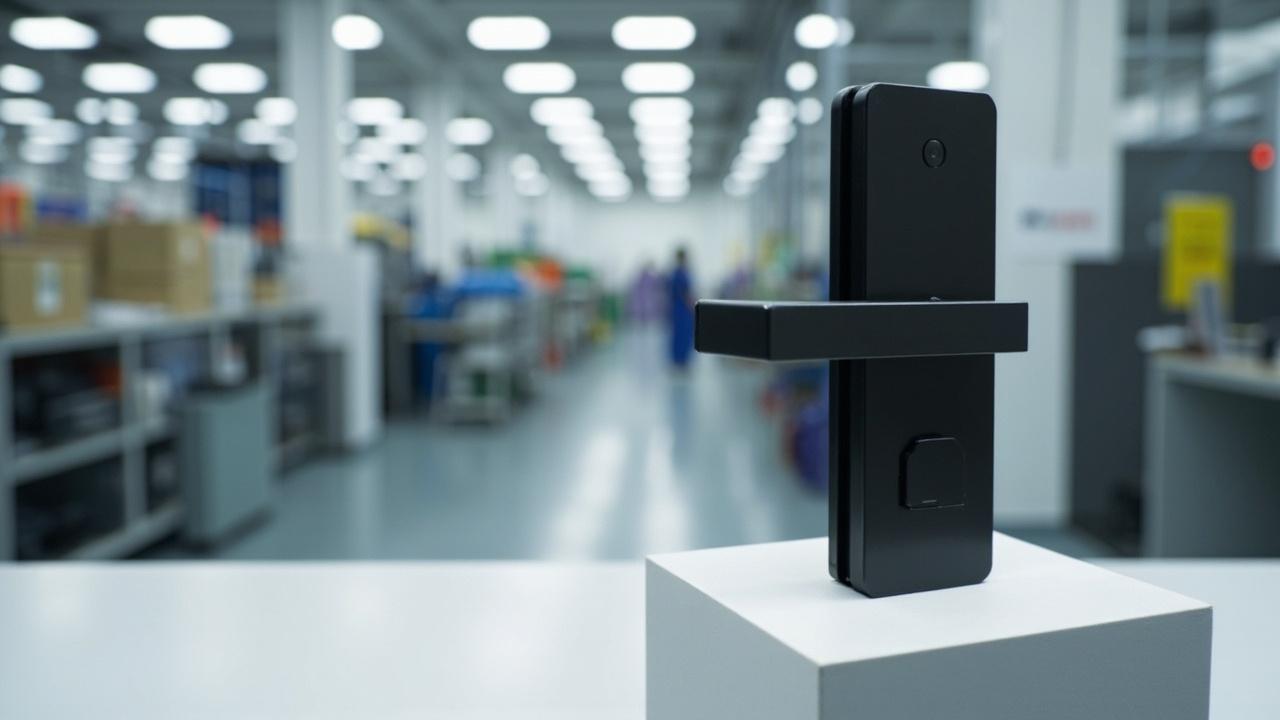
Smart Lock Price by Door Type
Smart-lock price by door type is the per-door-class cost-driver conversation that maps each door population in a buyer portfolio — aluminium narrow-edge, wooden mid-edge, steel commercial-edge, glass frameless, fire-rated, outdoor perimeter, cabinet — to the SKU family whose mechanical envelope, credential stack, finish posture and documentation scope the per-door-class quotation then carries, with all numeric figures resolved on the dated quotation offer letter rather than on any catalog price band. Headline "smart lock price" answers almost nothing for a B2B buyer. A 79-model catalog holds door-fit SKUs for at least six door populations; the per-door-class cost-driver structure moves by which population dominates the buyer's portfolio, which mechanical envelope that population forces, which credential stack the operations team requires, and which finish posture the buyer is willing to fund. This article runs that conversation as an annotated dialogue between a wholesale-importer buyer (BD) and the supplier's commercial engineer (CE). The annotations are half the lesson: every time a number "sounds catalog-shaped," the conversation catches itself and routes the figure to the quotation offer letter or to the product page of the shortlisted SKU. No specific prices are asserted anywhere in the article. Cost-driver structure is asserted; per-deal figures live on the quote.
The deeper the conversation goes, the clearer it becomes that "smart lock price by door type" is not one question. It is at least seven sub-questions — what is the door population in the buyer's portfolio, which door class dominates the volume, what mechanical envelope does that door class force, which SKU family matches that mechanical envelope, how does the credential stack change the per-door-class cost stack, how does the finish posture move the per-door-class figure, and what commercial terms the buyer is willing to fund (volume band, OEM branding, packaging). Each is a per-portfolio answer. Each maps to a driver the quotation has to disclose; each driver resolves on the quote itself. What follows is the per-door-class conversation, line by line, with annotations calling out where the catalog answer ends and the per-quote confirmation begins.
This article is deliberately distinct from Smart Lock MOQ and Price, which frames the same problem as a per-category MOQ-and-price datasheet. Here the per-door-class driver structure runs front to back; the MOQ conversation is one of seven drivers the per-door-class quotation carries. For the sister conversation on the credential-method axis instead of the door-class axis, see Smart Lock Price by Access Method. For the sister conversation on the customization axis, see Smart Lock Price by Customization. For the door-fit compatibility conversation that governs which SKU family each door class can receive, see Smart Lock Door Compatibility Matrix. For the model-selection matrix that converts a per-buyer-need to a per-SKU-family shortlist, see Smart Lock Model Selection Matrix. For the wholesale-level price question that sits above all of these, see How Much Does a Smart Lock Cost?.
Setting the table — the six-door-class taxonomy
BD: I'm a wholesale-importer buyer. Across a typical year I'll be specifying maybe three thousand doors: residential balcony aluminium, residential and small-hotel timber entry, a small stock of steel commercial back-of-house, a glass-storefront retail chain, and an outdoor perimeter gate portfolio. The question that keeps coming back to me is "what's the smart lock price," and the supplier's commercial engineer on the other side of this table has a 79-model catalog to choose from. I don't want a per-unit figure. I want a per-door-class driver structure so I can plan the volume band by door class before I send the RFQ.
CE: That's the right order. Most per-door-class pricing mistakes I see in the field are not "wrong price." They are "right door class, wrong mechanical envelope," "right door class, wrong finish posture," "right door class, wrong credential stack," and "right door class, wrong commercial-term position." Before any of that, I need the door-class map off your portfolio, the cost-driver map off the SKU family, and the volume band off the order you actually write.
BD: Walk me through the six door classes first. I want the population, the mechanical envelope, the SKU family, and the driver structure before we talk numbers.
CE: Six classes. Class one — aluminium narrow-edge. The population is balcony doors, internal partitions, modern apartment entries, slim-profile retail storefronts. The mechanical envelope is slim: lock-case geometry is narrow-edge or rim, edge width is small by design, lock-case body is dimensioned to the rail, reinforcement at the lock zone may or may not be present and is the binding decision. The published SKU family anchor is the SLK-1104 class. The cost-driver structure is light on mechanicals and finish because the case is small, heavier on credential stack (multi-method menus are common), heavier on weather / IP posture when the door is exposed, and heavier on documentation scope if the buyer asks for per-door drawings. Class two — wooden mid-edge. The population is interior and entrance doors in apartments, villas, hotel guest rooms, low-rise commercial. The mechanical envelope is generous: lock-case geometry is mortise or rim, edge width is full stile, mortise pocket geometry is the binding decision. The published family anchor for residential class is the SLK-8831 5-in-1 multi-method; for hotel class, the SLK-9936S hotel door lock is the documentation-granularity ruler. The cost-driver structure is moderate on mechanicals, moderate-to-heavy on credential stack (multi-method and RFID-card primary are common), moderate-to-heavy on finish (multiple finish options exist at hotel class), and moderate to heavy on documentation scope (audit-event-record depth matters at hotel class). Class three — steel commercial-edge. The population is service entries, plant rooms, parking barriers, fire-rated corridors, back-of-house commercial. The mechanical envelope is heavy: lock-case geometry is cylindrical or mortise heavy-duty, the door leaf is flush or fire-core, the cylinder class is security-grade. The cost-driver structure is heavy on mechanicals, lighter on credential stack unless the operations team asks for multi-method, and heavier on documentation scope when fire-rating evidence is in scope. Class four — glass frameless. The population is frameless-glass storefronts, glass partitions, glass hotel corridors and lobbies. The mechanical envelope is glass-specific: lock-case geometry is glass-clamp or glass-pull-rim, the door is glass, mounting is surface, backset is whatever the glass thickness allows. The published family anchor is the SLK-G200 glass-door smart-lock. The cost-driver structure is heavy on glass-specific mechanicals, moderate on credential stack, and moderate to heavy on documentation when B09 double-opening face-recognition is in the shortlist. Class five — fire-rated. The population is fire-rated timber and steel doors in commercial corridors, plant rooms, multi-storey residential entries. The mechanical envelope is governed by the listing: lock-case geometry is selected against the fire-door listing; cylinder class is security-grade; backset and case geometry are constrained by the listing. The cost-driver structure is heavy on documentation scope (fire-rating evidence and test scope) and heavy on cycle / mechanical testing; the credential stack is typically light or absent because the listing governs. Class six — outdoor perimeter. The population is aluminium and steel gates and fences, pool enclosures, exterior service entries. The mechanical envelope is outdoor-class: lock-case geometry is outdoor-specific; weather envelope is the binding decision. The cost-driver structure is heavy on weather / IP posture, heavy on mechanical durability, lighter on credential stack when the gate is operator-only.
BD: What's the seventh class I might be missing?
CE:Cabinet-class — small-format lockable enclosures, drawers, lockers. The mechanical envelope is small-format cabinet; the population is typically a small share of a mixed-asset portfolio. The cost-driver structure is light on mechanicals, light on credential stack, light on documentation, light on finish. Cabinet sits outside the door-class conversation most of the time, but on a wholesale importer's portfolio it has to be on the list because some property managers order it as part of the same annual commitment.
Annotation — the six-door-class taxonomy is the door-side anchor of the article. Mechanical envelope, SKU family, and driver structure move by class. Cost-driver structure is documented; per-deal figures live on the quote — confirm on the dated offer letter.
The six-door-class matrix at a glance
| # | Door class | Typical population | Lock-case geometry | Published SKU family anchor | Dominant cost driver |
|---|---|---|---|---|---|
| 1 | Aluminium narrow-edge | Balconies, partitions, modern entries | Narrow-edge / rim | SLK-1104 class | Mechanical + credential + weather |
| 2 | Wooden mid-edge | Apartments, villas, hotel rooms | Mortise / rim | SLK-8831 5-in-1 (residential), SLK-9936S (hotel) | Credential + finish + documentation |
| 3 | Steel commercial-edge | Service entries, plant rooms, fire-rated | Cylindrical / mortise heavy-duty | Heavy-duty cylindrical family + SLK-9936S-class hotel anchor | Mechanical + documentation + weather |
| 4 | Glass frameless | Storefronts, partitions, hotel lobbies | Glass-clamp / pull-rim | SLK-G200 | Mechanical (glass-specific) + finish |
| 5 | Fire-rated | Commercial corridors, plant rooms | Listing-governed mortise | SLK-9936S-class hotel anchor with listing evidence | Documentation + cycle testing + mechanical |
| 6 | Outdoor perimeter | Gates, fences, pool enclosures | Outdoor-class mortise / rim | Outdoor D11 / D12 / D15 / ODS / DQ family | Weather / IP + mechanical durability |
| 7 | Cabinet-class | Cabinets, drawers, lockers | Small-format cabinet | Cabinet 6-model family | Light across all drivers |
Cost-driver structure by door class — what's on the quotation
BD: Now I want to see the driver structure by class. Not the figure. The driver — what moves the per-class line in the offer letter.
CE: Right. Every per-door-class quotation carries the same seven cost drivers in roughly the same order — raw materials, electronics and credential stack, mechanical mechanism, surface finish, documentation and packaging, certification evidence scope, and channel-side services. What changes per door class is how much each driver contributes to the per-class line. Below is the per-driver contribution by class. Numbers are off the quote; structure is on the page.
BD: Aluminium narrow-edge first.
CE: Aluminium narrow-edge. Raw materials — small lock-case body, modest electronics footprint, modest battery cell count; contribution is light. Electronics & credential stack — credential menu typically narrow (multi-method common, fingerprint optional, RFID-card common, app/Bluetooth lane per the buyer's app-platform choice — TTLock / Tuya / Doodle); contribution is moderate. Mechanical mechanism — narrow-edge case, slim latch, slim strike; contribution is light to moderate. Surface finish — typically limited (one or two finishes); contribution is light to moderate. Documentation and packaging — typically light; contribution is light. Certification evidence scope — varies; outdoor-envelope SKUs carry IP-rating and salt-spray scope; contribution depends on what the buyer demands. Channel-side services — depends on the volume band; contribution is moderate at low band, light at high band. Net profile: the class is lighter on most drivers and moderate on credential stack; the per-door figure is moderate across the ladder.
BD: Wooden mid-edge.
CE: Wooden mid-edge. Raw materials — full mortise case; contribution is moderate. Electronics & credential stack — residential anchors multi-method menus with fingerprint + passcode + card + key + app (the SLK-8831 5-in-1 class); hotel anchors RFID-card primary with hotel PC software lane and multilingual management; the credential stack is the dominant cost driver in this class. Mechanical mechanism — full mortise case; contribution is moderate. Surface finish — multiple finish options at hotel class; contribution is moderate to heavy at hotel, light to moderate at residential. Documentation and packaging — hotel class carries audit-event depth (the SLK-9936S documentation-granularity yardstick names up to 1,000 audit-event records) plus multilingual management software packaging; contribution is moderate to heavy at hotel, light at residential. Certification evidence scope — varies; contribution depends on the buyer's evidence demand. Channel-side services — moderate at low band, light at high band.
BD: Steel commercial-edge.
CE: Steel commercial-edge. Raw materials — heavy-duty mortise or cylindrical case, security-grade cylinder; contribution is heavy. Electronics & credential stack — varies; credential menu is typically passcode + RFID + mechanical-key for back-of-house, full multi-method for tenant-facing; contribution is moderate. Mechanical mechanism — heavy-duty case; contribution is heavy. Surface finish — typically limited; contribution is light to moderate. Documentation and packaging — fire-rating evidence when in scope; cycle-test scope when in scope; contribution is moderate to heavy. Certification evidence scope — fire-rating evidence drives the line; contribution depends on the scope. Channel-side services — depends on volume.
BD: Glass frameless.
CE: Glass frameless. Raw materials — glass-specific clamp or pull-rim mechanicals; contribution is moderate to heavy because the geometry is unusual. Electronics & credential stack — credential menu varies; contribution is moderate. Mechanical mechanism — glass-mount-specific case; contribution is heavy. Surface finish — finish options vary; contribution is moderate. Documentation and packaging — glass-door drawings and per-door measurement discipline are common; contribution is light to moderate. Certification evidence scope — varies; contribution depends on evidence demand. Channel-side services — depends on volume.
BD: Fire-rated.
CE: Fire-rated. Raw materials — listing-driven case; contribution is moderate to heavy because the listing constrains the part. Electronics & credential stack — typically passcode or RFID; credential menu is light; contribution is moderate. Mechanical mechanism — listing-constrained mortise; contribution is heavy. Surface finish — typically limited; contribution is light. Documentation and packaging — fire-rating evidence and cycle-test scope are the dominant drivers; contribution is heavy. Certification evidence scope — fire-rating evidence governs; contribution is heavy. Channel-side services — depends on volume.
BD: Outdoor perimeter.
CE: Outdoor perimeter. Raw materials — outdoor-class case; contribution is moderate to heavy. Electronics & credential stack — varies; contribution is moderate. Mechanical mechanism — outdoor-class mechanism; contribution is heavy. Surface finish — typically weather-resistant; contribution is moderate to heavy. Documentation and packaging — IP and salt-spray test scope when demanded; contribution is light to moderate. Certification evidence scope — weather and durability evidence when demanded; contribution is moderate to heavy. Channel-side services — depends on volume.
BD: Cabinet-class.
CE: Cabinet-class. Raw materials — small cabinet case; contribution is light. Electronics & credential stack — fingerprint or passcode; contribution is light. Mechanical mechanism — small-format cabinet mechanicals; contribution is light. Surface finish — typically limited; contribution is light. Documentation and packaging — light; contribution is light. Certification evidence scope — light; contribution is light. Channel-side services — depends on volume; contribution is light across the volume ladder.
Annotation — the seven-driver stack is constant; the per-driver contribution is per door class. The catalog never carries the per-class figure. The dated offer letter does. Confirm on the dated offer letter.
Per-door-class cost-driver contribution at a glance
| Driver | Alu narrow | Wooden mid | Steel commercial | Glass | Fire-rated | Outdoor perimeter | Cabinet |
|---|---|---|---|---|---|---|---|
| Raw materials | Light | Moderate | Heavy | Mod–Heavy | Mod–Heavy | Mod–Heavy | Light |
| Electronics & credential stack | Moderate | Heavy (residential multi-method / hotel RFID) | Moderate | Moderate | Moderate | Moderate | Light |
| Mechanical mechanism | Light–Moderate | Moderate | Heavy | Heavy | Heavy | Heavy | Light |
| Surface finish | Light–Moderate | Mod–Heavy at hotel / Light–Mod at residential | Light–Moderate | Moderate | Light | Mod–Heavy | Light |
| Documentation & packaging | Light | Mod–Heavy at hotel / Light at residential | Mod–Heavy | Light–Moderate | Heavy | Light–Moderate | Light |
| Certification evidence scope | Light–Moderate | Varies | Mod–Heavy | Light–Moderate | Heavy | Mod–Heavy | Light |
| Channel-side services | Volume-dependent | Volume-dependent | Volume-dependent | Volume-dependent | Volume-dependent | Volume-dependent | Volume-dependent |
The mechanical-envelope gate — why door class forces the SKU family
BD: Before we move to the volume band, I want to name what forces a given door class into a given SKU family. You're saying mechanical envelope is the gate.
CE: It is. The per-door-class cost-driver contribution above assumes the SKU family matches the door class. If the mechanical envelope does not match, no driver matters — the lock will not mount, the unit does not enter the quotation. The mechanical-envelope gate has six sub-numbers per door × per SKU. Door thickness window (a hotel-class mortise typically lives in 36–100 mm; a residential mortise typically lives in a narrower window; a cylindrical lock typically lives in a 30–55 mm or 35–55 mm range; a glass-door lock has a glass-thickness window instead of a traditional door-thickness window — every one is per-SKU; check the model’s published specification). Edge / lock-case geometry (mortise, cylindrical, narrow-edge, glass, cabinet — per SKU). Backset envelope (hotel-class mortise typically 95–105 mm; cylindrical typically 60 or 70 mm; narrow-edge aluminium-frame typically 30–45 mm; glass-door pull-rim has no traditional backset — per SKU; check the model’s published specification). Cylinder class (5-pin is a documented hotel-class lane; other cylinder classes are per-SKU; check the model’s published specification). Handing (left vs right, field-reversible or factory-handed — per-SKU; check the model’s published specification). Finish (multiple finish options exist at hotel class; other SKUs vary — per-SKU; check the model’s published specification).
BD: I hear "check the model’s published specification" a lot.
CE: Because that's where the answer lives. The catalog tells you the family; the product page tells you the per-SKU number. The product-page-documented SLK-9936S documentation-granularity yardstick names 36–100 mm door thickness, RFID Mifare 1 @ 13.56 MHz, read distance 0–5 cm, read time <0.25 s, 4 × AA batteries, battery operating cycles >15,000, audit/event records up to 1,000, 5-pin cylinder, 3-point latch, stainless steel + alloy body, multiple finish options, mechanical emergency access, multilingual management software, standalone or centralized database modes, 1–5 star hotel positioning — and that block lives only inside the documentation-granularity box at the end of this article. Every other SKU's mechanical envelope — SLK-9936G / SLK-9905A / SLK-9951TH / SLK-9962S / SLK-8831 / SLK-G200 / B09 / SLK-1104 class / SLK-3108 / cylindrical Tuya / 3D-face family / outdoor D11-D12-D15-ODS-DQ / face 9L5-R-Q7-Future 1 / camera-cat-eye 516 / Q7 intercom / 4G / cabinet 6-model family / RFTC-RF card-and-code legacy family / stainless keypad 019-022-309 — is its own product-page fact, never asserted by line-extension.
BD: So the SLK-9936S block is documentation-granularity yardstick, not a template.
CE: Exactly. It's the ruler for what a per-SKU documentation-granularity line looks like. Numbers from that block do not port to other SKUs.
Mechanical-envelope sub-numbers by door class
| Sub-number | Alu narrow | Wooden mid | Steel commercial | Glass | Fire-rated | Outdoor perimeter | Cabinet | Where the answer lives |
|---|---|---|---|---|---|---|---|---|
| Door thickness window | Per-SKU narrow-edge window | 36–100 mm at hotel class (anchor); residential narrower | Heavy mortise or cylindrical window | Glass-thickness window instead | Listing-constrained | Outdoor-class window | Small cabinet window | Product page |
| Lock-case geometry | Narrow-edge / rim | Mortise / rim | Cylindrical / mortise heavy | Glass-clamp / pull-rim | Mortise (listing-governed) | Outdoor mortise / rim | Small-format cabinet | Product page |
| Backset envelope | Narrow-edge window | 95–105 mm at hotel class anchor | Cylindrical 60/70 mm typical | Pull-rim (no traditional backset) | Listing-constrained | Outdoor-class window | Cabinet-specific | Product page |
| Cylinder class | Per-SKU | 5-pin at hotel class anchor (SLK-9936S) | Security-grade per-SKU | Per-SKU | Security-grade listing-constrained | Per-SKU | Per-SKU | Product page |
| Handing | Per-SKU | Per-SKU reversible or factory-handed | Per-SKU | Per-SKU | Per-SKU | Per-SKU | Per-SKU | Product page |
| Finish | Limited | Multiple finish options at hotel class | Limited | Per-SKU | Limited | Weather-resistant | Limited | Product page |
Annotation — mechanical envelope is the gate, not the figure. If the gate fails, no per-class price matters. Check the model’s published specification first.
The credential-stack axis — what moves the per-door-class line most
BD: Across the six classes, which driver moves the per-class figure the most?
CE: It depends on the class — but consistently the credential stack is the driver with the largest per-door-class swing. Moving a wooden-mid residential door from passcode-only to multi-method (fingerprint + passcode + card + key + app — the SLK-8831 5-in-1 class) moves the per-class line more than any finish change. Moving a hotel door from RFID-card primary to RFID + Bluetooth mobile-key moves the per-class line more than any documentation expansion. Moving a glass door from passcode-only to fingerprint + face adds a 3D-face module and moves the per-class line the most. The credential-stack axis is the largest single driver across the six classes.
BD: Walk me through the credential-stack ladder per class.
CE: Ladder runs from light to heavy. Light — passcode only or mechanical key only. Light-to-moderate — passcode + RFID card. Moderate — passcode + RFID + mechanical key. Moderate-to-heavy — fingerprint + passcode + RFID + key + app (the 5-in-1 class). Heavy — multi-method with 3D-face or with hotel PC software and multilingual management software at the operations end. Across the six door classes, the credential-stack position that is "default for the door class" varies. Aluminium narrow-edge defaults to light-to-moderate unless the operations team asks for multi-method. Wooden mid-edge residential defaults to moderate-to-heavy; wooden mid-edge hotel defaults to moderate with hotel PC software extending the operations-side stack. Steel commercial-edge defaults to moderate (passcode + RFID + key) for back-of-house and to multi-method for tenant-facing. Glass defaults to light-to-moderate when B09 face is not in the shortlist; face-recognition adds a heavy rung. Fire-rated defaults to light (passcode or RFID) because the listing constrains the part. Outdoor perimeter defaults to moderate (multi-method weatherproof). Cabinet defaults to light (fingerprint or passcode).
BD: How does the credential-stack position move the per-door-class figure?
CE: It moves it by what the credential menu adds to the electronics-and-credential driver. Multi-method adds fingerprint sensor, RFID reader, keypad, app-radio. Hotel PC software and multilingual management adds management-software packaging. 3D-face adds a face-recognition module and anti-spoofing posture. Every rung adds to the per-class line. Specific figures are off the quote.
Annotation — credential-stack position is the biggest single per-door-class driver. Across the six classes, moving the credential ladder one rung moves the per-class line more than finish, documentation, or channel-side services. Confirm on the dated offer letter.
Credential-stack ladder by door class
| Class | Light | Light-to-Mod | Moderate | Mod-to-Heavy | Heavy |
|---|---|---|---|---|---|
| Alu narrow | Passcode only | Passcode + RFID | + Key | Multi-method 5-in-1 | (rare on this class) |
| Wooden mid (residential) | — | — | + Key | Multi-method 5-in-1 | — |
| Wooden mid (hotel) | — | — | RFID primary + hotel PC software | — | RFID + mobile key + multilingual mgmt |
| Steel commercial | Passcode | + RFID | + Key (back-of-house default) | Multi-method (tenant-facing) | — |
| Glass | Passcode only | + RFID | + Key | + Fingerprint | + 3D-face (B09 double-opening class) |
| Fire-rated | Passcode | + RFID | — | — | (rare; listing-constrained) |
| Outdoor perimeter | — | — | Multi-method weatherproof | — | + Mobile key |
| Cabinet | Fingerprint or passcode | — | — | — | — |
Cells marked — have no documented value in this article’s sources; obtain the figure from the supplier’s written specification.
Finish posture — what finish moves, what finish doesn't
BD: Finish. Tell me what finish actually moves per class.
CE: Finish posture is the second-largest per-door-class driver in some classes and a small driver in others. The classes where finish moves the per-class line the most are wooden mid-edge hotel class (multiple finish options exist at hotel class), glass (glass-clamp finish and pull-handle finish are part of the visible aesthetic), and outdoor perimeter (weather-resistant finish). The classes where finish moves the line the least are aluminium narrow-edge (typically limited to one or two finishes), steel commercial-edge (typically limited), fire-rated (listing-constrained), and cabinet (light across the board).
BD: What about stainless steel?
CE: Stainless steel is a documented catalog lane — the stainless keypad 019 / 022 / 309 series is in the published catalog scope. Whether stainless steel moves the per-class line more than the standard finish is per-deal — confirm on the offer letter. The catalog never carries the figure.
BD: And custom colours?
CE: Custom colour is a customization-axis driver, not a finish-axis driver. We do not assert per-class custom-colour figures anywhere. For the customization-axis conversation, see Smart Lock Price by Customization.
Annotation — finish posture moves wooden-mid hotel, glass, outdoor perimeter the most; moves the other classes less. Per-class finish figure lives on the dated offer letter.
Finish posture by door class — relative size of the finish driver
| Class | Finish posture light / moderate / heavy | Typical finish set | Relative driver contribution |
|---|---|---|---|
| Alu narrow | Light | One or two finishes | Light |
| Wooden mid (residential) | Light-to-moderate | Limited at residential, more at hotel | Light–Moderate |
| Wooden mid (hotel) | Moderate-to-heavy | Multiple finish options (anchor) | Moderate–Heavy |
| Steel commercial | Light-to-moderate | Limited | Light–Moderate |
| Glass | Moderate | Glass-clamp / pull-handle finish | Moderate |
| Fire-rated | Light | Limited | Light |
| Outdoor perimeter | Moderate-to-heavy | Weather-resistant | Moderate–Heavy |
| Cabinet | Light | Limited | Light |
Documentation, certification, channel — the three back-line drivers
BD: Three drivers I want to name: documentation scope, certification evidence scope, and channel-side services.
CE: Right. Documentation scope — per-door drawings, multilingual management software packaging, audit-event-record depth (the SLK-9936S yardstick names up to 1,000 audit-event records), per-door measurement discipline. Documentation is a heavy driver at hotel class (wooden mid-edge hotel), a moderate driver at glass class (per-door drawings are common), a moderate-to-heavy driver at fire-rated class (fire-rating evidence and cycle-test scope), and light across the other classes. Certification evidence scope — varies by class. Fire-rated carries the heaviest certification evidence demand. Outdoor perimeter carries weather / IP / salt-spray demand. Hotel class may carry a documented test scope but specific test figures are not asserted and are routed to the buyer's own evidence demand. Channel-side services — depends on the volume band and on the buyer's posture. Wholesaler-band, distributor-band, OEM-band, and framework-contract band all carry different channel-side service postures. The channel-side service driver is the one driver that moves by volume band rather than by door class.
BD: So if my portfolio is split across three door classes and I plan the order as a single wholesale-band commitment, the channel-side driver is the same across the three classes but the documentation and finish drivers are not.
CE: Exactly. The driver-by-class map is multiplicative, not additive. The seven-driver contribution by class times the channel-side service by volume band is the per-class figure the offer letter carries. Confirm on the dated offer letter.
Annotation — channel-side services moves by volume band; the other six drivers move by door class. Quotation reads off the dated offer letter. The catalog never carries the figure.
Channel-side service posture by volume band
| Volume band | Channel-side posture | Notes |
|---|---|---|
| Sample / evaluation (Tier 1) | Light | Per-unit figure; minimal packaging customization |
| Small-lot pilot (Tier 2) | Light-to-moderate | Volume lift on per-unit figure |
| Standard wholesale (Tier 3) | Moderate | Standard packaging, standard documentation |
| Framework contract (Tier 4) | Moderate-to-light per-unit | Volume-discount and MOQ-posture lift |
| Container / OEM bridge (Tier 5) | Light per-unit | OEM branding, packaging, documentation customization in scope |
For the deeper MOQ-and-volume conversation, see Smart Lock MOQ and Price. The seven-driver stack is constant; the MOQ posture changes by volume band.
Illustrative scenario — a 1,800-door mixed-portfolio
BD: Walk an illustrative scenario. I'm a wholesale-importer buyer with a mixed portfolio: 600 aluminium narrow-edge balcony and partition doors across two apartment blocks; 700 wooden mid-edge hotel-class doors across a 140-room hotel + 40 back-of-house; 200 steel commercial-edge back-of-house doors across a small office portfolio; 200 glass frameless storefront doors across a 24-store retail chain; 100 outdoor perimeter gates across mixed property. Total 1,800 doors.
CE: Walked as an illustrative scenario, not a customer story. The numbers and the property mix are hypothetical and the driver mapping is the lesson.
| Sub-portfolio | Door count | Door class | SKU family anchor | Dominant driver | Per-deal confirmation |
|---|---|---|---|---|---|
| Aluminium narrow-edge | 600 | Alu narrow | SLK-1104 class | Credential stack + weather posture | Product page + quote |
| Wooden mid-edge hotel | 700 (140 guest-room + 560 — see note) | Wooden mid (hotel class) | SLK-9936S hotel door lock | Credential (RFID + hotel PC software) + finish + documentation | Product page + quote |
| Steel commercial-edge | 200 | Steel commercial | Heavy mortise / cylindrical family | Mechanical + documentation | Product page + quote |
| Glass frameless | 200 | Glass | SLK-G200 | Mechanical (glass-specific) + finish | Product page + quote |
| Outdoor perimeter | 100 | Outdoor | Outdoor D-family | Weather / IP + mechanical durability | Product page + quote |
| Illustrative total | 1,800 | Mixed | Mixed | Volume-band-dependent | Quote |
(Note on the wooden-mid 700 — the buyer's stated split of "140-room hotel + 40 back-of-house" leaves 520 doors unaccounted; treated here as additional hotel guest-room doors for scenario purposes. Confirm the actual split on the buyer's site survey before RFQ.)
BD: How does this 1,800-door mixed portfolio shape the order?
CE: Three things. One — order volume by class changes the per-class channel-side service posture. A 600-door aluminium-narrow commitment is a moderate-volume commitment at frame-contract or container-band; the channel-side service driver is light per-unit. A 700-door wooden-mid hotel commitment is high-volume at frame-contract band; the channel-side service driver is light per-unit but the documentation driver (hotel PC software, multilingual management software packaging) is moderate-to-heavy. A 200-door glass commitment is small-to-moderate volume; the channel-side service driver is moderate per-unit. Two — the credential-stack axis across the 1,800 doors is mixed. Aluminium narrow defaults light-to-moderate. Wooden-mid hotel defaults RFID-card primary + hotel PC software. Steel commercial defaults moderate (passcode + RFID + key). Glass defaults light-to-moderate unless B09 face is in scope. Outdoor defaults multi-method weatherproof. Three — finish posture per class. Aluminium narrow has limited finish set; wooden-mid hotel has the largest finish posture swing; glass has moderate; outdoor perimeter has moderate-to-heavy. Per-deal driver mapping is the lesson here. Numeric figures live on the offer letter.
BD: So the per-door-class price I see on the offer letter is the seven-driver contribution by class, multiplied by the channel-side service posture by volume band, with the SKU family column naming which model family anchors each class.
CE: Yes. And every numeric cell on that offer letter traces back to a per-door-class driver and a per-volume-band posture. The thing the catalog never carries is the per-door-class figure. The thing the dated offer letter carries is exactly that figure — but only for the SKU and the order scope actually quoted. Confirm on the dated offer letter.
Annotation — the per-door-class figure is the seven-driver contribution by class times the channel-side service posture by volume band. Per-door-class figure is OFF the catalog and ON the offer letter.
Cross-link map — how the per-door-class driver sits inside the broader C16 conversation
BD: Where does this conversation sit inside the rest of the C16 cluster?
CE: Three sibling articles sit nearest. Article 861 — Smart Lock MOQ and Price — frames the same seven-driver stack from the MOQ-and-volume-band side. This article (867) frames it from the per-door-class side. They are mirror reading orders of the same driver structure. Article 868 — Smart Lock Price by Access Method — is the sister conversation on the credential-stack side; the credential-stack driver is the largest single per-door-class swing, so the two articles are tightly paired. Article 863 — Smart Lock Price by Customization — is the customization-axis sister; it names how OEM branding, custom firmware, custom packaging move the per-class line. The door-fit-to-model-class conversation that governs which family each door class can receive lives in Smart Lock Door Compatibility Matrix. The buyer-need-to-SKU-family selection conversation lives in Smart Lock Model Selection Matrix. For the wholesale-level price-question umbrella, see How Much Does a Smart Lock Cost?. For the per-quotation review conversation, see Smart Lock Quotation Comparison. For the per-RFQ composition conversation, see Smart Lock RFQ Guide for International Buyers. For the manufacturer-side conversation that produces the offer letter, see Smart Lock Manufacturer and OEM/ODM process. For the supplier of samples before the order, see Order Samples. For the broader catalog context, see Request Catalog.
Annotation — 867 sits in the C16 cluster as the per-door-class mirror of 861's per-volume-band structure. 868 sits beside it as the per-credential-stack mirror; 863 as the per-customization mirror.
Per-door-class driver checklist the buyer carries into the RFQ
BD: What does the buyer carry into the RFQ?
CE: A worksheet. Below. Per door class, fill in the seven-driver contribution read off the product page and the volume-band posture. Every numeric cell on the worksheet routes to "check the model’s published specification" or "confirm on the dated offer letter." There is no cell where a number is asserted on the worksheet itself.
| # | Door class | Door count | SKU family anchor | Raw materials | Electronics / credential stack | Mechanical mechanism | Surface finish | Documentation & packaging | Certification evidence scope | Channel-side service (volume band) |
|---|---|---|---|---|---|---|---|---|---|---|
| 1 | Aluminium narrow-edge | ___ | SLK-1104 class | — | — | — | — | — | — | — |
| 2 | Wooden mid (residential) | ___ | SLK-8831 5-in-1 | — | — | — | — | — | — | — |
| 3 | Wooden mid (hotel) | ___ | SLK-9936S hotel | — | — | — | — | — | — | — |
| 4 | Steel commercial | ___ | Heavy mortise / cylindrical family | — | — | — | — | — | — | — |
| 5 | Glass | ___ | SLK-G200 | — | — | — | — | — | — | — |
| 6 | Fire-rated | ___ | SLK-9936S class with listing evidence | — | — | — | — | — | — | — |
| 7 | Outdoor perimeter | ___ | Outdoor D-family | — | — | — | — | — | — | — |
| 8 | Cabinet | ___ | Cabinet 6-model family | — | — | — | — | — | — | — |
Every cell — product page or quote. Catalog never carries the figure. Check the model’s published specification. Confirm on the dated offer letter.
Documentation-granularity yardstick — product-page-documented SLK-9936S block, scoped
BD: Walk me one more time through what the documentation-granularity yardstick looks like — and the firewall.
CE: The SLK-9936S hotel-class lock publishes the following first-party spec block (product-page-documented, scoped to SLK-9936S only, never extended to siblings): door thickness 36–100 mm; RFID Mifare 1 @ 13.56 MHz; read distance 0–5 cm; read time <0.25 s; 4 × AA batteries; battery operating cycles >15,000; audit/event records up to 1,000; 5-pin cylinder; 3-point latch; stainless steel + alloy body; multiple finish options; mechanical emergency access; multilingual management software; standalone or centralized database modes; positioned for 1–5 star hotels. The block is invoked here ONLY as a documentation-granularity ruler — what a per-SKU documentation-granularity line looks like. Numbers from this block do not port to siblings SLK-9936G / SLK-9905A / SLK-9951TH / SLK-9962S / SLK-8831 / SLK-G200 / B09 / SLK-1104 class / SLK-3108 / cylindrical Tuya / 3D-face family / outdoor D11-D12-D15-ODS-DQ / face 9L5-R-Q7-Future 1 / camera-cat-eye 516 / Q7 intercom / 4G / cabinet 6-model family / RFTC-RF card-and-code legacy family / stainless keypad 019-022-309. Every per-SKU figure lives on its own product page. Check the model’s published specification.
Annotation — yardstick is yardstick, never template. SLK-9936S numbers do not port. Every per-SKU number lives on its own product page.
What this guide does not do — out of scope by design
BD: Last question. What doesn't this guide do?
CE: Four things out of scope. One — it does not carry per-door-class figures. The seven-driver contribution structure is constant; the numeric figure is on the dated offer letter. Two — it does not assert any specific certification claim. IP ratings, cycle counts, test scope, salt-spray scope, fire-rating listings — all routed to the buyer's evidence demand and the factory's evidence response on the quote. Three — it does not assert any specific MOQ, lead time, or warranty term. Volume-band posture is documented; specific MOQ / lead-time / warranty numbers live on the quote. Four — it does not assert any client name, factory stat, or held attestation. The site-wide catalogue facts (10+ years, 80+ countries, 79-model catalog, OEM-ODM factory) carry. Specific commercial terms do not.
Annotation — out-of-scope firewalls are part of the article's discipline. The catalog never carries the figure; the dated offer letter does.
Closing — what to do next
BD: What does the buyer do next?
CE: Three steps. First — fill the per-door-class worksheet above against the buyer's actual portfolio and the SKU family anchor the matrix names for each class. Step two — for each shortlisted SKU, check the model’s published specification the mechanical-envelope numbers (door thickness window, lock-case geometry, backset envelope, cylinder class, handing, finish) and the credential-stack numbers (multi-method menu, RFID reader if present, app-platform binding, mobile-key support, hotel PC software support). Step three — route the per-door-class worksheet to request a quote, with the SKU family anchor column populated and the volume-band column populated. The supplier's commercial engineer responds with a dated offer letter carrying the per-door-class figure for each quoted SKU and a per-volume-band MOQ / lead-time / warranty posture. The buyer reviews the offer letter per-door-class, runs the comparison worksheet, and confirms the order. For samples against the shortlisted SKU family, route to order samples. For the broader catalog context, route to request catalog.
BD: And the headline takeaway?
CE: Smart-lock price is not a number. It is a per-door-class driver contribution times a per-volume-band posture. The door class sets the seven-driver contribution. The volume band sets the channel-side service posture. Per-door-class figure lives on the dated offer letter. Mechanical-envelope fit lives on the product page. The two together — product page plus offer letter — are what the buyer takes into a price comparison. Check the model’s published specification; confirm on the dated offer letter; never port a per-SKU figure across siblings.
^slk-9936s-anchor: product-page-documented, scoped to SLK-9936S only. Door thickness 36–100 mm · RFID Mifare 1 @ 13.56 MHz · read distance 0–5 cm · read time <0.25 s · power 4 × AA · battery operating cycles >15,000 · audit/event records up to 1,000 · 5-pin cylinder · 3-point latch · stainless steel + alloy body · multiple finish options · mechanical emergency access · multilingual management software · standalone or centralized database modes · 1–5 star positioning. Never extended to SLK-9936G / SLK-9905A / SLK-9951TH / SLK-9962S / SLK-8831 / SLK-G200 / B09 / SLK-1104 class / SLK-3108 / cylindrical Tuya / 3D-face family / outdoor D11-D12-D15-ODS-DQ / face 9L5-R-Q7-Future 1 / camera-cat-eye 516 / Q7 intercom / 4G / cabinet 6-model family / RFTC-RF legacy family / stainless keypad 019-022-309. All per-SKU figures recorded in the model specification of the SKU under consideration.