
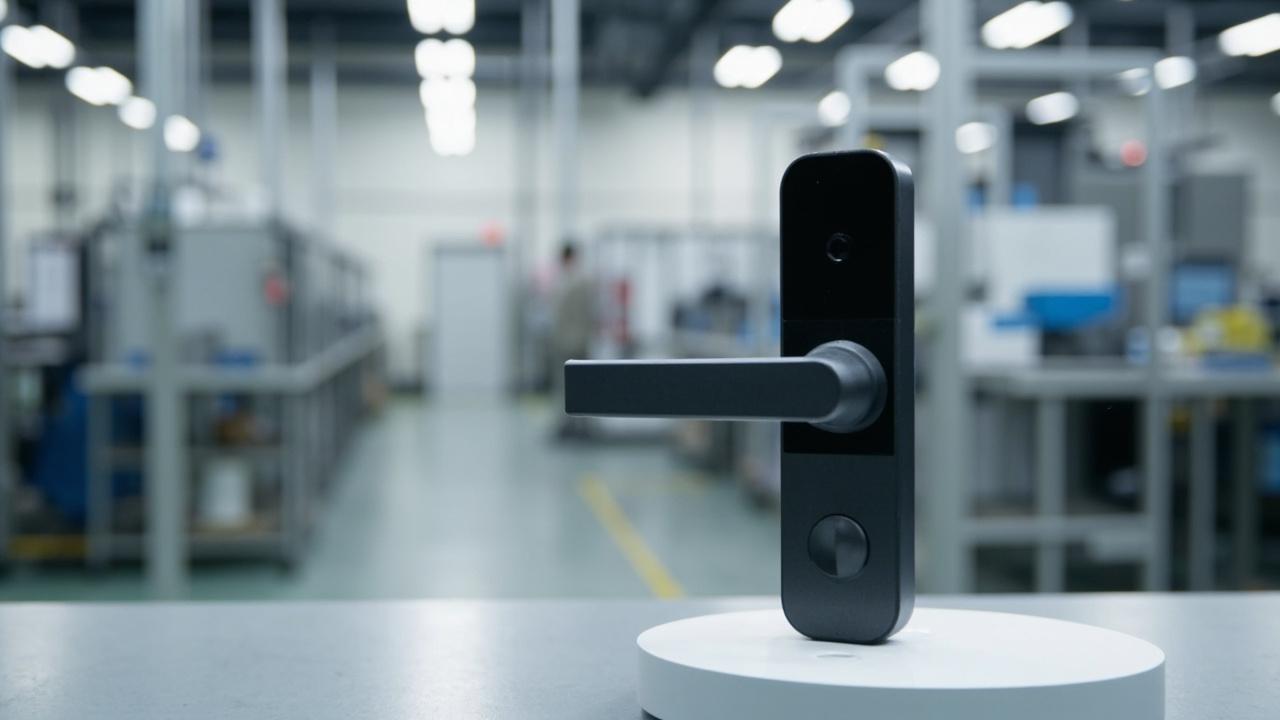
Smart Lock Market for Student Housing
Five student-housing market scenarios, five operational rounds, one verdict that is not a winner. The smart lock decision for student housing is not a single building type wearing a single product. The student-housing market is a portfolio of structurally different operating models — high-rise purpose-built towers with 24/7 reception desks, mid-rise university-affiliated residences with central housing offices, off-campus build-to-rent clusters scattered across a city, legacy office blocks being converted into student beds, and co-living corridors where every bedroom is its own lockable universe. Each scenario asks the lock a different question at every point in the academic calendar, and the question the brochure answers has very little to do with any of them.
The direct answer, before anything else:
For the student-housing market, no single lock class wins across all five operating scenarios. What wins is a portfolio-mapping exercise: high-rise PBSA towers favor hotel-class RFID with centralized software, mid-rise university-affiliated residences favor keypad-plus-app hybrids that accept legacy mechanical override, build-to-rent clusters favor keypad code-rotation at every door, conversion/refurbishment projects favor retrofit-tolerant lock classes with documented mechanical key fallback, and co-living corridors favor per-bedroom credential granularity with shared common doors on a separate lane. Per-model specifics — credential capacity, audit depth, app lane, door-thickness fit, integration with any campus one-card system — are all confirmed on the product page or written supplier datasheet, not inferred from a category. Two claims govern the entire arena: (1) every lock class under discussion here is a real catalog position drawn from a published 79-model lineup, and (2) no scenario is allowed to invent a per-model number it cannot route back to a dated product page.
This is a comparison arena. Five scenarios enter; they fight over five rounds, and each round is a question the academic calendar asks whether or not the operator answers it. The scenarios are built from the shape of real portfolios we are asked to quote into — they are not customer stories. Where a round depends on a specific model's behavior, the model earns the points only with a check the model’s published specification caveat attached, and the caveat repeats every time it matters.
How to read this arena
| Arena element | What it carries | Why it is here |
|---|---|---|
| Five scenarios | High-rise PBSA · Mid-rise university-affiliated · Build-to-rent cluster · Legacy conversion · Co-living corridor | These are the five shapes a "student-housing" inquiry actually arrives as once the operator finishes describing it |
| Five rounds | Move-in surge · Mid-tenancy rotation · Audit depth · Mechanical fallback · Summer turnover | Each round is a calendar moment the lock has to absorb, not a feature |
| Scoring 0–5 per round, 25 max | A scenario earns the points for how its chosen lock class behaves at its realistic best on that calendar moment | No brochure-feature points. Every point is a calendar moment the operator has to survive |
| Caveat discipline | Every per-model claim is routed to the dated product page or written supplier datasheet | Catalog honesty is the only defensible posture in a market that asks the same word to mean five buildings |
| No market sizing invented | No specific market size, growth rate, or segment-share figure appears anywhere in this article | Those figures belong to research firms with dated methodologies; we are a lock factory that gets asked which lock fits which building |
Two disciplines govern every claim below.
The catalog honesty gate. We publish a 79-model lineup with 24 hotel-class locks, 37 fingerprint locks, 18 keypad locks, 9 RFID locks, 10 outdoor locks, 6 face-recognition locks, 6 cabinet locks, 3 video-camera locks, and 3 glass-door locks. Unlocking methods across that catalog span fingerprint, passcode, RFID/IC card, mechanical key, app/Bluetooth on TTLock / Tuya / Doodle lanes depending on the model, remote control, 3D face on a small number of models, hotel PC software on hotel-class models, camera/cat-eye, and 4G on a small number of models. Methods explicitly outside the published catalog: palm-vein, Matter, Zigbee, Apple Home Key. Any model-specific capability claimed in this article is check the model’s published specification. Any category-level claim appears because the count is publicly true.
The integration gate. This article makes no campus one-card, PMS, or property-management-software claims of any kind. Locks do not read your student information system. Even on the most connected setup, the practical loop is: a housing officer generates a code or card in the lock's app or hotel-style software, hands it to the resident through whatever process the operator already uses, and remembers to expire it at the end of the contract. If a seller tells you a lock "syncs with your student records," that is a question to take to their product page and their own documentation — not a fact this arena will hand out.
Meet the contenders
| Scenario | What the building looks like | Why the lock question is hard | The lock-class lane this arena tests |
|---|---|---|---|
| High-rise PBSA tower | 400–800 beds, 24/7 reception desk, branded operator, weekly arrival/departure calendar | Reception is paid to issue credentials by the hundreds in a single weekend | Hotel-class RFID (e.g. Mifare-class) with centralized management software |
| Mid-rise university-affiliated residence | 100–250 beds, central housing office, annual academic contract | The university already has a card; the lock has to coexist with whatever the campus carries | Keypad + mechanical override, with optional RFID add-on for common doors |
| Build-to-rent student cluster | 20–80 doors across multiple low-rise buildings, landlord-managed, individual leases | No reception desk, no housing office, every door is its own credential universe | Keypad code-rotation at every door, no central desk required |
| Legacy office-to-student conversion | An existing building with existing doors, retrofit-only, tight bore/backset constraints | You cannot drill a new hole; the lock must accept what is already in the door | Retrofit-tolerant electronic lock class with documented mechanical key fallback |
| Co-living corridor | Single building, multiple bedrooms behind a shared front door, per-bedroom locks | Two lock layers on every door — front door and bedroom door — each with its own credential lane | Per-bedroom credential granularity (keypad or RFID) plus shared common door on a separate lane |
One entry rule worth stating plainly: we built smart locks for more than ten years and sell into 80+ countries, so every scenario is scored by how its chosen lock class behaves in real operator hands, including ours when we advise a building type away from a lock class the brochure would push toward it. Expect cheerleading for the right lock in the right building and honest withdrawal of the wrong lock in the wrong building.
The connectivity and audit gates
The connectivity gate. "The housing office generates a fresh credential remotely and texts it to the resident" is a real workflow and it is not universal. It exists on app-connected models — the catalog's app/Bluetooth lanes run through TTLock, Tuya, or Doodle depending on the model — and standalone keypad models behave differently: on many of them, codes are created at the lock itself, which means someone stands at the door to type an admin code and a resident code. Whether a specific model connects, and what its app lane actually permits, is a product-page fact. Every time a point below depends on remote behavior, it carries that flag.
The audit gate. Event and access records are real — the completed spec block for our SLK-9936S hotel lock lists audit/event records up to 1,000 — but record counts, what gets recorded, and how records are read out are per-model facts. The SLK-9936S is a hotel lock and does not enter any one of these five scenarios directly; it appears later as a ruler for what a finished spec looks like, under an explicit no-porting firewall.
Round 1 — Move-in surge
The first weekend of the academic year. Hundreds of parents are watching. The reception desk has six hours to put a working credential in every new resident's hand.
- High-rise PBSA tower. Hotel-class RFID with centralized software is built for exactly this. Reception encodes cards at a desk, hands them over the counter, the resident walks to the room and presents the card. The mechanics are identical to a hotel check-in scaled to a weekend. The honest caveat: this lane is genuinely strong only on models whose central software can issue and revoke at the pace a 400-bed weekend demands — a per-model fact you check the model’s published specification or in the hotel PC software documentation. Where it shines: throughput. Where it strains: the card itself is a physical object that has to move from desk to room.
- Mid-rise university-affiliated residence. A keypad-plus-app hybrid can carry an arrival window without forcing every resident to the housing office, but the surge compression still resolves to a human at a desk handing over a card or code at peak hours. The university-affiliated flavor adds a second wrinkle: whatever lock class is chosen has to coexist with whatever card the campus already issues, and that coexistence is rarely plug-and-play. Where it shines: residents who already carry a university card don't have to carry a second credential. Where it strains: integration quality is per-product.
- Build-to-rent student cluster. No reception desk. Each door gets a code generated from an app or punched in at the lock. The surge compression becomes a remote-issuance problem on whatever app lane the lock carries (TTLock / Tuya / Doodle depending on model — confirm connectivity on the product page). Where it shines: zero desk staffing required. Where it strains: remote issuance exists only on app-connected models; standalone keypad units put a human at the door for every arrival.
- Legacy office-to-student conversion. Same arrival surge as any other scenario, with a tighter tolerance for what the door can accept. The lock class chosen must physically fit the existing bore and backset, and that fit envelope is the first question to answer before any credential lane is discussed. Where it shines: retrofit-tolerant lock classes absorb the surge through the same code-rotation lane as build-to-rent. Where it strains: bore/backset misfit discovered mid-arrival weekend is a scenario-ending event.
- Co-living corridor. Two layers, both must absorb the surge simultaneously. The shared front door takes a single credential (code, card, or fob) for every resident; the per-bedroom doors take individual credentials. Where it shines: when the corridor uses a single management lane for both layers, the surge is one issuance problem. Where it strains: when the two layers run on different credential systems, the surge doubles into a coordination problem.
Round 1 verdict: High-rise PBSA 4/5, Mid-rise university-affiliated 3/5, Build-to-rent 3/5 (with the standalone caveat), Legacy conversion 2/5 (the fit gate eats a point), Co-living corridor 3/5 (with the two-layer caveat).
| Round 1 — Move-in surge | High-rise PBSA | Mid-rise university | Build-to-rent | Legacy conversion | Co-living corridor |
|---|---|---|---|---|---|
| Reception staffing required | Yes (desk) | Yes (housing office) | No | No | No |
| Per-resident effort | Pick up card | Pick up code/card | Receive code | Receive code | Receive two credentials |
| Hardware bottleneck | Encoder throughput | Card coexistence | App lane availability | Bore/backset fit | Two-layer coordination |
| Scales to 400 arrivals in a weekend? | Yes | Yes (with caveats) | On app-connected models | On app-connected models | On app-connected models |
| Score | 4 | 3 | 3 | 2 | 3 |
Round 2 — Mid-tenancy credential rotation
October through April. Room swaps, withdrawals, mid-year arrivals, lease transfers, lost credentials. The lock has to absorb churn without a desk visit per event.
- High-rise PBSA tower. Centralized software is built to revoke and reissue — that is what it is for. A resident withdraws mid-semester, the desk revokes the card in software, the next arrival gets a freshly encoded card, and the door never knew the difference. Where it shines: a single revoke action covers every common door the previous resident could open. Where it strains: the desk has to be staffed to perform the revoke, which is a labor cost the building has already accepted.
- Mid-rise university-affiliated residence. Similar mechanics to PBSA on paper, with a softer staffing floor. The housing office is not 24/7, so a midnight withdrawal creates a window where the prior credential is still live. Code-rotation discipline on the keypad lane narrows that window to minutes; card-rotation on the RFID lane requires the office to be open or the resident to come back in person. Where it shines: code-rotation when supported. Where it strains: anything requiring a desk visit.
- Build-to-rent student cluster. This is where the cluster's lack of a desk becomes an asset. App-connected code generation lets the landlord rotate codes from a phone at any hour (confirm connectivity on the product page). Standalone keypad units absorb churn at the door — every rotation is a walk-up event, which trades labor for response time. Where it shines: app-connected remote rotation. Where it strains: standalone units put a human at every churn event.
- Legacy office-to-student conversion. Same churn mechanics as build-to-rent on a per-door basis, with the added constraint that the lock class has to keep working across a retrofit door whose tolerances were never designed for repeated credential writes. Mechanical keyway fallback gives the operator a manual override lane when the electronic lane needs service. Where it shines: when the chosen lock class supports the same churn frequency as build-to-rent. Where it strains: lock classes that document a write-cycle limit lower than the building's churn rate are a slow-motion failure.
- Co-living corridor. The per-bedroom layer carries the churn. The shared front door credential is mostly stable across the academic year; the bedroom credentials rotate with every resident. Where it shines: per-bedroom granularity means a single rotation never affects a roommate. Where it strains: every churn event is two writes (front door unchanged, bedroom door reissued), and the two layers have to stay synchronized.
Round 2 verdict: High-rise PBSA 5/5, Mid-rise university-affiliated 3/5, Build-to-rent 4/5 (with the standalone caveat), Legacy conversion 3/5, Co-living corridor 4/5.
Round 3 — Audit depth
Six weeks after a noise complaint, the housing office needs to know who opened which door when. The audit lane has to hold up to scrutiny from parents, the university, and possibly the police.
- High-rise PBSA tower. Hotel-class RFID with centralized software carries the strongest audit lane of any scenario in the arena. The lock records which card opened which door at what time; the software queries and exports. The honest caveat: this lane is genuinely strong only on models whose central software supports the export path the operator needs — a per-model fact you check the model’s published specification or in the software documentation. The SLK-9936S spec block's audit/event records up to 1,000 figure shows the scale of buffering a completed hotel-class datasheet carries, as a format ruler only — never port to any student-housing model claim.
- Mid-rise university-affiliated residence. Audit depth depends on which credential lane dominates. A keypad model with audit logs and exportable records can answer the question at a coarser grain than a card-based system, but the question still gets answered. The interesting wrinkle: the university may demand a different export format than the housing office produces, and that translation is rarely automatic.
- Build-to-rent student cluster. Audit depth is a per-model question. Some keypad models keep granular per-credential logs; others only record "an admin code was used." Remote retrieval exists only on app-connected models; standalone units require someone to walk up to the door and pull the log. Where it shines: app-connected models with documented export. Where it strains: standalone units where the audit question arrives after the resident has moved out.
- Legacy office-to-student conversion. Same audit depth as build-to-rent on a per-model basis, with a longer tail of legacy mechanical keyway events that may or may not be recorded depending on the lock class. The honest read: any audit story that depends on the mechanical keyway being logged is incomplete by construction.
- Co-living corridor. Two layers means two audit stories. The shared front door logs entries; the per-bedroom layer logs bedroom entries. Where the two layers run on different credential systems, reconstructing "who came in the building and went to that bedroom" requires joining two log sources — a question for whatever software or spreadsheet the operator uses to reconcile them. Where it shines: a single management lane for both layers produces a single audit story. Where it strains: two lanes, two logs, one operator trying to join them at 2 a.m.
Round 3 verdict: High-rise PBSA 5/5, Mid-rise university-affiliated 3/5, Build-to-rent 3/5 (with the standalone caveat), Legacy conversion 2/5, Co-living corridor 3/5 (with the two-layer caveat).
| Round 3 — Audit depth | High-rise PBSA | Mid-rise university | Build-to-rent | Legacy conversion | Co-living corridor |
|---|---|---|---|---|---|
| Per-event attribution | Cardholder | Code-holder or cardholder | Code-holder | Code-holder (electronic only) | Two layers |
| Remote log retrieval | Yes (centralized software) | If app-connected | If app-connected | If app-connected | If app-connected |
| Export path | Per-model: check against the model specification | Per-model: check against the model specification | Per-model: check against the model specification | Per-model: check against the model specification | Per-model: check against the model specification |
| Joins with non-lock data | Possible via hotel PC software | Limited | Limited | Limited | Manual if two lanes |
| Score | 5 | 3 | 3 | 2 | 3 |
Round 4 — Mechanical fallback and emergency access
The battery died at 02:00. The lock has to let the resident in without forcing a locksmith.
- High-rise PBSA tower. Hotel-class locks with mechanical emergency access use a mechanical key override (5-pin cylinder on the SLK-9936S class, product-page-documented) that the reception desk controls. The keyway inclusion and key-supply policy are per-model facts — check the model’s published specification. The honest read: any hotel-class lock class that does not document a mechanical override lane is a fire-evacuation liability, not a credential convenience.
- Mid-rise university-affiliated residence. Mechanical override is the dominant credential lane when batteries fail. The university-affiliated flavor adds a key-control question: who holds the override key, how many copies exist, and what is the audit trail when the override is used. Where it shines: a documented override policy. Where it strains: an undocumented one.
- Build-to-rent student cluster. Mechanical override exists on every serious electronic lock class, but the key-supply policy varies by model. Some models ship with two keys; others require a separate order. Some operators hold all override keys; others issue one per resident. Where it shines: a documented override key-supply policy the operator can audit. Where it strains: a model whose keyway is undocumented or whose replacement key supply chain is opaque.
- Legacy office-to-student conversion. Mechanical fallback is the single most important lane in this scenario, because the door's original key may still be in circulation. The lock class chosen has to accept the existing keyway, override it cleanly, and document the relationship between the two. Where it shines: a lock class with documented keyway compatibility. Where it strains: a lock class that ignores the legacy keyway and forces a rekey.
- Co-living corridor. Two layers, two mechanical stories. The shared front door typically retains its original mechanical keyway; the per-bedroom layer may or may not, depending on the lock class. The honest read: any co-living corridor whose per-bedroom layer does not have a documented mechanical override is a fire-evacuation liability, not a credential convenience.
Round 4 verdict: High-rise PBSA 4/5, Mid-rise university-affiliated 3/5, Build-to-rent 3/5, Legacy conversion 4/5 (this is the round where retrofit tolerance pays), Co-living corridor 3/5 (with the two-layer caveat).
Round 5 — Summer turnover
End of academic year. The building empties in June and refills in September. Some buildings hand the empty months to a conference program or a renovation crew; others stay dark.
- High-rise PBSA tower. Summer is when centralized software earns its keep. Every departing resident's credential is revoked in a single batch; the building's empty months are managed by a small staff holding master credentials; the September refill runs the same move-in surge as Round 1, with the software carrying the lessons of the previous academic year. Where it shines: batch revocation. Where it strains: nothing in particular — this is the round the lane was built for.
- Mid-rise university-affiliated residence. Similar batch mechanics, with a tighter staffing window. The housing office may be skeleton-crew over the summer, which means the September refill has to run with a fraction of the academic-year staff. Where it shines: documented batch-revoke tooling. Where it strains: nothing in particular if the tooling is documented.
- Build-to-rent student cluster. Summer is when the cluster pivots to short-stay tenants or sits empty. If the operator runs a short-stay summer program, the lock class has to support per-stay code generation alongside the academic-year code rotation; if the cluster sits empty, the lock class has to hold credentials dormant without consuming battery or requiring maintenance. Where it shines: app-connected models whose code-rotation lane serves both academic and short-stay tenants (check the model’s published specification). Where it strains: standalone keypad units that require a walk-up for every credential change.
- Legacy office-to-student conversion. Summer is when the renovation crew gets the building. The lock class chosen has to support a temporary credential for the crew that does not collide with the academic-year credentials that will return in September. Mechanical override is the fallback lane; an electronic lane for the crew is a per-model question. Where it shines: a lock class with a documented "temporary user" lane. Where it strains: a lock class that forces the operator to either re-key for the crew or share an academic-year credential with the crew.
- Co-living corridor. Two layers, two summer questions. The shared front door credential may stay live for the summer crew; the per-bedroom credentials rotate with the academic year. Where it shines: a single management lane that handles both. Where it strains: two lanes that have to be reconciled by hand.
Round 5 verdict: High-rise PBSA 5/5, Mid-rise university-affiliated 4/5, Build-to-rent 3/5 (with the app-connected caveat), Legacy conversion 3/5, Co-living corridor 3/5 (with the two-layer caveat).
The final scoreboard
| Scenario | Move-in | Mid-tenancy | Audit | Fallback | Summer | Total /25 | Arena result |
|---|---|---|---|---|---|---|---|
| High-rise PBSA tower | 4 | 5 | 5 | 4 | 5 | 23 | Strongest all-around — the hotel-class lane earns its keep across every round, with two honest caveats on per-model software and override key policy |
| Mid-rise university-affiliated | 3 | 3 | 3 | 3 | 4 | 16 | Solid mid-field — the university-card coexistence question decides how close this scenario runs to PBSA |
| Build-to-rent student cluster | 3 | 4 | 3 | 3 | 3 | 16 | App-connected model pulls this scenario into mid-field; standalone model drops it back |
| Legacy office-to-student conversion | 2 | 3 | 2 | 4 | 3 | 14 | Falls behind on audit; rises on fallback. The retrofit-fit gate is the deciding factor |
| Co-living corridor | 3 | 4 | 3 | 3 | 3 | 16 | Mid-field with two-layer caveats at every round. Single management lane is the deciding factor |
The scoreboard's honest footnote: the PBSA score concentrates strength in two rounds (Audit and Summer) where the hotel-class lane is purpose-built. A scenario whose portfolio doesn't carry those two rounds shouldn't pay for the hotel-class premium — it should buy the keypad-plus-app lane the build-to-rent cluster uses. The five scenarios don't compete on a single building's behalf; they compete on a portfolio operator's behalf, and the operator's portfolio is almost certainly a mix of all five shapes.
Illustrative scenario: a 5,400-bed mixed portfolio runs the gauntlet
Consider an illustrative 5,400-bed mixed portfolio — explicitly a scenario built for decision-testing, not a customer story — operated by a single housing group across a single city. The portfolio shape: one 640-bed high-rise PBSA tower, two 180-bed mid-rise university-affiliated residences, four build-to-rent student clusters averaging 60 doors each (240 doors), one 320-bed legacy office-to-student conversion, and three co-living corridors averaging 90 bedrooms each (270 bedrooms behind three shared front doors).
| Portfolio segment | Bed count | Doors | Lock-class lane | Primary caveat |
|---|---|---|---|---|
| High-rise PBSA tower | 640 | 640 + 12 common | Hotel-class RFID + centralized software | Per-model software and override-key policy — check the model’s published specification |
| Mid-rise university-affiliated (×2) | 360 | 360 + 16 common | Keypad + mechanical override, optional RFID | University-card coexistence — check the model’s published specification |
| Build-to-rent cluster (×4) | 960 | 240 (one per bedroom, four buildings) | Keypad code-rotation | App connectivity — check the model’s published specification |
| Legacy office-to-student conversion | 320 | 320 + 8 common | Retrofit-tolerant lock with documented mechanical keyway | Bore/backset fit and keyway policy — check the model’s published specification |
| Co-living corridors (×3) | 540 | 270 bedrooms + 3 front doors | Per-bedroom keypad + shared front-door lane | Two-layer coordination — check the model’s published specification |
The portfolio-level read: a single lock class across all five scenarios would be wrong. The PBSA tower pulls the hotel-class lane (23/25); the legacy conversion pulls the retrofit-tolerant lane (14/25, but the fallback round is where it actually wins); the build-to-rent cluster pulls the keypad code-rotation lane (16/25 with the app-connected caveat); the mid-rise and co-living scenarios sit in the mid-field (16/25 each). The procurement signal is a multi-lane shortlist, not a single-line RFQ — and every lane carries its own check the model’s published specification discipline, because no category-level claim survives a specific model's documentation.
The scenario's honest footnote: 5,400 beds across five shapes is a portfolio size that few operators run in a single city, but the shape mix is not unusual. The lock-class fragmentation across the portfolio is the operator's real procurement problem, and it is the problem the multi-lane shortlist is designed to solve.
The scoreboard's verdict by buyer profile
| Buyer profile | What they actually buy | Why the scoreboard reads this way |
|---|---|---|
| High-rise PBSA operator | Hotel-class RFID + centralized software across rooms and common doors | The 23/25 score is not a close call — the hotel-class lane earns its keep on the audit and summer rounds, and the move-in surge round is where the desk staffing pays for itself |
| University housing office | Keypad + mechanical override, with RFID add-on for common doors that share a card with the campus | The 16/25 score reflects a real ceiling: the university-card coexistence question decides whether the score reads 16 or closer to PBSA's 23 |
| Build-to-rent landlord | Keypad code-rotation at every door, app-connected model | The 16/25 score is app-dependent; standalone keypad units drop this scenario back toward the legacy conversion's 14/25 |
| Conversion/refurbishment developer | Retrofit-tolerant lock with documented mechanical keyway | The 14/25 score understates the scenario's fallback strength — Round 4 is the only round where legacy conversion wins outright |
| Co-living operator | Per-bedroom keypad + shared front-door lane | The 16/25 score carries two-layer caveats at every round; single management lane is the deciding factor |
The closing read
The student-housing smart-lock market is not a single building type wearing a single product. It is five building shapes, five calendar moments per shape, and a per-model fact gate that repeats at every point a brochure would otherwise hand you a number. The arena's honest verdict is that no scenario wins outright — each scenario wins on the rounds its lock class was built for and loses on the rounds it wasn't, and the operator's job is to map the lock class to the building shape rather than to the feature page.
Two closing rules govern every procurement decision that comes out of this arena:
Check the model’s published specification. Per-model specifics — credential capacity, audit-record depth, app lane, door-thickness fit, mechanical keyway inclusion and key-supply policy, integration with any campus one-card system, battery format and low-power behavior — are all recorded in the model specification or written supplier datasheet before any quotation is signed. The SLK-9936S spec block quoted inside this article is a format ruler for what a completed per-model confirmation looks like; it is not a port across to any student-housing model.
Match the lock class to the building shape, not the brochure. A 640-bed PBSA tower needs a different lock class than a 60-door build-to-rent cluster. A retrofit conversion needs a different lock class than a co-living corridor. The arena exists to make that mapping legible before the operator commits to a single-line RFQ, and the multi-lane shortlist is the procurement artifact that maps to a multi-shape portfolio.
For the building-by-building breakdown of how these five scenarios actually absorb the academic calendar — move-in surge, mid-tenancy rotation, audit depth, mechanical fallback, and summer turnover — see Smart Locks for Student Housing: Five Operational Pillars for Move-In, Rotation, Lockout, Year-End Audit and Summer Turnover. For the short-term rental market's parallel scenario comparison, see Smart Lock Market for Short-Term Rentals. For the senior-housing market's parallel scenario comparison, see Smart Lock Market for Senior Housing. To map a specific building shape to a specific lock class, request a written offer letter against the dated product pages of the models in scope at /request-a-quote, or order evaluation samples at /order-samples.