
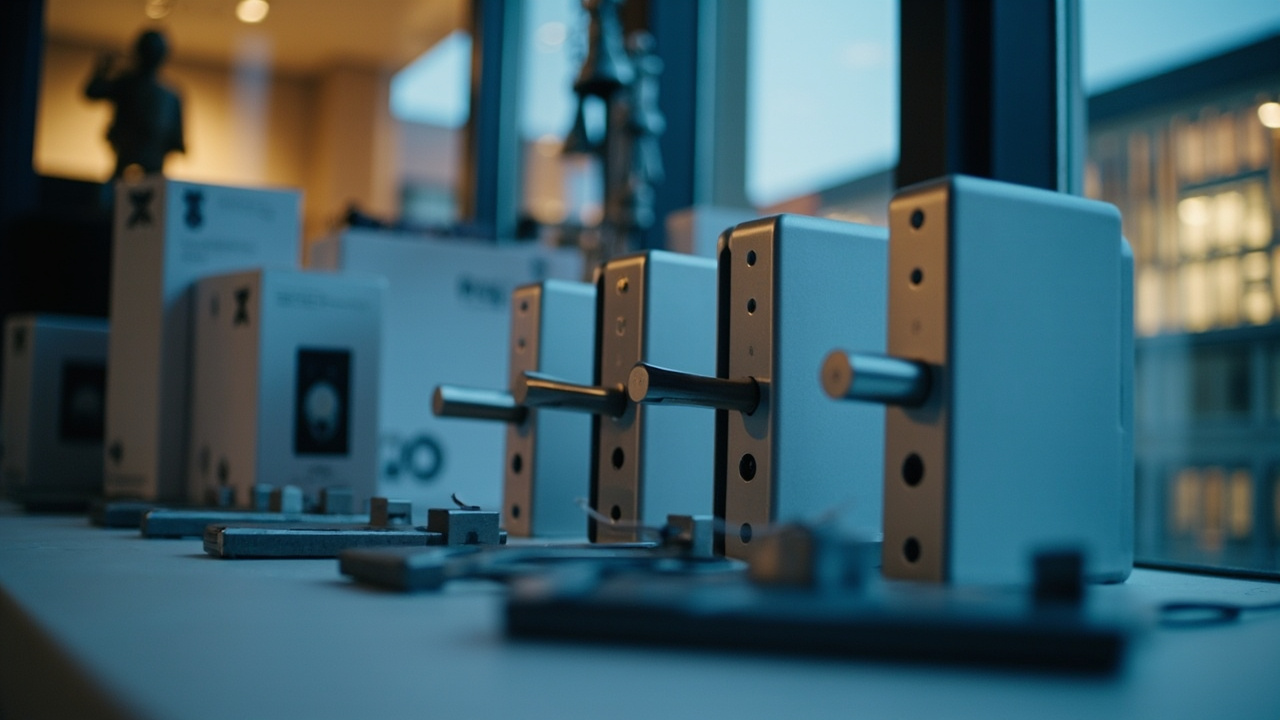
Direct-connect Versus Cylindrical Lock Body: Which Fits a Clinics and Medical Offices Door Programme
Procurement managers rarely need to choose between two product names; they need to choose between two door-fit and evidence packages. A direct connect versus cylindrical body clinics comparison should therefore begin with the approved door schedule, each room's access purpose and the installation constraints.
Direct answer. In short, direct connect versus cylindrical body clinics comparison is the subject of this piece. direct connect versus cylindrical body clinics comparison is where the work on direct connect versus cylindrical body clinics comparison sits. cylindrical-body is what has to be evidenced before anyone signs. A direct connect versus cylindrical body clinics comparison is a comparison written to be reused. Criteria are stated. direct connect versus cylindrical body clinics comparison is where the direct connect versus cylindrical body clinics comparison shortlist narrows.
Throughout, direct connect versus cylindrical body clinics comparison means what direct connect versus cylindrical body clinics comparison sets out. It is a working definition of direct connect versus cylindrical body clinics comparison drawn from the evidence below. It is valid for the specific market and product, not as a general claim.
Direct-connect and cylindrical lock body are procurement labels, not substitutes for drawings. The supplier must show the connection path, case dimensions, spindle and cylinder arrangement, strike interfaces, service access and dated documentation for the exact offered configuration. That evidence forms the clinic door hardware specification and supports medical office access control decisions.
The objective is not to select one architecture for every clinical door. It is to identify which body can be evidenced against each door without imposing unnecessary records where the operational requirement is the opposite.
How to read the annotations — direct connect,cylindrical body
Each field below uses three evidence levels:
- Stated: a description in a quotation, catalogue or email.
- Drawn: dimensions, fixing positions and interfaces shown on a dated drawing.
- Verified: measured at the door and checked against the exact offered SKU.
A stated feature does not become verified merely because it appears in a product family document. The procurement record should identify which evidence closes each field. Every commercial claim here has to be checked against the smart door locks.
flowchart TD
    A[Start with the approved door schedule] --> B{Door and frame measurements complete}
    B -->|No| C[Complete door fit measurement]
    C --> B
    B -->|Yes| D[Compare connection and interface evidence]
    D --> E{All mandatory fields evidenced}
    E -->|No| F[Hold selection and request drawings]
    F --> D
    E -->|Yes| G[Approve exact SKU and record handover]
Annotated architecture record — direct connect,cylindrical body
The following comparison records what each proposal must explain. It does not assume that every supplier uses the same terms.
| Annotation field | Direct-connect lock body | Cylindrical lock body | Required evidence |
|---|---|---|---|
| Working meaning | Supplier-defined connected lock assembly; do not assume it means network connectivity. | Supplier-defined cylindrical lock case; do not assume it fits an existing bore. | Terminology note and assembly drawing |
| Mechanical connection | Show the panel-to-case, case-to-leaf and fixing arrangement. | Show case fixing, cylinder and lever relationship. | Section drawing and fixing details |
| Case geometry | Record the complete connected assembly, not only the visible panel. | Record the case envelope, fixing centres and clearances. | Dimension drawing with tolerances |
| Cylinder interface | State whether a cylinder is integral, removable or not offered. | State the cylinder format, backset relationship and rose or collar arrangement. | Cylinder and spindle schedule |
| Controls and power | Show wiring, connectors, battery or external-power arrangements. | Show the same items while retaining the separate case geometry. | Wiring and service diagram |
| Mechanical override | Define the key, tool or emergency-access arrangement. | Define how override access works without dismantling the case. | Operating procedure |
| Service access | Identify how modules are reached and replaced. | Identify which components can be serviced in the installed position. | Service procedure and parts list |
| Evidence status | Record drawing number, revision and exact SKU. | Record drawing number, revision and exact SKU. | Dated evidence register |
This record prevents “direct-connect” from being mistaken for a digital connection and prevents “cylindrical” from being treated as proof of dimensional compatibility.
Door fit and mechanical interface record
The Office Smart Lock Site Survey should capture the physical evidence before either body is shortlisted. Complete the door fit measurement against the installed door rather than relying only on the nominal door size.
| Field | Required record | Selection consequence |
|---|---|---|
| Door leaf | Material, thickness, edge condition and relevant construction | A case dimension unsupported by the measured leaf cannot be accepted |
| Frame rebate | Width, depth, stop position and fixing access | Insufficient rebate space may exclude one architecture |
| Case and bore | Opening position, dimensions and available cavity | Existing preparation must match the proposed case evidence |
| Backset | Distance from door edge to relevant spindle or cylinder reference | Handle and cylinder alignment must be checked |
| Spindle and handle | Profile, length, fixing method and lever clearance | This is a common interface boundary between both approaches |
| Cylinder and rose | Format, projection, collar and fixing arrangement | Confirm that keys, levers and trim remain serviceable |
| Latch or deadbolt | Throw, projection, faceplate and keeper relationship | Strike geometry must match the actual frame |
| Door-control interfaces | Door closer, hold-open device and frame-mounted hardware | Identify interference and the responsibility for adjustment |
| Power and service | Battery compartment, external power override via USB terminal if offered, and access path | Serviceability affects downtime and credential continuity |
The first-party catalogue contains 79 published models; 72 include RFID/IC card and 41 include a mobile app. Those counts describe portfolio presence, not door-body suitability. Confirm on the dated product page for the specific SKU before carrying any feature into the clinic door hardware specification.
Access intent and event-record annotation
The first operational question is not whether every door should log access. It is which rooms require attribution of entry and which require a door that does not generate a routine access record. A records-room audit trail may be necessary while a treatment-room log can create unnecessary exposure of patient presence.
CONFIRM-WITH-LOCAL-AUTHORITY: Verify the applicable privacy, fire-door and escape-hardware requirements with the authority that signs off for the project location; treat each requirement as a per-door and per-product question.
| Illustrative clinic door | Access intent | Event-record requirement | Annotation for body selection |
|---|---|---|---|
| Consulting room | Staff badge or app access | Define whether attribution is operationally needed | Preserve cleanable surfaces and uncomplicated service access |
| Treatment room | Staff access with privacy-sensitive use | Avoid automatic logging unless justified | Record override behaviour and room-release arrangements |
| Records room | Restricted staff credential | Require attributable access records | Establish where records are held and how retrieval is evidenced |
| Medication store | Restricted credential or designated staff access | Review access attempts and exceptions | Confirm how credentials are revoked and how overrides are recorded |
| Service entrance | Wider operational access | Match event detail to security need | Coordinate latch, strike, closer and service hardware |
This is an illustrative schedule, not a claim that every clinic should apply the same policy. The approved room list should show who grants each right and which exceptions require evidence.
Direct-connect decision test
A direct-connect lock body becomes the preferred candidate for a door when the supplier can connect the mechanical and electronic proposal into one evidenced package. The following conditions should all be met:
- A current drawing identifies the exact SKU, configuration and connection path.
- The complete assembly fits the measured leaf, rebate and frame fixing areas.
- The cylinder, spindle, lever, latch and strike interfaces are individually defined.
- Service access does not require an improvised modification or removal of unrelated parts.
- The proposed credential and event-record functions match the room's operational purpose.
- Installation documentation and a dimension drawing are available on request.
Where these conditions cannot be evidenced, “direct-connect” remains a marketing description rather than an approved body.
Cylindrical-body decision test
A cylindrical-body option becomes the preferred candidate when the door has a documented preparation that the supplier can match and retrofit lock selection is based on measured geometry rather than a catalogue photograph.
Check the bore or case envelope, fixing centres, backset, spindle profile, cylinder projection, lever clearance and strike position. Record whether the existing faceplate or cylinder can remain in service or must be replaced. The Smart Lock Retrofit Site Survey is useful for documenting what can be retained and what creates rework.
The supplier should also explain mechanical override, emergency access and battery or external-power servicing. If the cylindrical case is dimensionally feasible but service access or audit requirements remain unresolved, retain the option for clarification rather than approving it by description.
Annotated comparison scorecard
Score each architecture from 0 to 2 for every door: 0 means the requirement is absent or contradicted, 1 means it is conditional, and 2 means it is supported by current evidence. A score counts only when its supporting document is attached to the record.
| Criterion | Direct-connect score | Cylindrical-body score | Evidence required |
|---|---|---|---|
| Measured case and frame fit | 0 to 2 | 0 to 2 | Drawing compared with site survey |
| Cylinder, spindle and lever compatibility | 0 to 2 | 0 to 2 | Interface schedule and sample |
| Room-specific access and event needs | 0 to 2 | 0 to 2 | Approved access matrix |
| Cleaning and service access | 0 to 2 | 0 to 2 | Procedure and component drawing |
| Existing door-control hardware | 0 to 2 | 0 to 2 | Coordination record |
| Documentation completeness | 0 to 2 | 0 to 2 | Drawing register and dated product record |
Do not average away a zero on mechanical fit or another requirement designated as mandatory by the project. Such a zero places the selection on hold until the supplier closes the evidence gap.
Lock body procurement checklist for the RFQ
Send the RFQ against a room-by-room schedule rather than asking for a generic “best” lock body. The lock body procurement checklist should request:
- The final door, frame and hardware schedule.
- The proposed body family, exact SKU and configuration.
- Dimension drawings, fixing details and an installation guide.
- The cylinder, spindle, lever, latch or deadbolt and strike interfaces.
- The credential methods and event-record outputs required for each room.
- Cleaning, battery replacement, override and service procedures.
- Clear responsibility for door closers, hold-open devices and frame interfaces.
- A current quotation linked to the documented configuration.
Ask for confirmation of the dated product page for the specific SKU. Any feature, dimension or capability that drives acceptance should be carried into the purchase record rather than left in an email or preliminary catalogue.
Procurement recommendation by door type
The recommendation is conditional. For a new or substantially replaced door, the direct-connect route is attractive when the supplier provides a complete connected assembly, current dimensional evidence and a workable service plan. For an existing cylindrical preparation, the cylindrical-body route may reduce unnecessary frame work when the measured geometry, interfaces and documentation all match.
Neither label should be accepted across the programme without checking each door type. A clinic may reasonably use more than one body family where the evidence differs by room. The Direct-connect Versus Cylindrical Lock Body: Decision Matrix for Clinics and Medical Offices Operators can extend this record into a bid comparison.
Used as intended, the direct connect versus cylindrical body clinics comparison is a gate for evidence rather than a universal ranking. Select the architecture that closes the mechanical, access and service fields for the actual door, then preserve that decision in the signed programme record.
The practical counterpart to this point is sl 6301 narrow edge smart lock complete buyer. That is the same question direct connect versus cylindrical body clinics comparison has to answer here.
Closing the evidence register
The final package should contain one decision row per door, the supporting drawings, the product evidence and the name and date of the approving reviewer. Request the relevant catalogue material through Request Catalog, and submit the documented configuration through Request a Quote so that the quotation and approval record refer to the same SKU rather than a generic lock family.