
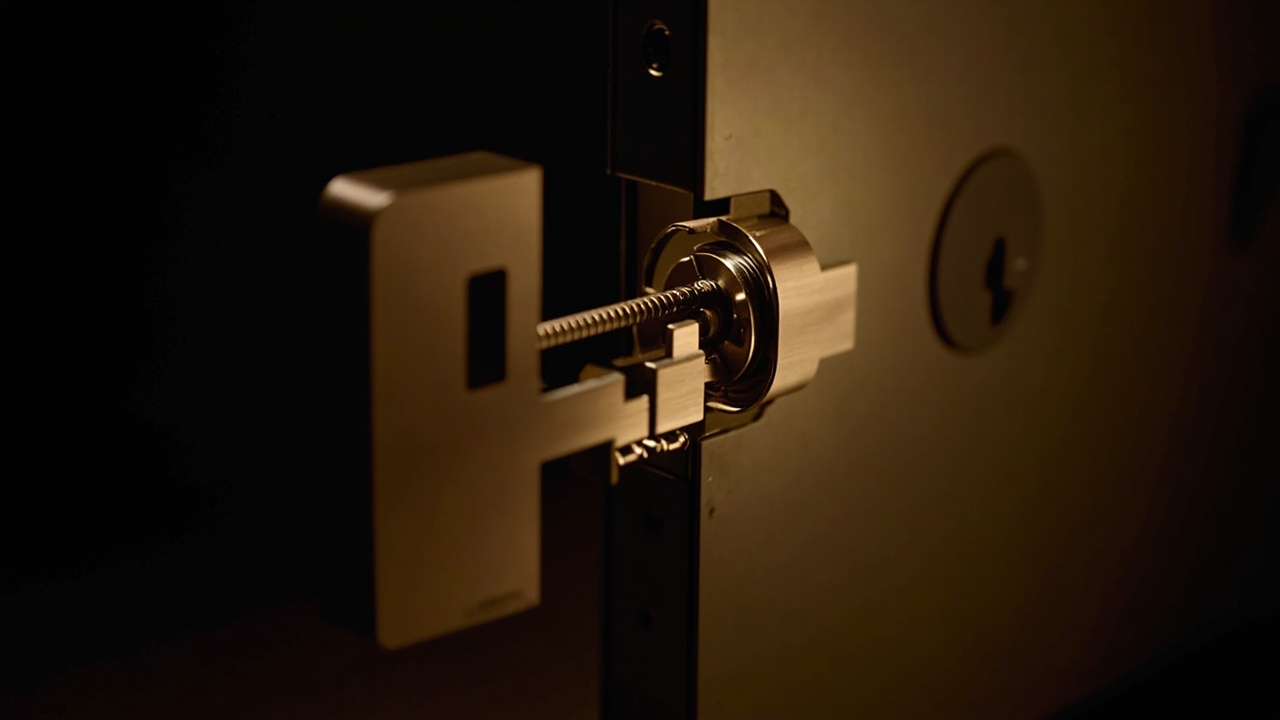
The Cylindrical Lock Body Trade-Offs: Cost, Durability and Service
System integrators comparing cylindrical lock body tradeoffs are rarely choosing between a good cylinder and a bad one. They are deciding whether a mechanical and electromechanical assembly will fit an existing opening, survive its operating demands, remain economical to own, and be serviceable without redesigning the entire door. That decision sits beneath the visible panel and should be settled before credentials, finishes or software are presented as the main selection criteria.
Direct answer. The short answer is that cylindrical lock body tradeoffs is not one decision. It is a sequence. This article takes cylindrical lock body tradeoffs from cylindrical lock body tradeoffs through cylindrical-lock-body to the record you keep. A cylindrical lock body tradeoffs is the engineering view of one component. cylindrical lock body tradeoffs is the behaviour that has to be reproduced. Then cylindrical lock body tradeoffs can be signed off.
cylindrical lock body tradeoffs is used here in the sense given under cylindrical lock body tradeoffs. It is a working definition of cylindrical lock body tradeoffs that carries no regulatory weight. The buyer still has to check it against the dated product page.
- Confirm the feature — confirm on the dated product page for the specific SKU behind cylindrical lock body tradeoffs
- Confirm the constraint — record where the technology in cylindrical-lock-body stops working
- Confirm the contingency — name the mechanical path that remains if cylindrical lock body tradeoffs fails
- In cylindrical lock body tradeoffs, this sequence is what cylindrical lock body is checked against.
This guide treats the cylindrical-lock-body description as procurement shorthand. It covers the cylinder, spindle, lock body or mortise case, latch or deadbolt drive, strike interface and the related parts that determine whether a smart lock can work on the intended door. The aim is a qualification record that can support a controlled sample, a supplier comparison and an installation handoff.
Separate the cylinder from the lock body
A lock specification often uses cylindrical lock body, mortise case and lock body as if they describe one interchangeable item. In the qualification file, however, each term needs a defined boundary.
The cylinder is the mechanical key or override interface. The spindle transfers rotation between the inside handle or control and the drive mechanism. The mortise case contains the mechanism and guides the latch or deadbolt. The strike plate and keeper react the load when the door closes. The escutcheon or panel carries the user-facing controls and may also contain the control board, motor, gearbox, battery compartment and communication module.
That separation matters because a change to one interface may invalidate the rest of the assembly. A buyer should not assume that a different cylinder, spindle or latch can be mixed into an approved lock body without renewed fit and function evidence.
| Element | What the buyer confirms | Consequence if the definition is unclear |
|---|---|---|
| Cylinder | Key interface, override function and required mounting interface | Keying or emergency-access assumptions may fail |
| Spindle | Profile, engagement, dimensions and torque path | Handles may bind or fail to retract the latch |
| Mortise case | Body dimensions, drive layout and supported door functions | Panels may not assemble or operate correctly |
| Latch or deadbolt | Projection, movement and strike relationship | The door may not close or latch as designed |
| Strike interface | Faceplate and keeper dimensions | Closing forces may be transferred into the frame incorrectly |
| Panel connection | Fixing positions and control-to-body relationship | A complete lock may fit electrically but not mechanically |
The phrase cylinder and spindle compatibility belongs in the qualification record for this reason. It should describe a verified interface, not merely two component names appearing on the same quotation. Before comparing bodies, assign a drawing or specification reference to each critical interface.
Build an operating profile before comparing bodies
The right body for one opening may be unsuitable for another because the loads, movement, environment and maintenance access differ. Rather than starting with a preferred finish or a familiar model, write a short operating profile for every representative door type.
The profile should state what the lock must tolerate and who will maintain it. Traffic description should distinguish ordinary pedestrian use from delivery carts, luggage, repeated pulls, emergency egress movement or door-closer forces. The environmental record should identify dust, moisture, salt exposure, cleaning chemicals, temperature variation and cleaning routines without assigning a rating that has not been verified for the proposed configuration.
| Profile input | Evidence to collect | Body decision affected |
|---|---|---|
| Opening type and traffic | Door schedule, use description and maintenance log | Drive loading and case exposure |
| Door movement | Closing action, closer condition and alignment observations | Latch engagement and strike wear |
| Environment | Cleaning regime, moisture and contamination sources | Material, finish and sealing requirements |
| Access pattern | Credential types, emergency access and override expectations | Cylinder, spindle and control arrangement |
| Maintenance access | Available hand clearance and technician access | Fastener, connector and battery access |
| Change exposure | Likely hardware revisions and retrofit work | Replaceability and interface stability |
An illustrative scenario may involve a service entrance with frequent cart traffic and another door in a quiet guest corridor. The service entrance may justify a higher investment in a robust latch, case and strike interface, while the corridor lock may prioritise quiet operation and straightforward battery access. These are different qualification cases, even if both doors appear on the same floor plan.
Price the cylindrical lock body cost stack
The useful commercial question is not simply what one body costs. It is how cylindrical lock body cost changes when the body, drive, cylinder, electronics, finish, assembly controls and service obligations are treated as one system. A low component price can be offset by tighter tolerances, more process steps, special finishes or changes that create field rework.
Request an itemised quotation that separates quoted hardware from services and project-specific costs. Ask the supplier to identify which items change when the door thickness, latch function, finish, credential configuration or mounting arrangement changes. Exact figures should come through the project quotation rather than a general market assumption.
| Cost driver | Quote question | Trade-off exposed by the answer |
|---|---|---|
| Material and finish | Which exposed surfaces and internal parts use the stated material? | Appearance may be closely linked to corrosion and wear exposure |
| Machined interfaces | Which dimensions are controlled during manufacture and assembly? | Small changes may affect latch alignment or panel fit |
| Drive train | What parts convert control or spindle input into bolt movement? | A compact solution may create different servicing needs |
| Cylinder and keying | Which cylinder and keying elements are included? | Override scope may be unclear between variants |
| Electronic assembly | Which board, motor, sensor or communication parts are included? | Capability boundaries may not match the supplier quotation |
| Assembly labour | Are mechanical and electronic integration steps separately identified? | A low assembly price may conceal more process variation |
| Test and documentation | Which production evidence accompanies the submitted configuration? | Sample and production equivalence may be unclear |
| Packaging and logistics | How are parts grouped, labelled and protected? | Replacement matching and shipment handling may become harder |
The quotation should also expose cost drivers outside the metal body. A replacement programme may need separate cylinders, fasteners, strike components, wiring interfaces or complete locks depending on the service strategy. Treat those as potential downstream costs, then ask for current project figures in the quotation rather than estimating them from catalogue prices.
Evaluate lock body durability by load path
The durability decision should evaluate lock body durability as the ability to maintain alignment and function under the declared duty and environment. The critical load may enter through the latch, strike, spindle, cylinder, case mounting points or an external door closer. Asking only whether a case is made from metal misses how force reaches that case.
Evidence must match the proposed configuration. A material description alone does not show how a latch resists repeated impact. A cycle description does not show whether the spindle or cylinder remained aligned during the work. A finished-lock photograph cannot establish the condition of the case inside the door.
| Load or exposure | Evidence to request | Qualification response |
|---|---|---|
| Repeated latch operation | Cycle method, inspected parts and acceptance conditions | Accept, limit use or request redesign |
| Side load at handles | Test setup and observed spindle, hub and case interfaces | Revise the interface if movement is visible |
| Strike and closer loads | Frame, closer and latch observations during operation | Correct alignment before body approval |
| Cylinder use | Override test method and wear inspection | Accept only the cylinder scope demonstrated |
| Dust and cleaning exposure | Cleaning regime and condition after agreed exposure | Identify vulnerable interfaces and maintenance needs |
| Corrosive surroundings | Material and finish scope for the supplied configuration | Request evidence for the actual environment |
For failure patterns that should shape the request, use The Cylindrical Lock Body Failure Modes Seen on Smart Lock Projects. That companion guide helps identify the observation to document; the trade-off decision here is whether the additional evidence or redesign cost is justified for the opening.
Durability should be treated as an operating requirement rather than a marketing descriptor. The qualification record should identify the test condition, sample identity, inspected component and acceptance rule. If a supplier cannot connect its evidence to the offered body, the claim remains unresolved.
Separate serviceability from convenience
Lock body serviceability describes how a technician can diagnose, adjust or replace the relevant assembly while preserving door fit, access control and the selected configuration. “Easy to install” is not an adequate service definition. A body that installs quickly but requires the complete panel and connected hardware to be removed may still create significant downtime.
Separate service into four routes: operator troubleshooting, field replacement, bench repair and complete-lock replacement. The preferred route depends on the access model, site staffing and whether the project expects spare bodies to be held locally.
| Service route | Evidence to define | Questions for the supplier |
|---|---|---|
| Operator troubleshooting | Battery access, indication and fault response | What can the user inspect without tools? |
| Field replacement | Body removal, panel separation and connector access | Which assemblies can be separated at the door? |
| Bench repair | Parts list, diagnostic method and reassembly checks | What must be returned for diagnosis? |
| Complete replacement | Door interface and credential continuity requirements | Which upstream settings must be retained or migrated? |
Also record the mechanical override route. Emergency access should be described as an interface to be verified, not as a guarantee that every credential, door condition or failed component can be bypassed in the same way. A qualified cylinder, key, spindle and latch arrangement is part of that route.
Service documentation should include the mechanical override procedure, exploded views where available, fastener positions, connector identification, battery direction, installation adjustments and the configuration boundaries for the submitted body. Ask whether spare parts are uniquely identified or whether a replacement can be mixed across revisions.
Make door fit a pass-or-fail gate
A commercially attractive body has no value if it cannot be installed on the intended opening. The door backset and latch relationship must be measured rather than inferred from a door schedule. Door thickness alone is not enough.
Use the Office Smart Lock Site Survey when establishing a repeatable survey method for commercial openings. For existing doors where retrofit work is likely, compare the survey fields with the Smart Lock Retrofit Site Survey. These links provide the site-information context; they do not replace a sample fitted to the selected body.
| Field to verify | Measurement or observation | Pass condition for the intended lock |
|---|---|---|
| Door leaf thickness | Total leaf thickness at the lock position | Falls within the confirmed configuration range |
| Backset | Distance from door edge to lock centreline | Matches the proposed body interface |
| Latch projection | Projection beyond the faceplate | Meets the intended door and frame condition |
| Faceplate | Height, width, fixing positions and edge detail | Matches the supplied body or approved conversion |
| Door rebate | Depth and usable volume around the case | Leaves required clearance and fixing access |
| Handing and swing | Hinge side and opening direction | Supports the intended latch or bolt arrangement |
| Strike and keeper | Faceplate, keeper and frame fixing condition | Provides an aligned and stable reaction point |
| Door closer and hardware | Force direction and available clearance | Does not prevent operating or servicing the lock |
Door fit should remain a hard gate rather than a weighted preference. A candidate that fails the measured opening is not rescued by scoring well on price. For the full comparison method, use The Cylindrical Lock Body and Door Compatibility: The Fit Envelope.
Connect supplier claims to a dated configuration
A datasheet can be useful only when its statements can be traced to the body being quoted. Review claim boundaries with Reading the Cylindrical Lock Body Claims in a Supplier Datasheet, then map each procurement-relevant statement to the submitted configuration.
A first-party example is the SLK-9936S hotel lock. Its cited first-party specification includes a 5-pin cylinder, a 3-point latch, and a stainless steel plus alloy body. Because these fields can drive procurement decisions, confirm on the dated product page for the specific SKU before freezing the design or treating the example as a general specification for another body.
The same rule applies to drawings, finishes, application limits and service instructions. A document dated before a hardware revision may describe an earlier interface. The qualification file should record the document date, applicable model or variant, declared door scope and any changes requested after publication. Membership shows that a model belongs in a product family; it does not establish that every lock body in that family shares the same dimensions, drive, cylinder or service route.
Score cylindrical lock body tradeoffs with hard gates
When cylindrical lock body tradeoffs are scored, use hard gates first and weighted criteria second. The weighting below is an illustrative worksheet, not a universal recommendation. Adjust it to the opening profile, operating environment, service strategy and project constraints.
The example allocates points across five criteria. Cost receives 20, door fit 20, durability 25, serviceability 20 and evidence quality 15. A score of zero can mean the criterion failed, the information was missing or the response was unacceptable; the record should distinguish those outcomes.
| Criterion | Illustrative weight | Scoring question | Evidence source |
|---|---|---|---|
| Total cost | 20 | Does the quotation expose relevant changes and downstream obligations? | Itemised quotation and change schedule |
| Door fit | 20 | Does the candidate pass every measured interface? | Survey, drawings and fitted sample |
| Durability | 25 | Is there configuration-specific evidence for the declared loads and exposure? | Test records and inspection criteria |
| Serviceability | 20 | Can the relevant assembly be reached, diagnosed and replaced as proposed? | Service procedure and sample demonstration |
| Evidence quality | 15 | Can each claim be traced to the dated configuration? | Datasheet, drawings and revision record |
Rate each criterion from zero to five, multiply the rating by its weight and divide by five to obtain weighted points. Add the results only after every hard gate has passed. Missing evidence should not become a neutral score; it should lower confidence or stop the qualification.
The record should also preserve the raw observations. A matrix with totals but no notes is difficult to audit when the proposed finish, door thickness or latch function changes. Keep the score as a decision aid, not as a substitute for engineering evidence.
Move from comparison to a controlled sample
A controlled sample tests the complete intended assembly on or against a representative opening. It should not be an unconfigured display unit that shares only a product name with the quotation.
flowchart TD
    A[Define opening and duty profile] --> B[Measure door and lock interfaces]
    B --> C[Request comparable body evidence]
    C --> D[Score candidates against project gates]
    D --> E{Sample passes agreed criteria?}
    E -- Yes --> F[Release for controlled deployment]
    E -- No --> G[Correct body or revise design]
Agree the sample protocol before the unit arrives. Identify the sample, document its revision, photograph the installed interfaces and record the door measurements. State what will be inspected after operation, which functions will be exercised and what evidence is needed for environmental or repeated-duty exposure.
| Sample stage | Required record | Decision enabled |
|---|---|---|
| Receipt | Sample identity, revision and visible condition | Confirm the sample matches the proposal |
| Installation | Measured interfaces and adjustment record | Detect fit or assembly variation |
| Operation | Normal, override and selected access functions | Verify the intended user routes |
| Inspection | Component condition and interface observations | Accept or investigate the result |
| Comparison | Results against the agreed acceptance conditions | Select, reject or request another sample |
| Release | Configuration and revision record | Control what enters the project |
Do not convert a successful sample into a general claim about every unit. Its role is to validate the proposed interface and expose unresolved questions while changes are still inexpensive.
Send a structured body-comparison request
A useful request for quotation should force comparable responses. Instead of asking for the “best lock body,” ask each supplier to complete the same fields. Mortise case selection should identify the case or body, its variant and its documented door scope. If several cases can serve the same panel, state which criteria distinguish them.
| Request field | Response required from each candidate |
|---|---|
| Body designation | Exact case or body name, variant and revision |
| Cylinder interface | Type, mounting method and override scope |
| Spindle interface | Profile, dimensions and engagement method |
| Latch and deadbolt options | Available functions and associated door requirements |
| Dimensions | Drawing references for case, faceplate, backset and projection |
| Materials and finish | Scope of material and finish options |
| Electronics boundary | Included control, motor, sensor, power and communication parts |
| Service route | Diagnosis, field replacement and reassembly requirements |
| Evidence | Dated production-intent test and inspection records |
| Change control | Revision notification and configuration identification method |
| Commercial breakdown | Itemised current quotation and priced project variations |
For the evidence schedule, use The Cylindrical Lock Body Test Evidence a Buyer Can Actually Request. Ask each supplier to identify the sample and configuration covered by each record. A test report with no trace to the submitted body is context, not acceptance evidence.
The request should also ask for dimension drawings, an installation guide and a datasheet on request, using the terminology agreed in the qualification file. This prevents the same component from being described differently by sales, engineering and the quotation team.
Plan retrofit lock body replacement before rollout
The installed base determines whether a nominally serviceable body is operationally serviceable. For retrofit lock body replacement, list every dependency that must survive or be restored: cylinder interface, spindle, latch, strike, panel mounting, wiring, power configuration, credential enrolment and site records.
| Replacement condition | Response path | Dependency to verify |
|---|---|---|
| Identical body and revision available | Exchange within the approved configuration | Mechanical fit and configuration continuity |
| Mechanical body changes but panel remains | Use an approved conversion if documented | Cylinder, spindle, latch and wiring |
| Panel and body change together | Treat as a complete-lock replacement | Door fit, access routes and commissioning |
| Existing strike or door hardware is worn | Correct the interface before installing the replacement | Frame condition and latch alignment |
| Configuration revision is uncertain | Quarantine the replacement until identity is confirmed | Revision and revision-control record |
An illustrative retrofit may begin with a failed lock on a door that is otherwise scheduled to remain in service. The technician finds a different cylinder supplier and a modified spindle arrangement. If the project had recorded the original interfaces and revision, the discrepancy could be identified before the replacement was ordered. If it had not, a “same model” instruction could conceal an assembly difference.
Service planning should also identify where technical decisions will be made. If a field team cannot distinguish a mechanical alignment issue from a failed electronic assembly, record that escalation route in the training and handover material. Otherwise, body serviceability exists only on paper.
The same question is worked through in more detail in the smart lock cycle testing. That is the same question cylindrical lock body tradeoffs has to answer here.
Close the qualification with recorded gates
The final qualification record should let another person reproduce the decision. It needs the operating profile, door survey, candidate list, hard-gate results, weighted scores, evidence references, open questions, approved revision and the conditions attached to any sample release.
For panic hardware, fire doors, controlled exits or other special openings, project requirements may be governed locally. Verify the scope and confirm which authority signs off; this is a per-product and per-opening question.
CONFIRM-WITH-LOCAL-ACCESS-AND-EGRESS-REVIEW: Confirm the applicable access, egress, fire-door and site rules for each opening before the lock body is frozen.
| Sign-off gate | Evidence held | Status |
|---|---|---|
| Opening profile approved | Door schedule and operating assumptions | Open or accepted |
| Door fit passed | Survey and fitted-sample record | Open or passed |
| Mechanical interfaces confirmed | Drawings and cylinder-to-spindle checks | Open or passed |
| Durability evidence accepted | Configuration-specific test records | Open or passed |
| Service route defined | Procedure, parts and escalation path | Open or passed |
| Supplier evidence traced | Dated datasheet and revision record | Open or passed |
| Commercial exposure understood | Itemised quotation and change schedule | Open or accepted |
| Project-specific review complete | Local review record where applicable | Open or passed |
When the record is ready, use the request catalog route to obtain the documentation needed for the exact offered configuration, and send the completed comparison through the request-a-quote process. A disciplined cylindrical-lock-body qualification keeps the visible smart-lock decision connected to the interfaces that will determine fit, durability, ownership cost and service performance after installation.