
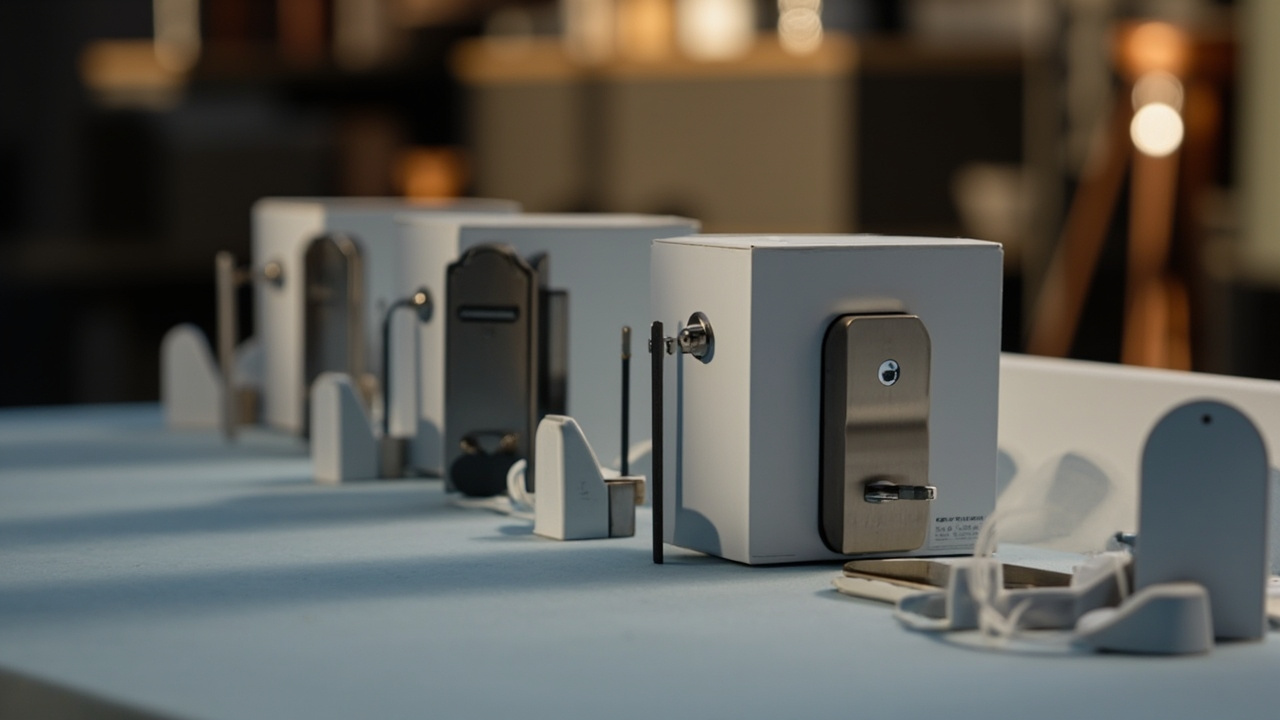
Cloud Platform Versus Mortise Lock Body: Which Fits a Build-to-Rent and Multifamily Door Programme
Decision request — cloud platform,mortise body
- Decision owner: Procurement Manager
- Programme: Build-to-rent and multifamily
- Evaluation stage: Pre-award technical and commercial evaluation
Procurement needs a portfolio-level decision, not a feature contest. This cloud platform versus mortise body build to rent comparison separates the access-management layer from the lock body required at each door. The memo asks which scope should lead the specification, what evidence closes each gap, and how platform, installation, turnover, and maintenance costs should be attributed. It also identifies where the two scopes must be combined rather than treated as substitutes.
Direct answer. The short answer is that cloud platform versus mortise body build to rent comparison is not one decision. It is a sequence. This article takes cloud platform versus mortise body build to rent comparison from cloud platform versus mortise body build to rent comparison through mortise-body to the record you keep. A cloud platform versus mortise body build to rent comparison is a criteria-led comparison. cloud platform versus mortise body build to rent comparison applies to cloud platform versus mortise body build to rent comparison before any shortlist is drawn up.
cloud platform versus mortise body build to rent comparison is taken here as cloud platform versus mortise body build to rent comparison, deliberately narrowly. It is a working definition of cloud platform versus mortise body build to rent comparison. It is specific to this market and product, and it is not a statutory or certified term.
The decision requested is approval of a door-segment scorecard and a common RFQ evidence pack. No supplier should be shortlisted from a connectivity claim alone.
Evidence boundary — cloud platform versus mortise body build to rent comparison
The first-party catalogue snapshot contains 79 published models: 77 sit in the smart-door-lock category, 41 offer a mobile app, 23 record Bluetooth, 15 record Wi-Fi plus Bluetooth, and one records 4G LTE. These counts describe catalogue composition, not suitability for a door programme. Confirm on the dated product page for the specific SKU before any capability affects award.
The physical comparison uses catalogue objects that can be measured or inspected: escutcheon, lock body or mortise case, latch, deadbolt, backset, spindle, cylinder, strike plate, frame rebate, power compartment, network gateway, app, and audit-log store. A cloud-led award still needs this hardware evidence; a body-led award still needs a defined credential and records workflow.
Normalising the two procurement scopes
The lock body versus access platform is not a choice between two equivalent products. One route starts with access policy, identity, reporting, and remote administration. The other starts with door construction and the most economical repeatable hardware package.
| Decision field | Cloud-led route | Mortise-body-led route | Evidence required |
|---|---|---|---|
| Control object | Central access rules, credentials, schedules, and records | Lock body, latch, strike, override, and local access workflow | Configuration diagram and hardware schedule |
| Best programme fit | Multiple buildings, shared spaces, or frequent staff changes | Repeated unit doors with straightforward local administration | Door-class allocation |
| Commonality | Common policy across a portfolio, subject to platform capability | Common lock body and installation detail across units | Sample submittal and door-by-door schedule |
| Tenant turnover | Policy and credential changes become a central operating task | Credential exchange and local records become a property-operations task | Demonstrated handover procedure |
| Shared access | Strong candidate where visitor, staff, and amenity permissions overlap | Possible, but administration and reporting need a defined owner | Shared-access workflow |
| Cost ownership | Platform, configuration, support, and integration costs enter the model | Hardware, installation, replacement, and local administration dominate | Total-cost worksheet |
| Main risk | Software scope exceeds the actual operating requirement | Hardware remains standardised while access administration becomes fragmented | Named operational owner and service plan |
A cloud-led route earns its overhead where several buildings, shared entrances, moving staff, or central reporting justify it. A mortise-body-led route can fit repeated unit doors where the operator accepts simpler local administration. The answer may differ by door class within the same development.
Mechanical fit comes before platform selection
Door fit criteria should be completed before comparing software or credential methods. A dimensionally unsuitable mortise lock body cannot be corrected by a capable management platform.
| Door class | Physical checks | Management checks | Required evidence |
|---|---|---|---|
| Standard unit door | Door thickness, frame rebate, backset, spindle, mortise case, latch or deadbolt, strike and keeper | Unit credential issue, transfer, revocation, and recovery | Dimension drawing plus an installed sample |
| Communal entrance | Door closer, hold-open arrangement, escape hardware, cylinder, latch, strike, and access-control components | Shared fob, staff master, visitor rule, and emergency-access ownership | Site survey and coordinated door schedule |
| Cycle store | Latch or bolt arrangement, frame interface, power access, and override method | Maintenance-team access and exception handling | Survey record and operating procedure |
| Parcel room | Opening mode, latch or bolt, keeper, power source, and access hardware | Staff and resident permissions, delivery rules, and event review | Configuration sheet and handover test |
The Smart Lock Retrofit Site Survey is the more relevant starting point for existing unit and service doors. The Office Smart Lock Site Survey addresses a different access pattern at communal or shared entrances. A build to rent door specification should preserve that separation rather than forcing every opening into one hardware and administration model.
Escape hardware, door coordination, and accessibility remain separate approval gates. Neither route should be treated as automatically resolving them.
CONFIRM-WITH-LOCAL-DOOR-AUTHORITY: Confirm the applicable escape-release, fire-door, accessibility, and access-control requirements for each scheduled door with the approving authority and qualified local trades.
Credential handover and turnover control
Credential handover is where a theoretically capable lock can still create an expensive operating problem. The comparison must cover the complete resident journey, not merely credential issuance.
| Control point | Cloud-led route | Mortise-body-led route | Evidence to request |
|---|---|---|---|
| Issue | Central or distributed policy assignment | Local programming and register update | Issue and audit demonstration |
| Transfer | Revocation and reissue through the platform | Manual deletion, card or code change, and register reconciliation | Transfer procedure with named roles |
| Revoke | End-date, disable, or centrally remove access | Operator-managed removal and confirmation | Exception and overdue-revocation process |
| Recover | Account, mobile, or override recovery | Key, cylinder, or local administrator recovery | Recovery test on a representative door |
| Review | Central event reporting | Local log, register, or supplier-assisted retrieval | Sample records and export method |
The catalogue describes the SLK-8831 5-in-1 as fingerprint, password, card, key, and app.
For multifamily access management, the supplier must also define how temporary access expires, how staff permissions differ from resident permissions, and what happens when a device is unavailable. “Supports an app” is not evidence of a controlled handover process.
Total cost per door over the tenancy
The controlling commercial question is: what is the cost per door over the tenancy, and what is included? Unit price alone omits the costs most likely to affect a repeated-door programme.
Total cost per door = hardware + installation + commissioning + turnover labour + planned maintenance + replacement + allocated platform costs
| Cost bucket | Items to include | Evidence from bidders |
|---|---|---|
| Hardware and installation | Lock body or mortise case, panels, strike components, installation labour, and commissioning | Itemised quotation by door class |
| Access administration | Platform fees where applicable, configuration, staff training, and support | Separate recurring-cost statement |
| Turnover | Issue, transfer, revocation, exception handling, and register reconciliation | Assumed workflow and included hours |
| Planned maintenance | Battery changes, inspections, consumables, and preventive service | Maintenance ownership and service schedule |
| Replacement | Damaged components, failed devices, and mixed-version replacements | Replacement process and unit assumptions |
| Exit and migration | Record retrieval, credential disposal, equipment removal, or platform migration | End-of-programme terms |
Maintenance ownership must be stated explicitly. A cloud-led route still creates physical tasks, while a body-led route can create extensive local administration. The quote should separate product, platform, and operator labour so recurring costs remain visible after the purchase order is closed.
The practical counterpart to this point is the wifi smart lock manufacturer. That is the same question cloud platform versus mortise body build to rent comparison has to answer here.
Operating ownership and control boundaries
A cloud-led route requires procurement to assign ownership for platform configuration, account support, record retention, device replacement, and resident offboarding. The property team must still own door inspections, local overrides, battery-related visits, and coordination with the installer.
For a body-led route, procurement should define who maintains the credential register, performs turnover checks, retrieves event records, replaces failed locks, and manages mechanical overrides. Local administration is not the same as no administration.
CONFIRM-WITH-LOCAL-CYBER: Confirm data residency, tenant-information processing, retention, supplier support access, and incident responsibilities with the operator’s legal and security advisers.
The supplier should also provide a dated software or configuration record for each awarded door class. That record should show which credentials, schedules, permissions, and local fallback procedures apply.
Weighted evaluation scorecard
Complete the scorecard only after each bidder passes the hard gates for door fit, escape coordination, credential handover, and documentation. Score each line from one to five against the evidence requested.
| Criterion | Weight | Scoring focus |
|---|---|---|
| Mechanical and door fit | 25% | Drawings, sample, rebate, backset, spindle, latch or bolt, and strike compatibility |
| Portfolio commonality | 15% | Number and coherence of door classes and configurations |
| Turnover and credential handover | 15% | Demonstrated issue, transfer, revocation, recovery, and audit workflow |
| Total cost per door | 20% | Transparent tenancy-period model with labour and recurring costs separated |
| Maintenance and replacement | 10% | Named ownership, service method, local override, and device replacement |
| Shared-space access control | 10% | Staff, resident, visitor, and amenity permissions across communal doors |
| Evidence quality | 5% | Dated product documents, drawings, configuration records, and quotation detail |
Weighting is a procurement tool rather than a statement about the market. Change the weights only before supplier responses are opened, apply the same scoring anchors to every bidder, and retain the supporting evidence behind each score.
Evaluation sequence
flowchart TD
    A[Confirm door classes] --> B[Check mechanical fit]
    B --> C[Map credential handover]
    C --> D[Build total cost model]
    D --> E[Score supplier evidence]
    E --> F[Approve representative pilot]
    F --> G[Freeze door-by-door schedule]
A pilot should use representative doors rather than a showroom unit alone. Include at least one unit door and one shared-access condition, then test fit, issue, transfer, revocation, override, reporting, battery-related maintenance, and replacement ownership.
RFQ data request
Require one response row for every proposed door class and SKU. Each bidder should return:
- Dimension drawings covering panel, mortise case, backset, spindle, latch or deadbolt, strike, rebate, and applicable door thickness.
- A door compatibility statement identifying where the mortise lock body must be adapted or where an alternative mechanism is required.
- Credential options, supported capacity, temporary or periodic codes, guest-card issuance, and floor or room permissions.
- Evidence for unlock records, local or centralised database operation, mobile-app functions, remote unlock where applicable, and audit-log retrieval.
- Power method, low-battery alert, external power override via USB terminal, and environmental operating limits.
- Gateway or network requirements without treating catalogue connectivity counts as a model-specific commitment.
- Documentation available for the specific SKU, including dimension drawings, installation guidance, datasheets, manuals, and configuration records.
- Separate quotations for hardware, installation, platform, support, training, and any operator-performed service.
Request exact commercial figures through a quote. Do not convert an incomplete response into a programme assumption.
Provisional award logic
The cloud platform versus mortise body build to rent comparison should be closed at door-segment level rather than through one portfolio-wide technology declaration.
- Standard unit doors: Favour the mortise-body-led route when the operator accepts local administration and prioritises standardised hardware and installation.
- Communal entrances: Favour the cloud-led route when several user groups, schedules, and access records must be managed together.
- Cycle stores and service rooms: Favour the simpler body-led route where access is limited and property staff can own the register and override process.
- Parcel rooms: Evaluate both routes against shared permissions, exception handling, and the cost of keeping resident-facing access separate from staff access.
Use the parallel Cloud Platform Versus Mortise Lock Body: Decision Matrix for Build-to-Rent and Multifamily Operators for the weighted comparison, while retaining this memo’s cost, evidence, and ownership fields as the award record.
Convert the approved shortlist into a door-by-door bill of materials and issue the request for quotation through the request a quote page. Include the scorecard, drawings, pilot results, and recurring-cost schedule in the same package so suppliers quote against a common build to rent door specification.