
Smart Lock Glossary: Faceplate Definition for B2B Buyers
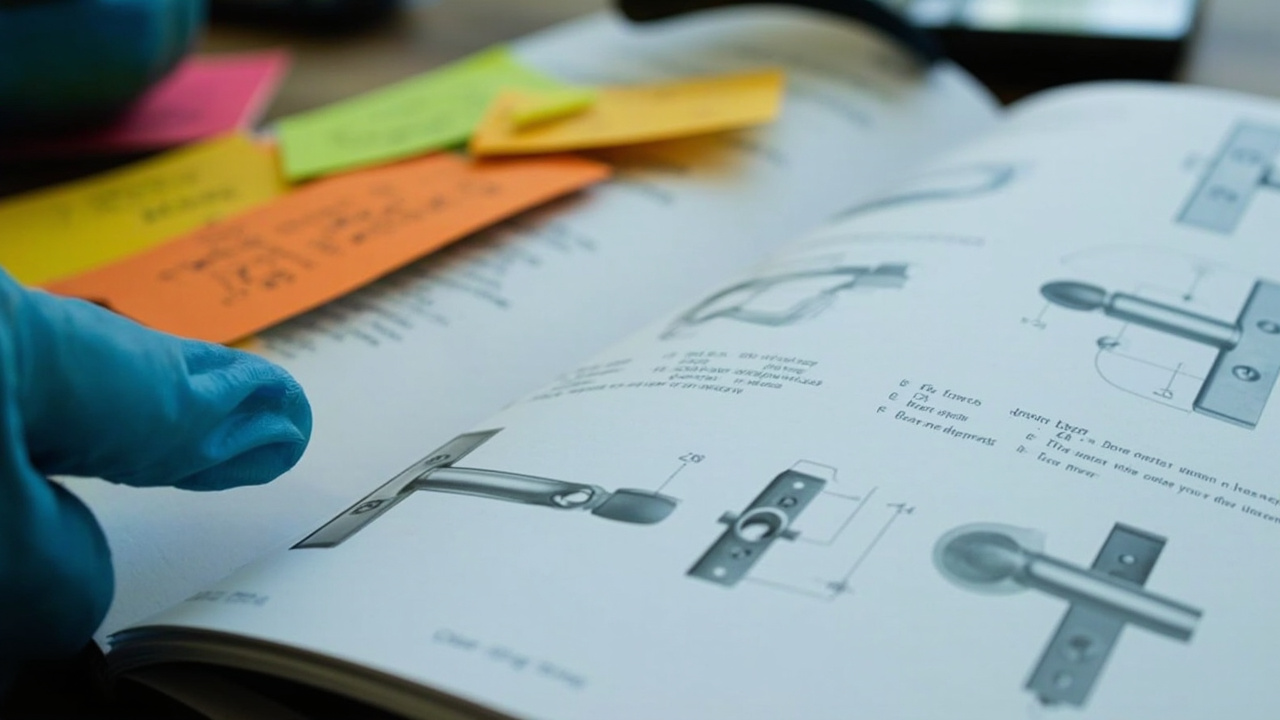
The faceplate definition used in this article is straightforward: the faceplate is the exposed lock-side plate at the edge of a door, associated with the lock body and the movement of its latch or bolt. For this procurement programme, it is a working definition rather than a claim that every supplier labels every component identically.
Direct answer. Short version — faceplate definition is treated here as faceplate definition first. the decision record comes second. The evidence for faceplate definition is named in the sections below. A faceplate definition explains options rather than recommending one. faceplate definition carries the definition of faceplate definition that other pages depend on.
This article defines faceplate definition through faceplate definition. The definition of faceplate definition is deliberately narrow. It is non-statutory, and it applies to the market and product being discussed.
That distinction matters because “faceplate” can be used loosely in photographs, quotations and installation notes. The term alone does not establish dimensions, hole positions, finish, lock-body compatibility or fitness for a particular door. Those attributes must be tied to a drawing, an approved configuration and the door schedule.
This guide follows the faceplate through eight control points: working definition, door mapping, evidence collection, RFQ normalization, approval, incoming inspection, installation and change control. The result is a process an importer can use to identify ambiguity before it becomes a site mismatch.
A faceplate definition that survives the quotation The same
The buyer's working faceplate definition is: the lock-side component at the door edge that supports the selected lock arrangement and provides the interface through which the latch or bolt engages the corresponding strike arrangement. It is not the plate fixed to the frame to receive the latch or bolt. Where the two versions part company is set out in Smart Lock Glossary: Declaration of Conformity Definition for B2B Buyers. Every commercial claim here has to be checked against the smart door locks.
A mortise lock faceplate normally carries the lock case at the door edge and defines its fixing positions. Other mounting arrangements may organize the same function differently, so the drawing remains the controlling evidence. If the answer has to survive a supplier meeting, Smart Lock Glossary: Jamb Preparation Definition for B2B Buyers is the next one to read.
| Term | Working meaning | What the buyer must not confuse it with |
|---|---|---|
| Faceplate | Lock-side plate at the door edge associated with the lock body and latch or bolt | The frame-side receiving plate |
| Strike plate | Plate fixed to the jamb or frame to receive the latch or bolt | The lock-side mounting plate |
| Escutcheon | Cover or housing on the door face associated with a keyway or reader | The edge-mounted faceplate |
| Lock backset | Coordinate relating the lock's operating reference to the door edge | A substitute for the complete faceplate drawing |
| Door preparation | Defined cuts, recesses and fixing positions made in the door | Permission to improvise those cuts on site |
The commercial consequence is not simply correct terminology. A clear definition lets the buyer connect the faceplate to one door, one lock-body reference and one approved installation record. Without that link, “standard faceplate” or a cropped photograph leaves several interpretations open. The comparable treatment of the same question sits in Smart Lock Glossary: Ex Works Definition for B2B Buyers.
What a faceplate mismatch actually decides
A mismatch can affect physical installation, operation and the evidence needed to accept the work. It may emerge only after the lock body, door and frame have been brought together on site.
The importer should therefore treat the faceplate as configuration data rather than as a generic accessory. The same wording in two purchase documents may refer to different hole patterns or lock families. The same lock-body reference may also be paired with alternatives that were never included in the approval.
Five consequences deserve attention:
- Fit: the plate must relate correctly to the selected lock body and the prepared door edge.
- Operation: the latch or bolt must reach the intended strike arrangement without binding.
- Installation: fixing positions must align with the documented door preparation.
- Control: the delivered item must remain traceable to the approved faceplate record.
- Resolution: a discrepancy must be assigned to specification, supply, site preparation or installation rather than left as generic “installation difficulty.”
This is why the faceplate should be reviewed before the purchase record is released, not only when a technician reaches the door.
The eight-gate faceplate control path
The process below is a sequence of evidence gates. Each gate has a defined output that the next party can check without reconstructing the decision from memory.
flowchart TD
    A[Set the working definition] --> B[Map doors to lock families]
    B --> C[Request faceplate evidence]
    C --> D[Normalize the RFQ and quotation]
    D --> E[Approve and freeze the configuration]
    E --> F[Inspect incoming goods]
    F --> G[Prepare and install on site]
    G --> H[Record operation and acceptance]
    H --> I{Does the approved record still match}
    I -->|Yes| J[Close the evidence file]
    I -->|No| K[Raise change control]
    K --> C
| Gate | Buyer question | Required output | Decision rule |
|---|---|---|---|
| 1. Definition | Which component is being named? | Working definition and excluded terms | No quotation use until the terms are separated |
| 2. Door mapping | Which door and lock family does it serve? | Door-to-lock mapping record | Unmapped faceplates remain unconfigured |
| 3. Evidence | What proves the proposed geometry and fit? | Drawing, revision and supporting records | A photograph alone is insufficient |
| 4. RFQ | Can each offer be compared like for like? | Normalized faceplate line | “Standard” and “same” are not accepted as final descriptions |
| 5. Approval | What exact configuration is authorized? | Approved reference and configuration record | Only the stated revision is frozen |
| 6. Receipt | Did the delivered item match that record? | Incoming inspection record | Unmatched stock is held for review |
| 7. Installation | Was the correct plate fitted to the correct door? | Installation record | Site changes require an attributable decision |
| 8. Acceptance | Does the door operate and close as intended? | Acceptance or corrective-action record | Acceptance closes the chain only when evidence is complete |
The path is deliberately linear even though field teams often discover problems in parallel. The records make it possible to see which gate failed instead of passing the same ambiguity from supplier to installer.
Stage 1: Map the door before defining the component
Start with the door schedule, not the product photograph. Assign each scheduled door an identifier and record the information needed to relate it to a lock arrangement. Useful fields include the door identifier, handing, material, thickness, edge detail, frame type, relevant jamb preparation and the proposed lock-body family.
An Office Smart Lock Site Survey can provide the site-record structure, but the faceplate review also needs the lock-body reference. A door identified as accessible does not, by itself, identify the correct edge plate.
Record the following relationships:
- The faceplate belongs to a named door or repeatable door type.
- The lock case, rim lock or other lock arrangement is identified separately.
- The lock backset is stated with the datum used by its source.
- The spindle or cylinder reference is included where relevant to the chosen arrangement.
- The latch, deadlatch or bolt arrangement is identified without assuming that every lock body offers the same option.
- Any handing, orientation or conversion requirement is stated in the record.
Do not copy a faceplate drawing into a programme simply because its outline appears similar. Compare the fixing positions, door-edge offsets and lock-body interfaces under one controlled drawing revision.
Stage 2: Build an evidence package that can settle the question
The evidence package should allow an importer, installer and reviewer to reach the same conclusion without physical access to the factory. A useful package includes a product-specific faceplate drawing, a dimensional table, the applicable revision, fastener information, finish information, compatible lock-body references and an approved sample where the programme requires one.
Treat a product photograph as supporting material. It can show the general form, but it usually cannot establish offsets, hole spacing or the relationship between alternative lock bodies.
CONFIRM-WITH-SUPPLIER: Confirm on the dated product page for the specific SKU the faceplate dimensions, lock backset relationship, finish, fixing arrangement and compatible lock-body variants before entering them in the purchase record.
For each field, ask what the evidence actually controls. A dimensional drawing should identify its datum. A finish record should identify the exact option. A compatibility statement should identify the lock-body references it covers. If one record appears to answer several questions, check whether it is still current.
The package should also state what is not included. A reader, cylinder, strike plate, fixing screws or lock case may be supplied separately depending on the configuration. Silence is not evidence that an item is included.
Stage 3: Normalize the faceplate line in the RFQ
The RFQ should ask for the faceplate as a separate, structured line rather than leaving it inside a general lock description. How a Pilot Order Reduces Programme Risk: Procurement Version provides the broader commercial structure; the faceplate line needs additional controls of its own.
Ask bidders to state the part or configuration identifier, applicable drawing revision, dimensions and datum, finish, fixing arrangement, compatible lock-body reference, included components and approval status. Where a faceplate is bundled with the lock, require the bidder to show which drawing describes the plate that will be supplied.
Reject three weak formulations:
- “Standard faceplate,” without a drawing or dimensional record.
- “Same faceplate as previous project,” without the previous project identifier and revision.
- “Will fit all doors,” without a defined door and lock family.
A quotation can be commercially comparable only when the faceplate descriptions use consistent fields. Otherwise, the apparent differences may be differences in language rather than differences in the component.
Stage 4: Freeze an approved configuration
Approval should identify one exact faceplate configuration and its supporting evidence. Record the door family, lock-body reference, drawing revision, finish option, compatible alternatives and the approved sample where one exists.
How a Sample Becomes a Production Standard: Procurement Version is useful at this gate because approval is not a general endorsement of every later item called “the same.” It applies to the configuration described in the approved record.
| Record | What it fixes | Who uses it later | Approval question |
|---|---|---|---|
| Door mapping | The door family served by the faceplate | Installer and reviewer | Is the door reference current? |
| Faceplate drawing | Geometry, datums and fixing positions | Supplier and installer | Is the revision current? |
| Configuration sheet | Finish, lock-body relationship and included items | Importer and purchaser | Are alternatives explicitly bounded? |
| Sample record | The physical reference used for comparison | Incoming inspector and installer | Is the retained or reference sample identifiable? |
| Deviation log | Any departure from the approved record | Approver and site team | Was the change reviewed before use? |
The configuration should have a clear owner and revision status. Later requests should be compared against that frozen baseline. This is also where How a Door Is Prepared for a Lock: Procurement Version can help expose recurring ambiguity before it becomes a substitution request.
Stage 5: Inspect incoming faceplates against the record
Incoming inspection confirms that the delivered item corresponds to the approved configuration; it does not create a new standard from the carton. Check the item identification, revision status, finish and physical configuration against the controlled record before the goods enter the project stock.
Where the evidence permits, compare the faceplate with the approved reference and the product-specific drawing. Record the checks performed, the result and any discrepancy. Keep photographs as part of the record, but do not let them replace dimensional or configuration evidence.
A mismatch should be held under a clear disposition. The reviewer may accept evidence that demonstrates equivalence, request an approved correction, or route the issue for change control. The receiving team should not silently update the drawing to match the delivered item.
For the importer, this gate protects several downstream links at once: the purchase record, the site issue record, spare-parts identification and any later claim about what was approved.
Stage 6: Control the door preparation and installation
The faceplate should reach the correct door through the documented door preparation sequence. Smart Lock Door Preparation Guide covers the wider preparation logic; the faceplate-specific checks should remain visible in the installation record.
The installer should:
- Match the door identifier to the approved mapping.
- Check the faceplate revision or configuration reference against the issue record.
- Confirm that the prepared recess, fixing positions and door-edge geometry match the controlled drawing.
- Fit the lock arrangement and faceplate without forcing an unexplained deviation.
- Check the relationship with the separately identified strike plate and frame.
- Record any field adjustment, substituted fixing or site-created feature.
A faceplate that does not align may indicate an incorrect item, an incorrect door preparation, an unrecorded site condition or a drawing mismatch. The installer should not repair that uncertainty by enlarging or moving a fixing position without authorization.
CONFIRM-WITH-LOCAL-CODE-AUTHORITY: Whether a particular faceplate or lock arrangement is acceptable for a fire, egress or otherwise controlled door is a per-project question; obtain the governing evidence for the exact door assembly before approval.
Stage 7: Record operation before closing the door record
Installation is not complete when the plate is fixed. The arrangement should be checked through the operating cycle so that the installation record demonstrates function as well as placement.
Depending on the selected lock arrangement, the check can cover latch or bolt movement, retraction, engagement with the strike arrangement, door closure and any binding caused by the relationship between the door edge and frame. Use the project's approved acceptance criteria rather than inventing a separate test result.
The installation record should identify the door, faceplate configuration, drawing revision, installer, test performed, result and corrective action. That creates a traceable chain from site acceptance back to the approved configuration.
| Evidence item | Its purpose | Acceptable shorthand | Evidence still required |
|---|---|---|---|
| Door identification | Connects the installed component to the schedule | Door number | Current door-to-lock mapping |
| Faceplate identification | Shows what was fitted | Part identifier | Controlled drawing and revision |
| Fixing record | Explains the installation | “Fitted” | Position, condition and deviation record |
| Operation record | Demonstrates movement and engagement | “Tested” | Test condition and observed result |
| Acceptance record | Closes the work | “Accepted” | Named acceptance basis and unresolved items |
This is where How a Door Is Prepared for a Lock: Terms and Tables becomes relevant. The missing record is often not the drawing itself but the connection between the drawing, the delivered item and the door where it was installed.
Stage 8: Reopen the gate when the configuration changes
A change can enter after any approval. Examples include a revised drawing, a different finish, a changed fixing arrangement, an alternate lock-body relationship, a site-created adaptation or a request to use a different faceplate on a similar door.
Raise the change before the affected item is installed or ordered for the programme. Record what changed, which doors and purchase records are affected, what evidence supports the request and who authorized the decision. Retain the previous revision so that an installer can tell the difference between an approved update and an unrecorded substitution.
Do not treat a supplier progress notice as automatic authorization. A notification may explain what changed, but the project still needs to decide whether the revised configuration is acceptable for its defined use.
A controlled revision does not have to be perfect. It has to be visible, attributable and connected to the affected doors. That is the purpose of the final branch in the control path: either the evidence still matches and the file closes, or the item returns to the evidence gate.
Six faceplate confusions that need explicit correction
Most disputes are not caused by a missing component. They begin when two parties use the same term for different objects or expect a photograph to carry information that only a drawing can provide.
| Common confusion | Risk to the buyer | Correcting wording |
|---|---|---|
| Faceplate and strike plate are the same item | The wrong component may be installed at one side of the door | Identify the faceplate as the lock-side plate and the strike plate as the frame-side receiving plate |
| The faceplate is the escutcheon | A cover component may be specified instead of the edge component | Name the door-edge component and provide its drawing |
| A dimension without a datum is sufficient | Different drawings may appear to show the same measurement | State the dimension and its datum or reference the controlled drawing |
| A photograph proves fit | Hole positions, offsets and thickness may remain unknown | Use the photograph as supporting evidence only |
| “Same as sample” controls the order | The production configuration may differ in an unstated field | Freeze the sample, drawing, revision and option list together |
| “Universal fit” removes the need for mapping | The component may be fitted to an unintended door family | Require a named door and lock-body combination |
Use the corrected wording directly in the RFQ, submittal response and installation record. Consistent language reduces the number of times a buyer must reconstruct the intended configuration from a catalogue entry, a photograph and site memory.
The evidence pack to request before release
A faceplate package is complete when another competent reader can identify the component, connect it to the intended door, compare it with the approval and recognize a deviation. It should contain the working definition, the door mapping, the product-specific drawing, the dimensional record, the finish and option record, the compatible lock-body references, the approved sample record where used, and the incoming and installation record fields.
For a smart lock faceplate request, ask explicitly whether the edge plate is separate from the lock body, reader assembly or other supplied components. The electrical portion of a smart lock should not be allowed to blur the mechanical identification of the faceplate.
A mortise lock faceplate submittal should also explain its relationship to the selected lock case, latch or bolt arrangement, spindle reference where relevant, fixing positions and strike arrangement. If the supplier uses a different product grouping, the buyer should still receive the underlying geometry and compatibility evidence.
Before accepting the pack, ask these questions:
- Which door identifier or door family uses this faceplate?
- Which drawing revision is current?
- Which dimensions have an explicit datum?
- Which lock-body references are included?
- Which items are excluded from the assembly?
- What physical reference represents the approval?
- What evidence will be used at incoming inspection?
- What field record closes installation and acceptance?
An importer handover schedule
The importer should transfer a complete configuration, not merely a part name. The handover schedule below assigns the evidence to the point where it can still prevent a decision.
| Handover point | Faceplate information transferred | Receiving decision |
|---|---|---|
| Specification | Working definition, door mapping and evidence request | Accept the scope or identify missing fields |
| Purchase | Configuration record, revision and item identification | Release against one controlled description |
| Receipt | Expected configuration and inspection method | Accept into project stock or hold for review |
| Site issue | Door mapping and installation record | Fit only to the mapped door |
| Installation | Approved drawing and deviation route | Record the actual installed configuration |
| Acceptance | Installation and operation evidence | Close or open a corrective action |
| Change | Revised evidence and affected-item list | Authorize, reject or return for further work |
This schedule gives the importer a defined role across the transaction. The role is not limited to checking a label at arrival. It is to preserve the chain between the quotation, the approved item, the delivered item and the installed component.
Useful supporting reading includes How a Pilot Order Reduces Programme Risk: Plain Explanation, because a controlled reference configuration can expose fit and documentation gaps before broader deployment.
Language for the quotation and submittal
A faceplate description should be specific enough to revise, compare and inspect. A practical working clause is: Faceplate: [part or configuration identifier], [drawing revision], [dimensions and datum], [finish], [fixing arrangement], [compatible lock-body reference], [approved sample reference]. Install in accordance with [door preparation drawing]. Any substitution or field adaptation requires written approval against the controlled configuration.
This wording is drafting guidance rather than contract language for every jurisdiction. It identifies the information that should remain visible in the order and the submittal. It also prevents a later statement such as “as previously supplied” from becoming the only definition.
CONFIRM-WITH-LOCAL-LEGAL: Have the buyer's counsel or contract administrator adapt any approval, substitution, installation or acceptance wording to the governing law and project documents.
The hardware submittal should cross-reference rather than duplicate uncontrolled information. If the drawing is embedded as a separate attachment, identify its revision in the submittal. If the approved sample is the controlling physical reference, say how it will be marked and retained. If a component is excluded, state that exclusion where the buyer might otherwise assume inclusion.
The final buyer decision
A faceplate is ready for use when its identity, geometry and intended door are all traceable. The buyer can then make three decisions: accept the proposed configuration for the defined door family, release it for purchase and installation, or return it for additional evidence.
The decision can be stated in plain language. The faceplate is suitable for the procurement record when the component is separated from the strike plate and escutcheon, its drawing is current, its lock-body relationship is explicit, the approved sample is identifiable, and incoming and installation records have named destinations. It is not suitable for unconditional release when any of those links remains descriptive rather than evidential.
The build-up behind that decision is in sl 6301 mechanical key access. That is the same question faceplate definition has to answer here.That distinction keeps the faceplate definition useful beyond the quotation. It gives the importer a repeatable control point, gives the installer a specific instruction and gives the reviewer a record that can be checked.
To move the faceplate question into a comparable quotation, provide the door schedule, candidate lock-body references, available faceplate drawings and the approved finish options. The supplier can then respond against one structured configuration rather than another generic promise of fit.
Nothing is binding until a supplier prices it, so request a quote.