
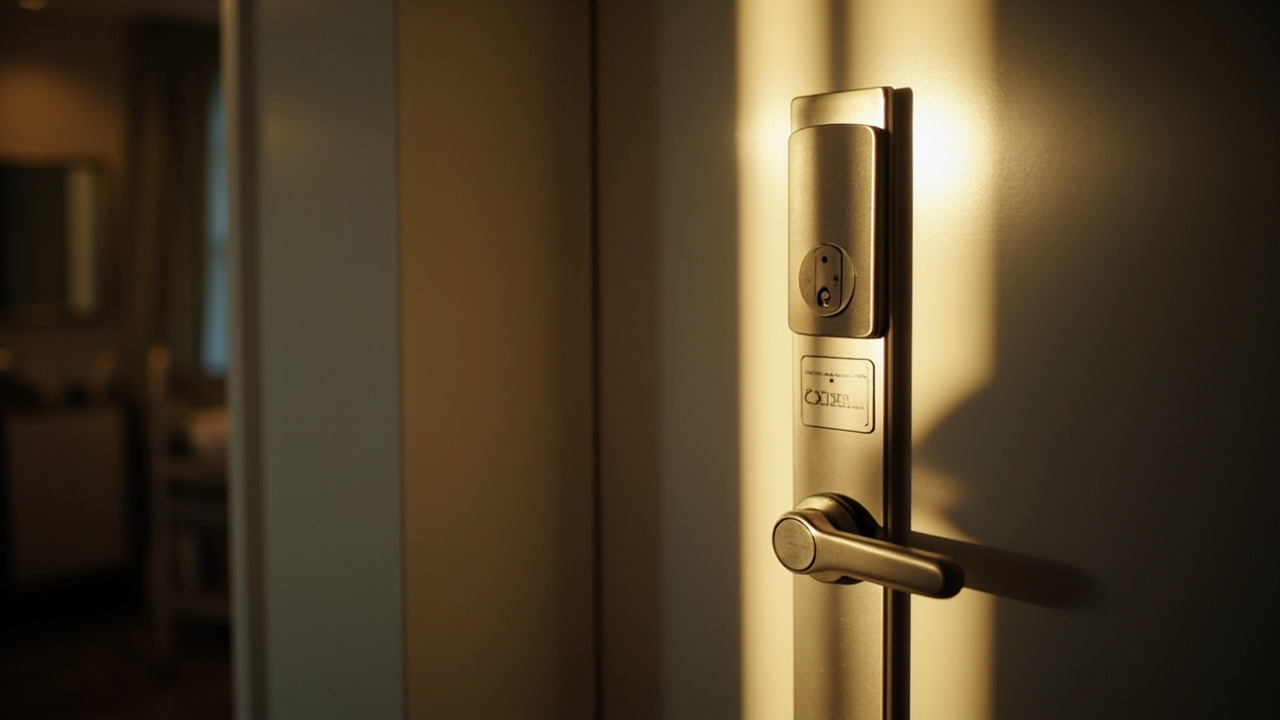
Guest, Resident and Staff Experience of Smart Locks in Cold Storage and Chill Chain
Property Manager briefing — Evaluation stage. Cold storage user experience is not one journey shared by everyone. A scheduled visitor, an onsite resident and a picker opening a freezer during a rush have different permissions, equipment and expectations. This memo recommends testing those journeys against real doors and measured environmental conditions before any wider lock selection is made.
Decision requested — cold storage
Direct answer. Approve a controlled, door-by-door evaluation than a fleet-wide product decision. Include a cold-room door, a freezer door where installed, a dispatch or loading door, and an office or staff entrance. The evaluation should test arrival, entry, exit, credential recovery
Do not approve a shortlist until the team can answer two engineering questions: what is the door’s duty cycle, and what is the temperature at the lock body? A satisfactory interface in an ambient office does not demonstrate suitability at a condensation or frost point.
The operating reality
A cold-storage site operates around freezer or chiller rooms, loading and dispatch positions, and staff-accessible areas. Large temperature differences can produce condensation and frost around a door, while a pick or delivery can create a burst of opening traffic. The electronic lock is therefore only one element of a larger sequence involving the door, frame, threshold, credential, operator and recovery process.
The role names also need care:
- A guest is a scheduled visitor, auditor or contractor who arrives without an ongoing operating relationship.
- A resident is an onsite residential occupant only if such accommodation exists. Do not assume that a warehouse employee, shift worker or regular contractor is a resident.
- Staff include pickers, dispatch personnel, supervisors and maintenance technicians whose routines differ.
The memo uses the resident journey conditionally because the site must first establish whether residential occupancy is genuinely in scope.
flowchart TD
    A[Arrival request received] --> B[Verify person purpose and door]
    B --> C[Approve scoped access or defer]
    C --> D[Issue time bound credential when approved]
    D --> E[Arrive open enter and close]
    E --> F[Use normal exit or approved recovery route]
Role-by-role experience test
For the cold storage user experience, use this matrix during the evaluation rather than judging the lock only through an administrator account.
| Role | Need at the door | Desired experience | Failure to test |
|---|---|---|---|
| Guest | Brief, pre-authorized access | Clear arrival instructions and no wait at a temperature-exposed door | Shared code remains active after the visit |
| Resident | Continuity without unnecessary administration | Predictable entry and a clear exit route | A network or phone dependency blocks normal access |
| Picker | Rapid entry during active work | One-handed credential use and immediate feedback | Gloves, frost or a busy door cause wrong actions |
| Supervisor | Control and visibility across working areas | Correct permissions and a useful handover process | Temporary access is not removed on time |
| Technician | Controlled service entry | Defined override and restoration procedure | Manual access creates an unrecorded door state |
Guest journey: arrival without avoidable exposure
The guest experience begins before the lock. The requester should know which entrance to use, which permission is being requested, how long it remains valid and who to contact if it fails. A temporary credential should reflect the purpose and duration of the visit rather than become a general site key.
At the door, instructions must remain usable when the visitor is wearing protective clothing or carrying equipment. The test should cover presenting a credential, entering, closing the door and leaving again. It should also cover arriving outside the authorized period, selecting the wrong door and receiving a denied response without exposing operational information.
The site should define where a guest waits while access is verified. Waiting at a freezer threshold is an avoidable operational risk, so the reception or holding point needs to be agreed before the visit. The detailed survey in Smart Locks for Cold Storage and Chill Chain: Door Survey and Fit Reality should capture that route and the physical door arrangement.
Resident journey: continuity without assuming the wrong building
Where residential accommodation is genuinely present, resident access continuity must be tested separately from staff access. Residents may expect entry without a reception step, but they also need a clear route to leave when a credential, network service or power supply is unavailable. An interior release, pull-cord or other emergency provision must never be treated as optional merely because the entrance lock is electronic.
Where there is no residential occupancy, the buyer should record that finding and stop describing staff or frequent contractors as residents. The common cold-room door can still be assessed for people who use the site regularly, but their permissions and expectations should not inherit a residential privacy model that the site does not have.
Resident-facing technology should not require a phone or cloud service for ordinary exit. Any record associated with resident movement should be limited to what the site has justified for operational use.
CONFIRM-WITH-LOCAL-FIRE-AUTHORITY: Confirm emergency release, free egress and alarm-interface requirements for every cold-room, freezer and dispatch door before approval.
Staff journey: designed for the pick, not the demonstration
The staff test should happen with the gloves, clothing, urgency and door traffic that occur during a pick. A picker may need to present a credential while holding a scanner, moving a pallet or wearing wet outerwear. The response at the door must make clear whether entry is granted, and the test must observe whether frost or condensation affects the credential, reader or user.
At cold-room doors, badge or code access is only one layer. The interior release or pull-cord arrangement needs to remain understandable and usable during an emergency, while still preserving the controlled sequence required for the protected space. Staff must also know what to do when a credential is rejected, a door is obstructed or the lock has entered a low-power state.
Training should be part of the evaluation, not deferred until handover. Training Warehouse Operatives to Run Smart Locks in Cold Storage and Chill Chain is the appropriate companion for turning the tested recovery sequence into an operating routine. The site should observe staff rather than relying only on a scripted supplier demonstration.
Door applicability and evidence
| Door | Primary experience risk | Evidence to request during evaluation |
|---|---|---|
| Chiller room | Condensation at the threshold and repeated entries | Measured conditions at the lock body, door-cycle history and environmental evidence |
| Freezer room | Frost, rapid opening and a protected emergency exit | SKU-specific environmental limits, release procedure and door-opening observations |
| Loading bay | Vehicle activity, trolley impact and mixed users | Frame condition, latch arrangement, override method and user workflow |
| Dispatch door | Time pressure during order release | Role permissions, denied-access feedback and exit behavior |
| Office or staff door | Contractor handover and credential lifecycle | Revocation process, record scope and office-side installation conditions |
The Office Smart Lock Site Survey and Smart Lock Retrofit Site Survey can support the site’s survey discipline, but neither substitutes for observing the cold-storage door in service.
For each shortlisted SKU, confirm on the dated product page for the specific SKU the stated environmental scope, power source, service procedure and relevant dimensions. A supplier’s general portfolio statement is not enough evidence for a lock body installed beside a known condensation point.
Environmental fit is an operating requirement
The evaluation should record the temperature at the lock body, not merely the published room setting. It should also record condensation, frost, door-cycle frequency, exposure to washdown, frame movement and the time needed to complete each entry. These observations form the input to the engineering decision about the electronic lock.
Ask each supplier to address the complete combination of cold exposure, condensation and repeated opening. The response should cover environmental evidence, power behavior in the measured conditions, enclosure or seal assumptions, battery or wired-power servicing, and the procedure when moisture or ice prevents normal operation.
The door itself must also be observed. A heavy leaf, poor alignment, changed frame or damaged latch can create a poor access experience even when the credential system behaves correctly. The proposed design should identify who owns that fault and whether the lock can remain usable during adjustment.
CONFIRM-WITH-LOCAL-HEALTH-AND-SAFETY-ADVISER: Confirm cold-exposure, ice, condensation, manual-handling and trapped-person controls for staff, guests and any onsite resident.
Credential continuity without stale permission
Each role needs a different permission lifecycle. Guest access should be temporary and purpose-bound. Resident access, where applicable, should remain predictable and should be removed through an assigned move-out or occupancy-change process. Staff access should follow role and shift requirements, while temporary or contractor permissions should have a visible expiry.
The evaluation must also show what happens when the network or management service is unavailable. Ask the supplier to demonstrate the documented offline behavior and recovery sequence rather than infer it from an application interface. If access events are recorded, define which events matter operationally and avoid turning every door into an unnecessary monitoring point.
CONFIRM-WITH-LOCAL-DATA-PROTECTION-REVIEWER: Confirm which access events may be logged or retained, who may view them, and how worker or resident monitoring is handled.
The operating design for those permissions can be developed through Access Policy for Cold Storage and Chill Chain: Warehouse Operatives Permissions Design.
Failure experience and recovery ownership
| Trigger | User-visible effect | Required evaluation response |
|---|---|---|
| Condensation or frost | Credential or reader does not respond as expected | Observe the real door and confirm the cleaning or service route |
| Low power | Entry decision becomes uncertain | Show the warning, backup plan and responsible responder |
| Management service unavailable | A remote change or query cannot be completed | Demonstrate the documented local fallback |
| Lost or misused credential | A person cannot enter or remains able to enter | Test reassignment and revocation with assigned ownership |
| Door obstruction or failed latch | Lock decision and door movement disagree | Test the manual opening, closing and restoration sequence |
A recovery test is incomplete until staff know who responds, which door they attend and what they do after opening it. Smart Lock Failure Triage for Cold Storage and Chill Chain can support that decision tree. The indoor experience should not be used to infer the cold-door failure route.
Evaluation scorecard for the procurement decision
| Criterion | Evidence required | Pass condition |
|---|---|---|
| Environmental fit | Measured conditions and dated SKU-specific evidence | The proposed device and installation match the recorded door conditions |
| Role journey | Observed guest, resident where applicable, and staff scenarios | Each role can complete the journey or has an owned fallback |
| Door compatibility | Survey of leaf, frame, latch, threshold and swing | The installation method addresses observed physical conditions |
| Recovery | Simulated low-power, unavailable-service and lost-credential events | A named team can restore the intended door state |
| Permission control | End-to-end issue, change and removal exercise | No temporary permission remains beyond its defined scope |
| Operational acceptance | Facilities, operations and safety review | The responsible site team accepts the tested sequence |
A failed criterion should produce a hold, not an explanatory note. Product fit, door condition and operating ownership remain separate decisions even when the same supplier addresses them.
Controlled evaluation sequence
Start with the doors that represent the highest operational exposure, then expand only after the recovery route is proven. Record door identity, measured conditions, frame arrangement, daily opening pattern, credential methods, interior release, manual access, alarm interface and responsible owner.
Run the same role scenarios against each proposed configuration. A successful scenario should establish who opened the door, what the person did next and whether the door returned to its expected state. An unsuccessful scenario should identify whether the cause lies in the credential, the lock, the door, the service or the operating procedure.
The output of this stage should be a verified door schedule and evidence pack, not a generalized claim that a lock works in cold storage. That distinction carries directly into Smart Locks for Cold Storage and Chill Chain: Door Survey and Fit Reality, the staffing and training sequence, and the site’s final acceptance record.
Readers comparing approaches usually start with hotel smart lock legacy system replacement. That is the same question cold storage user experience has to answer here.
Questions that must be closed before selection
- Is there a genuine residential population, and who owns resident permissions?
- Which doors have the highest duty cycle and the longest continuous exposure?
- What temperature and condensation condition is actually measured at each lock body?
- How do guests receive, use and surrender temporary access?
- What documented fallback applies when the management service is unavailable?
- Who responds to low power, frozen hardware or a damaged door?
- Which events are necessary for operations, and which should not be recorded?
- Who signs acceptance for each door and its manual recovery route?
Next action for the property manager
Proceed to a controlled evaluation only if the site can provide the measured door conditions, duty-cycle observations, role definitions and manual recovery routes described here. Hold any fleet recommendation if environmental evidence, staff usability or the fallback opening remains unresolved.
Prepare a door schedule, role matrix, measured-condition record and supplier evidence request, then use the request-a-quote route to keep the evaluation tied to specific sites and specific requirements.