
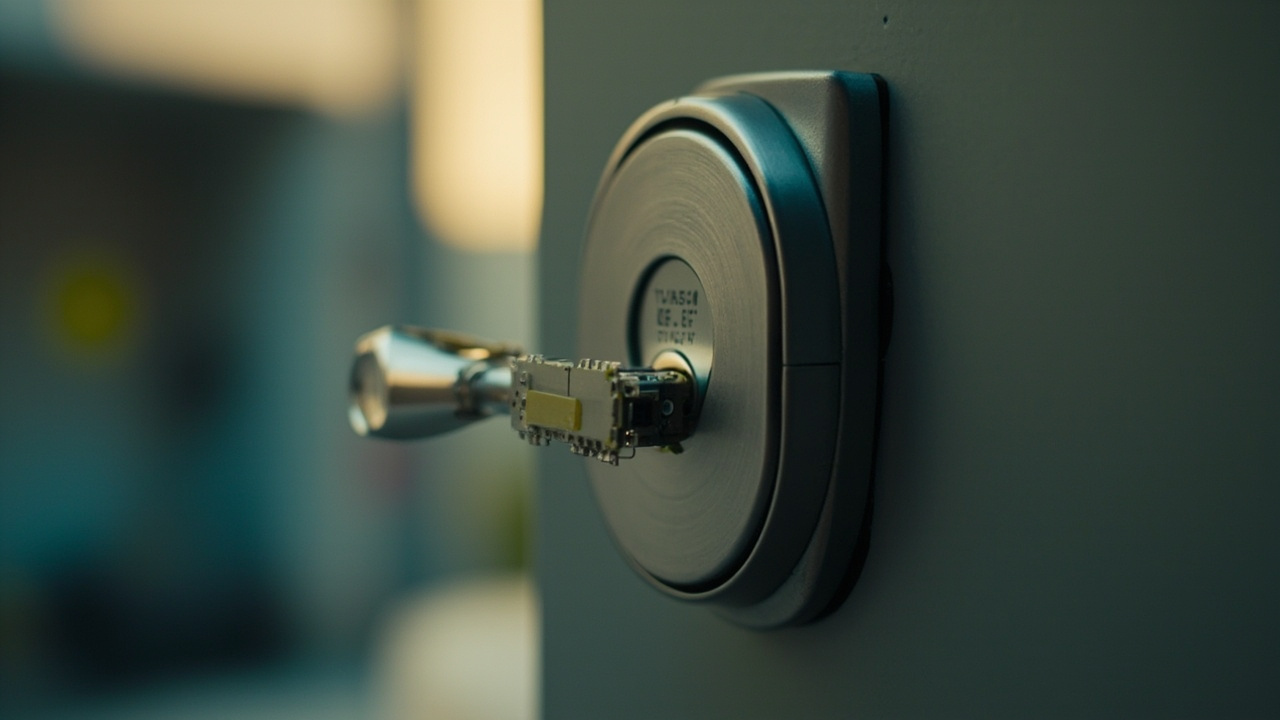
The SLK-118E Fit Envelope: Door Thickness, Backset and Clearance
This slk 118e door fit notes memo gives a procurement manager a controlled way to separate published SLK-118E catalogue information from the door-specific evidence needed before an order can be released. It focuses on thickness, backset, mortise preparation, faceplate fit, clearances and handing rather than credentials, software or commercial terms.
Direct answer. Short version — slk 118e door fit notes is treated here as slk 118e door fit notes first. slk-118e comes second. The evidence for slk 118e door fit notes is named in the sections below. A slk 118e door fit notes is the engineering view of one component. slk 118e door fit notes is the behaviour that has to be reproduced. Then slk 118e door fit notes can be signed off.
On slk 118e door fit notes, this article uses slk 118e door fit notes as the definition. It treats slk 118e door fit notes as a working definition specific to this market and product, rather than a general one.
- Establish the reach — confirm on the dated product page for the specific SKU behind slk 118e door fit notes
- Establish the edge — record where the technology in slk-118e stops working
- Establish the reserve — name the mechanical path that remains if slk 118e door fit notes fails
- Treat this as the slk 118e door fit notes sequence, with slk 118e as the reference.
Memo Control and Procurement Decision
The purpose of this data memo is to prevent a general-purpose hotel lock from being treated as a confirmed fit for every wooden door in a project schedule.
| Memo field | Entry |
|---|---|
| To | Procurement Manager |
| Subject | SLK-118E mechanical fit evidence for project doors |
| Decision | Approve the evidence request and fit-gate workflow before product release |
| Current status | Open until dated drawings and site measurements are aligned |
| Required output | Door-by-door fit schedule, approved drawings and sample record |
| Commercial boundary | This memo approves fit evidence only; it does not authorize an order |
The decision requested is simple: accept the measurement, drawing and deviation process below as the gate between a door survey and product approval. No door should move to order release merely because it is labelled as a wooden door or because another SLK-118E unit has already been installed elsewhere.
A procurement record should distinguish four evidence levels: catalogue metadata, a controlled manufacturer drawing, a site measurement and a representative sample result. A later item in that sequence does not erase a missing item from an earlier one.
Published Baseline and Remaining Fit Questions
The catalogue record identifies the SLK-118E as a hotel lock with a 201 stainless-steel body record, a No. 2 hotel mortise, panel dimensions of 242 × 77 × 19 mm, and silver or gold finish options. Its Door fit field is shown as an em dash. That absence is not a numerical range, a maximum door thickness or evidence that any particular door will fit.
Treat the following catalogue fields as metadata, not as a release drawing, and confirm on the dated product page for the specific SKU before using any of them to approve a project order.
| Published item | Catalogue record | Fit decision it can support |
|---|---|---|
| Mortise | No. 2 hotel mortise | Identifies the documented lock-case family; it does not replace the dimension drawing |
| Panel dimensions | 242 × 77 × 19 mm | Provides panel-envelope metadata, not leaf thickness or backset |
| Body material | 201 stainless steel | Supports general body identification only |
| Finish options | Silver / Gold | Finish selection does not change the dimensional review |
| Applicable door thickness | Not populated in the Door fit row | Must be established from controlled evidence |
| Suitable door types | Not populated in the Door fit row | Must be tested against the actual door and frame |
| Documentation | Dimension drawings, installation guide and full datasheet available on request | Defines the evidence package to request before approval |
The key procurement gap is therefore not the model name. It is the missing relationship between the mortise case, spindle and latch datums and the dimensions of each door leaf, frame and prepared opening.
For slk 118e door fit notes to be auditable, the memo must preserve that distinction. A catalogue record can identify the product family, but only a dated drawing can define the required backset, case preparation, faceplate and installation envelope. A drawing alone cannot prove that the doors at the site match it; the site record must still be measured and linked to the correct door.
What the Mechanical Fit Envelope Contains
A usable fit envelope is a coordinated set of dimensions and interfaces, not one headline thickness figure. It includes the lock case, spindle, latch, faceplate, door leaf, rebate, frame, strike interface and installation accessories.
flowchart TD
A[Identify door and revision] --> B[Measure leaf and rebate]
B --> C[Record spindle and latch datums]
C --> D[Compare site record with dated drawing]
D --> E{All interfaces align}
E -->|Yes| F[Approve representative sample fit]
E -->|No| G[Issue fit deviation request]
G --> H[Resolve drawing hardware or door]
H --> D
Each stage in this diagram creates a record with an owner. The final decision must be traceable from the survey door ID back to the drawing revision used for comparison.
| Envelope layer | What to compare | Approval evidence |
|---|---|---|
| Leaf envelope | Leaf thickness, bevel, warp and hardware zones | Dimensioned site record |
| Rebate envelope | Rebate depth, pocket dimensions and pocket position | Section drawing and site measurement |
| Lock-case envelope | Case depth, width, spindle location and latch reach | Controlled product drawing |
| Faceplate interface | Plate width, height, screw positions and corner geometry | Faceplate drawing |
| Backset interface | Edge-to-spindle and edge-to-latch datums | Manufacturer drawing |
| Handle and spindle interface | Spline, handle direction and rose or trim clearance | Installation detail |
| Frame interface | Leaf-to-stop relationship, keeper position and opening clearance | Survey photograph and measurement |
| Operational interface | Latch withdrawal, door closure and frame contact | Sample test record |
The envelope should be expressed as a set of limits and datums published by the manufacturer. Procurement should not invent a tolerance, substitute a generic industry rule or infer a limit from the panel dimensions. Where the drawing is silent, the item remains open.
Door Measurement Protocol
Use a consistent wooden door measurement procedure at every project location. Record each value to the same unit and identify its datum. The same lock may be acceptable in one opening and unsuitable in another because of leaf thickness, frame construction, door hardware or preparation.
Before Measuring
- Assign a unique door ID that survives survey, drawing, sample and purchase records.
- Photograph the door closed, the latch edge, rebate, frame and strike area.
- Remove or account for wedges, stops, seals, closers and temporary hardware.
- Record whether the leaf is new, modified or previously fitted with a lock.
- Note visible movement, cupping, splitting, bevels, hinge condition and unusual coatings.
- Capture the manufacturer’s handing definition rather than assuming left and right have the same meaning across product families.
The measurement team should use an appropriate steel rule or tape, a depth gauge and a calfer capable of checking the same locations. Use the same tools and units across the project where practical. A photo may document a condition, but it should not be the only source for a controlled dimension.
Measure the Leaf
For SLK-118E door thickness, measure the leaf at the latch line and at the hinge side, avoiding raised panels, handle bosses and applied trim. Record both readings and the location of each one. If the readings differ, do not average them into a single value without noting the variation.
Measure the finished faces rather than the nominal timber size before machining. Also record any bevel, rounded edge or decorative profile that could reduce material behind the faceplate. The objective is to document the actual finished leaf, including the condition likely to be present when the lock is installed.
Measure the Rebate
For door rebate depth, measure from the door edge to the rebate shoulder at the latch area. Record the pocket width and depth separately, as well as the distance from the edge to the spindle datum if an opening already exists. Clean out old hardware before checking for hidden obstructions.
A rebate photograph should include a scale placed in the same plane as the measurement. If the leaf is warped or the pocket is irregular, record that condition instead of adjusting the figure to an imagined straight edge.
Establish the Backset Datums
For SLK-118E backset, use the manufacturer’s drawing to identify the governing datum. Record the horizontal distance from the door edge to the spindle centreline and, where the drawing defines it, the distance to the latch centreline separately. Do not treat two differently defined backset measurements as interchangeable.
If the project has an existing mortise, measure from the same physical edge used on the drawing. If the edge position is uncertain, document the ambiguity and hold the comparison. A plausible number is less useful than a traceable measurement with a stated origin.
Check the Lock Case and Faceplate
Record case width, case depth, spindle position, latch projection and faceplate dimensions from the controlled drawing. The No. 2 hotel mortise label alone is insufficient to populate those fields. Obtain the actual outline or section drawing for the ordered configuration.
For the faceplate, compare width, height, screw positions and corner geometry. The faceplate must sit flat without cutting into a bevel or projecting into the frame. Do not enlarge a recorded plate dimension to make the site appear compatible; record the conflict and request a drawing-based decision.
Record Clearances and Hardware
Use the lock clearance checklist to capture leaf-to-frame gaps, stop distance, frame rebate, keeper position, door sweep, hold-open device and door closer. Record any projecting handle, rose, escutcheon or auxiliary latch that could reduce the working envelope.
Test the door in its normal closed position and with the latch fully retracted. A drawing may show adequate static clearance while a closer, sweep or projecting handle prevents full operation. The site record must include the installed accessory set or a clear note that accessories are pending.
Minimum Measurement Record
| Field | Recording rule | Acceptable source |
|---|---|---|
| Door ID | Unique and repeated across every later record | Survey schedule |
| Leaf thickness at latch | Finished reading with location | Direct measurement |
| Leaf thickness at hinge side | Finished reading with location | Direct measurement |
| Rebate depth | Edge-to-shoulder reading | Direct measurement |
| Pocket width and depth | Existing preparation, if present | Direct measurement |
| Edge-to-spindle datum | State manufacturer definition and measured value | Controlled drawing plus measurement |
| Edge-to-latch datum | State manufacturer definition and measured value | Controlled drawing plus measurement |
| Faceplate condition | Width, height, positions and fit | Drawing comparison plus photograph |
| Handing | Site condition plus manufacturer definition | Survey and drawing |
| Frame clearance | Stop, keeper, sweep, closer and gap | Site survey |
| Measurement date and recorder | Traceable contact and revision | Signed or logged record |
A blank cell means unresolved. It should not be interpreted as zero, not applicable or within tolerance.
Site Survey and Door-Surface Investigation
The mechanical fit should be reviewed in the context of the complete opening. An Office Smart Lock Site Survey provides a useful survey discipline, while the Smart Lock Retrofit Site Survey is especially relevant where an existing lock or modified wooden leaf must be assessed.
| Site condition | Evidence to capture | Procurement disposition |
|---|---|---|
| New wooden door | Factory drawing, finished thickness, rebate and handing | Compare before frame or door release |
| Previously drilled door | Existing pocket, spindle position, plate condition and damage | Require retrofit assessment |
| Rebated frame | Leaf-to-stop relationship and keeper geometry | Hold until frame dimensions are aligned |
| Warped or cupped leaf | Straightness observation and closure test | Treat as a deviation candidate |
| Door closer present | Model, mounting points and swing envelope | Check static and operational clearance |
| Hold-open or sweep present | Projection, travel and contact zone | Record accessory and door preparation needs |
| Unusual handle or trim | Projection and relationship to spindle | Include in the full assembly review |
A survey visit should not quietly change the specified product. It should either confirm the documented configuration or create a traceable question. If a field adjustment appears necessary, record the proposed adjustment and obtain written approval before modifying a door or ordering nonstandard hardware.
Mechanical fit also does not establish the compliance of the complete door assembly. Egress, accessibility and fire-door questions require a separate project review.
CONFIRM-WITH-LOCAL-FIRE-CODE-AND-ACCESSIBILITY-REVIEW
Dated Drawing and Evidence Request
Before the fit schedule is approved, request a controlled evidence package tied to the exact SLK-118E configuration. The catalogue lists dimension drawings, an installation guide and a full datasheet as available on request.
The companion SLK-118E: Reading the Published Specification Without Guesswork explains how to distinguish published specifications from assumptions. For fit approval, the evidence package should go further by showing where every site dimension is measured.
| Document | Minimum content for fit review | Acceptance check |
|---|---|---|
| Dimension drawing | Product identifier, revision, units, views and datums | Matches the intended SKU and current revision |
| Mortise case drawing | Case width, depth, spindle and latch locations | Datums agree with the installation guide |
| Faceplate drawing | Width, height, screw positions and corner detail | Compatible with measured leaf edge |
| Installation guide | Required preparation, handing and accessory sequence | Steps apply to the recorded door type |
| Full datasheet | Door-fit fields, documented limits and support notes | No unresolved or conflicting dimensions |
| Cut template | Physical or controlled template reference | Traceable to the same drawing revision |
| Packing and configuration record | Finish, hardware set and order configuration | Matches the door and project schedule |
The request should specify “SLK-118E” rather than a generic hotel lock and ask the supplier to identify the drawing revision on every page. A document without revision information is reference material, not an approval baseline.
Use a simple evidence hierarchy:
- A dated, SKU-specific dimension drawing governs the dimensional comparison.
- The installation guide explains how the drawing is applied.
- The dated product page and full datasheet provide context and document availability.
- The site survey records the actual door.
- A controlled deviation records any approved departure.
If two documents conflict, stop the comparison and request clarification. The more convenient document is not automatically the controlling one.
Representative Sample Qualification
A sample proves only what it represents. Select a door condition that exercises the tightest relevant constraints rather than the easiest opening in the project. For a new-build project, use a production-representative leaf and frame prepared to the released drawings. For retrofit work, reproduce the most demanding existing condition.
| Sample stage | Action | Recorded result |
|---|---|---|
| Configuration freeze | Record SKU, drawing revision, hardware and handing | One traceable configuration |
| Preparation check | Inspect case pocket, rebate, spindle and faceplate zones | Preparation matches the released detail |
| Static fit | Place the lock without forcing the door | No unauthorised material removal or interference |
| Operating fit | Operate the handle and latch through the normal cycle | Latch retracts and door closes as intended |
| Accessory interaction | Test with closer, sweep, handle and frame in place | Working movement remains clear |
| Installation check | Review fixings, cable routing and service access | Installation can be completed as documented |
| Final comparison | Match sample measurements with the site schedule | Approval applies only to equivalent conditions |
The acceptance record should say “pass,” “fail” or “conditional” for each criterion. A photograph may support the record but should not replace dimensions or an operating result. If a sample relies on a modification, capture that modification as a deviation rather than describing it as standard installation.
For repeat orders, add the sample and drawing references to the SLK-118E Order Checklist for Project and Repeat Purchases. The fit record then travels with the commercial and configuration record instead of being recreated from memory.
Fit Decision Comparison
Use the following matrix to turn evidence into a procurement status. It is designed for doors and configurations, not for an abstract comparison between unrelated lock types.
| Evidence condition | Mechanical fit status | Release action | Reason |
|---|---|---|---|
| Site measurements align with the current dated drawing | Approved for the represented configuration | Proceed with the controlled fit record | Every governing datum has been compared |
| Drawing is available, but one site dimension is missing | Conditional hold | Complete and sign the missing measurement | A missing value cannot be treated as compliant |
| Product page or datasheet describes suitability but provides no controlled dimensions | Evidence hold | Obtain the drawing or a manufacturer response | General suitability language does not establish the fit |
| Site values conflict with the drawing | Deviation | Issue a fit deviation request before ordering or modifying the door | The door or specified configuration requires resolution |
| Existing preparation differs from the documented case pocket | Retrofit assessment required | Evaluate the opening and seek an approved method | Hidden damage or interference may be present |
| Representative sample passes but the project includes a less typical door | Limited approval | Test the atypical condition or obtain additional evidence | The sample represents only its defined condition |
| Drawing, guide and site record use conflicting datums | Unresolved | Freeze procurement and request clarification | Measurements may look different without being technically incompatible |
This decision table keeps “no evidence” separate from “evidence of incompatibility.” Both are reasons not to release, but they lead to different actions. One requires collection; the other may require a revised door, revised hardware or a different configuration decision.
Mechanical fit should also remain separate from credential and software selection. The Configuring SLK-118E: Credential Choices and Management Tools article addresses operational choices that do not resolve a faceplate, backset or frame conflict.
RFQ Fit-Schedule Template
Send the supplier one schedule that mirrors the site survey. A fit-only RFQ can use the following instruction:
For each door ID, return the controlling SLK-118E drawing revision, the manufacturer’s dimensional datums, the applicable preparation limits and a clear fit disposition. Identify any field that cannot be confirmed. Do not replace a missing dimension with a nominal value or assume that all doors share one thickness and backset.
| RFQ field | Supplier response required | Buyer check |
|---|---|---|
| Project and door ID | Repeat the ID exactly | Correct door schedule row |
| Leaf thickness at latch | Confirmed value or stated limitation | Matches the survey record |
| Leaf thickness at hinge side | Confirmed value or stated limitation | Variation is visible |
| Rebate depth | Required range and drawing datum | Survey value compared |
| Pocket width and depth | Required opening dimensions | Existing condition compared |
| Edge-to-spindle backset | Drawing-defined value and datum | Measurement origin checked |
| Edge-to-latch datum | Drawing-defined value where applicable | Not confused with spindle datum |
| Case width and depth | Required case envelope | Rebate and leaf allow it |
| Faceplate | Required dimensions and screw positions | Edge, bevel and frame allow it |
| Handing | Manufacturer-defined handing for this configuration | Site handing identified |
| Frame and accessory clearance | Requirements or reference drawing | Closer, sweep and keeper checked |
| Drawing and document revisions | Full identifiers | No mixed-revision comparison |
| Fit disposition | Approved, conditional, incompatible or information required | Procurement status recorded |
Attach the door schedule, survey photographs and applicable door drawings. Keep commercial fields separate from the fit response so that an unresolved dimension cannot be buried within an otherwise complete quote.
When the supplier cannot answer a field, request a dated document or a written clarification. Do not convert a catalogue gap into a buyer assumption. For the SLK-118E, the empty Door fit row is exactly why the response must request the missing dimensional framework.
Fit Deviation Request and Revision Control
A fit deviation request should describe the mismatch, its cause, the affected door IDs and the proposed resolution. It should not merely state that the door is “special.” Include the current drawing revision, measured evidence, risk to operation and any proposed field or factory change.
| Deviation class | Typical cause | Required resolution record |
|---|---|---|
| Leaf variation | Thickness, warp, bevel or machining differs from the survey assumption | Revised measurement and acceptance drawing |
| Frame variation | Stop, rebate, keeper or opening geometry differs | Revised frame detail and sample decision |
| Existing preparation | Old pocket, fixings or damage does not match the drawing | Condition survey and approved preparation method |
| Hardware conflict | Handle, closer, sweep or trim occupies the working envelope | Revised assembly drawing |
| Document conflict | Drawings, guide or supplier response use conflicting datums | Written clarification and a controlled revision |
| Configuration change | Handing, case, finish set or related option changes | Revised configuration and fit recheck |
Give every approved deviation a unique reference and list the door IDs it covers. An approval for one leaf does not automatically cover another leaf with the same nominal description but a different measured condition.
Maintain a revision register containing the document title, revision, date, issuer and superseding item. When a drawing changes, check whether previously measured doors are affected. Record the outcome as “rechecked and unaffected” or “reopened for assessment”; do not leave the status implied.
The same question is worked through in more detail in smart lock free rotation handle. That is the same question slk 118e door fit notes has to answer here.
Procurement Closeout and Evidence Handover
The fit package should leave the procurement manager with a complete, reviewable record. It should also be transferable to installation, quality control and repeat purchasing teams without a new interpretation of the fit.
| Closeout item | Required evidence | Accountable function |
|---|---|---|
| Product configuration | SKU, options, finish set and hardware reference | Procurement |
| Governing drawing | Dated drawing and revision index | Supplier or engineering contact |
| Door schedule | Completed field for every applicable door ID | Site survey team |
| Comparison result | Pass, conditional, incompatible or information required | Procurement or project engineer |
| Deviation log | Closed reference for every approved departure | Procurement |
| Sample record | Configuration, conditions, actions and results | Evaluation team |
| Installation release | Approved preparation and accessory information | Installation team |
| Archive location | One controlled location for drawings and records | Document control |
The release condition is not merely that a catalogue entry names the SLK-118E. It is that every affected door ID has a governing datum, a measured value, a disposition and a document revision on the same record.
Once the fit response and representative sample are complete, send the controlled door schedule through the Request a Quote workflow and use Order Samples when a physical configuration check is required. Those inquiry steps should carry the approved fit evidence with them, ensuring the procurement record starts with measurable door requirements rather than an assumed universal fit.