
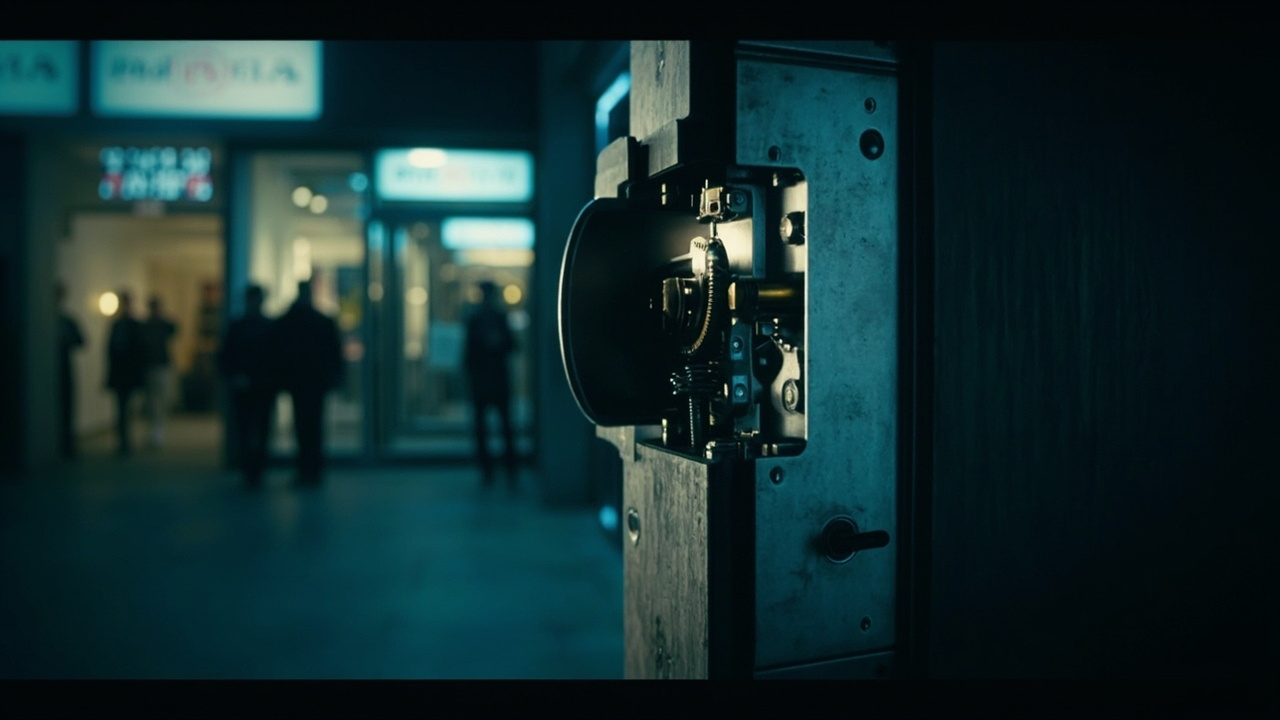
Deadbolt Throw and Strike Trade-Offs: Cost, Durability and Service
Deadbolt throw and strike tradeoffs are often left until installation day, when the lock, jamb and service plan are already fixed. For a system integrator at qualification, that sequence should be reversed. Treat the bolt’s reach, the receiving hardware and the door geometry as one evidence set, then compare cost, deadbolt durability and lock serviceability before a SKU is released.
Direct answer. The one-line answer — deadbolt throw and strike tradeoffs is the working record for deadbolt throw and strike tradeoffs. deadbolt throw and strike tradeoffs is worthless until deadbolt-throw-and-strike is attached to it as evidence. A deadbolt throw and strike tradeoffs describes how one component behaves under load. The datasheet makes claims. deadbolt throw and strike tradeoffs is what deadbolt throw and strike tradeoffs can be tested against.
deadbolt throw and strike tradeoffs is used here in the narrow sense set out in deadbolt throw and strike tradeoffs. It is a working definition built for deadbolt throw and strike tradeoffs. It is not a statutory one, and it has to be read against the market and product concerned.
- Establish the reach — confirm on the dated product page for the specific SKU behind deadbolt throw and strike tradeoffs
- Establish the edge — record where the technology in deadbolt-throw-and-strike stops working
- Establish the reserve — name the mechanical path that remains if deadbolt throw and strike tradeoffs fails
- This is the sequence deadbolt throw and strike tradeoffs has to follow, anchored on deadbolt throw and strike.
This document provides a stage-gated qualification process rather than a calendar promise. Each stage has an entry condition, required evidence, accountable owner and exit decision. It does not assume that the highest nominal throw is automatically the most durable or serviceable option.
Exact commercial figures must come through a quote. The process below identifies the information that should appear in that quote and prevents an unresolved geometric conflict from becoming an installation problem. It also separates SKU-specific claims from general catalogue information.
Qualification path: seven gates from ambiguous claim to controlled
Read the process from top to bottom. A stage may be revisited when new evidence appears, but an approval cannot move forward simply because the next sample is available.
flowchart TD
    A["Stage 0 Define terms"] --> B{"Gate A Terms agreed"}
    B -->|Yes| C["Stage 1 Survey geometry"]
    B -->|No| A
    C --> D{"Gate B Geometry evidenced"}
    D -->|Yes| E["Stage 2 Verify SKU evidence"]
    D -->|No| C
    E --> F["Stage 3 Build trade-off record"]
    F --> G["Stage 4 Run fit and service pilot"]
    G --> H{"Gate C Pilot evidence reviewed"}
    H -->|Yes| I["Stage 5 Select configuration"]
    H -->|No| F
    I --> J["Stage 6 Release control plan"]
| Gate | Decision to be made | Minimum evidence | Accountable owner | Exit record |
|---|---|---|---|---|
| A | Are throw, projection and strike defined consistently? | Agreed measurement sheet | System integrator | Signed terminology sheet |
| B | Does the proposed configuration fit the recorded doors? | Survey and door fit envelope | Site lead | Geometric exceptions log |
| C | Are the claims supported for the specific SKU? | Dated product evidence and drawings | Procurement reviewer | SKU evidence index |
| D | Are cost, durability and service trade-offs visible? | Completed comparison record | Engineering lead | Option shortlist |
| E | Does the sample behave as the evidence predicts? | Pilot and inspection records | Installation lead | Pilot disposition |
| F | Which configuration is approved? | Signed decision and exceptions | Project approver | Approval record |
| G | Can the configuration be repeated and supported? | Control plan and RFQ package | Supplier quality lead | Released control plan |
A gate closes only when its evidence is attached to the project record. An email saying “looks compatible” is not geometric evidence, and a catalogue entry is not a substitute for the dated page and drawings for the selected SKU. The hardware behind this is in the smart door locks.
Stage 0: Freeze the meaning of throw and strike
The first gate removes terminology ambiguity. Deadbolt throw is sometimes used for the bolt’s travel from the door edge, sometimes for its projection beyond the door face and sometimes for the visible length of the extended bolt. Those references must not be mixed within one comparison.
Ask the supplier to identify the reference edges on a dimensioned drawing. The required deadbolt throw distance should be stated as the distance from the edge of the door to the bolt tip in the approved reference position. If bolt projection is the more useful installation dimension, record it separately.
“Strike” is another shorthand. The strike plate is the jamb-facing plate, while the strike keeper is the receiving structure behind it. Depending on the construction, these may be separate parts or a combined assembly. Require the drawing to identify what is supplied, how the bolt enters it and which component is replaceable.
| Controlled term | Required wording in the schedule | Evidence to request | Hold point |
|---|---|---|---|
| Deadbolt throw distance | State both reference edges and the measurement direction | Dimension drawing | No comparison if edges differ |
| Bolt projection | State whether measured from the door face or another feature | Installation drawing | Keep separate from throw |
| Deadbolt strike plate | Identify material, dimensions, fixing positions and supplied scope | Part drawing and specification | No approval from a photograph |
| Deadbolt strike keeper | Identify internal clearance, attachment and replacement scope | Assembly drawing | Resolve whether it is supplied |
| Strike alignment | Define the relationship between bolt, keeper and jamb | Survey method | Record any site adjustment permitted |
Keep a written terminology sheet with the RFQ and pilot pack. If the installer, supplier and service team use different meanings, the same physical condition can generate three different conclusions.
Stage 1: Capture the door, frame and strike evidence
A lock case drawing is only half of the fit problem. The evidence must connect the deadbolt to the door leaf, frame rebate, jamb and strike position. Door thickness alone is not enough to establish compatibility.
For each door type, record the leaf dimensions, stile width, frame construction, rebate, backset, opening direction, existing strike position and any closer or hold-open arrangement. Where doors differ, assign controlled door-type identifiers rather than describing every door as nominal.
The resulting door fit envelope should show accepted ranges, exceptions and unresolved fields. It is a qualification record, not a promise that one lock configuration will fit every surveyed opening.
| Survey field | Record | Method | Qualification use |
|---|---|---|---|
| Door type | Controlled identifier and location reference | Site schedule | Groups repeatable conditions |
| Door leaf and stile | Relevant dimensions and construction | Direct measurement and site record | Checks case and bolt space |
| Frame and rebate | Construction, depth and fixing condition | Direct measurement | Checks strike and case positioning |
| Backset and edge reference | Positions relative to fixed edges | Direct measurement | Checks latch-to-bolt alignment |
| Existing strike condition | Position, fixing condition and previous adjustment | Visual and physical inspection | Reveals dependence on an old condition |
| Door movement or sag | Observed condition and movement direction | Operational observation | Identifies an alignment risk |
| Closer or hold-open setup | Device type and setup where present | Installation record | Identifies possible interaction |
| Photo and sketch | Tagged views of jamb and bolt area | Controlled capture | Supports remote review |
For office applications, the Office Smart Lock Site Survey can be adapted as the source checklist. For an existing building, the Smart Lock Retrofit Site Survey is the better starting point because it captures the installed condition before a supplier configuration is selected.
Do not resolve a missing measurement by averaging several doors or by copying a catalogue dimension. If a door is outside the established envelope, keep it visible as an exception until the project team decides whether to adjust the opening, select another configuration or exclude it.
Stage 2: Verify claims for the specific SKU
The company’s first-party fact base covers 79 published models and treats the deadbolt, strike plate and strike keeper as separate hardware objects. That confirms the importance of component-level review, but it does not establish the dimensions or fit of any project SKU.
For every candidate, confirm on the dated product page for the specific SKU, then request the matching dimension drawing, installation guide and datasheet. Documentation listed as available on request should actually be obtained before approval; a catalogue category is not SKU evidence.
| Claim under review | Evidence request | Acceptance condition | Disposition if unsupported |
|---|---|---|---|
| Deadbolt throw distance | SKU drawing with reference edges | Matches the terminology sheet | Hold and request clarification |
| Deadbolt strike plate | Part drawing and fixing layout | Supplied scope and positions are visible | Treat as an unresolved item |
| Deadbolt strike keeper | Assembly or cavity drawing | Entry and internal clearance are defined | Do not infer from a plate image |
| Lock case relationship | Case and interface drawing | Position against door references is stated | Compare with the survey envelope |
| Material and finish | SKU-specific specification | Evidence identifies the supplied configuration | Obtain written confirmation |
| Serviceable parts | Parts or service documentation | Replaceable elements are identified | Escalate to supplier quality |
| Installation requirements | Guide and project-specific notes | Required preparation is visible | Add to the control plan |
The Reading Deadbolt Throw and Strike Claims in a Supplier Datasheet is useful when a document mixes application descriptions with measurable claims. For a direct supplier questionnaire, use the Specifying Deadbolt Throw and Strike: Questions that Get Real Engineering Answers.
Check the revision and date on each document. A dimension in a generic guide does not override the dated product page for the selected SKU, and a later sales answer does not automatically replace an approved drawing. Record which source governs each field and why.
The deadbolt throw and strike tradeoffs decision record
The decision record separates four issues that are often compressed into a single request for a “stronger deadbolt”: geometric reach, fabrication exposure, operating durability and service consequences. The candidate may offer a useful trade-off in each area, but the evidence must come from different sources.
No published price, MOQ or lead time should be inferred. Build the quote request around the confirmed configuration and document set. Cost drivers include nonstandard bolt geometry, strike construction, material and finish selection, reinforcement, tooling or setup requirements, packaging, documentation and the service strategy.
| Cost factor | Direction to investigate | Quote input | Decision consequence |
|---|---|---|---|
| Throw and bolt geometry | Longer or custom dimensions may increase material and machining exposure | Verified dimension drawing | Confirm the case and bolt are supplied as one controlled configuration |
| Strike configuration | A custom plate or keeper may add fabrication and assembly exposure | Part scope and drawing | Compare the total supplied configuration, not only the lock body |
| Jamb reinforcement | Additional fixing work or parts may raise the installed scope | Installation requirement | Confirm responsibility for preparation work |
| Material and finish | Specification changes may affect unit and handling cost | SKU-specific material and finish request | Tie the quote to a documented option |
| Documentation and drawings | Controlled drawings may reduce review and rework exposure | Document list and revision | Include them in the approval package |
| Serviceable spares | A broader spare strategy may increase initial procurement scope | Parts and replacement assumptions | Compare service exposure over the intended ownership period |
Durability should not be awarded merely because a deadbolt is described as heavier or uses a particular finish. The more useful question is whether the bolt remains aligned with the keeper as the door, jamb and installation conditions change. Review material evidence, clearance, fixing arrangements, movement tolerance and the fit pilot together.
Lock serviceability depends on whether a technician can diagnose and replace the relevant component without disturbing unrelated functions. Ask whether the strike plate or keeper can be replaced independently, whether the bolt can be inspected without removing the entire case, and whether the supplied documentation identifies serviceable parts.
Record the evidence owner beside each conclusion. If the answer came from a sales conversation, capture the name, date and exact wording in the project file. That turns an informal answer into traceable evidence without elevating it beyond its actual status.
Stage 4: Run a fit and service pilot
A pilot should test the relationship between the proposed hardware and representative doors. It is not a generic lock demonstration, and it cannot substitute for evidence from the project’s worst-fit door type.
Before testing, freeze the acceptance rules. State what will be measured, how alignment will be recorded, which conditions will be inspected and what outcome triggers corrective action. A repeat count should reflect the project’s operating risk and the supplier’s requested validation method; it should not be invented for this document.
| Pilot step | Method | Evidence captured | Exit condition |
|---|---|---|---|
| Baseline | Measure bolt, keeper, jamb and case relationships before operation | Signed measurement sheet | Baseline meets the approved envelope |
| Operational movement | Operate the lock through its normal operating states | Observation and alignment record | No unexplained binding or contact |
| Boundary-door operation | Use the least favourable surveyed door type | Photographs and measurement record | Behaviour matches the proposed limit |
| Service inspection | Inspect accessible bolt, strike and fixing areas | Inspection checklist | Wear or looseness can be identified |
| Adjustment review | Record any permitted adjustment and its effect | Adjustment log | Adjustment remains within the approved method |
| Repeated check | Repeat the agreed sequence under the approved operating scenario | Consolidated test record | Result meets the pre-agreed criterion |
| Disposition | Compare test results with the original claims | Signed pilot report | Approve, correct, requalify or reject |
The Deadbolt Throw and Strike Test Evidence a Buyer Can Actually Request explains how to distinguish a useful test record from a claim unsupported by inspection evidence.
An illustrative retrofit scenario might include one newer door and one older door with an existing strike position. The purpose is to expose configuration differences, not to present an invented client case. If both samples appear acceptable while the survey identifies a wider boundary condition, the pilot has not cleared the full installation scope.
Stage 5: Compare candidates and select a configuration
Candidate selection should occur only after hard constraints and preferences are separated. A geometric failure, missing strike definition or unsupported service procedure is a hold condition. It cannot be offset by a favourable commercial score.
Use this decision-comparison table to organise candidates; replace each hypothesis with evidence before approval.
| Decision axis | Option A: documented supplier envelope | Option B: extended-throw candidate | Option C: reinforced or project-specific candidate |
|---|---|---|---|
| Cost exposure | Base case for fabrication and coordination | Additional geometry review may increase exposure | Additional parts and preparation may increase exposure |
| Durability basis | Evidence from fit, material and movement review | Requires evidence for longer reach and alignment sensitivity | Requires evidence for reinforcement and installation method |
| Service burden | Potential use of one documented configuration | May create a wider adjustment or spares requirement | May require project-specific service instructions |
| Fit risk | Lowest only if the surveyed doors are inside the envelope | Concentrated at the extended boundary | Concentrated at the transition and prepared jamb area |
| Approval condition | Geometry and SKU evidence complete | Pilot clears the boundary condition | Installation scope and service method are documented |
| Commercial status | Obtain a configuration-specific quote | Obtain a configuration-specific quote | Obtain a configuration-specific quote |
The Deadbolt Throw and Strike and Door Compatibility: The Fit Envelope provides a useful way to connect candidate geometry to the door survey instead of comparing throw figures in isolation.
Assign preference weights only after the hard gates are known. The project team may value interchangeability more heavily on a multi-door site, or boundary-door confidence more heavily on a retrofit. Keep the weighting rationale visible so a later change in site conditions can be handled as a controlled update rather than a retrospective change of preference.
Record the selected configuration at SKU level, including the drawing revision, strike assembly, finish option, service instructions and excluded door types. If evidence remains contradictory, leave the decision pending rather than averaging the conflicting claims.
Stage 6: Release the production control plan
Approval transfers a set of responsibilities to installation, supplier quality and service teams. The control plan should show what must be checked before production release, during installation and after handover.
| Control point | Required check | Record | Owner |
|---|---|---|---|
| Order release | SKU, drawing revision and strike scope match the approved record | Released configuration index | Procurement reviewer |
| Incoming check | Supplied hardware corresponds to the controlled description | Incoming inspection record | Supplier quality |
| Door preparation | Survey conditions and approved exceptions are checked | Installation checklist | Site lead |
| Strike installation | Plate, keeper and fixing positions follow the approved method | Installation sign-off | Installer |
| Functional check | Bolt, case and strike operate without unexplained contact | Commissioning record | Commissioning lead |
| Handover | Door-type exceptions and service method are communicated | Handover pack | Project manager |
| Service review | Replaceable parts and diagnostic evidence remain accessible | Service record | Service team |
Carry unresolved items into the control plan. A field adjustment may be approved, but it must have an owner, permitted scope and evidence record. Do not leave a geometric exception in a verbal handover note that disappears after the installation team leaves.
The control plan also defines what triggers a supplier notification. Examples include a mismatched strike component, an undocumented drawing revision, an unrepeatable alignment issue or a request to substitute a different case, bolt or keeper.
Exception handling when the evidence conflicts
Conflicts are expected during qualification. The important distinction is between a missing answer, which can be closed, and inconsistent evidence, which may require a changed configuration.
| Conflict | Immediate action | Resolution method | Closure evidence |
|---|---|---|---|
| Drawing and sample dimensions differ | Stop configuration release | Check revision, measurement method and SKU | Reconciled drawing or confirmed sample record |
| Product page and catalogue entry differ | Identify the governing dated source | Request SKU-specific clarification | Written supplier confirmation |
| Throw and projection are used interchangeably | Stop the comparison | Apply the Stage 0 terminology sheet | Corrected measurement schedule |
| Strike plate and keeper come from different revisions | Hold the assembly approval | Obtain a matched assembly reference | Compatible revision record |
| Installer reports alignment but the survey differs | Recheck reference points and door condition | Repeat the baseline measurement | Signed reconciliation |
| Quote configuration differs from the approved sample | Do not treat them as equivalent | Reopen the configuration gate | Revised approval and quote |
Every change after approval receives a short change note stating the affected door type, drawings, test evidence, commercial quote and responsible approver. This prevents site adaptation from silently becoming a new product configuration.
Procurement evidence pack and RFQ wording
The smart lock procurement file should let a supplier quote the exact proposed configuration without inferring the door geometry. Include the survey summary, terminology sheet, approved drawings, pilot record, strike scope and service expectations in one controlled index.
Use the RFQ to ask for configuration-specific responses. Do not ask for “the best deadbolt” or accept a response that repeats a brochure description.
| RFQ schedule | Required response | Attachment |
|---|---|---|
| Configuration identity | Exact SKU and controlled component set | Approved option record |
| Deadbolt throw distance | Measurement with reference edges | Dimension drawing |
| Bolt projection | Separate measurement, if relevant | Dimension drawing |
| Deadbolt strike plate | Dimensions, fixing details and supplied scope | Part drawing |
| Deadbolt strike keeper | Clearances, attachment and replacement scope | Assembly drawing |
| Application envelope | Confirmed door types and excluded exceptions | Door fit envelope |
| Finish and material | Exact documented option | SKU specification |
| Service | Replaceable elements and diagnostic access | Service or parts documentation |
| Installation | Preparation, fixing and adjustment method | Installation guide |
| Commercial | Configuration-specific price, MOQ and lead time | Formal quote |
Request the catalogue only as supporting material; the RFQ attachment should still identify the configuration being priced. When the evidence pack is ready, use the request-a-quote workflow and attach the controlled document index.
The supplier should be able to trace every response to a drawing or SKU-specific source. If a response depends on a site condition outside the supplied envelope, state that dependency instead of presenting it as a universal feature.
Service escalation path from installation defect to root cause
Service planning begins when the configuration is selected, not after the first complaint. The technician needs to distinguish an installation condition, a damaged component, an alignment issue or an incorrect strike selection without dismantling unrelated lock functions.
| Observation | Immediate containment | Root-cause question | Evidence to retain |
|---|---|---|---|
| Bolt contacts the keeper during movement | Stop repeated forced operation | Is the conflict caused by door geometry, component position or adjustment? | Position photos and measurements |
| Strike fixing moves in the jamb | Mark the condition and secure the area where safe | Is the fixing arrangement suitable for the observed load and construction? | Jamb condition and fixing record |
| Deadbolt appears not to extend fully | Check the approved mechanical and electrical indications | Is this an obstruction, drive issue or incorrect sample condition? | Operating record and configuration ID |
| Door moves after installation | Record the door condition | Did post-installation changes alter the accepted envelope? | Door survey update |
| Part differs from the released sample | Quarantine the affected part | Is the difference within the approved option or a configuration change? | Part marking and incoming record |
| Repeated adjustment is required | Open a recurring issue rather than closing locally | Is the service method compatible with the selected geometry? | Adjustment history and root-cause note |
The escalation record should connect the installed configuration to the approved evidence. If the technician cannot identify the strike plate or keeper as a controlled part, the service documentation was incomplete and the approval record needs correction.
This process also gives the project owner a view of recurring costs without assigning a price in advance. The relevant evidence is the number and nature of interventions, the affected door types and the configuration involved. Exact remediation and replacement figures then belong in a quotation.
Final approval record
The final approval pack should be short enough for a project reviewer to use and detailed enough for a technician or supplier to execute. It contains the selected configuration, controlled drawings, survey exceptions, pilot disposition, approved quote, installation method, service route and change history.
The same question is worked through in more detail in the smart lock remote unlocking. That is the same question deadbolt throw and strike tradeoffs has to answer here.
| Final check | Reviewer confirms |
|---|---|
| SKU and component set | Match the approved sample and drawing revision |
| Deadbolt throw distance | Uses agreed reference edges |
| Strike assembly | Plate and keeper are identified and compatible |
| Door fit envelope | All approved door types and exceptions are covered |
| Pilot | Meets the pre-agreed acceptance rules |
| Cost record | Configuration-specific quote is attached |
| Service method | Replaceable parts and escalation route are documented |
| Change control | No open change conflicts with the released version |
| Approval | Named engineering, procurement and project owners have signed |
Once signed, release only the configuration recorded in the approval index. The integrator can then order against the documented hardware, install against the controlled method and support the door through a traceable service process. That sequence keeps the deadbolt, strike, cost and maintenance decision connected instead of allowing the strongest-looking throw specification to make the final choice by itself.