
SLK-9905A: Reading the Published Specification Without Guesswork
A published specification can look like the end of a product search, especially when procurement receives a neat grid of access, platform, body, power, fit, packing, capacity, environment, and service fields. For the SLK-9905A, that grid is useful only if each line is read at its proper level. The task called slk 9905a specification decode begins by separating what the row prints from what a project still needs to prove.
Direct answer. The one-line answer — slk 9905a specification decode is the working record for slk 9905a specification decode. slk 9905a specification decode is worthless until slk-9905a is attached to it as evidence. A slk 9905a specification decode is a component behaviour guide. It covers limits. It covers failure modes. slk 9905a specification decode decides whether slk 9905a specification decode is acceptable for this build.
slk 9905a specification decode is used here in the narrow sense set out in slk 9905a specification decode. It is a working definition built for slk 9905a specification decode. It is not a statutory one, and it has to be read against the market and product concerned.
- Verify the function — confirm on the dated product page for the specific SKU behind slk 9905a specification decode
- Verify the boundary — record where the technology in slk-9905a stops working
- Verify the backup — name the mechanical path that remains if slk 9905a specification decode fails
- For slk 9905a specification decode, the order below is fixed and slk 9905a is the reference point.
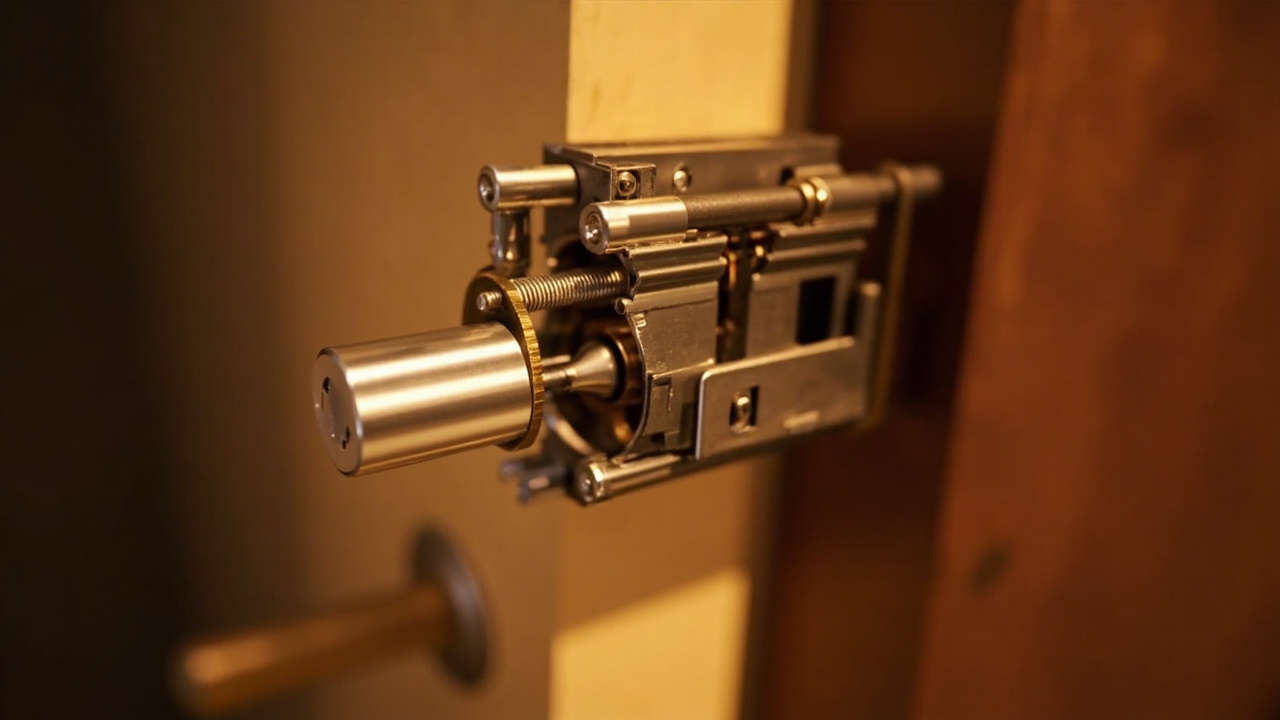
The published row names the SLK-9905A RFID Hotel Lock with Hidden Card Reader and places it in the RFID Door Lock and Smart Door Locks categories. It records an RFID/IC card access method; hotel lock management software with a PC-linked card encoder; guest-card and permission functions; a stainless steel and alloy body; 4 × AA alkaline power; a 38–100 mm door-thickness range; hotel wooden or metal doors; and the packing and service terms discussed below. Before any of these details drives a purchase, confirm on the dated product page for the specific SKU.
| Published area | Exact record | Disciplined reading |
|---|---|---|
| Identity | SLK-9905A RFID Hotel Lock with Hidden Card Reader | Confirms the named model and categories, not the installation details |
| Access | RFID/IC card: Standard | Records the access category; the credential format appears separately |
| Platform | Hotel lock management software; PC-linked card encoder | Describes the recorded management arrangement |
| Door fit | Door thickness: 38–100 mm; hotel wooden or metal doors | Defines a stated range and door context, not every cutout or clearance |
| Power | 4 × AA alkaline batteries; low-battery alert | Identifies the recorded power source and alert function |
| Capacity | Mifare-1 13.56 MHz cards | Identifies card type, not a maximum number of cards or users |
| Environment | — | No environment value is published in this row |
| Services | Drawings, guide, and full datasheet available on request | Describes evidence that can be requested, not evidence already received |
A specification is read in a sequence, not a single glance
The first mistake in product evaluation is to treat every populated field as equally complete. A model name answers one question. A door-thickness range answers another. “Standard” beside an access method answers a third. None of them automatically answers whether a particular hotel door, card stock, operating environment, or service process is suitable.
A reliable reading follows the same path each time: capture the exact wording, identify the decision it affects, compare it with the project requirement, and demand evidence where the row stops. When a value is absent, the correct outcome is an open evidence request, not an invented value.
flowchart TD
    A[Published row] --> B[Exact wording]
    B --> C[Procurement meaning]
    C --> D{Value stated}
    D --> E[Confirm stated value]
    D --> F[Open evidence request]
    E --> G[Compare with project need]
    F --> G
    G --> H[Conditional decision]
This method matters because the specification is not merely marketing copy. It is a record with defined gaps. The buyer’s task is to turn each gap into a question that can be closed before order release.
Begin with identity and resist the feature count
The SLK-9905A published specification identifies the product as an RFID Hotel Lock with Hidden Card Reader. Its Style field reads “RFID Hotel Card Lock (Heavy-Duty ANSI),” while its categories are RFID Door Lock and Smart Door Locks. These labels help route the model into the right evaluation, but they do not replace a dimensional drawing or installation guide.
The hidden-reader description is particularly easy to overread. It tells a buyer that the product is published under that name. It does not, in the row supplied, establish the reader’s exact position, the dimensions of the escutcheon or panel, the door-face preparation, or the wiring path. Those questions require the dimension drawings available on request.
Likewise, “Heavy-Duty ANSI” appears in the catalogue as a style description. A buyer should not convert that wording into a certification or local-approval claim.
Read “RFID/IC card: Standard” as a controlled phrase
The Access field reads “RFID/IC card: Standard.” That is a useful starting point, but it is not a complete credential specification. “Standard” identifies the published access category. It does not, on its own, state card quantities, card ownership, encoding rules, credential issuance steps, or compatibility with an existing hotel system.
The Capacity field supplies another precise piece: “Mifare-1 13.56 MHz cards.” Together, the two entries narrow the credential conversation without closing it. A responsible buyer now knows the recorded access family and card type, while still needing to establish whether the project’s cards, encoder, software workflow, and card-return process align.
The evidence request should therefore include a sample of every card type the hotel expects to use, a written description of the issuing process, and confirmation of the interface between the PC-linked card encoder and the operating workflow. If the project already holds cards, test those cards rather than relying on a generic sample.
For the operational details that sit beyond the catalogue row, Configuring SLK-9905A: Credential Choices and Management Tools provides a focused companion to this specification reading.
Separate the software, encoder, and lock architecture
The Platform & network field contains several statements that are often collapsed into the single phrase “hotel management system.” That collapse loses important distinctions. The row records hotel lock management software with a PC encoder and guest cards. It identifies the lock as standalone and states that no in-room network is required. Its Functions field lists guest card issuance, floor/room permissions, check-in validity windows, and unlock records.
| Published element | What the row establishes | Evidence still needed for evaluation |
|---|---|---|
| Hotel lock management software | A PC-based management component is part of the published configuration | User roles, workflow, reporting, and project setup responsibilities |
| PC-linked card encoder | Cards are linked to a PC-side encoding step | Connection method, compatible card samples, and encoding procedure |
| Standalone lock; no in-room network required | The published arrangement does not depend on an in-room network | Confirmation of the exact operating scope for the selected configuration |
| Guest card issuance | Card issuance is a named function | Card types, quantities, ownership, issue method, and return process |
| Floor/room permissions | Room and floor access mapping is a named function | Mapping rules, exceptions, and configuration evidence |
| Check-in validity windows | Time-based guest validity is a named function | Window creation, expiry behavior, and test procedure |
| Unlock records | Unlock-event recording is a named function | Record display, retention, export, and audit format |
This table prevents a common specification error: turning a recorded function into an assumed workflow. The published row says what the product configuration includes as named functions. It does not describe every administrative screen, report, permission rule, or data-handling requirement.
For procurement, ask for a demonstration that uses the project’s own operating sequence. The demonstration should show who issues a card, how floor and room permissions are assigned, what happens when a validity window ends, and how unlock records are retrieved.
The body description is useful before it is complete
The Body & panel fields record the Style as “RFID Hotel Card Lock (Heavy-Duty ANSI),” the Material as “Stainless steel + alloy,” the Mortise as a “7-pin high-security profile cylinder,” and the Finish as “Satin nickel / Powder black.” These are concrete published fields, but each still has a defined limit.
“Stainless steel + alloy” does not identify grades, thickness, or the location of each material. The finish field identifies two recorded options but does not describe the coating process or every project-specific finish. The mortise wording identifies the cylinder profile in the published row, but it does not replace a door schedule, cylinder-position drawing, or site measurement.
The row does not print panel dimensions, lock-body measurements, backset, spindle details, or a complete cutout schedule. That is not a reason to discard the model. It is a reason to order the right evidence. The documentation field says dimension drawings, an installation guide, and a full datasheet are available on request.
A sample can help finish and construction review, while drawings should govern fit. Any purchase decision that relies on dimensions, cylinder position, or faceplate preparation should be confirmed on the dated product page for the specific SKU.
Hotel door fit starts with the door, not the lock
The Door fit field publishes a door-thickness range of 38–100 mm and suitable door types of hotel wooden and metal doors. That range is the starting constraint for hotel door fit. It is not a declaration that every wooden or metal door within the range will accept the lock.
The procurement team needs to compare the published range with measured site conditions. A useful survey records more than the nominal leaf thickness, because skewed frames, varying timber, metal reinforcements, and existing cutouts can change the work required.
| Survey item | Why it affects the SLK-9905A decision | Evidence to retain |
|---|---|---|
| Door-leaf thickness at the lock position | Checks the published 38–100 mm range | Dimensioned door schedule or site measurements |
| Swing and handing | Identifies the correct lock and reader orientation | Marked door schedule |
| Backset and faceplate position | Checks the existing mortise and cylinder layout | Door elevation or lock pocket measurements |
| Latch and strike geometry | Checks frame engagement and strike preparation | Strike and frame measurements |
| Mortise cavity and cylinder position | Compares the door preparation with the published body | Dimension drawing and site template |
| Hidden-reader location | Establishes where the reader must be prepared | Manufacturer drawing and marked site plan |
| Door and frame condition | Reveals adjustment, repair, or replacement needs | Photographs and survey notes |
For a direct replacement workflow, use Replacing Doors or Locks with SLK-9905A: A Fit Checklist. Where the project question extends to the wider retrofit condition, the Smart Lock Retrofit Site Survey offers a broader site record.
The disciplined conclusion is conditional: a door that falls within the published thickness range and matches the relevant drawing may proceed to project review. It should not be approved from thickness alone.
Power is a service workflow, not only a battery count
The Power field records “4 × AA alkaline batteries” and “Low-battery alert: Standard.” These entries answer two immediate questions: the published power source and the presence of a low-battery alert function. They do not state service life, replacement frequency, alert thresholds, or behavior after depletion.
A hotel buyer should connect those missing details to an operating plan. Who replaces the batteries? How will the front desk identify a low-battery room? What is the escalation path? What records are kept? Does the replacement interval vary by use? These are service questions, and they belong in the RFQ and installer handoff rather than in a generic product description.
The supplied row also does not print a value for external power override via USB terminal. That missing value should remain open: ask whether the project needs an external emergency-power arrangement, what connection is required, and what documented procedure applies. Do not infer the answer from the low-battery alert field.
Carton data belongs to logistics planning
The Packing field gives a carton of 485 × 330 × 445 mm, 6 pcs/ctn, and a gross weight per carton of 16.1 kg. These values are useful because they are specific, but they describe export-carton planning rather than the installed lock.
| Published packing field | Recorded value | Procurement use |
|---|---|---|
| Carton dimensions | 485 × 330 × 445 mm | Check handling space, transport constraints, and carton planning |
| Units per export carton | 6 pcs/ctn | Reconcile shipping units with the purchase schedule |
| Gross weight per carton | 16.1 kg | Inform handling and freight planning without deriving an unstated unit weight |
The gross carton weight does not establish net product weight, individual packing dimensions, pallet configuration, or shipment weight. Those points should remain separate requests. If doors, frames, hardware, or finished-room items are moving through the same logistics chain, the carton dimensions need to be checked against that route rather than against a generic warehouse assumption.
The Services field records OEM/ODM options for custom logo, finish, packaging, manuals, and product configuration for distributor and project orders. That is a scope statement. Buyers should define the required artwork, finish reference, packaging method, manual language, and configuration approval points in writing before treating customization as included.
The capacity field describes a card type, not a hotel at scale
The Capacity row reads “Mifare-1 13.56 MHz cards.” It is easy to misread that field as a scalability statement, but the published entry identifies the card type rather than a maximum number of cards, rooms, users, or stored events.
The separate unlock-records function creates another question. A record can exist without the row specifying retention, search filters, export format, or storage volume. Procurement should therefore ask how the project’s expected guest-card issuance and event volume will be handled. The answer belongs in operating requirements and a tested workflow, not in an inferred capacity figure.
This distinction protects the RFQ from two common errors: assuming a fixed card quantity and assuming that every card is supplied with the lock. The published specification identifies Mifare-1 13.56 MHz cards as the credential format. It leaves card supply, ownership, issuance responsibility, and record-management details for confirmation.
For repeat orders and project documentation, SLK-9905A Order Checklist for Project and Repeat Purchases provides the matching control document.
The blank environment field is a question, not permission
The Environment row contains an em dash. That absence must be preserved in the reading. It means no operating-temperature, humidity, weatherproof-housing, or exposure value is published in the supplied record. It does not authorize a buyer to treat the lock as suitable for an uncovered entrance, corrosive atmosphere, extreme temperature, or any other unstated condition.
Ask for the operating environment relevant to the project: indoor or outdoor placement, seasonal temperature range, humidity exposure, water ingress risk, salt or industrial atmosphere, cleaning regime, and door exposure. Then request dated technical evidence tied to the exact model and configuration. The evidence should identify the test scope, configuration, and result without being generalized beyond that scope.
CONFIRM-WITH-LOCAL-AUTHORITIES: Confirm any project-specific fire, egress, accessibility, and access-control requirements for the exact installation and jurisdiction; the published product row is not local approval.
For an RFID hotel lock specification, environmental suitability is not a footnote. The card reader, electronics, power arrangement, and body material all form part of the installation decision, even though the catalogue row leaves the environment field unpopulated.
Documentation is part of the deliverable
The Services field states that dimension drawings, an installation guide, and a full datasheet are available on request. That phrase is precise. It says the documents can be obtained; it does not say they are already attached to the quotation or that a particular revision has been approved.
A complete procurement file should identify the document, its revision date, and the project configuration to which it applies. The full SLK-9905A datasheet should be compared with the live catalogue row, while the dimension drawings should govern the physical fit review.
| Evidence request | Decision supported | Approval condition |
|---|---|---|
| Dimension drawings | Panel, mortise, reader, cylinder, and cutout review | Marked drawing matches the surveyed doors |
| Installation guide | Door preparation, wiring, mounting, and handover procedure | Guide revision is accepted for the project |
| Full SLK-9905A datasheet | Published functions, options, power, fit, and omissions | Dated document matches the quoted model |
| Finish sample | Visual and tactile review of a specified finish | Selected finish is recorded in the project schedule |
| Card and encoder test procedure | Credential issuance and guest-card workflow | Test uses the intended card types and operating sequence |
This evidence list turns “available on request” into an actionable request. It also keeps the approval note honest: documents support a decision, but each must be reviewed against the project rather than merely collected.
Turn the specification into a procurement RFQ
A useful procurement RFQ mirrors the published record and then adds the project evidence. Copying the catalogue paragraph into an email is not enough; the RFQ should preserve exact values while exposing the unanswered questions.
| RFQ package | Include from the published record | Add for the project |
|---|---|---|
| Model identity | SLK-9905A; RFID Hotel Lock with Hidden Card Reader; recorded categories | Exact configuration and approved finish |
| Access and credentials | RFID/IC card; Mifare-1 13.56 MHz cards | Sample cards, issuing procedure, existing-system test |
| Management | Hotel lock management software; PC-linked card encoder; named functions | Workflow demonstration, roles, record handling, operating responsibility |
| Body and fit | Material, mortise, finish, 38–100 mm range, hotel wooden and metal doors | Drawings, door schedule, site measurements, marked reader position |
| Power | 4 × AA alkaline batteries; low-battery alert | Replacement policy, escalation process, emergency-power question |
| Packing and configuration | Carton dimensions, six units per carton, 16.1 kg gross, custom options | Delivery sequence, packaging requirement, artwork and manual scope |
| Evidence | Drawings, guide, and datasheet available on request | Document revisions, samples, test records, and written clarifications |
The finished RFQ should separate three answers: what the supplier publishes, what the supplier confirms in writing for this quotation, and what the buyer will verify on site or in operation. Mixing those layers creates avoidable variation later.
An illustrative evaluation follows the evidence, not the label
Consider an illustrative procurement team evaluating the SLK-9905A for hotel wooden and metal doors. The published row is strong enough to move the model into serious review: it names a card-based hotel configuration, identifies a PC-linked encoder, records relevant management functions, and states a usable door-thickness range. It is not strong enough to approve the installation.
The team first tests the doors. A wooden door within the thickness range still requires checks of handing, backset, mortise, strike, and reader position. The metal door receives the same disciplined review because the published door type does not replace a drawing comparison. The team then verifies the card format with actual samples and maps the intended guest-card workflow against the named functions.
Next come power and environment questions. The 4 × AA alkaline entry becomes an operating procedure rather than a battery count on a comparison sheet. The blank Environment field becomes a request for project-specific evidence. The team finally requests the drawings, installation guide, and full datasheet, records their revisions, and attaches them to the evaluation file.
The same question is worked through in more detail in smart lock anti card mechanism. That is the same question slk 9905a specification decode has to answer here.The result is not a blanket approval. It is a conditional decision showing exactly which parts of the published specification have been confirmed and which project conditions still govern release.
Score what has been established, not the adjectives
A final procurement comparison should distinguish a documented value from an open item. “Standard,” “heavy-duty,” and “hidden” can be useful descriptors, but they carry less weight than a matched drawing, confirmed card sample, or accepted project procedure.
| Evaluation criterion | Published position | Evidence state for project approval |
|---|---|---|
| Model identity | Named SLK-9905A configuration | Confirm the dated product page for the specific SKU |
| Access | RFID/IC card: Standard; Mifare-1 13.56 MHz cards | Test intended card types and approve issuance workflow |
| Management | Hotel software, PC-linked encoder, and named functions | Demonstrate the project operating sequence |
| Physical construction | Material, mortise, finish, and style are published | Approve the drawing, finish sample, and door comparison |
| Door fit | 38–100 mm; hotel wooden and metal doors | Close the site-measurement and drawing review |
| Power | 4 × AA alkaline; low-battery alert | Document replacement and alert responsibilities |
| Packing | Carton dimensions, six units, 16.1 kg gross | Validate the project logistics plan |
| Environment | No value published | Keep an evidence request open until project conditions are covered |
| Documentation | Drawings, guide, and datasheet available on request | Record the revisions actually supplied and approved |
This worksheet makes the slk 9905a specification decode useful after the article ends. The score is not a popularity measure. It is a map of evidence, showing where the published row is sufficient, where project documents are required, and where a missing value must remain visibly missing.
For the measurement side of this, see the smart lock electrical requirements. That is the same question slk 9905a specification decode has to answer here.
The approval note should reveal its conditions
A defensible approval note for the SLK-9905A can be short because the unresolved items are explicit. It should identify the model, summarize the published access and management configuration, acknowledge the 38–100 mm door-fit range, and state that final acceptance depends on the received drawings, site measurements, credential test, project documentation, and any applicable local confirmation.
Such wording protects the buyer from a subtle failure mode: the quotation and the specification begin to look interchangeable. The quotation reflects the project conversation. The dated product page and supplied documents reflect the selected SKU. The site records reflect the doors. Keeping those sources distinct makes later changes visible.
A commercial request can then list the model, door schedule, intended card types, management workflow, finish, packing requirements, and requested evidence. The request a quote route gives the supplier enough structured information to return a relevant project response.