
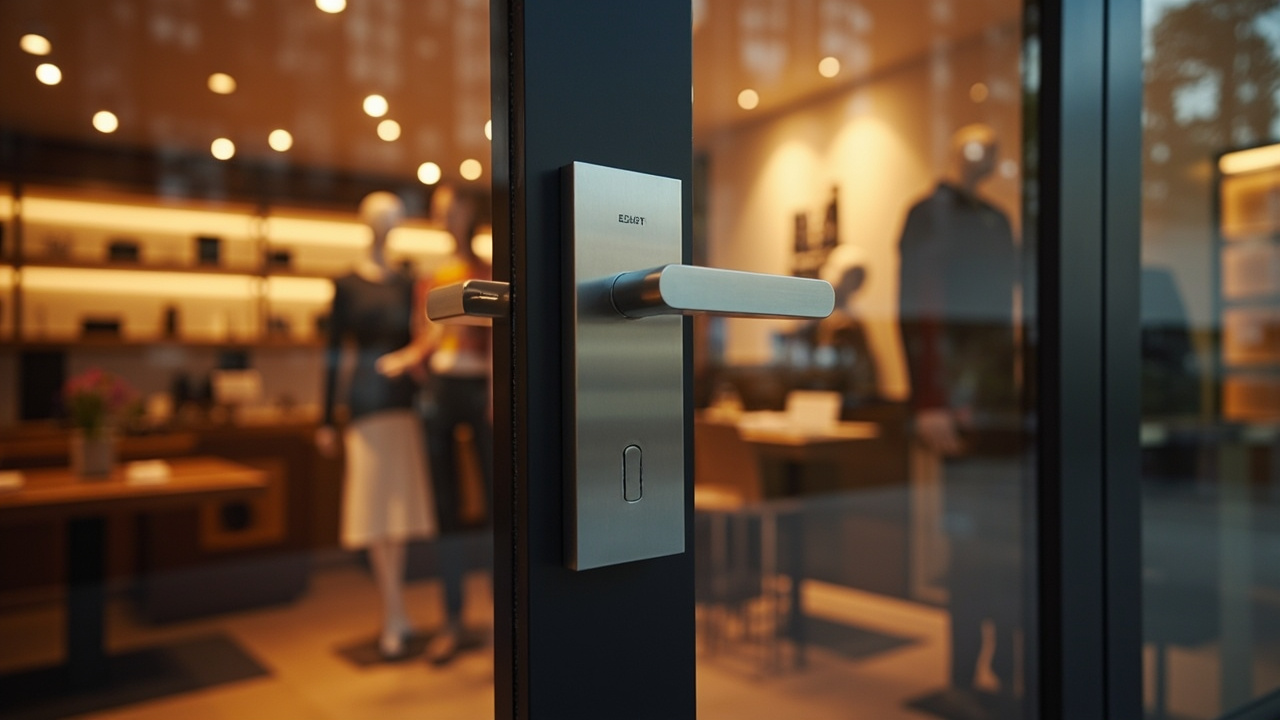
Scaling from One Site to Many: Smart Locks for Restaurant Groups
Restaurants scaling many sites face a control problem that a successful pilot can hide: the hardware choice may look repeatable while the operating conditions are not. Restaurants scaling many sites therefore need a repeatable way to separate the group standard from the facts that still belong to each doorway. This tear-off is for property managers comparing a proven single-site setup with a multi-site restaurant access control programme. It creates a portable gate for design, exceptions, acceptance, ownership and change control. The aim is not to disguise different doors; it is to make every difference visible before the next site is released.
Direct answer. Condensed to the essential point, restaurants scaling many sites turns a request into a decision record. restaurants scaling many sites and the decision record are the two parts of restaurants scaling many sites most often skipped. A restaurants scaling many sites maps one building type to its door classes. restaurants scaling many sites comes first. Each class states what restaurants scaling many sites requires and how it is evidenced.
The phrase restaurants scaling many sites is anchored in restaurants scaling many sites. For the rest of this article it denotes the conditions and evidence that restaurants scaling many sites sets out below. Nothing wider than that.
Make the pilot result travel as a controlled baseline Once
Use this checklist to decide whether a proven single-site setup has become a group-controlled offer. Tick a box only when evidence is attached to the site record. What can be supplied is listed in the smart door locks.
- The reference-site door map covers the front door, kitchen, store, terrace, toilet corridor and cellar; omissions are justified.
- A site-by-site door survey records the leaf, frame, swing, hardware and nearby obstacles instead of copying pilot dimensions.
- The group specification states what may vary, who approves an exception and what evidence returns to the standard owner.
- Each door has an operating owner, a fallback route and responsibility for access-right changes.
- The acceptance test covers a kitchen-door stop during service, the manual route and a recovery owner.
- The phased smart lock rollout can pause at one site without leaving another dependent on an unapproved configuration.
- The change route survives a key employee, supplier or restaurant operator leaving.
Keep the group standard separate from the local door fact
Smart lock standardisation should standardise decisions, not pretend every restaurant has the same entrance. Keep the group baseline for door roles, access intent, evidence, ownership and exceptions. Each site proves fit through a site-by-site door survey. The Office Smart Lock Site Survey and Smart Lock Retrofit Site Survey offer measurement references, but restaurant doors still need service-specific judgement.
| Control | Group baseline | Local proof | Release condition |
|---|---|---|---|
| Door geometry | Survey fields and method | Dated site record | Complete before approval |
| Operating load | Door role and service pattern | Manager observation | Standard or exception approved |
| Access intent | Credential classes and revocation owner | Roster and procedure | Owner named |
| Fallback | Manual route and recovery sequence | Named contacts and test | Route tested |
| Appearance | Permitted interfaces and finishes | Site approval | Sign-off recorded |
| Serviceability | Maintenance method and escalation | Local capability | Responsibility accepted |
Do not approve a SKU from a group photograph. Confirm on the dated product page for the specific SKU the handle arrangement, power source, credential management, environmental limits and network dependency, then record the site need. The dated page narrows the choice; it does not replace the door survey.
Assign door roles before choosing a credential
A restaurant estate contains different operating risks. The front door carries the brand and customer arrival; the kitchen handles service changes; the cellar and store need controlled access. The terrace and toilet corridor require their own treatment. Scaling starts with the door role, not with placing the same reader on every leaf.
| Door role | Main operating question | Group decision |
|---|---|---|
| Front door | How are customer and after-hours entry handled? | Brand-approved access and manual route |
| Kitchen | What if service entry stops mid-change? | Stop procedure and recovery owner |
| Store | Who enters during delivery and close-down? | Role-based rights and revocation owner |
| Terrace | Which openings face weather and public access? | Equipment class and seasonal duty |
| Toilet corridor | How are privacy and cleaning duties divided? | Local procedure and access boundary |
| Cellar | Which stock and staff need controlled entry? | Restricted credential and holder |
Restaurant key control should name who may receive portable access credentials, who removes them and what happens when a code, fob or phone is lost. Choose the credential process with staff handover and fallback together; a channel staff cannot use during service is not an operating standard.
Treat site readiness as a gate before product approval
A group can select a sound candidate lock and still fail at one restaurant. Readiness needs a separate record: physical opening, observed power and network conditions, door users, fallback route and the person who acts after handover.
- The opening, frame, handle and latch are documented against the actual door.
- Grease, washdown and temperature exposure are recorded at the proposed lock position.
- Power and network conditions are observed; no capability is inherited from the reference restaurant.
- Staff identity, shift pattern and access-right owner are confirmed before rules are issued.
- The manual route is reachable, understood by the opening manager and linked to current contacts.
- The site operator accepts cleaning, battery, configuration and escalation duties.
Use Smart Locks for Restaurant Groups: Door Survey and Fit Reality for the physical fit record. Readiness is operational: a site can pass the SKU review and fail because nobody owns the manual route or access rights.
Freeze one configuration record that the next site can reuse
The pilot becomes a template only after its decisions are captured as fields. A photograph shows the finished lock, but not the approved configuration, its acceptor or the change made at the door.
| Field | Required entry |
|---|---|
| Site and door ID | Property, unique door reference and role |
| Approved product record | Candidate family, dated page and evidence location |
| Physical configuration | Door, handle, frame and opening conditions |
| Access configuration | Credential purpose, rights source and revocation owner |
| Service conditions | Observed environment, power and responsibility |
| System state | Version, configuration identifier and change record where applicable |
| Acceptance status | Test result, open actions and release decision |
Do not leave fields for the next site to interpret. A reusable record avoids a new argument at every kitchen door.
Put departures into one exception register
An exception is not permission for drift. It is a visible decision with an owner, review point and evidence that the group can accept, redesign or close.
| Exception type | Record | Decision needed | Closure evidence |
|---|---|---|---|
| Door geometry | Measurement and photographs | Standard fit or redesign | Approved fit record |
| Access method | Staff and visitor journey | Channel and training choice | Accepted procedure |
| Site services | Observed power and network | Required change and duty | Commissioned record |
| Operating fallback | Failure scenario and location | Manual route and owner | Completed route test |
| Brand condition | Site appearance request | Exception or common specification | Group and site sign-off |
Carry the open list into the RFQ Template for Smart Locks for Restaurant Groups. A supplier should answer the exceptional and ordinary doors separately; otherwise the group specification becomes a promise that every site is alike.
Release a site wave only after the evidence closes
The reference restaurant establishes a repeatable method, not a guaranteed installation. A site is ready for the next wave when its readiness record, exception decisions, configuration and acceptance evidence share one owner.
flowchart TD
    A[Approved portfolio baseline] --> B[Site readiness record]
    B --> C{Fit and operations pass}
    C -->|Yes| D[Reference installation]
    C -->|No| E[Exception and owner]
    E --> B
    D --> F[Acceptance evidence]
    F --> G{Wave release approved}
    G -->|Yes| H[Next site group]
    G -->|No| I[Correct and retest]
    I --> F
| Release test | Minimum evidence | Decision owner |
|---|---|---|
| Readiness | Site survey and operating record complete | Site survey owner |
| Exceptions | Every exception accepted or closed | Exception approver |
| Configuration | Versioned record matches the door | Configuration owner |
| Acceptance | Service test and fallback completed | Acceptance owner |
| Handover | Duties, contacts and spare route accepted | Property manager |
Use Rollout Sequencing for a Restaurant Groups Smart Lock Programme for detailed order and Phased Retrofit: Smart Locks Across a Restaurant Groups Portfolio for the move from incumbent locks. This release rule is narrower: no site advances merely because another site succeeded.
It is worth pairing this with slk g200 for frameless glass doors. That is the same question restaurants scaling many sites has to answer here.
Put one owner beside every decision point
Multi-site programmes drift when a decision sits between the head-office specification, installer and restaurant manager. Give each control point one accountable role, even if several people supply evidence.
| Decision | Accountable role | Handover evidence |
|---|---|---|
| Standard | Group property standard owner | Approved version and change route |
| Site fit | Site survey owner | Complete door record |
| Exception | Group exception approver | Signed decision and review date |
| Access rights | Restaurant access administrator | Issue, change and removal procedure |
| Acceptance | Site acceptance owner | Signed test and open-action list |
| Maintenance | Contract or site support owner | Escalation route and review record |
Restaurant lock maintenance needs a named first-line action and escalation path at every site. If support is centralised, the site still needs someone who can recognise a failed door and start the fallback.
Rehearse the worst service moment and the record it leaves
Evaluation should include a controlled failure exercise, not only a successful unlock. During a simulated kitchen service change, take the credential route out of use and record who notices, opens the fallback and confirms recovery.
- A service opening is interrupted without using a different, unapproved door.
- Staff can reach the manual route and the responsible manager is contactable.
- The test records the interruption, response and confirmed recovery.
- A departed employee’s access right is removed through the approved process.
- The next shift receives open actions, contacts and configuration status.
- A failed credential channel leaves no access ownership unassigned.
CONFIRM-WITH-LOCAL-FIRE-AUTHORITY: Confirm the applicable fire-door and escape requirements at each site before approving the locking arrangement.
CONFIRM-WITH-LOCAL-BUILDING-AUTHORITY: Confirm accessibility, door-opening and escape requirements for the front door and service doors.
CONFIRM-WITH-LOCAL-DATA-REVIEWER: Confirm which access-event records, retention periods and data-controller responsibilities apply to the group and each site.
Control changes after release
A released site remains inside the programme. Give each trigger a defined action so a local convenience does not become an undocumented standard.
- Door or frame replacement: reopen the survey, fit record and configuration check.
- Handle, latch or swing change: update the physical record before access rules change.
- New role or boundary: identify the credential owner and review affected doors.
- Shift, management or supplier change: confirm handover contacts and open actions.
- Power, network or operating change: reassess the dependency and fallback route.
- Refit, remodel or seasonal closure: reopen readiness and acceptance evidence.
- Repeated failure: move the lesson into the group standard or exception register.
Record each decision with the site, configuration version and approving owner. A change approved for one restaurant becomes reusable only after the standard owner checks whether it should alter the portfolio baseline.
Tear off the evaluation decision
Complete one sheet per proposed rollout. Keep the evidence links beside the fields; a blank is a question, not a permission to assume.
| Evaluation field | Entry |
|---|---|
| Reference restaurant and pilot date | |
| Door roles in scope | |
| Proposed group baseline | |
| Candidate product record and dated page | |
| Site survey status by door role | |
| Exception register location and owner | |
| Configuration record version | |
| Access-right administrator | |
| Acceptance test owner | |
| Fallback and escalation route | |
| Next-wave release condition | |
| Evaluation decision and date |
The governing test for restaurants scaling many sites is not whether one photograph repeats in every restaurant. It is whether each released site can show why its configuration was selected, who owns access rights and the manual route, and how exceptions return to the standard. Attach the sheet to the RFQ, retain dated product-page evidence and require the next wave to start only when the same questions close. The result answers the first operational question: which door fails at the worst moment, and what is the manual route?
Close the loop with requesting a quote.