
Smart Lock vs Biometric Access Control
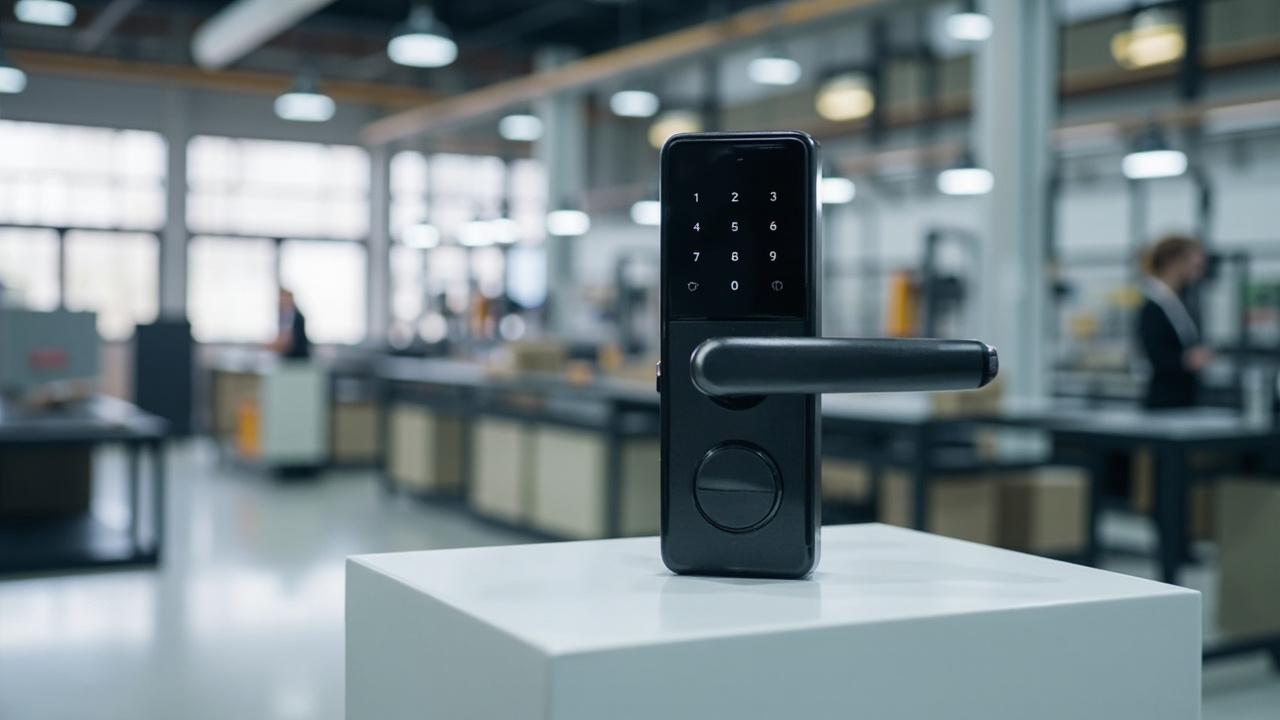
The short version that belongs in the first hundred words: the question "smart lock vs biometric access control" is not a brand-vs-brand shootout, and it is not a feature checkbox. A smart lock in this comparison is a credential lock at a single door — the kind this site sells into a 79-model catalog across Smart Door Locks 77, Fingerprint 37, Hotel 24, Keypad 18, Outdoor 10, RFID 9, Face Recognition 6, Cabinet 6, Video Camera 3, Glass 3 — carrying fingerprint, passcode, RFID/IC card, mechanical key, app/Bluetooth on a TTLock / Tuya / Doodle platform lane, remote control, hotel PC software, camera/cat-eye, 4G models, or 3D face on a few models. A biometric access control system in this comparison is a multi-door topology built around a biometric reader, a controller, and a server — wired or networked — that authenticates the same biometric across many doors with centralized enrolments, centralized audit, and an integration surface for HR, PMS, elevator, intrusion, and visitor systems. The decision is structural: which doors want a per-door credential lock with on-device admin, which want a biometric reader on the wall that hands a credential to a controller across the building, and which want a hybrid where the same door carries both. The decision resolves to a per-environment matrix a procurement reviewer signs against — not a brochure line — and every per-criterion number on the matrix is check the model’s published specification.
This article is the datasheet lens into that matrix. For the credential-security depth that decides where any biometric credential belongs (fingerprint as biometric vs fingerprint as convenience layer, anti-spoof posture, template storage, revocation), see Smart Lock Fingerprint Security. For the chassis-level comparison that says biometric is one credential among several, see Smart Lock Credential Security. For the sibling comparisons that frame a smart lock against the next two access-control flavours the B2B reviewer has on the table — a keypad credential surface and a face-recognition credential surface — see Smart Lock vs Keypad Access Control and Smart Lock vs Face Recognition Access Control. This article (835) is the biometric-credential-class slice of the smart-lock-vs-credential lane three-way; it is deliberately distinct from 834 (keypad credential class) and 836 (face-recognition credential class), and it does not own the chassis (506) or the depth on fingerprint security (508).
How to read this annotated datasheet
A smart-lock-vs-biometric-ACS datasheet in a B2B RFQ has to be read per-criterion row first, then per-environment column, because the structural question the procurement reviewer is signing against is "for this door class, which criteria decide the credential lane?" — not "is biometric secure?" Twelve criteria carry the comparison, in the order a technical reviewer actually signs a datasheet:
- Credential model — what the user presents, and whether the secret is something they know, something they carry, or something they are.
- Enrolment & template storage — where the biometric template lives, who holds it, how it is revoked, what happens to it at the end of employment.
- Anti-spoof / liveness posture — whether the reader can tell a real biometric from a presented artefact, and how that posture is documented per model.
- Throughput / match time — how many seconds per user at the door, and how that scales at peak.
- Fail-secure vs fail-safe under power loss — what the lock does when the battery dies, the network drops, or the controller reboots.
- Network dependency — standalone at the door, gateway-paired, or permanently-online ACS controller.
- Audit depth & reconciliation — how many events, what fields, how they are pulled, how they reconcile to a person.
- Multi-factor composition — whether biometric stands alone, pairs with PIN, pairs with RFID, or is composite-required.
- Multi-door topology — single-door at the door, multi-door via gateway, multi-door via ACS controller.
- TCO driver structure — what drives cost in each lane (per-door hardware, per-controller, per-licence, per-enrolment station, cabling, power).
- Integration surface — OSDP / Wiegand / API / PMS / HR / elevator / intrusion / visitor.
- Jurisdiction & consent — staff vs guest biometric capture, retention window, consent regime, right-to-revoke.
Across the twelve rows sit ten per-environment columns — small office (10–30 staff), multi-tenant office tower (200+), server room, hotel guest-room front door, hotel back-of-house / engineering door, hospital ward, school classroom, retail back / stockroom, light-industrial shop-floor staff door, outdoor perimeter / gate — because the same criterion behaves differently at the door of a server room than at the door of a hotel guest-room, and the procurement reviewer's signature is the union of per-criterion posture × per-environment posture. Every cell in the matrix carries a to verify in writing blank where the per-model figure is what makes the cell honest — user capacity, FAR, FRR, liveness support, match time, fail posture, audit depth, integration surface — and a verdict sentence where the structural reading is independent of any specific SKU.
A note on what this datasheet deliberately does not do. It does not declare a winner. The biometric credential class is structurally honest at some doors and structurally wrong at others. The smart-lock credential class is the same. The buyer who reads the matrix and walks away with "biometric wins" or "smart lock wins" has read the matrix as a marketing shootout. The buyer who reads the matrix and walks away with a per-door per-criterion configuration has read the matrix as a datasheet.
The Master Matrix — per-criterion rows × per-environment columns
The matrix below maps one criterion per row to one environment per column. Cells containing Check the model’s published specification for every shortlisted SKU are the per-model behavioural specifics the procurement reviewer signs against. Cells containing a verdict sentence are the structural reading that holds across the catalog regardless of which specific lock the reviewer picks. Cells containing both carry the structural verdict plus the per-SKU blanks under that verdict.
| Criterion | Small office (10–30 staff) | Multi-tenant office tower (200+) | Server room / IT room | Hotel guest-room front door | Hotel back-of-house / staff door | Hospital ward / pharmacy | School classroom / staff room | Retail back / stockroom | Light-industrial shop-floor | Outdoor perimeter / gate |
|---|---|---|---|---|---|---|---|---|---|---|
| 1. Credential model | Smart lock primary; biometric optional secondary for owner/manager door only | Smart lock per tenant entry; biometric ACS at tower common doors | Biometric ACS primary (high audit) | Smart lock with RFID card + mobile key; biometric typically excluded for guest privacy | Smart lock with RFID card + PIN; biometric optional for staff-only zones | Biometric with PIN composite at ward; smart lock at pharmacy stockroom | Smart lock with PIN + mechanical override; biometric typically excluded for minors | Smart lock with PIN primary; biometric optional for owner | Smart lock with RFID card or PIN primary; biometric optional for owner | Smart lock with PIN or RFID primary; biometric typically excluded at gate |
| Verdict: small-office operator decides mostly on door count and consent capacity, not on biometric class | Verdict: tower operator splits between tenant-side smart lock and common-side biometric ACS at design stage | Verdict: server room wants high audit + two-factor; biometric ACS is the canonical answer, smart lock serves as composite partner | Verdict: hotel guest-room front door is where biometric typically loses; guest consent regime is the constraint | Verdict: hotel back-of-house door matches smart lock with multi-credential overlay | Verdict: hospital ward is the canonical biometric-with-PIN composite door; pharmacy stockroom is smart lock territory | Verdict: school doors default to smart lock + PIN; biometric class is rarely the right answer for classrooms | Verdict: retail back door is smart lock + PIN; owner-only biometric is a discretionary second factor | Verdict: shop-floor staff door is smart lock + RFID / PIN; biometric is owner-only optional | Verdict: outdoor gate is structural and weather-bound; biometric is rarely the right credential at a gate | |
| 2. Enrolment & template storage | Standalone smart lock: enrolment on-lock; template lives on-lock | Biometric ACS: enrolment at central station; template lives on ACS controller/server; smart lock enrolment per tenant on the tenant-side lock | Biometric ACS: enrolment at enrolment station; template lives on controller or server; per-door reader only carries match probe | Smart lock enrolment at check-in or pre-arrival via app; template not in scope because biometric class excluded at this door | Smart lock enrolment via hotel PC software; per-staff PIN + RFID; biometric optional for staff zone | Biometric ACS enrolment at controlled workstation with HR consent; template on server; per-ward reader carries match | Smart lock enrolment on-device or via school admin app; template rarely in scope | Smart lock enrolment on-device; per-staff PIN; biometric optional for owner | Smart lock enrolment on-device or via factory admin app | Smart lock enrolment on-device or via site-admin app; biometric optional at gate for owner |
| Verdict: template location is the consent-regime trigger; on-device templates narrow the consent regime to the property, server-side templates widen it to the controller's operator | ||||||||||
| Check the model’s published specification: per-model template storage location (on-lock vs paired-app vs hosted controller) — check the model’s published specification | Check the model’s published specification: per-model template storage location — check the model’s published specification | Check the model’s published specification: per-controller template storage policy — confirm on the controller datasheet | Check the model’s published specification: N/A — biometric excluded at this door for guest-privacy reasons; lane configured by hotel PC software | Check the model’s published specification: per-model template storage location for any biometric-optional SKU — check the model’s published specification | Check the model’s published specification: per-controller template storage + retention policy — confirm on the controller datasheet | Check the model’s published specification: N/A unless biometric is in scope for staff-only zone | Check the model’s published specification: per-model template storage location for any biometric-optional SKU — check the model’s published specification | Check the model’s published specification: per-model template storage location for any biometric-optional SKU — check the model’s published specification | Check the model’s published specification: per-model template storage location for any biometric-optional SKU — check the model’s published specification | |
| 3. Anti-spoof / liveness posture | Smart lock: depends on sensor class; many catalog fingerprint sensors do not advertise liveness as a feature | Biometric ACS: depends on reader class; liveness is part of the reader-side posture, not the door | Biometric ACS: liveness expected; reader class typically higher tier | N/A — biometric excluded | Smart lock biometric optional: confirm per SKU | Biometric ACS: liveness expected at ward entry | N/A unless biometric in scope | Smart lock biometric optional: confirm per SKU | Smart lock biometric optional: confirm per SKU | Smart lock biometric optional: confirm per SKU at gate for owner-door; confirm per SKU |
| Verdict: anti-spoof is a reader-class spec, not a biometric-credential spec; the buyer who compares fingerprint sensors across the catalog without naming the reader class is comparing apples to doors | ||||||||||
| Check the model’s published specification: liveness support per fingerprint SKU (capacitive / optical / multispectral — none of the 37 fingerprint SKUs are blanket-asserted to support liveness); check the model’s published specification | Check the model’s published specification: liveness support per biometric ACS reader — confirm on the reader datasheet | Check the model’s published specification: liveness support per biometric ACS reader — confirm on the reader datasheet | — | Check the model’s published specification: liveness support per biometric-optional SKU — check the model’s published specification | Check the model’s published specification: liveness support per biometric ACS reader at ward — confirm on the reader datasheet | Check the model’s published specification: N/A unless biometric in scope | Check the model’s published specification: liveness support per biometric-optional SKU — check the model’s published specification | Check the model’s published specification: liveness support per biometric-optional SKU — check the model’s published specification | Check the model’s published specification: liveness support per biometric-optional SKU at gate — check the model’s published specification | |
| 4. Throughput / match time | Smart lock: <1 s typical for fingerprint, <0.25 s for RFID card on SLK-9936S spec block; per-SKU confirm | Biometric ACS: <1 s typical at reader; per-reader confirm | Biometric ACS: <1 s; high throughput rarely the constraint | Smart lock: <1 s for RFID or mobile key — biometric excluded | Smart lock: <1 s for PIN / RFID; biometric optional per SKU | Biometric ACS: <1 s; composite with PIN doubles the time at the door | Smart lock PIN: <1 s; biometric rarely in scope | Smart lock PIN: <1 s; biometric optional | Smart lock RFID / PIN: <1 s; biometric optional | Smart lock PIN / RFID: <1 s; biometric excluded at gate |
| Verdict: throughput is rarely the constraint that decides the lane; the constraint that decides the lane is the credential model + consent regime, not how fast the door opens | ||||||||||
| Check the model’s published specification: per-model match time for any shortlisted SKU — check the model’s published specification; for SLK-9936S RFID lane the catalog product-page-documented spec block lists read time <0.25 s and that figure is anchored to SLK-9936S only and never ported across siblings | Check the model’s published specification: per-reader match time — confirm on the reader datasheet | Check the model’s published specification: per-reader match time — confirm on the reader datasheet | Check the model’s published specification: per-model RFID / mobile-key match time — check the model’s published specification | Check the model’s published specification: per-model match time for any shortlisted SKU — check the model’s published specification | Check the model’s published specification: per-reader match time + composite pairing time — confirm on the reader + lock datasheet | Check the model’s published specification: per-model PIN match time — check the model’s published specification | Check the model’s published specification: per-model PIN match time — check the model’s published specification | Check the model’s published specification: per-model RFID / PIN match time — check the model’s published specification | Check the model’s published specification: per-model PIN / RFID match time at gate — check the model’s published specification | |
| 5. Fail-secure vs fail-safe under power loss | Smart lock: battery-powered, fail-secure or fail-safe per model; confirm per SKU | Smart lock tenant-side: battery per door; biometric ACS common-side: UPS-backed controller | Biometric ACS: UPS-backed controller mandated; smart lock at composite door: battery-backed secondary | Smart lock: battery per door; fail-secure typical for hotel guest-room front doors | Smart lock: battery per door; fail-secure for staff zone | Biometric ACS: UPS-backed controller; composite with smart lock as secondary | Smart lock: battery per door; mechanical override preserved | Smart lock: battery per door | Smart lock: battery per door | Smart lock: battery per door at gate |
| Verdict: fail posture is not a smart-lock-vs-biometric ACS question; it is a door-class question, an AHJ question, and a building-code question that the lock spec implements | ||||||||||
| Check the model’s published specification: per-model fail posture (fail-secure vs fail-safe) for any shortlisted SKU — check the model’s published specification; product-page-documented mechanical emergency access on SLK-9936S is hotel-scoped and not portable to siblings | Check the model’s published specification: ACS controller UPS sizing — confirm on the controller datasheet; AHJ review required | Check the model’s published specification: ACS controller UPS sizing — confirm on the controller datasheet; AHJ review required | Check the model’s published specification: per-model fail posture — check the model’s published specification | Check the model’s published specification: per-model fail posture — check the model’s published specification | Check the model’s published specification: ACS controller UPS sizing + per-lock fail posture — confirm on the controller + product page | Check the model’s published specification: per-model fail posture — check the model’s published specification | Check the model’s published specification: per-model fail posture — check the model’s published specification | Check the model’s published specification: per-model fail posture — check the model’s published specification | Check the model’s published specification: per-model fail posture — check the model’s published specification | |
| 6. Network dependency | Smart lock: standalone typical; paired-app optional via TTLock / Tuya / Doodle; no permanent cloud required | Smart lock tenant-side: standalone per door; biometric ACS common-side: permanent LAN to controller | Biometric ACS: permanent LAN to controller; smart lock composite partner: paired-app optional | Smart lock: standalone with hotel PC software via encoder; can run offline | Smart lock: paired with hotel PC software; can run offline | Biometric ACS: permanent LAN to controller; paired with hospital IT for HR + consent | Smart lock: standalone typical; paired-app via school-admin optional | Smart lock: standalone typical; paired-app optional | Smart lock: standalone typical; paired-app via factory admin optional | Smart lock: standalone at gate typical; paired-app optional |
| Verdict: network dependency decides who runs the system, not which credential is more secure. A standalone smart lock at a door with no network is structurally honest; an ACS reader at a door with a permanent LAN dependency is structurally honest; mixing the two without owning the network layer is structurally dishonest | ||||||||||
| Check the model’s published specification: per-model network profile (standalone / paired-app / gateway / 4G / hotel PC software / camera+cat-eye) — check the model’s published specification | Check the model’s published specification: ACS controller LAN profile + cabling topology — confirm on the controller datasheet | Check the model’s published specification: ACS controller LAN profile + composite lock network profile — confirm separately | Check the model’s published specification: per-model network profile — check the model’s published specification | Check the model’s published specification: per-model network profile — check the model’s published specification | Check the model’s published specification: ACS controller + hospital IT integration profile — confirm on the controller + integration documentation | Check the model’s published specification: per-model network profile — check the model’s published specification | Check the model’s published specification: per-model network profile — check the model’s published specification | Check the model’s published specification: per-model network profile — check the model’s published specification | Check the model’s published specification: per-model network profile at gate — check the model’s published specification | |
| 7. Audit depth & reconciliation | Smart lock: hundreds to thousands of events on-device; reconciliation manual or via paired-app | Biometric ACS: tens of thousands on controller; reconciliation at server; HR/PMS export | Biometric ACS: high audit depth; reconciliation at server; integrate with SIEM | Smart lock: 1,000 events on SLK-9936S; hotel PC software pulls + exports | Smart lock: hundreds to thousands of events; hotel PC software pulls + exports | Biometric ACS: high audit depth; reconciliation with hospital IT + HR | Smart lock: on-device buffer; school admin app pulls + exports | Smart lock: on-device buffer; app pulls + exports | Smart lock: on-device buffer; factory admin app pulls + exports | Smart lock: on-device buffer at gate; admin app pulls + exports |
| Verdict: audit depth without reconciliation cadence is not audit; reconciliation cadence without HR/PMS integration is not audit; HR/PMS integration without retention policy is not audit. The audit stack is a three-layer stack, and every layer has to be populated before the system survives a dispute | ||||||||||
| Check the model’s published specification: per-model audit buffer depth — check the model’s published specification; product-page-documented SLK-9936S figure is up to 1,000 records, hotel-scoped only | Check the model’s published specification: per-controller audit buffer depth + export format — confirm on the controller datasheet | Check the model’s published specification: per-controller audit buffer depth + SIEM integration — confirm on the controller + integration documentation | Check the model’s published specification: per-model audit buffer depth — check the model’s published specification | Check the model’s published specification: per-model audit buffer depth — check the model’s published specification | Check the model’s published specification: per-controller audit buffer + retention policy + SIEM/HR integration — confirm on the controller + integration documentation | Check the model’s published specification: per-model audit buffer depth — check the model’s published specification | Check the model’s published specification: per-model audit buffer depth — check the model’s published specification | Check the model’s published specification: per-model audit buffer depth — check the model’s published specification | Check the model’s published specification: per-model audit buffer depth at gate — check the model’s published specification | |
| 8. Multi-factor composition | Smart lock: PIN + fingerprint composite optional; per-SKU confirm | Smart lock tenant-side: PIN + RFID at tenant door; biometric ACS common-side: biometric + card typical | Biometric + PIN composite mandatory at server room doors | Smart lock: RFID card + mobile key composite; biometric excluded | Smart lock: RFID card + PIN composite typical; biometric optional as third factor | Biometric + PIN composite mandatory at ward entry; smart lock + PIN at pharmacy stockroom | Smart lock: PIN + mechanical key override; biometric excluded | Smart lock: PIN + RFID optional; biometric optional as third factor | Smart lock: PIN or RFID primary; biometric optional composite | Smart lock: PIN or RFID primary at gate; biometric excluded |
| Verdict: composition is the property that makes either lane honest at a door; a single-factor credential at any high-audit door is the procurement default that survives the fewest disputes | ||||||||||
| Check the model’s published specification: per-model composite pairing support — check the model’s published specification | Check the model’s published specification: per-reader composite pairing support — confirm on the reader datasheet | Check the model’s published specification: per-reader + per-model composite pairing — confirm separately | Check the model’s published specification: per-model composite pairing — check the model’s published specification | Check the model’s published specification: per-model composite pairing — check the model’s published specification | Check the model’s published specification: per-reader composite pairing + per-model composite pairing — confirm separately | Check the model’s published specification: per-model composite pairing — check the model’s published specification | Check the model’s published specification: per-model composite pairing — check the model’s published specification | Check the model’s published specification: per-model composite pairing — check the model’s published specification | Check the model’s published specification: per-model composite pairing at gate — check the model’s published specification | |
| 9. Multi-door topology | Smart lock: 1 door per lock; expansion by adding locks | Biometric ACS: many doors per controller; expansion by adding readers + doors | Biometric ACS: many IT-room doors per controller | Smart lock: 1 door per lock; hotel PC software federates many locks | Smart lock: many doors federate to hotel PC software; biometric optional federates to ACS | Biometric ACS: many ward doors per controller; hospital IT federates many controllers | Smart lock: 1 door per lock; school admin app federates many locks | Smart lock: 1 door per lock; admin app federates many locks | Smart lock: 1 door per lock; factory admin app federates many locks | Smart lock: 1 door per gate; admin app federates many locks |
| Verdict: topology is the structural answer; smart locks are per-door, biometric ACS is per-controller. The procurement reviewer who treats them as interchangeable on a multi-door site has read neither the topology nor the consent regime | ||||||||||
| 10. TCO driver structure | Smart lock: per-door hardware + per-licence (paired-app) + per-installation labour | Smart lock tenant-side: per-door hardware per tenant door; biometric ACS common-side: per-controller + per-reader + per-server + per-installation + cabling | Biometric ACS: per-controller + per-reader + per-server + per-enrolment station + cabling + UPS | Smart lock: per-door hardware + encoder + hotel PC software + PMS integration | Smart lock: per-door hardware + encoder + hotel PC software; biometric optional adds per-controller | Biometric ACS: per-controller + per-reader + per-server + hospital IT integration + consent administration | Smart lock: per-door hardware + admin app + school IT integration | Smart lock: per-door hardware + admin app | Smart lock: per-door hardware + factory admin app + cabling | Smart lock: per-door hardware at gate + admin app + outdoor cabling |
| Verdict: TCO comparison is honest only when both lanes are quoted against the same door count and the same consent/administration overhead; the buyer who quotes one lane and forgets the cabling+UPS+server+enrolment-station stack of the other lane has the wrong answer. Exact figures are quote-driven and confirm via the request-a-quote workflow | ||||||||||
| Check the model’s published specification: per-door hardware cost factor + per-controller cost factor + per-licence cost factor — confirm via the request-a-quote workflow; no public prices in this datasheet | Check the model’s published specification: per-tenant-door hardware + per-controller + per-reader + per-server — confirm via the request-a-quote workflow | Check the model’s published specification: per-controller + per-reader + per-server + per-enrolment station + UPS — confirm via the request-a-quote workflow | Check the model’s published specification: per-door hardware + encoder + hotel PC software + PMS integration — confirm via the request-a-quote workflow | Check the model’s published specification: per-door hardware + encoder + hotel PC software + optional per-controller — confirm via the request-a-quote workflow | Check the model’s published specification: per-controller + per-reader + hospital IT + consent admin — confirm via the request-a-quote workflow | Check the model’s published specification: per-door hardware + admin app + school IT — confirm via the request-a-quote workflow | Check the model’s published specification: per-door hardware + admin app — confirm via the request-a-quote workflow | Check the model’s published specification: per-door hardware + admin app + cabling — confirm via the request-a-quote workflow | Check the model’s published specification: per-gate hardware + admin app + outdoor cabling — confirm via the request-a-quote workflow | |
| 11. Integration surface | Smart lock: paired-app (TTLock / Tuya / Doodle) per model; mechanical key override always | Biometric ACS: OSDP / Wiegand / API / elevator / intrusion / visitor; smart lock tenant-side via paired-app | Biometric ACS: OSDP / Wiegand / API / SIEM; smart lock composite partner via paired-app | Smart lock: hotel PC software + PMS + encoder; mobile key lane via paired-app | Smart lock: hotel PC software + PMS; optional biometric ACS federated | Biometric ACS: OSDP / Wiegand / API + HR + consent register; smart lock at stockroom via paired-app | Smart lock: school admin app + optional SIS/LMS; mechanical override preserved | Smart lock: admin app + optional retail POS; mechanical override preserved | Smart lock: factory admin app + optional MES; mechanical override preserved | Smart lock: site admin app + optional gate controller interface |
| Verdict: integration surface decides who runs the lock; the procurement reviewer who specifies a lock before naming the integration surface has specified a lock the integrator will replace | ||||||||||
| Check the model’s published specification: per-model integration interface (OSDP / Wiegand / API / paired-app / encoder / hotel PC software / face + intercom / 4G) — check the model’s published specification; per-SKU binding to TTLock / Tuya / Doodle platform families is per-model and per-project | Check the model’s published specification: per-reader + per-controller integration interface — confirm on the controller datasheet | Check the model’s published specification: per-reader + per-controller + per-lock interface — confirm separately | Check the model’s published specification: per-model integration interface — check the model’s published specification | Check the model’s published specification: per-model integration interface — check the model’s published specification | Check the model’s published specification: per-reader + HR + consent register interface — confirm separately | Check the model’s published specification: per-model integration interface — check the model’s published specification | Check the model’s published specification: per-model integration interface — check the model’s published specification | Check the model’s published specification: per-model integration interface — check the model’s published specification | Check the model’s published specification: per-model integration interface at gate — check the model’s published specification | |
| 12. Jurisdiction & consent | Smart lock: minimal biometric consent if biometric in scope; PIN/card generally no biometric consent | Biometric ACS: full consent regime for staff at common doors; tenant-side smart lock generally no biometric consent | Biometric ACS: full consent + audit retention regime | Biometric excluded for guest-privacy; staff biometric scope limited | Smart lock: minimal consent; biometric optional limited consent | Biometric: full consent + retention + right-to-revoke regime; smart lock at stockroom minimal consent | Smart lock: minimal consent; biometric rarely in scope | Smart lock: minimal consent; biometric optional limited consent | Smart lock: minimal consent; biometric optional limited consent | Smart lock: minimal consent; biometric optional at gate for owner-door only |
| Verdict: jurisdiction and consent is the criterion that ends the datasheet — not because it is the most technical, but because it is the most legally binding. A biometric reader placed in scope without consent is a reader the regulator will order removed; a smart lock in scope without consent regime is typically a non-event | ||||||||||
| Check the model’s published specification: jurisdictional consent posture per shortlisted SKU — confirm with local counsel and the controller/integration documentation; no held certification claims made in this datasheet | Check the model’s published specification: full consent + retention + right-to-revoke regime — confirm with local counsel | Check the model’s published specification: full consent + retention + right-to-revoke regime — confirm with local counsel | Check the model’s published specification: N/A — biometric class excluded for guest doors; confirm with hotel PC software integration scope | Check the model’s published specification: jurisdictional consent posture — confirm with local counsel and the controller/integration documentation | Check the model’s published specification: full consent + retention + right-to-revoke regime — confirm with local counsel | Check the model’s published specification: jurisdictional consent posture — confirm with local counsel | Check the model’s published specification: jurisdictional consent posture — confirm with local counsel | Check the model’s published specification: jurisdictional consent posture — confirm with local counsel | Check the model’s published specification: jurisdictional consent posture at gate — confirm with local counsel |
Cells marked — have no documented value in this article’s sources; obtain the figure from the supplier’s written specification.
Reading one row in full: criterion 2 (enrolment & template storage)
The second row is the row the compliance reviewer reads first, because the second row is the row that decides whether biometric capture is even legal at the door. Walk it slowly.
Smart lock at the door, no ACS controller in scope. Enrolment happens on the lock — the user presents a finger at the lock, the lock stores a template against a user slot, the lock matches against that template at every entry. The template lives on the lock. The consent regime is narrow: the property is the data controller, the data subject is the user standing in front of the lock, the data lives on one device, the retention window is the lock's storage window, the revocation is delete-the-template-on-the-lock. Per-SKU specifics — biometric user capacity, template size on storage, what happens to the template after user deletion, whether the template is encrypted at rest, whether the export interface exposes the template — are open specification items the buyer resolves against the verified product page. The 37 catalog fingerprint SKUs are named at category level only; every SKU in scope has verified in writing.
Smart lock with paired-app (TTLock / Tuya / Doodle). Enrolment happens at the lock or via the app at the administrator's discretion; the template may live on the lock, in the paired-app, or both. The paired-app becomes a second copy of the data; the consent regime is wider; the export interface becomes a paired-app export interface rather than a lock export interface; the integration surface is whatever the app platform documents. Per-SKU binding to TTLock / Tuya / Doodle is per-model — check the model’s published specification; do not assert that any specific SKU in the catalog binds to a specific platform. The cross-platform credential portability question is a platform question, not a lock question.
Biometric ACS at the door. Enrolment happens at a controlled enrolment station, often with HR oversight; the template is transferred to a server or ACS controller, and the door-side reader only carries the match probe. The data subject's biometric now lives on a server the integrator runs, and the consent regime is the server's regime — typically the most onerous in the building. The per-ward, per-room, per-zone pattern of biometric ACS reads is enforced by the controller, not by the reader; the reader is a peripheral; the controller is the system. Per-controller specifics — template storage location, encryption at rest, retention window, right-to-revoke interface, export to HR or SIEM, jurisdictional audit-trail output — are open specification items the integrator resolves against the controller datasheet and the integration documentation. The lock in this datasheet only matters when it sits next to the reader as a composite partner (PIN-or-card secondary to biometric).
The structural reading: enrolment and template storage is the criterion that decides whether biometric belongs at the door, before any anti-spoof or throughput or TCO question is even asked. A door class whose enrolment and template storage posture is too wide for the property's consent regime is a door class where biometric does not belong, and the datasheet's verdict sentences already encode that exclusion for guest-room front doors, school classrooms, and outdoor gates — the three door classes where consent capacity is structurally thin.
Reading one column in full: hotel back-of-house / staff door
The fifth column is where the per-criterion rows meet a door class the catalog knows well — it is the hotel back-of-house door class, where the biometric question is not "biometric yes/no" but "where in the staff population, on which door, with which composite, under which consent regime."
Credential model. Back-of-house staff doors in hotels are not single-credential doors. Housekeeping, engineering, security, front-desk, management — each population has its own credential mix, its own validity window, its own card-issuance cadence. The smart-lock catalog side carries RFID/IC card + PIN + mechanical key + (on a subset) fingerprint + (on a subset) mobile key, with per-SKU specifics confirmed on the product page for every shortlisted model. The product-page-documented SLK-9936S spec block — door thickness 36–100 mm, RFID Mifare 1 @ 13.56 MHz, read distance 0–5 cm, read time <0.25 s, 4 × AA power, battery operating cycles >15,000, audit/event records up to 1,000 records, 5-pin cylinder, 3-point latch, stainless steel + alloy body, multiple finish options, mechanical emergency access, multilingual management software, standalone or centralized database modes, 1–5 star hotel positioning — is the documentation-granularity ruler, hotel-scoped, never extended to siblings SLK-9936G / SLK-9905A / SLK-9951TH / SLK-9962S / SLK-G200 / SLK-8831 / SLK-1104 / SLK-3108 / cylindrical Tuya / 3D-face / cabinet / 4G / D11 / D12 / D15 / ODS / DQ / 019 / 022 / 309 / RFTC-RF card-and-code / B09 / 9L5-R / Q7 / Future 1 / 516 / Q7 intercom.
Composite pairing. Back-of-house composite is typically RFID card primary + PIN secondary for engineering and security; mechanical key override for management. Biometric primary at any staff door is rare, biometric secondary is discretionary, biometric composite (mandatory two-factor) is reserved for cash room, key-cage, and audit-heavy doors. Per-model composite pairing support is Check the model’s published specification.
Network dependency. Hotel back-of-house doors federate to the hotel PC software, which carries the audit pull, the staff registration, the card issuance, the override register, and (optionally) the mobile-key issuance for staff doors that want it. The PC software can run standalone, with a centralized database, or with a PMS bridge above it — per-deployment posture is confirm on the integration documentation.
Audit, TCO, integration, jurisdiction. Audit depth depends on the lock side (per-model) and the PC software side (per-software); TCO is per-door hardware + encoder + PC software + PMS integration (to verify in writing — check the product page); integration surface is hotel PC software + PMS + (optional) biometric ACS controller for biometric-optional staff zones; jurisdiction is the lightest of the door classes because staff consent regime is more tractable than guest consent regime.
The structural reading: the back-of-house staff door is the door class where the smart-lock catalog holds without a fight, and where biometric ACS is the optional addition only when audit pressure is unusually heavy. The buyer who picks biometric ACS for the entire back-of-house fleet of a 240-room hotel has over-specified the door class; the buyer who picks smart lock + RFID + PIN for the entire back-of-house fleet and biometric ACS for the cash room only has the right answer.
An illustrative configuration across a 240-room hotel
Consider a 240-room full-service hotel with three back-of-house staff floors, a conference level, a spa, an F&B outlet on the ground floor, and two basement plant rooms. The operator asks the integrator for a single "biometric access control" recommendation and is met, under this datasheet, with a per-door per-criterion configuration.
Guest-room front doors (240 doors). Smart lock catalog side, RFID card primary + mobile key secondary on a hotel PC software federated system, mechanical key override preserved. Biometric excluded for guest-privacy reasons; the consent regime is structural. Per-model specifics (Mifare 1 @ 13.56 MHz, audit buffer up to 1,000 events, mechanical emergency access, multilingual PC software) come from the SLK-9936S spec block, hotel-scoped only.
Back-of-house staff doors (≈110 doors). Smart lock catalog side, RFID card primary + PIN secondary, hotel PC software federated, mechanical key override preserved. Biometric optional secondary fingerprint at the management office and key-cage only. Per-model specifics for every shortlisted SKU on the staff side — check the model’s published specification.
Cash room, key-cage, server room (4 doors). Biometric ACS primary + PIN or RFID composite mandatory. UPS-backed controller mandates; the four locks selected as composite partners are smart-lock catalog SKU on the mechanical side with the biometric reader as the credential side. Per-controller integration with hotel PC software is a PMS-and-IT integration, not a lock integration; per-controller specifics — confirm on the controller + integration documentation.
Conference level, spa, F&B back-of-house (≈40 doors). Smart lock catalog side, RFID card + PIN, hotel PC software federated. Biometric optional for the spa manager-only door. Per-model specifics — check the model’s published specification.
Two plant rooms (2 doors). Smart lock outdoor catalog class (D11 / D12 / D15 / ODS / DQ family at category level only; per-SKU confirmation on the product page), PIN primary, weather tolerance per-SKU confirm. Biometric excluded at outdoor gate per the structural reading.
The configuration the integrator signs against is not "smart lock or biometric access control." The configuration the integrator signs against is "smart lock catalog at the per-door default, biometric ACS at the four high-audit doors, hybrid where the composite partner is needed, mechanical key override preserved everywhere." The integrator's job at that point is verified in writing the per-SKU specifics against the product page for every shortlisted SKU, against the controller datasheet for every shortlisted controller, and against the integration documentation for the PMS and IT bridges. The hotel's job is to sign the per-door per-criterion configuration against the staff consent regime, the guest privacy regime, and the AHJ review required for the four high-audit doors.
A discipline note that belongs in the operating manual that follows this datasheet: the configuration is durable only when the operator writes down the per-door per-criterion matrix the integrator signed against, keeps the dated product page revisions attached as annexes, and reconciles the credential-policy register (who is authorized to issue, what the validity window is, how the revocation is triggered, how the audit record is reconciled) on the cadence the jurisdiction requires. The lock survives the configuration; the configuration does not survive an unwritten credential policy.
What the factory floor tells you
A factory that has shipped both the per-door smart-lock catalog and the integration surface that a biometric ACS controller talks to will tell the buyer four things a marketing shootout will not.
First, the smart-lock vs biometric-ACS decision is not a credential-security question. It is a topology-and-consent question. The credential-security question is upstream of the topology question, and is what the Smart Lock Fingerprint Security and Smart Lock Credential Security siblings answer. The buyer who treats biometric as "more secure" without naming the door class, the enrolment posture, the consent regime, the controller topology, and the integration surface has bought a feature, not a system.
Second, the per-model specifics are the part the buyer signs against, and the per-model specifics are not portable across siblings. The product-page-documented SLK-9936S spec block is the documentation-granularity ruler for that SKU; it is anchored to that SKU under a no-porting-across-models firewall; every per-model claim for any other SKU in the 79-model catalog is check the model’s published specification. The buyer who treats one SKU's spec block as a catalog-wide spec block has not read the firewall.
Third, the criterion that ends the datasheet is jurisdiction, not security. A biometric reader placed in scope at a door where the consent regime does not support it is a reader the regulator will order removed; a smart lock placed in scope at a door where the consent regime is fine is typically a non-event. The twelve-row matrix terminates at row 12 because row 12 is the row that makes rows 1–11 legally binding. The lawyer and the lock specifier should sign the matrix together.
Fourth, the catalog fingerprint category is 37 SKUs and the catalog biometric ACS lane is not a category — it is the lane the integrator assembles out of a reader + a controller + an enrolment station + a server + a PMS / HR / SIEM bridge. The factory delivers the per-door lock side of the integration; the integrator delivers the controller side; the operator signs the consent regime. The buyer who treats the per-door lock side as the system has specified one component of five.
Where the buyer goes from here
The datasheet above is the chassis the buyer signs the per-door per-criterion configuration against. The next three moves are not datasheet moves; they are procurement moves.
Move one: write the per-door per-criterion matrix for the property. Twelve rows, ten columns, with the structure of the matrix above copied into the property's own spreadsheet and the property's own door classes added where they do not appear in the canonical ten. The buyer who walks into the RFQ without a populated matrix is a buyer the supplier can talk into anything; the buyer who walks in with a populated matrix is a buyer the supplier has to answer.
Move two: confirm every shortlisted SKU's per-criterion specifics against the dated product page. For every smart-lock model on the shortlist — biometric user capacity, FAR, FRR, liveness support, match time, fail posture, audit buffer depth, composite pairing support, network profile, integration interface — the dated product page is the only honest answer. For every biometric ACS component on the shortlist — reader, controller, enrolment station, server, integration bridge — the controller datasheet and the integration documentation are the only honest answer. Per-environment estimates that are not anchored to a dated page are not estimates; they are guesses.
Move three: sign the matrix against the consent regime and the AHJ review. The twelve rows terminate at the consent regime. Sign the matrix with counsel. Walk the AHJ review where it applies (cash room, key-cage, server room, egress, fire-rated doors). Keep the dated product page annexes attached. Run the configuration review at handover, and run it again at every controller firmware upgrade, every hotel PC software revision, every consent-regime change in the operating jurisdiction.
When those three moves are done, the datasheet is the configuration the buyer signs against, the integrator wires against, the operator runs against, and the compliance reviewer audits against. The catalog delivers the per-door smart-lock side. The integrator delivers the controller side. The buyer delivers the consent regime. The configuration survives the morning after a dispute because all three parties wrote their part down.
For the buyers who want the architectural chassis a multi-door biometric ACS sits inside (the four-component operating system of credential, controller, reader, and server — and where the smart-lock catalog fuses with it at the per-door partner), the cluster pillar on Smart Lock Brand Sourcing Checklist walks the integration-and-federation model in full. For the buyers comparing the biometric credential class against the keypad credential class on the same per-door structure, the sibling on Smart Lock vs Keypad Access Control is the next article in the three-way C15 comparison set. For the buyers comparing biometric against face recognition on the same per-door structure, Smart Lock vs Face Recognition Access Control is the third. For the buyers chasing the credential-security depth on biometric specifically, Smart Lock Fingerprint Security is the depth sibling this article hands off to. The closing question is not "smart lock or biometric access control." The closing question is "what is your per-door per-criterion configuration, and where is biometric the canonical answer for which door class under which consent regime?" Bring the configuration. The factory delivers the per-door smart lock. The integrator delivers the controller. The matrix survives the morning after.