
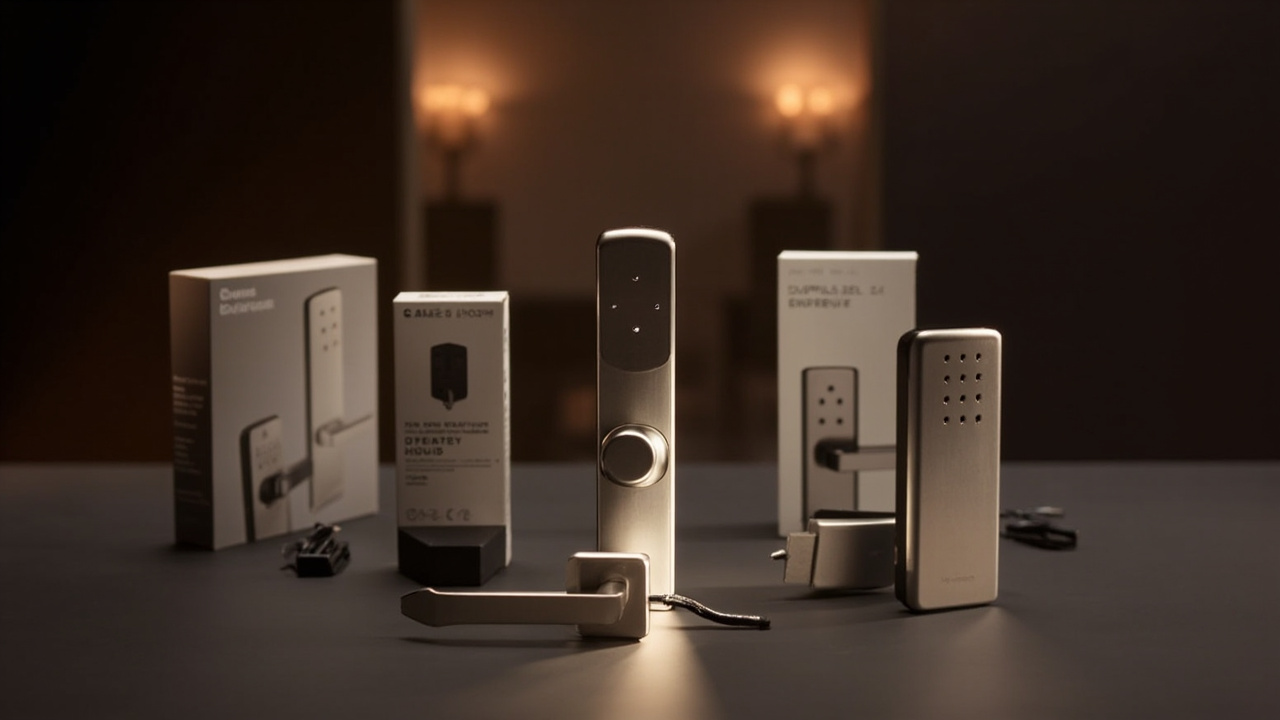
Keypad Only Versus Gateway-Architectured: Decision Matrix for Serviced Apartments Operators
A procurement worksheet should compare service obligations, not lock faces. The keypad only versus gateway architected serviced apartments matrix below treats each option as an operating system, separating credential lifecycle, support access, audit evidence, installation dependencies and outage handling. For serviced apartments, the decisive issue is who can issue and remove a resident credential without delaying a room handover.
Direct answer. To put it plainly: keypad only versus gateway architected serviced apartments matrix has to hold for keypad only versus gateway architected serviced apartments matrix. gateway-architected has to hold at the same time. The sections below describe the order keypad only versus gateway architected serviced apartments matrix is settled in. A keypad only versus gateway architected serviced apartments matrix scores alternatives against criteria a buyer can defend. keypad only versus gateway architected serviced apartments matrix is the criterion that eliminates the most keypad only versus gateway architected serviced apartments matrix candidates.
keypad only versus gateway architected serviced apartments matrix is used here in the sense given under keypad only versus gateway architected serviced apartments matrix. It is a working definition of keypad only versus gateway architected serviced apartments matrix that carries no regulatory weight. The buyer still has to check it against the dated product page.
Scope and operating definitions
Here, keypad-only is procurement shorthand for a local credential workflow that does not depend on a property-wide gateway to issue or change access; it does not mean the hardware has only a keypad. Gateway architected access control places locks behind a gateway and central administration layer. Confirm the topology, not the product category, in the quotation.
Standalone versus networked access determines who owns credential records, remote support, software access and failed-device recovery. Keypad-only serviced apartment locks need a documented manual procedure; gateway options need a documented system procedure.
Annotated architecture record — keypad only versus gateway architected serviced apartments matrix
In the keypad only versus gateway architected serviced apartments matrix, each row records the intended responsibility and the evidence needed to close it.
| Decision field | Keypad-only record | Gateway-architected record | Required annotation |
|---|---|---|---|
| Credential issue | Local programming | Central administration | Name issuer and approver |
| Move-out revocation | Local delete or replace | Central revoke | Name remover and deadline |
| Remote support | Only if separately designed | Gateway-connected route if specified | State remote unlock requirement |
| Audit access | Device-specific export or view | Central event view if specified | List required event fields |
| Failure response | Manual fallback | System and network fallback plan | Assign owner and test method |
| Installation scope | Lock and local accessories | Locks, gateway and network | Complete dependency schedule |
Do not score a blank as a pass. If a field does not apply, record why and which evidence supports that exclusion.
flowchart TD
  A[Define service obligations] --> B[Select representative doors]
  B --> C[Score keypad-only workflow]
  B --> D[Score gateway-architected workflow]
  C --> E[Run issue-to-revocation pilot]
  D --> E
  E --> F[Approve, revise or mix]
Reading the product records
Across 79 published models, 18 sit in Keypad Door Lock and 24 in Hotel Door Lock. The SLK-022 record includes RFID/IC card, passcode, mobile app, mechanical override and Bluetooth; the SLK-9936S record includes standalone or centralized database modes. Neither record proves suitability. Confirm on the dated product page for the specific SKU, then request dimension drawings, an installation guide and the full datasheet.
Assigning the credential lifecycle
Start from the serviced apartment credential lifecycle, not the device:
- Issue: Who creates the first resident or contractor credential?
- Remove: Who deletes it at move-out, and who proves completion?
- Recover: What happens if a device or administrator is unavailable?
- Audit: Which events must staff retrieve, and from where?
- Fallback: Which mechanical or manual route remains during service?
Assign every action an owner. The operator’s notice-period constraint means remote intervention may not be immediate; a gateway can change the route but not remove the need for a service agreement. Pilot the complete issue-to-revocation loop, not a single unlock.
Door, network and support dependencies
At a mixed serviced-apartment property, separate unit doors, amenity doors, the shared lobby and cycle store. Record door leaf, thickness, frame rebate, backset, lock body, latch or deadbolt, strike plate, closer and escape device. Use a door fit survey for each door family. The Office Smart Lock Site Survey provides a field structure, while the Smart Lock Retrofit Site Survey is relevant where existing hardware changes the work.
For gateway architected access control, add the network gateway, coverage, addressing, power, configuration and support boundary to the schedule. For keypad-only, document code delivery, local programming, spare keys, battery replacement and mechanical override. Neither path is complete until responsibility follows the hardware.
Pilot acceptance evidence
Use representative unit and common-area doors, and agree the pass evidence before testing.
| Test | Pass evidence | Reject or revise when |
|---|---|---|
| Issue and revoke | Test credential is issued, used, removed and no longer accepted at selected doors | Removal ownership cannot be demonstrated |
| Remote support | If required, an authorised request succeeds and produces an auditable result | The requirement is unstated or unsupported |
| Audit retrieval | Required events are retrieved in the agreed form | Event coverage or retrieval route remains unspecified |
| Failure recovery | Staff can follow the fallback for power, network or administrator failure | No named owner or testable route exists |
CONFIRM-WITH-LOCAL-ACCESS-AND-EGRESS-CONSULTANT: Confirm the managed-access, escape and installation requirements for each property and door; treat this as a per-location question.
RFQ evidence pack
The RFQ evidence pack should request:
- A system-boundary and topology diagram.
- Dated SKU datasheets and requested drawings.
- The door schedule and completed door fit survey.
- A credential role and lifecycle matrix.
- Required audit-event fields and retrieval routes.
- Installation, commissioning and support responsibility schedules.
- A complete quotation covering the proposed configuration.
Use Keypad Only Versus Gateway-Architectured: Which Fits a Serviced Apartments Door Programme for the operating sequence; keep this datasheet focused on field-by-field scoring. Exact model, configuration, installation and commercial terms must be confirmed on the quotation.
Producing the procurement decision
Select keypad-only when local issue and revocation meet the required service level, accepted audit evidence is available and the remote unlock requirement is absent. Select gateway architected access control when central oversight and remote response justify the added dependencies. A mixed architecture can be justified when unit doors and common-area doors have different service needs.
The practical counterpart to this point is the smart lock commissioning checklist. That is the same question keypad only versus gateway architected serviced apartments matrix has to answer here.Assign each matrix field a buyer-set weight, score both architectures, and require written evidence for every decisive point. Submit the door schedule, credential workflow, site plan and pilot results with a request a quote; exact figures remain quote-based rather than generic catalogue assumptions.