
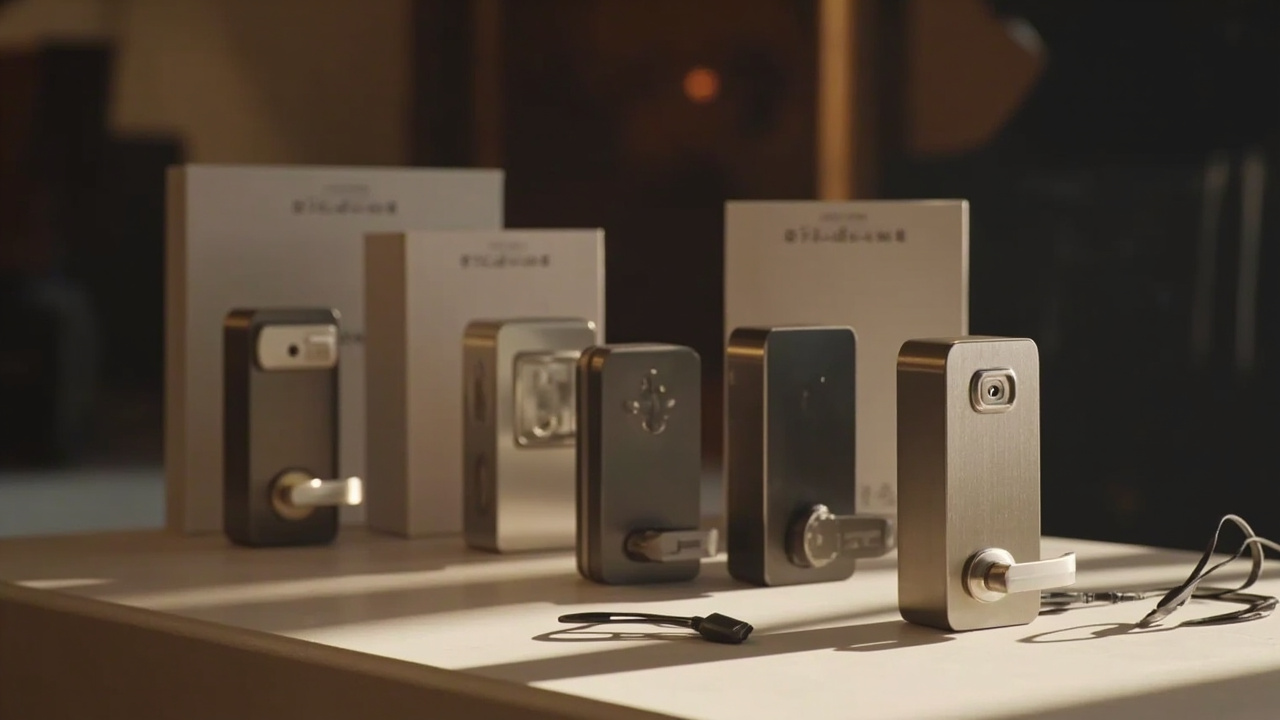
Direct-connect Versus Standalone: Decision Matrix for Cold Storage and Chill Chain Operators
For procurement managers evaluating cold-room doors, this direct connect versus standalone cold storage matrix turns architecture into a sequence of evidence-based decisions. The question is not whether connectivity sounds better; it is whether the selected access system can be commissioned, maintained and evidenced at each freezer, chiller, dispatch and office door. Direct-connect may suit fleet-wide visibility, but a network path cannot compensate for an unsuitable escutcheon, mortise case, latch or emergency-release arrangement. Standalone may suit a small site where local control and offline continuity dominate. Neither label qualifies a lock for a cold environment.
Direct answer. In short, direct connect versus standalone cold storage matrix is the subject of this piece. direct connect versus standalone cold storage matrix is where the work on direct connect versus standalone cold storage matrix sits. the decision record is what has to be evidenced before anyone signs. A direct connect versus standalone cold storage matrix compares alternatives without marketing language. direct connect versus standalone cold storage matrix carries the weight in the scoring of direct connect versus standalone cold storage matrix.
Throughout, direct connect versus standalone cold storage matrix means what direct connect versus standalone cold storage matrix sets out. It is a working definition of direct connect versus standalone cold storage matrix drawn from the evidence below. It is valid for the specific market and product, not as a general claim.
Separate access architecture from cold-door suitability
Direct-connect means the lock or its reader has a live network path to a central service, subject to the selected product’s capabilities. Standalone means the door can operate without a live network path at every access point. That does not mean an offline lock must lack records: a local system may still issue credentials, store unlock events and exchange data through a PC-linked encoder.
| Decision element | Direct-connect | Standalone | Evidence procurement should request |
|---|---|---|---|
| Live status | Central service may receive door or access events | Status depends on the local controller and reporting cycle | Define which events must be visible immediately and which can be reconciled later |
| Credential changes | Central workflow may simplify group updates | Local issuance and device updates require a controlled process | Issue, expiry, revocation, visitor cleanup and lost-credential procedures |
| Network interruption | Defined degraded mode is essential | Local operation may continue more readily | Demonstrate the documented interruption mode rather than infer it from the product category |
| Audit trail | Location and retrieval method must be defined | Export, reconciliation and retention must be defined | Sample event fields, export format, retention responsibility and retrieval owner |
| Infrastructure | Gateways, cabling, wireless coverage and configuration may enter the scope | Some infrastructure may still be needed for encoding or reporting | Separate mandatory access control infrastructure from optional reporting equipment |
| Maintenance | Remote diagnosis may assist, but field access remains necessary | Local inspection and record retrieval become more important | Name the technician, tools, access procedure and response path for each failure mode |
The 79-model catalogue contains several connectivity patterns: mobile app capability is recorded for 41 models, while connectivity records include Bluetooth for 23, Wi-Fi plus Bluetooth for 15 and 4G LTE for one. These are catalogue-composition facts, not proof of live central connectivity, cold-room suitability or compatibility with any particular door.
The SLK-118 provides a useful standalone architecture reference. Its catalogue record lists a standalone lock, PC-linked card encoder, no in-room network requirement, guest card issuance, floor and room permissions, check-in validity windows and unlock records. It also records a 201 stainless-steel body, No. 2 hotel mortise, 242 × 77 × 19 mm panel, four AA alkaline batteries and a low-battery alert. Its Environment and Door fit fields are blank, so it is not evidence of freezer suitability. Confirm on the dated product page for the specific SKU before using any of these values in an approval.
Build the opening register before selecting a lock
Cold storage access control should be decided opening by opening. A badge reader at a freezer room, a code reader at a dispatch door and a lock on a staff office serve different operational needs. Combining them into one site-wide specification can force unnecessary infrastructure or leave the cold-room opening under-specified.
| Opening type | Typical access pattern from the vertical brief | Questions that must be answered before model selection |
|---|---|---|
| Freezer or chiller room | Badge or code at the outer door, with an interior release or pull-cord arrangement | What temperature and humidity reach the lock body, and how does the interior release interact with the lock? |
| Loading bay | Staff, drivers or contractors enter under time-limited authority | Does the access decision need to coordinate with dispatch procedures, or only control the door? |
| Dispatch door | Repeated opening during picking and loading | What is the duty cycle, and which components are exposed to condensation, frost or impact? |
| Office within the site | Employees use the same credential model as other administrative doors | Should the office share the cold-site credential lifecycle, or remain operationally separate? |
For each opening, record the door identifier, leaf and frame construction, door thickness, rebate, backset, latch or deadbolt arrangement, frame rebate, closer, hold-open device, escape arrangement, expected users, opening frequency and power location. An Office Smart Lock Site Survey can structure the non-cold administrative openings, while a Smart Lock Retrofit Site Survey is more relevant where the mortise case, strike keeper, frame or escutcheon must be checked against an existing door.
Do not let a software-led schedule hide the mechanical unknowns. The lock body, case, latch, strike plate, spindle and cylinder must be understood together. A credential platform can assign access rights, but it cannot correct an incompatible mortise case or a door whose closer prevents the latch from seating.
Set the minimum evidence standard for every opening
The minimum standard should be a gate, not a score awarded after selection. If environmental evidence or door-fit evidence is missing, the opening remains unresolved regardless of how attractive the access architecture looks.
| Gate | Buyer question | Evidence to demand | Signal to reject or hold |
|---|---|---|---|
| Operating envelope | What temperature and humidity are specified at the lock body, reader and escutcheon? | Dated product-page fields or supporting documentation for the exact SKU | A general indoor or weather-resistant description without the operating values needed for the site |
| Condensation exposure | Can condensation or frost reach the reader, keypad, seams, cable entries or battery compartment? | An installation detail and component-placement plan for the actual door orientation | An assumption that condensation cannot form because the lock is near the opening |
| Duty cycle | How often and for how long will the door be opened during a shift or picking peak? | A site-supplied operating profile used for the evaluation | An evaluation based only on the number of daily staff shifts |
| Door fit | Which escutcheon, mortise case, latch or deadbolt, backset, strike and frame dimensions are required? | Dimension drawings and a measurement against the actual door or approved submittal | A catalogue dimension treated as a confirmed site measurement |
| Access method | Which credential or credential combination must the opening accept? | Model-level access fields and a sample credential workflow | An assumption that one catalogue category covers badge, code, card and emergency access |
| Records | Which events must be retained, reviewed and exported? | Sample event schema, export process and storage responsibility | “Audit trail” without named events or a retrieval method |
| Service | Who opens, tests and restores the device after a failure? | Written handover and support procedure | Remote software support assigned without local mechanical responsibility |
Measure the actual condition at the lock body rather than relying on the displayed room temperature alone. Ask what happens after a warm loading period, how long moisture remains near the door, and whether seals, coatings or enclosure features are part of the proposed configuration. The cold room door specification should identify the measurement point and the evidence date.
Egress, fire separation, food-safety interfaces and alarm integration require site-specific review rather than a catalogue assumption.
CONFIRM-WITH-LOCAL-AUTHORITY: Verify which authority signs off on egress, food-safety interfaces, alarm integration and environmental requirements for each opening.
Select standalone when local control is the operating requirement
A standalone lock for cold rooms becomes attractive when the site needs reliable local access but does not require live central visibility. The decision should follow the work, not a preference for fewer network components. A small depot with a stable workforce, a limited number of cold openings and a clear local person responsible for credential cleanup may fit this pattern.
Evaluate standalone operation through five questions:
- How are credentials issued? Confirm whether the card encoder is attended, where the workstation sits, who may issue credentials and how the issuance log is controlled.
- How are changes transferred? Require the approved process for adding, changing or revoking access, including what happens when a device or card is out of service.
- How are records recovered? Demand a sample export and identify how the operations team links events to people, doors and time periods.
- What remains available during an interruption? Test the documented workflow for local entry, override use and later record reconciliation.
- How is local knowledge maintained? Assign ownership for the encoder, credential stock, audit export, battery checks and mechanical service.
A standalone architecture can still create a central governance burden. If several sites export files manually to one spreadsheet, the system may be offline at the door but administratively fragmented. Procurement should score the complete operating procedure, not only the lock’s network label.
The RFID and smart-lock category pages can support initial product discovery, but category membership is not an environmental or integration decision. A proposed standalone model still needs the cold-site evidence and door-fit gates defined above.
Select direct-connect when live control changes the operating
A direct-connect networked lock proposal is stronger when several operational needs depend on current information: high contractor turnover, centralized credential suspension, consistent multi-site reporting, or a requirement to see access events without collecting files from each site. The business case should identify which decision improves when the connection works.
Do not assume that network connectivity automatically provides remote unlock, real-time door status, battery monitoring or every audit event. Ask the supplier to map each required function to a specific product configuration and evidence item. Where a function is unavailable, write it as an absence and redesign the workflow rather than adding it to the requirement informally.
| Requirement | Direct-connect evidence needed | If live connectivity fails |
|---|---|---|
| Central credential suspension | Configuration method, transaction time and confirmation record | Defined local exception and manual reconciliation |
| Access reporting | Event list, retrieval method and reporting interval | Local buffering and export procedure |
| Remote diagnosis | Diagnostic functions actually available | On-site diagnostic responsibility and replacement route |
| Site-wide visibility | Door-status source and update interval | Manual inspection fallback |
| Maintenance | Logging or diagnosis function relevant to the fault | Technician access, tools and local spares plan |
The failure test is part of the evaluation. A site should know what an operator sees during a connection loss, which doors remain usable, and how long the team can continue before manual work becomes unsafe or inefficient. That answer belongs in the acceptance record, not in a sales assumption.
Compare failure modes before comparing features
Cold environments magnify weak decisions about placement, power and service access. A feature comparison is incomplete until the operating team has considered what happens after a seal collects moisture, a credential is lost or a shift change occurs while the network is unavailable.
| Failure mode | Standalone response to specify | Direct-connect response to specify | Acceptance evidence |
|---|---|---|---|
| Lost or misused credential | Local revoke-and-reissue procedure | Central revoke procedure plus local exception rule | Reissue test and resulting event record |
| Network interruption | Local entry, later export and reconciliation | Defined degraded mode and central-service behavior | Interrupted-service exercise |
| Power interruption | Mechanical emergency access and safe door state | Same local safety requirement, independent of software | Physical access check at the actual door |
| Low battery | Alert receipt and replacement responsibility | Alert receipt, remote visibility if applicable and local response | Alert routing and replacement workflow |
| Door held open or forced | Sensor or manual inspection response | Same local response plus event capture if available | Event definition and response time |
| Condensation at reader | Sealing, placement and inspection procedure | Same physical controls; connectivity cannot correct them | Installation detail and inspection record |
| Audit gap | Defined export and reconciliation cycle | Defined central retrieval and local fallback | Sample export with traceable events |
| Reader or lock failure | Local bypass, service access and parts process | Local bypass plus service access and parts process | Work order and physical restoration drill |
The interior pull-cord or release arrangement described in the cold-storage brief must be reviewed as part of the door package rather than treated as an accessory after lock selection.
CONFIRM-WITH-LOCAL-FACILITY-OWNER: Confirm the approved emergency-release, escape and door-reinstallation procedure with the responsible site authority and qualified door professional for each opening.
Apply a gated decision matrix
The direct connect versus standalone cold storage matrix should apply hard gates before weighted preference. Use the gates to remove unsuitable configurations, then compare the remaining options against operational priorities.
| Criterion | Gate or indicative weight | Evidence scored | Standalone result | Direct-connect result |
|---|---|---|---|---|
| Operating temperature and humidity at lock body | Gate; weight 5 | Dated specification for the exact SKU | ||
| Condensation, frost and enclosure placement | Gate; weight 5 | Installation and inspection detail | ||
| Door fit and latch or deadbolt arrangement | Gate; weight 5 | Dimension drawings and site measurement | ||
| Emergency release and service access | Gate; weight 5 | Physical procedure and site acceptance | ||
| Credential lifecycle | Weight 4 | Issuance, expiry, revocation and visitor process | ||
| Offline operating procedure | Weight 4 | Tested interruption and reconciliation workflow | ||
| Audit records and retrieval | Weight 4 | Event sample, export and ownership | ||
| Central visibility required by operations | Weight 3 | Named decision or requirement | ||
| Installation infrastructure | Weight 3 | Cabling, gateway, power and configuration scope | ||
| Local maintainability | Weight 3 | Service responsibility, tools and spares | ||
| Total weighted score | Maximum 41 | Use only after all gates pass |
For each weighted criterion, award zero, one or two points: zero means the option fails the stated requirement, one means a documented workaround is needed, and two means the evidence directly supports the requirement. The weights are a worksheet, not a universal industry weighting. Adjust them through the lock selection scorecard with operations, security, facilities and procurement before comparing supplier responses.
Do not let a strong software result compensate for an unresolved gate. An unverified cold operating envelope or incompatible door fit returns the configuration to evidence collection, regardless of its architecture.
Run the standards decision tree — versus standalone cold storage matrix
Use the following tree as an internal procurement standard. It separates physical suitability, operating architecture and weighted commercial preference.
flowchart TD
    A[Register door and duty cycle] --> B{Environmental evidence complete}
    B -->|No| C[Hold model selection]
    B -->|Yes| D{Door fit evidence complete}
    D -->|No| C
    D -->|Yes| E{Live central control mandatory}
    E -->|No| F[Assess standalone first]
    E -->|Yes| G{Local offline control required}
    G -->|Yes| H[Assess direct connect with failover]
    G -->|No| I[Assess direct connect]
    F --> J{Weighted score and pilot pass}
    I --> J
    H --> J
    J -->|Pass| K[Approve model and configuration]
    J -->|Fail| C
Apply the tree in this order:
- Register the opening. Include temperature exposure, duty cycle, frame, leaf, access pattern and emergency arrangement.
- Resolve physical gates. Obtain the dated SKU evidence and door-fit package before comparing connectivity.
- Define the mandatory control model. State whether live central access changes an operational outcome. Avoid choosing direct-connect merely because it offers more visible features.
- Apply the interruption test. If local offline control is mandatory, require a documented failover workflow from the direct-connect option before it advances.
- Score only qualified configurations. The weighted matrix then compares architecture, workflow and ownership.
- Pilot the selected configuration. Verify the physical installation, credential process, record retrieval and service workflow at a representative opening.
The companion Direct-connect Versus Standalone: Which Fits a Cold Storage and Chill Chain Door Programme addresses programme-level fit. This matrix remains the opening-by-opening procurement gate.
Convert the decision into a sample and pilot protocol
A procurement RFQ checklist should ask every supplier to answer the same questions using the same opening register. Include a cutaway, dimension drawing, installation detail, software screenshot sample and written operating sequence where relevant. The request should identify cold exposure, duty cycle, door construction and required records rather than asking for a generic “smart lock” recommendation.
| Stage | Buyer action | Supplier response required |
|---|---|---|
| Register | Issue one controlled schedule for every opening | Acknowledge each door, access pattern and operating condition |
| Qualify | State the proposed SKU and configuration | Identify the exact dated product page and configuration variables |
| Fit | Provide dimension drawings and installation guidance | Map each dimension to the measured door and frame |
| Operate | Submit issuance, revocation and event procedures | Demonstrate the sequence for normal and interrupted service |
| Inspect | Define the site acceptance session | Explain who witnesses and signs each check |
| Handover | Issue service, warranty administration and documentation responsibilities | Confirm the training, documentation and escalation route |
| Approve | Record gates, scores and exceptions | Sign the final configuration rather than a generic model name |
An illustrative small-depot scenario would contain one freezer-room door, one chiller-room door and one office door. If live central visibility is not mandatory, the independent evaluation might advance the standalone option for both cold rooms after environmental and door-fit evidence passes. The office could still use a different access architecture if its workflow and administration differ.
That scenario is not a case study and does not predict a particular site’s result. Its purpose is to show how the tree prevents one site-wide connectivity decision from overriding door-level constraints.
Validate the door and cold-side hardware as one package
The cold room door specification should cover more than the reader face. Review the escutcheon, panel, lock body, mortise case, latch, deadbolt, strike plate, strike keeper, door-frame rebate, backset, spindle and cylinder as one mechanical set. Record the door leaf, closer, hold-open device and escape device because their movement affects latch seating and emergency access.
Positioning also matters. Identify where moisture can collect, where warm air reaches the reader or keypad, and whether the battery compartment, control board, radio module or emergency power port is exposed to the door’s thermal cycle. Ask for the proposed component placement rather than relying on a generic exterior or interior label.
Power requires the same treatment. Record the proposed source, battery or cell arrangement, low-battery alert, external power override method and maintenance access. A catalogue field that is blank remains unresolved rather than becoming a permissive assumption.
The door survey should include the physical action test: operate the lever or handle, confirm latch or deadbolt engagement, check strike alignment, observe closer interaction and verify the approved interior release. This test belongs in the pilot record and handover checklist.
Structure an RFQ that exposes missing evidence
A procurement RFQ checklist can prevent a polished architecture proposal from hiding an unresolved door. Ask for responses under numbered headings, with “not available” allowed where a feature or record does not exist. A clear absence is more useful than a capability inferred from another model.
| RFQ heading | Information requested | Procurement response |
|---|---|---|
| Proposed architecture | Direct-connect, standalone or a defined mixed configuration | Explain the decision in one operating sentence |
| Exact model and variant | SKU, finish, panel, mortise and configuration references | Confirm on the dated product page for the specific SKU |
| Access methods | Credential or method actually offered for the proposed model | Reject unsupported assumptions |
| Environmental record | Operating temperature and humidity, enclosure and condensation-control details | Compare against each opening’s profile |
| Door fit | Drawings, applicable thickness, backset, case, latch and strike arrangement | Match to the surveyed door |
| Records | Events, storage location, export method and retention responsibility | Assign an accountable owner |
| Interruption behavior | Power and network interruption sequence | Accept by test, not assumption |
| Installation | Component placement, cabling, power, gateway and configuration work | Define site and supplier responsibilities |
| Documentation | Installation guide, dimension drawings and datasheet request | List delivery timing and revision status without unsupported lead-time claims |
| Service | Training, fault responsibility, tooling, spares and escalation | Name the service owner |
Ask the supplier to separate supplied equipment, site infrastructure, configuration services and local labour. This makes the quote easier to compare without demanding unpublished cost figures. Any factor that drives quotation, minimum order quantity or delivery scheduling should remain subject to the current project quotation.
Match the final recommendation to the operating scenario
| Illustrative operating scenario | Initial architectural direction | Conditions that keep it provisional |
|---|---|---|
| One cold room with a stable team and no mandatory live control | Standalone first | Environmental evidence, door fit and local credential process must pass |
| Several sites with frequent staff and contractor turnover | Direct-connect first | Central credential workflow, event retrieval and interruption behavior must pass |
| Freezer door with condensation and frost exposure | Architecture is secondary | The selected model must first satisfy the environmental and installation gates |
| Existing dispatch door with an uncertain frame or latch arrangement | Hold selection | Survey the mortise case, strike, backset, closer and release arrangement |
| Mixed office, loading bay and cold-room portfolio | Decide per opening | Do not force one architecture onto openings with different needs |
The matrix should produce a configuration decision, not merely a category label. A standalone selection means the local access and record procedures have been accepted. A direct-connect selection means the live-service benefits justify the infrastructure, while interruption behavior and physical cold-door requirements remain proven.
The practical counterpart to this point is the smart lock cylinder measurement. That is the same question direct connect versus standalone cold storage matrix has to answer here.
Final sign-off and request path
Before approval, record the opening schedule, dated model evidence, environmental decision, door-fit comparison, access workflow, record-retrieval method, interruption test, pilot result, residual risks and named owners. Attach the signed pilot checklist to the purchase record.
This matrix is a procurement aid, not site-specific engineering approval or a regulatory determination. Any remaining question about egress, safety or local authority requirements stays open until confirmed with the responsible local party.
Send the completed opening register, survey results and selected configuration to Smart Lock Factory for a project quotation, catalogue request and supporting documentation. The request should identify the exact door schedule, proposed access method, environmental exposure and required records so the supplier can quote the configuration that will actually be evaluated.
When the file is ready, request a quote against the written requirement.