
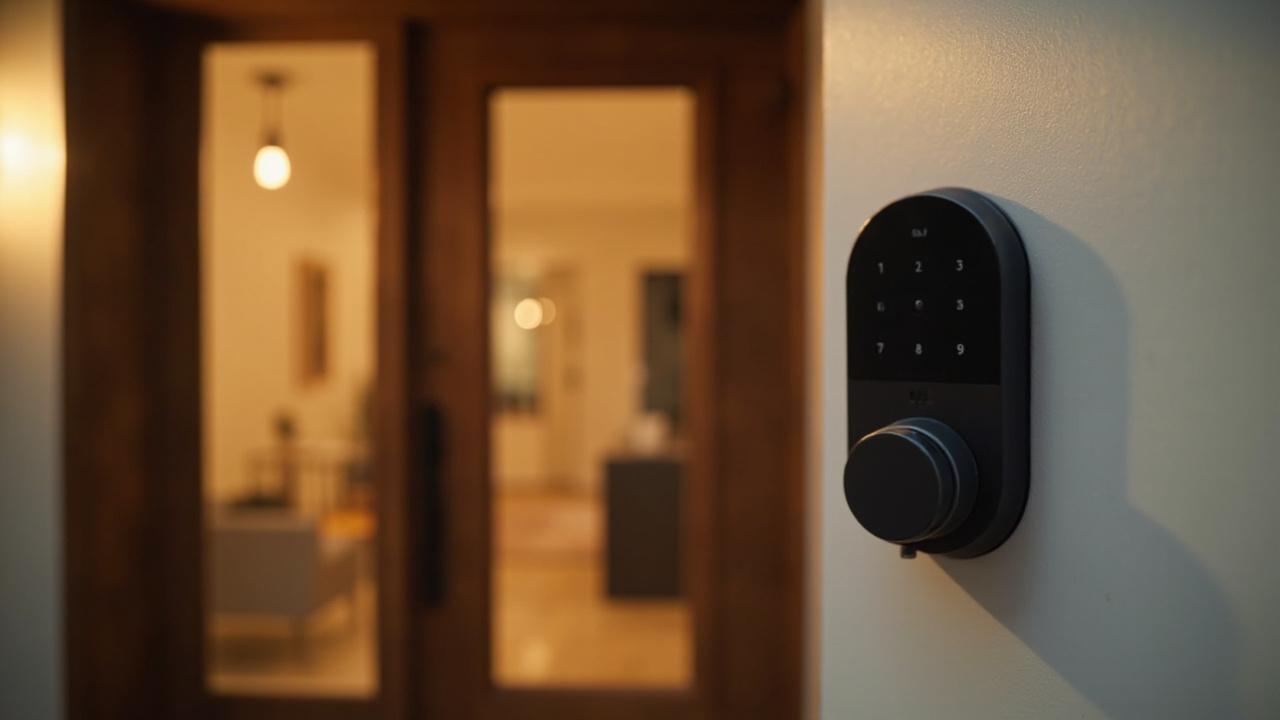
Fingerprint Smart Locks for Rental Properties
TO: The principals of a four-partner ownership group, seven scattered single-family rentalsFROM: SmartLockFactory applications desk — we manufacture these locks; that bias is disclosed, the downsides below are not hiddenDATE: October 2026RE: Whether fingerprint smart locks belong across the whole portfolio, and what has to be true for them to workREAD: Twelve minutes. The decision asks are in the final table; everything before it earns them.
Executive summary
You asked, after the third lockout call this summer, whether the portfolio should standardize on fingerprint smart locks. Here is the straight answer.
A fingerprint smart lock for a rental property is a door lock that admits an enrolled finger as the primary credential, usually alongside passcode, card, mechanical key and an app or Bluetooth lane on platforms such as TTLock, Tuya or Doodle. In our catalog this is a stocked category — 37 fingerprint models out of 79 published models — and for owner-managed single-family rentals its real advantage is administrative, not theatrical: a tenant's finger cannot be cloned, lent out, or left in a leasing office across town. Its real costs are tenant finger variability and enrollment friction, both manageable, neither imaginary.
The decision in front of your partnership is not "biometric yes or no." It is broader: what single credential doctrine governs a whole house across four events — move-in, ordinary living, a Tuesday maintenance call, and turnover. Seven scattered houses means nobody stands at a concierge desk, so whoever holds the admin role effectively is the leasing office. This memo weighs four credential options with their cons stated plainly, separates the door-level questions from the portfolio-level ones, and closes with six decision asks that need votes, not vibes. One house should pilot for one full turnover cycle before all seven commit. If the pilot's deletion habit holds and nobody strands, standardize; if it doesn't, the finger keeps the maintenance shed and the front doors get a different answer.
The situation, as we understand it
Seven single-family houses. No shared entry, no on-site staff, no gate. The nearest two are eight minutes apart; the farthest is a twenty-five-minute drive from your maintenance person. Tenancies mix: two residents of eight-plus years, a couple of three-year cycles, and one house near campus that turns over every August like clockwork. Repairs are dispatched to a hired hand with a lockbox code. Showings at the turning-over houses happen while the old tenant is still in place.
Three facts about that situation shape everything below.
- Every door is a whole-house door. In an apartment building, the front door carries the fleet problem and units carry the tenancy problem. In your portfolio, one lock on one house carries both: everyone who lives there, everyone who services it, and everyone who might want in.
- Turnover is your churn engine. The campus house alone guarantees a credential event every August. Small hands, young hands, older hands on that one lease cycle; long-haul tenants' biology is stable almost everywhere else.
- Your admin capacity is four partners plus one contractor. Whatever system you choose has to survive being operated by people who have day jobs.
The sibling memo for apartment fleets works unit-by-unit through a credential worksheet; this memo makes the whole-house doctrine decision first, then lets the doors sort themselves. That is the distinction, and it is why the two pieces disagree productively.
What you are actually deciding
Before any table: a written doctrine, two sentences per house, that answers four questions.
- Who gets a credential at this door, and who enrolls them? (Answer it now, not at a lease signing in the rain.)
- What happens when the finger is refused — wet, worn, injured, dead battery, six-year-old? One fallback lane, named, per house.
- Who holds the admin identity — the tenant or the landlord? Every fingerprint lock you will be quoted distinguishes admin from ordinary user. Which side of the lease that role sits on is a policy choice with consequences in both directions.
- What gets deleted at move-out, by whom, and how is it verified? The most-often-skipped question. It is where orphaned tenant fingers become next-tenant security problems.
The decision rule: standardize the doctrine across all seven houses; let the hardware vary with the doors. Seven suburban houses built across two decades will not share one door profile. Pre-hung 2016 replacements may take a standard body; an older steel or narrow-frame door may not. Per-model door-fit ranges are a documentation item, not a catalog assumption — but a fingerprint-passes / passcode-falls-back doctrine can run on every house in the portfolio regardless of which SKU hangs on which slab.
Four credential options, with the cons said out loud
We manufacture fingerprint locks and we are still convinced the honest comparison favors passcodes more often than biometric marketing admits. Here is the four-option table a partnership vote can actually use.
| Option | What it is | Honest pros | Honest cons | Best fit in this portfolio |
|---|---|---|---|---|
| Fingerprint-led (finger primary, one backup lane) | Enrolled finger as the daily credential; passcode, card, app or key as named fallback | Fastest honest lane; no lendable credential; residents cannot hand a copy to an ex; no card-stock cost | Tenant finger variability (wear, age, season, injury); enrollment friction at every move-in; admin-role disputes; biometric-consent posture needed; dead battery strands everyone if the fallback is sloppy | Long tenancies, the maintenance shed, the manager-door equivalent |
| Passcode-led | Shared or individual codes as primary | Zero biology problems; tenants need no appointment to get credentials; cheap to issue | Codes walk out with the neighbor who watched you type them; rotating codes at turnover annoys everyone; codes get photographed and texted; attribution is weak | The August campus house, contractor access, showings |
| App/Bluetooth share (TTLock / Tuya / Doodle-class, per model) | Phone as credential, landlord shares temporary access | Remote grant and revocation from wherever the partner is; temporary windows for showings and repairs map neatly to leases | Excludes the tenant who has one phone and it is always at 4%; tenant-side app accounts create a separation-of-tenancies headache; egress and emergency assumptions vary by model and locale — check the model’s published specification | Landlord and contractor lanes; secondary lane for tech-comfortable tenants |
| Mechanical key with smart assist | Fingerprint or keypad lock chosen for its key override; key stays a real credential | Survives every failure mode above; zero enrollment; tenant understanding is total | Keys are anonymity machines — copyable in any lobby, untraceable, only fixable by rekeying every door that shares a bitting; key custody grows with every contractor hired | Emergency lane everywhere; primary lane nowhere |
The decision rule, stated once: no resident's only way home is any single credential, and the finger is no exception. Whichever option leads, every house carries a named fallback whose failure mode is independent of the primary's. Fingers and batteries die on the same humid afternoon; a code does not need power. That is why the two-independently-failing-lanes habit shows up in every row of the next section.
Tenant finger variability, honestly
Ask ten landlords whether fingerprint locks "work" and you will get ten confident, contradictory answers. Both are telling the truth about different populations. The finger is a living credential; its read quality changes with the person, the season and the day.
What we see in the field, stated plainly:
- Work hands wear their ridges down. Landscapers, painters, and your winter-stripped drywall hands enroll poorly or intermittently. The long-tenancy couple who refinished their own floors are exactly the population the sales video does not show.
- Small hands are the real edge case. A six-year-old's ridges are faint. Kids work fine on most readers most of the time and fail on the worst afternoon of the year. For a rental this is not a rejection argument — it is an enrollment argument: kids get the fallback credential, adults get the finger.
- Seasons move reliability. Heating-season dry skin in January and swollen humid fingers in July are different credentials from the one you enrolled in April. This is drift, not defect, and the fix is a second enrolled finger and a patient fallback lane.
- Injuries are temporary and permanent. A burn or a deep cut on the enrolled finger is a Tuesday problem; solved by the alternate finger. A genuinely changed ridge pattern is a re-enrollment event, which is exactly what the doctrine in section three pre-authorizes.
- Refused does not usually mean stranger. On a door that has opened for a person for two years, the most likely reading of a refusal is a condition change on their finger — which is why the lockout ticket, not the burglary alarm, is the operational complaint fingerprint locks generate.
The decision rule: enroll two non-adjacent fingers per adult, on the day their hands are in their worst ordinary condition, and treat every child and every frequently-injured resident as a fallback-lane person. Two fingers on different hands fail independently; two fingers on the same hand share an injury, a soap habit and a bad day.
Whether a specific model's sensor handles a damp finger better than another's is a per-model behavior question — sensor classes differ, and the honest answer lives on the product page, not in a category average. What the doctrine does is make the answer less load-bearing: with two fingers, an alternate lane, and a re-enrollment habit, tenant biology becomes a service ticket, not a crisis.
Enrollment friction, honestly
Every tenant is a credential event. That is the sentence nobody says at the sales stage, and it is the largest real cost of a fingerprint-led portfolio.
The friction stacks up in places the demo never shows:
- Move-in day, in person. Whoever holds the lock's admin identity must stand at the door while each adult registers a finger, then verify it works — their finger, their door, before the keys change hands. If the lock ships to the tenant in a box with an instruction sheet, the admin identity ships too, and you have quietly made the tenant the administrator of their own security system (which may be fine; see the admin-role question below; which may be a mess when the tenant changes the code you hold and sues about an entry).
- Couples and the shared-finger problem. Both adults enrolled, each on their own fingers, never both on the same slot with the same stored identity. One finger, one identity, one person — the same rule the employee-entrance world follows, just with a lease instead of a payroll.
- Guests, dog-walkers, the sister who waters plants. Every one of them is a request to the enrolled-and-authorized loop. Fingerprints should not be casually issued the way house keys once were — a finger cannot be "collected back" — so the doctrine gives those people the time-boxed passcode or app lane, not a registration.
- Turnover, the forced appointment. The August house guarantees this event every year: delete the outgoing tenants' fingers, verify the deletion (see below), re-provision the admin lane, then enroll the incoming lease. Skipping verification is how the portfolio ends up with a departed tenant's finger still opening unit four. The deletion-rules sibling article covers the policy detail; what the memo needs is your vote on who owns the habit.
- Four-partner admin bandwidth. Seven houses, no on-site staff. Enrollment friction at scale becomes calendar friction. That argues for a per-house owner of the physical appointment — usually the hired hand or a designated partner — not a rotating volunteer.
The decision rule: never ship the lock to the tenant as the administrator. Either the landlord administers and grants user slots, or the tenant administers and the lease says who keeps a way in when that account changes. Both models work. The model you never choose is the one that breaks at the worst moment.
Seven doors, five events: where each option strains
The whole-house doctrine earns its keep only if it survives the actual event calendar. Take the five recurring events of a scattered single-family portfolio and push each credential through them.
| Event | Fingerprint | Passcode | App/Bluetooth share | Mechanical key |
|---|---|---|---|---|
| Move-in enrollment | Appointment required; friction highest here | Trivial: change the code, hand out the new one | Moderate: tenant installs and joins the app account; admin-transfer questions surface | Trivial: cut from a locked master or ship-and-rekey |
| Ordinary daily entry, year two | Smoothest lane for most adults; seasonal refusals land on the fallback lane | Smooth until the code leaks to the neighbor; leaks are invisible | Smooth for phone-comfortable users; the 4%-battery failure is invisible until it is not | Dullest reliable lane; every loss is a rekey event |
| Tuesday maintenance call | Contractor needs their own enrolled finger or the code/app lane — the tenant's finger is not a work order | Works today; works after the contractor writes it on a clipboard in the truck | Cleanest: grant a window, watch it expire | Lockbox-code-photographed-in-the-rear-view-mirror energy |
| Showing while tenant is in place | Finger irrelevant to showings; do not let showing access leak into the tenant's credential story | Rotate a showing-only code per weekend | Best fit: time-boxed access tied to the appointment | Hide-a-key-in-the-planter era, updated |
| Turnover | The forced appointment: delete all fingers, verify, re-provision before re-enrolling | Replace the code and the next tenant has a clean slate — provided every temporary code issued during the lease is actually gone | Depends entirely on who owned the app account at move-in (see decision ask #3) | Rekey: certain, one-time cost, no ghost-credential risk |
Read the turnover row again. It is the row the whole comparison turns on. The passcode's "clean slate" is only clean if the code ledger was kept; the finger's "clean slate" is only clean if someone verified the deletions. The decision rule: a credential system you cannot audit is a credential system that fails silently. For access-model detail across a fleet of doors — as opposed to this single-house-per-doctorine view — the access-management sibling covers the operating cadence.
Compressed into one decision path, the doctrine falls out of the portfolio's calendar rather than the brochure — and the delete-and-verify habit is the gate every house must clear:
flowchart TD
    START["Per house in the portfolio"] --> TURN{"Fixed annual turnover cycle?"}
    TURN -- "yes — guaranteed churn each August" --> CODE["Passcode-led lane\nrotated showing and contractor codes"]
    TURN -- "no — long or mid-length tenancies" --> FP["Fingerprint-led lane\ntwo non-adjacent fingers per adult"]
    FP --> KIDS{"Children or frequently-injured residents?"}
    KIDS -- "yes" --> FB["Fallback-lane credential for them\nthe finger stays with the adults"]
    KIDS -- "no" --> ADMIN["Admin identity assigned\nlandlord or tenant — written into the lease"]
    FB --> ADMIN
    CODE --> ADMIN
    ADMIN --> VERIFY["Turnover ritual at move-out\ndelete · verify · re-provision before re-enrolling"]
    VERIFY --> AUDIT{"Is the credential ledger auditable?\ncan someone name every deletion"}
    AUDIT -- "no" --> FIX["Add delete-and-verify to the turnover checklist\nassign a named owner"]
    FIX --> VERIFY
    AUDIT -- "yes" --> DONE["Doctrine holds across the portfolio\nhardware may still vary door by door"]
What to verify against the model’s published specification before you shortlist
Per-model truth, not category truth. Every line below is a blank to fill from the product page of each candidate before the partnership compares SKUs — and blanks are why this memo recommends a pilot buy instead of a seven-unit buy.
- Sensor class and enrollment behavior. Optical or capacitive family, whether enrollment works on damp or gloved conditions (assume it does not until the page says so), how many fingers per user.
- Capacity semantics. Total users, identities per user, admin slots versus user slots — and whether deleting a tenant is one action or three.
- Credential lanes actually present. Fingerprint plus what: passcode, RFID card, mechanical key, app/Bluetooth and on which platform (TTLock, Tuya or Doodle are the families in this catalog). The 5-in-1 fingerprint/password/card/key/app class exists in the range — each model's exact quartet or quintet is a product-page read.
- Event or entry records, if any. Some models log; the granularity differs. For a portfolio without on-site staff, "who opened it at 2 a.m." is doctrine gold, and availability is per-model.
- Door fit: thickness, backset, edge width, handle orientation. Seven houses across two decades of construction means at least three door profiles. Narrow-edge and retrofit classes exist in the catalog for exactly this problem — but every number is documentation, and the pilot should be chosen because its door is the awkward one.
- Power behavior. Cell type, low-battery warning channel, whether a dead pack still reads or still accepts the fallback, and the emergency-power path at the outside of the door. Winter matters for the two northern-facing entries.
- Egress and local rules. Any assertion about fire-path behavior or installed-location legality is a jurisdiction question — for your properties, with your counsel, against the model's documentation. Check the model’s published specification, then confirm with the authority having jurisdiction. Do not let a supplier answer this one for you — including us.
Dead-battery doctrine and key custody
Two failure modes strand people in rentals, and both are boring enough to prevent cheaply.
Battery. The lock warns. Someone with the calendar duty checks the warning habit, not the heroics. Three rules: every house names one partner (or the hired hand) responsible for cell swaps within a stated interval after the warning; a spare set of the correct cells lives in the maintenance shed of the doctrine, not in a drawer at one of the houses; the tenant-facing lease clause says the landlord handles the cells so an August student does not decide lithium is a personal project. What a specific model does at 3% power — reads, refuses, beeps, accepts the fallback — is per-model; product page before you write the lease clause.
Keys. The mechanical lane is the last credential, and its governance is the one landlords are worst at. Rules that cost nothing: enrolled keys are a counted set, issued to named people, and the count is reconciled at every turnover and every contractor change; nobody mails an uncounted spare inside a lease packet; the keyway/bitting is not published in listing photos. A key cut from an anonymous ring copy is the oldest ghost-credential in the business, and every fingerprint program in this portfolio that keeps a key fallback also keeps a key ledger. If maintaining a ledger sounds like too much work, the honest response is not "no key fallback" — it is that a smart-only lane without a physically audited backup is the lane you will regret on the locksmith's invoice at 11 p.m.
An illustrative scenario: one year at Maple-row
Illustrative — a planning exercise, not a customer story. Consider the partnership's seven houses as a calendar.
March. The far house's eight-year tenants ask about fingerprint entry after a neighbor's break-in. The partners, burned by the summer lockouts, vote a pilot: one fingerprint-led lock on that house, ordered as a sample, chosen because its door is the oldest and most awkward. Move-in-style enrollment happens on a Saturday: both adults, two non-adjacent fingers each, hands in their January-dry worst because that is the season they live in. The landlord admin identity stays with one partner; the tenants hold user slots and a personal passcode they may change once a year.
June. The hired hand gets his own enrolled finger for the shed and the maintenance lane on the pilot house — never a borrowed tenant code. One showing season passes; codes rotate per weekend, nobody photographs a finger.
August. Campus house turnover lands — but the pilot house has no turnover, so the August event rehearsal happens at the campus house on a keypad: replace the code, review the temporary codes issued during the lease, and — the part everyone skips — confirm the contractor's old lockbox combination went out of use too. The partnership discovers its first lesson: a passcode lane with no ledger is the same ghost-credential problem they feared with fingers, just slower.
The following January. The pilot house's long-tenancy partner injures his enrolled index finger at the workshop. The alternate finger opens the door without heroics; the fallback code is for the burn clinic week. Nobody calls a partner. The enrollment-verification note from March is the difference between a calm Tuesday and a locksmith.
Decision moment. Three votes after the pilot year: standardize fingerprint-led on the four long-tenancy houses and the shed; keep the campus house on passcode-led because a guaranteed annual churn event plus small-handed new leases every August makes enrollment friction the dominant cost there; the two mid-length houses follow whichever lane their next lease prefers. Two different credentials, one doctrine — the fallback, admin-role, deletion-verification and key-custody rules identical on every door. That, more than any sensor choice, is what "standardized" means in a scattered portfolio.
Privacy and consent: posture, not playbook
A fingerprint template stored on a lock at a rented house is a question your tenants are entitled to ask and your local law may answer in ways this memo cannot predict. Some jurisdictions regulate biometric collection including in dwellings; some do not; some attach consent requirements when leases reference stored templates. None of that is a fact base this side of your counsel's office.
The posture that survives anyway, independent of jurisdiction:
- Tell, do not surprise. The lease addendum says what kind of credential is enrolled, what it is stored for, and what happens to it at move-out. Tenants who are asked before signing almost never object; tenants who discover it in month seven file complaints.
- Enroll the minimum. Two fingers per adult who wants the lane. Nobody's children are registered to a landlord's door by anyone's doctrine but their own parents', and the fallback lane is why.
- Store on the lock, not in a spreadsheet. Some models in this category keep templates locally; local storage keeps the custody question small. Per-model storage architecture is a documentation item and, honestly, one of the few lines worth asking us directly.
- Delete like you mean it. The deletion sibling covers the mechanics; this memo asks only that the delete-and-verify step be named in the lease addendum, so it happens even during the August the partners are busy.
This is not a legal section. It is a partnership-risk section: the fingerprint program's most likely complaint is never a burglary — it is a tenant who feels surveilled or stranded, and both are prevented by paperwork and a fallback lane, not hardware.
Decision asks
Six asks, owners assigned, each a single partnership decision. The pilot is cheap to start and cheap to stop; the vote is what makes it a program instead of a gadget.
| # | Ask | Decision needed | Owner |
|---|---|---|---|
| 1 | Credential doctrine by house type | Adopt fingerprint-led for the long-tenancy houses, passcode-led for the August campus house, doctrine language identical across both? | All principals, one vote |
| 2 | Pilot unit and door | Approve a one-lock pilot on the awkward-door house, run through one full enrollment-fallback-winter cycle? | Designated partner |
| 3 | Admin identity per house | Landlord-administered with tenant user slots, or tenant-administered with a lease-defined fallback for landlord entry? One answer, written into the lease template. | All principals |
| 4 | Turnover deletion and verification | Named person owns delete-and-verify at every move-out; step appears on the turnover checklist beside the security deposit. | Designated partner + hired hand |
| 5 | Fallback lane and battery duty | Every house names its one independent fallback (code, app window, or counted key) and its battery-warning duty person, before the first order. | All principals |
| 6 | Key custody ledger, if keys stay | Counted key set, issued by name, reconciled at every turnover; no uncounted spares ever ship again. | Hired hand, audited by partners |
If asks 1 through 6 come back with names and dates instead of attitudes, the shortlist builds itself: category pages under the fingerprint door lock range narrow by the confirmed blanks — capacity semantics, admin-role behavior, event records, door fit — and the pilot unit answers the rest. Order a single sample through /order-samples if you want one door's worth of hands-on truth before any fleet conversation; when the doctrine is voted and the blanks filled, /request-a-quote is the fast lane to a pilot-plus-later proposal with the right SKU mix for seven imperfect doors.
The lock is the easy part. The finger at six a.m. coming home from a night shift, in January, with a bandaged knuckle, is the part your doctrine has to answer — and the part this portfolio can actually get right.