
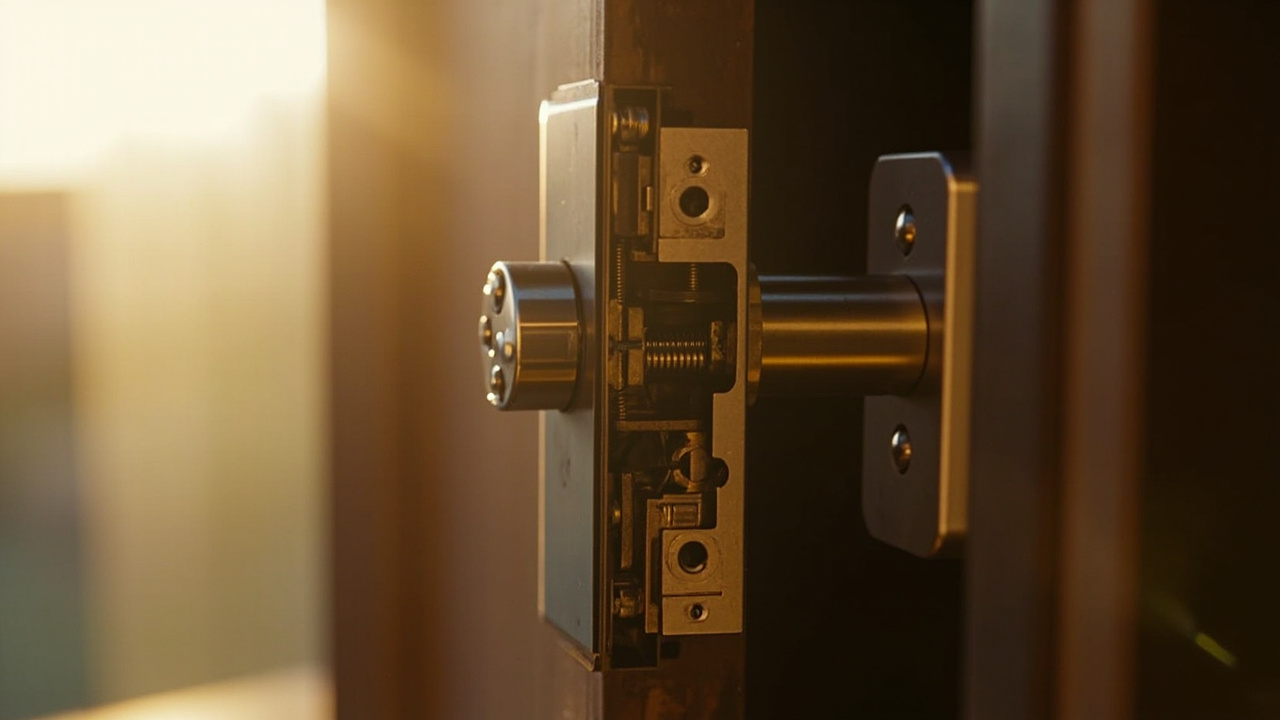
The Clutch and Anti-Torque Design and Door Compatibility: The Fit Envelope
Clutch and anti torque design door fit envelope is what this piece examines at component level. At a qualification bench, the most misleading lock sample is often the one that works perfectly in the hand. It turns, releases the latch, and appears ready for installation. Then it meets the actual door: a narrow rebate, a backset that does not align, a door closer pressing on the leaf, or a strike keeper pulling the bolt out of engagement.
Direct answer. In short, clutch and anti torque design door fit envelope is the subject of this piece. clutch and anti torque design door fit envelope is where the work on clutch and anti torque design door fit envelope sits. clutch-and-anti-torque-design is what has to be evidenced before anyone signs. A clutch and anti torque design door fit envelope treats one component on its own terms. clutch and anti torque design door fit envelope names the tests that close it. clutch and anti torque design door fit envelope is not accepted on a headline figure.
- Verify the function — confirm on the dated product page for the specific SKU behind clutch and anti torque design door fit envelope
- Verify the boundary — record where the technology in clutch-and-anti-torque-design stops working
- Verify the backup — name the mechanical path that remains if clutch and anti torque design door fit envelope fails
- For clutch and anti torque design door fit envelope, the order below is fixed and clutch and anti torque design is the reference point.
For a system integrator, the task is to define the clutch and anti torque design door fit envelope before approving the mechanism. In plain terms, that envelope is the range within which the door, lock body, spindle, latch, strike and operating loads can work together without interference, uncontrolled handle movement, or loss of latch engagement. Fit is a relationship between components, not a property that can be established from a catalogue line alone.
The opening that fails before the lock does
Imagine a retrofit opening scheduled as “replace the existing lock.” The schedule contains a door width and a hardware group, but not the information that determines whether a new mortise case can enter the door. The installer arrives to find a frame rebate shallower than the case, a follower position offset from the spindle, and a door leaf too thick for the escutcheon.
The lock is not necessarily defective. It has simply been asked to occupy a space for which it was not prepared. Before discussing a clutch or anti-torque mechanism, the integrator needs a record of the door leaf, frame stop, lock cavity and hardware clearances. That record becomes the boundary against which the proposed design is tested.
This is why an Office Smart Lock Site Survey is more useful than a generic door schedule. It captures the opening as it exists, including the conditions that drawings often omit.
Clutch and anti-torque need a working definition
A clutch may separate a handle input from the latch drive when a defined condition is present. That condition might concern freewheel behavior, preload, back-driving or another operating state. The exact meaning belongs to the product architecture, so a buyer should not infer it from the word “clutch” alone.
Anti-torque terminology is similarly context-dependent. A supplier may use it to describe controlled handle response, resistance to an applied turning load, protection of the latch drive, or another mechanical arrangement. The term does not create a universal force rating or guarantee.
For qualification, ask the supplier to define both functions in operational language: what moves freely, what remains connected, what load reaches the motor and gearbox, and what evidence demonstrates the result. The The Clutch and Anti-Torque Design Trade-Offs: Cost, Durability and Service offers a useful way to examine the consequences after that definition has been established.
Reading the fit envelope from the leaf outward
The useful boundary begins with measurable geometry. Each dimension should come from the opening record rather than a nominal door category.
| Component | Measurement to record | Fit consequence | Evidence requested |
|---|---|---|---|
| Door leaf | Thickness, edge condition, handing and bevel | Controls escutcheon projection, case insertion and latch reach | Dimensioned opening survey |
| Frame rebate | Width, depth and stop position | Governs lock body and strike installation | Frame section or site measurement |
| Backset and follower | Distance from door edge to lock body reference and spindle centerline | Prevents spindle-to-follower offset | Installation drawing and template |
| Lock body or mortise case | Case width, depth, screw positions and follower travel | Determines physical insertion and movement | SKU-specific drawing |
| Spindle and handle | Diameter, projection, rotation and attachment clearance | Controls handle engagement and freewheel behavior | Assembly detail |
| Latch, deadbolt, strike plate and keeper | Bolt dimensions, engagement and alignment | Preserves correct withdrawal and locking | Operating-cycle record |
| Door closer and surrounding hardware | Closer type, swing, leaf movement and permitted intervention | May add load during closing or latch withdrawal | Site-condition assessment |
The Smart Lock Retrofit Site Survey can provide the opening evidence, while the supplier provides the product-side evidence. Neither record is complete alone.
Qualification follows the motion, not the brochure
Once geometry is known, the door still has to move. A lock may enter its cavity correctly but bind as the leaf swings, place the spindle under side load, or lose latch engagement when the closer pulls the door away from the frame. These are motion problems, not dimensions hidden in the catalogue.
flowchart TD
    A["Receive the opening record"] --> B["Measure leaf and frame"]
    B --> C["Map backset spindle latch and strike"]
    C --> D["Define clutch and anti-torque behavior"]
    D --> E{"Cycle the door under site conditions"}
    E -->|Yes| F["Record the accepted fit envelope"]
    E -->|No| G["Redesign or reject the opening"]
The cycle should include opening, closing, latching and re-latching with the expected handle, closer and other installed hardware. The evaluator should also record whether the clutch remains in its intended state and whether the latch reaches full engagement. The The Clutch and Anti-Torque Design Failure Modes Seen on Smart Lock Projects provides a useful set of symptoms to compare against those observations.
A decision table that separates geometry from behavior
A drawing review and an installed-door review answer different questions. Keeping them separate prevents a mechanically possible design from being approved before its behavior has been observed.
| Decision point | Drawing-only evidence | Qualification evidence | Pass condition |
|---|---|---|---|
| Physical insertion | Case, rebate and escutcheon dimensions | Trial fit in the actual opening | No forced modification or unintended frame alteration |
| Spindle relationship | Nominal backset and follower position | Handle travel with the installed spindle | Correct alignment throughout the required rotation |
| Clutch behavior | Supplier definition and state diagram | Operation with the actual handle and load condition | State transitions match the stated design |
| Anti-torque response | Description of the controlled load path | Repeated operation under representative site loading | No binding, uncontrolled movement or damage |
| Latch and strike | Bolt and keeper dimensions | Full withdrawal and engagement through repeated cycles | Reliable latch engagement with correct alignment |
| Service access | Installation and maintenance instructions | Access to screws, cylinder and drive components | Routine service is possible without removing unrelated hardware |
The pass condition matters because drawings can establish that two parts are dimensionally compatible. Only an installed or representative test can show how the mechanism behaves when the leaf, spindle and applied loads interact.
Three illustrative openings expose three different fit questions
Consider an illustrative new timber door with coordinated lock preparation. The principal task is to confirm that the backset, follower, spindle, latch and strike form a continuous geometry. The clutch definition still matters, but installation precision is the dominant fit question.
Now consider an illustrative glass or aluminum retrofit. The proposed lock may use a glass door patch fitting, with the lock body held outside the door leaf. Backset, patch-fitting geometry, handle clearance and the movement of the glass under the closer now govern the envelope. The physical mounting arrangement can be suitable while the operating load remains unsuitable, or the reverse.
A third illustrative situation involves a high-traffic door with coordinated closer and exit hardware. The lock must be assessed within that hardware system rather than as a freestanding sample. The project team should define whether latch retraction, free-swing behavior and service access remain acceptable under the actual opening sequence.
CONFIRM-WITH-LOCAL-DOOR-CODE-OWNER: Confirm egress, fire-rating, accessibility and site-security requirements for each opening with the responsible local authority or qualified door professional; this guide does not assert approval for any opening.
Evidence that turns a claim into a qualification record
A system integrator can convert the opening into an acceptance record without turning the exercise into a component teardown. The request to the supplier should include:
- A dimensioned drawing for the exact SKU, including the lock body, spindle, latch and strike arrangement.
- A plain-language definition of clutch engagement, freewheel and anti-torque behavior.
- The permitted operating conditions and any conditions the supplier excludes.
- Installation guidance for frame preparation, spindle alignment and service access.
- Evidence that the proposed mechanism has been evaluated with representative door movement and applied loads.
The Specifying the Clutch and Anti-Torque Design: Questions that Get Real Engineering Answers can serve as the structured prompt for that supplier response. Any evidence request should remain specific to the mechanism and opening under review rather than relying on a generic test statement.
From the catalogue line to the accepted door
The first-party catalogue spans 79 published models, which means product names and category labels cannot establish installation fit. A concrete first-party reference is the SLK-9936S hotel lock, documented for a door thickness of 36–100 mm and a 3-point latch. Those fields can help frame a question about a particular opening, but they do not define the clutch behavior or the complete door fit envelope. Confirm on the dated product page for the specific SKU before using model-level specifications in a procurement decision.
The same question is worked through in more detail in narrow edge locks for office doors. That is the same question clutch and anti torque design door fit envelope has to answer here.At handoff, package the opening survey, dimensioned product drawing, supplier definitions and cycle-test notes as one qualification record. Approval then belongs to a documented relationship between mechanism and door rather than to a persuasive catalogue description. With that package ready, a system integrator can request a quotation against the actual preparation and leave each lock positioned inside an accepted fit envelope.