
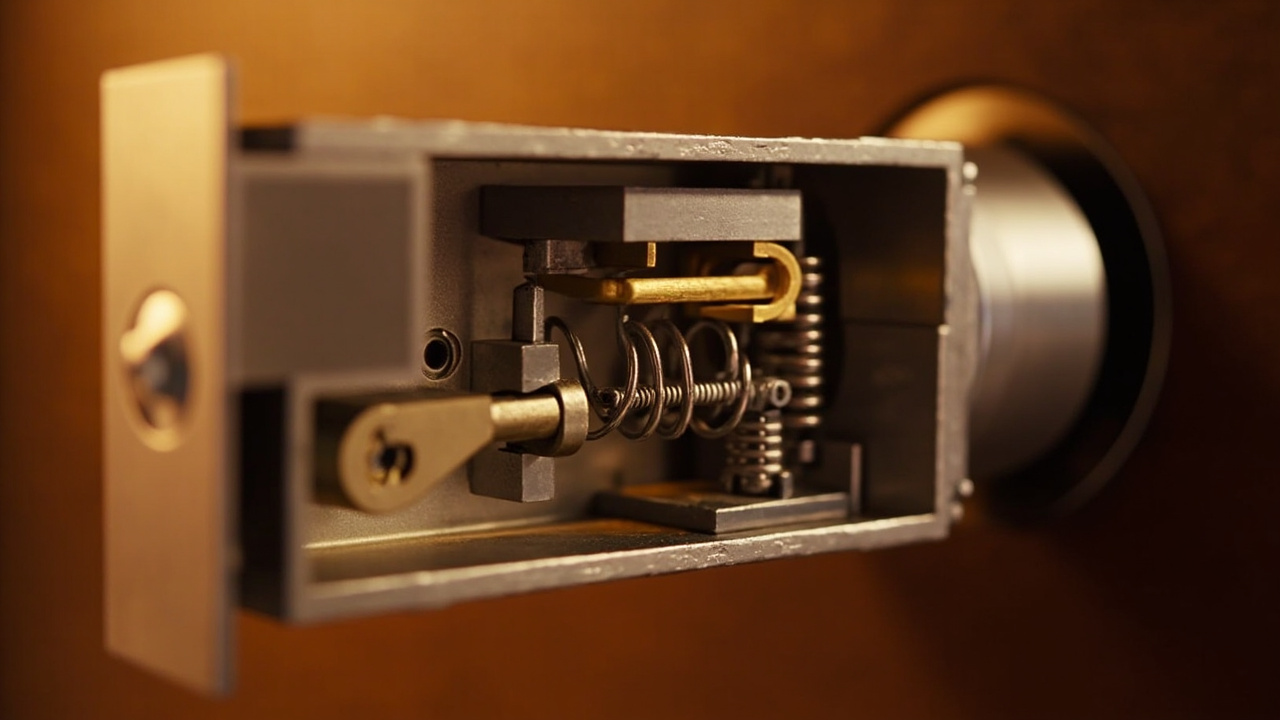
SLK-502 Specifications, Field by Field
Slk 502 specification decode is what this piece examines at component level. Procurement managers comparing hotel-lock quotations often receive a field list whose populated entries look more decisive than they are. The SLK-502 catalogue record is specific about access methods, hotel management software and core functions, while power, door fit, packing, capacity and environment are recorded as —. Those gaps should remain visible rather than be filled with familiar smart-lock assumptions.
Direct answer. In short, slk 502 specification decode is the subject of this piece. slk 502 specification decode is where the work on slk 502 specification decode sits. slk-502 is what has to be evidenced before anyone signs. A slk 502 specification decode is a component-level look at how the technology behaves. slk 502 specification decode is where the limits sit. slk 502 specification decode is verified on the dated product page.
This slk 502 specification decode treats the catalogue as an evidence map. It distinguishes a recorded capability from an unresolved requirement, then turns each unresolved field into a precise question for the supplier. The approach is especially important when one quotation must cover hotel rooms, apartments, distributor packaging or several door types.
Before release, confirm on the dated product page for the specific SKU. The comparison below identifies what the catalogue establishes and what remains outside that evidence boundary.
Read the catalogue as an evidence map
For the slk 502 specification decode, start with the populated fields rather than a general product impression. A field marked Standard identifies an access method, while a platform field identifies a management route. Neither tells you the technical limit, project configuration or physical fit. The comparison works only when those distinctions remain explicit.
| Decision area | SLK-502 catalogue record | Comparison implication | Evidence still required |
|---|---|---|---|
| Access | RFID/IC card: Standard; Passcode: Standard | Two credential methods are named | Credential format, code rules and issuance details |
| Platform | Hotel lock management software with PC encoder and guest cards | An on-site management path is identified | Software version, encoder workflow and supported operations |
| Network | Standalone lock; PC-linked card encoder; no in-room network required | The lock is not presented as dependent on an in-room network | Transfer method, deployment boundary and configuration details |
| Functions | Guest card issuance, floor/room permissions, check-in validity windows and unlock records | The catalogue names four workflow functions | Rule definitions, record fields and export details |
| Body and panel | RFID Hotel Card Lock | A hardware format is classified | Materials, dimensions, finishes and hardware geometry |
| Power | — | No power specification is populated | Power source, endurance, alerts and override arrangements |
| Door fit | — | No fit specification is populated | Door measurements, lock case and strike arrangement |
| Packing | — | No packing record is populated | Carton dimensions, unit count, weight and protection |
| Capacity and versions | — | No capacity or version field is populated | User limits, record volume and offered configurations |
| Environment | — | No environmental range is populated | Intended placement, temperature, humidity and housing |
| Services | Drawings, installation guide, full datasheet on request; defined OEM/ODM scope | Documentation and customization routes are offered | Current revisions, approvals and project-specific evidence |
This table is a screening tool, not an approval record. Any field that affects lock selection, installation or operation should be confirmed on the dated product page for the specific SKU before it becomes a contractual line.
Compare the access fields without filling in the details
The access line is concise: RFID/IC card is Standard and Passcode is Standard. That supports a comparison at the method level. It does not establish the card family, encoding method, read characteristics, passcode length, temporary-code rules or administrative permissions. Those details must be obtained rather than assumed from the word “Standard.”
- RFID/IC card: The recorded feature is
RFID/IC card: Standard. Ask which credential format the project requires, whether cards are issued by the property or supplied by the guest, how card groups are named and what happens when an issued card is cancelled. Request the exact guest card issuance procedure rather than a generic card-capability statement. - Passcode: The recorded feature is
Passcode: Standard. Ask for permitted digit length, whether one-time and periodic codes are available, how access windows are enforced and whether code activity appears in the same record workflow as card activity. These are configuration questions, not extra catalogue claims.
A card-led hotel requirement therefore has a clear catalogue match, while a passcode-led requirement also has a named access basis. A project requiring both has two recorded choices, but its approval still depends on how the hotel lock management software combines card and code rules.
The strongest procurement question is not “Does it take a card?” It is “Can the supplied credential format and issuance process satisfy our guest, staff and contractor workflow?” The catalogue supports the first stage of that comparison. The project record must support the second.
Place the PC workflow against the network requirement
The platform record names hotel lock management software with a PC encoder and guest cards. The network record states standalone lock operation, a PC-linked card encoder and no in-room network required. Together, these lines describe the management path that procurement should compare against its operating model.
The workflow to validate starts with guest card issuance in the management software. It continues through the PC-linked card encoder and ends at the standalone lock. Each arrow needs a confirmed operating procedure: which application step issues the credential, what data is transferred, how a room or floor permission is assigned, and how the person at the property retrieves the issuance history.
This gives a hotel lock management software requirement a concrete comparison point. A property operating a front desk with a PC-based encoder can evaluate the named route directly. A property expecting an in-room network, off-site administration or a different management interface has not received that evidence from this record. The absence of those functions from the catalogue is not a substitute for a dated SKU confirmation.
Do not add mobile-app control, remote unlock or cloud administration to the quotation merely because other smart locks are compared in the project. Ask for the exact application, encoder and lock configuration if any of those workflows are mandatory. The practical distinction is simple: confirm the PC workflow and network boundary in writing, then compare that workflow with the project’s mandatory access process.
For a process-level review of card issuance, validity rules and records, read How Credentials and Management Software Work on SLK-502. That companion resource addresses the operating sequence; this field comparison determines whether the sequence belongs in the approved SLK-502 configuration.
Audit the four named management functions
The Functions field gives the SLK-502 management scope a useful structure. Each function has a direct catalogue match, but each also needs an operational definition before a buyer can compare it with project expectations.
- Guest card issuance: The recorded
guest card issuancefunction supports comparison with a front-desk issue-and-recover process. Ask for the issuance inputs, card groups, cancellation route and the evidence that will be handed to operating staff. - Floor and room permissions: The catalogue writes
floor/room permissions. In ordinary procurement language, floor and room permissions determine which credential can open which door. Ask how those relationships are configured, reviewed and changed without relying on an implied room-count limit. - Check-in validity windows: The recorded
check-in validity windowsfunction maps to a stay-based access requirement. Ask for the start and end rules, treatment of early arrival or late departure and the procedure for extending or cancelling a window. - Unlock records: The recorded
unlock recordsfunction provides an audit trail in the catalogue. Ask which event fields appear, how an operator searches them and whether the project needs an export format that can be incorporated into another record system.
These functions together create a meaningful hotel comparison. They do not establish record capacity, credential volume, reporting detail or the behavior of every configuration. The right decision is to mark each function as evidenced, defined or open, then seek the missing definition.
| Management function | Catalogue evidence | Strongest match | Open comparison point |
|---|---|---|---|
| Guest card issuance | Named in the Functions field | Front-desk card workflow | Issuance, replacement and cancellation procedure |
| Floor and room permissions | Named in the Functions field | Room-scoped access design | Configuration method and change control |
| Check-in validity windows | Named in the Functions field | Time-bounded guest access | Start, end, extension and cancellation rules |
| Unlock records | Named in the Functions field | Basic activity review | Event detail, search and export format |
A buyer should not award extra credit merely because a function appears in a longer feature list. The comparison is stronger when the same requirement is traced to the same named function and its operating detail is supplied.
Treat the body classification as a starting point
The model is listed as Keypad RFID Smart Lock for Hotels and Apartments, under Hotel Door Lock and Smart Door Locks. Its Body and panel field contains one style value: RFID Hotel Card Lock. The resulting RFID hotel card lock profile helps a buyer identify the format, but it is not a dimensional or material specification.
The catalogue does not populate panel dimensions, panel/body material, handle or lever details, lock body geometry, latch or deadbolt selection, spindle, cylinder, strike plate or strike keeper. Those items cannot be inferred from the style label. A procurement comparison should request the relevant physical data alongside the door schedule and mark any feature that varies by version as unresolved.
Site type changes what evidence matters. An office installation should be mapped through the door survey discipline in Office Smart Lock Site Survey. An existing opening should be checked through Smart Lock Retrofit Site Survey. Those surveys do not supply SLK-502 geometry; they help the buyer collect the measurements needed to compare that geometry with dated product evidence.
Keep every unpopulated field open
A — in the catalogue is an absence of recorded information for that field. It should create an evidence request, not an improvised specification. The affected fields cover most of the physical and operational decisions that determine whether a project order is ready.
Power
The Power field is —, so the SLK-502 specifications do not identify a power source, battery type or operating endurance. Ask whether the intended configuration uses replaceable cells, how a low-battery alert is presented, how the lock behaves at a low state and whether an external power override via a USB terminal applies. Demand dated evidence for the exact configuration and usage profile before treating any of those arrangements as available.
Door fit
The Door fit field is —, so applicable door thickness, suitable door types and lock-body geometry remain unanswered. The measurement schedule should include door leaf thickness, frame rebate, backset, spindle position, mortise case, latch or deadbolt, strike plate, strike keeper, panel clearance and handle or lever projection. Use SLK-502 Fitting Notes: What to Measure Before You Order to structure the site reading, then compare those measurements with current dimension drawings.
Packing
The Packing field is —, so carton dimensions, units per export carton, gross weight and protective arrangement are not established. These values affect transport planning and receiving inspection even when the lock specification is settled. Request them for the final hardware, accessory and documentation configuration rather than accepting a generic carton description.
Capacity and versions
The Capacity and versions field is —, so user capacity, unlock-record volume and the number or naming of offered versions are unresolved. Ask how those limits are communicated, whether different versions change the door or management configuration, and which version will appear on the order and the dated product evidence.
Environment
The Environment field is —, so weatherproof housing, operating temperature, operating humidity and intended placement are not populated. A lock for a controlled interior and a lock at an exposed entrance therefore require different evidence. A project must not infer exterior suitability from the hotel or apartment category label.
Read documentation and OEM scope as two separate commitments
The Services field states: Documentation: Dimension drawings, installation guide and full datasheet available on request. This gives the buyer a defined document request rather than a general promise of support. Request the full SLK-502 datasheet, current dimension drawings and installation guide, and record their dates and configuration references.
The document set should reconcile the product fields rather than introduce a second description. Cross-check access, platform, network, functions, body, power, door fit and environment. Any missing or conflicting field should remain on the approval list until the supplier resolves it in a dated document.
The OEM/ODM field is also specific: Custom logo, finish, packaging, manuals and product configuration for distributor and project orders. Compare this with the buyer’s customization brief by separating artwork, finish, packaging, manual and configuration work. Ask which samples or proofs are required, who approves them, how revisions are controlled and which version identifiers will be carried into production records.
These are complementary commitments: documentation tells the buyer what the configuration is; OEM/ODM scope tells the buyer what can be changed and how that change will be identified. Keep them as separate approval lines in the order review, as shown in A SLK-502 Order Review: Items to Confirm Before Release.
Run the comparison arena against requirement profiles
Because the available evidence covers one model, the fairest arena compares SLK-502 with the buyer’s non-negotiable requirement profile. A catalogue match means that a field is populated in the right decision area. It is not a claim about performance, compatibility or suitability.
| Requirement profile | Evidence in the SLK-502 record | Strongest match | Main unresolved condition | Arena result |
|---|---|---|---|---|
| Card-led hotel with on-site PC issuance | RFID/IC card, hotel software, PC-linked encoder, issuance, permissions, windows and records | Named card-management workflow | Door fit, power, environment and SKU-specific details | Shortlist subject to physical and dated evidence |
| Apartment requiring both card and passcode access | RFID/IC card and passcode, plus permissions and unlock records | Two access methods are recorded | Permission mapping, code rules, door fit and operating workflow | Conditional candidate |
| Distributor order needing branding and packaging control | OEM/ODM field names logo, finish, packaging, manuals and configuration | Broad customization scope is stated | Approval route, version control and evidence tied to final artwork | Direct on scope, conditional on approval |
| Project requiring mobile or off-site administration as mandatory | Standalone lock and PC-linked card encoder are recorded; no mobile-app function is listed | On-site PC route | Mandatory workflow lacks affirmative catalogue evidence | Hold unless the dated SKU evidence changes the decision |
| Exterior or environment-exposed entrance | Environment field is — | Intended hotel and apartment use is named | Housing and operating-range evidence | Hold when environmental suitability is mandatory |
The table exposes where a populated field is doing useful work and where an absence is decisive. Do not let a strong match in access management conceal an unresolved door, power or environment requirement. Conversely, a documented evidence gap can be closed; it should not be treated as an invented weakness.
The arena result should drive the next action. A shortlist item needs physical and SKU confirmation. A conditional candidate needs named closure conditions. A hold remains open until the buyer receives evidence capable of changing the requirement comparison.
Test the field map against illustrative project scenarios
Scenario A: a card-led hotel desk
In this illustrative scenario, the property issues guest cards from an on-site PC, applies stay-based validity, assigns room access and reviews unlock activity. Those requirements line up directly with the SLK-502 access, platform and Functions fields. The comparison remains open on the physical and environmental lines, but there is no need to invent a different software workflow just to make the lock appear suitable.
Before approval, the buyer should obtain the issuance procedure, permission method, validity rules, record fields, dimension drawings, power information and current environment statement. The evidence should identify one SLK-502 configuration that can carry the complete workflow.
Scenario B: a mixed-access apartment
In this illustrative scenario, staff use cards while residents and short-term visitors also need passcodes. The two Standard access entries make SLK-502 relevant to the comparison. The unresolved question is how the two credential methods are administered together, how floor and room permissions are represented and how unlock records identify each access event.
A field-based decision would approve the model for further evaluation, not the project installation. Door schedules, code rules, software behavior and configuration evidence must close the remaining lines. The absence of a listed mobile workflow is especially important if the operating model assumes one.
Scenario C: a custom distributor release
In this illustrative scenario, the buyer wants a project-specific logo, selected finish, packaging and manuals. The OEM/ODM record names those customization points, making it a strong match at scope level. Approval should still depend on a controlled artwork proof, a confirmed finish reference, packaging specifications, manual versions and a final product-configuration record.
This scenario also tests the Services field. The buyer needs the dated full SLK-502 datasheet and drawings to match the customized release, not a disconnected catalogue extract. The commercial comparison is strongest when customization approval and technical conformity point to the same configuration reference.
Build an evidence ladder before approving the order
The comparison becomes auditable when every accepted field has a source. Use a short evidence ladder rather than a general assurance that the lock is “suitable.”
- Identify the exact record. Record the SLK-502 SKU, version and any configuration options. Do not let evidence for one body, software or hardware version migrate to another.
- Capture dated product evidence.
- Obtain controlled documents. Use the dimension drawings, installation guide and full datasheet to close or explain remaining physical and operational fields.
- Reconcile with the project. Match each line to the door schedule, credential process, operating environment, packing requirement and OEM brief. Assign an owner and a status to every open item.
flowchart TD
    A[Start with a project requirement] --> B[Match the requirement to a catalogue field]
    B --> C{Is the field populated?}
    C -->|Yes| D[Compare scope and compatibility]
    C -->|No| E[Record an evidence gap]
    D --> F{Dated SKU evidence obtained?}
    E --> F
    F -->|Yes| G[Approve or approve with written conditions]
    F -->|No| H[Hold the affected order line]
CONFIRM-WITH-LOCAL-AUTHORITIES: Confirm location-specific building, tenancy and access-control requirements with the authorities responsible for the project before order release.
Send a field-by-field RFQ schedule
A useful RFQ should return evidence in the same structure used for evaluation. Replace general requests with line-specific instructions, and require every response to identify the exact SLK-502 configuration to which it applies.
| RFQ line | Instruction to the supplier | Required return before approval |
|---|---|---|
| Model identity | Identify the exact SLK-502 SKU and version | Dated page or catalogue reference |
| RFID/IC card | State the supported project credential format and issuance route | Credential specification and guest card procedure |
| Passcode | State code length, types and access-window behavior | Passcode rules for the proposed configuration |
| Platform | Define the hotel lock management software and encoder relationship | Software and encoder workflow description |
| Network | Confirm the no-in-room-network boundary for the proposed use | Deployment and encoder connection instructions |
| Guest card issuance | Define issuance, replacement and cancellation steps | Controlled issuance procedure |
| Floor/room permissions | Explain room and floor assignment and change control | Permission structure and sample rule set |
| Check-in validity windows | Define start, end, extension and cancellation behavior | Validity-window examples |
| Unlock records | Identify event fields, search scope and export method | Record specification and sample output |
| Door fit | Match the lock to the project door types | Dimension drawings and door-fit schedule |
| Power | State source, endurance basis, low-state behavior and override option | Dated power specification |
| Environment | Define intended placement and operating range | Environment and housing specification |
| Packing | State carton dimensions, units, gross weight and protection | Current packing schedule |
| Documentation | Provide the current drawings, guide and full datasheet | Controlled documents with revision references |
| OEM/ODM | Identify artwork, finish, packaging, manuals and configuration controls | Approval route and final configuration record |
Use the instruction below as the opening request to the supplier:
Please respond against the field schedule above and identify the exact SLK-502 configuration covered by each answer. Where the dated product page and supporting document do not state a value, mark the line as open and provide the evidence required to close it. Identify the revision and date of each drawing, manual, datasheet and configuration record.
This format keeps unanswered fields visible and prevents a general product description from substituting for project evidence. It also gives the approver a direct path back to the field map when the commercial response changes.
Apply the final release test
Release can proceed when the model identity, access methods, management workflow, door fit, power, environment, documentation, packing and any OEM changes are supported by evidence tied to the final SLK-502 configuration. A populated catalogue field is a starting point, not a substitute for a procurement-critical confirmation.
The same question is worked through in more detail in smart lock price by customization. That is the same question slk 502 specification decode has to answer here.If evidence remains open, hold the affected order line and identify the missing field, document owner and required form of proof. That approach preserves momentum without turning an unverified assumption into an approved specification.
Use this field-by-field comparison to prepare the supplier response, attach the relevant door and credential schedules, and then request a quote with the unresolved evidence gaps stated explicitly. The quotation becomes decision-useful when the access method, management workflow, physical requirements and customization scope can all be traced to the same dated SLK-502 record.