
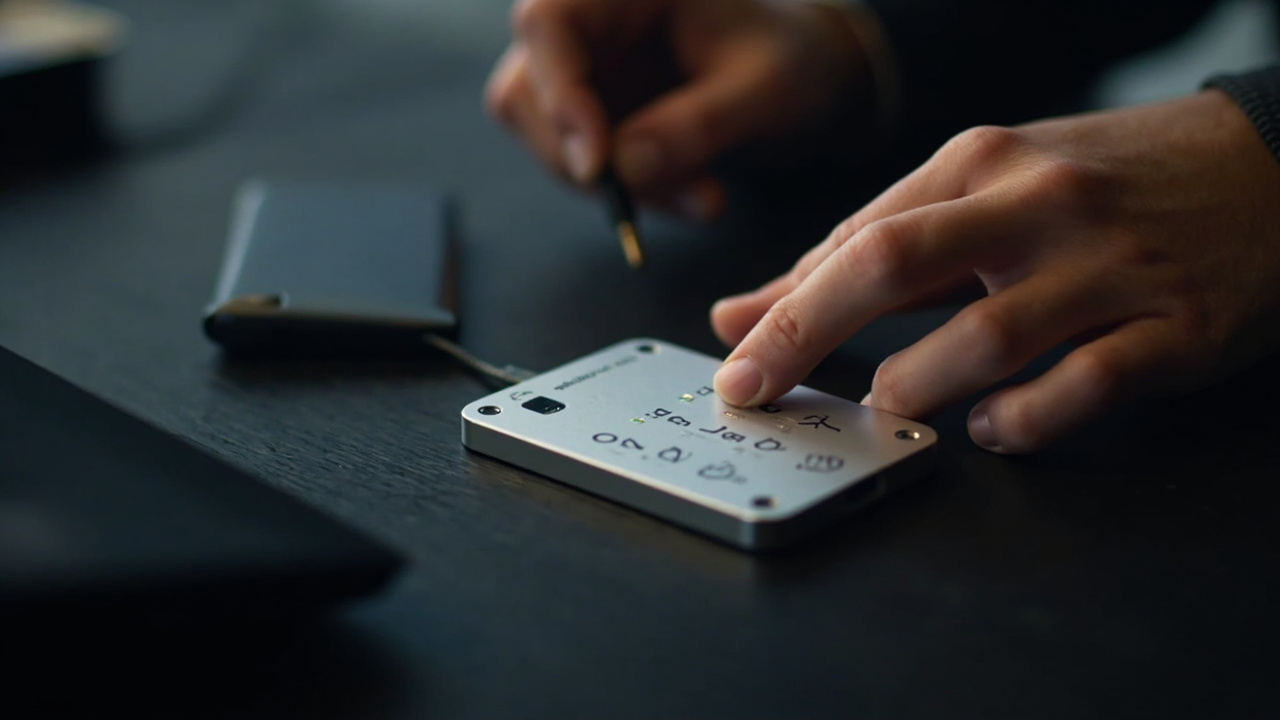
Configuring SLK-002: Credential Choices and Management Tools
Procurement teams comparing slk 002 credential software options need to separate four questions that are often collapsed into one: what identifies a guest, what authorizes access, where the credential record is maintained, and how the operator proves what happened. The lock may be the same across two projects, but the software edition, credential workflow, and operating responsibility can differ.
Direct answer. Short version — slk 002 credential software options is treated here as slk 002 credential software options first. slk-002 comes second. The evidence for slk 002 credential software options is named in the sections below. A slk 002 credential software options treats one component on its own terms. slk 002 credential software options names the tests that close it. slk 002 credential software options is not accepted on a headline figure.
On slk 002 credential software options, this article uses slk 002 credential software options as the definition. It treats slk 002 credential software options as a working definition specific to this market and product, rather than a general one.
The catalogue record identifies RFID/IC card, passcode, mobile app, and mechanical override as standard access methods for SLK-002. It records the TTLock platform with Bluetooth connectivity, with hotel lock management software available on card-model versions. Before approval, confirm on the dated product page for the specific SKU that the ordered configuration and supplied software match these records.
This guide turns those facts into an evaluation method. It covers the four credential layers, the tools needed to administer them, the guest-access lifecycle, management evidence, and a scored procurement record. The goal is not to select an app from a feature grid; it is to select a documented workflow that the property can operate and an auditor can review.
Begin with the access decision rather than the application name
A procurement manager should first define the operating requirement. Ask four questions:
- Who receives a credential? A guest, employee, contractor, owner, or maintenance provider may need a different access level.
- Where is the credential controlled? The lock, a card encoder, a PC application, a mobile application, or a central database may hold part of the record.
- When must access stop? Arrival, a date, a shift, a checkout event, or an immediate revocation may determine validity.
- What evidence must remain? The buyer may need to demonstrate who issued a credential, which room or floor it covered, and which unlock records were exported for review.
These questions prevent a common configuration error: choosing a credential because it is convenient to issue while leaving its expiry, revocation, or audit trail unresolved.
The selection unit should therefore be the credential workflow, not an individual button in the app. A card can be an excellent guest carrier while still being poorly administered if the property cannot retrieve its validity, room scope, or issuance history. A passcode can serve a temporary need, but the owner must still define who receives the code, how it is communicated, and when it becomes inactive.
Build a four-layer credential portfolio
SLK-002 credential management should be evaluated across four layers.
| Credential layer | Primary job in the workflow | Evidence to request | Procurement caution |
|---|---|---|---|
| RFID/IC card | Carry a guest identity for controlled room entry | Card-issuance demonstration, card compatibility statement, reissue procedure | Do not assume every card format or model version is interchangeable |
| Passcode/keypad | Provide a temporary or secondary route when a card is impractical | Issue, change, expiry, and deletion demonstration | A passcode still needs an owner, distribution method, and revocation rule |
| Mobile app | Support staff administration or mobile access under the selected platform | Exact app edition, account roles, device procedure, logout behavior | Separate mobile administration from the guest credential journey |
| Mechanical override key | Provide a controlled physical fallback during an electronic-access interruption | Key custody, issue-and-return register, incident procedure | Treat the key as an operational credential, not an informal workaround |
RFID guest credentials are strongest when the property already has a repeatable arrival process. The buyer should test whether the operator can issue a credential, attach the correct room and floor permissions, set a check-in validity window, retrieve unlock records, and recover from a lost-card case without editing records outside the documented workflow.
Passcode access can cover a staff member, a short stay, or a situation where issuing a physical card is inconvenient. Its weakness is usually administrative rather than technical: an uncontrolled code can outlive the person who received it. The evaluation should show how codes are named, stored, communicated, changed, and deleted.
Mobile app administration should be tested by role, not merely by device. Ask who can create a guest, amend a room assignment, extend validity, review records, and remove another operator's access. If mobile access is used during the guest journey, test it under the same account and device rules as staff use.
The mechanical override key needs a documented chain of custody. Procurement should identify who holds it, where it is stored, how its issue is recorded, and what event triggers use. That turns an emergency route into a controlled process rather than an untracked exception.
Separate the credential from its management system
When buyers compare slk 002 credential software options, the software is only one layer of the decision. The card, code, or mobile identity is the credential; the issuing workflow and record store are the management layer; the lock applies the resulting permission.
The SLK-002 catalogue row identifies TTLock with Bluetooth connectivity and lists guest card issuance, floor/room permissions, check-in validity windows, and unlock records among the card-model functions. It also states that hotel lock management software is available on card-model versions.
A complete evaluation therefore needs to identify four components:
- The credential carrier issued to the guest or staff member.
- The tool that creates and changes that credential.
- The location where its status and permissions are retained.
- The mechanism used to inspect and export activity.
This structure prevents two misleading conclusions. First, a mobile application can be present without providing every function needed for hotel-wide administration. Second, PC hotel lock management software can be available without meaning that every model version includes it. The procurement file should name the exact hardware variant alongside the exact software edition.
The published record should be read with the same discipline applied elsewhere. SLK-002: Reading the Published Specification Without Guesswork provides a useful method for separating a documented field from an assumption. For software procurement, add screenshots of the actual workflow, the package or edition name, and a written mapping between the ordered variant and the tools being quoted.
Compare deployment patterns the supplier must substantiate
Management architecture should follow the property's operating model. The table below compares candidate approaches for evaluation; it does not assign unverified capabilities to every SLK-002 version.
| Management approach | Suitable operating question | Evidence required from the supplier | Boundary to preserve |
|---|---|---|---|
| Lock-led or app-led administration | Can a small property issue and expire credentials without a central office workflow? | Demonstrated issue, edit, expiry, and record review | Do not infer multi-property administration from mobile access alone |
| PC software for card-model versions | Does the property need card encoding and structured guest-card issuance? | Exact supported version, encoder list, room and floor setup | Confirm that the ordered variant includes the management package |
| Centralised database workflow | Must several properties or departments share controlled administration? | Account structure, property separation, record retrieval, export method | Do not assume a network gateway or central server is included |
| Exception and fallback workflow | What happens when the app, database, or issuing device is unavailable? | Written continuity procedure and authorized override route | Do not substitute unrecorded shared credentials for a tested process |
For a single guesthouse, the central question may be whether the selected card-model software can issue and retrieve credentials without creating unnecessary infrastructure. For several properties, the question shifts toward property separation, central administration, and how activity is consolidated. A central database may be desirable, but the supplier must demonstrate the architecture and identify every required component.
Bluetooth connectivity also needs version-level clarity. The term “TTLock” alone is not a sufficient software specification for purchasing.
Buyers should ask the supplier to demonstrate one complete administrative action rather than several disconnected features. Issue a test credential, assign a controlled scope, set an expiry, save the change, retrieve it, and show the resulting unlock record. That sequence tests the system boundaries more effectively than a static feature list.
Test the guest credential lifecycle against a real operating
An illustrative small-guesthouse scenario is enough to test the workflow without turning the evaluation into a fictional case study. A new reservation arrives, the operator prepares access, the guest uses it, the stay ends, and the operator must close the credential and retain the evidence.
The test should cover the following stages:
- Create: The operator selects the appropriate guest record and credential type.
- Scope: The credential is assigned to the correct room and permitted floor.
- Validate: A check-in validity window reflects the intended arrival period.
- Issue: The RFID guest credential or passcode access method is produced and handed over under the documented process.
- Use: The lock accepts the credential and creates an unlock record.
- Change: The operator amends a room, extends a window, or handles a reported loss.
- Close: The credential expires, is deleted, or is collected according to policy.
- Review: The operator retrieves the issuance and activity history.
The catalogue record lists guest card issuance, floor/room permissions, check-in validity windows, and unlock records for the relevant SLK-002 card-model functions. A screenshot showing one setting does not prove that the full sequence is supported.
Pay particular attention to transitions. The highest-risk gap often appears when a guest extends a stay, moves rooms, reports a lost credential, or checks out early. For each event, ask whether the operator must create a replacement, edit the existing credential, or revoke it and issue another. Record the answer and the menu path used.
The same test should cover staff workflows. Temporary credentials should have a named owner, limited scope, and automatic or documented expiry. Shared credentials should be discouraged unless the operating model gives one accountable person responsibility for their use. The tool should make responsibility visible rather than allowing anonymous access to remain untraceable.
Define permission and validity rules before configuration
Floor/room permissions should be expressed as an approval checklist. A procurement manager should be able to state what a new credential can open, who approves that scope, and what happens when the room assignment changes.
A practical permission worksheet contains:
| Field | Entry required for each credential class |
|---|---|
| Credential holder | Name or defined role tied to the guest or staff record |
| Credential type | RFID/IC card, passcode, mobile identity, or mechanical override |
| Property or building | The site to which the record applies |
| Floor scope | The permitted floors and any restricted areas |
| Room scope | The assigned room or rooms |
| Start condition | On issue, scheduled date, or another documented trigger |
| End condition | Fixed expiry, checkout, manual revocation, or defined event |
| Approver | The person accountable for issuance and scope |
| Recovery action | Reissue, edit, revoke, delete, or retrieve |
Check-in validity windows should reflect the property's actual arrival practices. The buyer should test a boundary case, such as a credential created before arrival or used immediately after its stated end time. The desired result must be agreed before the software is configured.
Room changes deserve separate treatment. If a guest moves, does the operator update one record or create a new credential? If the lock retains old permissions after an edit, the response may require revocation and reissue. The supplier should demonstrate the outcome rather than simply stating that permissions are editable.
Emergency and maintenance access should not be folded into ordinary guest scopes by convenience. Request a separate operating rule for service access, accompanied by a record of who requested it, why it was issued, and when it was withdrawn. This is a configuration control, not an assumption about any named access method.
Evaluate unlock records as an operational dataset
Unlock records are useful only when procurement can define what they must prove. The catalogue record lists unlock records among the functions for the relevant card-model configuration.
Ask whether a record can answer the following operational questions:
- Which credential was presented?
- Which door was opened, including the property and room identifier?
- When did the event occur?
- Was the attempt successful or unsuccessful?
- What was the credential's assigned scope at that time?
- Can the record be connected to the guest or staff account without manual renaming?
- Can the relevant period be exported for review?
Also test the reporting boundary. An operator may be able to view an event in the application without being able to export it, or may see a device-generated event without the associated account. Procurement should document the difference because it affects incident review, internal control, and dispute handling.
Records associated with guests or staff require a local review before the buyer selects storage, access, and export settings.
CONFIRM-WITH-LOCAL-DATA-OWNER: Confirm the local privacy, retention, access, and disclosure requirements that apply to guest and staff records before approving the SLK-002 management configuration.
A sample export is stronger evidence than a verbal assurance. Request an export containing the fields proposed for routine review, then check whether identifiers are consistent with those shown in the application. The sample should use test data so the evaluation does not depend on live guest records.
Match the management toolchain to the operating role
The catalogue identifies the TTLock platform with Bluetooth connectivity and hotel lock management software on card-model versions. It also records a mobile app and a PC-linked card encoder as relevant concepts across the product family.
| Tool or record | Decision it should support | Evidence to obtain during evaluation |
|---|---|---|
| Mobile app | Operator access, account roles, and selected credential tasks | Exact application version, role demonstration, session and account controls |
| PC hotel lock management software | Structured guest-card issuance and centralized editing | Named package or edition, supported model list, property and user setup |
| PC-linked card encoder | Creation of compatible RFID guest credentials | Compatibility statement, card test, reissue procedure, handling and storage process |
| Audit or unlock-record store | Retrieval and export of operational events | Sample record, search filters, export method, visible identifiers |
| Central database, where applicable | Administration across a defined property set | Architecture diagram, account separation, database responsibility, backup procedure |
| Mechanical override key register | Controlled fallback when electronic administration is unavailable | Custody form, issue and return process, incident linkage |
The mobile app and PC application should not be treated as interchangeable merely because both can appear in a quotation. A buyer may need the PC tool to configure cards while using the mobile app for limited routine tasks. The quotation and training plan should state which actions belong to each interface.
Software support should also be defined operationally. Ask how a new operator is authorized, how access is withdrawn when that person leaves, where the business records are stored, and which party administers software accounts. If an external tool or service is required, identify its owner and renewal responsibility without relying on a generic promise of future support.
For procurement, the relevant question is not whether the software contains a particular menu. It is whether the property can complete a controlled guest lifecycle, recover from an error, and produce evidence using the named package.
Run a controlled pilot before approving a project configuration
A pilot should use a limited set of test credentials, a controlled door, and named test accounts. It can run before a project order, but the final configuration still needs approval against the same written criteria.
| Test | Action | Evidence to retain |
|---|---|---|
| Credential issue | Create one RFID guest credential and one passcode | Screenshots showing saved identity, scope, and validity |
| Permission control | Attempt a room outside the assigned scope | Result of the attempt and the operator’s explanation |
| Validity window | Test before the start and after the end boundary | Record showing the expected allowed and denied outcomes |
| Change and revoke | Extend, move, delete, or replace a credential | Before-and-after record plus reissue rule |
| Mobile administration | Create an operator role and remove access | Account-role demonstration and removal record |
| Record retrieval | Find an event and export the relevant period | Sample export and field mapping |
| Card encoder | Encode and read a test card with the quoted encoder | Compatibility result and written compatibility statement |
| Override route | Simulate an authorized fallback issue and return | Key register and incident record |
Use test names throughout. If the system accepts free-text labels without a consistent convention, define one before the pilot. This makes later search, export, and reconciliation easier.
The pilot should also test operational recovery. Have a second operator repeat the task using only the written procedure. A workflow that depends on one person’s memory is not yet a repeatable management tool. Record any step that depends on an undocumented menu, local file, personal account, or informal message.
A pilot on a display model or a different card-model version does not transfer automatically to the unit intended for purchase.
Control the exceptions that appear after handover
The strongest configuration still needs a defined exception path. Procurement should cover lost credentials, unavailable issuing equipment, operator turnover, property handover, and electronic-access interruption.
For each exception, assign four controls: who decides, which credential route is authorized, where the event is recorded, and when access is withdrawn. The mechanical override key belongs in this process, while ordinary guest access should remain in the digital workflow. That separation makes the exception visible instead of normalizing workarounds.
Staff turnover deserves a named owner. The person responsible for software accounts and the person responsible for physical keys may be different, but their records must meet at a defined handover point. Include both in the handover checklist and remove access that the departing operator held.
Door and site conditions also affect the software evaluation. Use the SLK-002 Door Fit and Replacement Notes for Buyers to confirm the mechanical questions separately from the credential decision. The Office Smart Lock Site Survey provides a broader site-condition framework, while the Smart Lock Retrofit Site Survey can help identify retrofit constraints before a software workflow is treated as final.
A credential workflow cannot compensate for an unsuitable escutcheon, panel, lock body, strike plate, or door-frame condition. Conversely, a stable door schedule does not prove that access rights can be issued or revoked correctly. Keep the hardware survey and the management evaluation as connected but distinct procurement records.
Assemble the supplier evidence pack
The supplier should provide one dated evidence pack that connects the ordered SLK-002 variant to the software, credentials, documentation, and commercial scope. This prevents each quotation from describing a different configuration.
| Evidence item | Requested content | Reason for the request |
|---|---|---|
| Dated product record | Exact SKU, model version, finish, access methods, and included software | Establishes what was quoted rather than inferred |
| Software specification | Application or package name, version, supported model variants, and account model | Supports installation, training, and renewal decisions |
| Credential demonstration | Card, passcode, app, scope, validity, revocation, and record sequence | Demonstrates that the workflow fits the property |
| Encoder compatibility | Quoted encoder, card test result, and supported card statement | Prevents a generic card assumption |
| Data and record format | Search, export, identifier mapping, and retention configuration | Supports review and troubleshooting |
| Implementation documents | Installation guide, dimension drawings, configuration record, and full datasheet on request | Connects hardware and software handover |
| OEM or project configuration | Logo, finish, packaging, manuals, and product configuration terms available for project orders | Clarifies what customization is included |
| Commercial response | Itemized quotation and documented commercial terms | Allows comparison on the same stated scope |
The catalogue lists documentation availability and OEM/ODM configuration for distributor and project orders.
The same pack should identify what is excluded. An omitted encoder, missing software license, unsupported model version, or undefined app account can be easier to correct at quotation stage than after installation. Ask for exclusions and assumptions in writing rather than treating silence as inclusion.
A supplier may also offer related configuration services. The factory’s request-a-quote process is more useful when the request states the credential model, software edition, door schedule, expected management pattern, and required evidence rather than asking only for a lock and a quantity.
Convert the evaluation into a scored procurement record
A decision table gives procurement a traceable reason to select one configuration over another. Score each criterion from one to five using observed evidence, then apply the suggested weight. The weights are a starting framework for the buyer to adjust, not a universal requirement.
| Criterion | Suggested weight | Five-point evidence standard | Automatic concern below three |
|---|---|---|---|
| Credential lifecycle | 25% | Issue, scope, change, revoke, expire, and review are demonstrated end to end | The complete guest sequence cannot be demonstrated |
| Permission and validity controls | 20% | Room, floor, date, and account boundaries are configurable and evidenced | Only one broad access scope is available |
| Records and export | 15% | Events are searchable, identifiable, and exportable in a usable format | Records exist only as an unstructured device view |
| Operational resilience | 20% | Key, account, device, and issuing-process exceptions have written owners | Recovery depends on an undocumented individual |
| Documentation and handover | 20% | Exact version, model mapping, documents, training, and quotations are complete | The software edition or ordered variant remains unclear |
Calculate the weighted score after the evidence review, not before it. Record the evidence location beside each score so another evaluator can reproduce the result. Include unresolved questions as named actions rather than hiding them inside a rounded total.
Use a no-go condition where appropriate. If the supplier cannot establish that hotel lock management software is available for the exact card-model version being purchased, or cannot demonstrate the required guest-card issuance and record sequence, further scoring should not conceal that gap. The same applies to an export requirement that cannot be tested.
This scorecard is particularly useful when quotations look similar. One supplier may provide a richer management package, another may offer a simpler workflow, and a third may require a separate service. The table makes the operational difference visible without pretending that every property should choose the same credential mix.
Sequence approval, configuration, and repeat orders
The procurement sequence should move from requirements to evidence and then to controlled approval. The SLK-002 Order Checklist for Project and Repeat Purchases can carry the approved configuration into subsequent orders so that software assumptions and hardware variants do not drift apart.
flowchart TD
    A[Define operating model] --> B[Choose credential mix]
    B --> C[Match software to version]
    C --> D[Prove guest lifecycle]
    D --> E[Review records and export]
    E --> F[Score supplier evidence]
    F --> G[Approve configuration]
    G --> H[Configure test environment]
    H --> I[Release production order]
Before approval, document the intended guest, staff, and fallback access classes. During evaluation, connect each class to a demonstrated tool and evidence item. After selection, freeze the software edition, supported variant, encoder, credential naming rule, permission model, validity rule, and record-export format in the purchase record.
For repeat orders, compare the new quotation against that frozen baseline. Changes to the model version, app, card encoding, door schedule, or operating process should trigger a documented impact review. A lower-priced unit is not directly comparable if its management scope differs.
The same question is worked through in more detail in smart lock price by application. That is the same question slk 002 credential software options has to answer here.Training should follow the final workflow rather than a generic software demonstration. Give each role a task list, expected result, recovery route, and record to retain. The pilot operator’s steps can become the training outline after they are corrected.
Record the procurement decision that can be defended
The defensible decision is the one that proves the complete access journey. For SLK-002, the buyer should be able to state which credential layers are required, which management tools are included in the exact version, how guest card issuance and temporary access are controlled, how floor/room permissions and check-in validity windows are demonstrated, and how unlock records are retrieved.
Treat this guide as an evaluation framework rather than regulatory approval, third-party accreditation, or a guarantee of compliance at a particular site. The purchasing record should identify the evidence and approver for every control.
CONFIRM-WITH-LOCAL-AUTHORITY: Confirm which local authority, if any, sets requirements for access-control credentials and property operations at each deployment site, and obtain the evidence required for that scope.
Send the completed scorecard, exact SKU and software version, credential workflow, door schedule, and unresolved-action list with the request-a-quote request. That gives the factory a concrete configuration to quote and gives procurement a common basis for comparing the response.