
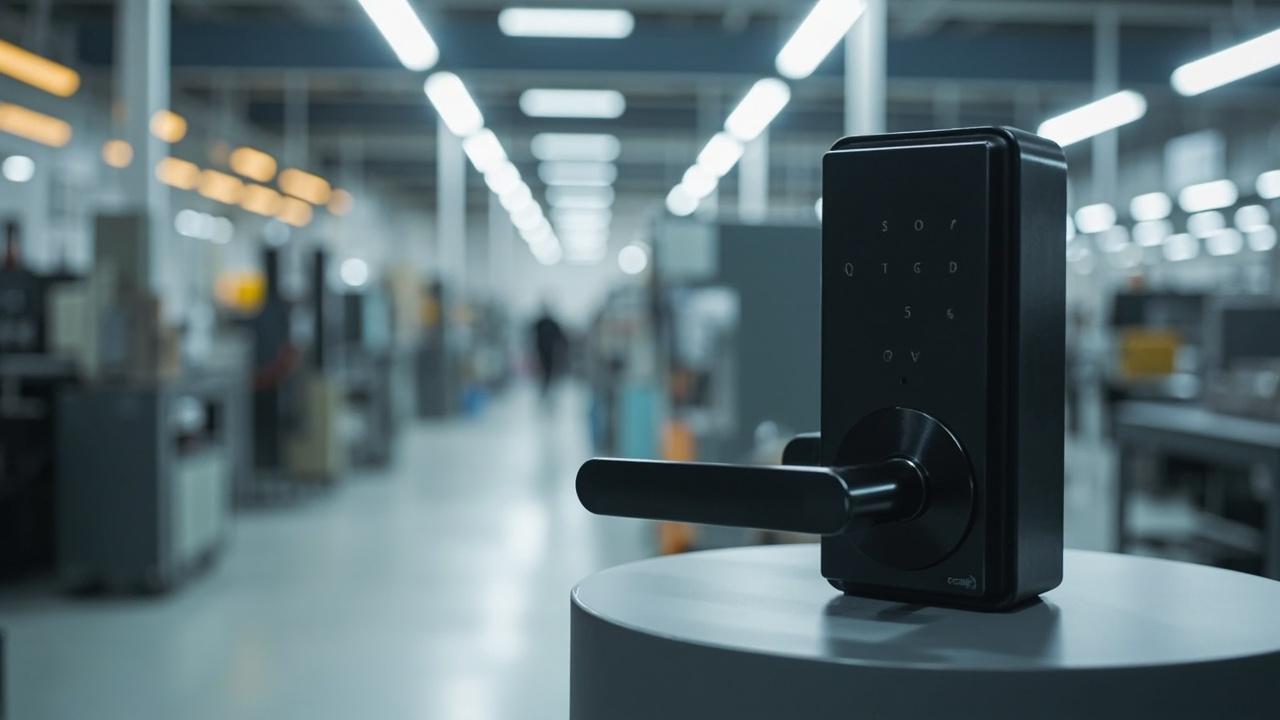
Smart Lock Market for Commercial Buildings
The smart lock market for commercial buildings is not a single market. It is eight different segment conversations — corporate office tower, multi-tenant commercial complex, standalone retail strip, shopping centre, co-working space, mixed-use with hotel anchor, light-industrial flex space, owner-operated commercial block — each driven by a different buyer persona, sitting on a different door-thickness envelope, asking for a different credential stack, retrofitting against a different building envelope, and answering to a different insurer and AHJ. The mistake the headline "smart lock market for commercial buildings" invites is to publish a single growth percentage and stop there. That figure, whatever number it carries, is borrowed from somewhere else and signed against your building. This article refuses to invent that figure. Instead it reads the market the way a tender reviewer reads a datasheet: per-segment rows × per-driver columns, every cell routed to a to verify in writing "check the model’s published specification" blank the supplier signs against. The populated matrix becomes the commercial-building market annex the tender reviewer can carry into the next supplier meeting.
The catalog this site sells from carries 79 published models across 10 categories — Smart Door Locks 77, Fingerprint 37, Hotel 24, Keypad 18, Outdoor 10, RFID 9, Face Recognition 6, Cabinet 6, Video Camera 3, Glass 3 — and the smart lock that fits the corporate office tower is not the smart lock that fits the standalone retail strip is not the smart lock that fits the mixed-use hotel anchor. Per-model specifics — door-thickness fit, credential capacity, event-record depth, app platform identity on TTLock / Tuya / Doodle, app control surface, mechanical-key override existence, glass-door suitability, outdoor-environment wording — are check the model’s published specification for every shortlisted class and SKU before any tender row is signed.
This article is deliberately distinct from its three siblings. For the operations memo on the same building class — what the head of operations does at handover, which doors are a lock purchase, which doors are a base-building question — see Smart Locks for Commercial Buildings. For the apartments market-segment reading in the same C17 cluster, see Smart Lock Market for Apartments. For the commercial-building ROI build that turns the market reading into a per-cost-line payback matrix, see Smart Lock ROI for Commercial Buildings. For the procurement-cost framing the market reading feeds into, see Smart Lock Procurement Budget Checklist. This article is the market-segment lens: eight commercial-building segments, ten market drivers, eighty populated cells with open specification items the tender reviewer fills in from the verified product page.
How to read this commercial-building market matrix
A tender reviewer reading the smart lock market for a commercial building has to read it segment-by-segment and driver-by-driver, because the typical market-sizing failure is downstream of a driver the buyer never confirmed against the per-segment spec. The matrix below has eight segment rows and ten driver columns, in the order a market datasheet is reviewed. The eight segment rows are:
- Corporate office tower — single-tenant or anchor-tenant office tower, base-building ACS present, tenant suites the lock focus.
- Multi-tenant commercial complex — retail + office + light-industrial mix, four owners (base building, anchor tenant, small tenants, shared service spaces) per Smart Locks for Commercial Buildings.
- Standalone retail strip — ground-floor small retail between bricks, one owner-operator per unit, mechanical-key envelope inherited.
- Shopping centre — anchor + inline + mall-management common area, three owner seats.
- Co-working space — flex membership, hour-or-day credentials, member turnover the dominant churn driver.
- Mixed-use building with hotel anchor — hotel + residential + retail stacked, three owner seats with overlapping credential posture.
- Light-industrial flex space — second-floor warehouse conversion, loading-bay doors the dominant operand.
- Owner-operated commercial block — single owner, single management, single RFQ.
The ten driver columns, in market-datasheet-review order, are:
- Dominant buyer persona — who writes the cheque.
- Dominant door family — which doors the market demand actually touches.
- Primary credential stack — what the segment accepts at the door.
- Software / app posture — standalone, centralized database, or hybrid.
- Door-thickness envelope — the per-segment door fit that makes the SKU applicable.
- Retrofit vs new-build envelope — what the building envelope allows.
- Audit / event-records demand — what the insurer and the AHJ ask the lock to retain.
- Mechanical override requirement — the sealed-envelope posture the segment demands.
- Finish and aesthetic posture — the per-segment finish expectation.
- Fire-egress interaction — the AHJ-side posture the lock sits inside.
- open specification item — every per-segment figure the supplier signs against.
Each row in the matrix below maps one commercial-building segment to the ten drivers it answers. Each cell carries a to verify in writing blank wherever the per-segment figure (audit-retention posture by insurer, fire-egress interaction by AHJ, door-thickness fit per SKU, retrofit envelope per door, finish option per door) is what makes the segment the right segment rather than a near-miss. Check the model’s published specification for every shortlisted segment and SKU before any market row is committed to the spec. No CAGR, no unit-volume figure, no penetration rate, no regional share, no revenue figure, no year-on-year growth, no supplier share, no installed-base figure is asserted in this article. The market matrix is built without numbers so the only numbers that enter the room are the numbers the supplier signs against.
The Master Matrix — per-segment rows × per-driver columns
The matrix below is the populated annex a tender reviewer signs against. Columns are the ten drivers from the catalog; rows are the eight commercial-building segments. Each cell uses one of four states: SEGMENT-STANDARD (the driver is on the segment's standard posture), DRIVER-SPECIFIC (the driver varies per-segment — see to verify in writing), CONDITIONAL (the driver is required only if the per-segment posture requires it), and NOT APPLICABLE (the segment does not generate a use for the driver). Every cell that touches a per-segment figure — credential capacity, audit retention, door-thickness window, finish option, app platform binding — carries a to verify in writing pointer to the verified product page, the supplier's written response, or the local AHJ and insurer.
| # | Segment | Dominant buyer persona | Dominant door family | Primary credential stack | Software / app posture | Door-thickness envelope | Retrofit vs new-build envelope | Audit / event-records demand | Mechanical override requirement | Finish and aesthetic posture | Fire-egress interaction | Value to confirm |
|---|---|---|---|---|---|---|---|---|---|---|---|---|
| S1 | Corporate office tower | Tenant (interior fit) + procurement lead | Tenant suite entrance + internal glass partition | CONDITIONAL — multi-method keypad + RFID + app-on-TTLock-Tuya-Doodle lane + fingerprint on secure suites — check the model’s published specification | CONDITIONAL — standalone for small tenants, centralized database for multi-floor tenancy — check the model’s published specification | DRIVER-SPECIFIC — per-class — check the model’s published specification | DRIVER-SPECIFIC — retrofit envelope per door (existing aluminium frame vs new hollow metal) — check the model’s published specification | CONDITIONAL — insurer questionnaire posture — confirm with local counsel and insurer | DRIVER-SPECIFIC — sealed-envelope master-credential discipline — check the model’s published specification | DRIVER-SPECIFIC — finish must suit tenant brand standards — check the model’s published specification | CONDITIONAL — AHJ posture on life-safety and panic-egress — confirm with local AHJ and counsel | Confirm every per-cell figure on the verified product page |
| S2 | Multi-tenant commercial complex | Head of operations + leasing lead + four distinct owners | Tenant suite + service back-of-house + retail front interior-back + rooftop cellular | DRIVER-SPECIFIC — varies per door family — check the model’s published specification | DRIVER-SPECIFIC — varies per door family — check the model’s published specification | DRIVER-SPECIFIC — per door family — check the model’s published specification | DRIVER-SPECIFIC — retrofit envelope per door — check the model’s published specification | CONDITIONAL — insurer + leasing-team posture — confirm with insurer and counsel | DRIVER-SPECIFIC — sealed-envelope per door — check the model’s published specification | DRIVER-SPECIFIC — finish per door — check the model’s published specification | CONDITIONAL — AHJ posture on life-safety and panic-egress per door — confirm with local AHJ and counsel | Confirm every per-cell figure on the verified product page and the Smart Locks for Commercial Buildings operations memo |
| S3 | Standalone retail strip | Owner-operator per unit | Ground-floor small retail front + interior back stockroom | CONDITIONAL — keypad with time-bounded codes + RFID card lane + mechanical-key override for the landlord — check the model’s published specification | DRIVER-SPECIFIC — standalone typical for single-unit owner — check the model’s published specification | DRIVER-SPECIFIC — per door — check the model’s published specification | DRIVER-SPECIFIC — retrofit envelope against sandwich-panel doors typical — check the model’s published specification | CONDITIONAL — insurer posture — confirm with insurer | DRIVER-SPECIFIC — mechanical-key override envelope per door — check the model’s published specification | DRIVER-SPECIFIC — finish per door — check the model’s published specification | CONDITIONAL — AHJ posture on shopfront-egress — confirm with local AHJ | Confirm every per-cell figure on the verified product page |
| S4 | Shopping centre | Mall management + anchor tenant + inline tenants | Anchor tenant stockroom + inline tenant front + mall-management common area | DRIVER-SPECIFIC — varies per tenant seat — check the model’s published specification | DRIVER-SPECIFIC — varies per tenant seat — check the model’s published specification | DRIVER-SPECIFIC — per door — check the model’s published specification | DRIVER-SPECIFIC — retrofit envelope per door — check the model’s published specification | CONDITIONAL — mall-management posture + insurer — confirm with mall management and insurer | DRIVER-SPECIFIC — sealed-envelope posture per door — check the model’s published specification | DRIVER-SPECIFIC — finish per door — check the model’s published specification | CONDITIONAL — AHJ posture on mall common-area egress — confirm with local AHJ | Confirm every per-cell figure on the verified product page |
| S5 | Co-working space | Operator + member experience lead | Member entrance + meeting-room pocket + flex-office pod | CONDITIONAL — app-on-TTLock-Tuya-Doodle lane + keypad + RFID for member day-pass — check the model’s published specification | DRIVER-SPECIFIC — centralized database + cloud typical — check the model’s published specification | DRIVER-SPECIFIC — per door — check the model’s published specification | DRIVER-SPECIFIC — retrofit envelope typical against existing aluminium-and-glass — check the model’s published specification | CONDITIONAL — member-experience posture + insurer — confirm with insurer | DRIVER-SPECIFIC — sealed-envelope posture per door — check the model’s published specification | DRIVER-SPECIFIC — finish must suit the brand standard — check the model’s published specification | CONDITIONAL — AHJ posture on flex-occupancy egress — confirm with local AHJ | Confirm every per-cell figure on the verified product page |
| S6 | Mixed-use building with hotel anchor | Hotel + residential + retail (three seats) | Hotel guest room + residential + retail front | CONDITIONAL — hotel RFID for guest room + residential keypad + retail per Smart Locks for Commercial Buildings base-building — check the model’s published specification | DRIVER-SPECIFIC — hotel centralized database + residential standalone — check the model’s published specification | DRIVER-SPECIFIC — per door — check the model’s published specification | DRIVER-SPECIFIC — retrofit envelope per door — check the model’s published specification | CONDITIONAL — hotel + residential + retail insurer posture — confirm with insurer | DRIVER-SPECIFIC — sealed-envelope posture per door — check the model’s published specification | DRIVER-SPECIFIC — finish per door — check the model’s published specification | CONDITIONAL — AHJ posture on hotel + residential + retail egress — confirm with local AHJ | Confirm every per-cell figure on the verified product page; the SLK-9936S product-page-documented spec block is invoked ONCE only on this row's hotel-anchor cell as the documentation-granularity ruler under explicit no-porting-across-models firewall scoped to that SKU |
| S7 | Light-industrial flex space | Tenant + building-services lead | Second-floor warehouse loading-bay + tenant office hatch | DRIVER-SPECIFIC — heavy-duty mortise with keypad or RFID + outdoor/aluminium series where door is metal-clad + cylindrical Tuya class for the office hatch — check the model’s published specification | DRIVER-SPECIFIC — standalone typical — check the model’s published specification | DRIVER-SPECIFIC — per door — check the model’s published specification | DRIVER-SPECIFIC — retrofit envelope typical against existing metal-clad door — check the model’s published specification | CONDITIONAL — insurer posture — confirm with insurer | DRIVER-SPECIFIC — sealed-envelope posture per door — check the model’s published specification | DRIVER-SPECIFIC — corrosion-resistance finish typical — check the model’s published specification | CONDITIONAL — AHJ posture on industrial egress — confirm with local AHJ | Confirm every per-cell figure on the verified product page |
| S8 | Owner-operated commercial block | Single owner + single management + single RFQ | All doors in the building by one owner | DRIVER-SPECIFIC — per door family — check the model’s published specification | DRIVER-SPECIFIC — per door family — check the model’s published specification | DRIVER-SPECIFIC — per door — check the model’s published specification | DRIVER-SPECIFIC — retrofit envelope per door — check the model’s published specification | DRIVER-SPECIFIC — single owner posture — confirm with insurer | DRIVER-SPECIFIC — sealed-envelope posture per door — check the model’s published specification | DRIVER-SPECIFIC — finish per door — check the model’s published specification | DRIVER-SPECIFIC — single owner AHJ posture — confirm with local AHJ | Confirm every per-cell figure on the verified product page |
The matrix is the populated annex. The sections that follow dissect each driver line by line, in the order a market reviewer reads a datasheet. Every per-segment figure that controls a cell — credential stack, software posture, door-thickness envelope, retrofit fit, audit retention — is check the model’s published specification, confirm with local counsel, or confirm with local AHJ, never borrowed from a headline growth percentage.
Driver 1 — Dominant buyer persona, line by line (D1)
The dominant buyer persona is the seat that signs the cheque. The persona writes the language the supplier sees; it does not always write the language the building engineer reads. Per-segment market figures differ because the persona differs.
- D1 Corporate office tower — tenant (interior fit) is the dominant seat, with the procurement lead co-signing against the building's ACS posture. Per-segment market sizing is NOT asserted.
- D1 Multi-tenant commercial complex — head of operations + leasing lead + four distinct owners (base building, anchor tenant, small tenants, shared service spaces) per Smart Locks for Commercial Buildings. The dominant seat varies by door family. Per-segment market sizing is NOT asserted.
- D1 Standalone retail strip — owner-operator per unit. The dominant seat is the unit owner. Per-segment market sizing is NOT asserted.
- D1 Shopping centre — mall management + anchor tenant + inline tenants. The dominant seat varies by door family. Per-segment market sizing is NOT asserted.
- D1 Co-working space — operator + member experience lead. The dominant seat is the operator, with the member-experience lead influencing the credential stack. Per-segment market sizing is NOT asserted.
- D1 Mixed-use building with hotel anchor — hotel + residential + retail (three seats). The dominant seat varies by door family. Per-segment market sizing is NOT asserted.
- D1 Light-industrial flex space — tenant + building-services lead. The dominant seat varies by door family. Per-segment market sizing is NOT asserted.
- D1 Owner-operated commercial block — single owner + single management + single RFQ. The dominant seat is the single owner. Per-segment market sizing is NOT asserted.
Driver 2 — Dominant door family, line by line (D2)
The dominant door family is the door the market demand actually touches. Per-segment door families differ because the building envelope differs.
- D2 Corporate office tower — tenant suite entrance + internal glass partition + service back-of-house. The dominant family is the tenant suite entrance. Per-segment figures — check the model’s published specification.
- D2 Multi-tenant commercial complex — tenant suite + service back-of-house + retail front interior-back + rooftop cellular. The dominant family varies per door family per Smart Locks for Commercial Buildings. Per-segment figures — check the model’s published specification.
- D2 Standalone retail strip — ground-floor small retail front + interior back stockroom. The dominant family is the small retail front with a sandwich-panel-to-brick interface. Per-segment figures — check the model’s published specification.
- D2 Shopping centre — anchor tenant stockroom + inline tenant front + mall-management common area. The dominant family varies by tenant seat. Per-segment figures — check the model’s published specification.
- D2 Co-working space — member entrance + meeting-room pocket + flex-office pod. The dominant family is the member entrance with a glass-and-aluminium envelope. Per-segment figures — check the model’s published specification.
- D2 Mixed-use building with hotel anchor — hotel guest room + residential + retail front. The dominant family varies by stack. Per-segment figures — check the model’s published specification.
- D2 Light-industrial flex space — second-floor warehouse loading-bay + tenant office hatch. The dominant family is the loading-bay door with a metal-clad envelope. Per-segment figures — check the model’s published specification.
- D2 Owner-operated commercial block — all doors in the building by one owner. The dominant family varies per door. Per-segment figures — check the model’s published specification.
Driver 3 — Primary credential stack, line by line (D3)
The primary credential stack is what the segment accepts at the door. The stack is the per-segment posture; the supplier confirms against the per-SKU and per-segment written response.
- D3 Corporate office tower — multi-method keypad + RFID + app-on-TTLock-Tuya-Doodle lane + fingerprint on secure suites. The stack varies per tenant posture. Per-SKU specifics — check the model’s published specification.
- D3 Multi-tenant commercial complex — varies per door family. The stack is documented in Smart Locks for Commercial Buildings per door family. Per-SKU specifics — check the model’s published specification.
- D3 Standalone retail strip — keypad with time-bounded codes + RFID card lane + mechanical-key override for the landlord. Per-SKU specifics — check the model’s published specification.
- D3 Shopping centre — varies per tenant seat. Per-SKU specifics — check the model’s published specification.
- D3 Co-working space — app-on-TTLock-Tuya-Doodle lane + keypad + RFID for member day-pass. Per-SKU specifics — check the model’s published specification.
- D3 Mixed-use building with hotel anchor — hotel RFID for guest room (SLK-9936S hotel-class anchor — product-page-documented for documentation-granularity ruler only, never ported across siblings) + residential keypad + retail per the base-building memo. Per-SKU specifics — check the model’s published specification.
- D3 Light-industrial flex space — heavy-duty mortise with keypad or RFID + outdoor/aluminium series where door is metal-clad + cylindrical Tuya class for the office hatch. Per-SKU specifics — check the model’s published specification.
- D3 Owner-operated commercial block — varies per door family. Per-SKU specifics — check the model’s published specification.
Driver 4 — Software / app posture, line by line (D4)
The software / app posture is whether the lock is standalone, on a centralized database, or hybrid. Per-segment postures differ because the operational habit differs.
- D4 Corporate office tower — standalone for small tenants, centralized database for multi-floor tenancy. Per-SKU specifics — check the model’s published specification.
- D4 Multi-tenant commercial complex — varies per door family per Smart Locks for Commercial Buildings. Per-SKU specifics — check the model’s published specification.
- D4 Standalone retail strip — standalone typical for single-unit owner. Per-SKU specifics — check the model’s published specification.
- D4 Shopping centre — varies per tenant seat. Per-SKU specifics — check the model’s published specification.
- D4 Co-working space — centralized database + cloud typical. Per-SKU specifics — check the model’s published specification.
- D4 Mixed-use building with hotel anchor — hotel centralized database + residential standalone. Per-SKU specifics — check the model’s published specification.
- D4 Light-industrial flex space — standalone typical. Per-SKU specifics — check the model’s published specification.
- D4 Owner-operated commercial block — varies per door family. Per-SKU specifics — check the model’s published specification.
Driver 5 — Door-thickness envelope, line by line (D5)
The door-thickness envelope is the per-segment door fit that makes the SKU applicable. Per-segment envelopes differ because the building fabric differs. The product-page-documented SLK-9936S hotel-class anchor (door thickness 36–100 mm) is invoked ONCE only as the documentation-granularity ruler on the mixed-use building hotel-anchor cell under explicit no-porting-across-models firewall; no per-SKU figure is ported across segments.
- D5 Corporate office tower — per-class. Per-SKU specifics — check the model’s published specification.
- D5 Multi-tenant commercial complex — per door family. Per-SKU specifics — check the model’s published specification.
- D5 Standalone retail strip — per door. Per-SKU specifics — check the model’s published specification.
- D5 Shopping centre — per door. Per-SKU specifics — check the model’s published specification.
- D5 Co-working space — per door. Per-SKU specifics — check the model’s published specification.
- D5 Mixed-use building with hotel anchor — per door family. product-page-documented SLK-9936S door thickness 36–100 mm invoked ONCE only as the documentation-granularity ruler on the hotel-anchor cell under explicit no-porting-across-models firewall scoped to that SKU. Per-SKU specifics — check the model’s published specification.
- D5 Light-industrial flex space — per door. Per-SKU specifics — check the model’s published specification.
- D5 Owner-operated commercial block — per door. Per-SKU specifics — check the model’s published specification.
Driver 6 — Retrofit vs new-build envelope, line by line (D6)
The retrofit vs new-build envelope is what the building envelope allows. Per-segment envelopes differ because the construction stage differs. The retrofit envelope determines whether the lock fits the door or whether the door has to be reworked to fit the lock.
- D6 Corporate office tower — retrofit envelope per door (existing aluminium frame vs new hollow metal). Per-SKU specifics — check the model’s published specification.
- D6 Multi-tenant commercial complex — retrofit envelope per door per Smart Locks for Commercial Buildings. Per-SKU specifics — check the model’s published specification.
- D6 Standalone retail strip — retrofit envelope against sandwich-panel doors typical. Per-SKU specifics — check the model’s published specification.
- D6 Shopping centre — retrofit envelope per door. Per-SKU specifics — check the model’s published specification.
- D6 Co-working space — retrofit envelope typical against existing aluminium-and-glass. Per-SKU specifics — check the model’s published specification.
- D6 Mixed-use building with hotel anchor — retrofit envelope per door. Per-SKU specifics — check the model’s published specification.
- D6 Light-industrial flex space — retrofit envelope typical against existing metal-clad door. Per-SKU specifics — check the model’s published specification.
- D6 Owner-operated commercial block — retrofit envelope per door. Per-SKU specifics — check the model’s published specification.
Driver 7 — Audit / event-records demand, line by line (D7)
The audit / event-records demand is what the insurer and the AHJ ask the lock to retain. Per-segment demands differ because the insurer questionnaire and the AHJ posture differ. Audit retention is a jurisdiction-specific posture; the supplier confirms against the per-jurisdiction and per-segment written response.
- D7 Corporate office tower — insurer questionnaire posture. Per-jurisdiction specifics — confirm with local counsel and insurer.
- D7 Multi-tenant commercial complex — insurer + leasing-team posture per Smart Locks for Commercial Buildings. Per-jurisdiction specifics — confirm with insurer and counsel.
- D7 Standalone retail strip — insurer posture. Per-jurisdiction specifics — confirm with insurer.
- D7 Shopping centre — mall-management posture + insurer. Per-jurisdiction specifics — confirm with mall management and insurer.
- D7 Co-working space — member-experience posture + insurer. Per-jurisdiction specifics — confirm with insurer.
- D7 Mixed-use building with hotel anchor — hotel + residential + retail insurer posture. product-page-documented SLK-9936S audit/event records up to 1,000 invoked ONCE only as the documentation-granularity ruler on the hotel-anchor cell under explicit no-porting-across-models firewall scoped to that SKU. Per-jurisdiction specifics — confirm with insurer.
- D7 Light-industrial flex space — insurer posture. Per-jurisdiction specifics — confirm with insurer.
- D7 Owner-operated commercial block — single owner posture. Per-jurisdiction specifics — confirm with insurer.
Driver 8 — Mechanical override requirement, line by line (D8)
The mechanical override requirement is the sealed-envelope posture the segment demands. Per-segment requirements differ because the locked-out-versus-emergency-response posture differs. Mechanical override is the per-segment non-electronic path the building engineer can sign against.
- D8 Corporate office tower — sealed-envelope master-credential discipline. Per-SKU specifics — check the model’s published specification.
- D8 Multi-tenant commercial complex — sealed-envelope per door per Smart Locks for Commercial Buildings. Per-SKU specifics — check the model’s published specification.
- D8 Standalone retail strip — mechanical-key override envelope per door. Per-SKU specifics — check the model’s published specification.
- D8 Mixed-use building with hotel anchor — sealed-envelope posture per door. product-page-documented SLK-9936S mechanical emergency access invoked ONCE only as the documentation-granularity ruler on the hotel-anchor cell under explicit no-porting-across-models firewall scoped to that SKU. Per-SKU specifics — check the model’s published specification.
- D8 Light-industrial flex space — sealed-envelope posture per door. Per-SKU specifics — check the model’s published specification.
- D8 Owner-operated commercial block — sealed-envelope posture per door. Per-SKU specifics — check the model’s published specification.
Driver 9 — Finish and aesthetic posture, line by line (D9)
The finish and aesthetic posture is the per-segment finish expectation. Per-segment postures differ because the building aesthetic and the tenant brand standard differ. The product-page-documented SLK-9936S multiple finish options block is invoked ONCE only as the documentation-granularity ruler on the mixed-use building hotel-anchor cell under explicit no-porting-across-models firewall; no per-finish figure is ported across segments.
- D9 Corporate office tower — finish must suit tenant brand standards. Per-SKU specifics — check the model’s published specification.
- D9 Multi-tenant commercial complex — finish per door per Smart Locks for Commercial Buildings. Per-SKU specifics — check the model’s published specification.
- D9 Standalone retail strip — finish per door. Per-SKU specifics — check the model’s published specification.
- D9 Shopping centre — finish per door. Per-SKU specifics — check the model’s published specification.
- D9 Co-working space — finish must suit the brand standard. Per-SKU specifics — check the model’s published specification.
- D9 Mixed-use building with hotel anchor — finish per door family. product-page-documented SLK-9936S stainless steel + alloy body + multiple finish options invoked ONCE only as the documentation-granularity ruler on the hotel-anchor cell under explicit no-porting-across-models firewall scoped to that SKU. Per-SKU specifics — check the model’s published specification.
- D9 Light-industrial flex space — corrosion-resistance finish typical. Per-SKU specifics — check the model’s published specification.
- D9 Owner-operated commercial block — finish per door. Per-SKU specifics — check the model’s published specification.
Driver 10 — Fire-egress interaction, line by line (D10)
The fire-egress interaction is the AHJ-side posture the lock sits inside. Per-segment interactions differ because the occupancy class and the AHJ differ. Fire-egress language is jurisdiction-specific; the AHJ and counsel sign against the per-jurisdiction and per-segment written response.
- D10 Corporate office tower — AHJ posture on life-safety and panic-egress. Per-jurisdiction specifics — confirm with local AHJ and counsel.
- D10 Multi-tenant commercial complex — AHJ posture on life-safety and panic-egress per door per Smart Locks for Commercial Buildings. Per-jurisdiction specifics — confirm with local AHJ and counsel.
- D10 Standalone retail strip — AHJ posture on shopfront-egress. Per-jurisdiction specifics — confirm with local AHJ.
- D10 Shopping centre — AHJ posture on mall common-area egress. Per-jurisdiction specifics — confirm with local AHJ.
- D10 Co-working space — AHJ posture on flex-occupancy egress. Per-jurisdiction specifics — confirm with local AHJ.
- D10 Mixed-use building with hotel anchor — AHJ posture on hotel + residential + retail egress. Per-jurisdiction specifics — confirm with local AHJ.
- D10 Light-industrial flex space — AHJ posture on industrial egress. Per-jurisdiction specifics — confirm with local AHJ.
- D10 Owner-operated commercial block — single owner AHJ posture. Per-jurisdiction specifics — confirm with local AHJ.
Per-segment reading notes the matrix does not carry
The eight-segment × ten-driver matrix above is the populated annex. The notes below are the per-segment reading the matrix does not carry — the items that have to be carried in writing into the next supplier meeting rather than read off a brochure.
- Segmentation is not a growth-percentage. Per-segment market sizing — CAGR, unit-volume, penetration rate, regional share, revenue figure, year-on-year growth, supplier share, installed-base figure — is NOT asserted anywhere in this article. The matrix is built without numbers so the only numbers that enter the room are the numbers the supplier signs against.
- Credential capacity is per-SKU. Per-model credentials — fingerprint capacity, RFID card capacity, PIN count, app-bound user count, event-record depth — vary per SKU. The matrix routes every credential cell to the verified product page; the supplier confirms in writing for every shortlisted segment and SKU.
- App platform binding is per-SKU. App platforms in the catalog (TTLock / Tuya / Doodle / hotel PC software) are platform families. The matrix names them generically; no per-SKU binding is asserted.
- Audit retention is jurisdiction-specific. Audit retention windows — hours to minutes — vary by jurisdiction and by AHJ. The matrix routes every audit cell to local counsel and the building's insurer.
- Fire-egress interaction is AHJ-specific. Fire-egress language — panic-egress, ADA, life-safety, fire-rated — is AHJ-specific. The matrix routes every fire-egress cell to local AHJ and counsel.
- Finish and aesthetic posture is brand-specific. Finish and aesthetic posture — stainless steel, gold, copper, coffee-black, brushed stainless, black, electrophoretic — vary by tenant brand standard. The matrix routes every finish cell to the verified product page and the tenant's brand-standards team.
- Mechanical override is per-door. Mechanical override posture — sealed envelope, master key, emergency access — varies per door family and per SKU. The matrix routes every override cell to the verified product page and the building engineer's clerk of works.
Scenario — a 240-key mixed-use commercial complex walks the matrix
Consider a 240-key mixed-use commercial complex: a hotel anchor on the lower five floors with the SLK-9936S class hotel-class RFID door lock on the guest-room doors (the product-page-documented documentation-granularity ruler for what a hotel-class cell looks like in writing, scoped strictly to that SKU under explicit no-porting-across-models firewall), residential floors 6 to 18 with keypad + RFID + app lane locks on the residential entrance doors (per-SKU specifics — check the model’s published specification), retail inline on the ground floor with multi-method 5-in-1 class hardware on the tenant stockroom doors (SLK-8831 5-in-1 class reference), and a co-working operator on floor 19 with app-on-TTLock-Tuya-Doodle lane locks on the member entrance and meeting-room pocket doors (per-SKU specifics — check the model’s published specification). The dominant buyer personas are four: hotel operations, residential management, retail landlord, co-working operator. The dominant door families are four: hotel guest room, residential entrance, retail stockroom, co-working member entrance. The primary credential stacks are four: hotel RFID, residential keypad, retail multi-method, co-working app. The software / app postures are four: hotel centralized database, residential standalone, retail standalone, co-working centralized database + cloud. The audit / event-records demand is governed by four different insurer questionnaires. The mechanical override requirement is per door family. The finish and aesthetic posture is per tenant brand standard. The fire-egress interaction is governed by four different AHJs (hotel AHJ, residential AHJ, retail AHJ, co-working AHJ). The tender reviewer walks the matrix segment-by-segment and driver-by-driver and routes every per-cell figure to the verified product page, the building's insurer, local counsel, and the local AHJ. The matrix is the annex the tender reviewer carries into the next supplier meeting. The supplier signs against the matrix, not against a borrowed growth percentage.
Where to send the next move
This article refuses to invent a smart lock market figure for any commercial-building segment. The matrix above is built so that the only numbers that enter the room are the numbers the supplier signs against. The next move is to populate the matrix.
For the operations memo that turns the market reading into a per-door-family handover plan for the same building class, see Smart Locks for Commercial Buildings. For the apartments market-segment reading in the same C17 cluster, see Smart Lock Market for Apartments. For the commercial-building ROI build that turns the market reading into a per-cost-line payback matrix, see Smart Lock ROI for Commercial Buildings. For the procurement-cost framing the market reading feeds into, see Smart Lock Procurement Budget Checklist. For the installation-cost envelope the market reading sits inside, see Smart Lock Installation Cost. For the maintenance-cost envelope the matrix sits inside, see Smart Lock Maintenance Cost. For the international RFQ guide that translates the matrix into a written supplier response, see Smart Lock RFQ Guide for International Buyers.
The populated matrix, with every cell filled from the verified product page and the local AHJ, is the commercial-building market annex the next supplier meeting signs against. Request a per-segment, per-driver written quote at Request a Quote. Order a per-segment evaluation kit at Order Samples. Request the full catalog at Request Catalog. The matrix is the document; the written supplier response is the answer; the verified product page is the source.