
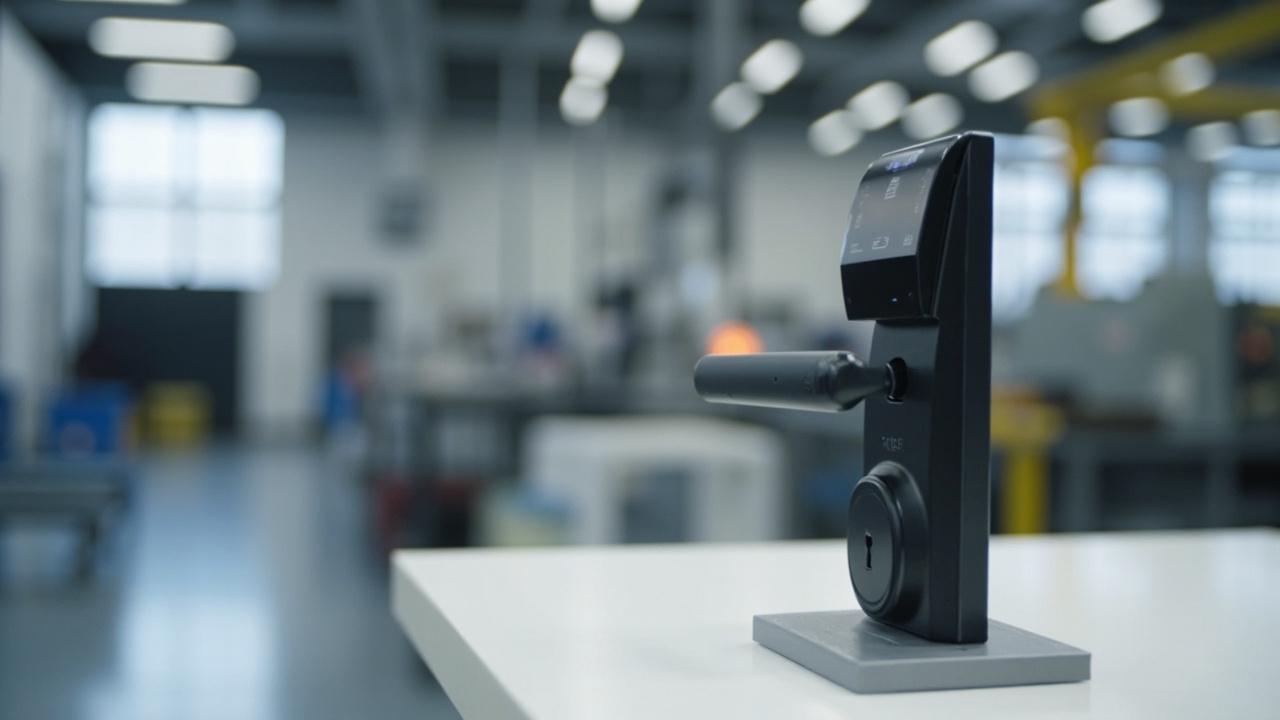
Smart Lock Maintenance Cost
A smart lock maintenance cost is the per-task-row × per-environment-column matrix that documents how the cost the buyer is asked to fund across the operational life of a smart lock is assembled inside the supplier's maintenance programme. Rows are the named maintenance tasks the buyer's facilities lead and CFO recognise — preventive inspection, battery replacement, firmware update, credential re-issue, mechanical service, audit log retention, spare-parts reserve, warranty reserve, emergency callout, and decommissioning. Columns are the named operating environments a smart lock is actually deployed into — hotel and serviced apartment, multi-family residential, office and commercial, retail and storefront, glass-door retail, industrial and staff-only, and outdoor and perimeter. Every cell carries a Check the model’s published specification blank, the cost figure for that line is resolved only by a written, dated, per-SKU and per-deployment supplier response, and the only first-party number named in the article — the SLK-9936S hotel-class spec block (door thickness 36–100 mm · RFID Mifare 1 @ 13.56 MHz · read distance 0–5 cm · read time <0.25 s · 4 × AA battery · battery operating cycles >15,000 · audit/event records up to 1,000 · 5-pin cylinder · 3-point latch · stainless steel + alloy body · multiple finish options · mechanical emergency access · multilingual management software · standalone or centralized database modes) — is invoked ONCE only as the documentation-granularity yardstick for what a maintenance cost cell must look like in writing, strictly scoped to that SKU under an explicit no-porting-across-models firewall.
The reader of this matrix is the buyer who has already procured a smart lock programme and is now funding the multi-year operational tail of that programme. The reader is the buyer's facilities or property operations lead, who is asked to budget a maintenance reserve against an envelope the supplier has never itemised in writing. The reader is also the buyer's CFO, who is asked to commit working capital against a maintenance reserve that does not show how the spend is structured, and the buyer's IT or security lead, who is asked to defend the firmware and credential lifecycle against a maintenance schedule the supplier has never documented per environment. This breakdown does not name a maintenance cost figure for any task on any environment on any SKU. It names what the maintenance cost is made of, where in the supplier's contract the maintenance evidence is supposed to be written, what is a stable structural rule and what is a per-SKU or per-deployment figure the supplier must answer in writing, and where the buyer must route a written dated per-line response before any maintenance reserve is signed off. The reader is referred alongside to smart lock OEM cost breakdown for the procurement-side cost-component lens the maintenance-cost lens reads against, to smart lock testing after installation for the commissioning-side acceptance lens the maintenance programme starts from, and to smart lock installation cost for the one-time installation-cost lens the maintenance-cost lens amortises against over the lock's operational life.
Three structural rules apply before the matrix is read. Rule 1 — the maintenance cost is not a single figure. It is a stack of named maintenance task rows that share the same SKU, the same deployment environment, and the same calendar window, and the supplier's headline service fee is only one of those rows. Funding a maintenance reserve against an un-itemised envelope is the most common reason a buyer's operations committee approves a budget that does not survive the first emergency callout. Rule 2 — every per-environment cell is either a stable structural rule or a blank. Structural rules (the cadence of preventive inspection per environment, the basis on which the warranty reserve is amortised, the labour-allocation basis across visits, the per-region callout premium structure) do not change between SKUs within an environment. Per-environment blanks (the per-visit battery-replacement cost for a specific hotel SKU at a 200-door property, the per-SKU firmware-update cost for a specific glass-door SKU at a 40-store rollout, the per-incident emergency callout cost for a specific outdoor SKU in a specific destination region) change between SKUs, between environments, and between deployments, and must be answered by the supplier in writing. Rule 3 — the matrix produces three outputs. A per-task-row maintenance schedule (this much preventive inspection, this much battery replacement, this much firmware update, this much credential re-issue, this much mechanical service, this much audit log retention, this much spare-parts reserve, this much warranty reserve, this much emergency callout, this much decommissioning), a per-environment evidence register (which environment cell drove each task row, with a signed dated supplier reference), and a maintenance cost worksheet (the named task rows the buyer's facilities lead pastes into the annual maintenance budget review). All three outputs are signed before any maintenance reserve is released.
This article is an annotated datasheet of the maintenance cost matrix. Rows are the maintenance tasks the buyer's facilities lead and CFO recognise. Columns are the operating environments the smart lock is actually deployed into. The product-page-documented SLK-9936S hotel-class spec block is invoked ONCE only as the documentation-granularity yardstick on the SLK-9936S hotel-environment cell, under explicit no-porting-across-models firewall — every other per-task-row per-environment cell for SLK-9936G / SLK-9905A / SLK-9951TH / SLK-9962S / SLK-G200 / SLK-8831 5-in-1 / SLK-1104-class narrow-edge / SLK-3108 / cylindrical Tuya round-code / 3D-face-recognition remote-intercom / B09 glass / outdoor D11-D12-D15-ODS-DQ / face 9L5-R-Q7-Future 1 / camera 516 cat-eye / Q7 intercom / 4G / cabinet 6-model family / stainless keypad 019-022-309 / RFTC-RF card-and-code legacy roster 118-118E-228-230-232-238-239-253-305-306-308-309-502-620-621-911-002-019-022-2020-760 is routed to to verify in writing "check the model’s published specification" with a written, dated, per-SKU and per-deployment supplier answer.
How to read this maintenance cost matrix
The maintenance cost conversation has three voices that need to be reconciled on paper before any reserve is signed. The first voice is the buyer's facilities or operations lead, who wants to know the annual maintenance envelope so the budget can be cut. The second voice is the buyer's CFO, who wants to know what the maintenance spend is made of and how it amortises across the operational life of the lock. The third voice is the supplier's service account manager, who is asked to defend a maintenance figure they may have inherited from a previous service sheet without re-costing the current deployment. This matrix is the document on which all three voices are written down in the same column structure, and the matrix becomes the buyer's evidence when any of the three voices disagrees with the rest. Three reading rules apply.
Rule 1 — read rows as named maintenance tasks, columns as named operating environments. Each row is a named maintenance task a facilities lead and CFO recognise (preventive inspection, battery replacement, firmware update, credential re-issue, mechanical service, audit log retention, spare-parts reserve, warranty reserve, emergency callout, decommissioning). Each column is a named operating environment the smart lock is actually deployed into (hotel and serviced apartment, multi-family residential, office and commercial, retail and storefront, glass-door retail, industrial and staff-only, outdoor and perimeter). The cell at the intersection is either a stable structural rule (preventive inspection cadence, warranty reserve amortisation basis, after-hours callout premium structure) or an open specification item (the per-visit battery-replacement cost for the SLK-9936S hotel SKU at a 200-door property — check the model’s published specification).
Rule 2 — every cell is either a structural rule or a blank. Structural rules are stable across SKUs within an environment. The cadence of preventive inspection per environment, the basis on which the warranty reserve is amortised across the lock's operational life, the labour-allocation basis across visits per region, the per-environment firmware update window — all of these are stable structural rules the supplier can write down once and apply across the catalog within the environment. Blanks are the cells where the supplier's per-SKU or per-deployment answer governs. Those are the cells marked Check the model’s published specification and resolved only by a written, dated, per-line supplier response.
Rule 3 — the matrix produces three outputs. The output is not a single maintenance cost figure; it is a per-task-row maintenance schedule (this much preventive inspection, this much battery replacement, this much firmware update, this much credential re-issue, this much mechanical service, this much audit log retention, this much spare-parts reserve, this much warranty reserve, this much emergency callout, this much decommissioning), a per-environment evidence register (which environment cell drove each task row, with a signed dated supplier reference), and a maintenance cost worksheet (the named task rows the buyer's facilities lead pastes into the annual maintenance budget review). All three outputs are signed before any maintenance reserve is released.
Maintenance Task Row 01 — Preventive inspection
Preventive inspection is the maintenance cost component the facilities lead reaches first. It is the cost of the per-visit labour rate, the per-visit travel cost, the per-visit consumables cost, the per-visit documentation cost, the per-port per-visit inspection depth, and the cadence that ties the visit to a calendar window — per-quarter versus per-half-year versus per-year. The matrix reads preventive inspection in the same column structure as the per-event callout and the per-period credential re-issue so the preventive inspection contribution to the annual maintenance envelope cannot be hidden inside an emergency callout cell. Every per-environment cell in this row is an open specification item routed to "check the model’s published specification" because the per-SKU and per-deployment preventive inspection cost is the supplier's per-line answer.
| Environment | Preventive inspection rule | Hotel & serviced apartment | Multi-family residential | Office & commercial | Retail & storefront | Glass-door retail | Industrial & staff-only | Outdoor & perimeter |
|---|---|---|---|---|---|---|---|---|
| Preventive inspection | Per-visit labour + travel + consumables + documentation, with cadence named in writing | Confirm per-visit preventive inspection cost (labour + travel + consumables + documentation) + per-quarter or per-half-year or per-year cadence for SLK-9936S hotel SKU at 200-door property — check the model’s published specification | Confirm per-visit preventive inspection cost + cadence for the multi-family SKU at the unit count — check the model’s published specification | Confirm per-visit preventive inspection cost + cadence for the office SKU at the door count — check the model’s published specification | Confirm per-visit preventive inspection cost + cadence for the retail SKU at the storefront count — check the model’s published specification | Confirm per-visit preventive inspection cost + cadence for the glass-door SKU at the storefront count — check the model’s published specification | Confirm per-visit preventive inspection cost + cadence for the industrial SKU at the door count — check the model’s published specification | Confirm per-visit preventive inspection cost + cadence for the outdoor SKU at the perimeter count — check the model’s published specification |
| Rule applied | Per-visit labour + travel + consumables + documentation is itemised in the service sheet for each line | Per-environment cadence is named in writing | Per-environment cadence is named in writing | Per-environment cadence is named in writing | Per-environment cadence is named in writing | Per-environment cadence is named in writing | Per-environment cadence is named in writing | Per-environment cadence is named in writing |
| Cell verdict | — | — | — | — | — | — | — | — |
Cells marked — have no documented value in this article’s sources; obtain the figure from the supplier’s written specification.
Maintenance Task Row 02 — Battery replacement
Battery replacement is the maintenance cost component the facilities lead and the property operations lead reach for second. It is the cost of the per-unit battery by chemistry lane, the per-visit battery-replacement labour cost, the per-batch battery procurement cost, the per-environment battery-cycle expectation, the low-battery warning verification cost, and the disposal cost of the spent cell set. The matrix reads battery replacement in the same column structure as the per-event mechanical service so the battery-replacement contribution to the annual maintenance envelope cannot be hidden inside a mechanical service cell. Every per-environment cell in this row is an open specification item routed to "check the model’s published specification" because the per-SKU and per-deployment battery-replacement cost is the supplier's per-line answer. The SLK-9936S hotel-class anchor of "battery operating cycles >15,000" is invoked ONCE only as the documentation-granularity yardstick on the SLK-9936S hotel-environment cell and is strictly scoped to that SKU; the battery-cycle expectation for every other SKU on every other environment is a separate per-SKU and per-deployment supplier answer.
| Environment | Battery replacement rule | Hotel & serviced apartment | Multi-family residential | Office & commercial | Retail & storefront | Glass-door retail | Industrial & staff-only | Outdoor & perimeter |
|---|---|---|---|---|---|---|---|---|
| Battery replacement | Per-unit battery cost by chemistry lane + per-visit labour + per-batch procurement + per-environment cycle expectation + disposal cost | Confirm per-unit 4 × AA battery cost + per-visit replacement labour + per-batch procurement cost + battery-cycle expectation for SLK-9936S hotel SKU at 200-door property — check the model’s published specification (the SLK-9936S '>15,000 cycles' anchor is scoped strictly to SLK-9936S and never extended to siblings) | Confirm per-unit battery cost + per-visit labour + cycle expectation for the multi-family SKU at the unit count — check the model’s published specification | Confirm per-unit battery cost + per-visit labour + cycle expectation for the office SKU at the door count — check the model’s published specification | Confirm per-unit battery cost + per-visit labour + cycle expectation for the retail SKU at the storefront count — check the model’s published specification | Confirm per-unit battery cost + per-visit labour + cycle expectation for the glass-door SKU at the storefront count — check the model’s published specification | Confirm per-unit battery cost + per-visit labour + cycle expectation for the industrial SKU at the door count — check the model’s published specification | Confirm per-unit battery cost + per-visit labour + cycle expectation + low-temperature cycle derating for the outdoor SKU at the perimeter count — check the model’s published specification |
| Rule applied | Per-unit battery cost by chemistry lane is itemised in the service sheet | SLK-9936S cycle anchor scoped to that SKU only | Per-environment cycle expectation is named in writing | Per-environment cycle expectation is named in writing | Per-environment cycle expectation is named in writing | Per-environment cycle expectation is named in writing | Per-environment cycle expectation is named in writing | Low-temperature derating is named in writing |
| Cell verdict | — | — | — | — | — | — | — | — |
Maintenance Task Row 03 — Firmware update
Firmware update is the maintenance cost component the buyer's IT or security lead reaches for. It is the cost of the per-SKU firmware file preparation, the per-port OTA channel configuration, the per-visit on-site firmware flash labour, the per-batch firmware regression test cost, the change-control and rollback clause cost, the per-region firmware signing-key handling cost, and the per-deployment rollback-rehearsal cost. The matrix reads firmware update in the same column structure as the per-event credential re-issue so the firmware-update contribution to the annual maintenance envelope cannot be hidden inside a credential re-issue cell. Every per-environment cell in this row is an open specification item routed to "check the model’s published specification" because the per-SKU and per-deployment firmware-update cost is the supplier's per-line answer.
| Environment | Firmware update rule | Hotel & serviced apartment | Multi-family residential | Office & commercial | Retail & storefront | Glass-door retail | Industrial & staff-only | Outdoor & perimeter |
|---|---|---|---|---|---|---|---|---|
| Firmware update | Per-SKU firmware file prep + per-port OTA config + per-visit flash labour + per-batch regression test + change-control + rollback + signing-key handling | Confirm per-SLK-9936S firmware file prep + per-port OTA config + per-visit flash labour + per-batch regression test + rollback cost at the 200-door property — check the model’s published specification | Confirm per-SKU firmware file prep + per-port OTA config + per-visit flash labour + per-batch regression test + rollback cost at the multi-family deployment — check the model’s published specification | Confirm per-SKU firmware file prep + per-port OTA config + per-visit flash labour + per-batch regression test + rollback cost at the office deployment — check the model’s published specification | Confirm per-SKU firmware file prep + per-port OTA config + per-visit flash labour + per-batch regression test + rollback cost at the retail deployment — check the model’s published specification | Confirm per-SKU firmware file prep + per-port OTA config + per-visit flash labour + per-batch regression test + rollback cost at the glass-door deployment — check the model’s published specification | Confirm per-SKU firmware file prep + per-port OTA config + per-visit flash labour + per-batch regression test + rollback cost at the industrial deployment — check the model’s published specification | Confirm per-SKU firmware file prep + per-port OTA config + per-visit flash labour + per-batch regression test + rollback cost + field-flash premium at the outdoor deployment — check the model’s published specification |
| Rule applied | Per-SKU firmware file prep is itemised in the service sheet | Per-port OTA channel is named in writing | Per-port OTA channel is named in writing | Per-port OTA channel is named in writing | Per-port OTA channel is named in writing | Per-port OTA channel is named in writing | Per-port OTA channel is named in writing | Field-flash premium is named in writing |
| Cell verdict | — | — | — | — | — | — | — | — |
Maintenance Task Row 04 — Credential re-issue
Credential re-issue is the maintenance cost component the buyer's guest services or tenant services lead reaches for. It is the cost of the per-card RFID re-issue material, the per-fingerprint enrolment labour, the per-PIN re-issue labour, the per-mobile-key re-issue entitlement, the lost-credential de-programming cost, the per-batch credential stock procurement, and the per-region credential re-issue SLA premium. The matrix reads credential re-issue in the same column structure as the per-event mechanical service so the credential re-issue contribution to the annual maintenance envelope cannot be hidden inside a mechanical service cell. Every per-environment cell in this row is an open specification item routed to "check the model’s published specification" because the per-SKU and per-deployment credential re-issue cost is the supplier's per-line answer.
| Environment | Credential re-issue rule | Hotel & serviced apartment | Multi-family residential | Office & commercial | Retail & storefront | Glass-door retail | Industrial & staff-only | Outdoor & perimeter |
|---|---|---|---|---|---|---|---|---|
| Credential re-issue | Per-card material + per-fingerprint enrolment labour + per-PIN re-issue labour + per-mobile-key entitlement + lost-credential de-programming + per-batch stock + per-region SLA premium | Confirm per-RFID-card re-issue material + per-PIN re-issue labour + per-mobile-key entitlement + lost-card de-programming cost + per-batch RFID stock cost for the SLK-9936S hotel SKU at 200-door property — check the model’s published specification | Confirm per-credential re-issue material + per-fingerprint enrolment labour + per-mobile-key entitlement + lost-credential de-programming cost for the multi-family SKU at the unit count — check the model’s published specification | Confirm per-credential re-issue material + per-fingerprint enrolment labour + per-mobile-key entitlement + lost-credential de-programming cost for the office SKU at the door count — check the model’s published specification | Confirm per-credential re-issue material + per-fingerprint enrolment labour + per-mobile-key entitlement + lost-credential de-programming cost for the retail SKU at the storefront count — check the model’s published specification | Confirm per-credential re-issue material + per-mobile-key entitlement + lost-credential de-programming cost for the glass-door SKU at the storefront count — check the model’s published specification | Confirm per-credential re-issue material + per-fingerprint enrolment labour + per-mobile-key entitlement + lost-credential de-programming cost for the industrial SKU at the door count — check the model’s published specification | Confirm per-credential re-issue material + per-fingerprint enrolment labour + per-mobile-key entitlement + lost-credential de-programming cost + weather-degraded sensor re-enrolment cost for the outdoor SKU at the perimeter count — check the model’s published specification |
| Rule applied | Per-credential re-issue material is itemised in the service sheet | Per-batch RFID stock cost is named in writing | Per-batch credential stock cost is named in writing | Per-batch credential stock cost is named in writing | Per-batch credential stock cost is named in writing | Per-batch credential stock cost is named in writing | Per-batch credential stock cost is named in writing | Weather-degraded sensor re-enrolment is named in writing |
| Cell verdict | — | — | — | — | — | — | — | — |
Maintenance Task Row 05 — Mechanical service
Mechanical service is the maintenance cost component the buyer's facilities lead reaches for when a lock fails to cycle cleanly. It is the cost of the per-visit mechanical service labour rate, the per-part replacement mechanical component cost, the latch-bolt-door-prep rework cost, the surface-finish touch-up cost, the alignment-and-adjustment cost, the per-region mechanical service travel cost, and the per-incident mechanical service SLA premium. The matrix reads mechanical service in the same column structure as the per-event credential re-issue so the mechanical service contribution to the annual maintenance envelope cannot be hidden inside a credential re-issue cell. Every per-environment cell in this row is an open specification item routed to "check the model’s published specification" because the per-SKU and per-deployment mechanical service cost is the supplier's per-line answer.
| Environment | Mechanical service rule | Hotel & serviced apartment | Multi-family residential | Office & commercial | Retail & storefront | Glass-door retail | Industrial & staff-only | Outdoor & perimeter |
|---|---|---|---|---|---|---|---|---|
| Mechanical service | Per-visit labour rate + per-part replacement mechanical component cost + latch-bolt-door-prep rework + surface-finish touch-up + alignment-and-adjustment + per-region travel + per-incident SLA premium | Confirm per-visit mechanical service labour + per-part replacement cost + latch-bolt-door-prep rework + alignment cost for SLK-9936S hotel SKU at 200-door property — check the model’s published specification | Confirm per-visit mechanical service labour + per-part replacement cost + latch-bolt-door-prep rework + alignment cost for the multi-family SKU at the unit count — check the model’s published specification | Confirm per-visit mechanical service labour + per-part replacement cost + latch-bolt-door-prep rework + alignment cost for the office SKU at the door count — check the model’s published specification | Confirm per-visit mechanical service labour + per-part replacement cost + latch-bolt-door-prep rework + alignment cost for the retail SKU at the storefront count — check the model’s published specification | Confirm per-visit mechanical service labour + per-part replacement cost + glass-door-prep rework + alignment cost for the glass-door SKU at the storefront count — check the model’s published specification | Confirm per-visit mechanical service labour + per-part replacement cost + industrial-door-prep rework + alignment cost for the industrial SKU at the door count — check the model’s published specification | Confirm per-visit mechanical service labour + per-part replacement cost + weather-degraded mechanical service premium + alignment cost for the outdoor SKU at the perimeter count — check the model’s published specification |
| Rule applied | Per-visit mechanical service labour rate is itemised in the service sheet | Per-part replacement cost is named in writing | Per-part replacement cost is named in writing | Per-part replacement cost is named in writing | Per-part replacement cost is named in writing | Per-part replacement cost is named in writing | Per-part replacement cost is named in writing | Weather-degraded mechanical service premium is named in writing |
| Cell verdict | — | — | — | — | — | — | — | — |
Maintenance Task Row 06 — Audit log retention
Audit log retention is the maintenance cost component the buyer's compliance and IT leads reach for. It is the cost of the per-port log storage, the per-period log retention, the per-event audit export labour, the per-region data-residency hosting, the archival and retrieval cost, the per-region regulatory retention surcharge, and the per-incident regulatory export premium. The matrix reads audit log retention in the same column structure as the per-event emergency callout so the audit log retention contribution to the annual maintenance envelope cannot be hidden inside an emergency callout cell. Every per-environment cell in this row is an open specification item routed to "check the model’s published specification" because the per-SKU and per-deployment audit log retention cost is the supplier's per-line answer. The SLK-9936S hotel-class anchor of "audit/event records up to 1,000" is invoked ONCE only as the documentation-granularity yardstick on the SLK-9936S hotel-environment cell and is strictly scoped to that SKU; the audit-record retention expectation for every other SKU on every other environment is a separate per-SKU and per-deployment supplier answer.
| Environment | Audit log retention rule | Hotel & serviced apartment | Multi-family residential | Office & commercial | Retail & storefront | Glass-door retail | Industrial & staff-only | Outdoor & perimeter |
|---|---|---|---|---|---|---|---|---|
| Audit log retention | Per-port log storage + per-period retention + per-event audit export labour + per-region data-residency hosting + archival + per-region regulatory surcharge + per-incident regulatory export premium | Confirm per-port log storage + per-period retention + per-event audit export labour + per-region hosting + archival cost for the SLK-9936S hotel SKU at 200-door property — check the model’s published specification (the SLK-9936S 'audit/event records up to 1,000' anchor is scoped strictly to SLK-9936S and never extended to siblings) | Confirm per-port log storage + per-period retention + per-event audit export labour + per-region hosting + archival cost for the multi-family SKU at the unit count — check the model’s published specification | Confirm per-port log storage + per-period retention + per-event audit export labour + per-region hosting + archival cost for the office SKU at the door count — check the model’s published specification | Confirm per-port log storage + per-period retention + per-event audit export labour + per-region hosting + archival cost for the retail SKU at the storefront count — check the model’s published specification | Confirm per-port log storage + per-period retention + per-event audit export labour + per-region hosting + archival cost for the glass-door SKU at the storefront count — check the model’s published specification | Confirm per-port log storage + per-period retention + per-event audit export labour + per-region hosting + archival cost for the industrial SKU at the door count — check the model’s published specification | Confirm per-port log storage + per-period retention + per-event audit export labour + per-region hosting + archival cost + low-bandwidth archival premium for the outdoor SKU at the perimeter count — check the model’s published specification |
| Rule applied | Per-port log storage cost is itemised in the service sheet | SLK-9936S audit-record anchor scoped to that SKU only | Per-environment retention cadence is named in writing | Per-environment retention cadence is named in writing | Per-environment retention cadence is named in writing | Per-environment retention cadence is named in writing | Per-environment retention cadence is named in writing | Low-bandwidth archival premium is named in writing |
| Cell verdict | — | — | — | — | — | — | — | — |
Maintenance Task Row 07 — Spare-parts reserve
Spare-parts reserve is the maintenance cost component the buyer's procurement lead reaches for when a lock is past its primary service window or when a SKU is being phased out. It is the cost of the per-SKU replacement-part unit cost, the per-region spare-parts catalogue lead time, the per-batch spare-parts reserve, the per-region spare-parts reserve, the per-finish spare-parts reserve, the RMA handling cost, the RMA shipping cost, and the per-batch spare-parts inventory carrying cost. The matrix reads spare-parts reserve in the same column structure as the per-event mechanical service so the spare-parts reserve contribution to the annual maintenance envelope cannot be hidden inside a mechanical service cell. Every per-environment cell in this row is an open specification item routed to "check the model’s published specification" because the per-SKU and per-deployment spare-parts reserve cost is the supplier's per-line answer.
| Environment | Spare-parts reserve rule | Hotel & serviced apartment | Multi-family residential | Office & commercial | Retail & storefront | Glass-door retail | Industrial & staff-only | Outdoor & perimeter |
|---|---|---|---|---|---|---|---|---|
| Spare-parts reserve | Per-SKU replacement-part unit cost + per-region catalogue lead time + per-batch reserve + per-region reserve + per-finish reserve + RMA handling + RMA shipping + per-batch inventory carrying cost | Confirm per-SLK-9936S replacement-part unit cost + per-region catalogue lead time + per-batch reserve + RMA handling + RMA shipping cost at the 200-door property — check the model’s published specification | Confirm per-SKU replacement-part unit cost + per-region catalogue lead time + per-batch reserve + RMA handling + RMA shipping cost at the multi-family deployment — check the model’s published specification | Confirm per-SKU replacement-part unit cost + per-region catalogue lead time + per-batch reserve + RMA handling + RMA shipping cost at the office deployment — check the model’s published specification | Confirm per-SKU replacement-part unit cost + per-region catalogue lead time + per-batch reserve + RMA handling + RMA shipping cost at the retail deployment — check the model’s published specification | Confirm per-SKU replacement-part unit cost + per-region catalogue lead time + per-batch reserve + RMA handling + RMA shipping cost at the glass-door deployment — check the model’s published specification | Confirm per-SKU replacement-part unit cost + per-region catalogue lead time + per-batch reserve + RMA handling + RMA shipping cost at the industrial deployment — check the model’s published specification | Confirm per-SKU replacement-part unit cost + per-region catalogue lead time + per-batch reserve + RMA handling + RMA shipping cost + weather-degraded RMA premium at the outdoor deployment — check the model’s published specification |
| Rule applied | Per-SKU replacement-part unit cost is itemised in the service sheet | Per-region catalogue lead time is named in writing | Per-region catalogue lead time is named in writing | Per-region catalogue lead time is named in writing | Per-region catalogue lead time is named in writing | Per-region catalogue lead time is named in writing | Per-region catalogue lead time is named in writing | Weather-degraded RMA premium is named in writing |
| Cell verdict | — | — | — | — | — | — | — | — |
Maintenance Task Row 08 — Warranty reserve
Warranty reserve is the maintenance cost component the buyer's CFO reaches for when the lock is inside its primary service window. It is the cost of the per-unit warranty reserve, the per-batch warranty reserve, the per-shipment warranty reserve, the per-region warranty reserve, the per-finish warranty reserve, and the warranty reserve amortisation method. The matrix reads warranty reserve in the same column structure as the per-event spare-parts reserve so the warranty reserve contribution to the annual maintenance envelope cannot be hidden inside a spare-parts reserve cell. Every per-environment cell in this row is an open specification item routed to "check the model’s published specification" because the per-SKU and per-deployment warranty reserve cost is the supplier's per-line answer.
| Environment | Warranty reserve rule | Hotel & serviced apartment | Multi-family residential | Office & commercial | Retail & storefront | Glass-door retail | Industrial & staff-only | Outdoor & perimeter |
|---|---|---|---|---|---|---|---|---|
| Warranty reserve | Per-unit + per-batch + per-shipment + per-region + per-finish reserve + amortisation method | Confirm per-unit warranty reserve + per-batch reserve + per-region reserve + amortisation method for the SLK-9936S hotel SKU at 200-door property — check the model’s published specification | Confirm per-unit warranty reserve + per-batch reserve + per-region reserve + amortisation method for the multi-family SKU at the unit count — check the model’s published specification | Confirm per-unit warranty reserve + per-batch reserve + per-region reserve + amortisation method for the office SKU at the door count — check the model’s published specification | Confirm per-unit warranty reserve + per-batch reserve + per-region reserve + amortisation method for the retail SKU at the storefront count — check the model’s published specification | Confirm per-unit warranty reserve + per-batch reserve + per-region reserve + amortisation method for the glass-door SKU at the storefront count — check the model’s published specification | Confirm per-unit warranty reserve + per-batch reserve + per-region reserve + amortisation method for the industrial SKU at the door count — check the model’s published specification | Confirm per-unit warranty reserve + per-batch reserve + per-region reserve + amortisation method + outdoor-corrosion surcharge for the outdoor SKU at the perimeter count — check the model’s published specification |
| Rule applied | Per-unit warranty reserve basis is itemised in the service sheet | Per-region warranty reserve is named in writing | Per-region warranty reserve is named in writing | Per-region warranty reserve is named in writing | Per-region warranty reserve is named in writing | Per-region warranty reserve is named in writing | Per-region warranty reserve is named in writing | Outdoor-corrosion surcharge is named in writing |
| Cell verdict | — | — | — | — | — | — | — | — |
Maintenance Task Row 09 — Emergency callout
Emergency callout is the maintenance cost component the buyer's facilities lead reaches for when a lock fails outside its preventive window. It is the cost of the per-incident emergency callout labour rate, the per-incident emergency travel cost, the per-incident after-hours premium, the per-incident diagnostic labour cost, the per-incident replacement-part premium, the per-incident SLA response premium, and the per-incident regulatory escalation premium. The matrix reads emergency callout in the same column structure as the per-event preventive inspection so the emergency callout contribution to the annual maintenance envelope cannot be hidden inside a preventive inspection cell. Every per-environment cell in this row is an open specification item routed to "check the model’s published specification" because the per-SKU and per-deployment emergency callout cost is the supplier's per-line answer.
| Environment | Emergency callout rule | Hotel & serviced apartment | Multi-family residential | Office & commercial | Retail & storefront | Glass-door retail | Industrial & staff-only | Outdoor & perimeter |
|---|---|---|---|---|---|---|---|---|
| Emergency callout | Per-incident labour + per-incident travel + per-incident after-hours premium + per-incident diagnostic + per-incident replacement-part premium + per-incident SLA response premium + per-incident regulatory escalation premium | Confirm per-incident emergency callout labour + travel + after-hours premium + diagnostic + replacement-part premium for SLK-9936S hotel SKU at 200-door property — check the model’s published specification | Confirm per-incident emergency callout labour + travel + after-hours premium + diagnostic + replacement-part premium for the multi-family SKU at the unit count — check the model’s published specification | Confirm per-incident emergency callout labour + travel + after-hours premium + diagnostic + replacement-part premium for the office SKU at the door count — check the model’s published specification | Confirm per-incident emergency callout labour + travel + after-hours premium + diagnostic + replacement-part premium for the retail SKU at the storefront count — check the model’s published specification | Confirm per-incident emergency callout labour + travel + after-hours premium + diagnostic + replacement-part premium for the glass-door SKU at the storefront count — check the model’s published specification | Confirm per-incident emergency callout labour + travel + after-hours premium + diagnostic + replacement-part premium for the industrial SKU at the door count — check the model’s published specification | Confirm per-incident emergency callout labour + travel + after-hours premium + diagnostic + replacement-part premium + field-response premium for the outdoor SKU at the perimeter count — check the model’s published specification |
| Rule applied | Per-incident emergency callout labour rate is itemised in the service sheet | Per-incident after-hours premium is named in writing | Per-incident after-hours premium is named in writing | Per-incident after-hours premium is named in writing | Per-incident after-hours premium is named in writing | Per-incident after-hours premium is named in writing | Per-incident after-hours premium is named in writing | Field-response premium is named in writing |
| Cell verdict | — | — | — | — | — | — | — | — |
Maintenance Task Row 10 — Decommissioning
Decommissioning is the maintenance cost component the buyer's CFO and IT leads reach for at the end of the lock's operational life. It is the cost of the per-port decommissioning labour, the per-batch secure-wipe cost, the per-region recycling and disposal cost, the per-batch credential-revocation cost, the per-region regulatory end-of-life filing cost, and the per-batch documentation archival cost. The matrix reads decommissioning in the same column structure as the per-event audit log retention so the decommissioning contribution to the multi-year maintenance envelope cannot be hidden inside an audit log retention cell. Every per-environment cell in this row is an open specification item routed to "check the model’s published specification" because the per-SKU and per-deployment decommissioning cost is the supplier's per-line answer.
| Environment | Decommissioning rule | Hotel & serviced apartment | Multi-family residential | Office & commercial | Retail & storefront | Glass-door retail | Industrial & staff-only | Outdoor & perimeter |
|---|---|---|---|---|---|---|---|---|
| Decommissioning | Per-port decommissioning labour + per-batch secure-wipe + per-region recycling + per-batch credential-revocation + per-region regulatory end-of-life filing + per-batch documentation archival | Confirm per-port decommissioning labour + per-batch secure-wipe + per-region recycling + per-batch credential-revocation cost for the SLK-9936S hotel SKU at 200-door property — check the model’s published specification | Confirm per-port decommissioning labour + per-batch secure-wipe + per-region recycling + per-batch credential-revocation cost for the multi-family SKU at the unit count — check the model’s published specification | Confirm per-port decommissioning labour + per-batch secure-wipe + per-region recycling + per-batch credential-revocation cost for the office SKU at the door count — check the model’s published specification | Confirm per-port decommissioning labour + per-batch secure-wipe + per-region recycling + per-batch credential-revocation cost for the retail SKU at the storefront count — check the model’s published specification | Confirm per-port decommissioning labour + per-batch secure-wipe + per-region recycling + per-batch credential-revocation cost for the glass-door SKU at the storefront count — check the model’s published specification | Confirm per-port decommissioning labour + per-batch secure-wipe + per-region recycling + per-batch credential-revocation cost for the industrial SKU at the door count — check the model’s published specification | Confirm per-port decommissioning labour + per-batch secure-wipe + per-region recycling + per-batch credential-revocation cost + outdoor-furniture-removal premium for the outdoor SKU at the perimeter count — check the model’s published specification |
| Rule applied | Per-port decommissioning labour rate is itemised in the service sheet | Per-batch secure-wipe cost is named in writing | Per-batch secure-wipe cost is named in writing | Per-batch secure-wipe cost is named in writing | Per-batch secure-wipe cost is named in writing | Per-batch secure-wipe cost is named in writing | Per-batch secure-wipe cost is named in writing | Outdoor-furniture-removal premium is named in writing |
| Cell verdict | — | — | — | — | — | — | — | — |
Environment scorecard — which task row carries the heaviest weight
The buyer reading the matrix for the first time will ask which maintenance task row carries the heaviest weight inside each environment column, and which environment column carries the heaviest weight inside each maintenance task row. The scorecard below organises that read; every cell still routes to to verify in writing "check the model’s published specification" against a written, dated, per-SKU and per-deployment supplier response, and the column-internal weight is the buyer's own deployment posture, not a supplier claim.
| Environment | Heaviest task row | Second heaviest task row | Maintenance posture for that environment |
|---|---|---|---|
| Hotel & serviced apartment | Battery replacement (per-room cadence) | Credential re-issue (per-guest-turnover cadence) | High-frequency preventive + per-turnover credential cycle + per-guest-callout pattern |
| Multi-family residential | Mechanical service (per-tenant-turnover cadence) | Credential re-issue (per-tenant-change cadence) | Medium-frequency preventive + per-tenant mechanical and credential cycle |
| Office & commercial | Firmware update (per-IT-release cadence) | Audit log retention (per-compliance-retention cadence) | Medium-frequency preventive + per-IT-release firmware cycle + per-audit-window retention |
| Retail & storefront | Emergency callout (per-store-hours exposure) | Mechanical service (per-store-traffic cadence) | Low-frequency preventive + per-store-hours emergency exposure + per-traffic mechanical cycle |
| Glass-door retail | Mechanical service (per-traffic-and-glass-cycle cadence) | Spare-parts reserve (per-glass-cycle replacement) | Low-frequency preventive + per-traffic mechanical and spare-part cycle |
| Industrial & staff-only | Mechanical service (per-shift-cycle cadence) | Spare-parts reserve (per-shift-rotation replacement) | High-frequency preventive + per-shift mechanical and spare-part cycle |
| Outdoor & perimeter | Spare-parts reserve (per-weather-degradation cadence) | Mechanical service (per-weather-degradation cadence) | High-frequency preventive + per-weather mechanical, spare-part, and decommission cycle |
Three structural rules the matrix must answer before any reserve is signed
Before any maintenance reserve is signed, the matrix must answer three structural rules in writing. The structural rules are the cells that do not change between SKUs within an environment and that the supplier can write down once and apply across the catalog within that environment.
| Rule | What it answers | Why it must be in writing | Where it appears in the supplier's service sheet |
|---|---|---|---|
| Structural Rule 1 — preventive inspection cadence per environment | How often each environment is visited in a calendar year | The cadence drives the per-visit labour, travel, consumables, and documentation cost across the entire maintenance reserve | Maintenance service sheet, Section 2 — preventive inspection cadence by environment |
| Structural Rule 2 — warranty reserve amortisation method per environment | Whether the reserve is amortised per unit, per batch, per shipment, per region, or per finish, and across how many lock-years | The amortisation method determines how the reserve sits on the buyer's books across the lock's operational life | Maintenance service sheet, Section 4 — warranty reserve amortisation method by environment |
| Structural Rule 3 — after-hours emergency callout premium structure per region | Whether the after-hours premium is a fixed multiplier, a tiered multiplier, or a fixed add-on, and how it is applied per region | The premium structure determines the per-incident emergency callout cost across the buyer's incident history | Maintenance service sheet, Section 6 — after-hours emergency callout premium structure by region |
Project scenario — a 200-room hotel property maintaining 200 SLK-9936S-class hotel locks
Consider a 200-room hotel property maintaining 200 hotel-class locks across a five-year operational life. The property is funded against a per-room annual maintenance envelope the supplier's service account manager has not itemised. The buyer's facilities lead and CFO are asked to commit a maintenance reserve against that envelope without being shown how the per-task-row × per-environment-column cost is assembled. The matrix above is the document on which the per-task-row maintenance schedule is written down — this much preventive inspection across the 200 doors per quarter, this much battery replacement per door per cycle, this much firmware update across the central database per release, this much credential re-issue per guest turnover, this much mechanical service per incident, this much audit log retention per regulatory window, this much spare-parts reserve per batch, this much warranty reserve per door-year, this much emergency callout per incident, this much decommissioning per door at end of life. The product-page-documented SLK-9936S hotel-class spec block is invoked ONCE only as the documentation-granularity yardstick on the SLK-9936S hotel-environment cell, strictly scoped to that SKU. Every other per-task-row per-environment cell is routed to to verify in writing "check the model’s published specification" with a written, dated, per-SKU and per-deployment supplier response, and the matrix is signed before any maintenance reserve is released.
The reader is referred alongside to smart lock OEM cost breakdown for the procurement-side cost-component lens the maintenance-cost lens amortises against, to smart lock testing after installation for the commissioning-side acceptance lens the maintenance programme starts from, and to smart lock installation cost for the one-time installation-cost lens the maintenance-cost lens amortises across the lock's operational life. The buyer who routes a written, dated, per-SKU and per-deployment supplier response for every per-task-row per-environment cell on the matrix above, against a single dated offer letter, holds the evidence the operations committee and the supplier's service account manager both sign against.
Closing CTA — route every cell to /request-a-quote before any maintenance reserve is signed
Every per-task-row per-environment cell on this matrix carries a Check the model’s published specification blank, and the cost figure for every cell is resolved only by a written, dated, per-SKU and per-deployment supplier response. The matrix above is the document the buyer's facilities lead, CFO, and IT or security lead paste into the annual maintenance budget review. The exact figures for every cell of every row are confirmed with the supplier against a dated, per-SKU and per-deployment written offer letter at Request a quote, and the supporting figures for spare-parts reserve and replacement-part catalogue are confirmed at smart lock spare parts order. The matrix is the buyer's evidence when any cell is contested at the annual maintenance budget review, and the matrix is signed before any maintenance reserve is released. The reader who has a maintenance programme question outside the matrix scope — catalog scope per environment, environment-specific spare-parts catalog, environment-specific firmware cadence — is referred to the request a catalog page for the first-party catalog scope by environment.