
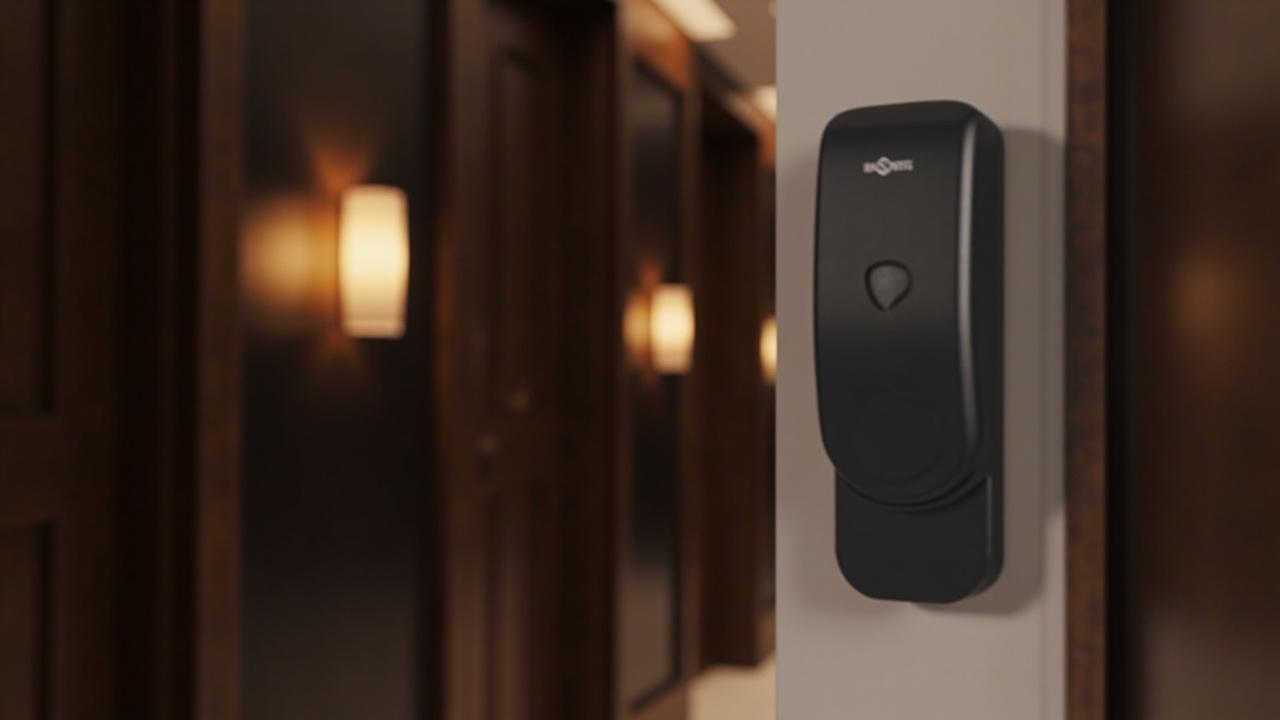
Smart Lock Free-Rotation Handle
A smart lock free-rotation handle is a per-door-side assembly — outside handle, inside handle, spindle interface, clutch body, latch-engagement interface, cover/escutcheon, lever-return spring, baseplate/mount, rose/trim ring, lever or knob, finish layer, set screw, through-bolt — whose design specification varies by model class and must be confirmed against the verified product page for every shortlisted SKU rather than read off a brochure. The catalog this site sells from carries 79 published models across 10 categories — Smart Door Locks 77, Fingerprint 37, Hotel 24, Keypad 18, Outdoor 10, RFID 9, Face Recognition 6, Cabinet 6, Video Camera 3, Glass 3 — and the free-rotation handle design for every one of those SKUs is check the model’s published specification. This article reads like an annotated datasheet: each row of the handle-side parts list is dissected in the order a procurement reviewer reads a datasheet, every figure that varies per class is routed to an open specification item the buyer fills in from the verified product page, and the populated matrix becomes the handle-side annex the supplier signs against.
This article is deliberately distinct from its two siblings. For the security reading of the same handle — outside-handle free-rotation as an anti-forced-entry property, inside-handle always-free as a panic-egress property, the lifecycle through locked → authorized → unlocked → relock → failure states — see Smart Lock Free-Rotation Handle Security. For the anti-manipulation reading — forced handle manipulation, cable-through-gap, fishing, handle-set seizure, spindle shear as the threat model the design answers — see Smart Lock Anti-Manipulation Handle. For the cluster-wide materials taxonomy the handle assembly sits inside, see Smart Lock Materials Complete Buyer Guide. This article is the design-spec lens: the parts list, the per-class variations, the dimensional and material specifics the procurement reviewer signs against.
How to read this free-rotation handle datasheet
The handle-side specification a procurement reviewer hands the supplier, whether it appears in an RFQ, a part-number schedule, or a sample-stage checklist, is built from thirteen door-side rows. The buyer has to read it row by row, in the order a datasheet is reviewed, because the typical procurement failure is downstream of a parts list line the buyer never confirmed against the per-class spec. The thirteen door-side rows, in datasheet-review order, are:
- Outside handle — the handle a non-authorized party can reach; the part that spins freely when locked.
- Inside handle — the handle the room occupant or egressing person reaches; the part that is always-free under locked state and under power-loss.
- Spindle interface — the square (or other-section) shaft the handle sits on; the section, length and material are per-class.
- Clutch body — the spring-loaded or cam-driven decoupling between the lever and the spindle; the part that holds the free-rotation property.
- Latch-engagement interface — the geometry the clutch or motor drives when the credential is accepted; the part that moves the bolt.
- Cover / escutcheon — the external plate that frames the handle and the reader; the part the user touches and that bears the finish.
- Lever-return spring — the spring that returns the lever to its rest position after a release; the part that determines handle feel.
- Baseplate / mount — the plate that fixes the handle assembly to the door face; the part that carries the through-bolt pattern.
- Rose / trim ring — the trim ring that conceals the baseplate-to-door interface; the part that determines visual integration.
- Lever or knob — the form factor the user grips; the part that varies most across the catalog (lever for most classes, knob for some cylindrical and cabinet classes).
- Finish layer — the surface treatment (brushed stainless, black, gold, copper, coffee-black, powder coat, electrophoretic); the part that matches the door spec.
- Set screw / grub screw — the fastener that locks the lever to the spindle; the part whose size is per-class.
- Through-bolt / spindle grub — the fastener that binds the outside and inside assemblies through the door; the part that holds the lock together.
Each row in the matrix below maps one door-side part to the model class it appears in. Each cell carries a to verify in writing blank wherever the per-class figure (interface section, return-torque window, set-screw size, finish option) is what makes the part the right part rather than a near-miss. Check the model’s published specification for every shortlisted class and SKU before any handle-side part is committed to the spec.
The Master Matrix — per-door-side rows × per-class columns
The matrix below is the populated annex a procurement reviewer signs against. Rows are door-side parts; columns are model classes from the catalog (Hotel mortise — e.g. SLK-9936S class; Residential cylindrical / mortise — e.g. SLK-8831 5-in-1 class; Glass door — e.g. SLK-G200 class; Narrow-edge / aluminium — e.g. SLK-1104 class; Outdoor / gate — D11 / D12 / D15 / ODS / DQ class; Cabinet — 6-model cabinet class). Each cell uses one of four states: STANDARD (the part is on the standard parts list for this class), CLASS-SPECIFIC (the part varies per-class — see to verify in writing), CONDITIONAL (the part is required only if the per-class spec demands it — see to verify in writing), and NOT APPLICABLE (the door side does not generate a use for the part). Every cell that touches a per-class figure — interface geometry, return-torque window, set-screw size, finish option — carries a to verify in writing pointer to the verified product page.
| # | Door-side part | Hotel mortise (SLK-9936S class) | Residential cylindrical / mortise (SLK-8831 class) | Glass door (SLK-G200 class) | Narrow-edge / aluminium (SLK-1104 class) | Outdoor / gate (D-series class) | Cabinet (6-model class) |
|---|---|---|---|---|---|---|---|
| H1 | Outside handle | — | — | — | — | — | — |
| H2 | Inside handle | — | — | — | — | — | NOT APPLICABLE for most cabinet classes — check the model’s published specification |
| H3 | Spindle interface | CLASS-SPECIFIC — section and length per-class | CLASS-SPECIFIC — section and length per-class | CLASS-SPECIFIC — section and length per-class | CLASS-SPECIFIC — section and length per-class | CLASS-SPECIFIC — section and length per-class | CLASS-SPECIFIC — section and length per-class |
| H4 | Clutch body | CLASS-SPECIFIC — type and return-torque window per-class | CLASS-SPECIFIC — type and return-torque window per-class | CLASS-SPECIFIC — type and return-torque window per-class | CLASS-SPECIFIC — type and return-torque window per-class | CLASS-SPECIFIC — type and return-torque window per-class | CLASS-SPECIFIC — type and return-torque window per-class |
| H5 | Latch-engagement interface | CLASS-SPECIFIC — geometry per-class | CLASS-SPECIFIC — geometry per-class | CLASS-SPECIFIC — geometry per-class | CLASS-SPECIFIC — geometry per-class | CLASS-SPECIFIC — geometry per-class | CLASS-SPECIFIC — geometry per-class |
| H6 | Cover / escutcheon | STANDARD — multiple finish options (product-page-documented for SLK-9936S only; never port across) | STANDARD | STANDARD | STANDARD | STANDARD | STANDARD |
| H7 | Lever-return spring | CLASS-SPECIFIC — rating per-class | CLASS-SPECIFIC — rating per-class | CLASS-SPECIFIC — rating per-class | CLASS-SPECIFIC — rating per-class | CLASS-SPECIFIC — rating per-class | CLASS-SPECIFIC — rating per-class |
| H8 | Baseplate / mount | CLASS-SPECIFIC — footprint per-class | CLASS-SPECIFIC — footprint per-class | CLASS-SPECIFIC — footprint per-class | CLASS-SPECIFIC — footprint per-class | CLASS-SPECIFIC — footprint per-class | CLASS-SPECIFIC — footprint per-class |
| H9 | Rose / trim ring | CLASS-SPECIFIC — OD per-class | CLASS-SPECIFIC — OD per-class | CLASS-SPECIFIC — OD per-class | CLASS-SPECIFIC — OD per-class | CLASS-SPECIFIC — OD per-class | CLASS-SPECIFIC — OD per-class |
| H10 | Lever or knob | STANDARD — lever for hotel mortise class | STANDARD — lever for most residential cylindrical / mortise classes | CLASS-SPECIFIC — pull-handle or patch-fit per-class — check the model’s published specification | CLASS-SPECIFIC — narrow-edge lever per-class — check the model’s published specification | CLASS-SPECIFIC — lever or knob per-class — check the model’s published specification | CLASS-SPECIFIC — knob for most cabinet classes — check the model’s published specification |
| H11 | Finish layer | STANDARD — multiple finish options (product-page-documented for SLK-9936S only; never port across) | STANDARD | CLASS-SPECIFIC — finish must suit glass clamp geometry — check the model’s published specification | CLASS-SPECIFIC — finish must suit aluminium profile — check the model’s published specification | CLASS-SPECIFIC — corrosion-resistance finish expected — check the model’s published specification | CLASS-SPECIFIC — finish per-class — check the model’s published specification |
| H12 | Set screw / grub screw | CLASS-SPECIFIC — size per-class | CLASS-SPECIFIC — size per-class | CLASS-SPECIFIC — size per-class | CLASS-SPECIFIC — size per-class | CLASS-SPECIFIC — size per-class | CLASS-SPECIFIC — size per-class |
| H13 | Through-bolt / spindle grub | CLASS-SPECIFIC — pattern per-class | CLASS-SPECIFIC — pattern per-class | CLASS-SPECIFIC — pattern per-class | CLASS-SPECIFIC — pattern per-class | CLASS-SPECIFIC — pattern per-class | CLASS-SPECIFIC — pattern per-class |
Cells marked — have no documented value in this article’s sources; obtain the figure from the supplier’s written specification.
The matrix is the populated annex. The sections that follow dissect each door-side part line by line, in the order a procurement reviewer reads a datasheet. Every per-class figure that controls a cell — interface geometry, return-torque window, set-screw size, finish option — is check the model’s published specification.
Outside handle, line by line (H1)
The outside handle is the part a non-authorized party can reach. Its datasheet line names the form factor (lever or knob), the free-rotation behavior under locked state, the material, the finish option, and the set-screw / grub-screw that locks it to the spindle.
- H1 Hotel mortise class — outside handle is typically a lever on a clutched body. Free-rotation under locked state is the design property the security reading turns into a lifecycle document (Smart Lock Free-Rotation Handle Security). Material and finish are per-class — check the model’s published specification. The SLK-9936S figures (multiple finish options, stainless steel + alloy body) are product-page-documented for the documentation-granularity ruler role only and are not ported across to siblings.
- H1 Residential cylindrical / mortise class — outside handle is typically a lever on a clutched body for the cylindrical sub-class and on a direct-drive body for the mortise sub-class. Free-rotation behavior is per-sub-class — check the model’s published specification. The SLK-8831 5-in-1 class carries the catalog's documented multifunction form factor; specifics route to the verified product page.
- H1 Glass door class — outside handle is typically a patch-fit lever or a through-glass patch handle. Free-rotation behavior is per-class — check the model’s published specification. The SLK-G200 class is the catalog's documented glass-door form factor.
- H1 Narrow-edge / aluminium class — outside handle is typically a narrow-edge lever designed for a reduced door profile. Free-rotation behavior is per-class — check the model’s published specification. The SLK-1104 class is the catalog's documented narrow-edge form factor.
- H1 Outdoor / gate class — outside handle is typically a lever or knob rated for outdoor exposure. Free-rotation behavior is per-class — check the model’s published specification. The D11 / D12 / D15 / ODS / DQ class is the catalog's documented outdoor form factor; corrosion-resistance finish expectations are addressed in the C11 materials siblings.
- H1 Cabinet class — outside handle is typically a knob or a small lever sized for cabinet-scale doors. Free-rotation behavior is per-class — check the model’s published specification. The cabinet class covers 6 catalog models.
Inside handle, line by line (H2)
The inside handle is the part the room occupant or egressing person reaches. Its datasheet line names the form factor, the always-free behavior under locked state and under power-loss, the material, the finish option, and the set-screw / grub-screw that locks it to the spindle.
- H2 Hotel mortise class — inside handle is typically a lever on a direct-drive body (panic-egress property). Always-free under locked state is the baseline the security reading writes down without negotiation; the same baseline holds under power-loss via the mechanical emergency access path the SLK-9936S PDP-cited block names (mechanical emergency access — product-page-documented for SLK-9936S only; never port across). ADA / panic-egress implications for the property's specific occupancy class are routed to local AHJ and counsel — not asserted as factory-stamped compliance. Per-class specifics — check the model’s published specification.
- H2 Residential cylindrical / mortise class — inside handle is typically a lever on a direct-drive body. Always-free under locked state is the baseline; per-class specifics — check the model’s published specification. Multi-user behavior during long stays is a software-side decision, not a handle-side one.
- H2 Glass door class — inside handle is typically a patch-fit lever or a through-glass patch handle. Always-free behavior is per-class — check the model’s published specification. Glass-edge clearance for the inside handle assembly is per-class.
- H2 Narrow-edge / aluminium class — inside handle is typically a narrow-edge lever. Always-free behavior is per-class — check the model’s published specification. ADA / panic-egress implications routed to local AHJ and counsel.
- H2 Outdoor / gate class — inside handle is typically a lever or knob. Always-free behavior is per-class — check the model’s published specification. Outdoor exposure may require a sealed-electronics companion spec (the C10 engineering cluster covers this in dedicated articles).
- H2 Cabinet class — inside handle is not applicable for most cabinet classes (cabinet-scale doors typically do not require a panic-egress property). Check the model’s published specification for the specific SKU.
Spindle interface, line by line (H3)
The spindle interface is the square (or other-section) shaft the handle sits on. Its datasheet line names the section, the length, the material, and the through-bolt pattern that the spindle carries.
- H3 Hotel mortise class — spindle is typically a square-section steel shaft, length matched to the door thickness window the SLK-9936S PDP-cited block names (36–100 mm — product-page-documented for SLK-9936S only; never port across). Section, length, and material are per-class — check the model’s published specification.
- H3 Residential cylindrical / mortise class — spindle section and length are per-sub-class — check the model’s published specification. The SLK-8831 5-in-1 class carries the catalog's documented multifunction form factor.
- H3 Glass door class — spindle is typically a shorter section because glass doors carry a reduced thickness envelope — check the model’s published specification. Glass-door clamp geometry interacts with the spindle length; the SLK-G200 class is the catalog's documented glass-door form factor.
- H3 Narrow-edge / aluminium class — spindle is typically a shorter section because narrow-edge doors carry a reduced profile — check the model’s published specification. The SLK-1104 class is the catalog's documented narrow-edge form factor.
- H3 Outdoor / gate class — spindle section and length are per-class — check the model’s published specification. Corrosion-resistance expectation for outdoor SKUs is addressed in the C11 materials siblings.
- H3 Cabinet class — spindle is typically a short section sized for cabinet-scale doors — check the model’s published specification.
Clutch body, line by line (H4)
The clutch body is the spring-loaded or cam-driven decoupling between the lever and the spindle. Its datasheet line names the type (spring clutch, cam clutch, motor-gated), the return-torque window, the cycle rating, and the field-failure rate the supplier documents.
- H4 Hotel mortise class — clutch body is typically a spring-loaded or cam-driven decoupling rated for the hotel-class cycle volume. Return-torque window, cycle rating, and field-failure rate are per-class — check the model’s published specification. The anti-manipulation reading of the same clutch (clutch-failure-as-driven-state, spindle shear under sustained torque) lives in Smart Lock Anti-Manipulation Handle; this datasheet line names the part and the per-class spec, not the threat model.
- H4 Residential cylindrical / mortise class — clutch body type and return-torque window are per-sub-class — check the model’s published specification.
- H4 Glass door class — clutch body type is per-class — check the model’s published specification. Glass-clamp geometry interacts with the clutch-body footprint.
- H4 Narrow-edge / aluminium class — clutch body type is per-class — check the model’s published specification. Reduced profile may force a smaller clutch envelope.
- H4 Outdoor / gate class — clutch body type and corrosion-resistance expectation are per-class — check the model’s published specification.
- H4 Cabinet class — clutch body type is per-class — check the model’s published specification. Cabinet cycle volumes are typically lower than door-class volumes.
Latch-engagement interface, line by line (H5)
The latch-engagement interface is the geometry the clutch or motor drives when the credential is accepted. Its datasheet line names the type (clutch-driven, motor-driven, direct-drive), the latch projection, and the door-position sensor interface.
- H5 Hotel mortise class — interface is typically a clutch-driven or motor-driven engagement to a 3-point latch the SLK-9936S PDP-cited block names (3-point latch — product-page-documented for SLK-9936S only; never port across). Latch projection and door-position sensor interface are per-class — check the model’s published specification.
- H5 Residential cylindrical / mortise class — interface type and latch projection are per-sub-class — check the model’s published specification.
- H5 Glass door class — interface type is typically a magnetic or patch-fit engagement — check the model’s published specification.
- H5 Narrow-edge / aluminium class — interface type is per-class — check the model’s published specification. Reduced profile may force a reduced latch envelope.
- H5 Outdoor / gate class — interface type and latch projection are per-class — check the model’s published specification.
- H5 Cabinet class — interface type is typically a direct-drive for cabinet-scale bolts — check the model’s published specification.
Cover / escutcheon, line by line (H6)
The cover / escutcheon is the external plate that frames the handle and the reader. Its datasheet line names the material, the footprint, the finish options, and the fastener pattern.
- H6 Hotel mortise class — cover / escutcheon is typically a stainless-steel + alloy plate with multiple finish options the SLK-9936S PDP-cited block names (multiple finish options, stainless steel + alloy body — product-page-documented for SLK-9936S only; never port across). Footprint and fastener pattern are per-class — check the model’s published specification.
- H6 Residential cylindrical / mortise class — cover / escutcheon material and footprint are per-sub-class — check the model’s published specification.
- H6 Glass door class — cover / escutcheon footprint is typically a patch geometry — check the model’s published specification.
- H6 Narrow-edge / aluminium class — cover / escutcheon footprint is typically a reduced profile — check the model’s published specification.
- H6 Outdoor / gate class — cover / escutcheon material and corrosion-resistance expectation are per-class — check the model’s published specification.
- H6 Cabinet class — cover / escutcheon footprint is typically a cabinet-scale plate — check the model’s published specification.
Lever-return spring, line by line (H7)
The lever-return spring is the spring that returns the lever to its rest position after a release. Its datasheet line names the rating, the cycle life, and the field-replacement expectation.
- H7 Hotel mortise class — spring rating and cycle life are per-class — check the model’s published specification. The hotel-class cycle volume is higher than residential, so the spring rating is typically higher.
- H7 Residential cylindrical / mortise class — spring rating is per-sub-class — check the model’s published specification.
- H7 Glass door class — spring rating is per-class — check the model’s published specification.
- H7 Narrow-edge / aluminium class — spring rating is per-class — check the model’s published specification. Reduced profile may force a smaller spring envelope.
- H7 Outdoor / gate class — spring rating and corrosion-resistance expectation are per-class — check the model’s published specification.
- H7 Cabinet class — spring rating is typically a lower cycle rating — check the model’s published specification.
Baseplate / mount, line by line (H8)
The baseplate / mount is the plate that fixes the handle assembly to the door face. Its datasheet line names the footprint, the fastener pattern, and the through-bolt geometry.
- H8 Hotel mortise class — baseplate footprint and through-bolt pattern are per-class — check the model’s published specification. The through-bolt pattern interacts with the spindle section (H3) and the through-bolt / spindle grub (H13).
- H8 Residential cylindrical / mortise class — baseplate footprint is per-sub-class — check the model’s published specification.
- H8 Glass door class — baseplate footprint is typically a patch geometry — check the model’s published specification. Glass-clamp geometry interacts with the baseplate footprint.
- H8 Narrow-edge / aluminium class — baseplate footprint is typically a reduced profile — check the model’s published specification.
- H8 Outdoor / gate class — baseplate footprint and corrosion-resistance expectation are per-class — check the model’s published specification.
- H8 Cabinet class — baseplate footprint is typically a cabinet-scale plate — check the model’s published specification.
Rose / trim ring, line by line (H9)
The rose / trim ring is the trim ring that conceals the baseplate-to-door interface. Its datasheet line names the OD, the material, and the finish option.
- H9 Hotel mortise class — rose OD and finish are per-class — check the model’s published specification. Multiple finish options are catalog-documented for the SLK-9936S class (product-page-documented for SLK-9936S only; never port across).
- H9 Residential cylindrical / mortise class — rose OD and finish are per-sub-class — check the model’s published specification.
- H9 Glass door class — rose geometry is typically a patch geometry — check the model’s published specification.
- H9 Narrow-edge / aluminium class — rose OD is typically a reduced profile — check the model’s published specification.
- H9 Outdoor / gate class — rose OD and finish are per-class — check the model’s published specification.
- H9 Cabinet class — rose OD is typically a small trim ring — check the model’s published specification.
Lever or knob, line by line (H10)
The lever or knob is the form factor the user grips. Its datasheet line names the form factor, the length, the grip geometry, and the ADA implications.
- H10 Hotel mortise class — lever is the standard form factor. Length and grip geometry are per-class — check the model’s published specification. ADA / panic-egress implications for the property's specific occupancy class are routed to local AHJ and counsel — not asserted as factory-stamped compliance.
- H10 Residential cylindrical / mortise class — lever is the standard form factor for most sub-classes; knob may appear on certain cylindrical sub-classes — check the model’s published specification.
- H10 Glass door class — pull-handle or patch-fit lever is the typical form factor — check the model’s published specification. The SLK-G200 class is the catalog's documented glass-door form factor.
- H10 Narrow-edge / aluminium class — narrow-edge lever is the standard form factor — check the model’s published specification. The SLK-1104 class is the catalog's documented narrow-edge form factor.
- H10 Outdoor / gate class — lever or knob is the standard form factor — check the model’s published specification. ADA / panic-egress implications routed to local AHJ and counsel.
- H10 Cabinet class — knob is the standard form factor for most cabinet classes — check the model’s published specification.
Finish layer, line by line (H11)
The finish layer is the surface treatment. Its datasheet line names the finish family, the corrosion-resistance expectation, and the interaction with the door finish.
- H11 Hotel mortise class — finish layer is typically one of the catalog's documented finish families (brushed stainless, black, gold, copper, coffee-black, powder coat, electrophoretic). Multiple finish options are product-page-documented for SLK-9936S only and are not ported across — check the model’s published specification for every shortlisted class.
- H11 Residential cylindrical / mortise class — finish layer is per-sub-class — check the model’s published specification. The C11 materials cluster covers the finish taxonomy in dedicated articles.
- H11 Glass door class — finish layer must suit the glass clamp geometry — check the model’s published specification.
- H11 Narrow-edge / aluminium class — finish layer must suit the aluminium profile — check the model’s published specification.
- H11 Outdoor / gate class — finish layer must satisfy corrosion-resistance expectations — check the model’s published specification. The C11 corrosion-resistance siblings address the finish-vs-environment interaction.
- H11 Cabinet class — finish layer is per-class — check the model’s published specification.
Set screw / grub screw, line by line (H12)
The set screw / grub screw is the fastener that locks the lever to the spindle. Its datasheet line names the size, the head type, and the field-replacement expectation.
- H12 Hotel mortise class — set-screw size and head type are per-class — check the model’s published specification. The set-screw interacts with the spindle section (H3) and the lever form factor (H10).
- H12 Residential cylindrical / mortise class — set-screw size is per-sub-class — check the model’s published specification.
- H12 Glass door class — set-screw size is per-class — check the model’s published specification.
- H12 Narrow-edge / aluminium class — set-screw size is per-class — check the model’s published specification. Reduced profile may force a smaller set-screw.
- H12 Outdoor / gate class — set-screw size and corrosion-resistance expectation are per-class — check the model’s published specification.
- H12 Cabinet class — set-screw size is typically a small fastener — check the model’s published specification.
Through-bolt / spindle grub, line by line (H13)
The through-bolt / spindle grub is the fastener that binds the outside and inside assemblies through the door. Its datasheet line names the pattern, the length, the material, and the field-replacement expectation.
- H13 Hotel mortise class — through-bolt pattern and length are per-class — check the model’s published specification. The through-bolt pattern interacts with the door thickness window the SLK-9936S PDP-cited block names (36–100 mm — product-page-documented for SLK-9936S only; never port across) and the spindle section (H3).
- H13 Residential cylindrical / mortise class — through-bolt pattern is per-sub-class — check the model’s published specification.
- H13 Glass door class — through-bolt pattern is typically a glass-clamp geometry — check the model’s published specification. The through-bolt length matches the reduced glass thickness envelope.
- H13 Narrow-edge / aluminium class — through-bolt pattern is typically a reduced profile — check the model’s published specification.
- H13 Outdoor / gate class — through-bolt pattern and corrosion-resistance expectation are per-class — check the model’s published specification.
- H13 Cabinet class — through-bolt pattern is typically a short fastener — check the model’s published specification.
Per-class handle-side checklist
The procurement reviewer runs a per-class checklist against every shortlisted model. Each row is a class; each column is a door-side part. Cells that cannot be filled from the verified product page are recorded as such and routed back to the supplier.
| Class | What is documented |
|---|---|
| Hotel mortise (SLK-9936S class) | Inside handle spec (H2): always-free baseline; life-safety duty routed to AHJ Finish spec (H11): multiple finish options (product-page-documented for SLK-9936S only; never port across) |
| Residential cylindrical / mortise (SLK-8831 class) | Inside handle spec (H2): always-free baseline |
| Glass door (SLK-G200 class) | Inside handle spec (H2): always-free baseline |
| Narrow-edge / aluminium (SLK-1104 class) | Inside handle spec (H2): always-free baseline |
| Outdoor / gate (D-series class) | Inside handle spec (H2): always-free baseline |
| Cabinet (6-model class) | Inside handle spec (H2): not applicable for most classes |
The six-row × eight-column checklist is the per-class handoff. A buyer who reads it row by row has named every handle-side question a defensible RFQ has to ask.
Illustrative scenario — a mixed-vertical 96-room property with five door populations
Consider a 96-room property split across five door populations. Sixty rooms are hotel-class guest-room doors; sixteen rooms are serviced-apartment doors; eight doors are office interior doors; six doors are glass partition doors; six doors are narrow-edge aluminium doors to plant rooms. Each population carries a different class on the matrix above, and the spec carries them separately.
Guest-room population (60 doors, hotel mortise class). The outside handle spec (H1) is a lever on a clutched body. The inside handle spec (H2) is a lever on a direct-drive body, always-free under locked state and under power-loss via the mechanical emergency access path. The spindle spec (H3) is a square-section steel shaft, length matched to the door thickness window. The clutch spec (H4) is a spring-loaded decoupling rated for the hotel-class cycle volume. The latch spec (H5) is a clutch-driven engagement to a 3-point latch. The cover / escutcheon spec (H6) is a stainless-steel + alloy plate with multiple finish options. The finish spec (H11) is one of the catalog's documented finish families. The set-screw (H12) and through-bolt (H13) specs are per-class — check the model’s published specification for the specific SKU on the order.
Serviced-apartment population (16 doors, residential cylindrical / mortise class). The handle-side spec carries the same thirteen rows but with sub-class specifics. Multi-user behavior during long stays is a software-side decision, not a handle-side one. The clutch spec (H4) is typically a lower cycle rating than the hotel mortise class.
Office interior population (8 doors, residential cylindrical / mortise class). The handle-side spec carries the same thirteen rows but with direct-drive (rather than clutched) outside handle if the door remains unlocked through the open window. Anti-passback is a software-side decision.
Glass partition population (6 doors, glass door class). The outside handle spec (H1) is a patch-fit lever; the inside handle spec (H2) is a patch-fit lever. Spindle (H3), clutch (H4), and through-bolt (H13) specs are reduced because the glass thickness envelope is reduced. Finish (H11) must suit the glass clamp geometry.
Narrow-edge aluminium population (6 doors, narrow-edge / aluminium class). The outside handle spec (H1) is a narrow-edge lever. Spindle (H3), clutch (H4), baseplate (H8), rose (H9), set-screw (H12), and through-bolt (H13) specs are all reduced-profile per-class specifics. ADA / panic-egress implications routed to local AHJ and counsel.
The five populations produce five separate handle-side specs, five separate per-class confirmation matrices, and five separate sample-stage checklists. The buyer walks all five into the RFQ and refuses a single spec line that covers all populations with one class and one set of claims. The supplier is asked to fill the per-class blanks on the dated product page for each class the property actually buys.
The scenario is illustrative. It is not a customer story; it is a worked example of the discipline the spec carries. The catalog facts (79 published models; 24 hotel locks; categories: Smart Door locks 77, Fingerprint 37, Hotel 24, Keypad 18, Outdoor 10, RFID 9, Face Recognition 6, Cabinet 6, Video Camera 3, Glass 3; 10+ years; 80+ countries; OEM/ODM factory) sit behind the scene; the per-class handle-side facts route to the verified product page.
Closing — the handle-side handoff is a thirteen-row datasheet, not a feature
A buyer who walks into an RFQ with the words "free-rotation handle" in the spec has written a brochure line. A buyer who walks into the RFQ with thirteen door-side rows — outside handle, inside handle, spindle interface, clutch body, latch-engagement interface, cover/escutcheon, lever-return spring, baseplate/mount, rose/trim ring, lever or knob, finish layer, set screw, through-bolt — and six model classes has written a specification the factory has to answer on its verified product page for every shortlisted class and SKU.
The handle-side handoff is the master matrix and the per-class checklist. The SLK-9936S figures are used once as the documentation-granularity ruler (door thickness 36–100 mm, RFID Mifare 1 @ 13.56 MHz, read distance 0–5 cm, read time <0.25 s, 4 × AA power, battery operating cycles >15,000, audit/event records up to 1,000, 5-pin cylinder, 3-point latch, stainless steel + alloy body, multiple finish options, mechanical emergency access, multilingual management software, standalone or centralized database modes, 1–5 star hotels scoped to SLK-9936S only and never extended to siblings) and are not ported across to any sibling SKU; every other class and SKU's handle-side spec is its own fact on its own page.
The honest framing is that this datasheet is the design-spec lens, deliberately distinct from the security reading (Smart Lock Free-Rotation Handle Security) and the anti-manipulation reading (Smart Lock Anti-Manipulation Handle). The cluster-wide materials taxonomy that names the handle-side families sits in Smart Lock Materials Complete Buyer Guide; the measurement-side conversation that anchors the spindle, baseplate and rose sits in Smart Lock Handle Measurement, Smart Lock Strike Plate Measurement, Smart Lock Mortise Measurement and Smart Lock Door Thickness Measurement; the mechanical-security conversation that frames the handle as part of the cylinder-and-bolt layer sits in Smart Lock Mechanical Security; the install-side conversation that ties the parts list to the door prep sits in Smart Lock Installation Requirements. This article is the design-spec rung of that ladder, and it does not duplicate any of those siblings.
For the procurement-side handoff, the supplier's per-class verified product pages are the documentation source for every handle-side fact named in the matrices above. The supplier's written confirmation is the only sanctionable answer to a handle-side RFQ question. Pricing, MOQ, lead time, and warranty are routed to the quote workflow so the handle-side conversation stays a design-spec conversation, not a commercial one. Sample-stage verification of the per-class checklist above is the practical handoff between spec and order, and the sample order path is where that handoff runs.