
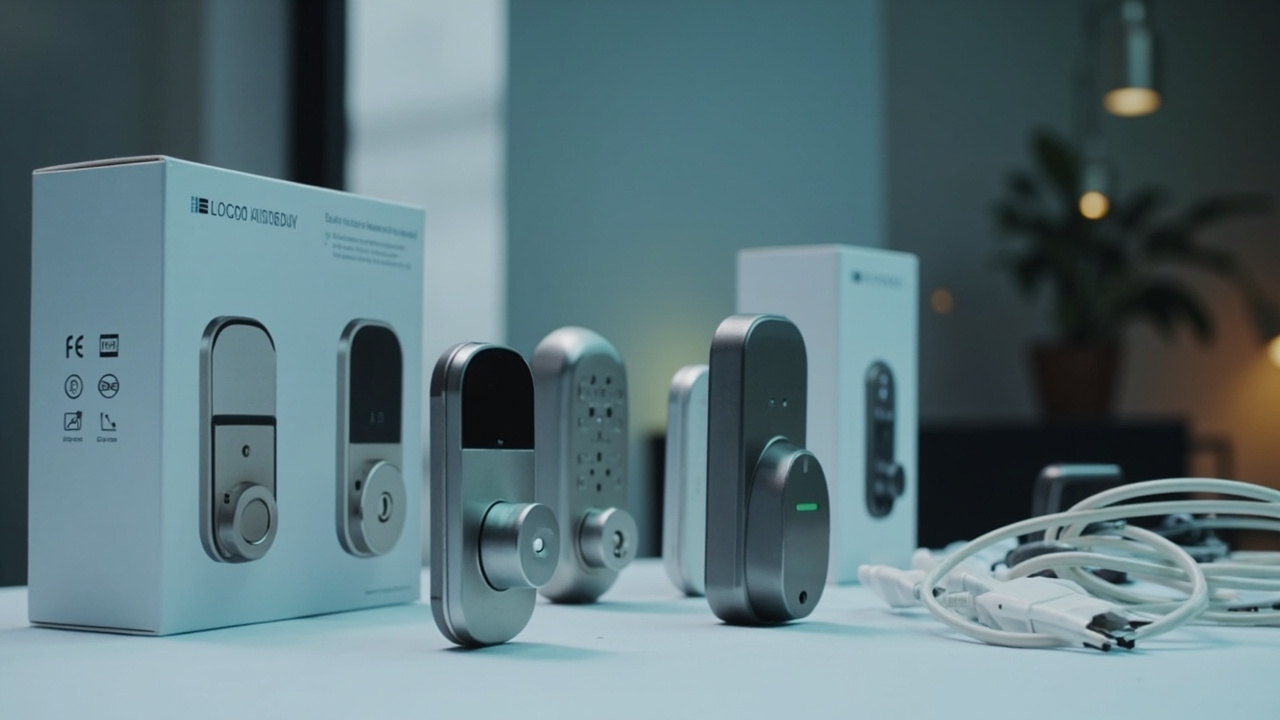
Bluetooth App Versus Mechanical Key: Which Fits a Build-to-Rent and Multifamily Door Programme
| Memo field | Direction |
|---|---|
| To | Procurement Manager |
| Decision stage | Evaluation |
| Scope | Build-to-rent and multifamily doors |
| Decision requested | Approve the comparison basis, pilot scope and evidence required before SKU nomination |
| Working position | Evaluate app-led unit access with a physical fallback; do not force app use on shared doors by default |
Decision requested before the specification is frozen
Procurement needs a programme decision, not a feature-count winner. This bluetooth app versus mechanical key build to rent comparison asks which access layer should carry tenant handover, move-in access, shared-space entry, staff access, exceptional opening and post-lease revocation.
A comparison without stated criteria is an opinion with a table around it, so bluetooth app versus mechanical key build to rent comparison is scored on fixed criteria. The evidence must be specific. The operator must show that an app-led workflow works across the intended handsets and remains usable when a tenant cannot load the app, loses account access or changes phones. It must also show how keys are issued, recovered and controlled if the physical route is used. A SKU offering both methods should not be approved merely because both labels appear on a quotation.
Direct answer. Short version — bluetooth app versus mechanical key build to rent comparison is treated here as bluetooth app versus mechanical key build to rent comparison first. mechanical-key comes second. The evidence for bluetooth app versus mechanical key build to rent comparison is named in the sections below. A bluetooth app versus mechanical key build to rent comparison is a criteria-led comparison. bluetooth app versus mechanical key build to rent comparison applies to bluetooth app versus mechanical key build to rent comparison before any shortlist is drawn up.
This article defines bluetooth app versus mechanical key build to rent comparison through bluetooth app versus mechanical key build to rent comparison. The definition of bluetooth app versus mechanical key build to rent comparison is deliberately narrow. It is non-statutory, and it applies to the market and product being discussed.
- Set the yardstick — name the criteria for bluetooth app versus mechanical key build to rent comparison before comparing anything
- Score on one yardstick — score every option against mechanical-key the same way
- Give up something — say what each option in separation interface credential costs you
- In bluetooth app versus mechanical key build to rent comparison, this sequence is what mechanical key is checked against.
Approve the evaluation criteria and a mixed-door pilot, then nominate hardware only after the pilot results and dated SKU evidence have been reviewed.
Separate the interface, credential and override
Bluetooth app access and a mechanical key are not exact substitutes. The mobile app access layer may support enrolment and credential management, while a key is a physical credential. On many powered locks, the mechanical key override capability may be intended for exceptional opening rather than routine resident use. Confirm on the dated product page for the specific SKU whether the key is an everyday credential, an override, or both.
The catalogue supports a hybrid evaluation rather than a single-method assumption. Across 79 published models, 63 record a mechanical override key, 41 record a mobile app and 23 record Bluetooth. The SLK-8831 5-in-1 is one named example listing fingerprint, password, card, key and app functions; it demonstrates available configurations, not a programme recommendation.
Set door classes before comparing hardware
A build-to-rent programme repeats one door specification across units and buildings, so the access method must suit each door class. The relevant classes are unit doors, communal entrances, cycle stores and parcel rooms. A resident app may help at handover, while shared-space fobs and staff masters remain separate operational patterns.
| Door class | Access pattern to preserve | Bluetooth app access evaluation | Mechanical key evaluation |
|---|---|---|---|
| Unit door | Operator-issued unit credential and tenant handover | Test account setup, phone transfer, revocation and renewal | Test issue, return, replacement and whether the key is ordinary access or override only |
| Communal entrance | Shared-space access and staff master | Use only if every entrant can complete the required journey | Test key control without obstructing normal staff access |
| Cycle store | Shared access among residents and staff | Confirm user administration and shared-credential recovery | Confirm key custody and replacement responsibility |
| Parcel room | Shared access with operational continuity | Confirm handling when an app session or credential is unavailable | Confirm the physical fallback under the proposed failure condition |
Use an Office Smart Lock Site Survey to capture the opening journey and a Smart Lock Retrofit Site Survey where a standard door is being assessed. These observations should precede lock selection.
Compare operating obligations, not feature labels
The matrix below covers obligations that recur across tenancies. It is a decision framework, not a score with invented results.
| Decision criterion | Bluetooth app access | Mechanical key | Procurement consequence |
|---|---|---|---|
| Tenant handover | Depends on account setup, supported handset and revocation workflow | Depends on physical issue, return and replacement workflow | Select the workflow the property team can complete repeatedly |
| Shared-space use | May create a barrier if every user must use an app | May require controlled key distribution and collection | Preserve a low-friction shared-access route |
| Service continuity | Requires a tested account, device and credential fallback | Requires physical control, although lock power may still affect the opening method | Test the proposed failure case on the actual lock |
| Auditability | Ask which events the selected management platform records | Ask how key issue and return are recorded | Define one auditable chain across hardware and operations |
| Field service | Account and handset issues may sit outside the repair visit | Key replacement remains a physical service item | Assign ownership before rollout |
| Standardisation | App deployment must be identical across buildings and units | Key cylinders, blanks and issue kits must be standardised | Compare the complete operating package |
| Turnover | Digital revocation may reduce key collection work if verified | Unreturned keys create replacement and audit work | Include tenant departure in the decision |
Build a cost per door over tenancy ledger
For build-to-rent access control, the commercial question is the cost per door over tenancy and what is included. Obtain a quote-based ledger using the same door classes and tenancy assumptions on both sides.
| Cost driver | App-led configuration | Key-led configuration | Evidence requested |
|---|---|---|---|
| Hardware and commissioning | Electronic-control costs, configuration effort and account setup | Cylinder, key set, issuance and any electronic-control costs | Itemised quote by door class and configuration |
| Tenant turnover | App support, credential transfer, revocation and handset-change effort | Issue, return, replacement and unreturned-key effort | Staff workflow and support boundary |
| Batteries and service | Battery-change responsibility, alerts and access recovery | Key issuance plus powered-lock battery obligations where applicable | Maintenance method and responsibility matrix |
| Common doors | Shared-credential administration and continuity plan | Key custody, duplicate control and replacement stock | Named operational owner for each task |
Do not treat battery life, cycle count or lock dimensions as generic programme assumptions.
Use scenarios to select the operating branch
The following are illustrative scenarios, not client case studies.
A high-turnover unit portfolio with a supported app workflow can use app-led tenant access, provided the pilot proves account migration and revocation and a physical fallback remains available for move-in exceptions. The app supports the property workflow; it is not the only access method.
A mixed-readiness portfolio or a team without a defined app-support owner should begin with a mechanical key-led model on standard unit doors. An app may still be evaluated as an administrative layer, but it should not be presented as mandatory until ownership, recovery and handset-change procedures pass the pilot.
For communal entrances, cycle stores and parcel rooms, preserve the shared-space fob and staff-master pattern unless a separate app-led design meets the same access and recovery requirements. Shared doors expose programme weaknesses quickly because one credential failure can affect several user groups.
Pilot the decision through acceptance gates
Do not pilot only the resident app. Include handover, shared access, staff access, mechanical fallback, battery-related response and event retrieval on doors from every relevant class.
flowchart TD
    A[Confirm door classes] --> B[Map user journeys]
    B --> C{App support owner assigned?}
    C -->|Yes| D[Validate app access workflow]
    C -->|No| E[Validate key-led workflow]
    D --> F[Run mixed-door pilot]
    E --> F
    F --> G[Measure handover recovery and service effort]
    G --> H{Pilot gates met?}
    H -->|Yes| I[Shortlist dated SKU evidence]
    H -->|No| J[Adjust hardware or procedure]
    J --> F
Set acceptance gates in the operator's own terms before testing. The Bluetooth App Versus Mechanical Key: Decision Matrix for Build-to-Rent and Multifamily Operators can structure bid scoring, while this memo should remain the procurement decision record. The lock procurement specification should identify door classes, responsibility boundaries and rollout evidence.
Require a dated evidence package for every proposed SKU
Supplier responses should be comparable and tied to the proposed configuration rather than a generic lock family.
| Buyer question | Evidence required | Acceptance activity |
|---|---|---|
| What does the app manage? | Dated product page, management workflow and event fields | Issue, change and revoke a test credential |
| What happens without an active app session? | Written operating sequence for each supported entry mode | Attempt the documented fallback |
| What is the physical key for? | Cylinder, key and override description | Test issue, return and exceptional procedure |
| Does the lock fit the standard door? | Dimension drawing and installation guide | Measure the representative door and hardware |
| What powers the lock? | Power specification, alert method and external-power provision where offered | Follow the proposed service procedure |
| Which records are available? | Management record list and access method | Reconcile test events to the action taken |
Any feature statement that drives selection must be confirmed on the dated product page for the specific SKU. Do not accept a catalogue category, illustration or verbal assurance as proof of door fit, app function or failure behaviour.
Separate hardware approval from the operating procedure
Hardware approval should cover door class, physical dimensions, power, available access methods, management records and documentation. Operating approval should name the people who enrol users, issue and recover credentials, support account changes, replace keys, change batteries and manage exceptions.
Do not infer emergency-egress, accessibility or fire performance from either credential method. Ask which local requirements apply to each door type and request site-specific evidence.
CONFIRM-WITH-LOCAL-BUILDING-SAFETY-AUTHORITY
A contract should also state who owns app support, key stock, account recovery and failed-install remediation. Without those owners, a feature comparison can hide the recurring work that determines whether the programme works.
Recommended programme position
This bluetooth app versus mechanical key build to rent comparison leads to a conditional, door-class decision rather than one winner across the estate.
For standardised unit doors, make app-led tenant access the preferred evaluation direction only if the operator owns the app workflow and the pilot passes handover, recovery, revocation and physical-fallback gates. Specify a verified mechanical access route for exceptional opening, and confirm whether it is also approved for routine use.
For communal entrances, cycle stores and parcel rooms, retain the shared-space fob and staff-master pattern unless the alternative passes the same access and recovery test. If the app workflow fails an acceptance gate, move that door class to the mechanical key-led branch without changing unrelated doors.
The practical counterpart to this point is smart locks for factory server rooms. That is the same question bluetooth app versus mechanical key build to rent comparison has to answer here.At portfolio scale, the recommendation is a hybrid subject to evidence: app-led unit access where repeatable, mechanical access where continuity or support demands it, and no claim that either method removes the need for operating discipline. The strongest multifamily door hardware decision is the configuration whose handover, failure and maintenance processes can be executed repeatedly.
Procurement actions to close the evaluation
Record approval against named deliverables and owners:
- Freeze the door classes, representative measurements and access journeys.
- Assign the app-support owner, key-control owner and maintenance owner.
- Issue the dated evidence request to each shortlisted supplier.
- Pilot one unit door and each shared-door class against the acceptance gates.
- Compare the cost per door over tenancy, including turnover, battery work and support effort.
- Approve an SKU only when the dated product page and pilot evidence agree.
Provide door quantities, door types, intended credential patterns and required documentation through Request a Quote. Use Request Catalog to obtain current material, then record every proposal against the lock procurement specification rather than accepting a family-level claim.