
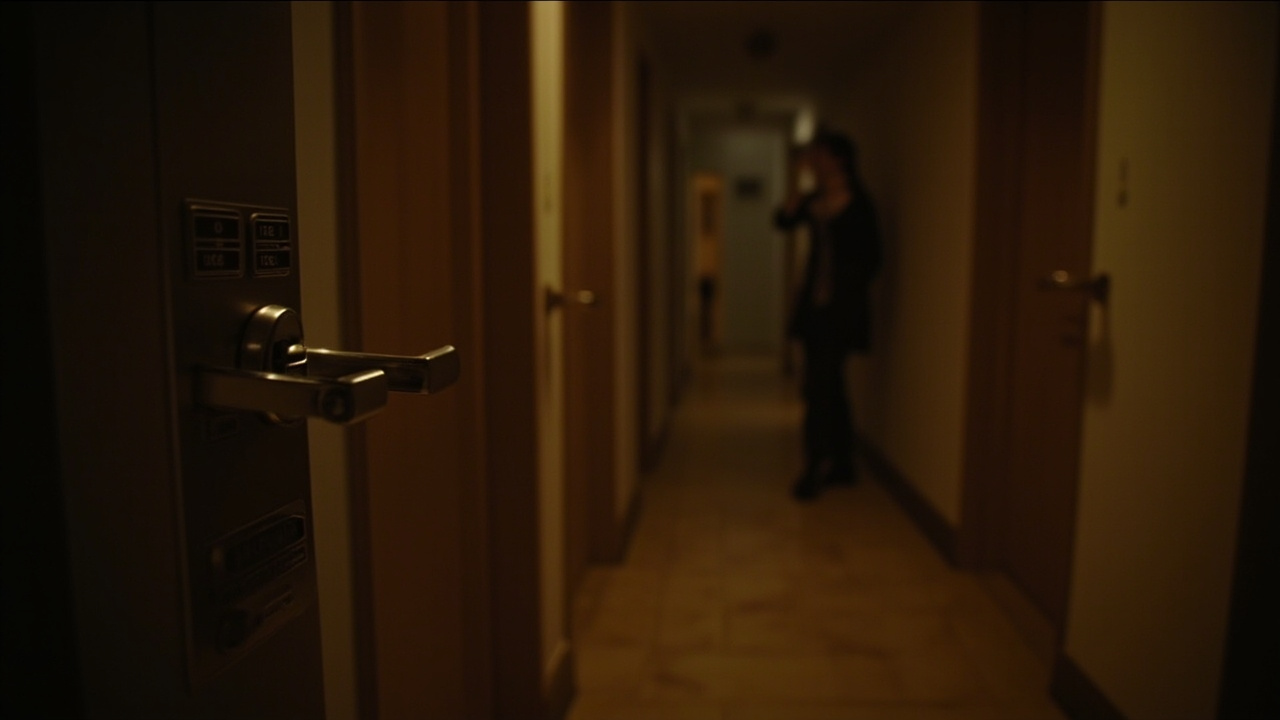
Smart Locks for Self-Storage Facilities: Door Survey and Fit Reality
Bid issue: fit evidence before product selection
This bid sheet turns a self storage door survey into a measurable fit condition. The property manager is evaluating individual unit locks, corridor gates, office doors and roller gates, and needs a response that separates proven fit from assumptions. Bidders must answer door by door rather than state that a lock will fit a general category. Against the catalogue, start from the cabinet locks.
Direct answer. In short, self storage door survey is the subject of this piece. self storage door survey is where the work on self storage door survey sits. self-storage is what has to be evidenced before anyone signs. A self storage door survey works through one building type door class by door class. self storage door survey is the first class to close. self storage door survey cannot be quoted until it is.
self storage door survey is used here in the narrow sense set out in self storage door survey. It is a working definition built for self storage door survey. It is not a statutory one, and it has to be read against the market and product concerned.
- Sort the openings — sort the door population into classes that behave alike, starting from self storage door survey
- Classify each door — state what self-storage needs before anything is quoted
- Show the fit — record the measurement that closes self storage door survey
- Treat this as the self storage door survey sequence, with self storage as the reference.
The bid covers physical fit, installation impact, customer handover and unresolved exceptions across the surveyed population. It does not replace the operator’s key-control policy, emergency procedure, credential model or rollout plan. Those controls may determine how a fitted lock is used, but a supplier cannot close a door-fit gap by pointing to them.
Existing-door work should use the field discipline in Smart Lock Retrofit Site Survey, while office doors can be compared with Office Smart Lock Site Survey. Both references are survey methods, not claims about any product.
Self storage door survey response sequence
The bidder response follows the physical evidence. The sequence prevents a catalogue selection from outrunning the door record. A storage facility door survey is complete only when the schedule identifies who will close each missing fact and when that closure will occur.
flowchart TD
    A[Accept surveyed door population] --> B[Assign unique door identifiers]
    B --> C[Complete physical measurements]
    C --> D[Map lock and door interfaces]
    D --> E[Test operating scenarios]
    E --> F[Resolve or register exceptions]
    F --> G[Return door-by-door fit schedule]
Each bidder should follow this sequence:
- Acknowledge the surveyed door population and the survey date.
- Assign the same door identifier used in the property manager’s schedule.
- Name the exact proposed SKU for every door line.
- Complete all physical fields or mark the line as an exception.
- Identify every modification to the leaf, frame, opening or adjacent hardware.
- Explain how the proposed lock is expected to operate at that door.
- Register assumptions, missing evidence and conditional commitments.
- Sign the response against the survey revision being priced.
A family name, photograph or general statement of adjustability is not a substitute for the door-by-door response. Where a product dimension or installation drawing drives the answer, confirm on the dated product page for the specific SKU and identify the document revision used.
Door classes must be surveyed separately
A self-storage facility may contain several door families, but they do not form one installation class. A unit door is handed to a customer, a corridor gate is controlled by the operator, an office door serves staff and a roller gate introduces a different leaf, track and service condition. Their proposed locks therefore need separate survey records.
| Survey class | Operating role | Primary fit question | Required record |
|---|---|---|---|
| Individual unit door | Customer-controlled storage space | Can the customer open, secure and later surrender the unit without an unplanned lock visit? | Leaf, frame, latch, strike, clearances and handover route |
| Corridor gate | Operator-controlled access zone | How will the proposed lock interact with gate movement and repeated operation? | Leaf travel, closing arrangement, mounting faces and condition |
| Office door | Staff-controlled workspace | Does the lock fit the existing opening and preserve intended staff access? | Leaf, frame, handle, closer, escape-route context and egress method |
| Roller gate | Vehicle or large-opening access | Does the proposed interface account for the leaf, guide, track and service access? | Gate construction, movement path, mounting zones and operating conditions |
The most damaging survey assumption is that every unit door has the same construction. In a self-storage property, the door leaf is not always original, and replacement doors can differ in thickness, frame profile and hardware arrangement. A sampled measurement may identify a recurring family, but the schedule must still show which surveyed doors belong to it.
The field record that bidders receive
The survey record should contain objective evidence rather than a lock selection. It should distinguish what was measured, what was observed and what the property manager still needs to verify. A blank critical field is an open item, not an implied value.
| Survey field | Information to record | Acceptable evidence |
|---|---|---|
| Door identifier | Exact unit, gate or office reference | Controlled survey number and marked location |
| Door family | Unit, corridor, office or roller gate | Photo showing the complete opening |
| Leaf and frame | Construction, profile and visible condition | Close and wide photographs |
| Dimensions | Leaf thickness, width, height and relevant frame dimensions | Dimensioned sketch or measurement sheet |
| Swing and traffic direction | Opening direction and approach side | Photograph taken from the normal approach |
| Hinge arrangement | Number, position and visible condition | Hinge-side photograph |
| Latch or bolt | Type, position, projection and operating condition | Close-up photograph |
| Strike interface | Existing strike, keeper and fixing positions | Close-up photograph |
| Closer and stay | Type, position and adjustment points | Photograph and mounting note |
| Working clearances | Door-to-frame, door-to-obstruction and handle projection | Measurement record |
| Mounting surface | Leaf, frame and adjacent wall construction | Material note and photograph |
| Existing hardware | Lock, cylinder, handle, key and removable components | Full and detail photographs |
| Access environment | Weather exposure, lighting, power and communications context | Operator observation with date |
| Proposed interface | Lock position, handing and installation route | Marked photograph or drawing |
| Fit evidence | Exact SKU drawing or template used | Dated document reference |
Photographs must show context as well as detail. A close-up of a strike plate cannot prove that a lock will fit; it may conceal the frame depth, handle projection or adjacent obstruction. The proposed mounting point should be marked against the same photograph used for the survey so that the installer and bidder interpret the same door.
Fit outcomes must be explicit
The survey is not complete merely because each door has a proposed product. The bidder must classify the fit so that the property manager can distinguish a demonstrated installation from a proposal awaiting correction. This is where self storage lock fit becomes a decision rather than a sales description.
| Fit outcome | Physical evidence required | Operating evidence required | Bid consequence |
|---|---|---|---|
| Accepted fit | Relevant dimensions, interfaces and proposed mounting positions are documented | Opening, closing and handover method are complete | Installation may proceed under the normal handover process |
| Conditional fit | A named modification, adaptor, replacement part or supplier action closes the gap | The condition and method for closing it are stated | Installation awaits documented closure of the exception |
| Unproven fit | A dimension, interface condition or exact SKU drawing is missing | The operating method cannot yet be demonstrated | No installation commitment until evidence is supplied |
| Excluded fit | The proposed product or installation route is not accepted for that door | An alternative is not offered within this bid | The door is removed from the proposed installation or separately tendered |
“Adjustable,” “universal” and “will fit” are not acceptable outcomes by themselves. The bidder must identify the adjustment, its limits and the evidence used. If a proposed arrangement depends on modifying the door leaf or frame, state whether the modification is permitted and who must approve it before installation.
The classification must remain tied to the exact product. A field measurement can verify the door; it cannot silently amend the product drawing.
The individual unit lock is also a customer handover
An individual unit lock is both an access product and a customer-facing lock. The customer may never meet the operator, and a customer can abandon a unit without returning keys. Consequently, an abandoned unit lock reset that depends on a technician visiting the door is a service dependency, not a complete fit or handover.
Detailed key ownership belongs in Smart Lock Key Control and Master Key Decisions for Self-Storage Facilities. The survey only needs the fit-related consequence: whether the proposed arrangement can be handed over, reset or replaced under the operator’s stated service route.
| Customer event | Survey and fit evidence | Required bidder response |
|---|---|---|
| New customer handover | Identify the hardware supplied at the door and the items the customer receives | Explain the customer’s physical and access interface |
| Vacancy and abandoned unit | Record whether access can be reset without a door visit and whether the lock remains on the unit | State the reset route, prerequisites and evidence |
| Replacement unit door | Record the new leaf and frame if they differ from the surveyed door | Submit a new fit classification and installation route |
| Lock replacement or correction | Identify which door components must be disturbed and which access route remains | State the correction sequence and site impact |
The bidder should not claim that a unit can be re-coded merely because the proposed lock has electronic access. The evidence must demonstrate the reset method, the required authority and whether the customer or operator must be present. Where that cannot be demonstrated, the handover schedule must identify the door visit and its operational dependency.
Existing and mixed leaves need separate fit routes
The mixed-door problem is central to self-storage fit work. A property may contain original unit doors, replacement leaves and retrofit hardware from different periods. These doors may appear identical in a corridor, yet their frame depth, latch position and fixing arrangement can differ.
The wider compatibility taxonomy in Door Types in Self-Storage Facilities: Unit Doors, Gates and Office Compatibility Notes separates the door types. For the survey, smart lock door compatibility must then be recorded for each physical leaf rather than inferred from the type label.
| Door condition | What the survey must prove | Bid requirement | Stop condition |
|---|---|---|---|
| Original unit leaf | Existing hardware positions, frame condition and available clearances | State the direct-fit or modification route | Existing position prevents the proposed interface |
| Replacement leaf | Whether its dimensions and construction differ from adjacent originals | Submit a separate fit line for the replacement | No dimensional or photographic evidence |
| Mixed batch | Which measured doors can be treated as one installation family | Identify representative and excluded doors | Variations remain untested |
| Previously retrofitted leaf | Existing adaptor, lock, cylinder or strike arrangement | State reuse, replacement or exclusion | Existing parts obscure the proposed interface |
Where modification is possible, the bidder should separate reversible installation work from irreversible work to the leaf or frame. It should also identify whether the replacement component will still be documented in the operator’s maintenance record. A visual match is not enough to carry an installation commitment from one door to another.
Corridor and roller gates are not scaled unit doors
Gates introduce movement, alignment and service conditions that cannot be transferred from an individual unit door. The detailed exposure questions belong in Vandalism, Misuse and Environmental Load on Locks in Self-Storage Facilities. The fit survey must capture the physical interface that those exposure questions will later test.
| Feature | Individual unit door | Corridor gate | Roller gate |
|---|---|---|---|
| Moving member | Relatively small leaf with a customer-operated lock | Gate leaf operated repeatedly in the access zone | Large moving leaf guided by a track |
| Survey focus | Latch, strike, hinge and customer handover | Leaf movement, latch capture, closing action and mounting faces | Leaf, guide, track, travel path and service access |
| Hardware evidence | Exact lock and interface dimensions | Proposed lock position during full movement | Proposed interface around the correct guide and mounting zone |
| Operational evidence | Customer opens and closes the unit | Staff and customer traffic through the zone | Gate travel and service behaviour at the proposed location |
| Service route | Door-level replacement or reset | Gate service may affect the access zone | Gate work may require specialist access or shutdown |
A roller gate lock survey must record the complete moving assembly, not merely the visible guide bracket. The bidder should mark where the proposed hardware sits relative to the leaf, guide, track and adjacent structure. If alignment changes during travel, the line remains conditional until the proposed interface has been checked against that movement.
Where a gate or office door sits on an escape route or emergency-use arrangement, the survey records the proposed lock and operating method but does not decide acceptability. The property manager must obtain the relevant local decision before the affected door is marked accepted.
CONFIRM-WITH-LOCAL-BUILDING-AND-FIRE-AUTHORITY: Confirm the required locking arrangement, emergency operation and authority approval for each gate or office door on a relevant escape route.
Office doors and operating conditions need separate evidence
The office door belongs in the same survey package but should not inherit a unit-door response. It is used by staff, may contain different hardware and may carry a different opening requirement. Its fit record must therefore remain visible as a separate line.
Site conditions also belong in the evidence. A self-storage facility may be mostly unstaffed, and a wide temperature range may affect the selection. The survey should record conditions at the door rather than asking bidders to infer them from the site description.
| Condition | Survey evidence | Bidder response |
|---|---|---|
| Unstaffed operation | Observed access route and whether staff attendance is normally required | Identify the door tasks that can be completed without staff |
| Temperature variation | Operator records or observed conditions at representative locations | State the documented operating boundary and its evidence |
| Weather exposure | Whether wind-driven rain, standing water or direct sunlight reaches the lock | State the applicable boundary and confirm it on the dated product page |
| Power availability | Nearest suitable supply point and any observed interruption | Describe the proposed power route and its fit at the door |
| Communications | Whether the corridor access route depends on a physical or remote credential | Describe the proposed connection and any door-level fallback |
| Physical traffic | Door and approach condition relevant to the proposed hardware | State the observed loading and misuse assumptions |
Any SKU-specific statement about temperature, power, battery life, read distance or cycle use must be tied to an identifiable document. The property manager should reject a condition answer that cannot be traced back to the proposed product.
Exceptions and survey close-out
Every unresolved item needs an owner, an evidence requirement and a defined next state. Leaving an exception open without those fields transfers the risk to the installer. The survey close-out is therefore a controlled decision record, not merely a collection of photographs.
| Status | Meaning | Required close-out action |
|---|---|---|
| Accepted | The proposed fit and operating method are evidenced | Include the door in the installation schedule |
| Accepted by exception | A named condition or modification is permitted | Attach the approval and completion evidence |
| Unresolved | Missing measurement, product evidence or approval prevents acceptance | Keep the door out of the installation release |
| Excluded | The proposed product or interface will not be used at that door | Record an alternative route or a separate tender |
The handover pack should contain the controlled door schedule, photo index, measurement record, marked installation positions, exception register and references to the exact proposed SKU documentation. The installer should receive only the released revision, while the property manager retains the unresolved items with their owners.
The release step is detailed in Installer Handover and Commissioning for Self-Storage Facilities. That process does not convert an unresolved fit into an accepted one; it starts only after the relevant line has been closed.
Mandatory door-by-door bid response schedule
The following schedule forms the minimum technical response. “As required,” “standard” and “suitable for site conditions” are not complete answers. The bidder may attach drawings and supporting documents, but the schedule must point to them.
| Ref. | Required bidder response | Evidence to attach | Acceptance rule |
|---|---|---|---|
| A | Confirm the surveyed door population and revision | Marked door schedule | Every surveyed door is answered |
| B | Identify the exact proposed SKU by door | Product reference list | No family name or unconfirmed equivalent |
| C | State the physical interface and mounting position | Marked photographs and drawings | Position agrees with the survey record |
| D | List every leaf, frame or hardware modification | Work description and responsibility | Each modification is identifiable and approved |
| E | Explain opening, closing and access operation at the door | Operating sequence | Sequence covers customer and operator use |
| F | Describe customer handover, reset and replacement routes | Handover procedure | Dependency on staff attendance is disclosed |
| G | Respond separately to corridor and roller gates | Gate-specific fit evidence | Gate movement is included in the check |
| H | Address recorded site conditions | Dated product evidence and site note | Product boundary matches the recorded condition |
| I | Register every unresolved or conditional item | Exceptions register | No blank critical field remains |
| J | Define handover records and local approval responsibilities | Handover checklist | Responsibilities are named by role |
The exact SKU and dated product reference are mandatory because the survey may contain doors from different installation families. A bidder that proposes a later substitution must return the affected lines for reclassification, with fresh fit evidence where the substitute changes dimensions, handing, mounting or operation.
Evaluation and clarification before award
The property manager should assign the weighting for each criterion before comparing responses. Physical fit comes first because a well-described product still fails when the door interface is wrong. The remaining criteria determine whether the response can move from evaluation into installation planning.
| Evaluation criterion | Evidence sought | Reason to hold or reject |
|---|---|---|
| Survey completeness | Every door and field is answered | Blank or omitted door lines |
| Product identity | Exact SKU and dated references | Unverified family or substitute |
| Physical fit | Measurements, photographs and marked interface | Unresolved geometry or mounting conflict |
| Operating fit | Opening, closing and access sequence | Required behaviour is not demonstrated |
| Customer handover | Reset, replacement and responsibility route | Customer task depends on an undisclosed visit |
| Site-condition fit | Traceable product and site evidence | Operating boundary is absent |
| Exception control | Owner, evidence and approval for every exception | Conditional acceptance has no closure route |
| Handover readiness | Clear records and responsibilities | Installer or operator receives conflicting data |
Clarifications should correct facts rather than create a new product proposal. If a bidder needs to change the proposed hardware, the affected door must be returned as a revised fit line. If the property manager needs a missing door measurement, the survey revision and affected lines should be identified before answers are accepted.
It is worth pairing this with smart lock strike plate measurement. That is the same question self storage door survey has to answer here.The next procurement action is to issue the completed door schedule with the bid invitation and require a response against every line. When the survey pack is ready, use the request-a-quote route and include the controlled schedule, photo index, exception register and exact-product references. A bid can then be evaluated on evidence: every accepted door has a known interface, a defined operating method and a handover route that the operator can actually own.