
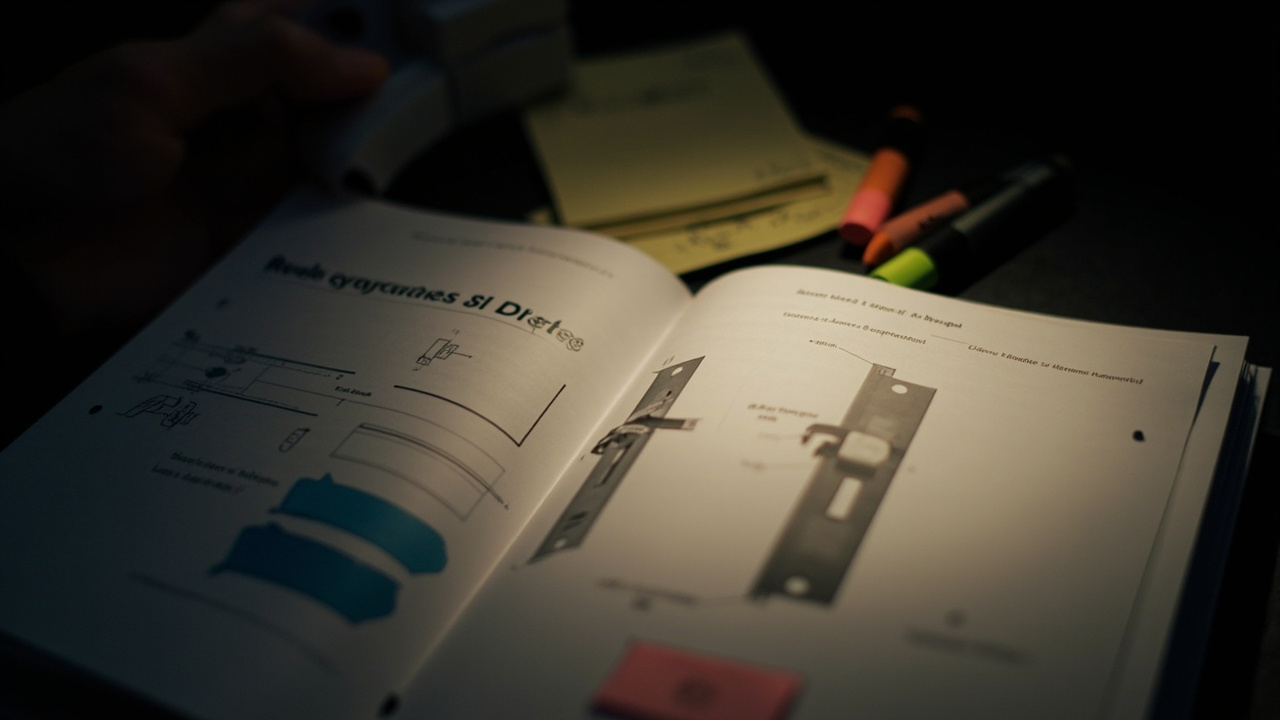
Smart Lock Glossary: Bored Lock Definition for B2B Buyers
Working definition. The bored lock definition used in this programme is a lock assembly intended for installation into a prepared recess cut into the door leaf, commonly a cylindrical or shaped bore. The label identifies an installation route, not the case dimensions, cylinder format, handing or electronic functions.
Direct answer. Short version — bored lock definition is treated here as bored lock definition first. bored-lock comes second. The evidence for bored lock definition is named in the sections below. A bored lock definition is a reference entry. It holds definitions, options and trade-offs. bored lock definition is the entry point for bored lock definition.
This article defines bored lock definition through bored lock definition. The definition of bored lock definition is deliberately narrow. It is non-statutory, and it applies to the market and product being discussed.
- Fix the terms — use one vocabulary for bored lock definition across the project
- Present the options — list the routes available for bored-lock and what each is for
- Present the trade-off — record what you give up with each route in quick answer
- This is the sequence bored lock definition has to follow, anchored on bored lock.
For this article, that is the buyer’s own working definition of bored lock, not a claim that every market uses the phrase identically. It is a scope-control label for an importer comparing quotations, samples and door schedules.
Quick answer for the buyer The same question as bored lock
A bored lock is not defined merely by having a cylinder or by being described as tubular. It is defined by the lock case being intended for a door recess and by the preparation records against which that case can be checked. The catalogue side of this is the smart door locks.
The useful buyer question is: Which lock case is intended for which door preparation, and what evidence proves that they match? A label without a drawing, survey or approved sample leaves the commercial scope open.
What the term actually decides — bored lock
For an importer, the bored lock definition is therefore a scope-control term. It tells the buyer which family of installation evidence to request, but it cannot settle whether a supplied case fits the actual door.
| Decision the term touches | What the label establishes | What remains unproved | Evidence needed |
|---|---|---|---|
| Installation route | The lock case is intended for a prepared door recess | Exact bore, case and fixing dimensions | Dimensioned template and door survey |
| Component boundary | The quotation concerns a lock assembly rather than only a cylinder | Cylinder, follower, spindle and fixing arrangement | Parts list and approved sample |
| Commercial scope | A preparation basis is being used in the offer | Whether production will match the sample | Configuration record and sample approval |
| Site compatibility | The intended lock is associated with a bore | Whether the actual door has the same preparation | Door schedule and project-specific survey |
Include these fields in the RFQ instead of accepting the term without supporting information. The broader structure belongs in What Should I Check Before Ordering Smart Locks.
Keep the lock, cylinder and preparation method separate
The phrase bored lock vs mortise lock is not resolved by vocabulary alone. A mortise lock can also require a cylinder bore, so the drawing must identify the case pocket, access hole and fixing pattern.
| Label | What it identifies | What it does not establish |
|---|---|---|
| Bored lock | A lock assembly intended for installation into a prepared recess | Case dimensions, cylinder format or electronic configuration |
| Tubular lock case | A lock case associated with bored installation | Exact fit, backset, follower arrangement or door compatibility |
| Euro-profile cylinder | A cylinder profile used within a lock arrangement | Whether the lock case and door preparation are correct |
| Mortise lock | A case intended for a mortise pocket in the door edge | Whether a separate cylinder bore is also required |
| Rim lock | A lock mounted against the door face | Compatibility with a bored preparation |
| Smart-lock retrofit kit | Parts intended to work with an existing lock arrangement | Suitability for a specific case, door or template |
This separation prevents a component-level approval from being mistaken for approval of the complete installation method.
Common-confusion checklist
- Treat “bored” as a location, not a dimension. It does not establish bore diameter, depth, case size, backset, follower position or spindle arrangement.
- Do not treat “tubular” and “bored” as interchangeable purchase terms. Confirm whether the quotation names a case, a cylinder, a retrofit arrangement or the complete lock.
- Do not treat a euro-profile cylinder as the bored lock. Record the cylinder separately from the lock case and door preparation.
- Do not assume every smart-lock product is compatible with an existing bored arrangement. Require the supplier to define the supported preparation basis.
- Do not assume new-door and retrofit scopes are equivalent. Record whether the door is being prepared for the first time or already contains a case.
The commercial cost of an unresolved label is not limited to an incorrect catalogue entry. It can become a sample rejection, a drawing revision, a receiving mismatch or an installation decision made without agreed evidence. Why Smart Locks Fail in the Field: Terms and Tables helps connect preparation records with downstream failure categories.
Door-evidence checklist
Attach the following records to the definition used in the quotation:
- A door preparation schedule identifying each door type and whether the leaf is new or existing.
- A dimensioned survey showing door thickness, face construction and the required lock-case recess.
- A dated template or drawing showing the cylindrical door bore, case outline, backset, follower position and spindle arrangement.
- The applicable faceplate, strike plate and escutcheon arrangement.
- Handing, latch or deadlatch position, and the intended lock preparation method.
- Fixing details, including any through-bolt requirement, jamb preparation or wood-to-metal conversion.
- An approved sample and a record identifying the exact configuration represented by that sample.
flowchart TD
    A[Term appears in commercial record] --> B[Collect door and lock evidence]
    B --> C[Compare preparation method]
    C --> D[Record accepted configuration]
    D --> E[Release approval or hold]
The minimum closeout should connect the definition to a specific door and an agreed lock configuration. Pilot Order Evidence provides the broader preparation context, while the Office Smart Lock Site Survey and Smart Lock Retrofit Site Survey can be used as field-record models.
Use bored-lock as the search token in the RFQ, quotation, sample approval and installation record so that the commercial document remains connected to the door evidence.
Specification wording that prevents ambiguity
Replace a label-only entry with a controlled clause that identifies the evidence and prohibits unrecorded substitutions.
Lock installation basis: bored-in lock case using the referenced preparation method. Door and case dimensions are governed by the attached drawing and door schedule. Cylinder, follower, spindle, handing and fixing arrangements are recorded in the parts list. No change to the lock case, cylinder arrangement or preparation template is accepted without written approval.
| Controlled field | Why it belongs in the record | Risk if omitted |
|---|---|---|
| Preparation basis | Connects the lock case to the intended door recess | General labels can describe different configurations |
| Drawing and schedule references | Makes the fit assessment reproducible | Drawings and quotations may refer to different assumptions |
| Case and cylinder boundaries | Separates replacement components from the assembly | Correct parts may still be arranged incorrectly |
| Handing and fixing fields | Controls parts that determine physical installation | Installation assumptions remain implicit |
| Substitution rule | Defines the approval path for changes | A delivered configuration may depart from the sample |
Send the completed wording with the RFQ rather than waiting for the order stage. It gives the supplier a concrete basis for quotation and lets the buyer compare responses on the same terms.
Import, classification and local compliance firewall
An importer should translate the physical configuration into a precise product description for shipping, receiving and installation records. Installation terminology must not be treated as a customs classification. How a Supplier Is Actually Verified: Terms and Tables and Smart Lock Factory Testing: What Should Be Tested provide the evidence discipline for the supplier record.
CONFIRM-WITH-CUSTOMS-BROKER: Confirm the product description, material, power source, function and packing presentation before using an HS code or deciding any duty treatment.
CONFIRM-WITH-LOCAL-LEGAL: Confirm the destination-market import, product and installation requirements for the specific configuration and intended use.
These checks settle separate questions. The working definition controls what the importer believes it is buying; local and customs review determines how that goods description is treated on entry and in the destination market.
Where the label does its work
| Transaction stage | What the definition must control | Closeout record |
|---|---|---|
| RFQ | The preparation basis requested from each supplier | Common terminology and attached door records |
| Sample | Whether the physical case matches the stated preparation | Marked sample and configuration sheet |
| Approval | Which dimensions, components and handing are frozen | Signed configuration reference |
| Production and packing | Whether the delivered item remains the approved item | Packing and configuration reference |
| Receiving | Whether cartons contain the expected lock arrangement | Item-level inspection against the packing record |
| Installation | Whether field assumptions match the approved preparation | Installation drawing available to the site team |
The term does its greatest work before approval, when a controlled definition can prevent mismatches. How a Pilot Order Reduces Programme Risk: Plain Explanation explains why an early configuration check can expose an ambiguous scope while it is still practical to correct the record.
One-page acceptance record — bored lock
Create a single control record containing the following fields:
- Source and wording of the bored lock definition.
- Door type, leaf material and existing-preparation status.
- Intended lock preparation method and case family.
- Drawing, template and door preparation schedule references.
- Case, cylinder, follower, spindle, handing and fixing boundaries.
- Sample identifier and approval record.
- Any approved exception or substitution.
- Unresolved field that still prevents release.
A compact entry can read: Bored installation basis: [reference]; door record: [reference]; case: [reference]; cylinder arrangement: [reference]; exceptions: [reference].
The record should be passed to quotation, purchasing, receiving and installation teams as one controlled attachment. That preserves the meaning of the term without pretending that the term itself proves compatibility.
Final buyer tear-off
Before issuing an RFQ:
- State the preparation basis instead of using the label alone.
- Request a dimensioned template, door schedule and approved sample.
- Define the lock case, cylinder and retrofit scope separately.
Before approving a sample:
- Match the sample to the actual door record.
- Resolve bore, case, follower, spindle, handing and fixing assumptions.
- Freeze the configuration and record the drawing references.
Before releasing an order:
- Require written approval for substitutions.
- Carry the same references into packing and receiving records.
- Confirm customs, local and installation questions through the appropriate specialist.
Send the completed tear-off with the RFQ rather than sending only the word. It gives an importer a scope that can be compared across quotations, checked against a sample, received against an agreed record and explained clearly to the installation team.
Ask for the offer against the same requirement: request a quote.