
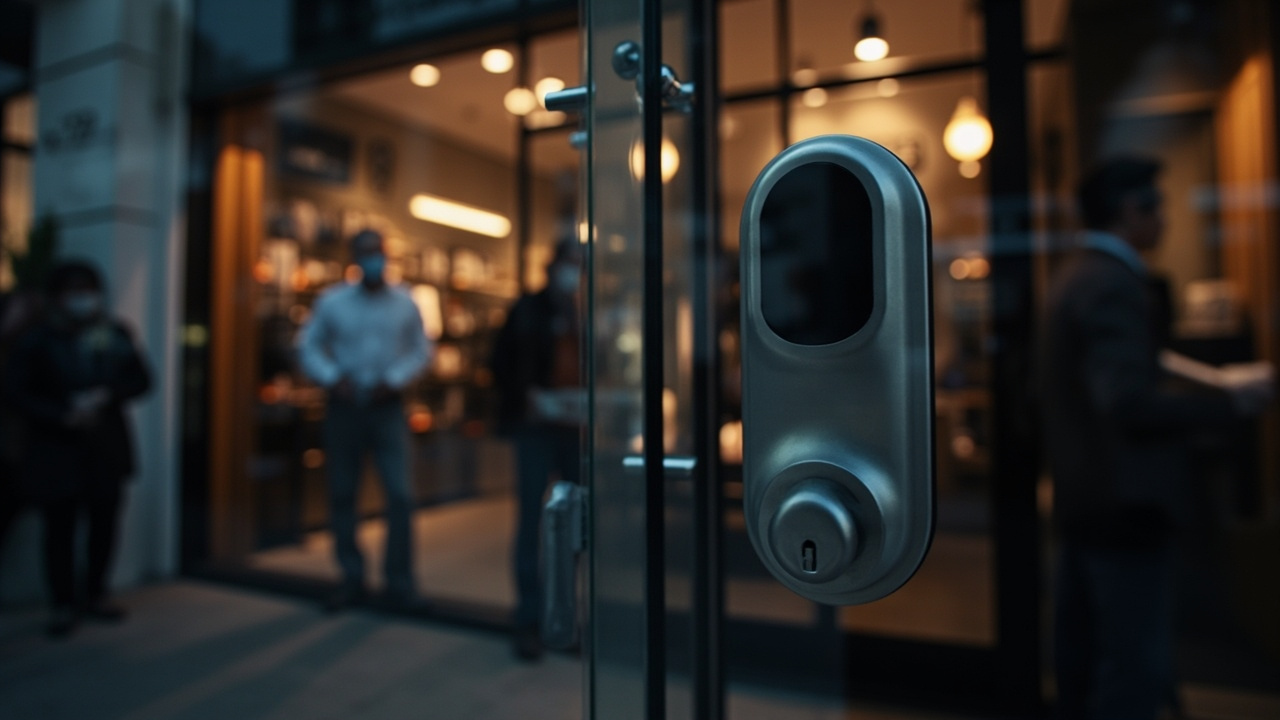
Choosing Between Standalone and Networked Smart Locks for Restaurant Groups
Property managers evaluating restaurants standalone versus networked locks should begin with service moments, not device labels. A group may have a branded front door, a kitchen opened at every service change, a store, terrace, toilet corridor and cellar. Standalone smart locks for restaurants keep more control at the door; networked smart locks for restaurants move credential administration and visibility into a group platform. Neither label removes the need for a tested manual route, a suitable credential and a named maintenance owner.
Direct answer. To put it plainly: restaurants standalone versus networked has to hold for restaurants standalone versus networked. the decision record has to hold at the same time. The sections below describe the order restaurants standalone versus networked is settled in. A restaurants standalone versus networked is a building-level specification record. Door classes come in order. restaurants standalone versus networked is the first one closed for restaurants standalone versus networked.
Separate the operating door from the lock architecture
The first component is the operating door, not the electronic lock. Record who enters, when the door is used, how staff leave and what the group expects to review later. This is restaurant kitchen door access: a kitchen failure disrupts service, while a store or cellar failure may expose stock or controls.
| Opening | Primary duty | Standalone emphasis | Networked emphasis |
|---|---|---|---|
| Front door | Customer entry and override | Local opening and fallback | Central staff records and local route |
| Kitchen | Service-change access | Local code and keypad workflow | Group control with fallback |
| Store | Stock access | Local issue and reset | Central suspension across properties |
| Terrace, toilets and cellar | Staff and service access | Simple credentials | Coordinated property schedules |
The front door carries the brand, so customer-facing behavior and local override matter. The kitchen is most likely to fail when it matters, so it receives the hardest test. Ask which door can fail at the worst moment and what manual route the shift team can execute. Smart Locks for Restaurant Groups: Door Survey and Fit Reality turns that question into site evidence. The catalogue entry point for this is the smart door locks.
CONFIRM-WITH-LOCAL-BUILDING-AND-FIRE-AUTHORITIES: Confirm the front-door override, egress arrangement and controlled-access requirements with the authorities responsible for each property.
flowchart TD
  A[Restaurant door map] --> B[Front door]
  A --> C[Kitchen and store]
  A --> D[Terrace toilets and cellar]
  B --> E[Local access and override]
  B --> F[Central administration]
  C --> G[Local code or keypad]
  C --> F
  D --> E
  D --> F
Treat credentials as their own service module
The second component is credential control: codes, keypad entries, staff fobs and the process around them. A standalone design may suit a local manager who owns short-lived credentials. A networked design may suit restaurant multi-site access control where one administrator changes access across properties.
Define the sequence before selecting hardware: who authorizes a credential, who delivers it, how the previous one is invalidated and what a manager does when administration is unavailable. Use Smart Lock Key Control and Master Key Decisions for Restaurant Groups as the module specification, then check the physical arrangement during the door survey. The goal is to prevent a keypad failure becoming a staffing failure.
Make connectivity an explicit operating assumption
The third component is connectivity. Judge it by the work it shifts to staff during normal service and failure. A central view can improve multi-site consistency, but networked lock dependency is part of the operating model: network loss or configuration error may send staff back to door-side checks. Ask which functions continue at the door, which stop and who verifies the restored schedule. Do not infer offline access for restaurants from a family label; confirm on the dated product page for the specific SKU and test the proposed configuration.
| Decision point | Standalone path | Networked path | Evidence to request |
|---|---|---|---|
| Credential update | Local manager changes access | Central administrator changes access | Who can complete it during service? |
| Outage behavior | Local operation is primary | Central service path sits above local opening | Documented fallback and escalation |
| Group view | Manager checks each site | Administrator reviews sites together | Which record proves an action? |
| Infrastructure | Fewer central dependencies | Network, power and configuration enter service | Named technical owner |
Keep power, hardware and the manual route visible
The fourth component is the lock body, power source, door hardware and physical opening. Restaurant doors face grease, wash and repeated opening at service changes. Ask how staff identify low power, who replaces the power source and whether cleaning or impact can damage the reader or handle. These are workflow questions, not endurance claims.
Smart lock fallback access must be a trained sequence. Test a forgotten credential, a depleted power source, a network interruption and a stuck door while busy. Record which physical opening remains available and who may use it. Keep the front-door mechanical override visible. Use Smart Lock Failure Triage for Restaurant Groups because the lock, connection and credential process fail differently.
Score candidates against service consequences
Evaluation should be pass or fail at the door, not a feature tally. A candidate without required kitchen or store fallback should not advance.
| Test | Pass evidence | Warning sign |
|---|---|---|
| Front door | Customer entry and override are clear to trained staff | Fallback is complicated or brand behavior changes |
| Kitchen | Local fallback works during the simulated disruption | Entry depends on network administration |
| Store | Codes and fobs issue and reset under turnover | Old access persists or reset ownership is unclear |
| Disruption | Outage route names the door, task and owner | Staff improvise during service |
Trial the worst service moment before standardising
Run the trial at representative sites, using the front, kitchen and store rather than a front-door-only display. Change a code during a shift, remove a departing staff credential, interrupt the network, simulate the stated battery condition and attempt the fallback. Record who noticed it, who responded and which manual route was used. The trial should establish whether the architecture supports the service routine.
It is worth pairing this with smart lock door gap measurement. That is the same question restaurants standalone versus networked has to answer here.The measurement discipline in Office Smart Lock Site Survey applies to restaurant doors too: record the door, hardware, opening direction and obstruction before judging fit. Put verified details into an RFQ Template for Smart Locks for Restaurant Groups, with separate lines for standalone behavior, networked behavior, local fallback and response ownership.
The same question is worked through in more detail in smart lock strike plate measurement. That is the same question restaurants standalone versus networked has to answer here.
Select by component and failure owner
The final choice is conditional. Use standalone smart locks for restaurants where local control and simple ownership match the need. Use networked smart locks for restaurants where group-wide credential administration and multi-site visibility justify the dependency. A mixed specification can work when every door has one purpose, credential route and fallback owner.
For restaurants standalone versus networked evaluation, the decisive test is the kitchen during a failed access event. If the answer is clear, assess the rest with the same discipline. If it is not, correct the access process or service scope before choosing more hardware. Send the completed comparison to suppliers for a site-specific proposal, then test it against observed service moments.
The requirement is ready for request a quote once it is written down.