
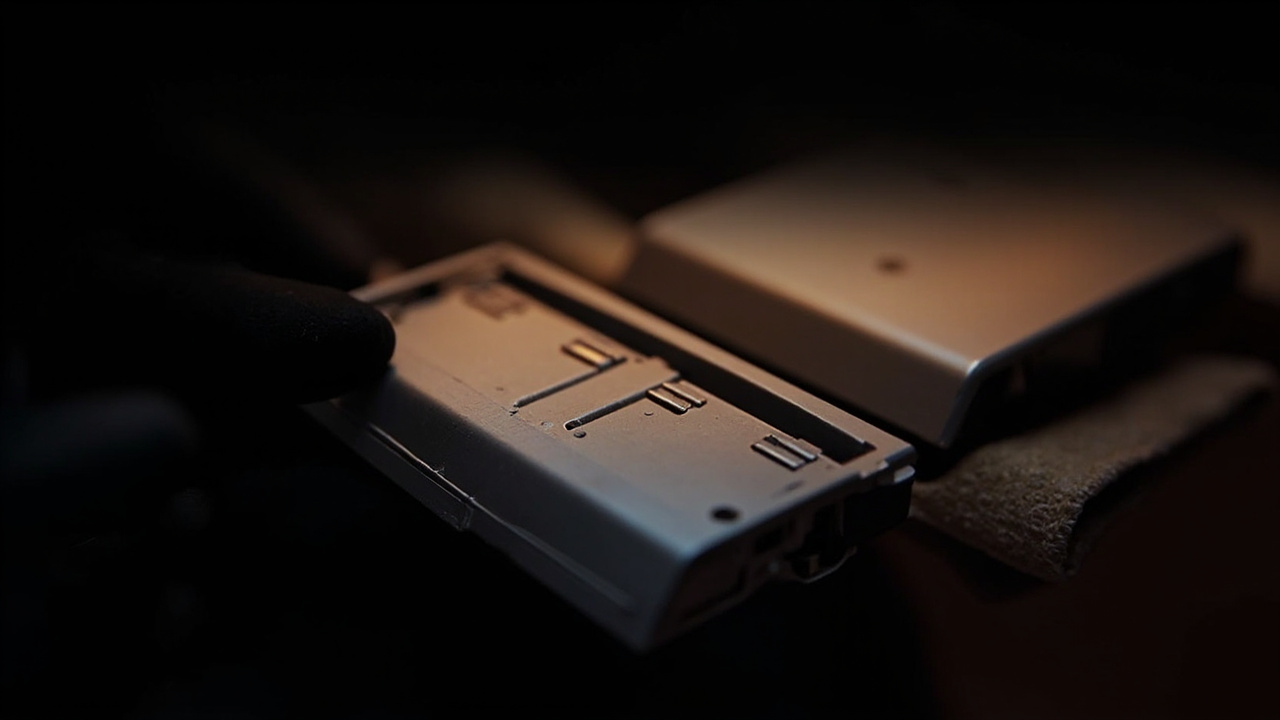
The Evidence a Motor Not Driving Record Needs: Readings, Envelopes and the Paper a Supplier Will Accept
A motor not driving measurement is a measurement of evidence, not of the motor. When a door is reported as "the motor does not move", the report arrives as a complaint rather than a finding, and behind that sentence sit at least four separate faults — a bolt jammed against a pre-loaded door, a drive that has stopped, an electronics path that never issued the command, and a power source that cannot deliver under load. They are separated by readings, not by argument, and most field records capture the conclusion and lose the readings. A record that says "motor replaced, door working" is a list of actions. A record that says "cells measured under load while the drive was commanded, override turned freely, no attempt appears in the unit's access record, and a second door of the same model shows the same fingerprint" is evidence, and it is the only kind a supplier can act on.
- Fix the frequency — define how often motor not driving measurement is inspected
- Fix the threshold — name the condition that forces a change to motor-not-driving
- Follow the metric — keep one metric that shows eight checks is healthy
- motor not driving measurement runs this sequence, and motor not driving is the record it produces.
This guide is written for the facility manager who owns a portfolio of doors and the outcome of every visit against them. It works through the eight checks of the motor not driving fault tree in the order they should be run, and treats each check as a measurement with a defined reading, a defined instrument and a defined envelope. It then sets out the minimum field record and the evidence pack that has to exist before a unit travels back to a supplier.
Direct answer. A motor not driving measurement is a reading plus the six things that make it interpretable: the instrument, the load, the moment, the prior state, the control and the witness. The eight checks turn "the motor does not move" into four candidate faults, and the record captures the reading that ruled each one in or out. Where the record stops is where the claim starts.
The Complaint That Arrives With Four Faults Behind It
The phrase a caretaker gives over the phone is a symptom statement. Underneath it sit four families of fault, and the families need different tools, different evidence and different decisions. A bolt is being stopped by the door itself — a mis-aligned leaf, a pre-loaded closer, a latch binding on the strike keeper. The drive has stopped, so the motor and gearbox are no longer turning the bolt or the deadbolt. The electronics never issued the command, so the control PCB, the credential path or the network lane failed before any current reached the motor. The power cannot deliver, so the cells, the pack or a contact cannot carry the motor's draw at the moment the motor tries to move.
Two more possibilities sit either side of that list. The door's physical state and the state the controller believes it is in can disagree, and a disagreement presents at the door exactly like a dead motor. Upstream of everything, the credential layer may be the thing that failed: a card never issued, a reader that stopped answering, a passcode changed without the door being told.
The cost of guessing is specific. A unit swapped because the bolt was jammed consumes a working unit and leaves the cause in the door. A fleet replaced because three doors in one corridor behaved alike converts a configuration problem into a stock problem. That is the whole argument for smart lock motor diagnosis: the separation between a jammed bolt or dead motor, a silent controller and a flat battery is made by readings, in a fixed order, before anyone is allowed to open a box.
This is why the tree is a method and not a warranty of diagnosis. It is what the buyer's own technician should be able to run, in a fixed order, with a reading at each step, and it is what a supplier's written support should ask for before a return is authorised. The worksheet form of that tree is covered in Motor Not Driving: A Field Worksheet to Complete, and the documentation that surrounds it is set out in Motor Not Driving Documentation Set. This guide owns a narrower question: what the readings have to carry with them, and what has to exist on paper before anyone decides a unit is faulty.
A Reading Without an Envelope Is Not Yet Evidence
Every number taken at a door is an interpretation until it carries the context that makes it interpretable. A cell voltage of 3.1 volts means several very different things depending on whether the meter was on a battery at rest or one collapsing under a commanded drive, whether the pack was fresh or a year old, and whether the pack was four cells or a single rechargeable block. The instrument, the load and the moment are not decoration on the record. They are the reading.
Six things travel with every reading. Miss one and the number becomes an anecdote that cannot be re-examined by anyone who was not standing at the door.
| Part of the envelope | What the record states | Why the reader cannot infer it |
|---|---|---|
| Instrument | The meter, probe or tool used, and who held it | A voltage figure is uninterpretable without the range and whether the reading was taken at rest or under load |
| Load | The door's condition at that moment: pre-loaded closer, latch against the strike, leaf alignment, temperature and humidity | A stall against a pre-loaded door is expected behaviour, not a defect |
| Moment | Clock time, seconds after the command, how many attempts | A unit that moves on the third attempt and one that never moves are different faults |
| Prior state | Locked or unlocked, configuration mode, which lanes are live, whether the door was reconfigured | A state mismatch presents exactly like a dead motor |
| Control | A second reading on a known-good path — the override, a sibling door, a repeat attempt | Without a control, one reading is an opinion with a decimal point |
| Witness | Who observed what, and who signs the record | The record is testimony plus measurement, and both must be attributable |
The control is the part most often missing, and it does the most work. A motor that produces no sound during a commanded drive tells you very little on its own: the command may never have arrived, the current may never have reached the motor, the motor may be dead, or the gearbox may be jammed at rest. Add the control that the mechanical override still turns freely by hand, and the same observation collapses to a narrow band — the drive and the power are candidates, the seized gearbox is not. Add a second control, that the same command produced a written attempt record while the bolt stayed still, and the band narrows again.
The load belongs to the envelope for a second reason. The door being tested is not an isolated component. It is a leaf in a frame, hung in a rebate, held by a closer, restrained by a hold-open device, and in many buildings it also has to satisfy an escape route requirement. If a technician has already removed the closer or shimmed the strike to make the door close, that is not a neutral act: it changes the reading, and the record has to say so.
CONFIRM-WITH-LOCAL-FIRE-SAFETY-AUTHORITY — whether a door that cannot be driven electrically may remain on an escape route, and who signs off on the interim mechanical operation while the fault is open.
The Matrix That Keeps the Four Faults Apart
The table below is the working core of this guide. Read it as a set of expectations, not as a lookup: the columns describe how each family of fault normally presents, and a reading that contradicts its column is itself a finding worth recording rather than a reason to abandon the reading.
| Reading taken at the door | Bolt jammed by the door | Drive stopped | Electronics silent | Power cannot deliver |
|---|---|---|---|---|
| Motor attempts, buzzes or stalls, bolt does not travel | Expected | Possible if the gearbox binds | Not expected | Possible if the pack collapses mid-attempt |
| No motor sound at all during the command window | Not expected | Expected | Expected | Expected |
| Mechanical override turns freely by hand | Does not turn | Turns freely | Turns freely | Turns freely |
| Power present at the terminals while a drive is commanded | Present | Present | Present or absent | Absent, or collapsing under load |
| External power substituted at the emergency terminal | Bolt still will not travel | Behaviour unchanged | Behaviour unchanged | Bolt travels |
| An attempt appears in the unit's own access record | Attempt present, bolt static | Attempt present, bolt static | No attempt recorded | Attempt present, bolt static |
| Bolt can be pushed by hand after the fault | Often, but only with force | Usually not | Usually not | Usually not |
The single most useful row is the sixth. A unit that writes an unlock attempt into its access record and then leaves the bolt where it was has processed a command: the credential arrived, the electronics accepted it, and the failure sits downstream in the drive or in the door's mechanics. A unit that writes nothing has a different problem — the command never reached the controller, which puts the fault upstream in the credential layer, the network lane or the electronics itself. One row, one reading, and the tree narrows from four families to two.
That row carries a condition, and the condition belongs in the record. It only works on units that keep an access record on the lane the command came through. Where the catalogue records no such lane for a given SKU, the technician cannot read the row off a screen; the record must say which lane was available and what was used in its place. A row that was not available is a finding about the evidence, not an empty cell.
Two more rows need warnings attached. The low-battery alert is a threshold, not a measurement: it fires at a chosen point on a discharge curve and says nothing about the pack at the moment the motor tried to draw from it, so a door that never warned and a door that warned and was ignored can present identically. The external-power substitution is a diagnostic move, not a repair: it answers one question — was the on-door source the problem — and the record must state which question it answered.
The Eight Checks in One View
The eight checks below are the motor not driving fault tree. Each node carries the reading that the check produces; the tree is read downwards, and the branch taken at each node is the branch the reading justifies.
flowchart TD
    A[Report of a motor that does not move] --> B[Check 1 door state and handle freedom]
    B -->|Handle binds| B1[Read - preloaded closer or leaf alignment]
    B -->|Handle free| C[Check 2 override turns by hand]
    C -->|Override binds| C1[Read - seized gearbox or seized spindle]
    C -->|Override free| D[Check 3 indicator and application state]
    D -->|Low battery shown| D1[Read - a threshold only, not a measurement]
    D -->|Jam shown| D2[Read - bolt obstructed by the door]
    D -->|No response at all| D3[Read - no command or no power]
    D --> E[Check 4 power at the terminals under load]
    E -->|Power absent or collapsing| E1[Read - the power source is the fault]
    E -->|Power present| F[Check 5 physical state against recorded state]
    F -->|States disagree| F1[Read - configuration or synchronisation]
    F -->|States agree| G[Check 6 cylinder and reader response]
    G -->|Key works, credential does not| G1[Read - the credential path]
    G -->|Neither answers| H[Check 7 a second door of the same model]
    H -->|Same fingerprint on both| H1[Read - configuration, firmware or batch]
    H -->|Different fingerprint| I[Check 8 replace and record]
    I --> J[Old unit retained in the state it failed]
Read downwards, the tree never asks "is the motor broken?" until it has exhausted everything cheaper to test. Each check costs under a minute at the door, each one rules out a whole family, and every branch that ends in a swap has earned the swap by eliminating the other three families first. The version written for field teams to run without a judgement call sits in Motor Not Driving: Decision Tree for Field Teams.
Checks One to Three: Before the Word Motor
Check one asks what the door is doing. Is the lock in its locked or unlocked state, and is the handle free? A lock trying to re-latch against a mis-aligned door or a pre-loaded closer is not having a motor fault; it is being asked to do work the door will not allow. The readings are unglamorous and they are the ones most often skipped: does the handle turn, does the door close against the strike without force, can the latch be pushed home by hand, what is the closer doing. A door that has been re-hung, a closer that has been serviced, a strike plate that has been moved or a hold-open device left engaged all change what the motor is being asked to do. Door geometry of this kind is set out in Smart Lock Door Measurement Guide and Smart Lock Replacement Measurement Checklist, both worth keeping in the same folder as the fault record, because the door and the lock are one assembly in the evidence, not two.
Check two asks whether the mechanical path still turns. If the override turns by hand, the lock body is not seized and the fault lies in the drive, the power or the electronics. If it binds, the gearbox or the spindle is seized and no amount of electrical testing will improve the picture. The reading is the direction of travel and the force — freely, stiffly, or not at all — and whether the bolt moves with the handle in each case. This check also has an operational side worth stating: the override is the route by which the door stays usable while the fault is open.
Check three asks what the indicator and the application say, and it splits the tree three ways. Low battery, jam, or no response at all are three different faults with three different routes. The readings are the indicator's own behaviour — which light, how many flashes, whether it changes under a command — and the application's last entry for that door. The discipline here is to write the indicator's behaviour down before opening the application, so that the two observations stay separate. A jam indication means the door's mechanics are involved and sends the technician back to check one. No response at all sends the technician forward to check four with a much narrower hypothesis.
Checks Four and Five: Power at the Terminal, and the Door
Check four is the only check where the measurement technique decides the answer. A cell that reads acceptably at rest can collapse the instant the motor asks for current, and a pack that reads acceptably across its terminals can still fail inside the lock. The reading therefore has two numbers, not one: the terminal reading at rest, and the terminal reading while a drive is being commanded, taken at the cells or the pack rather than at a convenient test point. This is where smart lock power measurement earns its place: a single open-circuit reading taken in a corridor is not a measurement of the pack that failed.
If the model has a terminal or USB emergency input, the substitution test belongs in the same step, and it is the cleanest discriminator in the tree. Power the lock from the external input and command a drive. If the bolt travels, the on-door power source was the fault, and the motor, the electronics and the credential path have all just proved themselves in one action. If the behaviour is unchanged, the power source is not the fault, and that is a finding worth having before a unit is swapped. Two cautions apply. The original cells must not be discarded before the reading is taken and photographed, because replacing them destroys the only surviving evidence of the power fault. And whether a given SKU has an emergency power input at all is a per-model question, answered on the dated product page for the specific SKU.
Check five asks whether the door is in the state the controller thinks it is in. A mismatch between the physical state and the recorded state is a configuration or synchronisation problem, and it rules out both the electronics and the drive in a single reading. The reading is a comparison between two records: the state the hardware is in when the handle is turned, and the state the system holds. On a unit whose recorded state lives in a management application or a hotel management system, the comparison is a screen. On a standalone unit whose recorded state lives in the issued card and the encoder's records, the comparison is a card test. That is a per-SKU question, and it must be answered for the unit on the door rather than assumed from the product family. Where the catalogue record leaves the platform blank, the recorded state has to be established from the unit in front of the technician, and the record says how it was established. The catalogue's own wording is that a field marked as absent means the model does not offer that capability — an absence is a fact, and a fact the evidence has to carry.
CONFIRM-PER-SUPPLIER — what the supplier's written support requires before a return is authorised, which evidence fields it reads first, and what the return route sends back to the site.
Checks Six and Seven: The Credential Path and the Second Door
Check six asks whether the cylinder and the reader answer. A door that opens by mechanical key but not by credential points at the credential path — the card, the passcode, the fingerprint template, the enrolment, the validity window — and not at the motor. The reading is comparative: which inputs are accepted and which are refused, and whether a refusal is a refusal or a non-response, because a reader that lights and refuses is behaving differently from a reader that stays dark. The credential state before and after the intervention belongs in the record in the same visit, because a credential state that changed without anyone recording it is a common way for a door to look healthy and fail again.
Check seven asks whether a second door of the same model shows the same fingerprint, and this is the step that separates a repair from a mass replacement. The fingerprint is the pattern of readings, not the symptom: the same silence during the command, the same absence of an attempt record, the same override behaviour, the same power result. If a second door of the same model, variant and configuration reproduces the pattern, the honest conclusion is a configuration, a firmware or a supply-batch issue, and the correct next action is to stop replacing units. If the second door shows a different pattern, the first door is an individual fault.
The measurement discipline of check seven is where most programmes lose the thread. "The other door also failed" is a symptom, not a fingerprint. What belongs in the record is the second door's readings, in the same format, with the same envelope, including the readings that were negative. A second door tested only for the symptom is much weaker evidence than a second door with a full set of readings attached.
Consider an illustrative situation. A facilities team in a serviced residence sees three doors in one corridor report a dead motor in a week, and swaps two units. The third door is then tested properly: the override turns, the power is present under load, and no attempt appears in the unit's record, while a door two floors away with the same model and variant behaves normally and logs its attempts. The fingerprint differs, the individual faults can be worked, and the corridor pattern is logged as a coincidence to watch rather than a batch problem. Had the second door been checked only for the symptom, and had it happened to be jammed rather than silent, the team would have swapped three good units and closed the file. Nothing here is a claim about a real site; it is the shape the evidence takes.
CONFIRM-WITH-LOCAL-ACCESS-DATA-REVIEW — what the access records captured during diagnosis may be retained for, who may read them, and for how long, before the record is filed with the fault.
Check Eight: The Swap That Does Not Destroy the Evidence
Only after checks one to seven have been run and recorded does a unit get replaced, and the replacement itself produces evidence that has to be captured while the old unit is still on the door.
The governing rule is simple and routinely broken: the old unit leaves the door in the state in which it failed. No factory reset. No re-flashing. No re-pairing. No cell change before the power reading has been taken and photographed. No disassembly. Every one of those actions destroys the observation that would have settled the case. A reset clears the credential bindings and the stored state, which is exactly the evidence check five needs. A cell change destroys the power evidence, which is the evidence check four produces. A unit that arrives at the supplier re-paired, re-set and re-powered is a unit that has had every question answered in advance of the questions being asked.
The record of the swap needs the unit identifier from the label, the model and variant as read from the label rather than from memory, the parts fitted, the credential state before and after, the old unit's retention location, and the photographs taken at the door: the label, the cells or the pack in place, the terminals, the indicator, the door as found. The old unit is not a spare until the fault record is closed. Retaining it is what makes the fault tree repeatable on the same unit by a second party, which is the difference between evidence and an assertion.
What the supplier does next is a question to ask, not a promise to repeat. An RMA is a route: what is authorised, what is shipped, and what comes back. Which documents accompany the unit, what the supplier reads first, whether a replacement arrives before the failed unit is received, and who carries the freight are all things to put in writing before the first return, not after the third.
The Minimum Field Record, Field by Field
Every procedure in this lifecycle ends with a record, and the same record is reused across every fault topic: a battery fault, a water fault, a credential fault and a drive fault all close on the same shape. A field record without the "what each check ruled out" column is a list of actions, not evidence, and that distinction is the whole point of keeping one.
| Field | What goes into it | The reading it serves | The gap that makes it worthless |
|---|---|---|---|
| Door or unit identifier | From the object schedule, not the room number | Joins the fault to the door's history and to the two timestamps | A room number that changes when the unit is re-let |
| Model and variant | As read from the label, with the catalogue row and the dated product page | Decides which per-SKU facts apply to every reading | A model name typed from memory on a work order |
| Reported time and operable-again time | Clock time of the report and of the door becoming operable | The two numbers behind any availability measure the buyer computes | One timestamp and an estimate for the other |
| Symptom and measured observation | The technician's own words, then the observation | Separates what was reported from what was seen | The two merged into a single sentence |
| Checks run, in order, and what each ruled out | The sequence with a ruled-out line against every check | Turns a list of actions into evidence | A ticked list with no ruling-out column |
| Parts fitted or unit swapped, old unit retained | Part identifiers, the swap record, where the old unit is held | Establishes what changed and what can still be examined | A unit returned to the supplier that was reset first |
| Credential state before and after | Which credential opened it before, which after | Isolates the credential layer | Blank because no credential seemed involved |
| The photo or the reading behind the conclusion | The image or the number, with its envelope attached | The one artefact a third party can re-examine | A conclusion with no artefact at all |
Two fields need more than a sentence. The identifier comes from the object schedule rather than the room list: a serviced residence re-lets rooms, an office re-desks teams, and a hotel moves a lock from one door to another during a refurbishment. A fault record that points at a room becomes unreadable the day the room changes, and the door's history detaches from the fault.
The model and variant field is where the fact firewall lives in practice. Every model-level value that matters to a diagnosis — the power source and its format, whether there is a low-battery alert, whether there is an emergency power input, which lanes exist, the operating temperature range — is confirmed on the dated product page for the specific SKU, never carried across from a sibling model in the same family. A record that names the model but not the dated page it was confirmed against has captured a memory rather than a fact.
The practical form of this table is the field service record template: a form the technician completes on the door, with the envelope expanded into six separate lines rather than one note, because a corridor with poor light is where most of these records are written. The envelope lines are the ones skipped under time pressure, and they are the ones that make the reading interpretable six months later.
Turning the Record into the Measures You Actually Manage
The point of the record is that the measures fall out of it without anyone inventing a number. Each of these is a figure the buyer computes from their own records, over a population and a period that the buyer states. None of them is a supplier's figure to publish: the plan sets the target, and the record supplies the measurement.
| Term | How this record produces it | What the record cannot tell you |
|---|---|---|
| Response time | From the reported time to the acknowledgement in the agreed channel | Whether anyone attended |
| On-site attendance time | From the acknowledgement to arrival at the door | Whether the door was fixed |
| Resolution time | From the reported time to the operable-again time | Why the interval was what it was |
| MTTR | The mean of the resolution intervals across a stated population and period | The tail, or the doors that were never reported |
| Availability | Operable time over scheduled time, for a stated population and period | Whether the population is the one that matters |
| First-time fix | A visit that ends with the door operable and no repeat visit for the same symptom | Whether the root cause was found - only the ruled-out column can answer that |
| Repeat rate | Failures that return inside a stated window | The severity of each of them |
| DOA | A unit that fails before it goes into normal service, with the boundary written into the agreement | Whose fault it was |
| RMA | What was authorised, what was shipped, what came back | Who carries the freight |
Two of those rows are decided by fields this record controls. First-time fix cannot be claimed honestly unless the ruled-out column exists, because a visit that fixed the symptom without eliminating the cause looks identical to a visit that eliminated the cause unless somebody wrote down what was eliminated. And the DOA boundary is a contractual line, not a technical one: the agreement has to say where "failed on arrival" stops and "failed in use" begins, because the evidence differs.
The two timestamps in the record are the raw material for every one of these measures, which is why they are captured at the door and not reconstructed afterwards: the moment a door became operable is a fact about a person at a door, and it does not survive being estimated from a spreadsheet a week later. The cadence of the whole thing should be read against the maintenance regime the building actually runs, which is developed in Smart Lock Installer Training Guide and in the low-battery handling set out in Smart Lock Low Battery Warning — A Three-Stage Lifecycle: Detection, Notification, Action.
The Evidence Pack That Has to Exist Before a Unit Goes Back
A unit should not be packed, labelled or shipped until the pack below can be assembled from the record. Each item exists because a supplier reading the pack has to be able to reproduce the reasoning, not just receive the hardware. This is the RMA evidence for smart locks that the supplier's written support should ask for before authorising a return.
- The eight checks, each with its reading and its ruled-out line, in the order they were run. A gap in the tree is a gap in the claim, and it will be read as a gap.
- Every reading with its envelope attached, including the readings that ruled a fault out.
- The retained old unit, in the state in which it failed, with its label photographed and its unit identifier matching the record.
- The photographs taken at the door, indexed to the checks they support.
- The control evidence, including the sibling-door readings from check seven.
- The model and variant as read from the label, with the dated product page reference for that SKU.
- The credential state before and after, and the credential events the lock recorded during the fault window.
- An explicit statement of what has not been established, and which question remains open.
- The parts fitted, the unit swapped, and the retention location of everything removed.
The state a unit passes through before it goes back is worth drawing out, because the most expensive failure is the one where a unit is swapped and returned before the readings exist.
stateDiagram-v2
    [*] --> InService
    InService --> Reported: fault reported with a time
    Reported --> UnderTest: the eight checks begin
    UnderTest --> RuledOut: a check eliminates a family of causes
    UnderTest --> SuspectedUnit: readings isolate the unit
    SuspectedUnit --> Swapped: unit replaced, old unit retained
    Swapped --> PackAssembled: evidence pack complete
    PackAssembled --> AwaitingQuestion: the supplier asks for more
    AwaitingQuestion --> PackAssembled: the missing evidence is supplied
    PackAssembled --> Returned: unit authorised and shipped
    Returned --> [*]
The branch worth noticing is the one that leaves the pack incomplete. A supplier that asks for a reading the record does not hold is telling you something useful about the door: either the check was never run, or the fault sits in a place the tree does not reach. Both are worth finding out, and the second is how a programme discovers that its tree needs a branch for a family of cause it has never had.
CONFIRM-WITH-LOCAL-INSURER — whether a door left operable only by its mechanical override, or a lock left powered down while a fault is open, triggers any notification the site is required to make, and what the site's own documentation must record about it.
Where the Catalogue Answers, and Where It Refuses
Model facts come from the manufacturer's own catalogue, read from the company's records, and they are quoted as they stand rather than extended to a neighbouring model. Confirm on the dated product page for the specific SKU before any of them is used in a procurement or a service decision. The table below shows what the catalogue records for installed models and what the fault record must capture because of it.
| Model | What the catalogue records | What the record must therefore capture |
|---|---|---|
| SLK-9936S | Power: 4 × AA alkaline batteries; no low-battery alert and no emergency power recorded; platform: hotel lock management software with a PC encoder and guest cards; network: standalone lock, PC-linked card encoder, no in-room network required | The recorded door state lives in the PC software and the issued card, not on the lock, so check five is a card test; with no alert and no emergency input recorded, the record must describe the indicator's actual behaviour and state that the substitution test could not be run |
| SLK-8831 | Power: 4 × AA alkaline batteries, low-battery alert recorded as standard; no emergency power recorded; door thickness 38–100 mm; temperature and humidity -25°C – 65°C, 20–95% RH | The alert can be relied on as a threshold but not as a measurement, and there is no external power to substitute, so the power finding has to come from the under-load terminal reading alone; the operating range belongs in the load envelope for a corridor or plant door |
| SLK-1103 | Power: 4 × AA batteries with emergency power via USB terminal; no low-battery alert recorded; platform: Tuya over Bluetooth; functions include remote unlock, temporary and periodic passcodes, user management and access records | The substitution test is available, so the power finding can be closed cleanly; the alert behaviour has to be observed and described because nothing is recorded about it; the access-record lane exists, so the row that separates a silent controller from a failed drive can be filled |
| SLK-1105 | Power: rechargeable 7.4V, 4200 mAh lithium pack with a 5V Micro-USB backup, low-battery alert recorded, emergency power via USB terminal; door thickness 40–100 mm, customisable | The power reading is a pack measurement, not a cell measurement, and the record has to say so; the backup input is a second substitution route, so the external-power test can be run on two different sources |
| SLK-1106 | The power field is recorded as absent | The cell format has to be read from the door label and written down, because the catalogue does not record it for this model |
That last row is the general rule in miniature. A blank in the catalogue is not an excuse and it is not an absence of information about the door. It is an instruction: for this model the record has to carry the detail itself, because no external source will supply it. A record that leaves the field blank has silently assumed a capability, and an assumption is not a measurement.
The same discipline applies to the vocabulary of the fault tree itself. A lock body with a latch and a deadbolt behaves differently from one with a spring latch alone, because the work the motor is doing differs. A mortise case, a spindle, a cylinder and a mechanical override key are separate objects with separate failure modes, and the record should name the object rather than the symptom: "the override key turns the cylinder and the spindle but does not retract the deadbolt" is a finding; "the door is jammed" is not.
Closing — What to Do Next
The fault tree is already written and your technicians can run it. What is usually missing is the envelope around each reading, and the paper that carries the readings once the visit is over. Start by fixing the record rather than the process: take one recent motor-not-driving fault and rewrite it with a ruled-out line against every check, an envelope attached to every number, and an explicit statement of what remains unestablished. That single rewrite shows the team what a complete record looks like, and it usually shows the supplier's own question in a way a blank template never does.
Three things are worth putting in place in the same pass. Fix the retention rule for failed units so that a unit is never reset, re-paired or re-powered before the readings exist. Put the sibling-door check into the procedure as a named step, because it is the step that stops a single fault from becoming a replacement programme. And ask the supplier, in writing, what their support reads first on a returned unit.
For the wider context — the site survey, the credential model, the handover evidence and the manufacturer check that should have happened before any of this — start with Smart Lock Handover Checklist, How to Verify a Smart Lock Manufacturer Before Placing an Order and Smart Lock Factory Audit Checklist for International Buyers.
A door that cannot be driven is an operational problem, but the failure that costs a portfolio money is the record that cannot survive a question. Measure the door, keep the envelope, keep the unit, and the evidence takes care of itself.
A settled specification becomes a comparable offer through request a quote.