
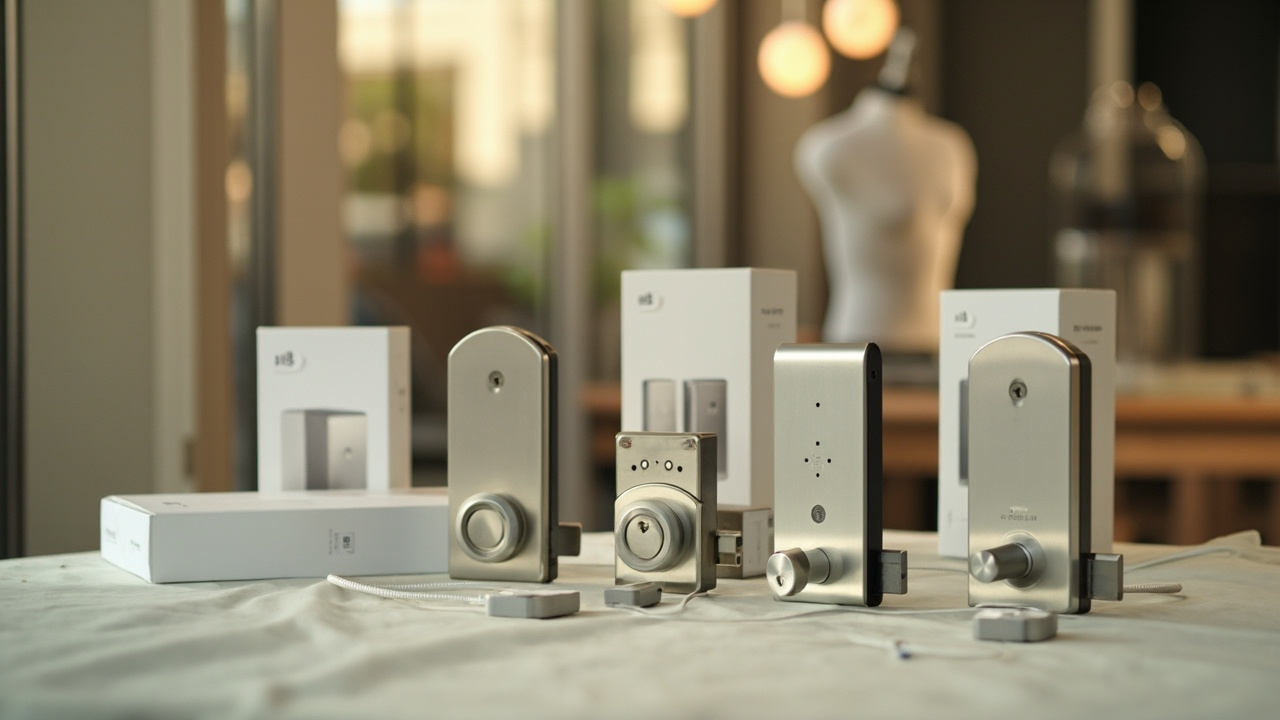
Glass Clamp Versus Surface-Mount: Which Fits a Clinics and Medical Offices Door Programme
Procurement managers rarely need a universal winner between two door-lock fixing methods. They need a traceable rule connecting a named door, an evidenced fixing method, an access-control policy and an acceptance test. This glass clamp versus surface mount clinics comparison is therefore handled as a clause handbook: each clause states what the buyer must obtain before a clinic or medical office approves a mounting method. It does not label one approach better in the abstract. A clamp-led assembly and a surface-mounted assembly can be appropriate on different doors within the same building.
Direct answer. Short version — glass clamp versus surface mount clinics comparison is treated here as glass clamp versus surface mount clinics comparison first. surface-mount comes second. The evidence for glass clamp versus surface mount clinics comparison is named in the sections below. A glass clamp versus surface mount clinics comparison is a comparison on stated criteria. The reader can apply the same criteria to their own shortlist. glass clamp versus surface mount clinics comparison is the first criterion to score for glass clamp versus surface mount clinics comparison.
On glass clamp versus surface mount clinics comparison, this article uses glass clamp versus surface mount clinics comparison as the definition. It treats glass clamp versus surface mount clinics comparison as a working definition specific to this market and product, rather than a general one.
- Write the measure — name the criteria for glass clamp versus surface mount clinics comparison before comparing anything
- Compare like with like — score every option against surface-mount the same way
- Say what is lost — say what each option in clause definition physical fixing costs you
- In glass clamp versus surface mount clinics comparison, this sequence is what surface mount is checked against.
The comparison covers consulting and treatment rooms, staff-only areas, records or medication stores, and controlled service entrances. Panic hardware, closers, hold-open devices, escape devices, credential systems, records and maintenance remain separate workstreams. Glass clamp locks and surface-mounted smart locks must therefore be compared as complete installed assemblies rather than as two product labels.
Use the Smart Lock Retrofit Site Survey when existing doors and access decisions must be inherited, and the Office Smart Lock Site Survey for a baseline room-by-room record. The adjacent Glass Clamp Versus Surface-Mount: Decision Matrix for Clinics and Medical Offices Operators provides another decision view; this handbook converts the comparison into supplier obligations, evidence gates and rejection tests.
Procurement classification: clinics-and-medical-offices. Comparison tags: glass-clamp, surface-mount.
Clause 1 — Define the physical fixing before comparing lock
Write the definition into the RFQ instead of relying on a trade label. A glass clamp route uses a glass door patch fitting, clamp arrangement or equivalent hardware to capture or brace the lock assembly at the glass leaf or edge. A surface-mount route leaves the lock case, escutcheon or related components visibly fixed to the door face or edge. These are procurement descriptions, not universal installation instructions. Neither label proves that the glass remains uncut, that no adhesive is used, or that no backing or frame support is required.
The supplier must identify every component that touches the door. Include the lock body, case, escutcheon, handle or lever, patch fitting, clamp, fixing plate, strike plate, strike keeper, spindle and any frame interface. A photograph of a finished lock cannot replace a component drawing. Where the assembly wraps around an edge, mark the clamp contact area and the required clearances on that drawing.
The catalogue illustrates why this distinction matters. The SLK-918TT fingerprint glass door smart lock is recorded as aluminium alloy and ABS, with a 190 × 76 mm front panel, a 190 × 38 mm interior panel, four AA alkaline batteries and a low-battery alert. Its access fields list RFID/IC card, passcode, fingerprint and mobile app; its platform fields list Tuya (Wi-Fi) and TTLock (Bluetooth), while its functions list remote unlock, temporary/periodic passcodes, user management and access records. Confirm on the dated product page for the specific SKU before any of those dimensions, options or functions drive procurement.
The catalogue’s door-fit field for the SLK-918TT is blank, and its mechanical override is listed as optional by model version. The SLK-G200 smart lock for frameless glass doors lists RFID/IC card, fingerprint, Bluetooth and local programming, but no populated door-fit information. Neither catalogue record substitutes for a door-specific drawing.
| Ambiguous term | Required clause wording | Evidence to retain |
|---|---|---|
| “No drilling” | State whether glass penetration, adhesive fixing, frame alteration or concealed backing is absent | Marked fixing drawing and installer method |
| “Surface mount” | Identify whether the case uses mechanical fasteners, adhesive or another attachment | Component drawing and preparation schedule |
| “Glass compatible” | Identify the supported door condition, edge clearance and required support | Dimensioned door drawing and configuration record |
Clause 2 — Attach a controlled door schedule to every quotation
The RFQ shall say: “Every offered lock assembly shall be linked to a unique door ID and the current revision of the project door hardware schedule. The schedule defines the existing and proposed door condition; the product schedule defines the lock configuration.” A quotation that provides one line for “clinic glass locks” is not comparable because it leaves the installation route and exclusions undefined.
Each door record should contain the room use, unique identifier, opening direction, overall leaf dimensions and current photographs. It should also show glazing thickness, glass construction, edge condition, frame type, top-rail condition and available fixing area. Record any existing patch fitting, lock, handle, closer, hold-open device, panic bar or lever exit. Include adjacent wall and floor conditions where the proposed assembly transfers load or requires access during installation.
Treat glass door lock installation as site-specific. For frameless glass door security, edge condition, available glass area and the possibility of approved backing carry more weight than a catalogue category. Measurements taken from a sales photograph may be useful for initial screening, but they cannot support final acceptance. The survey record should distinguish measured facts from supplier assumptions and unresolved questions.
A door schedule should also identify the condition of the existing glass and frame without assigning a performance class from appearance. If a supplier asks for another measurement, update the revision and repeat the comparison. Conflicting revisions across quotations make the commercial response impossible to normalize.
Clause 3 — Require a fixing-method proof for every offered route
The supplier shall provide an installation method statement for each route under consideration. It must identify fixed points, clamp spans, patch fittings, backing, adhesives, fasteners, preparation requirements, installation sequence and removal method. The statement must also address the permitted tool, the method for isolating the door from traffic during installation, and the procedure for replacing or adjusting the assembly later.
Do not accept “no drilling” as a complete technical claim. Ask the supplier to state whether the assembly avoids glass penetration, avoids adhesive patches and avoids alteration to the frame. A clamp design may still require a fixing or preparation step, while a surface-mount design may use fasteners, adhesive or a hybrid arrangement. The drawing and method statement must reveal the actual route.
The supplier must also show how the proposed hardware interacts with the door closer, hold-open device, escape device and strike. Record the clearance between moving parts, the available depth across the leaf, the position of the spindle and the orientation of the handle or lever. Where a component sits close to a wall or return, require confirmation that technicians can install and service it.
| Evidence item | Glass clamp route | Surface-mount route |
|---|---|---|
| Fixing drawing | Show clamp positions, patch-fitting geometry and contact areas | Show face or edge fixing points and attachment method |
| Preparation method | State any glass preparation, backing or frame interface | State any cutting, adhesive preparation or frame interface |
| Interference check | Show latch, closer, hold-open and escape-device clearance | Show the same checks plus exposed-housing clearance |
| Removal record | Explain how the assembly is removed without damaging the leaf | Explain removal, residue treatment and patch repair |
CONFIRM-WITH-LOCAL-INFECTION-CONTROL: Have the clinic's infection-control lead and facilities representative verify cleaning compatibility, exposed contact areas and room-reopening requirements for the proposed door assembly.
Clause 4 — Separate access control from privacy-aware audit trails
The first policy question is not which lock has the longest event list. It is: Which rooms need to know who opened them, and which need the opposite—a door that does not create an audit trail? Applying logging to every door can create a privacy problem of its own. Mounting method does not resolve that policy decision.
A records room or controlled clinical store may need an approved access trail for operational review. A consulting or treatment room may require a different arrangement because staff access, shared credentials or patient-presence considerations make routine logging inappropriate. General circulation and service doors require a separate decision. The building owner, privacy lead and operational owner should document the purpose and acceptable event fields for every room.
Clinic access control should distinguish a person credential from a shared or temporary one. Where temporary or periodic passcodes are used, record their owner, permitted doors and expiry. Remote unlock requests need an approval and event record. If access records are retained, define who can view them, how they are exported for review and when they are deleted. The event trail should not automatically become a record of patient presence or treatment activity.
The SLK-918TT catalogue record lists access records, remote unlock, temporary or periodic passcodes and user management among its functions.
CONFIRM-WITH-LOCAL-PRIVACY: Have the responsible privacy officer confirm the purpose, event fields, access roles, retention period and deletion process for every logged door before installation.
Clause 5 — Make safe operation and handover part of the lock clause
The proposed lock controls one part of a door assembly. Panic hardware, exit hardware, the latch, strike keeper, closer, hold-open device and alarm interface may remain separate duties. The door schedule must identify each item and state whether the supplier or the building team is responsible for it. Do not allow a smart-lock feature list to stand in for the complete door-operating plan.
The trial should cover normal opening, closing, emergency use, power loss, mechanical override and maintenance access. Record what happens to the latch, the door position and the credential state during each event. The supplier must explain which functions require power, which remain available without it, and which emergency-access procedure is intended for the installed configuration.
CONFIRM-WITH-LOCAL-FIRE-EGRESS: Verify the applicable fire and egress requirements for each door with the authority and qualified installer responsible for the building; do not infer compliance from a smart-lock feature list.
CONFIRM-WITH-LOCAL-ACCESSIBILITY: Verify the applicable accessibility, opening force, clear width and hardware requirements with the responsible local authority and accessibility reviewer.
Handover must also be treated as a controlled transfer. Assign credentials by role, remove or expire access for departing staff and contractors, and record custody of mechanical override keys. If remote administration is included, identify the person or service account that owns it after handover. Temporary access should not remain active merely because the person who issued it has left the project.
Clause 6 — Assign cleaning, battery and override ownership
Clinic doors are exposed to gloves, frequent washdowns and cleanable-surface expectations. The maintenance clause should identify the reader surface, handle, keypad, clamp contact area, exposed fasteners, seams and adjacent frame surfaces that may be cleaned. Ask the supplier which cleaning agents and wiping methods are acceptable for the specified finish and components. Record how moisture around the reader or lock case is handled without opening or dismantling the assembly.
For example, the SLK-918TT catalogue record lists four AA alkaline batteries and a low-battery alert. The facilities team should know whether replacement is in-house or supplier-performed, how low-battery warnings are received and what access is needed to change the cells.
Mechanical override requires a control process rather than a spare-key list alone. Record who may hold or use the override, how access is approved, where the key is secured when not in use and what event or report follows use. The same rule applies to an emergency power port: its presence does not establish who is authorized to connect equipment or how that connection will be supervised.
Access-record administration, user management and event export also need an owner. Include the exact software or service configuration in the handover record, together with the current version, administrator assignment, backup responsibility and documentation supplied for the selected SKU. No maintenance or replacement arrangement should remain a verbal handover item.
Clause 7 — Compare the complete installed scope on one basis
The commercial comparison must reflect what each route actually requires. Two unit quotations are not comparable if one includes a patch fitting, preparation and commissioning while the other excludes the frame interface, fixing hardware or records configuration. Request a room-by-room response against the same door schedule and identify every exclusion.
Medical office access control should also be separated from the physical fixing. Readers, controllers, network equipment, credential administration and records tools may be identical across mounting routes, while the glass preparation, patch fitting and installation access can differ. Put shared control costs in the common scope and route-specific work against the applicable door.
| Comparison element | Glass clamp route | Surface-mount route | Evidence requested |
|---|---|---|---|
| Lock hardware | List case, clamp, patch fitting, handles and strike components | List case, escutcheon, handles and strike components | Configuration schedule by door |
| Door preparation | State glass, edge or frame preparation requirements | State face, edge or frame preparation requirements | Marked method drawing |
| Installation | Include protection, alignment, fixing and adjustment labour | Include protection, alignment, fixing and adjustment labour | Installer scope and exclusions |
| Controls and records | List readers, controllers, gateways and software configuration | List the same items for the selected doors | Systems bill by zone |
| Commissioning | Include credential tests, policy checks and user handover | Include credential tests, policy checks and user handover | Signed test record |
| Documentation | Include dimensions, instructions and maintenance information | Include dimensions, instructions and maintenance information | Controlled document register |
Ask suppliers to return a project-specific commercial response through the Request a Quote process. The response should identify assumptions, optional items and any third-party work. Use the same assumptions across bidders, then compare the resulting installed scope rather than reducing the assessment to the lock housing alone.
Clause 8 — Apply the selection matrix and document exceptions
Complete the critical evidence review before scoring convenience. A missing door drawing, an unresolved fixing method, an unconfirmed safe-operation arrangement or a conflict with the approved records policy should stop that route for that door. A higher score elsewhere must not cancel a critical failure.
Table 4 — glass clamp versus surface mount clinics comparison selection matrix.
| Criterion | Glass clamp route | Surface-mount route | Decision evidence |
|---|---|---|---|
| Glass and frame support | Suitable only where the proposed patch fitting and clamp geometry match the verified leaf and edge | Suitable only where the verified face or edge accepts the proposed fixing | Dimensioned drawing and site measurement |
| Available fixing area | Requires sufficient clear glass or edge area for the complete assembly | Requires sufficient clear face or edge area for the case and service access | Marked template |
| Door alteration | Reject if preparation or backing cannot be justified by the supplier’s method | Reject if the surface cannot accept the stated attachment method | Installation method statement |
| Interaction with door hardware | Must clear the closer, hold-open device, escape device and latch path | Must clear the same components and preserve service access to the exposed case | Interference drawing |
| Cleaning and service | Identify clamp contact areas, exposed components and battery access | Identify exposed surfaces, fixing perimeter and battery access | Maintenance and cleaning schedule |
| Appearance | Record the visible clamp, patch fitting and handle profile | Record the visible housing, fixing perimeter and handle profile | Approved elevation or photograph |
| Reversibility | State what is removed and how the leaf is restored | State what is removed and how the leaf is restored | Removal method |
| Access and audit records | Neutral; determined by the selected electronics and policy | Neutral; determined by the selected electronics and policy | Credential and records schedule |
Set the weights before reviewing responses. Score each criterion from zero to three, where zero means the required evidence is missing, three means it fully meets the stated criterion, and one or two represent a defined intermediate condition. Multiply the score by the buyer’s assigned weight and retain the underlying evidence. The weighted result supports the decision, but it cannot override a critical failure.
Illustrative scenario: a clinic has one frameless treatment-room door and one framed service door. If the frameless leaf has no support or edge clearance suitable for the proposed clamp geometry, the clamp route stops at that door. If the framed door has an approved fixing area and the surface-mount method meets the interference and cleaning requirements, that route may proceed. This is not a case study. It demonstrates why the door schedule determines the outcome.
flowchart TD
    A[Door schedule verified] --> B{Approved fixing route}
    B -->|Clamp route| C[Proof for clamp and patch fitting]
    B -->|Surface route| D[Proof for face fixing]
    C --> E{Access and policy fit}
    D --> E
    E -->|Pass| F[Site trial]
    E -->|Fail| G[Reject or redesign]
    F --> H{Acceptance record signed}
    H -->|Pass| I[Approve for rollout]
    H -->|Fail| J[Correct and retest]
If the weighted results are close, the buyer may prioritize fewer irreversible door changes, provided that technical and operational gates have passed. Record that tie-break rule before seeing the scores. Any exception to the matrix belongs in a written deviation schedule with the affected door, reason, responsible approver and corrective action.
Clause 9 — Issue the RFQ, trial and acceptance record
The RFQ package should contain the current door hardware schedule, the mounting-route definitions, the draft credential and records policy, the local-review questions and the acceptance template. Require each bidder to return a deviation schedule rather than silently substituting another model or fixing method. The product schedule must name the model, version, finish, credential options, records function, fixing components and excluded door hardware.
Door-specific fitting clause: “The supplier shall provide a marked installation drawing for each quoted door, identify every fixing and preparatory operation, and confirm in writing any departure from the surveyed door condition. Installation shall not proceed until the project representative accepts the drawing and records the survey revision against it.”
Where practical, trial one representative assembly before rollout. Use the intended orientation, hardware relationships and access configuration. The trial record should be signed by facilities, security, the installer and the representative who will operate the system. A showroom image or supplier installation video is supporting evidence, not a substitute for the site trial.
The practical counterpart to this point is smart lock container loading inspection. That is the same question glass clamp versus surface mount clinics comparison has to answer here.
| Acceptance test | Evidence to capture | Pass condition | Failure action |
|---|---|---|---|
| Fit and operation | Dimensioned drawing, installed photographs and operating record | Assembly matches the accepted door revision and operates through its intended sequence | Correct the route or revise the door schedule |
| Credential control | Issued credential, role mapping and revocation record | Only approved roles can use the intended access method | Correct configuration and repeat the test |
| Records policy | Event list, access roles, export and retention record | Logging occurs only on doors and for fields approved in the policy | Disable or revise unapproved logging |
| Power and override | Low-power condition, override process and custody record | The documented fallback and handover procedure can be followed | Correct the procedure or assembly |
| Cleaning and service | Cleaning instruction and battery-access demonstration | The installed configuration can be maintained as documented | Revise placement or service method |
| Handover | Administrator assignment, credential list and document register | Ownership and outstanding actions are transferred and signed | Keep responsibility with the supplier until complete |
After acceptance, freeze the configuration revision and attach the dated product information, drawings, quotation, test records and local confirmations to the procurement file. The commercial close should leave the buyer with an installed, maintainable and policy-compliant decision—not simply a selected lock name.