
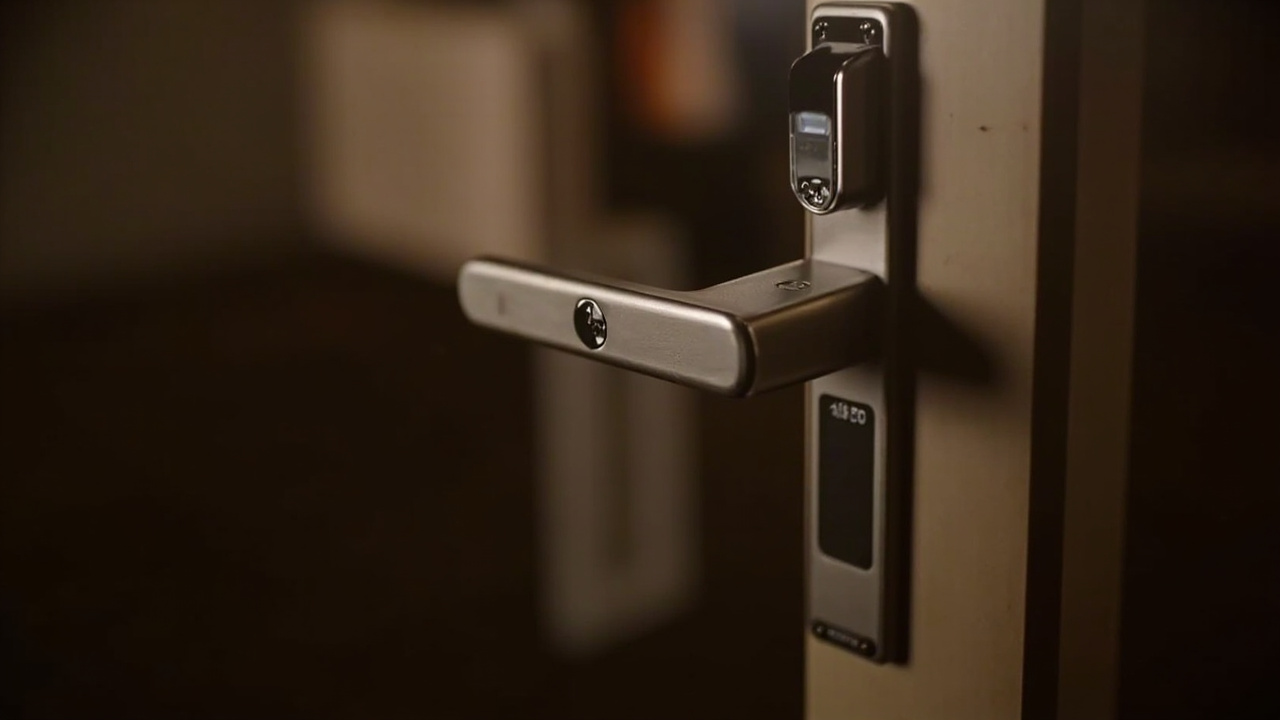
Training Estate Maintenance Team to Run Smart Locks in Resorts and Villa Rentals
Smart locks shift the operating risk from a key cupboard to the people who issue access, respond to faults and hand over unfinished work. A resort villas staff training programme must therefore teach a complete service routine, not just the buttons on a lock. The property manager needs evidence that staff can handle each door class, respect guest instructions, document exceptions and escalate a problem without improvising around estate controls.
Direct answer. The one-line answer — resort villas staff training is the working record for resort villas staff training. resort villas staff training is worthless until resort-villas is attached to it as evidence. A resort villas staff training works through one building type door class by door class. resort villas staff training is the first class to close. resort villas staff training cannot be quoted until it is.
Throughout, resort villas staff training means what resort villas staff training sets out. It is a working definition of resort villas staff training drawn from the evidence below. It is valid for the specific market and product, not as a general claim.
Component map: assembling the training package The product
Effective training connects several components. If one is omitted, the estate may have technically capable locks but no reliable operating routine. The training owner should treat the following as a linked system rather than a collection of presentations. The reference version of this is Fingerprint Smart Locks for Commercial Property Owners. The commercial end of this decision is the smart door locks.
flowchart TD
    A[Door and role map] --> B[Scenario drills]
    B --> C[Handover routine]
    C --> D[Incident escalation]
    D --> E[Capability evidence]
    E --> A
| Component | Trained outcome | Failure if absent | Proof required |
|---|---|---|---|
| Door map | Correct access route for each door class | Staff apply one routine everywhere | Approved door-and-exception map |
| Role matrix | Permission tied to the current task | Access is shared informally | Current role and credential list |
| Scenario drills | Repeated action under realistic conditions | Staff recognise buttons but fail in service | Observed task result |
| Shift handover | Open exceptions and live work transferred | The next shift starts without context | Signed handover record |
| Incident evidence | Symptom and escalation captured consistently | Faults repeat without useful diagnosis | Ticket containing required evidence |
Component 1: separate door competence from credential competence
The resort-villas estate contains a villa entrance, pool gate, service door, beach cabana and safe. These doors do not create the same operating task. The villa entrance supports guest arrival and turnover; the pool gate includes a manual override; the service door supports staff routines; and cabana or safe access follows a more restricted path.
Training should identify the door class before staff touch the credential system. It must also distinguish operating the installed lock from examining the door, latch or frame. The Smart Locks for Resorts and Villa Rentals: Door Survey and Fit Reality supplies the physical survey evidence. That evidence should appear in the training pack rather than leaving trainees to infer door behaviour from a manual.
Each trainee should demonstrate the normal route, the approved fallback and the condition that requires escalation for every door class in their area.
Component 2: tie permissions to work already assigned
A person’s job title is not enough to decide what access they should hold. The role matrix should connect an assigned task to the credential action required for it. A technician sent to investigate a lock needs a different permission decision from a housekeeper completing an approved service visit.
The matrix should identify who may issue, suspend, change and revoke access, and who may approve an exception. It should also show whether a master credential remains with an individual role or is issued for a defined shift. The Smart Lock Key Control and Master Key Decisions for Resorts and Villa Rentals provides the adjacent control decision; resort key control training should show how that decision changes the daily routine.
| Role | Permission action | Required record |
|---|---|---|
| Front desk | Complete the approved guest credential handover | Reservation or handover entry |
| Housekeeping | Request scoped access for an assigned villa | Service-task record |
| Maintenance technician | Diagnose an assigned door under a work order | Work-order evidence |
| Duty manager | Approve or refuse an exceptional access request | Exception entry |
| Security reviewer | Review an access incident within assigned authority | Incident record |
Before access records or personal details enter the training logs, the property must settle what the system may retain.
CONFIRM-WITH-LOCAL-DATA-REVIEWER: Confirm which guest and access data the property may record, who may view it and how long it may be retained before approving training forms.
Component 3: rehearse the moments that create work
Scenario training converts a procedure into a repeatable response. Villa access credential training should use realistic sequences instead of isolated button presses. Every scenario card needs the door, assigned role, starting state, expected action, handover point, evidence and stop condition.
The core estate scenarios are:
- Guest arrival or changeover: follow the approved guest-side check, confirm the new access arrangement and record completion without retaining unnecessary guest information.
- Service request: establish what access the guest permits, use only the authorised route and close the request when the task ends.
- Pool or outdoor gate: follow the property’s approved override and fallback procedure, and escalate rather than forcing a damaged door.
- After-hours symptom: identify the exact door, capture the observable symptom and decide whether the next step is credential support, maintenance support or a specialist escalation.
- Shift change: transfer pending authorisations, restricted doors, live faults and temporary access arrangements that are about to expire.
The service-request scenario must answer the resort’s first operating question: how can service enter without waking the guest or walking through the villa? The answer may be a scoped credential, an attended visit or another approved route, but staff must know which route applies and how it is evidenced.
CONFIRM-WITH-LOCAL-BUILDING-AUTHORITY: Confirm the approved override, egress and pool-access arrangements for each property before they are included in staff instruction.
Component 4: train symptom-led diagnosis boundaries
The objective is not to turn maintenance staff into product specialists. It is to give them a disciplined first response. The curriculum separates physical observations, credential checks and system symptoms so the event reaches the correct owner without unnecessary intervention.
For physical observations, staff note movement, obstruction, visible damage and the exact door affected. For credential symptoms, they confirm the assigned access procedure and whether the symptom follows one credential, one door or the whole area. For system symptoms, they record what the installed system reports and follow the current operating guide rather than attempting undocumented resets.
Outdoor smart lock troubleshooting must be framed as evidence collection. Staff should not diagnose salt damage, power endurance or connectivity from appearance alone. Dimensions, read distance, cycle counts, battery duration and environmental ratings are SKU facts; confirm on the dated product page for the specific SKU and approved operating guide before any of them becomes a training answer.
The Smart Lock Failure Triage for Resorts and Villa Rentals supports a consistent triage path: identify the fault domain, preserve the required evidence and stop at the defined escalation boundary.
Component 5: make shift handover a control point
A smart-lock handover should transfer live operating state, not merely announce that all is well. The outgoing person lists unresolved faults, pending guest authorisations, doors under restriction and work awaiting a specialist. The incoming person confirms receipt against the relevant record.
A usable staff handover for smart locks therefore contains the door location, symptom or pending task, action already taken, next owner and status. It avoids duplicating routine activity and does not reproduce access credentials in the shift note. When the incoming person cannot accept an exception because the evidence is incomplete, the outgoing person remains responsible until ownership transfers.
This routine matters during turnover periods, when responsibility changes often but guest service continues. The handover should be brief enough for the shift context and detailed enough for the next person to act without reconstructing the event from messages.
Component 6: practise the guest-facing conversation
Staff training should include a short role-play for the point where a technical workflow becomes a guest interaction. The trainee explains why access is needed, confirms what the guest permits and states when the arrangement will end. The exercise also covers a guest who declines entry, requests a different time or cannot use the proposed credential route.
Readers comparing approaches usually start with hotel smart lock maintenance access. That is the same question resort villas staff training has to answer here.The role-play extends to guest privacy access procedures. Staff should explain the operational need without discussing other guests, internal security reasoning or unnecessary personal details. The aim is a service experience in which the lock remains largely invisible.
Assessors should score the sequence rather than the personality of the trainee. They look for permission before access, correct door identification, a clear completion point and an accurate handover to the next owner.
CONFIRM-WITH-LOCAL-DATA-REVIEWER: Confirm what staff may record about a guest’s stay and access request before scripts and handover forms are approved.
Component 7: test outdoor and high-use conditions
Classroom equipment cannot represent a gate exposed to sun and salt or a service door worked repeatedly. The training environment should include representative hardware or clearly documented simulations for the door classes used at the property.
| Operating condition | Trained response | Escalation evidence |
|---|---|---|
| Gate exposed to weather | Use the approved route and avoid improvised forcing | Door location and observed condition |
| Door movement or drag | Stop repeated forced operation and call the assigned owner | Door and symptom description |
| Cabana or safe access | Use the correct route for that door class | Confirmation of door selected |
| Credential works at another door | Stop and refer for permission review | Access event and location |
The exercise tests judgement under estate conditions. It does not turn visible wear into an unverified product diagnosis. The property manager should ensure the final scenarios reflect the doors, staff roles and service patterns found during the site evaluation.
Component 8: choose the delivery route by operational risk
Smart lock training for resort staff can be delivered through several routes, but the least expensive format is not automatically the safest choice. The property manager should match the route to door complexity, staff turnover and the consequences of an incorrect response.
This overlaps with the earlier coverage in hotel smart lock master key management. That is the same question resort villas staff training has to answer here.
| Delivery route | Best fit | Required evidence | Choose only when |
|---|---|---|---|
| Self-led job aid | Familiar doors and stable procedures | Version-controlled quick reference | Staff already demonstrate the task |
| Team workshop | Recurring handover and guest-service routines | Representative scenarios and observation | Several staff must work as one team |
| Individual assessment | High-use or restricted access | Task-by-task sign-off | Incorrect actions carry material risk |
| Supplier-led session | New lock families or system changes | Current operating documents and local handover | The supplier also leaves a usable fallback for the estate |
A workbook or slide deck can support training, but it cannot prove competence. Direct observation is required for at least the actions that issue access, manage a service request, handle a live exception and escalate a failed door.
Component 9: build the acceptance record
The Installer Handover and Commissioning for Resorts and Villa Rentals addresses the technical handoff. The estate then adds a separate people handoff that tests whether trained people can operate the installed arrangement.
A trainee passes only when the assessor sees the required action performed. The acceptance record should cover these outcomes:
- The trainee identifies the correct door and applicable access route.
- The trainee completes the assigned credential action under the approved procedure.
- The trainee obtains permission before arranging service access.
- The trainee transfers an exception through the shift handover.
- The trainee records an observable symptom without making an unsupported diagnosis.
- The trainee uses a fallback only within its documented boundary.
- The trainee closes the task or assigns the correct next owner.
Property managers set the pass standard and review competence after staff changes. Estate maintenance lock procedures should identify the assessor, the document version, the date of observation and any restricted follow-up training.
Evaluation pack: what the property manager approves
The evaluation pack should contain the door-and-exception map, role matrix, scenario cards, escalation directory, handover template, acceptance record and document-version register. It should also state which matters remain with the supplier and which belong to the estate team.
At the evaluation stage, provide shortlisted suppliers with the door schedule, actual staff roles and realistic service scenarios. Require each one to show who will deliver the training, what operating documentation remains on site and how updates reach shifts. Ask to inspect a sample acceptance record rather than accepting attendance sheets as proof.
This approach makes the training transferable when a technician, housekeeper or duty manager leaves. It gives the property manager a defensible operating routine, gives staff a clear boundary between routine work and escalation, and keeps guest service aligned with the locks installed across the resort-villas estate.
The next step is to request a quote.