
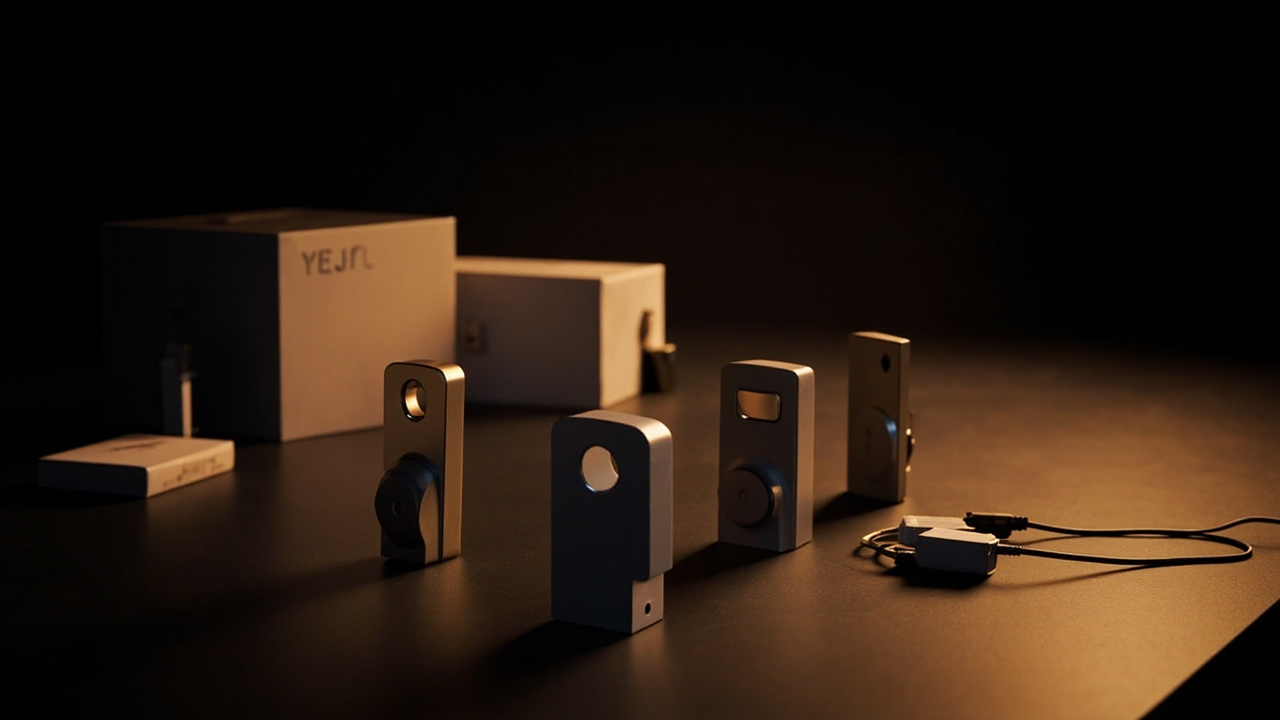
Intelligent Cylinder Versus Surface-Mount: Decision Matrix for Campsites, Glamping and Park Lodges Operators
An intelligent cylinder versus surface mount campsites matrix should separate door fit, credential reset and seasonal maintenance before appearance enters the score. For campsite, glamping and park lodge operators, the preferred format on a cabin pod may be unsuitable on a site gate or washroom block. This playbook gives procurement a repeatable way to screen each opening, compare shortlisted formats, demand evidence and approve a controlled pilot. The result should be a documented choice by door class, not a site-wide winner.
Direct answer. In brief, this article covers intelligent cylinder versus surface mount campsites matrix from intelligent cylinder versus surface mount campsites matrix to surface-mount. It states what to confirm about intelligent cylinder versus surface mount campsites matrix on the dated product page where a figure is involved. An intelligent cylinder versus surface mount campsites matrix is a criteria-led comparison. intelligent cylinder versus surface mount campsites matrix applies to intelligent cylinder versus surface mount campsites matrix before any shortlist is drawn up.
Read intelligent cylinder versus surface mount campsites matrix as intelligent cylinder versus surface mount campsites matrix. It is a working definition of intelligent cylinder versus surface mount campsites matrix. Not a statutory or certified one. It applies to the market and product in question rather than as a general claim.
- Name the basis — name the criteria for intelligent cylinder versus surface mount campsites matrix before comparing anything
- Hold every option to it — score every option against surface-mount the same way
- Set out the cost — say what each option in definition two retrofit formats costs you
- For intelligent cylinder versus surface mount campsites matrix, surface mount is what each step has to answer to.
Define the two retrofit formats before scoring them
An intelligent cylinder lock is an electronic cylinder intended to fit within a compatible mortise or multipoint lock arrangement. Its principal procurement appeal is that the visible door face may change less when the existing case, spindle, follower and strike geometry remain usable. That reuse is conditional: cylinder form, lock case, spindle drive, door thickness, fixing space and power access must all be checked.
A surface-mounted smart lock places its housing on the door face and connects it to a configured latch or deadbolt. It can suit an opening with no reusable mortise case, limited internal cavity space or an acceptable visible module. It must still align with the door edge and strike, transfer load through sound fixings and coexist with the escape arrangement. Neither format determines credential method, remote administration, weather protection or battery life by itself.
| Evaluation point | Intelligent cylinder | Surface mount | Evidence to request |
|---|---|---|---|
| Visible change | May preserve more of the existing door face | Adds a visible lock housing | Before-and-after photographs and finish schedule |
| Existing hardware | May reuse a compatible case, spindle and follower | Less dependent on the internal case but still dependent on latch and strike geometry | Dismantled-door photographs and drawings |
| Fitting risk | Electronics and cylinder must fit inside the lock arrangement | Fixing area, spindle reach and housing projection must suit the leaf | Dimension drawing and physical fit check |
| Credential control | Not predetermined by the format | Not predetermined by the format | SKU-specific credential and management sheet |
| Environmental exposure | Depends on the installed location and enclosure | The face-mounted housing may add another exposed interface | Enclosure details and environmental test evidence |
Score the installed arrangement rather than the product family. A well-documented compatible case is more valuable than a broad claim that one format is easier to install.
Create an opening register before choosing hardware
Create one register row for every physical opening. Give each pod, lodge door, washroom entrance, equipment store and site gate a unique opening ID so that fit, access and maintenance decisions remain linked. Do not average several different doors into a representative “guest door.”
| Opening class | Information to capture | Provisional route |
|---|---|---|
| Cabin or pod guest door | Leaf thickness, rebate, backset, spindle, follower, cylinder form, existing case, strike and closer | Intelligent cylinder if compatibility is demonstrated; surface mount if case reuse fails |
| Lodge or staff door | The same fit data plus operating frequency, override expectations and service access | Compare both formats using the weighted matrix |
| Washroom block | Fixing substrate, moisture exposure, ventilation, closer or hold-open arrangement and access pattern | Surface mount only with environmental, load and escape evidence; otherwise assess a complete lock |
| Site gate | Gate swing, hold-open arrangement, impact exposure, weather and gate hardware | Do not award either format by default; obtain a gate-specific proposal |
| Equipment store or irregular door | Existing lock condition, seasonal use and available fixing structure | Intelligent cylinder if the lock arrangement is reusable; surface mount if it is not |
The register should also record door swing, frame condition, service access, power availability and the person responsible for routine checks. A door with corrosion, movement or an unsuitable frame should not receive a retrofit until the underlying defect is addressed.
Apply the weighted decision matrix
Use the matrix only after every opening has a door class and evidence status. Score each criterion from zero to three: zero for absent, one for unresolved, two for partially demonstrated and three for demonstrated on the proposed installation. The weights below are a starting worksheet; adjust them for the site, but record the reason for each change.
| Criterion | Weight | A score of three requires |
|---|---|---|
| Door and hardware fit | 25 | Dimensioned fit demonstrated on the actual opening |
| Seasonal credential reset | 20 | A documented local reset and re-issue procedure |
| Environment and ingress exposure | 15 | Enclosure details and relevant test evidence accepted |
| Power and continuity | 15 | Battery, network and closure procedure verified |
| Installation and service effort | 10 | Fixing, wiring and maintenance access demonstrated |
| Appearance and guest impact | 5 | Finish and projection accepted by the operator |
| Supplier evidence | 5 | Drawings, manuals and management documentation supplied |
The intelligent cylinder versus surface mount campsites matrix should produce a provisional route, not an automatic award. A simple weighted result is (weight multiplied by score) divided by three. A tie means more evidence is required; it is not permission to guess.
| Typical opening | Provisional outcome | Condition before approval |
|---|---|---|
| Serviceable pod with a compatible lock arrangement | Intelligent cylinder candidate | Prove cylinder, spindle, case, battery and programming compatibility |
| Irregular solid or composite door without a reusable case | Surface-mount candidate | Prove fixing strength, spindle reach, strike alignment and latch operation |
| Exposed site gate | No direct format award | Require a gate-specific design and evidence for impact, weather, hold-open and access control |
Test the seasonal reset before comparing finishes
Seasonal credential reset is a core campsite access control requirement, not a software preference. The supplier should demonstrate how the site voids the previous season’s credentials and issues a new set without a factory or integrator being present.
- Inventory every credential type, its issuing point and the person authorised to cancel it.
- Request a demonstration of removing all prior-season access and replacing it with new access.
- Identify whether the proposed unit operates as a standalone lock or through a centralised database. Confirm which functions require a network or computer.
- Prove that replacement cards, codes or fobs can be issued from the stock held by site staff.
- Test cancellation of a lost credential and retrieval of the corresponding unlock record.
- Record what happens to stored permissions, programming and the audit trail when the unit is closed for winter.
Power is part of the reset. Ask whether removing the batteries clears configuration, how low-battery alerts work, whether external power override through a USB terminal is available for the specific SKU, and whether a door that loses power still permits the intended emergency access. The form factor may change battery access, but it does not guarantee any of these outcomes.
Complete the fit survey and supplier evidence review
Use the Office Smart Lock Site Survey as a model for repeatable measurement records, and use the Smart Lock Retrofit Site Survey to structure an existing-door inspection. For each opening, record leaf thickness, rebate, backset, spindle and follower details, cylinder form, latch or deadbolt, strike keeper, frame fixing and hardware projection.
Photograph the door closed and open, mark closer and hold-open positions, and record any corrosion, frame movement, washdown exposure or limited service access. Treat glamping door hardware as part of the operating system rather than décor: campsite access control and park lodge access decisions must trace back to the same opening ID.
Keep full-lock data in its proper category. The first-party SLK-9936S hotel lock record identifies a 5-pin cylinder, 3-point latch and standalone or centralised database modes. It is a complete hotel-lock example, not evidence for either retrofit form. If one of those fields affects a decision, confirm on the dated product page for the specific SKU and request the applicable drawing; never transfer its fields to an intelligent cylinder or surface module.
Run a controlled pilot before the first bulk order
A pilot should cover representative operating conditions rather than the easiest door available. Include at least one normal guest opening, one higher-use staff or service opening and one environment where moisture, impact or seasonal shutdown is relevant.
flowchart TD
A[Build the opening register] --> B{Seasonal reset works locally}
B -->|Yes| C[Check fit, power and weather]
B -->|No| D[Reject or change the format]
C --> E{Control pilot passes}
E -->|Yes| F[Approve for the door class]
E -->|No| D
Record installation effort, operating faults, battery alerts, credential issue time, audit retrieval, guest flow and the condition of the door after repeated use. Keep any failed opening in the register with its cause; changing the format or repairing the door may be more appropriate than changing the matrix weight.
CONFIRM-WITH-LOCAL-AUTHORITY: Confirm emergency-egress, accessibility and access-control obligations with the authority having jurisdiction for each property.
Send a decision-ready RFQ and approve by door class
The RFQ should ask the supplier to complete the same opening fields rather than offering a generic format recommendation. Request a proposed format, an explanation of fit, the management workflow and any unresolved exclusions for each opening.
| RFQ section | Required response |
|---|---|
| Opening schedule | Opening ID, door class, photographs, dimensions and service-access notes |
| Mechanical compatibility | Case, spindle, follower, cylinder, latch, strike, closer and fixing requirements |
| Seasonal credential reset | Local cancellation, re-issue, lost-credential and audit procedures |
| Power dependency | Battery, network, computer, low-power and closure requirements |
| Environment | Enclosure, fixings, moisture exposure, impact exposure and test evidence |
| Documentation | Dated drawings, installation guide, management instructions and SKU-specific capability sheet |
| Pilot | Sample or pilot units, acceptance checks and a method for recording failures |
Approve one of four outcomes for every opening: intelligent cylinder, surface mount, another lock type or deferred pending evidence. Deferral is preferable to forcing an unsuitable format into the matrix. Forward the completed register, drawings, weighted scores and pilot record with the quotation request so that each commercial offer can be compared against the same door-by-door requirements.
Assemble the final decision file
The final file should contain the opening register, photographs, fit survey, weighted matrix, RFQ responses, dated product evidence, pilot results and named approval. A procurement manager can then defend the choice without relying on a general claim that one construction method is more secure or more durable.
Use the Office Smart Lock Site Survey for the measurement record and the Smart Lock Retrofit Site Survey for existing-door inspection. For the regulatory dimension, compare it with Intelligent Cylinder Versus Surface-Mount: Which Fits a Campsites, Glamping and Park Lodges Door Programme. Send the completed matrix and supporting drawings with the quote request, then release the bulk order only for the opening IDs that have passed the fit, reset, environment and pilot gates.
The requirement is ready for request a quote once it is written down.