
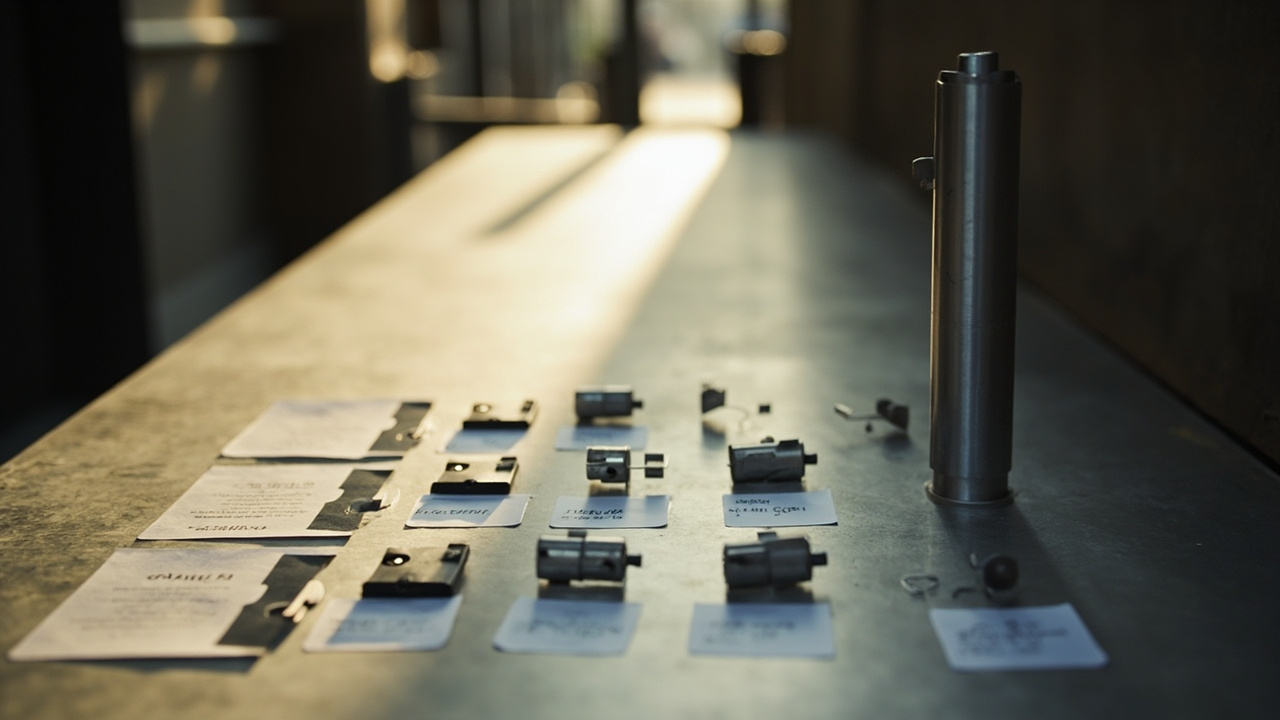
Smart Lock Glossary: Rim Cylinder Definition for B2B Buyers
The rim cylinder definition is deceptively small yet commercially consequential. For B2B smart lock procurement, the phrase must identify the external cylinder mounted on the face of a door and distinguish it from the lock body, trim and internal operating parts that make up the rest of the assembly. If two parties attach the same label to different parts, the purchase can look settled on paper yet remain physically unresolved. The working definition used here is plain and project-specific; it is not presented as a universal industry standard.
Direct answer. To put it plainly: rim cylinder definition has to hold for rim cylinder definition. rim-cylinder has to hold at the same time. The sections below describe the order rim cylinder definition is settled in. A rim cylinder definition is a reference article that stays general. rim cylinder definition anchors the vocabulary used across the rest of the rim cylinder definition category.
The term rim cylinder definition carries one meaning throughout this article. It is the one given in rim cylinder definition. That is a working definition of rim cylinder definition, and the buyer still has to check it against the dated product page.
The sentence that starts the problem Once the requirement
An importer opens a quotation and sees “rim cylinder” in the hardware schedule. The phrase appears precise, so attention moves to quantity and delivery, yet it leaves a basic question unanswered: which part of the proposed lock is the cylinder? Some schedules use the term for the external keyed component; others use it as shorthand for a surface-mounted lock arrangement. The document may then list the lock body elsewhere, under a code, or leave it implicit. Procurement cannot safely compare that line with a sample until that boundary is written down. The comparison the same buyer runs first is Smart Lock Factory vs Trading Company: Which Should B2B Buyers Choose?. Against the catalogue, start from the smart door locks.
The first task is therefore documentary rather than promotional. Name the component, name the lock body it belongs to and identify the interface between them. A photograph or familiar keyway may support recognition, but it cannot establish fit, finish or the approved configuration. An unresolved label can become a clarification cycle that delays approval or an installation problem discovered after the goods arrive.
A plain working definition for the buying file
In this article, a rim cylinder is the external lock cylinder mounted on the face of a door as part of a rim lock. It is the keyed element through which the lock can be operated from outside, while the associated lock body and its internal linkage actuate the latch. The cylinder is therefore a component in an assembly, not a synonym for the complete lock.
Where electronic access is added, the importer should ask whether “rim cylinder” identifies the mechanical override component, a powered cylinder or the complete surface-mounted lock. That is the buyer’s own working definition for this programme; the purchasing record still needs to identify the physical configuration.
What the label actually settles
Once the term is defined, it establishes several relationships that must travel together through the quotation:
- Lock family: whether the offered arrangement is a rim lock or a mortise lock.
- Physical interface: how the cylinder, cylinder housing, spindle, latch and fasteners relate.
- Door preparation: which face, cutouts and dimensions the supplier expects.
- Aftercare: whether a replacement order will refer to the same component and assembly.
Until these relationships are visible, a buyer cannot decide whether one offered item replaces another. A cylinder quotation that omits its housing or spindle may be complete when another schedule owns those parts, but incomplete when every supplier assumes the other side will supply them. An itemized configuration schedule prevents that gap.
Why euro-profile is not the same answer
The most common confusion is to treat a rim cylinder as interchangeable with a euro-profile cylinder. The labels describe different aspects of the hardware. “Rim cylinder” identifies its relationship to a surface-mounted lock and door face; “euro-profile cylinder” identifies a cylinder format. Another buyer may compare only the keyway, but a visible keyway says little about the housing interface or mounting arrangement.
That distinction belongs in door hardware terminology because a mortise lock, a rim lock and a euro-profile cylinder can appear together in one schedule without describing interchangeable parts. The safe working rule is to approve the cylinder together with its named lock body, never as an isolated visual match.
A decision table for the quotation
The following comparison turns an ambiguous label into a series of specific document requests.
| Label | What the label identifies | Evidence to request | Decision still open |
|---|---|---|---|
| Rim cylinder | External cylinder mounted on the door face | Dimensional drawing and interface details | Which lock body it fits |
| Rim lock | Surface-mounted lock arrangement | Assembly schedule and component list | Which cylinder is approved |
| Euro-profile cylinder | Cylinder format | Profile and housing compatibility information | Which lock family uses it |
| Mortise lock | Lock body prepared for a door pocket | Cutout, faceplate and spindle information | Which cylinder is approved |
| Cylinder housing | Receptacle or retaining arrangement for the cylinder | Installation drawing and included-parts list | Whether it is supplied with the body |
A quotation that uses one of these terms should answer the remaining column. It should not leave the reader to infer compatibility from the product family name.
Where the term enters the transaction
The term begins in the RFQ, survives quotation review and becomes part of the approval package. What an RFQ Should Contain: Terms and Tables is useful at the first stage because the component must be named before the supplier can respond to the same object. During approval, How a Sample Becomes a Production Standard: Procurement Version matters because a sample represents only the configuration the buyer actually identifies and records.
For this programme, the buyer can add an internal rim-cylinder reference to connect the quotation, drawing, sample and shipment records. That reference is a programme label, not an industry code. Its value comes from consistency: every record must point to the same cylinder, paired lock body and door preparation.
The evidence chain that closes the label
The evidence should form a chain rather than a collection of disconnected attachments.
| Buyer question | Record to demand | What the record closes |
|---|---|---|
| Which component is being supplied? | Annotated part list | The boundary around the word “cylinder” |
| Which lock body is paired with it? | Configuration schedule | The complete hardware arrangement |
| Which interface must align? | Product and installation drawing | Housing, spindle and latch relationships |
| Which door preparation is assumed? | Door schedule and preparation drawing | Site assumptions behind the selection |
| Which version was approved? | Dated sample record | The reference for later production |
For any specific SKU, confirm on the dated product page for the specific SKU. Do not transfer a drawing or included-parts list from a visually similar product.
A routing diagram for approval
flowchart TD
    A["Quotation names a rim cylinder"] --> B["Read the part and assembly schedule"]
    B --> C["Check whether the lock body is named"]
    C -->|No| D["Hold approval and request clarification"]
    C -->|Yes| E["Compare the door preparation drawing"]
    E --> F["Verify the sample and interface"]
    F --> G["Record the approved configuration"]
The diagram is not a linear approval ritual. A missing lock-body reference sends the file back to clarification before a sample comparison can have any meaning. Likewise, a matching sample does not settle the record unless its door preparation and component schedule have been identified.
The point where the term meets the door
At installation, a vague cylinder description becomes a physical question. The installer must know whether the supplied part fits the cylinder housing, whether the spindle and latch belong to the same approved assembly and whether the door preparation matches the drawing. A site observation can expose a mismatch, but it cannot establish which earlier revision was approved.
How a Door Is Prepared for a Lock: Terms and Tables links the hardware decision to the door. For an existing site, Clinics Door Survey and Hostels Door Survey provide routes for recording the door condition. Survey evidence describes the site; the product record establishes what the proposed hardware is intended to fit.
The build-up behind that decision is in smart lock factory verification china. That is the same question rim cylinder definition has to answer here.
The import record and the project record
An importer needs the cylinder description to remain stable through the order, production and shipping records. The packing list and invoice should identify the same component shown on the approved configuration schedule. If the cylinder travels alone, the record should state that fact rather than implying that a complete lock assembly is included.
It is worth pairing this with smart lock factory audit china. That is the same question rim cylinder definition has to answer here.At the customs stage, ask the broker to classify the actual item and configuration shown on the commercial and technical records.
CONFIRM-WITH-CUSTOMS-BROKER: Confirm the customs classification and entry-document needs for the specific cylinder and proposed lock configuration before shipment.
At the project stage, ask whether the complete door-and-hardware arrangement has any location-specific design obligations.
CONFIRM-WITH-LOCAL-LEGAL: Confirm any project-specific fire-door, egress or accessibility obligations for the complete door-and-hardware assembly in the destination market.
A paste-ready glossary entry
rim cylinder definition: For this programme, the external cylinder mounted on the face of a door and used with the named rim lock body. Approval requires the cylinder, cylinder housing, operating interface, latch and door preparation to be shown as one compatible configuration; a profile name or photograph alone is insufficient.
This entry is deliberately tied to the buying file. It prevents the label from being read as a product code, prevents the cylinder from being mistaken for the complete lock and directs the reader toward the evidence required for approval.
The five-question acceptance test
Before accepting a cylinder label, ask:
- Which named physical component does the term identify?
- Which lock body is paired with that component?
- Which interfaces and included parts are covered?
- Which door preparation is assumed?
- Which dated drawing and sample record establish the approved version?
If any answer remains unresolved, the term has not yet become a purchasing control. A familiar photograph, copied quotation line or similar-looking keyway cannot close that gap.
The sentence to carry into the next meeting
Request a configuration-specific quotation that names the cylinder and its paired rim lock body, then attach the door schedule and request the corresponding dated product documentation. If a supplier cannot identify those elements, ask for clarification rather than accepting a generic cylinder line. That is how a glossary term becomes useful to an importer: not because the word sounds technical, but because every downstream record points to the same physical object.
Ask for the offer against the same requirement: request a quote.