
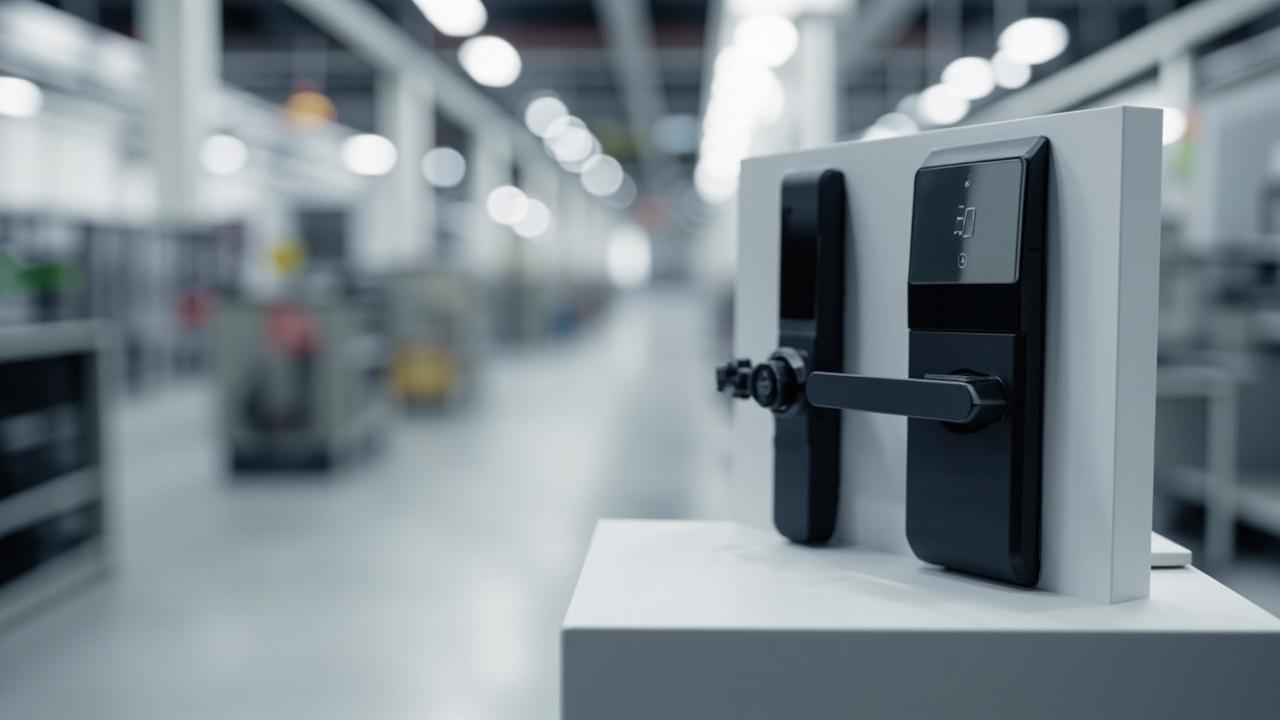
Smart Lock Price by Technology — A Technology-Tier Price-Component Lifecycle
Smart lock price by technology is not a single figure on a quotation line. It is the output of a ten-gate technology-tier price-component lifecycle — RFQ intake, technology-tier mapping, credential-stack cost-stack assembly, connectivity / app-platform binding layer, audit and management-software layer, order economics and MOQ positioning, lead-time slot selection, pricing-stack assembly, quotation assembly and revision, and day-2 lifecycle cost line — closed by the factory before a single per-door figure reaches the buyer's inbox. The buyer who reads the quotation as if it were a price list misreads every negotiation lever inside the technology stack. The buyer who reads the quotation as the last step of the lifecycle reads every other quotation the same way. This guide walks the lifecycle gate by gate for the technology-tier dimension specifically — because each credential tier (PIN keypad, RFID card, fingerprint, Bluetooth APP, face recognition, hotel PC-software, multi-credential 5-in-1) raises tier-specific BOM drivers that the buyer must surface in the RFQ before the factory can quote honestly. Every per-model technology-tier figure — credential capacity, RFID frequency, fingerprint user count, face-recognition enrolment depth, password length and rules, Bluetooth pairing protocol, app-platform binding, audit-event buffer depth, door-thickness envelope, mechanical-override cylinder profile, battery count and operating cycles, read time, standby and dynamic current — is verified in writing and routes to the dated product page; nothing is invented here.
Gate 0 — RFQ intake: which technology tier the buyer names changes which BOM the factory assembles
Smart-lock pricing begins before the factory opens a quotation template. It begins with what the buyer wrote in the RFQ. Three intake questions set the entire technology-tier lifecycle:
- Credential tier. The factory confirms which catalog credential category the buyer's RFQ names. The catalog publishes its credential breadth in two dimensions: by category page (the verified category anchors are
/fingerprint-door-lock,/hotel-lock,/keypad-door-lock,/rfid-door-lock,/face-recognition-door-lock,/glass-door-locks,/bluetooth-lock,/rfid-lock) and by category count (Smart Door Locks 77, Fingerprint 37, Hotel 24, Keypad 18, Outdoor 10, RFID 9, Face Recognition 6, Cabinet 6, Video Camera 3, Glass 3 per the verified catalog scale). The buyer who writes "Bluetooth smart lock" in the RFQ fires a different BOM assembly path than the buyer who writes "fingerprint + RFID + PIN hotel lock with PC software" — even when both RFQs end up on the same hotel-class lockbody. The credential tier the buyer names on the first RFQ email is the single largest driver of the quote revision rounds that follow. - Connectivity / management tier. Stand-alone on-lock master code, app-bound credential (TTLock / Tuya / Doodle), or hotel PC software in centralized-database mode over RS-485 / Wi-Fi. The catalog exposes exactly three app-platform bindings (TTLock, Tuya, Doodle) plus the hotel PC-software lane for hotel-class centralized deployments; no other management platform is published in the catalog, and the buyer's RFQ that names anything outside those four lanes routes the inquiry to a private-label / ODM engineering conversation before any quotation is drafted.
- Door class and survey numbers. Door thickness envelope, door material (wood / metal / glass / aluminum / stainless), swing direction, existing strike pocket, fire-rating or acoustic-rating posture, intended swing direction. The factory treats the door-survey numbers as a buyer-side RFQ choice, not a factory-side surprise. A buyer who answers those three intake questions crisply on the first RFQ email gets a one-round quotation; a buyer who leaves them blank gets a quotation the factory had to guess at, and that guess is the single most expensive guess in the lifecycle — because every gate downstream reads from it.
| Intake question | What the factory needs | What happens if blank | Routing rule |
|---|---|---|---|
| Credential tier (PIN / RFID / fingerprint / BT APP / face / hotel PC / multi-credential) | Determines credential-stack category and BOM family | Factory quotes against an assumed tier — buyer must revise after delivery | Verify against the dated product page or the category page first |
| Connectivity / management tier (stand-alone / TTLock / Tuya / Doodle / hotel PC software) | Determines electronics BOM, antenna, sensor, firmware, hotel-software seat | Per-tier envelope silently substituted; app-platform binding may not match the property's existing ecosystem | Catalog names only TTLock / Tuya / Doodle for app-bound; hotel PC software is the hotel-class lane — anything else routes to ODM |
| Door class + survey (thickness / material / swing / strike / fire-rating) | Determines mechanical-clamp envelope, lockbody platform, finish posture | Per-SKU envelope silently substituted; risk of fit-or-fail on install day | Per-SKU figure always Check the model’s published specification |
Gate 1 — Catalog tier mapping: which SKU family the buyer's tier fires
The catalog's technology-tier vocabulary resolves to a finite set of SKU families. The factory's quotation team maps the buyer's RFQ onto one of these families before any cost-stack assembly begins. This is the gate where most buyer-side confusion lives: a buyer who reads "Bluetooth smart lock" expects one BOM and is quoted a different BOM because the catalog's Bluetooth lane sits on a specific family of residential / apartment / light-commercial models, not on every lock in the catalog.
The verified catalog anchors resolve as follows:
- PIN keypad tier —
/keypad-door-lockcategory anchor; the 18 keypad SKUs span mechanical-overhead, electronic-password-only, and multi-credential keypad-on-top variants. Every per-SKU keypad figure (password length, rules-engine, anti-peep posture, master-code hierarchy, ekey count, lockout-after-attempts rule) is verified in writing and routes to the dated product page. - RFID card tier —
/rfid-door-lockand/rfid-lockcategory anchors; the 9 RFID SKUs span standalone card-only, card-plus-PIN, card-plus-app, and the hotel-line card-and-code models (RFTC / RF family 118, 118E, 228, 230, 232, 238, 239, 253, 305, 306, 308, 309, 502, 620, 621, 911, 002, 019, 022, 2020, 760). Every per-SKU RFID figure (Mifare 1 frequency at 13.56 MHz is the hotel-line anchor per the SLK-9936S product-page-documented block; read distance and read time vary by SKU) is verified in writing and routes to the dated product page. - Fingerprint tier —
/fingerprint-door-lockcategory anchor; the 37 fingerprint SKUs span fingerprint-only, fingerprint-plus-PIN, fingerprint-plus-RFID, fingerprint-plus-app, multi-function 5-in-1 fingerprint/password/card/key/app (SLK-8831 class), and 3D-face-over-fingerprint hybrids. Every per-SKU fingerprint figure (user enrolment count, FAR / FRR posture, sensor type, anti-spoofing posture, dual-mode fingerprint-plus-PIN rules) is verified in writing and routes to the dated product page. - Bluetooth APP tier —
/bluetooth-lockcategory anchor; the catalog app-platform vocabulary is bounded to TTLock, Tuya, and Doodle (no other APP platform is published in the catalog). Every per-SKU Bluetooth figure (BLE pairing protocol version, mobile-credential issuance flow, gateway-required or gateway-less mode, ekey issuance audit depth) is verified in writing and routes to the dated product page. - Face recognition tier —
/face-recognition-door-lockcategory anchor; the 6 face-recognition SKUs span 3D-face (a small number of models), 2D-face (most models), and dual-opening face-recognition glass-door (B09 class). Every per-SKU face figure (2D / 3D posture, anti-spoof posture, enrolment depth, liveness detection, dual-camera posture) is verified in writing and routes to the dated product page. - Hotel PC software tier —
/hotel-lockcategory anchor; the 24 hotel SKUs span SLK-9936S (standard mortice, door thickness 36–100 mm, 5-pin cylinder, 3-point latch, stainless steel + alloy body, mechanical emergency access, audit-event records up to 1,000 per the product-page-documented block on the dated product page), SLK-9936G (dressed-face alternate of the 9936S class), SLK-9905A hidden-reader (product-page-documented block on the dated product page), SLK-9951TH, SLK-9962S, and the legacy RFTC / RF hotel card-and-code family with stainless options on 019 / 022 / 309. Hotel PC software is the centralized-database mode lane; standalone mode is the alternate lane within the same family. Every per-SKU hotel figure (door thickness envelope, audit-event depth, PMS integration posture, mechanical-override cylinder profile, battery count, finish list) is verified in writing and routes to the dated product page. - 5-in-1 / multi-credential tier — multi-function family such as the SLK-8831 (fingerprint / password / card / key / APP); the per-tier BOM stacks every credential module on the same lockbody, and the price-component lifecycle the factory walks through is the union of all the per-tier BOMs the buyer fires on the first RFQ email.
| Technology tier (catalog vocabulary) | Catalog anchor | Verified SKU family | Per-tier figure source |
|---|---|---|---|
| PIN keypad | /keypad-door-lock | 18 SKUs across mechanical-overhead / electronic-password-only / multi-credential | Per-SKU — check the model’s published specification |
| RFID card | /rfid-door-lock, /rfid-lock | 9 SKUs across standalone card / card+PIN / card+APP / hotel RFTC-RF family | Per-SKU — check the model’s published specification |
| Fingerprint | /fingerprint-door-lock | 37 SKUs across fingerprint-only / +PIN / +RFID / +APP / 5-in-1 / 3D-hybrid | Per-SKU — check the model’s published specification |
| Bluetooth APP | /bluetooth-lock | TTLock / Tuya / Doodle binding only (no other APP platform published) | Per-SKU — check the model’s published specification |
| Face recognition | /face-recognition-door-lock | 6 SKUs across 3D-face / 2D-face / B09 dual-opening glass | Per-SKU — check the model’s published specification |
| Hotel PC software | /hotel-lock | 24 SKUs incl. SLK-9936S / SLK-9936G / SLK-9905A / SLK-9951TH / SLK-9962S / RFTC-RF legacy family | Per-SKU — check the model’s published specification; product-page-documented SLK-9936S block appears ONCE as documentation-granularity yardstick |
| 5-in-1 multi-credential | (multi-function family) | SLK-8831 class fingerprint+password+card+key+APP | Per-SKU — check the model’s published specification |
Gate 2 — Technology-tier cost-stack assembly: which BOM driver the factory is paying for
The second gate is the assembly of the per-tier cost stack. Every credential tier introduces a different BOM family, and the per-tier cost stack is the input the factory's pricing team reads at Gate 7 (pricing-stack assembly). The factory's cost stack breaks into nine factory-side components plus two buyer-side RFQ choices that move the stack before the factory even starts counting.
The nine factory-side components, written into every line of the factory quotation even when the trading-company quotation hides them:
- Credential module cost. The credential module is the largest single cost block on a fingerprint / face / multi-credential quotation. Fingerprint sensor cost moves with sensor type (optical / semiconductor / 3D); RFID reader cost moves with frequency (Mifare 1 at 13.56 MHz is the hotel-line anchor) and antenna design; face-recognition module cost moves with 2D vs 3D posture. Per-SKU credential module cost is Check the model’s published specification.
- Lockbody and mechanical-assembly cost. The lockbody is the second-largest cost block on a quotation. Material choice (stainless steel + alloy hotel class, zinc alloy residential / light-commercial, all-stainless 019 / 022 / 309 hotel-line options), cylinder class (5-pin standard on SLK-9936S class; higher-pin available on certain models), latch and mortise class (3-point latch on SLK-9936S class; ANSI mortise, European DIN mortise, cylindrical latch on alternate profiles), door-thickness envelope (the SLK-9936S class fits 36–100 mm; per-tier envelope varies by SKU), surface finish (painted, electroplated, PVD, brushed stainless, electrophoretic), mechanical-override cylinder posture (front-face / hidden / rear-face).
- Connectivity module cost. Bluetooth module cost, Wi-Fi module cost, 4G module cost, RS-485 hotel-software module cost. The per-tier connectivity cost is Check the model’s published specification.
- Power management cost. Battery count and operating-cycle count (the SLK-9936S class runs on 4 × AA with operating cycles in the high-five-figure range per the product-page-documented block on the dated product page; per-tier envelope varies by SKU), standby current, dynamic current, low-battery warning posture, USB emergency-power posture. Per-tier power figure is Check the model’s published specification.
- Audit-event and storage cost. Audit-event-record buffer depth (the SLK-9936S class supports up to 1,000 audit / event records per the product-page-documented block; per-tier envelope varies by SKU — fingerprint and face tiers often run larger), on-lock vs cloud storage posture, offload mechanism. Per-tier audit depth is Check the model’s published specification.
- Firmware and management software cost. Stand-alone on-lock master-code (no per-month cost), app-bound via TTLock / Tuya / Doodle (per-license cost posture is a buyer-side negotiation, never asserted in the article body), hotel PC software (per-seat cost posture is a buyer-side negotiation, never asserted in the article body). Per-tier software posture is Check the model’s published specification.
- Finish and surface-treatment cost. Per-tier finish list varies by SKU; factory-side finish-treatment posture is model-specific.
- Packaging and documentation cost. Standard carton, retail packaging, hotel-line packaging, ODM / OEM packaging — buyer-side choice.
- Compliance posture cost. No held certification is asserted in this article body; the buyer-side compliance requirement (CE / FCC / UL / EN / IEC / BHMA / ANSI / SKG / VdS / ISO / fire-rating / ADA / building-code / IP-rating / radio-approval — none asserted here) is surfaced in the RFQ and routed to /request-a-quote.
The two buyer-side RFQ choices that move the stack before the factory starts counting:
- Credential-stack breadth. A buyer who chooses fingerprint + RFID + PIN + Bluetooth APP + mechanical key (the SLK-8831 5-in-1 class) fires the cost-stack assembly of every credential module on the same lockbody. A buyer who chooses fingerprint-only fires only the fingerprint module and the on-lock management module.
- App-platform binding. A buyer who names TTLock, Tuya, Doodle, or hotel PC software on the first RFQ email fires a specific firmware / integration lane. A buyer who names any other APP or any other management platform routes the inquiry to a private-label / ODM engineering conversation before any quotation is drafted.
Gate 3 — Connectivity / app-platform binding layer: the catalog's three platforms plus the hotel lane
The third gate is the connectivity / app-platform binding layer. The catalog exposes exactly three APP bindings (TTLock, Tuya, Doodle) plus the hotel PC-software lane; no other APP platform is published. The factory's quotation team treats the app-platform binding as a buyer-side RFQ choice, not a factory-side default — because the per-tier firmware / integration cost is materially different across the three bindings, and the buyer's existing ecosystem (mobile-resident tenants, third-party property-management software, hotel PMS, multi-tenant smart-building platform) drives which binding the factory has to quote against.
- TTLock binding. The most common residential / apartment / light-commercial binding. Mobile-credential issuance over BLE; gateway-required mode for remote issuance and audit pull; gateway-less mode for local issuance only. The per-tier TTLock posture is Check the model’s published specification.
- Tuya binding. The second APP binding in the catalog. Tuya's IoT ecosystem covers a wider device population (lighting, HVAC, security) and the buyer's RFQ that names Tuya typically also names a broader smart-building ecosystem. The per-tier Tuya posture is Check the model’s published specification.
- Doodle binding. The third APP binding in the catalog. Smaller ecosystem but specific market footprint; the per-tier Doodle posture is Check the model’s published specification.
- Hotel PC software binding. The hotel-class centralized-database mode lane. Hotel PC software sits on the property's own server (or a third-party-hosted server), talks to the locks over RS-485 / Wi-Fi, runs a multilingual management surface, and supports PMS integration. The hotel line is the only catalog family that exposes this binding; every other catalog lane binds to APP, not to PC software.
| Connectivity / app-platform binding | Catalog lane | Per-tier posture source |
|---|---|---|
| TTLock | APP-bound residential / apartment / light-commercial | Per-SKU — check the model’s published specification |
| Tuya | APP-bound residential / apartment / light-commercial / smart-building ecosystem | Per-SKU — check the model’s published specification |
| Doodle | APP-bound residential / apartment / light-commercial (specific market footprint) | Per-SKU — check the model’s published specification |
| Hotel PC software | Hotel-class centralized-database mode (RS-485 / Wi-Fi) | Per-SKU — check the model’s published specification; SLK-9936S class exposes this binding per the product-page-documented block |
Gate 4 — Audit and management-software cost layer
The fourth gate is the audit / management-software cost layer. Every credential tier exposes some audit posture; the depth of that posture is tier-specific, and the buyer's RFQ that names an audit-event depth the catalog cannot meet routes the inquiry to a different SKU family or to an ODM engineering conversation.
- Stand-alone on-lock master-code tier. Audit posture is local to the lock; offload is manual at the lock. Per-tier envelope is Check the model’s published specification.
- APP-bound tier (TTLock / Tuya / Doodle). Audit posture is local + cloud (subject to gateway / Wi-Fi reach); offload is automated. Per-tier envelope is Check the model’s published specification.
- Hotel PC software tier. Audit posture is local + centralized database (the SLK-9936S class supports up to 1,000 audit / event records per the product-page-documented block on the dated product page); offload is automatic to the central server. Per-tier envelope is Check the model’s published specification.
The management-software cost layer is buyer-side — every per-tier seat posture, every per-tier cloud subscription posture, every per-tier PMS-integration cost posture is a buyer-side negotiation that never appears as a hard-coded figure in this article body; it routes to /request-a-quote.
Gate 5 — Order economics and MOQ positioning
The fifth gate is order economics and MOQ positioning. Every technology tier has a tier-specific MOQ posture, and the factory's quotation team reads the buyer's volume band before any per-tier figure is finalized. Five volume bands drive the per-tier quotation:
- Pilot band. A buyer who fires the pilot-volume RFQ typically lands on a per-tier envelope that includes tooling amortisation, sampling cost, and a higher per-unit posture. The factory treats the pilot band as a buyer-side decision to validate the credential stack on real doors before scaling.
- Distributor-house-brand band. A buyer who fires the distributor-house-brand RFQ typically lands on a per-tier envelope that includes light OEM customization (logo, packaging, documentation).
- Hotel-chain / property-management band. A buyer who fires the hotel-chain RFQ typically lands on a per-tier envelope that includes hotel-line lockbody posture, hotel PC software, PMS integration, and a multi-property rollout plan.
- System-integrator band. A buyer who fires the system-integrator RFQ typically lands on a per-tier envelope that includes the broader smart-building integration (TTLock / Tuya / Doodle binding to the integrator's existing platform).
- Brand-owner / private-label band. A buyer who fires the brand-owner RFQ typically lands on a per-tier envelope that includes the full ODM / OEM customization stack (logo, finish, packaging, firmware, documentation).
Every per-band figure — MOQ floor, per-unit posture, lead-time slot — is verified in writing and routes to /request-a-quote. No specific MOQ floor is asserted in this article body.
Gate 6 — Lead-time slot selection: production + QC + shipping + Incoterm
The sixth gate is lead-time slot selection. The lead-time slot is the sum of four sub-windows: production window, QC window, shipping window (Incoterm-dependent), and Incoterm handoff window. Every sub-window is tier-specific, and the buyer's RFQ that names a target delivery date without naming the Incoterm is incomplete.
- Production window. Tier-specific; the 5-in-1 multi-credential tier typically runs longer than the PIN-only tier because the credential module BOM assembly has more steps. Per-tier production posture is Check the model’s published specification.
- QC window. Tier-specific; the fingerprint and face tiers typically run more QC cycles than the PIN-only tier. Per-tier QC posture is Check the model’s published specification.
- Shipping window. Incoterm-dependent (EXW / FOB / CIF / DDP / DAP). The shipping window is the same regardless of credential tier; what changes across tiers is the per-door shipping cost allocation.
- Incoterm handoff window. The handoff window at the named Incoterm point is the same regardless of credential tier.
Gate 7 — Pricing-stack assembly: factory cost + margin + customization + tooling + freight/duty + currency/payment
The seventh gate is pricing-stack assembly. The factory assembles the quotation figure by layering six components: factory cost (the per-tier cost stack from Gate 2 plus the connectivity / app-platform layer from Gate 3 plus the audit / management-software layer from Gate 4), margin, customization (logo, finish, packaging, firmware, documentation — buyer-side RFQ choices), tooling (mold cost, fixture cost — buyer-side RFQ choices), freight and duty (Incoterm-dependent), and currency / payment window. Every per-tier figure in this stack is verified in writing and routes to the dated product page and to /request-a-quote. No specific figure — factory cost, margin, customization, tooling, freight, duty, currency, payment — is asserted in this article body.
Gate 8 — Quotation assembly and revision protocol
The eighth gate is quotation assembly and the revision protocol that follows. The factory's quotation is delivered as a multi-line dossier: per-tier credential-module line, lockbody line, connectivity / app-platform line, audit / management-software line, finish line, packaging line, tooling line (if applicable), freight and duty line, Incoterm line, payment-window line, validity-window line, revision-protocol line. The trading-company quotation typically absorbs several of these lines into a single markup; the factory quotation itemizes them. The buyer who can read the itemization controls the conversation; the buyer who only has the headline figure takes whatever number is on the page.
The revision protocol at this gate is the buyer's first negotiation lever:
- Volume lever. Re-quote at a higher volume band; the per-tier figure moves.
- Credential-mix lever. Drop a credential tier (e.g., drop face-recognition, keep fingerprint + RFID + PIN) and the cost stack shrinks.
- App-platform lever. Re-quote against a different catalog binding (e.g., move from Tuya to TTLock if the buyer's ecosystem aligns with TTLock) and the firmware / integration posture changes.
- Lead-time lever. Accept a longer lead-time slot for a lower per-tier figure; or pay a rush posture for a shorter lead-time slot.
- Incoterm lever. Move from EXW to FOB to CIF to DDP and the freight / duty allocation moves with the Incoterm.
- Payment-window lever. Move from a 30 / 70 payment window to a different split and the factory's working-capital posture changes.
Gate 9 — Day-2 lifecycle cost line: warranty + spare parts + firmware cadence + re-order band
The ninth gate is the day-2 lifecycle cost line. The factory's quotation typically does not include day-2 cost lines, and the buyer who reads the quotation only at Gate 8 misses three day-2 drivers that re-open the quotation conversation 12 to 36 months later:
- Warranty posture. Per-tier warranty posture is Check the model’s published specification and on the offer letter. No specific warranty year is asserted in this article body.
- Spare parts posture. Per-tier spare parts posture is Check the model’s published specification. Mechanical-override cylinder, fingerprint sensor, RFID antenna, Bluetooth module, battery contact, latch spring — per-tier spare parts lists vary by SKU.
- Firmware cadence. Per-tier firmware-cadence posture is Check the model’s published specification. APP-bound tiers typically run a more frequent firmware cadence than stand-alone tiers; hotel PC software tiers run a PMS-integration-driven cadence.
- Re-order band. The factory treats the re-order band as a buyer-side negotiation — the buyer who orders the same SKU family within a short re-order window typically lands on a per-tier envelope that does not re-fire the full tooling amortisation.
Per-model feature confirmation matrix
The per-model feature confirmation matrix is the worksheet the buyer pastes into the supplier conversation. Every row is a per-tier figure that the factory quotation team reads at Gate 1 (catalog tier mapping) before any cost-stack assembly begins; every cell is verified in writing on the dated product page.
| Per-tier figure | PIN keypad tier | RFID tier | Fingerprint tier | BT APP tier | Face tier | Hotel PC tier | 5-in-1 tier |
|---|---|---|---|---|---|---|---|
| Credential module cost (factory-side BOM) | — | — | — | — | — | — | — |
| Lockbody and mechanical-assembly cost | — | — | — | — | — | — | — |
| Connectivity / app-platform binding | Stand-alone | Stand-alone or APP-bound | APP-bound (TTLock / Tuya / Doodle) | APP-bound (TTLock / Tuya / Doodle) | APP-bound (TTLock / Tuya / Doodle) | Hotel PC software (RS-485 / Wi-Fi) | APP-bound (TTLock / Tuya / Doodle) |
| Power management posture | — | — | — | — | — | — | — |
| Audit-event-record buffer depth | — | — | — | — | — | — | — |
| Mechanical-override cylinder profile | — | — | — | — | — | — | — |
| Door-thickness envelope | — | — | — | — | — | — | — |
| Finish posture | — | — | — | — | — | — | — |
| Volume band posture | Pilot / distributor / SI / hotel / brand | Pilot / distributor / SI / hotel / brand | Pilot / distributor / SI / hotel / brand | Pilot / distributor / SI / hotel / brand | Pilot / distributor / SI / hotel / brand | Pilot / distributor / hotel-chain / property-mgmt | Pilot / distributor / hotel / brand |
| Per-program price / MOQ / lead time / warranty | Routes to /request-a-quote | Routes to /request-a-quote | Routes to /request-a-quote | Routes to /request-a-quote | Routes to /request-a-quote | Routes to /request-a-quote | Routes to /request-a-quote |
Cells marked — have no documented value in this article’s sources; obtain the figure from the supplier’s written specification.
Buyer-RFQ-profile decision matrix — how the buyer's named tier changes the factory's quotation
The buyer-RFQ-profile decision matrix is the worksheet the buyer pastes into the RFQ brief. Eight RFQ postures drive which technology tier the factory's quotation team reads at Gate 1:
| Buyer-RFQ posture | Credential tier fired | Connectivity tier fired | Per-tier BOM bias |
|---|---|---|---|
| Hotel-group, 100+ rooms, PMS integration | RFID + PIN + hotel PC software | Hotel PC software (RS-485 / Wi-Fi) | Hotel line (SLK-9936S class per product-page-documented block) |
| Apartment operator, multi-property, mobile-credential first | Fingerprint + BT APP + PIN + RFID | TTLock / Tuya / Doodle binding | Apartment line |
| Office tenant, meeting-room + suite | Fingerprint + PIN + RFID | TTLock / Tuya binding | Office line |
| Commercial storefront, single-property | PIN + RFID + mechanical key | Stand-alone or APP-bound | Light-commercial line |
| Outdoor gate / aluminum entry, weather-exposed | Fingerprint + RFID + PIN (waterproof posture) | APP-bound | Outdoor / aluminum line (D11 / D12 / D15 / ODS / DQ family) |
| Glass storefront, frameless single-leaf | RFID + remote + mechanical key | APP-bound (SLK-G200 line) | Glass line (SLK-G200 + B09 family) |
| Cabinet / storage enclosure | PIN or RFID | Stand-alone | Cabinet line |
| Brand-owner / private-label, multi-credential 5-in-1 | Fingerprint + PIN + RFID + APP + mechanical key | TTLock / Tuya / Doodle binding | 5-in-1 line (SLK-8831 class) |
The buyer who names the RFQ posture on the first RFQ email fires a tier-specific BOM assembly; the buyer who leaves the RFQ posture blank forces the factory to guess.
Per-gate readiness checklist — the buyer signs this at RFQ submission
The per-gate readiness checklist is the worksheet the buyer signs at RFQ submission, gate by gate, before the quotation conversation opens. Every Y/N column routes to the dated product page or to /request-a-quote when the answer is "no."
| Gate | Readiness question | Y / N | If "no," route to |
|---|---|---|---|
| Gate 0 RFQ intake | Credential tier named on first RFQ email? | Y / N | Dated product page or category page |
| Gate 0 RFQ intake | Connectivity / app-platform binding named? (TTLock / Tuya / Doodle / hotel PC software) | Y / N | Dated product page; anything outside the four lanes routes to ODM |
| Gate 0 RFQ intake | Door class + survey numbers named? | Y / N | Dated product page |
| Gate 1 Catalog tier mapping | Verified SKU family named? | Y / N | Dated product page or category page |
| Gate 2 Cost-stack assembly | Credential-stack breadth locked? | Y / N | Dated product page |
| Gate 3 Connectivity layer | App-platform binding confirmed against the catalog's three APP lanes? | Y / N | Anything outside TTLock / Tuya / Doodle routes to ODM |
| Gate 4 Audit / management layer | Audit-event depth posture confirmed? | Y / N | Dated product page |
| Gate 5 Order economics | Volume band named? | Y / N | /request-a-quote |
| Gate 6 Lead-time slot | Target delivery date named + Incoterm named? | Y / N | /request-a-quote |
| Gate 7 Pricing-stack | Customization, tooling, freight/duty, payment window all named? | Y / N | /request-a-quote |
| Gate 8 Quotation assembly | Line-item dossier read against factory quotation (not trading-company)? | Y / N | /smart-lock-quotation-comparison |
| Gate 9 Day-2 lifecycle | Warranty / spare parts / firmware cadence / re-order band all named? | Y / N | /request-a-quote |
Illustrative project scenario — a 240-door mixed-technology hotel-and-apartment property
Consider a 240-door mixed-technology property: a 160-room independent hotel plus an 80-unit serviced-apartment annex on the same campus, sharing a back-of-house but running on different credential ecosystems. The hotel runs the SLK-9936S class (product-page-documented spec block available on the dated product page: door thickness 36–100 mm, RFID Mifare 1 at 13.56 MHz, 5-pin cylinder, 3-point latch, stainless steel + alloy body, mechanical emergency access, audit / event records up to 1,000) bound to hotel PC software over RS-485 / Wi-Fi for PMS integration. The apartment annex runs a fingerprint + PIN + RFID + Bluetooth APP stack on the apartment-line SKU family, bound to the property's existing TTLock ecosystem.
The buyer's first RFQ email has to declare both technology tiers (RFID + hotel PC software for the hotel wing; fingerprint + BT APP for the apartment wing), the per-tier connectivity lane, the per-tier door survey, the per-tier volume band, the per-tier target delivery date, and the per-tier customization posture. The factory's quotation team reads the RFQ posture at Gate 1 and fires two parallel cost-stack assemblies — the hotel-tier BOM (lockbody + RFID Mifare 1 reader + 5-pin cylinder + 3-point latch + hotel PC software seat + multilingual management surface) and the apartment-tier BOM (fingerprint sensor + RFID antenna + PIN keypad + Bluetooth module + TTLock firmware seat + mechanical key override). Each per-tier figure — credential-module cost, lockbody cost, connectivity cost, audit-event buffer depth, door-thickness envelope, finish list — is verified in writing and routes to the dated product page.
The per-tier quotation that lands in the buyer's inbox itemises two parallel line-item dossiers: one for the hotel wing and one for the apartment annex. The buyer who can read both itemisations controls the conversation; the buyer who only has the headline figure takes whatever number is on the page. Every name in this scenario is fictitious; every number is illustrative; the framing is explicitly illustrative-not-a-customer-story.
Where the buyer goes from here
The technology-tier price-component lifecycle ends at Gate 9 with the buyer holding either a factory-direct line-itemised dossier or a trading-company absorbed-markup line. From there, the buyer's next move is fixed: walk the dossier against the per-gate readiness checklist, fire the Gate 8 revision protocol on any line the buyer is allowed to pull (volume / credential-mix / app-platform / lead-time / Incoterm / payment-window lever), and resolve the per-tier price / MOQ / lead-time / warranty / customization / artwork / tooling / packaging / sample-cost / freight / duty / certification / per-SKU spec / per-property install labor / per-property commissioning / per-program spare-parts / firmware-cadence figure through the dated product page and through /request-a-quote. The technology-tier framing is the lens the per-tier figure is read through; the per-tier figure is the last step of the lifecycle, not the first.
Buyers comparing this technology-tier lifecycle against the cluster siblings use the same Process/Timeline discipline: /blog/how-to-choose-between-smart-lock-technologies lays the technology-selection hub before any tier is fired; /blog/smart-lock-moq-and-price lays the MOQ-and-price lifecycle on top of whatever tier the buyer selects; /blog/smart-lock-price-by-application lays the application-tier lifecycle the technology-tier figure is read against once the buyer knows the deployment scenario; /blog/smart-lock-price-by-customization lays the customization-tier ladder the technology-tier figure climbs when the buyer asks for OEM / ODM engineering; /blog/smart-lock-price-by-material lays the material-tier figure the technology-tier envelope is built on; /blog/how-much-does-a-smart-lock-cost is the cluster entry-level overview the technology-tier guide sits inside; /blog/smart-lock-factory-price-guide, /blog/smart-lock-oem-price-guide, and /blog/smart-lock-odm-price-guide are the factory / OEM / ODM siblings the technology-tier lifecycle routes to once the channel is named; /blog/hotel-smart-lock-price-guide, /blog/fingerprint-smart-lock-price-guide, /blog/rfid-hotel-lock-price-guide, and /blog/digital-smart-lock-price-guide are the per-tier cluster siblings the technology-tier figure is read against; /blog/smart-lock-wholesale-price-guide, /blog/smart-lock-quotation-comparison, and /blog/smart-lock-rfq-guide-for-international-buyers are the wholesale / comparison / RFQ siblings the technology-tier lifecycle references at Gate 5 / Gate 7 / Gate 8.
The commercial routing rule is fixed: every per-tier figure — price / MOQ / lead-time / warranty / customization / artwork / tooling / packaging / sample cost / freight / duty / certification / app-platform binding / per-SKU spec / per-property install labor / per-property commissioning / per-program spare parts / firmware cadence — routes to /request-a-quote on the catalog line and to /oem-odm on the engineering line. No tier-specific figure is asserted in this article body. The cluster entry-level hub is /blog/how-much-does-a-smart-lock-cost; the technology-selection hub is /blog/how-to-choose-between-smart-lock-technologies; the MOQ-and-price sibling is /blog/smart-lock-moq-and-price; the application-tier sibling is /blog/smart-lock-price-by-application; the primary CTA is /request-a-quote; the secondary CTA is /request-catalog and /order-samples; the engineering route is /oem-odm; the channel route is /become-a-distributor; the brand route is /private-label.