
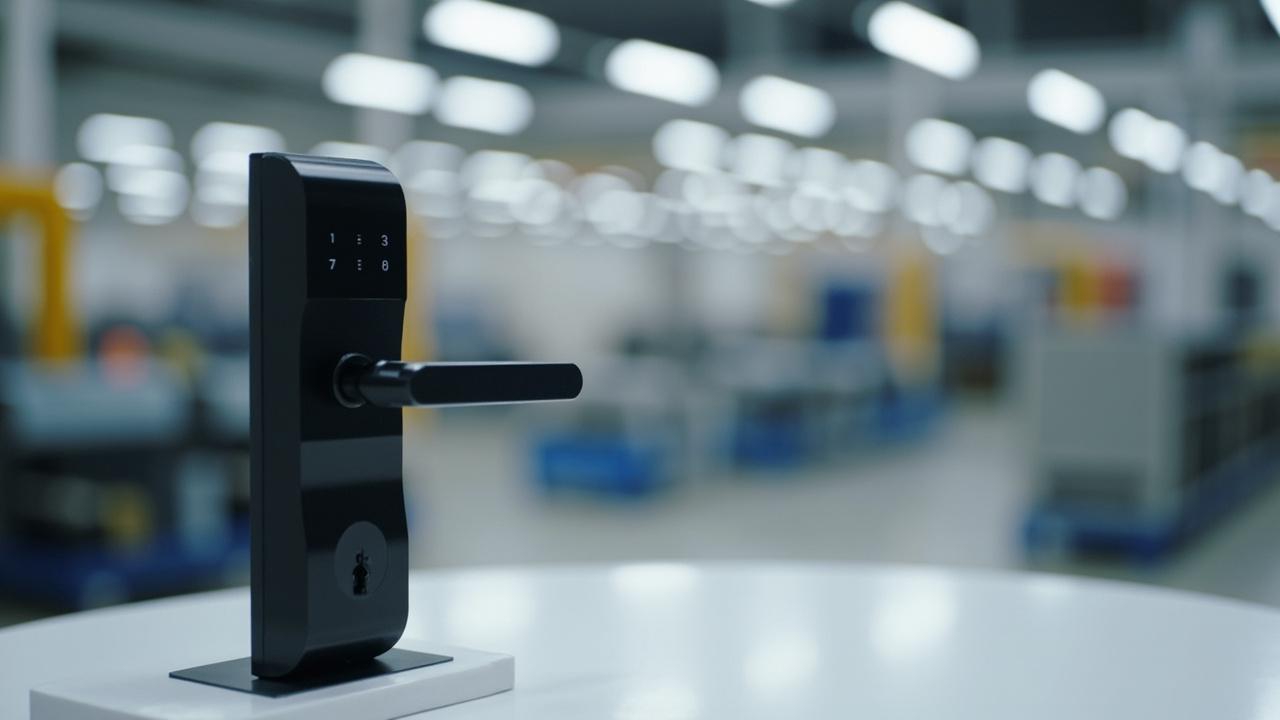
Smart Lock Opportunities for Wholesalers — A Wholesaler Opportunity Briefing
TO: Wholesaler principal, channel director, head of replenishment
FROM: Smart Lock Factory channel desk
DATE: Quarter of issue
RE: The wholesaler opportunity in smart locks — what the lane can honestly own, what it should refuse, and what to lock in writing before the first pallet moves
CC: Finance, after-sales, dealer-relations lead
Executive Summary
The smart lock wholesaler opportunity is the bulk-stock-turn lane between the factory gate and the dealer-and-installer network: catalog-finished units on a pallet, reorderable on a known cadence, supported by documentation a dealer can read without a phone call back to the factory. It is not the brand-posture lane. It is not the territory-defense lane. It is not the local-service lane. It is the lane that pays for inventory carry between two dates, and the wholesaler who reads it correctly wins the lane; the wholesaler who reaches past it into brand or territory loses the lane to the partner that already owns those activities.
The opportunity for a wholesaler considering smart locks rests on four activity lanes the wholesaler can honestly own and three lanes it should refuse. The four lanes are: bulk-lot replenishment of catalog-finished units across the 79-model / 10-category catalog, multi-class SKU laddering so a dealer can pick one carton per category from a single replenishment shipment, packaging-spec discipline that lets the wholesaler's pick-and-pack floor move a mixed-SKU pallet without an open-box per SKU, and reorder-cycle cadence that mirrors the dealer's monthly or quarterly burn. The three lanes the wholesaler should refuse are: brand posture, named-account territory defense, and local service-input work on the end-customer door. A wholesaler that accepts the four and refuses the three carries a lane the supplier can stock and the dealer can read.
This briefing is the wholesaler's opportunity read. It is not the channel-arena argument — that lives at Smart Lock Wholesaler Guide, which scores the wholesaler against the distributor and the dealer lane by lane. It is not the importer-side opportunity read — that lives at Smart Lock Opportunities for Importers, which is the cross-border bulk-purchase lane. It is not the private-label-side opportunity read — that lives at Smart Lock Opportunities for Private Labels, which is the rebranded-cartoned lane. This briefing sits between the wholesale-channel-guide and those two opportunity reads: it is the activity map the wholesaler uses to decide whether smart locks fit the existing wholesale lane and what to put in writing before the first order.
Why the wholesaler opportunity is on the table now
A wholesaler considering smart locks is rarely doing so on a greenfield. There is a wholesale business already, with a route density, a credit line with a bank, a pick-and-pack floor, a dealer list, and a category mix already paying rent. The smart lock opportunity arrives at that wholesaler through one of three doors.
Door one — a dealer on the existing book asks for smart locks. A long-tenancy hardware dealer who has been buying mechanical pin-tumbler and key-knob for fifteen years is losing shelf-turn to a new credential category and asks whether the wholesaler can stock electronic locks alongside the mechanical line. The wholesaler's question becomes: can the existing pick-and-pack floor handle a carton that contains a battery, a credential module, and a software dependency, without breaking the pick discipline that runs the mechanical line?
Door two — a property developer in the territory asks for bulk. A regional property developer is mid-cycle on a multi-block apartment delivery or a serviced-suite hotel roll-out, and the developer's procurement office sends a request for a volume quotation. The wholesaler has the credit line and the warehouse; the developer's question is whether the wholesaler can carry the inventory between factory delivery and unit-by-unit installation across the next eighteen months.
Door three — the wholesaler is being sized up by a brand-supporting factory. A factory running OEM for two named accounts reaches out to the wholesaler and asks whether the wholesaler can take the catalog-finished non-OEM SKUs and run them through the existing route density. The factory's question is whether the wholesaler will carry the long-tail catalog that the named accounts do not buy.
All three doors land at the same desk and force the same question: what is the wholesaler honestly buying into? The four-lane answer is the wholesaler opportunity; the three-refusal answer is the wholesaler's discipline; the rest of this briefing is the rules for executing the four lanes without sliding into the four.
Lane one — Bulk-lot replenishment of catalog-finished units
The first wholesaler lane is the activity the wholesaler already does for any product category it carries: buying catalog-finished units in bulk from the factory, holding them on the wholesaler's dock, and reselling them into the dealer and installer network on a replenishment cadence the dealer already knows. In smart locks, the lane works the same way it works in mechanical hardware, with three operational differences the wholesaler must price in before the first pallet.
Difference one — each unit carries a battery and a credential stack. A mechanical lock carton ships in the hand of a stock-clerk with a glance at the box. A smart lock carton ships in the hand of a stock-clerk with a glance at the box, a battery in the box, a credential module in the box, and a documentation packet the dealer is expected to read before the carton reaches the installer's van. The carton still moves on the wholesaler's existing pick-and-pack floor, but the carton contains a perishable (the battery), a software dependency (the credential module), and a contractual artifact (the documentation packet) that a mechanical-key carton does not contain. The wholesaler must agree in writing how each of those three items is checked, rotated, and replaced before the carton reaches the dealer's dock.
Difference two — the catalog has breadth the wholesaler has not carried before. The 79-model / 10-category catalog covers Smart Door Locks 77, Fingerprint 37, Hotel 24, Keypad 18, Outdoor 10, RFID 9, Face Recognition 6, Cabinet 6, Video Camera 3, Glass 3. The wholesaler's existing mechanical line carries perhaps three or four SKUs. The first wholesale order will not be one SKU — it will be a basket of SKUs sized to the dealer's expected first-quarter demand across hotel / fingerprint / keypad / outdoor / RFID classes, plus a sample bench the dealer needs to demonstrate to any walk-in buyer. The wholesaler's basket-size question is structurally different from the mechanical line's basket-size question, and the answer belongs in writing, not in a phone call.
Difference three — the documentation packet is a sales tool, not a packing slip. A mechanical-key carton ships with a fold-out installation sheet. A smart-lock carton ships with an installation sheet, a credential-issuance quick-start, a management-software pointer, a per-SKU spec block, and a per-deal commercial envelope the dealer will read before they ever quote the lock to a buyer. The wholesaler's pick-and-pack floor must know which of those items is a per-SKU constant (the installation sheet and the credential-issuance quick-start, in this catalog) and which is a per-deal variable (the commercial envelope, which the wholesaler must produce against the dealer's named deal rather than against the carton at large). The two roles are different, and the wholesaler's documentation discipline is the activity that lets the dealer quote a buyer without making a phone call back to the factory.
The lane works when the wholesaler agrees in writing that the pick-and-pack floor treats the three differences as wholesale-owned activities and refuses to push them back to the dealer, the factory, or the installer. The lane collapses when the wholesaler ships a smart-lock carton with a mechanical-key documentation set and tells the dealer to "figure it out."
Lane two — Multi-class SKU laddering for dealer pick-and-pack
The second wholesaler lane is multi-class SKU laddering: the wholesaler offers the dealer a single replenishment shipment that contains one or two SKUs per class — hotel / fingerprint / keypad / outdoor / RFID / glass — so the dealer can quote any walk-in buyer across the credential-and-door-mix range without sourcing from a second wholesaler. The lane is the wholesaler's defensible position against a single-class specialist who can undercut on hero SKUs but cannot quote a buyer who walks in with a hotel guestroom and a glass meeting-room pocket door in the same conversation.
The lane works when the wholesaler's SKU-ladder policy is in writing on three points:
- Which class gets a hero SKU and which class gets a long-tail SKU. Hero SKUs are the catalog SKUs the wholesaler is confident will turn inside two replenishment cycles; long-tail SKUs are the catalog corners the wholesaler carries to support the dealer's quote desk but expects to take longer to turn. The hero / long-tail assignment must be agreed in writing per SKU class, not per SKU, so the dealer can quote any walk-in buyer without checking whether the wholesaler stocks the SKU in question.
- How the wholesaler ladders the price-tier offer to the dealer's basket size. The wholesaler's price-tier offer — sample, pilot, standard wholesale, framework, container — is not a single ladder. It is a five-rung ladder whose elasticity between rungs is structurally different for hero SKUs and long-tail SKUs. The wholesaler should agree in writing which rung the dealer's first basket falls under, which rung the dealer's second basket falls under, and how the wholesaler tells the dealer when a rung transition is approaching. Confirm the rung posture with the supplier in writing for the dealer's named basket.
- How the documentation packet ladders with the SKU ladder. A dealer buying one carton of a hero SKU expects a documentation packet sized to the single carton; a dealer buying a five-class basket expects a documentation packet sized to the five-class basket, with a per-class install sheet, a per-class credential-issuance quick-start, and a basket-level commercial envelope. The documentation ladder is the activity that lets the dealer quote the buyer on the same day the carton arrives, and the wholesaler who gets the documentation ladder wrong is the wholesaler the dealer quietly bypasses on the next order.
The lane collapses when the wholesaler treats the SKU ladder as a price decision and skips the documentation decision. The dealer's question is not "what does the carton cost"; the dealer's question is "what does the carton let me quote tomorrow morning." The wholesaler who answers the first question and not the second loses the lane to a wholesaler who answers both.
Lane three — Packaging-spec discipline for pick-and-pack
The third wholesaler lane is packaging-spec discipline: the wholesaler agrees in writing which packaging variables are per-SKU constants the wholesaler can pre-decide, which are per-deal variables the wholesaler must read against the dealer's named deal, and which are factory-side variables the wholesaler does not touch.
| Packaging variable | Who decides | When it is decided | What the wholesaler must do |
|---|---|---|---|
| Carton dimensions and stacking | Factory, with wholesaler input on the wholesaler's pallet pattern | Hold pre-per-SKU at first wholesale order | Confirm the carton fits the wholesaler's existing pallet pattern; flag any carton that breaks the pattern in writing before the first PO |
| Inner-pack accessory kit (battery, mounting hardware, credential module) | Factory, with per-SKU consistency | Pre-per-SKU at first wholesale order | Confirm the inner-pack kit matches the per-SKU documentation set; flag any kit inconsistency in writing |
| Per-carton documentation set (install sheet, credential-issuance quick-start) | Factory, sized to per-SKU | Pre-per-SKU at first wholesale order | The documentation set ships in the carton; the wholesaler does not add to it |
| Per-deal commercial envelope (price-tier confirmation, payment-milestone cadence, lead-time confirmation) | Wholesaler, against the dealer's named deal | Per-deal at the dealer's PO | The wholesaler produces the per-deal envelope; the dealer signs against it; the factory confirms the per-deal envelope against the factory's commercial offer letter |
| Outer-pack labeling (wholesaler branding, region label, multi-language overlay) | Wholesaler, with factory's per-market language-pack input | Per-deal at the dealer's PO | The wholesaler produces the outer-pack label against the factory's per-market language-pack input; the factory approves before print run |
| Master-carton and pallet configuration for the wholesaler's pick-and-pack floor | Wholesaler, sized to the wholesaler's dock | Per-replenishment at the wholesaler's PO | The wholesaler defines the master-carton count and the pallet configuration; the factory confirms it can pack to the wholesaler's spec |
The lane works when the wholesaler reads the packaging-spec split in writing with the factory before the first PO, and the dealer reads it in writing with the wholesaler before the dealer's first basket. The lane collapses when the wholesaler treats packaging as the factory's problem and ships whatever lands on the dock — that is the lane that produces a dealer return on the second order and a dealer churn on the third.
Lane four — Reorder-cycle cadence that mirrors dealer burn
The fourth wholesaler lane is reorder-cycle cadence: the wholesaler carries inventory long enough to cover the dealer's monthly or quarterly burn without forcing the dealer to wait a factory cycle, and short enough that the wholesaler is not holding last quarter's catalog on the dock when this quarter's catalog turns. The lane is the wholesaler's velocity discipline, and it has three rules.
Rule one — the wholesaler's reorder trigger is the dealer's reorder trigger, mirrored. A dealer who reorders quarterly should be served by a wholesaler who reorders quarterly with a buffer equal to one dealer's reorder cycle. A dealer who reorders monthly should be served by a wholesaler who reorders monthly with a buffer equal to one dealer's reorder cycle. The buffer is the wholesaler's service-level promise to the dealer, and the promise should be in writing per dealer.
Rule two — the wholesaler's hero-SKU turnover is faster than the wholesaler's long-tail-SKU turnover, and the wholesaler sizes each differently. A hero SKU that turns every forty-five days does not need a sixty-day buffer. A long-tail SKU that turns every one hundred and twenty days needs a one hundred and twenty-day buffer or it will stock-out when the dealer asks. The two buffers are different because the two velocities are different, and the wholesaler should agree the velocity per SKU class in writing with the factory before the first PO.
Rule three — the wholesaler's reorder cadence does not collapse into a single annual PO. The lane is structurally distinct from an importer-side bulk buy, where one annual PO covers the year. The wholesaler's lane is structured for repeated replenishments on a known cadence. A wholesaler who tries to convert the lane into an annual PO will end up holding a year of inventory when the dealer's burn only covers three quarters. Confirm the per-class reorder-cadence posture in writing with the supplier for the named basket and the named dealer book.
The lane works when the wholesaler's reorder trigger is the dealer's reorder trigger mirrored, when the buffer is sized to velocity per SKU class, and when the cadence is repeated rather than annual. The lane collapses when the wholesaler treats the cadence as a finance decision and ignores the velocity signal.
The three lanes the wholesaler should refuse
The wholesaler opportunity includes the discipline of refusing three lanes the wholesaler is sometimes asked to take. The three refusals are not a posture; they are the wholesaler's protection against sliding into activity the wholesaler is not paid for.
Refusal one — brand posture. A wholesaler is sometimes asked to take on brand-posture activities: co-marketing kits, demo hardware, training material, named-account marketing spend. These are territory-and-brand premium activities, not stock-turn premium activities, and they are owned by the distributor lane, not the wholesale lane. A wholesaler who accepts them ends up paying a holding cost on brand assets the wholesaler does not turn, and the distributor partner quietly withdraws. The refusal rule is the wholesaler who carries stock does not carry brand posture.
Refusal two — territory defense. A wholesaler is sometimes asked to defend a territory against a second wholesaler or a direct factory account. Territory defense is a named-account discipline owned by the distributor lane; the wholesale lane is territory-neutral by design and works because it can route any dealer's replenishment regardless of which distributor owns the territory. A wholesaler who accepts a territory assignment ends up refusing half the dealer book the wholesaler used to carry, and the dealer book finds a second wholesaler. The refusal rule is the wholesaler who replenishes stock does not defend territory.
Refusal three — local service input on the end-customer door. A wholesaler is sometimes asked to take on the install-crew cost, the warranty-routing cost, or the service-van cost that sits between the dealer's sale and the end-customer's door. Those activities are the dealer lane's service-input premium, paid for by the dealer's wider margin. A wholesaler who accepts them ends up holding service-line costs on a stock-turn margin, and the service discipline quietly disappears. The refusal rule is the wholesaler who carries inventory does not carry service-input work on the end-customer door.
The three refusals are the wholesaler's defense. A wholesaler who refuses all three carries a lane the supplier can stock, the dealer can read, and the finance committee can underwrite. A wholesaler who accepts any of the three ends up holding activity the wholesaler was never paid for.
Per-SKU documentation rule
Every per-SKU figure the wholesaler's lane touches — door-thickness envelope, credential modalities supported per SKU, RFID frequency and read range, lock-management-software lane, body-material grade, finish options, battery count and chemistry, audit-event buffer depth, mechanical-override path, environmental rating — is a figure the wholesaler must read against the named SKU's product page and against the supplier's per-deal written offer letter. No per-SKU figure is asserted in this briefing. The documentation-granularity yardstick the wholesaler reads against is the product-page-documented SLK-9936S hotel-class first-party spec block (Door thickness 36–100 mm · RFID Mifare 1 @ 13.56 MHz · read distance 0–5 cm · read time <0.25 s · power 4 × AA · battery operating cycles >15,000 · audit/event records up to 1,000 · 5-pin cylinder · 3-point latch · stainless steel + alloy body · multiple finish options · mechanical emergency access · multilingual management software · standalone or centralized database modes · positioned for 1–5 star hotels), invoked once as a documentation-format ruler under an explicit no-porting-across-models firewall scoped strictly to that SKU. The yardstick is not portable to siblings SLK-9936G, SLK-9905A, SLK-9951TH, SLK-9962S, SLK-G200, SLK-8831 5-in-1, the SLK-1104 class, SLK-3108, the cylindrical Tuya round-code, the 3D-face remote-intercom, the outdoor D11/D12/D15/ODS/DQ family, the face 9L5-R/Q7/Future 1 family, 516 cat-eye, Q7 intercom, the 4G model, the cabinet 6-model family, the RFTC/RF card-and-code 118/118E/228/230/232/238/239/253/305/306/308/309/502/620/621/911/002/019/022/2020/760 family (with stainless 019/022/309 noted as a class), the fingerprint 37-model family, the keypad 18-model family, the RFID 9-model family, the hotel 24-model family, or the glass 3-model family. Every figure outside the SLK-9936S yardstick firewall is routed to verify in writing on the named SKU's product page and in writing with the supplier.
Illustrative scenario — A wholesaler sized up by a hotel-and-apartment dealer book
Consider a 120-dealer book across two adjacent regions, of which forty dealers currently stock mechanical hardware and four have asked in the last quarter about smart locks. Two of the four are hotel-class dealers with a guestroom-rebuild cadence. One is a mixed-use apartment dealer with a developer-relationship cadence. One is a fingerprint-and-keypad dealer serving residential replacement.
The wholesaler receives the four asks at the same desk and asks the factory for a basket sized to first-quarter burn. The factory offers the basket against the wholesaler's existing pallet pattern; the wholesaler confirms the basket fits the pick-and-pack floor; the wholesaler agrees the hero / long-tail assignment per SKU class; the wholesaler agrees the documentation-ladder posture per dealer ask; the wholesaler agrees the packaging-spec split (factory pre-per-SKU on inner-pack and per-carton documentation; wholesaler per-deal on the commercial envelope and the outer-pack labeling). The wholesaler agrees the reorder cadence per dealer (quarterly for the hotel-class dealers with a sixty-day buffer; monthly for the apartment dealer with a thirty-day buffer; on-demand for the residential replacement dealer with a forty-five-day buffer). The wholesaler refuses the brand-posture ask, the territory-defense ask, and the service-input ask. The first quarterly reorder lands ninety days later with the documentation ladder intact, the reorder trigger respected, and the three refusals in writing. The dealers who asked re-ask; the dealers who did not ask begin to ask. The wholesaler's lane holds.
This is an illustrative scenario, not a customer story. Every dealer name is fictitious. Every reorder cadence is illustrative. Every per-SKU figure routes to the named SKU's product page and to the supplier's per-deal written offer letter.
Decision rules before the first PO
Six rules the wholesaler puts in writing before the first wholesale order.
- Rule one — confirm the basket-size split per SKU class in writing before the first PO. Hero SKUs and long-tail SKUs are not the wholesaler's call alone; they are a joint call between the wholesaler and the supplier against the dealer's expected first-quarter burn.
- Rule two — confirm the documentation ladder per dealer ask in writing before the first carton ships. The documentation packet is a sales tool; the packet's per-class content is a per-dealer conversation; the bag's presence in the carton is a factory decision.
- Rule three — confirm the packaging-spec split in writing before the first PO. Six packaging variables sit between the factory and the wholesaler; each variable's owner is named in writing.
- Rule four — confirm the reorder trigger and the buffer per dealer in writing before the first replenishment cycle. The trigger is the dealer's trigger mirrored; the buffer is sized to the dealer's velocity per SKU class.
- Rule five — refuse the three lanes in writing before the first carton ships. The brand-posture lane, the territory-defense lane, and the service-input lane are owned by other channel partners; the wholesaler's lane is the stock-turn lane and only the stock-turn lane.
- Rule six — confirm every per-SKU figure against the named SKU's product page and against the supplier's per-deal written offer letter. No per-SKU figure is asserted by the wholesaler; the wholesaler reads every figure and confirms it in writing.
A wholesaler who puts the six rules in writing before the first PO carries the wholesale lane cleanly. A wholesaler who skips the rule and learns it by reading the first dealer return ends up holding inventory the dealer no longer wants.
What this briefing deliberately does not cover
The wholesale opportunity briefing sits in the middle of a wider set of channel-side briefings. Five adjacent readings the wholesaler should run alongside this one.
The first adjacent reading is the channel-arena argument — wholesaler against distributor against dealer scored round by round — at Smart Lock Wholesaler Guide. That briefing is where the wholesaler reads the channel-posture differences this briefing takes for granted. The second adjacent reading is the importer-side opportunity read at Smart Lock Opportunities for Importers, where the cross-border bulk-purchase lane and the per-shipment commercial envelope differ from the wholesale lane's per-basket envelope. The third adjacent reading is the private-label-side opportunity read at Smart Lock Opportunities for Private Labels, where the rebranded-cartoned lane and the per-deal artwork lane differ from the wholesale lane's standard-carton discipline. The fourth adjacent reading is the wholesale business-model reading at Smart Lock Wholesale Business Model, where the wholesaler's structural posture — stock-turn margin, territory-neutral routing, hero-SKU discipline — is the upstream argument this briefing's four-lane reading consumes. The fifth adjacent reading is the wholesale pricing-strategy reading at Smart Lock Wholesale Pricing Strategy, where the per-basket tier ladder this briefing references in lane two is unpacked rung by rung. The wholesaler who reads this briefing alongside the five siblings reads the lane in context.
Closing — The wholesale lane is the stock-turn lane
The smart lock opportunity for wholesalers is the stock-turn lane: catalog-finished units on a pallet, multi-class SKU laddering in the basket, packaging-spec discipline on the carton, and reorder-cycle cadence mirrored to the dealer's burn. Four lanes the wholesaler owns, three lanes the wholesaler refuses, six rules in writing before the first PO. The lane is honest and the lane is defensible when the wholesaler reads it correctly. The lane collapses when the wholesaler reaches past it into brand posture, territory defense, or end-customer service input — three activities the wholesaler is not paid for and three activities the partner channel already owns.
For the supplier conversation the wholesaler should bring the four-lane map, the three-refusal list, the six rules, and the named-basket ask to request a quote. For the dealer's first sample walk-through, the wholesaler should bring a hero-SKU basket, a documentation ladder sized to the dealer ask, and a packaging-spec split confirmed with the factory. For the reorder cadence, the wholesaler should mirror the dealer's trigger with a velocity-sized buffer per SKU class. For every per-SKU figure, the wholesaler reads against the named product page and against the supplier's per-deal written offer letter. The wholesale lane holds when the four lanes are owned, the three lanes are refused, and the six rules are in writing.