
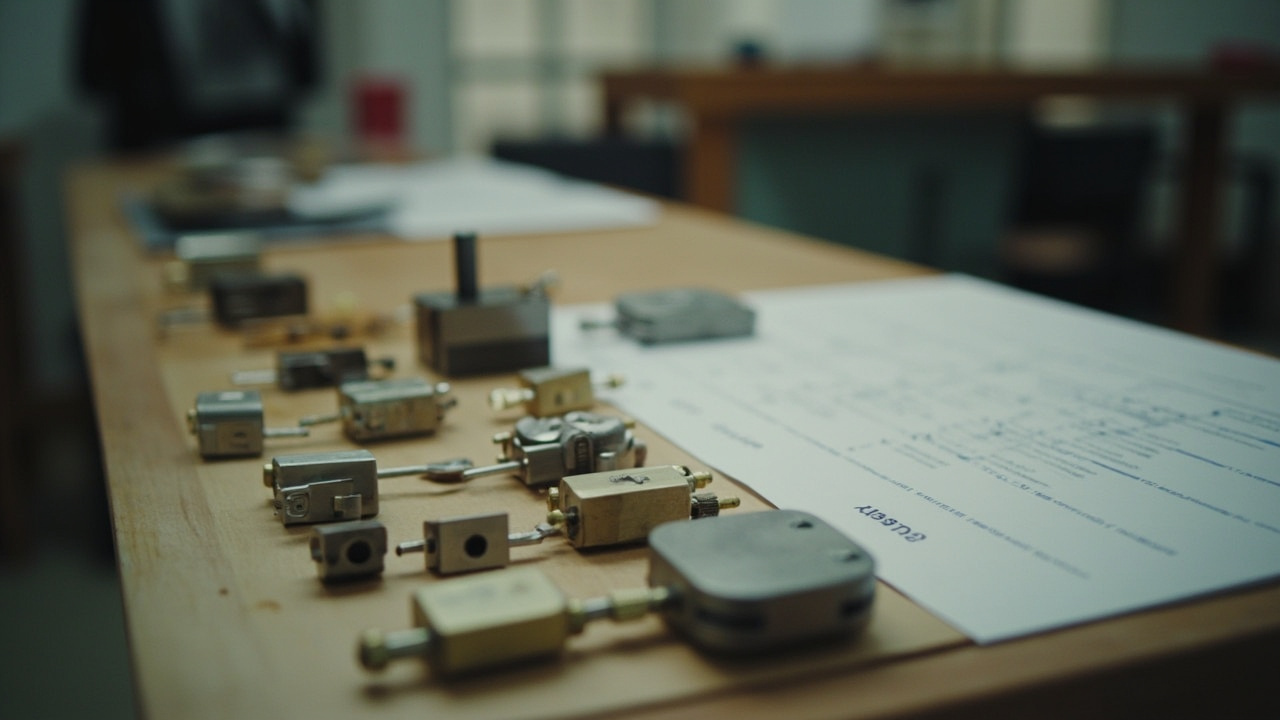
Smart Lock Glossary: First Article Definition for B2B Buyers
For an importer, the first article definition is the agreed rule that turns an identified sample into the production reference for later supply. It is a quality-control and commercial reference point, not a synonym for the first carton received and not blanket approval of a product family. The definition matters because an importer eventually has to decide whether delivered goods match the configuration the buyer approved.
Direct answer. In short, first article definition is the subject of this piece. first article definition is where the work on first article definition sits. first-article is what has to be evidenced before anyone signs. A first article definition explains options rather than recommending one. first article definition carries the definition of first article definition that other pages depend on.
first article definition is used here in the narrow sense set out in first article definition. It is a working definition built for first article definition. It is not a statutory one, and it has to be read against the market and product concerned.
Use the wording below as a buyer’s working definition. The supplier may supply the technical record, but the buyer should state which sample, configuration, tolerances and approval conditions form the reference.
Glossary entry: what the term decides
In plain English, a first article is a sample approved as the production reference. The approval gives that particular configuration a defined place in the buyer’s order history; it does not create unrestricted approval for related models, finishes or variants. The product family this applies to is the smart door locks.
| Element | Buyer-facing answer | What it decides | Evidence to retain |
|---|---|---|---|
| What it is | A sample accepted as the production reference | Which unit represents the intended production configuration | Sample identification and signed approval record |
| What it decides | Whether later goods are “as approved” | Acceptance, comparison and escalation of production differences | Configuration record linked to the approved sample |
| Common confusion | The first carton received is automatically the first article | Whether the buyer has a valid reference at all | Purchase order, sample submission and decision record |
| Scope | Approval applies only to the stated configuration and tolerances | Which changes require review | Configuration sheet, drawings, test records and deviation log |
| Evidence | A dated decision tied to an identified sample and configuration | Whether approval can be demonstrated later | Signed decision, inspection record and retained reference sample |
| Where it bites | Order approval, production release and incoming inspection | Whether a discrepancy is a variation or an unapproved change | Approval history maintained through delivery |
The common confusion is especially costly because first article approval binds only the configuration that was approved, with its stated tolerances. A similar housing, the same product-family name or an improved sample does not automatically expand that approval.
Approval sequence from sample to supply
Use the term as a sequence of gates rather than a single inspection event.
flowchart TD
  A[Define approved object] --> B[Issue configuration record]
  B --> C[Inspect submitted sample]
  C --> D[Record test evidence]
  D --> E{Buyer decision}
  E -->|Approved| F[Release production reference]
  E -->|Approved with limits| G[Record approval limits]
  E -->|Rejected| H[State corrective action]
- Define the object. Record what is being submitted: the physical sample, its identifier and the proposed configuration.
- Freeze the description. Match the sample to a dated configuration record with stated tolerances and applicable assumptions.
- Inspect and document. Record the checks performed, results, open items and the person responsible for the decision.
- Approve with conditions. State whether the sample is accepted, accepted with limits or not accepted, and attach the reasons.
- Control later supply. Compare production and incoming goods against the approved configuration and route every unreviewed difference through a change decision.
This sequence makes the sample-to-production control visible. Without the decision record, the physical sample may remain in a warehouse while the buyer still lacks a usable production reference.
Clause 1 — Name the approved object
Write the physical reference and the documentary reference as separate items. The production reference sample identifies what was inspected. The configuration record identifies what that sample represents, including the relevant hardware, finish, dimensions, operating assumptions and other attributes stated by the supplier. A photograph or catalogue page can assist identification, but neither replaces the configuration record.
The first article approval should also state which record revision was assessed and whether any items remain outside its scope. Generic statements such as approved for the range or approved as standard are too broad to support an incoming-goods comparison.
For an importer, retain the sample identification in the receiving file and link it to the purchase order, correspondence and inspection decision. If the sample cannot be stored or transported, the record should still identify where it was held and who controlled it.
Clause 2 — Freeze the approved configuration
The approved configuration should identify the variables that can alter fit, operation, credential handling, appearance or the behaviour covered by the approval. Depending on the product and project, that record may address items such as the escutcheon, faceplate, strike plate, spindle, backset, finish, reader format or other stated characteristics. These are examples of fields for the configuration record, not claims about a particular lock.
Decision comparison: approved sample versus later supply
| Decision point | First article | Production unit | Later shipment |
|---|---|---|---|
| Configuration identity | Matches the submitted and identified sample | Matches the released approved configuration | Matches the approval history for that order |
| Permitted variation | Stated tolerances and assumptions recorded | No unreviewed change outside those limits | Comparison evidence available for receiving inspection |
| Evidence | Dated inspection and approval decision | Production release linked to that decision | Traceable result from incoming inspection |
| Change handling | Any request is recorded before release | Unresolved deviations do not pass silently | Nonconforming supply follows the recorded disposition process |
A family label is not an approved configuration. Similar appearance or a shared catalogue entry does not establish that fit, components, finish or behaviour remains unchanged. The buyer should ask the supplier which fields identify the unit that may later be received and imported.
Clause 3 — Demand evidence tied to the sample
Ask for evidence that can be connected to the submitted unit and its configuration record. Useful records include:
- a dated configuration record identifying the submitted sample;
- dimensional and functional inspection results for that sample;
- the signed decision, including any conditions or limits;
- an open-deviation list showing unresolved differences;
- the retained reference sample or its controlled location;
- a change log covering the reference sample and configuration.
A conformity assessment is a process by which the manufacturer establishes that a product meets specified requirements. It may produce supporting documents, but the process itself should not be confused with a single certificate. The evidence pack should show which requirements were assessed, against which configuration and with what result. See What Conformity Paperwork Means: Plain Explanation for the broader documentary distinction.
Evidence also needs independence and scope. A report prepared for another configuration cannot simply be transferred to the approved sample. Where supplier claims require checking, How a Supplier Is Actually Verified: Plain Explanation provides the relevant verification structure.
Clause 4 — Control changes after approval
Once a first article is approved, the approval history should remain live rather than being filed as a closed record. A supplier may propose a component, finish, dimension, firmware baseline or process change. Each proposal needs a recorded disposition before affected goods are treated as conforming to the original approval.
For sample-to-production control, record four items for every proposed change: what changed, why it changed, which approval records may be affected and who accepted the disposition. Product Change Notification, commonly abbreviated PCN, is the notice through which a supplier communicates such a change. The label does not replace the need to assess the effect on the approved configuration.
An improvement is still a change when it alters a controlled field. The buyer can classify the proposal as accepted, accepted with revised evidence, held for further review or rejected for the stated configuration. Silence should not be built into the process as approval.
The build-up behind that decision is in smart lock purchase order checklist. That is the same question first article definition has to answer here.
Clause 5 — Place the term in the transaction
For an importer, the first article definition becomes most useful at the points where a transaction can otherwise lose its configuration history. Put the reference in the purchase order or approval record, then carry its identifier into pilot inspection, production release and receiving documents.
It is worth pairing this with smart lock rfq checklist for china suppliers. That is the same question first article definition has to answer here.
| Transaction point | Question to settle | Record to request |
|---|---|---|
| Before order commitment | Which document defines the intended configuration? | Draft configuration record and RFQ response |
| Pilot order | Is the submitted unit intended as the first article? | Sample identification and submission purpose |
| Approval decision | What exactly was accepted, and under what conditions? | Signed decision and deviation list |
| Production release | Which approved revision governs the order? | Production reference linked to the order |
| Import receipt | Does the received unit match that approval history? | Configuration identifier, packing information and receiving comparison |
A pilot order may support evaluation of the proposed product, but it does not become a first article merely because it arrives first. How a Pilot Order Reduces Programme Risk: Plain Explanation explains how that step fits within a wider approval programme.
The importer should also ask which approval reference can be shown on commercial and packing documents. This is a documentation request, not a universal rule that every market accepts the same field. The receiving team needs enough information to connect the physical goods with the approved configuration without relying on memory.
Terms that are often confused with a first article
- Sample: A generic unit submitted for evaluation. Its purpose must be stated before it can serve as a production reference.
- First article: The sample specifically approved as that production reference.
- Production reference sample: A working description for the retained physical or documented reference. It is not a separate universal approval category.
- Golden sample: A buyer’s working label for a selected reference unit. Define its location, control and permitted uses in the programme rather than treating the label as an industry standard.
- Master sample: Another programme-specific label that may be used for the controlling sample. State whether it is identical to the approved first article.
- Production standard: A broader phrase that may include drawings, specifications, procedures and approved samples. It can contain the first article, but it is not automatically the same thing.
If a term has no settled meaning for the programme, label it as the buyer’s own working definition and identify the evidence that gives it practical effect.
Draft clause for an order or approval record
Use the following as a starting point and adapt it to the contract structure:
The production reference sample identified as [sample ID] is the first article for this order. It is approved only for the configuration listed in [configuration record and revision], including the stated tolerances and assumptions. Any proposed change to that record, the production reference sample or an approved production source requires prior notice and a recorded disposition before affected goods are released as production references. Acceptance of delivered goods follows the purchase order, inspection plan and applicable law rather than this glossary entry.
CONFIRM-WITH-LOCAL-LEGAL: Confirm how approval, rejection, remedies and governing law apply in the buyer’s jurisdiction and the governing contract.
The approval history should show not only the accepted sample, but also the evidence, conditions and later decisions that preserve the meaning of as approved.
Related reference entries
Use these articles for the adjacent controls referenced above:
- How a Sample Becomes a Production Standard: Plain Explanation explains how an inspected sample can become a controlled production reference.
- How a Pilot Order Reduces Programme Risk: Plain Explanation covers the role of a controlled pilot before wider supply.
- What Conformity Paperwork Means: Plain Explanation separates a conformity process from the documents it produces.
- How a Supplier Is Actually Verified: Plain Explanation shows how evidence claims can be checked.
- Office Smart Lock Site Survey helps connect the approved hardware configuration with actual door preparation.
A disciplined first article definition gives the importer three practical controls: a named reference, a bounded approved configuration and a recorded route for every later difference.
The commercial step that follows is to request a quote.